
%201.svg)


HIPAA Compliance Checklist for 2025

Your employees are already using AI. The only question is whether you know where.
In 2024, Microsoft reported that 75 percent of knowledge workers use generative AI at work, and 78 percent bring their own AI tools. That means most enterprises already have shadow AI inside their environment.
The problem is not experimentation. It is invisible. If you cannot see AI tools connecting to your SaaS stack, you cannot govern them.
This is where shadow AI detection tools come in. Let’s break down what shadow AI really is, why IT teams find out too late, and which tools to detect shadow AI in enterprises actually work in 2026.
TL;DR
- Shadow AI is growing fast, and most enterprises lack full visibility into unauthorized AI usage.
- Traditional IAM and CASB tools often miss browser-based and free-tier AI tools.
- Effective shadow AI detection tools must combine browser data, SSO logs, and financial insights.
- Detection alone isn’t enough. Continuous monitoring and automated governance are critical.
- Platforms like CloudEagle provide unified shadow AI visibility and enforcement in one system.
1. What Is Shadow AI and Why Is It Quietly Becoming an Enterprise Security Problem?
Shadow AI refers to unauthorized AI tools, browser extensions, AI APIs, or embedded generative features used without IT approval.
It often looks harmless.
A sales rep uses ChatGPT to draft emails. Marketing uploads content into an AI summarizer. Developers test AI copilots with production data.
But here is the issue. AI tools are frequently:
- Store prompts and responses
- Retain metadata
- Use third-party subprocessors
- Process sensitive company data
According to Netskope, 1 in 3 enterprise users uploads sensitive data to generative AI apps. That creates immediate compliance and data exposure risks.
Without shadow AI visibility, enterprises cannot detect unauthorized AI usage or enforce policy boundaries.
And most organizations underestimate how fast this grows.
If you want to hear how security and IT leaders are actually solving this in practice, this episode is worth your time.
Listen here: Optimizing Shadow IT Risks and Innovations in SaaS Management
2. Why do most IT Teams Find Out About Shadow AI Too Late?
Shadow AI rarely announces itself.
It bypasses procurement. It hides inside browser sessions. It connects via OAuth tokens. It starts as a free trial. That quiet spread is exactly how AI tools slip past IT until someone goes looking.
Most IT teams rely on:
- Expense reports
- SSO logs
- Manual reporting
- CASB alerts
But traditional tools were not designed for the shadow AI monitoring software needs. They often only see applications behind identity providers.

The gap becomes dangerous because:
- AI browser extensions never show up in invoices
- Free-tier AI tools convert to paid without review
- Teams connect AI APIs directly into SaaS apps
- Personal email logins bypass corporate oversight
By the time security teams detect unauthorized AI usage, sensitive data may already have been exposed.
This is why enterprises need purpose-built shadow AI detection tools rather than relying solely on legacy IAM or CASB systems. Pulling all of that into a single view is what a shadow AI and shadow IT discovery layer is built for.
Also Read: The Real Cost of Shadow AI: How CloudEagle Can Prevent It
3. What to Look for in a Shadow AI Detection Tool Before You Commit to One?
Not all shadow AI detection tools are built the same. If you are evaluating tools to detect shadow AI in enterprises, here are the capabilities that matter.
If you are evaluating tools to detect shadow AI in enterprises, here are the capabilities that matter.
A. Multi-Source Discovery
The tool should correlate:
- Browser activity
- SSO data
- OAuth connections
- API integrations
- Finance and credit card spend
Shadow AI visibility requires more than login logs.
B. Real-Time Monitoring
You need continuous detection, not quarterly audits. Shadow AI monitoring software must flag AI usage as it happens.
C. Risk-Based Scoring
Not all AI tools are equally risky. Good AI governance tools for enterprises classify tools by:
- Data handling policies
- Compliance certifications
- Storage practices
- Subprocessor transparency
D. Enforcement Workflows
Detection without enforcement creates more alerts but no control.
Look for:
- Approval workflows
- Automated notifications
- Access revocation
- Policy enforcement
E. Cross-Functional Visibility
IT, security, and procurement should all see relevant insights. AI governance tools for enterprises must bridge technical and financial oversight.
If a solution only shows dashboards, it is incomplete.
4. Tools That Actually Detect Shadow AI Usage in Enterprises
Here are some of the leading shadow AI detection tools and AI governance tools for enterprises in 2026.
1. CloudEagle.ai
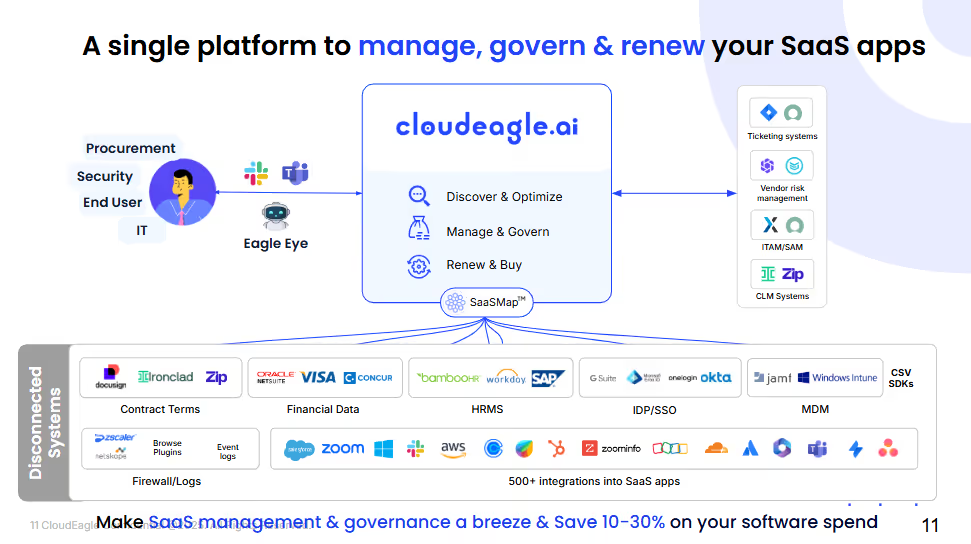
CloudEagle is a unified SaaS and AI governance platform designed to provide complete shadow AI visibility across identity, browser, and financial systems. It combines detection, governance, and cost control in one system.
A. Discover Every AI and SaaS App
The problem isn’t just logins. It’s fragmented data.
CloudEagle correlates:
- SSO login data
- Browser activity
- Finance and card transactions
- ERP data
- 500+ app integrations
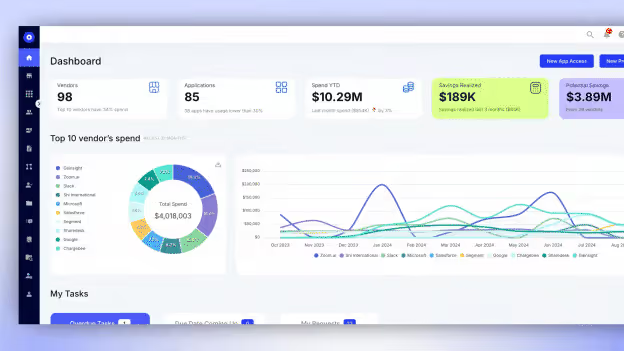
This creates one unified dashboard showing approved apps, shadow AI tools, department-level usage, and free tools turning into paid risk.
B. Correlate Usage and Spend
Shadow AI visibility isn’t just about who logged in.
CloudEagle verifies:
- Who is using an AI tool
- Whether spend is attached
- Whether it duplicates an approved app
- Whether sensitive teams are involved
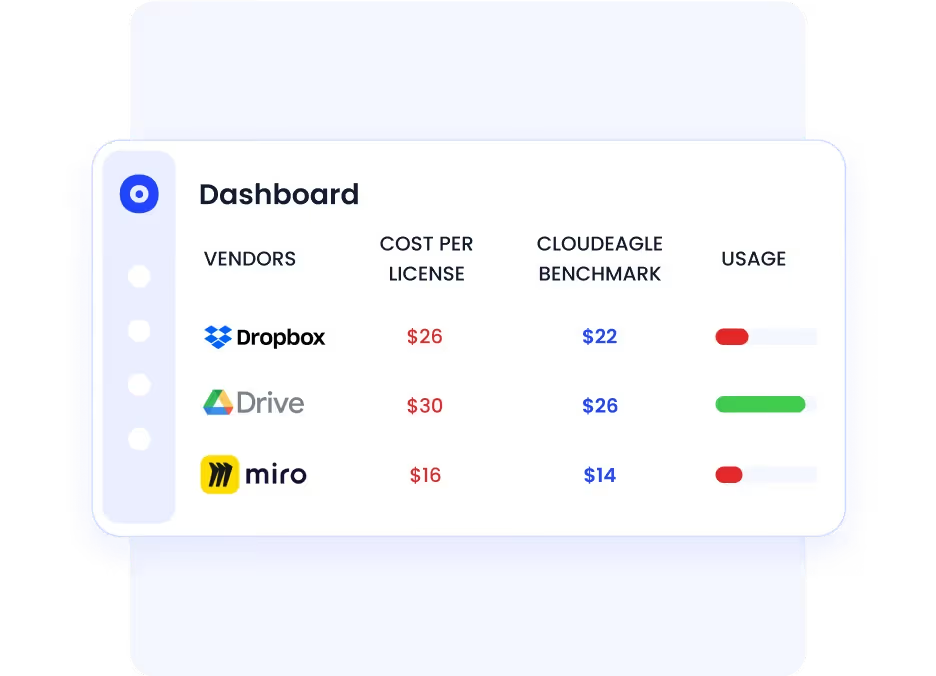
Instead of spreadsheet audits across SSO, GSuite, and ERP systems, you get continuous monitoring.
C. Flag High-Risk AI Automatically
The IGA report shows 70 percent of CIOs view AI tools as a top security risk, yet 95 percent do not use continuous AI access reviews.
CloudEagle adds:
- AI usage detection
- Risk scoring
- Shadow IT scorecards
- Policy enforcement workflows
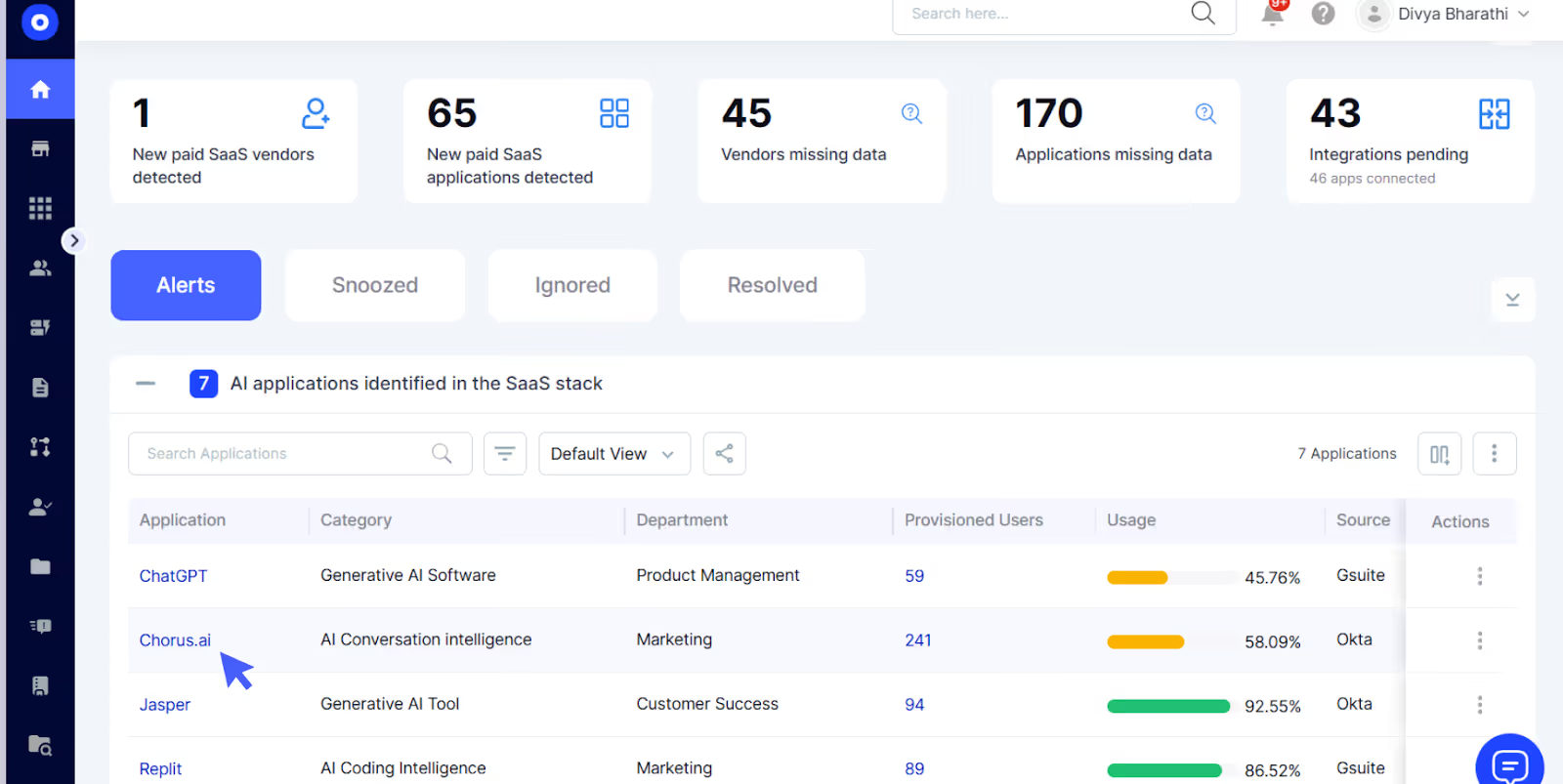
This turns reactive IAM into proactive AI governance.
D. Take Action, Not Just Show Insights
Most shadow AI detection tools stop at alerts.
CloudEagle lets teams:
- Notify users automatically
- Trigger approval workflows
- Create ITSM tickets
- Auto-deprovision risky access
- Automate access reviews
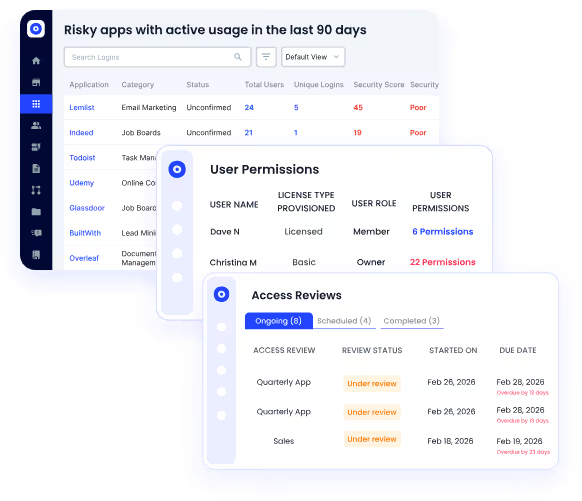
So instead of “We found 17 apps,” you get automated remediation in motion.
E. Govern Beyond SSO
Traditional IAM only governs apps behind SSO. Many AI tools sit outside that layer. CloudEagle.ai covers browser-based AI, free-tier tools, card-purchased apps, and apps beyond IDP coverage. That's what gives enterprises true shadow AI visibility, not partial detection.
Want to see how much of your AI environment is actually invisible right now? This webinar breaks it down with real data.
Watch here: 60% Invisible: Shadow AI and Hidden Access Crisis in SaaS & AI Environments
CloudEagle covers:
- Browser-based AI
- Free-tier tools
- Card-purchased apps
- Apps beyond IDP coverage
That’s what gives enterprises true shadow AI visibility, not partial detection.
Pricing
Custom enterprise pricing based on modules and organization size. Quote available upon request.
78% of Employees Bring Their Own AI. Do You Know What's in Yours?


2. Microsoft Purview
Microsoft Purview is part of the broader Microsoft compliance ecosystem. It focuses on data governance and risk management within Microsoft environments.

Limitations
- Primarily optimized for Microsoft 365 and Azure ecosystems
- Limited visibility into third-party SaaS AI tools
- Not purpose-built for shadow AI detection across browser-based tools
Pricing
Pay-as-you-go pricing based on data volume and governance workloads. Costs vary significantly depending on usage.
3. Netskope
Netskope is a CASB and cloud security platform that monitors web and cloud traffic, including generative AI usage at the network layer.
CloudEagle.ai and Netskope have a direct integration that gives IT and Security teams unified visibility, combining SaaS usage analytics with Netskope's real-time security risk scores, all from a single platform. When a risky AI app surfaces, you don't just get an alert. You get the context to act.
"Together, CloudEagle.ai and Netskope help teams move from reactive threat response to proactive risk management while optimizing their SaaS investments." — Andy Horwitz, SVP, Global Partner Ecosystems, Netskope
Read the CloudEagle × Netskope integration announcement →
Limitations
- Focused primarily on network-level monitoring
- Limited SaaS contract and license visibility
- May not detect AI tools used outside monitored network environments
Pricing
Estimated $8 to $15 per user per month for core capabilities, with additional costs for advanced data protection modules.
4. Zylo
Zylo is a SaaS management platform centered on spend tracking and vendor visibility. It can indirectly surface shadow AI usage through financial discovery.
Limitations
- Detection is heavily reliant on financial data rather than real-time AI monitoring
- Limited governance automation for unauthorized AI usage
- Not specialized for shadow AI visibility
Pricing
Custom enterprise pricing. Industry estimates suggest starting around $35,000 to $45,000 annually for larger deployments.
5. Zenity
Zenity focuses on SaaS security posture management and governance within enterprise application environments.
Limitations
- Narrower focus on SaaS workflow security
- Less emphasis on cross-platform shadow AI monitoring
- May require integration with other systems for full visibility
Pricing
Enterprise pricing available via custom quote.
6. Portal26
Portal26 provides GenAI adoption monitoring and governance features tailored to AI usage within enterprises.
Limitations
- Focused primarily on GenAI rather than full SaaS sprawl
- Limited financial and license optimization capabilities
- May not provide unified shadow AI visibility across all departments
Pricing
Marketplace and enterprise-based pricing. Costs vary by deployment and modules selected.
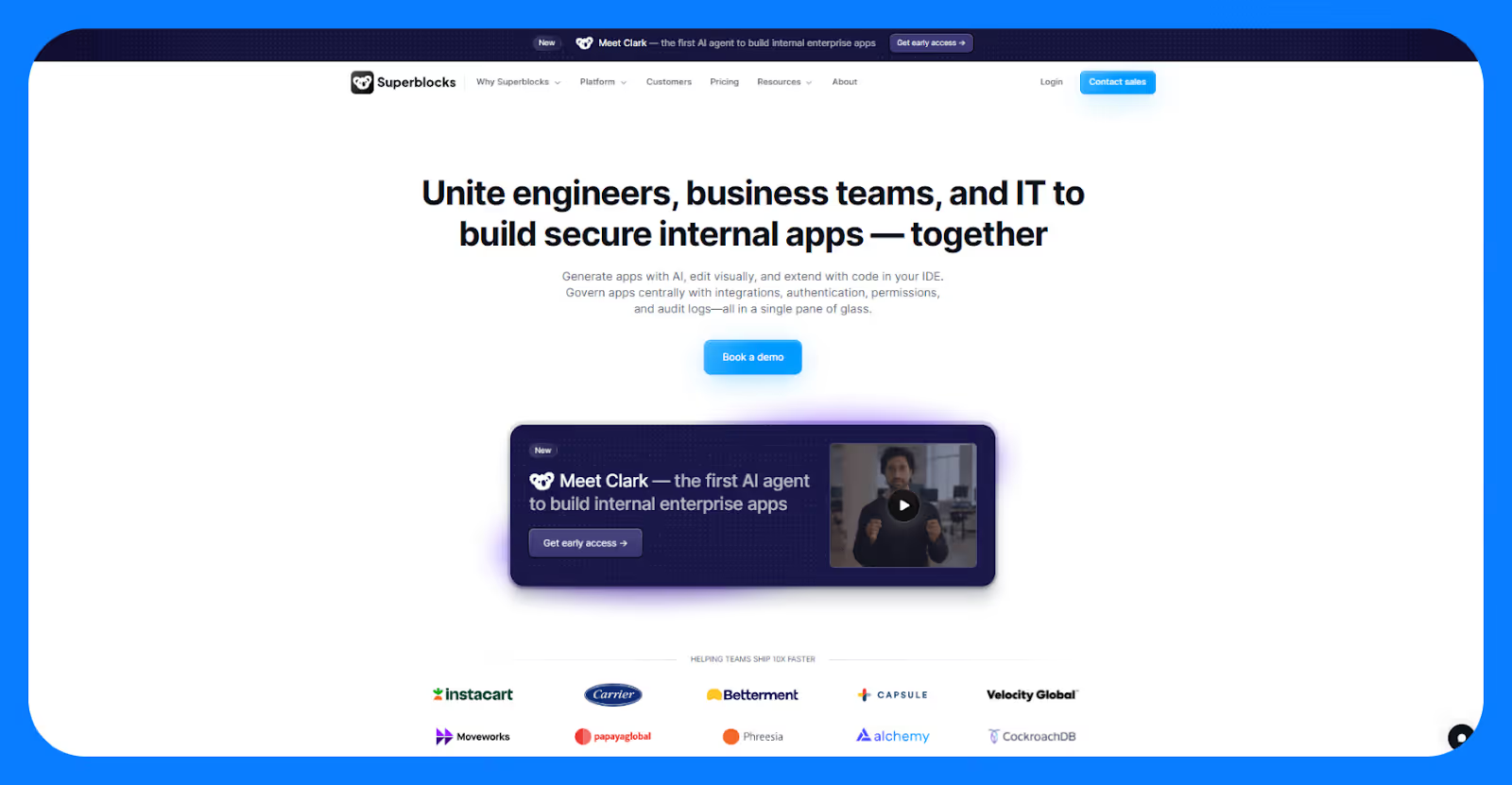
7. Superblocks
Superblocks is an internal app development platform that helps enterprises build secure AI-enabled workflows.
Limitations
- Not a dedicated shadow AI detection tool
- Focused more on building governed internal tools than detecting external AI usage
- Requires complementary tools for comprehensive shadow AI monitoring software capabilities
Pricing
Enterprise pricing model with custom quotes based on users and deployment scale.
Final Verdict
Shadow AI is already inside your enterprise. The real risk is not adoption. It’s invisibility.
Without the right shadow AI detection tools, IT teams discover unauthorized AI usage too late, after data, compliance, or budget risks have already surfaced.
The right tools to detect shadow AI in enterprises must combine visibility, monitoring, and enforcement in one system. CloudEagle.ai delivers unified shadow AI visibility, automated governance, and real-time control across SaaS and AI environments.
Book a free demo with CloudEagle.ai and take control of shadow AI before it scales beyond your visibility.
Frequently Asked Questions
- How to identify shadow AI?
Shadow AI can be identified by monitoring browser activity, SSO logs, OAuth connections, API usage, and corporate card transactions to detect unauthorized AI usage.
- What is a shadow AI tool?
A shadow AI tool is any AI application or generative platform used in an organization without IT approval or governance oversight.
- What are the most advanced tools for detecting shadow AI risks?
Advanced shadow AI detection tools combine browser discovery, SaaS visibility, risk scoring, and automated governance workflows in one platform.
- What is an example of shadow AI?
An employee using ChatGPT or another AI tool to process company data without approval is a common example of shadow AI.
- What are 7 types of AI?
The seven types include reactive machines, limited memory AI, theory of mind AI, self-aware AI, narrow AI, general AI, and superintelligent AI.


.avif)


.avif)
.avif)




.png)




.avif)
.avif)
.avif)


