
%201.svg)


HIPAA Compliance Checklist for 2025

AI adoption in enterprises has surged faster than most leaders anticipated. Large Language Models (LLMs), embedded AI, Generative AI tools, autonomous agents, and even “shadow AI” now run critical workflows, often completely unchecked.
Here’s the uncomfortable truth: many organizations are deploying AI at scale without knowing who or what is controlling it.
Enterprises can no longer rely on hope and manual supervision. They need an AI governance platform that provide full visibility, enforce control, enable real-time monitoring, and ensure compliance across all AI systems.
Let’s explore the top 10 AI governance tools like CloudEagle.ai, Singulr AI, Holistic AI, etc. and get the clarity you need to select the right one for your organization and prevent shadow AI.
What Are AI Governance Platforms?
AI Governance Platforms help modern enterprises discover, monitor, and manage how AI systems are used safely, responsibly, and in compliance with regulations.
As companies adopt tools such as OpenAI models, Google AI, Microsoft Copilot or other third-party AI applications, risks increase regarding data privacy, bias, security, and regulatory violations. AI governance platforms exist to reduce those risks.
Core functions of an AI governance platform:
If you are wondering what AI governance platforms actually do, think of them as the security layer for AI, similar to how IAM protects access or how DLP protects data.
Understanding AI governance compared to security is important because governance focuses on oversight, accountability, and policy enforcement, while security focuses on protecting systems and data from threats.
Why Every Enterprise Needs an AI Governance Platform?
By 2026, enterprise AI usage is expected to triple, driven by:
- Autonomous AI agents
- LLM-based workflows
- AI copilots inside SaaS tools
- Industry-specific AI applications
But with this growth comes risk.
Top threats AI governance platforms mitigate:
1. Shadow AI: Employees use unapproved AI tools (ChatGPT, Claude, Perplexity, Replit, etc.) without security controls.
2. Embedded AI inside SaaS: Tools like Google Workspace, HubSpot, Notion, Zoom, or Slack now include AI features that security teams cannot monitor.
3. Data Exfiltration Through Prompts: Sensitive data is inserted into prompts and sent outside the organization.
4. Autonomous Agent Risks: AI agents can execute actions—send emails, move data, update CRMs; creating new operational and security risks.
5. Compliance Exposure: New AI regulations require audit logs, risk assessments, human oversight, and clear governance.
6. Lack of Access Control: Without identity governance for AI, enterprises don’t know who is using which AI tools.
An AI governance platform reduces all of these risks while enabling safe and scalable AI adoption. Organizations that want to bring AI usage under governance need visibility, policy enforcement, and continuous monitoring across every AI system.

10 Best AI Governance Platforms in 2026 - For IT & Security Teams
The table below maps all ten platforms across capability dimensions critical to enterprise AI governance decisions.
CloudEagle.ai is the only platform in this list that operates as a unified command center spanning security, identity, and procurement, automating enforcement across all three dimensions rather than requiring separate point tools.
Below is the list of the top AI governance platforms with detailed descriptions, pros, cons, and ideal use cases.
1. CloudEagle.ai
CloudEagle.ai is an AI governance tool that enables enterprises to adopt AI with confidence by providing full visibility, structured control, and proactive risk management across the organization.
Not just governance, CloudEagle.ai is widely recognized by G2 and Gartner peer insights as one of the best AI tools for finance teams as it has helped customers save billions in SaaS and AI spend.
So, when you choose CloudEagle.ai, its not just about discovering AI tools silently utilized in your organization, you can also enhance Claude security, optimize Gemini, ChatGPT and Claude AI licenses, secure and save on your AI.
Key Features
a. Find every AI tool employees use, approved or not
AI tools often enter your stack without IT ever seeing them. CloudEagle.ai's shadow AI discovery builds a live inventory of every AI app in use and helps you catch AI tools running silently, including free trials and card purchases that never went through IT.
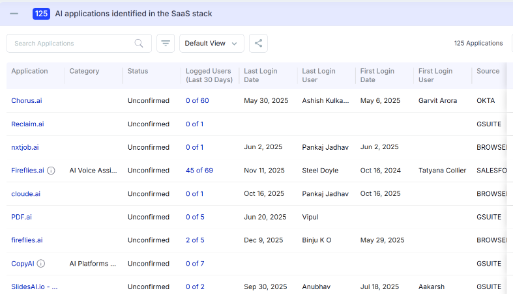
- Maintain a centralized inventory of AI applications using CloudEagle.ai's proprietary SaaSMap
- Identify both sanctioned and unsanctioned AI tools in use
- Correlate browser plugin data, Zscaler logs and CrowdStrike signals for deeper insight
- View all AI applications across the enterprise in a single dashboard
b. See what every AI tool consumes and costs, down to the user and API key
AI tools bill in licenses, tokens and credits, each inside its own vendor console. AI usage control brings that consumption into one view and ties every token to the person, team or agent behind it.
- Track fixed licenses and pay-as-you-go tokens side by side, broken down by model
- Map usage and cost to users, teams, cost centers, API keys and non-human identities
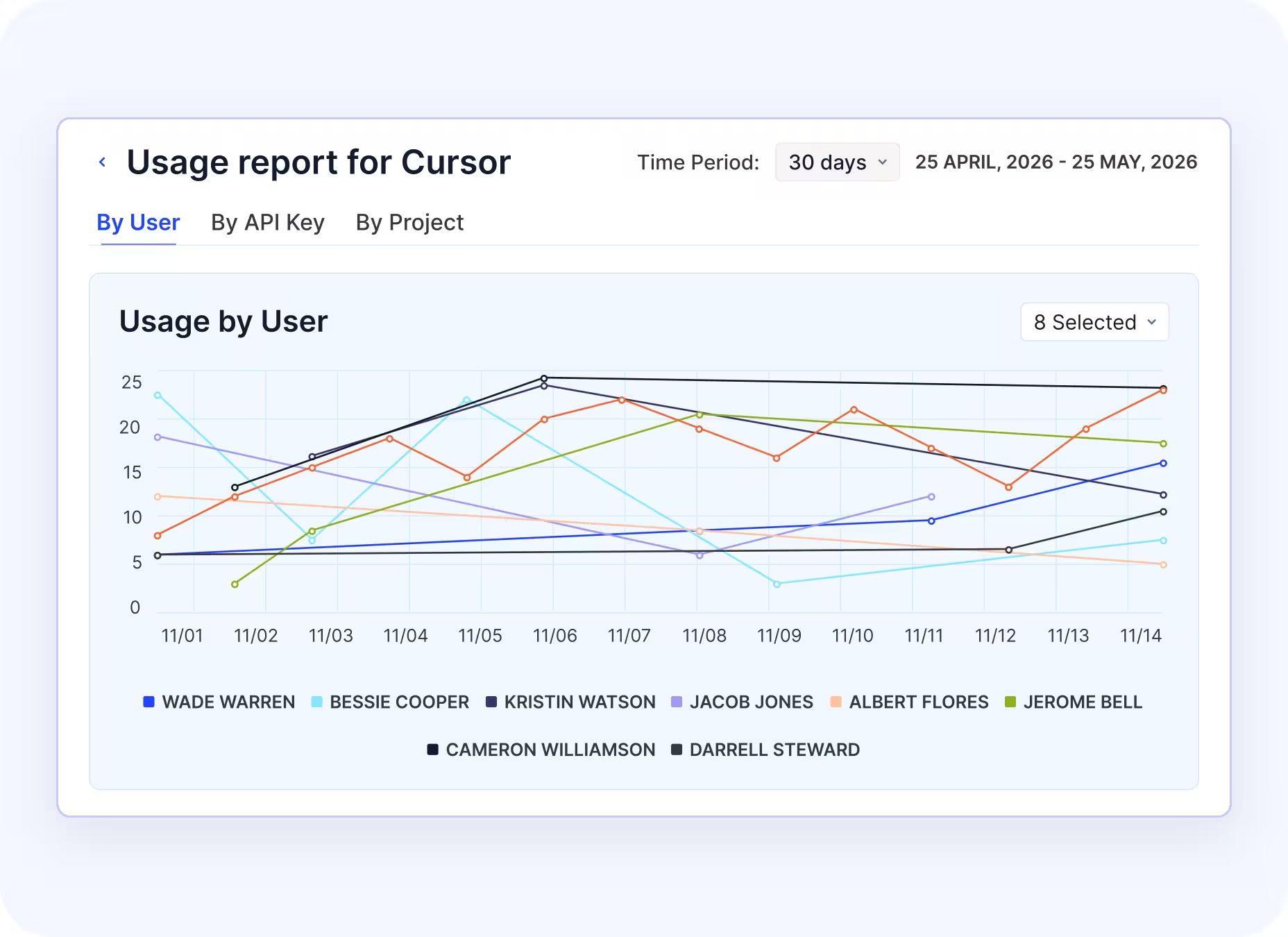
- Flag AI licenses with no activity in 90 or 180 days and reclaim them through Slack or Teams workflows
- Set per-user or team budgets, with alerts before a limit is crossed
When Domo brought its AI usage into one view, it found 34% of its AI licenses had no activity in 90 days.
"For the first time, we could see exactly which teams were using Claude, Cursor, and had Gemini access they had never touched. 34% of licenses had no activity in 90 days. We lacked this visibility. That single view changed every conversation we had about our AI program, internally and with our vendors."
- Daren Thayne, Chief Technology Officer, EVP of Product, Domo
c. Stop sensitive data from reaching unapproved AI, right in the browser
Most AI use happens in a browser tab, often on personal accounts that never touch SSO. CloudEagle.ai's browser plugin brings AI policy enforcement to that layer, warning users and blocking what should never leave.
- Surface every AI tool employees open in the browser, even off SSO and on personal accounts
- Show a flash page when someone opens an unapproved AI tool, then redirect them to an approved one
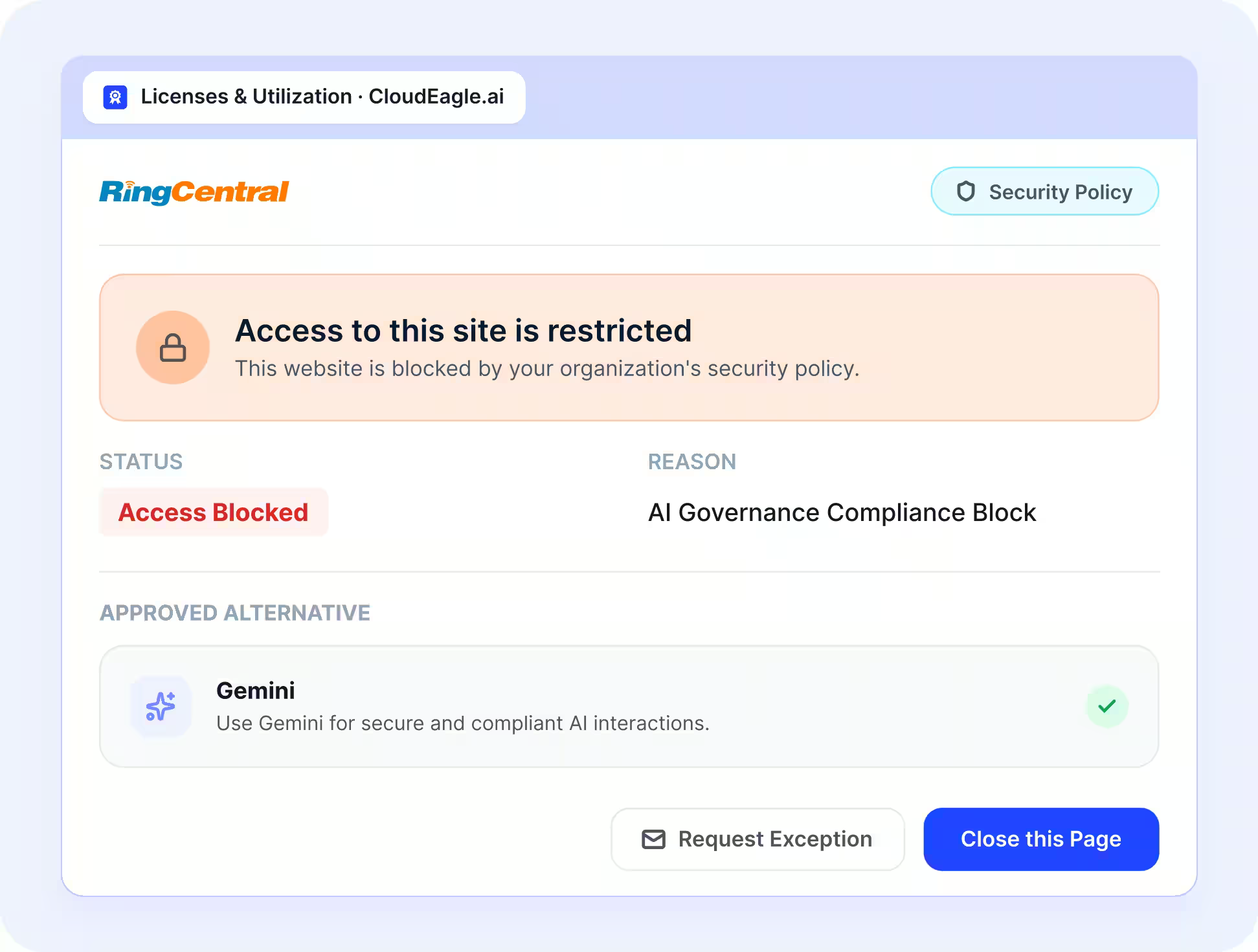
- Block PII, credentials, financial data and PHI before they are entered into an AI tool
- Set data-sharing policies by user, role, department and data type
- Log every warning, block and override for audit
d. Give every AI agent and API key an owner and an expiry date
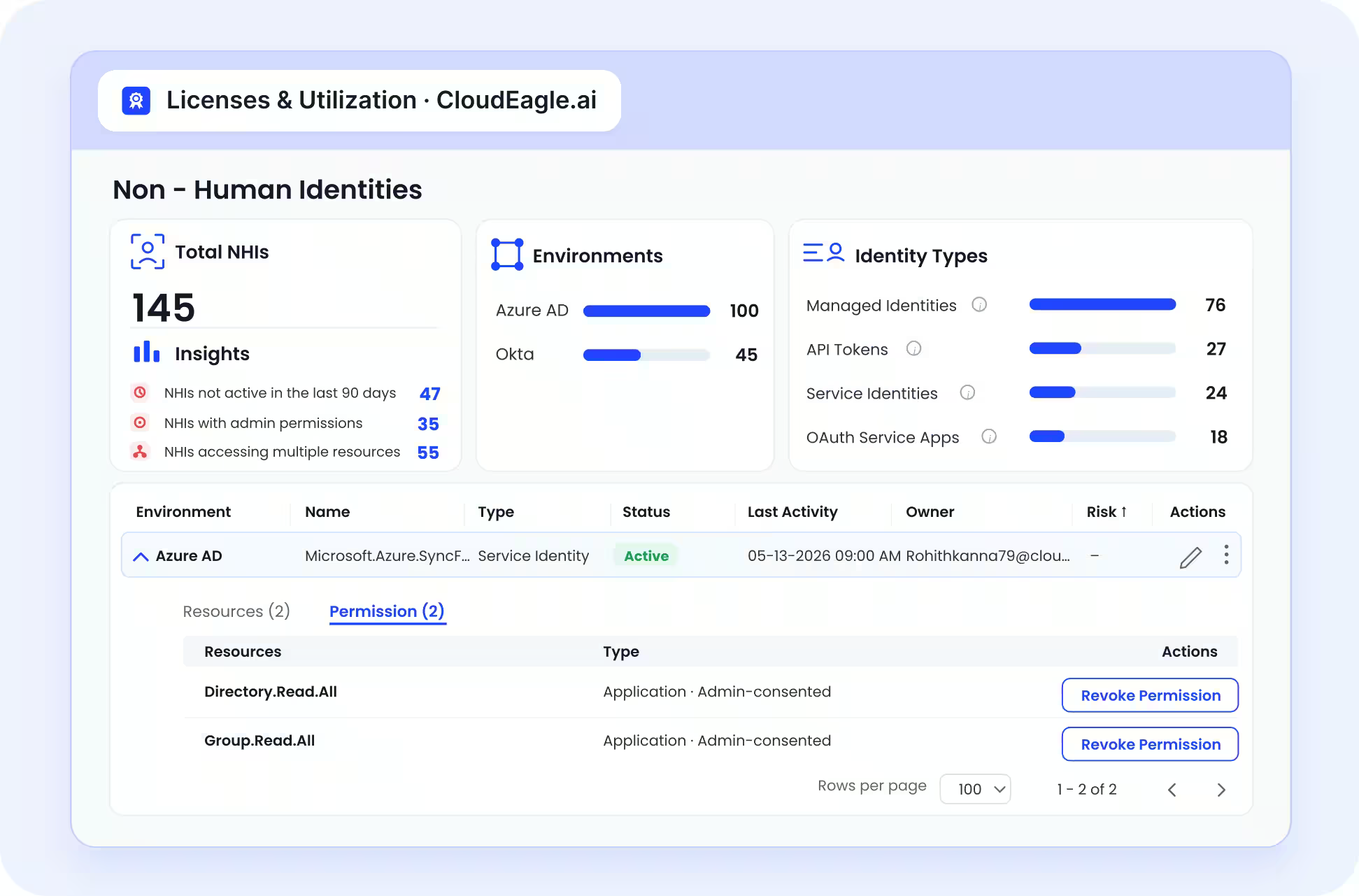
Service accounts, API keys and AI agents often get created with no owner and no expiry. Non-human identity management puts them under the same lifecycle controls as employees.
- Discover AI agents, MCP servers, service accounts and API keys
- Assign an owner and expiry to every machine credential
- Include non-human identities in access reviews and least-privilege checks
“Once AI adoption accelerated across teams, visibility alone wasn’t enough. We needed clear rules around who could use AI tools, under what conditions, and how those decisions were enforced and reviewed. CloudEagle helped us move from ad-hoc approvals to structured, defensible AI governance.” ~ Aditya Khosla, CTO, Iterative Health
Read Success Story -->
- CloudEagle has five different modules to suit your enterprise requirements. Contact sales for a customized quote.
Turn AI risk into AI confidence.


2. Singulr AI

Singulr AI is an enterprise-grade automated AI governance platform that helps organizations see, manage, and secure how AI tools are used across the company. It brings visibility, risk checks, policy controls, and real-time protection into one system so businesses can adopt AI safely and responsibly.
Key Features
- Central dashboard to see all AI tools being used across the organization
- Ongoing risk scoring of AI models, apps, and services
- Automated approval workflows for onboarding new AI tools
- Continuous testing to identify misuse, vulnerabilities, or biased outputs
- Real-time protection against prompt injection and sensitive data leaks
- Policy controls to define who can use which AI tools
- Audit logs for compliance tracking and reporting
Pros
- Covers AI discovery, risk checks, approvals, and monitoring in one platform
- Helps security and compliance teams stay ahead of AI risks
- Works with internal AI models, public AI tools, and AI built into SaaS apps
- Built for large organizations with growing AI usage
Cons
- May feel too advanced for small teams with limited AI usage
- Pricing is not publicly listed (enterprise sales model)
- Requires coordination between security, IT, and compliance teams to get full value
Pricing
- Singulr AI does not publish standard pricing on its website. Pricing is custom and based on company size, number of users, and the level of AI activity being monitored.
Read More: Top 12 AI Tools Used in Enterprises in 2026
3. Holistic AI
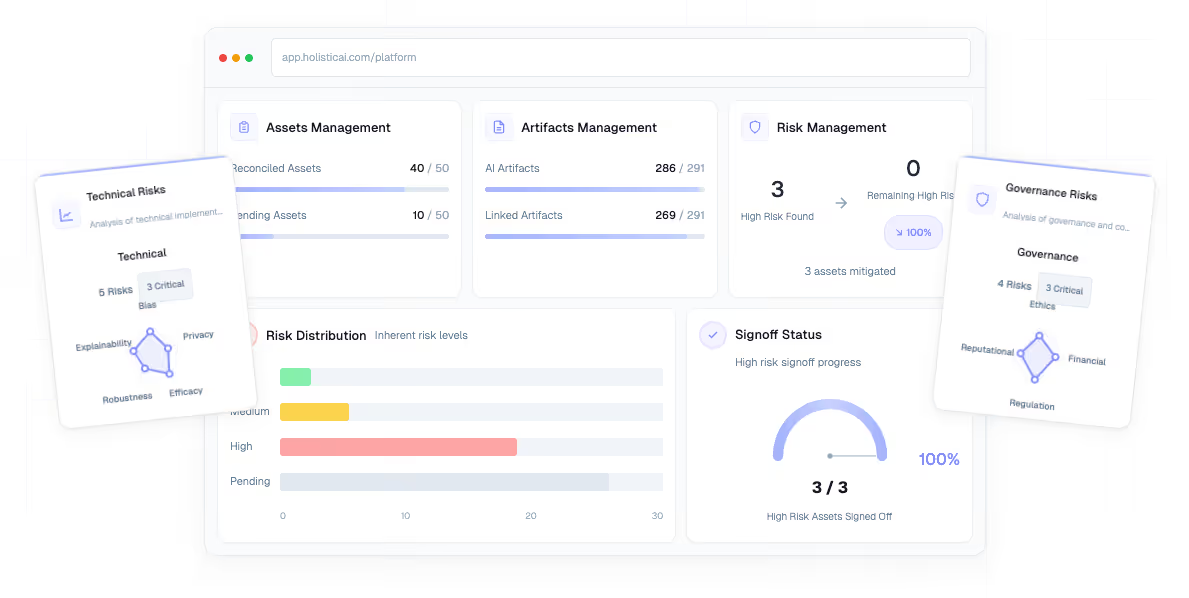
Holistic AI is an enterprise platform that helps companies track, assess, and manage how AI systems are built and used. It gives organizations visibility into their AI tools, checks them for risk, and helps ensure they meet internal policies and regulatory requirements.
Key Features
- Creates a central inventory of all AI systems in use
- Identifies hidden or unapproved AI tools across teams
- Evaluates AI systems for bias, privacy risks, and performance issues
- Tests AI systems before and after launch to find problems early
- Monitors AI behavior in real time and sends alerts if issues arise
- Maintains documentation and reports to support audits and compliance
Pros
- Provides full visibility into AI systems across the organization
- Covers the entire AI lifecycle, from review to ongoing monitoring
- Helps prepare for regulatory and compliance requirements
- Suitable for large organizations with multiple AI projects
Cons
- May be too extensive for small teams with limited AI usage
- Pricing is not publicly available
- Requires internal ownership (IT, risk, or compliance teams) to manage effectively
Pricing
- Holistic AI also follows a custom pricing model with no public price tiers. Costs are tailored based on the scope of AI systems, risk assessments, and governance requirements.
4. Google Gemini Enterprise Agent Platform (formerly Vertex AI)
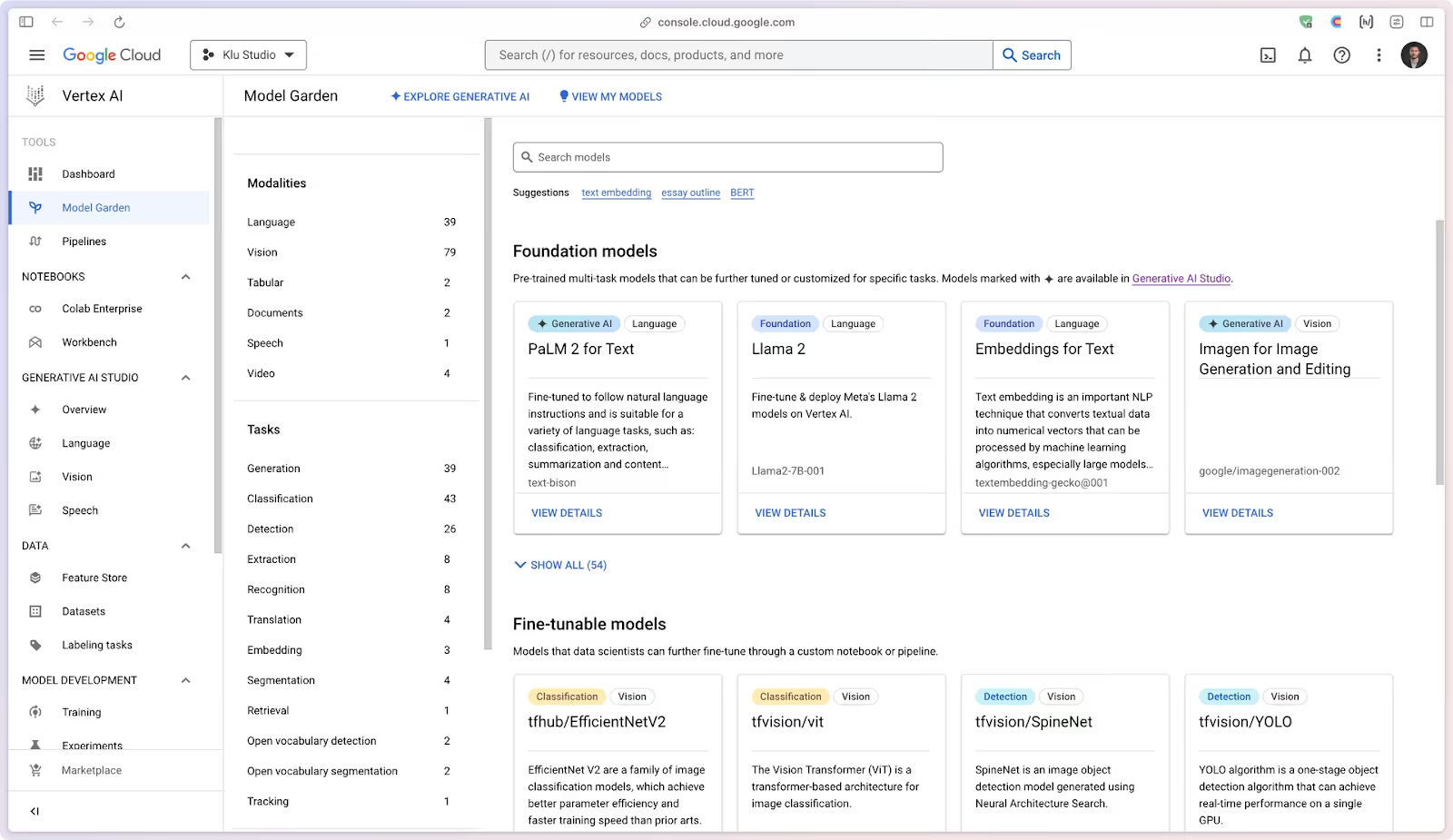
Gemini Enterprise Agent Platform is Google Cloud's platform for building and governing AI agents and models, renamed from Vertex AI in April 2026.
Google AI Governance (part of Google’s broader AI/ML stack) provides governance capabilities for ML/AI workloads on the GCP ecosystem; helping enterprises monitor, manage, and govern AI lifecycle and compliance when using Google’s AI services.
Key Features
- Model lifecycle management and versioning within the GCP environment.
- Compliance and audit logging for AI workloads and data pipelines.
- Usage-based pricing model (pay-as-you-go), aligning cost with consumption.
Pros
- Best fit for companies using the Google Cloud / GCP ecosystem — seamless integration.
- Flexible, usage-based pricing makes it scalable and cost-efficient for varying workloads.
Cons
- Less suitable if you use multi-cloud or on-premises AI workloads.
- Requires GCP-specific infrastructure — limited value outside the Google environment.
Pricing
- Pricing tends to be usage-based / pay-as-you-go depending on model usage, data processing, and resource consumption. Public exact numbers vary with usage and are often “custom / based on consumption”.
5. AWS SageMaker AI (Model Governance)
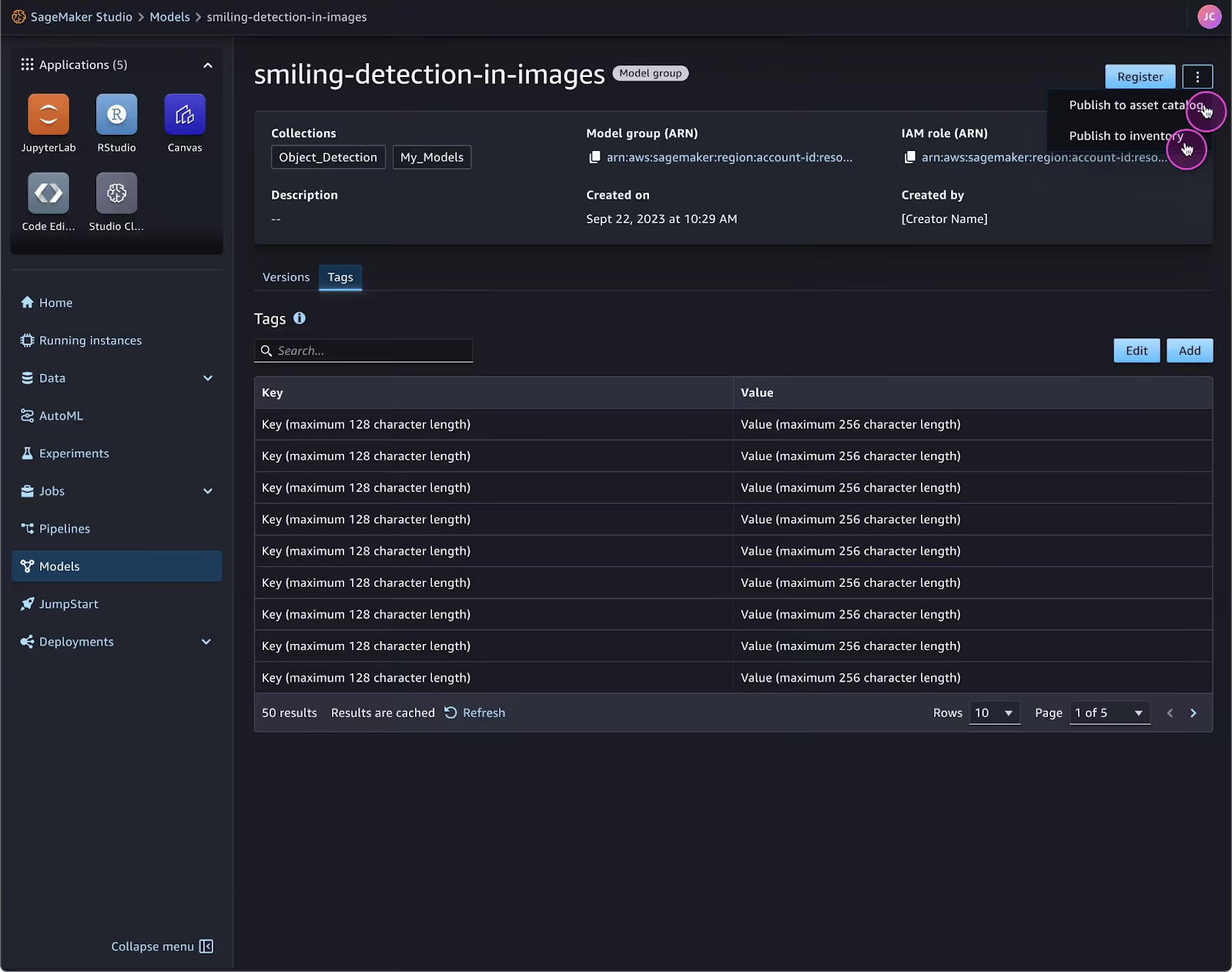
AWS SageMaker Governance (or related governance tools within AWS) enables governance over ML/AI workflows on AWS — offering monitoring, compliance, and governance capabilities to manage models, data pipelines, and AI usage within the AWS cloud environment.
Key Features
- Audit logging and compliance monitoring for AI workloads.
- Model registry, versioning, and lifecycle tracking within AWS ecosystems.
- Usage-based and pay-as-you-go pricing are aligned with AWS resource consumption.
Pros
- Scales with demand — good for dynamic workloads, bursts, or variable use.
- Offers end-to-end AI lifecycle and compliance governance inside the AWS cloud.
Cons
- Cost can spike depending on model usage, data size, and compute consumption.
- Advanced features (bias detection, explainability) may need additional tooling or plugins.
Pricing
- Like other cloud-native governance tools, pricing is usage-based, depending on compute hours, data processed, storage, etc. (Exact public pricing details are often not published; balance cost vs usage.
Read More: How Agentic AI Can Transform Your Identity Posture
6. DataRobot
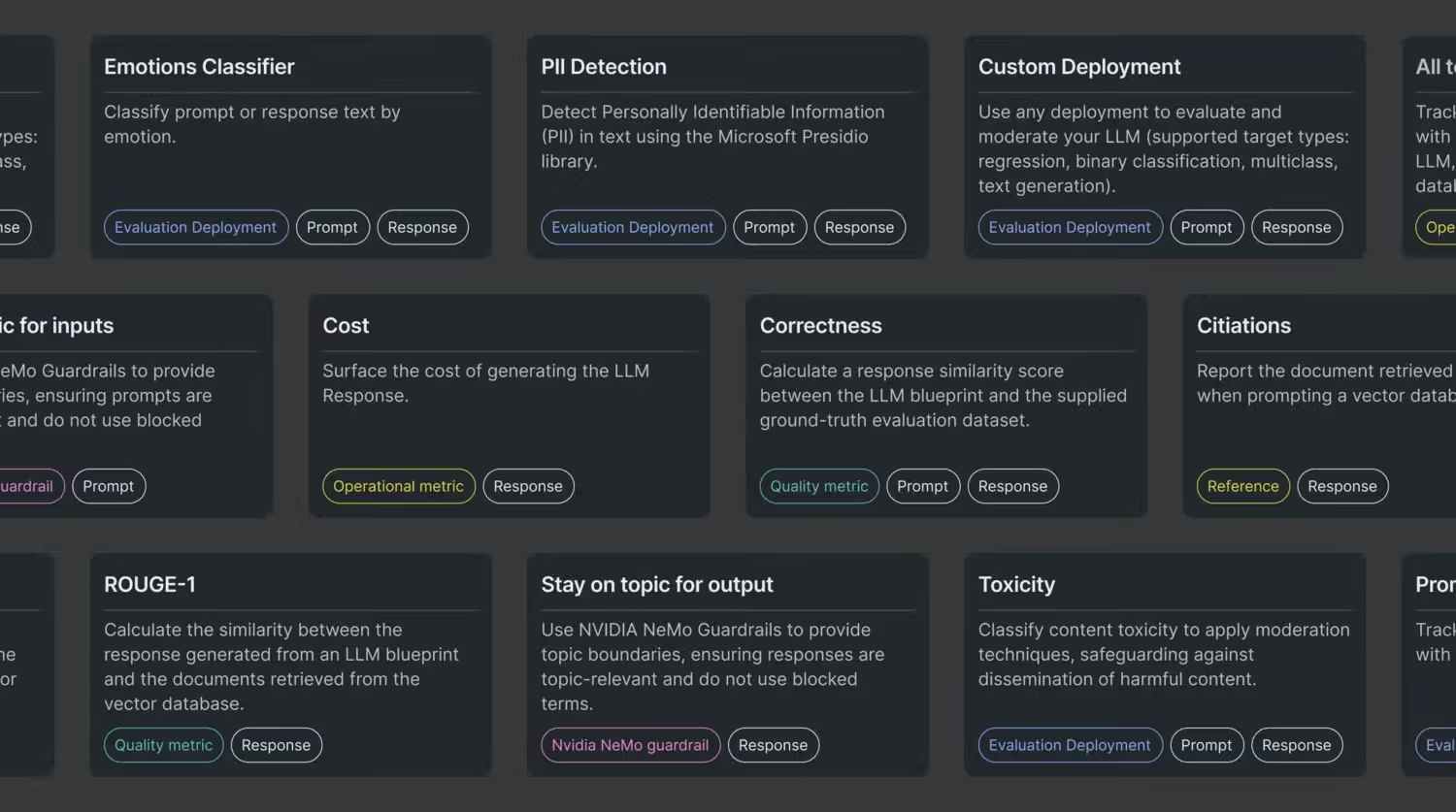
DataRobot is an enterprise-oriented AI governance solution that offers model management and compliance oversight across generative AI and predictive ML models; regardless of where they are built or deployed.
Key Features
- Model deployment and lifecycle tracking through unified UI or API.
- Flexibility to govern models across cloud, private cloud, or edge environments.
- Central hub for governance of all AI/ML models (LLMs, predictive, on-prem or cloud).
Pros
- Offers flexibility in deployment environments (cloud, private, hybrid).
- Reduces compliance burden by automating documentation and audit reporting.
Cons
- As with many enterprise governance tools, likely expensive or custom-priced.
- Might require considerable setup/integration for complex or hybrid infrastructures.
Pricing
- DataRobot’s AI Governance pricing is custom / enterprise-level — public sources do not list a simple per-month rate.
7. Securiti AI (now part of Veeam)
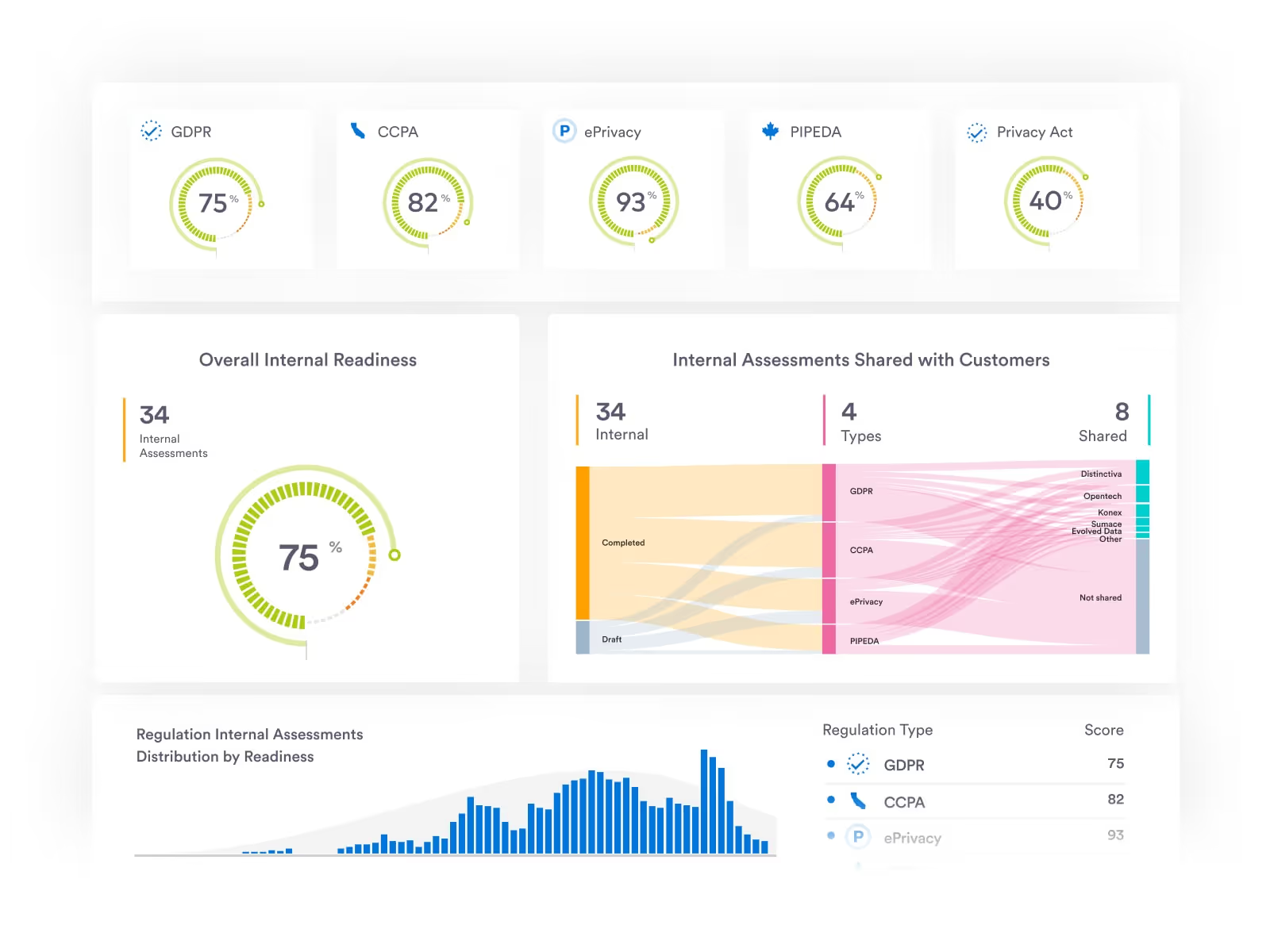
Securiti AI Governance combines data privacy, security, and AI governance — helping organizations manage risk, compliance, and data access control when using AI tools and agents, especially where sensitive data and privacy are concerns.
Key Features
- Data discovery, classification, and sensitive data access governance tied to AI usage.
- Unified privacy + security + AI usage compliance across cloud and SaaS tools.
- Monitoring and alerting when AI use violates data privacy or security policies.
Pros
- Helps manage use of third-party AI/SaaS tools, reducing shadow-AI risks.
- Bridges AI governance with data governance, giving unified control over data + AI.
Cons
- Focus on data/privacy may come at the expense of deep ML-model governance (fairness, drift, explainability).
- Customization and configuration may be complex, especially in large or diverse data environments.
Pricing
- No public standard pricing — governance tools like Securiti typically operate on enterprise-tier, custom pricing models.
8. OneTrust
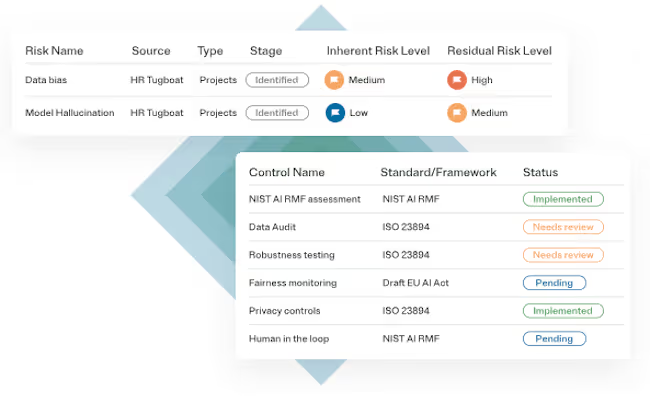
OneTrust AI Governance is part of a broader governance, privacy, and compliance portfolio; extended to cover AI and ML systems. It focuses on compliance, regulatory alignment, data privacy, and governance, especially useful for enterprises with privacy-sensitive data and regulatory obligations.
Key Features
- Data privacy and compliance controls are integrated with AI usage and data flows.
- Risk assessment and governance workflows for AI deployments involving personal or sensitive data.
- Audit logging, documentation, and compliance reporting for AI-related data and model use.
Pros
- Helps manage risk when using third-party AI tools, external SaaS, or sensitive data.
- Provides unified governance across data, privacy, and AI — reducing fragmentation.
Cons
- May require significant setup to integrate with existing AI/ML infrastructure.
- As a compliance-focused tool, may be less flexible for rapid AI experimentation or development workflows.
Pricing
- Pricing for OneTrust AI Governance is typically custom and enterprise-based (not publicly listed).
9. Credo AI
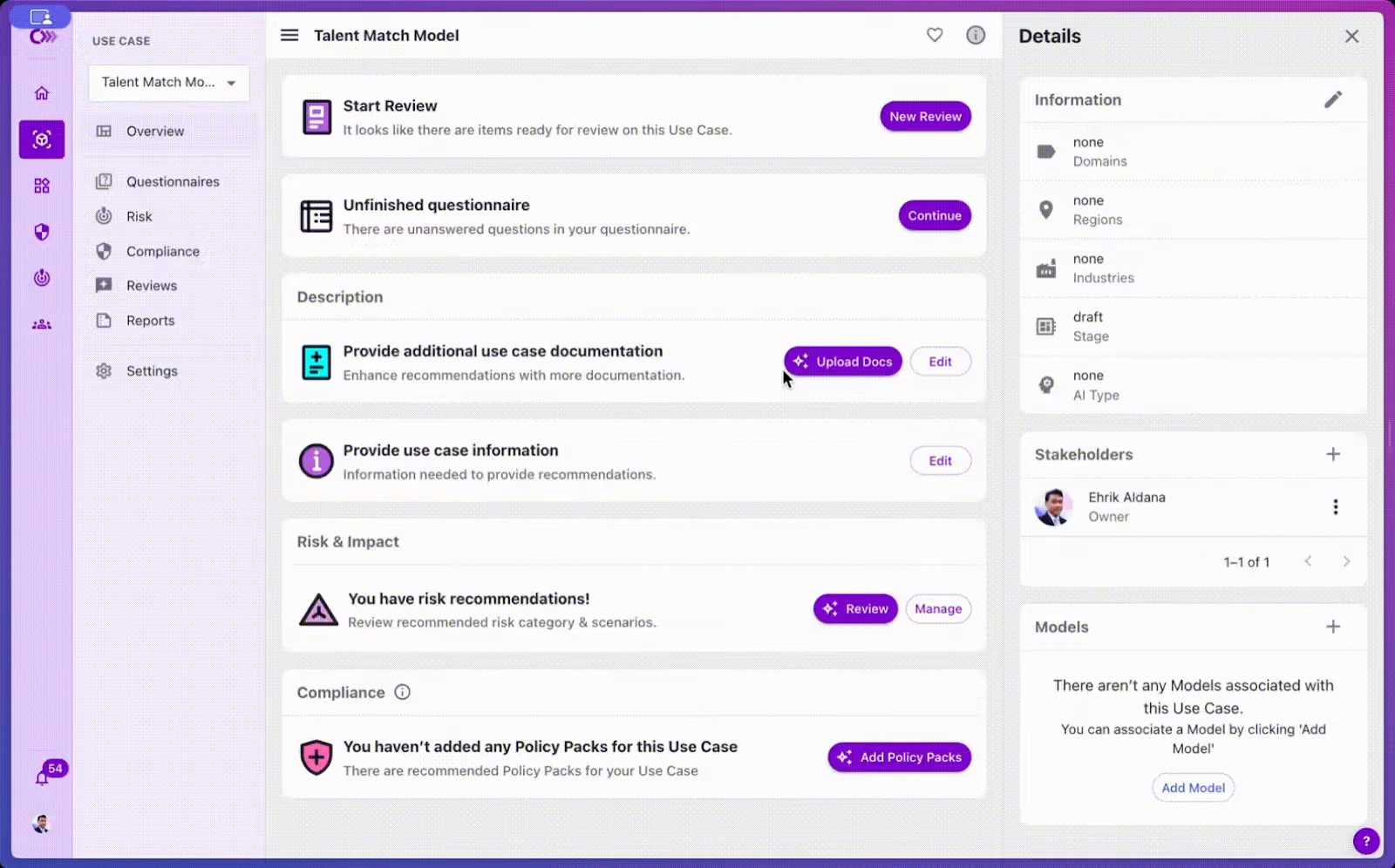
Credo AI is an AI governance and risk management platform that helps enterprises oversee AI use, regulatory compliance, risk, and AI metadata. It aims to deliver transparency, risk visibility, and governance workflows across all AI initiatives.
Key Features
- Central repository of AI metadata, use-cases, and model registry for all AI initiatives
- Risk center/dashboard to visualize AI risk and compliance across models and data use
- Automated reporting and compliance documentation — useful for audits and stakeholders
Pros
- Supports auditability, compliance documentation, and stakeholder reporting.
- Helps track all AI initiatives centrally, reducing sprawl or untracked AI projects (“shadow AI”).
Cons
- As a governance/risk-management platform, it may not handle low-level model monitoring (e.g., drift, performance) on its own.
- Pricing and total cost may be high depending on the number of models, use-cases, or scale; mostly custom enterprise pricing.
Pricing
- Credo AI pricing is custom; it depends on the scale and complexity of AI initiatives.
10. Snowflake AI Observability (formerly TruEra)
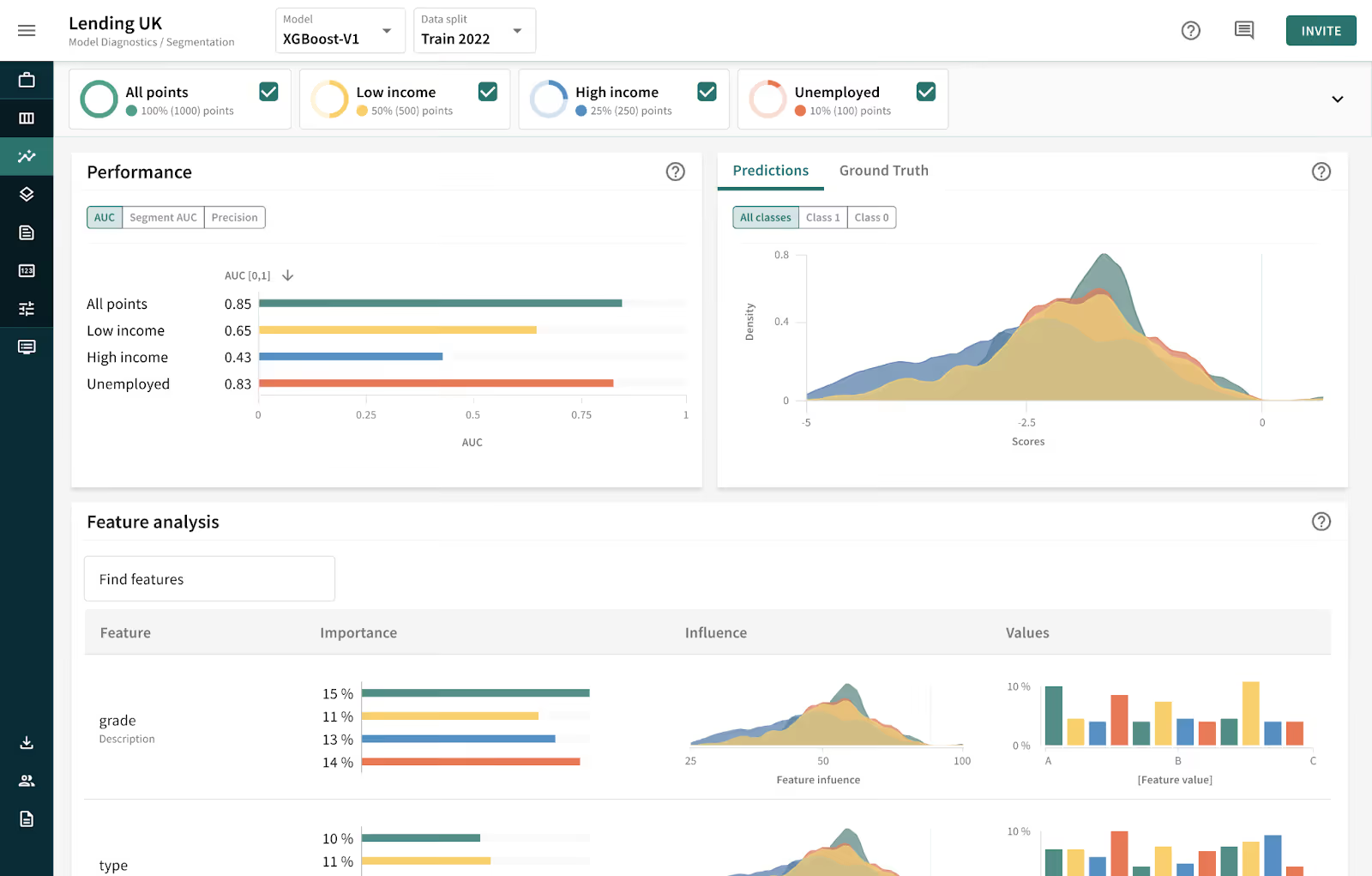
TruEra's AI observability platform now sits inside Snowflake, which acquired it in 2024 to evaluate and monitor LLM apps and ML models on its data cloud.
Key Features
- Lifecycle tracking and monitoring for AI models across training, deployment, and usage stages.
- Model explainability and fairness analysis, surface bias, performance disparities, and root-cause insights.
- Support for compliance and regulatory reporting by documenting model behavior, fairness, and audit trails.
Pros
- Helps maintain long-term model quality, fairness, and compliance as models evolve.
- Offers deep visibility into model behavior and risk beyond just access or deployment.
Cons
- Likely requires ML expertise to interpret and act on insights.
- Pricing is custom; may be costly depending on the number of models and scale.
Top Features to Look For in Enterprise AI Governance Platform Solutions
The following are the core enterprise AI governance platform features to look for:
1. Real-Time Monitoring & Risk Detection
- Tracks AI decisions and agent actions as they happen.
- Flags anomalies instantly to prevent escalation.
- Connects events to user identity for full accountability.
2. Identity & Access Governance for AI
- Controls who can access AI tools, build agents, or approve configurations.
- Enforces least privilege for all AI-related actions.
- Prevents unauthorized or risky use of AI capabilities.
3. Automated Policy Enforcement
- Applies governance rules consistently across tools and teams.
- Blocks actions that violate policies.
- Protects sensitive data from unintended exposure.
4. Compliance Automation & Reporting
- Generates audit-ready logs and reports.
- Ensures alignment with internal and external AI regulatory frameworks.
- Reduces manual compliance workloads.
5. Data Governance & Protection
- Restricts access to sensitive datasets.
- Applies data minimization to reduce risk.
- Tracks how AI systems use, store, and share enterprise data.
6. Integration Governance for SaaS & Vendors
- Ensures external AI tools follow internal rules.
- Controls third-party access to data and systems.
- Prevents external agents from becoming an unmanaged risk.
7. Multi-Layer Guardrails
- Input filtering to stop harmful prompts.
- Output validation to block unsafe responses.
- Workflow restrictions to prevent unauthorized actions.
Expert Tip: Building Effective AI Governance Frameworks
An AI governance platform is only effective when backed by clear ownership and a proactive operational rhythm. To move beyond basic reporting, you must empower your teams to enforce policies that turn compliance into a strategic business advantage.
- Establish Accountability: Define clear roles where Security manages risks, IT handles access, AI teams oversee autonomous agents, and Procurement optimizes spend.
- Control Every Access Point: Monitor both unsanctioned tools and AI features hidden within your existing software to eliminate hidden risks.
- Secure Autonomous Actions: Deploy human-in-the-loop gates and auto-revoking permissions to ensure AI agents operate within safe, time-bound limits.
- Deliver Proven Results: Target a 30% reduction in software costs, 80% faster access request resolutions, and audit timelines that shrink from months to days.
First 30 days rollout plan:
- Days 1–7: Connect SSO, HRIS, and finance integrations to establish a full application inventory and eliminate spreadsheet-based tracking immediately.
- Days 8–14: Identify Shadow AI and redundant tools; activate automated discovery and redirect workflows for unapproved apps.
- Days 15–21: Configure RBAC, JIT access policies, and agentic AI approval gates across high-risk systems.
- Days 22–30: Run a first automated access review cycle, capture deprovisioning evidence, and establish baseline KPI measurements for ongoing governance reporting.
How to Choose an AI Governance Platform in 2026?
Start by answering one question: are you optimizing for cost, security, or IT workload? Your answer determines which capabilities to prioritize.
- Finance and Procurement teams should demand intake-to-procure workflows, renewal orchestration triggers, and feature-level usage evidence, not just login timestamps, to eliminate wasteful spend.
- CIOs and Chief AI Officers need shadow AI detection with real-time inventory of every approved and unapproved tool.
- CISOs and Risk teams require automated access reviews that compress months-long audit cycles into days, Just-in-Time access controls, and audit-ready artifacts attached automatically to deprovisioning events.
- IT Ops teams should prioritize license reclamation workflows and Slack-first approvals that resolve requests where employees already work.
- Compliance teams should look for full audit logging, with evidence mapped to ISO 42001, NIST AI RMF and the EU AI Act.
- Enterprise data management and privacy teams should favor AI governance tied to data classification and privacy controls, where Securiti AI and OneTrust fit best.
When evaluating vendors, confirm the platform enhances your existing stack, bi-directional integrations with Okta, Jira, and your HRIS should come standard, not require custom development. A non-disruptive implementation means meaningful visibility within days, not a months-long rollout displacing current tools.
Why AI Governance Has Never Been More Critical Than in 2026
In 2026, scaling AI without a dedicated AI governance tool and a safety framework is a high-stakes gamble that few enterprises can afford to lose.
As regulations move from guidance to strict enforcement, your organization needs proactive control to turn AI from a liability into a verified asset.
- Stop Legal Fines: Meet strict transparency laws and avoid the heavy penalties now enforced under the EU AI Act and similar global mandates. Enterprises evaluating what the EU AI Act means for SaaS should understand that AI accountability requirements increasingly extend to AI-enabled business applications and embedded AI features.
- Protect Your Brand: Prevent model hallucinations and data leaks from destroying the hard-earned trust of your customers and stakeholders.
- Control Model Performance: Stop unpredictable AI behavior before it leads to flawed business decisions or operational failures.
- Speed Up Adoption: Implement clear rules today so your teams can launch new AI features faster and with total confidence.
How We Evaluated These AI Governance Platforms
Every platform on this list was assessed against six enterprise-grade criteria, with a deliberate emphasis on automation over dashboards.
A tool that only shows data without acting on it scored lower than one that enforces policy, reclaims access, and triggers workflows automatically.
Platforms that excel across all six dimensions, particularly those combining shadow AI detection with identity governance and procurement controls in a single system of record, ranked highest among the top AI governance platforms evaluated for 2026.
What are the leading platforms for AI governance and compliance?
CloudEagle: CloudEagle is an all-in-one platform that combines AI governance, SaaS management, and identity governance. It helps organizations discover shadow AI, control access, enforce policies, and automate onboarding and offboarding, all from a single system.
Credo AI: Credo AI is a purpose-built AI governance platform focused on AI risk management and regulatory compliance. It helps organizations track AI systems, assess risks, and maintain audit-ready documentation.
Singulr AI: Singulr AI provides centralized visibility into AI usage, along with risk scoring and policy enforcement. It helps enterprises monitor and secure AI tools across teams.
What is the best AI governance platform for real-time monitoring?
CloudEagle stands out as one of the best platforms for real-time AI governance and monitoring, especially for enterprises that need visibility, control, and compliance across both AI usage and SaaS applications.
Unlike many tools that focus only on model risk or compliance reporting, CloudEagle provides continuous, real-time insight into how AI tools are being used across the organization. It collects data from multiple sources (like browser logs, network signals, and applicationa APIs) to:
- Detect AI usage as it happens (including shadow or unmanaged AI tools)
- Track policy violations in real time and alert teams instantly
- Enforce governance controls without interrupting workflow
- Correlate usage with identity and access events for accurate auditing
By combining real-time monitoring with granular governance and automated workflows (onboarding/offboarding, approved tool lists, flash pages for unapproved AI access), CloudEagle helps organizations not only see what’s happening now but also act immediately to manage risk and stay compliant.
In short, if your priority is continuous monitoring with actionable controls across AI and SaaS environments, CloudEagle is one of the most effective platforms available today.
Conclusion
AI is becoming more powerful and is now a key part of business operations. As companies move from small projects to fully AI-driven workflows, governance is essential. Without proper supervision, AI tools, LLM prompts, and autonomous agents can create security, compliance, and operational risks.
Enterprises need real-time visibility, automatic safeguards, and control over AI, SaaS apps, identity, and access. A strong AI governance platform helps ensure AI works safely and follows company rules. CloudEagle.ai gives organizations a complete solution to manage AI risks while supporting innovation.
Are you ready to take control of SaaS and AI governance?
Schedule a demo with CloudEagle.ai and start managing AI safely and confidently.
FAQs
1. What features should the best AI governance platforms include?
Prompt monitoring, shadow AI detection, access governance, risk scoring, policy enforcement, and compliance automation.
2. How do AI governance platforms help with compliance?
They provide audit trails, risk reports, lifecycle documentation, and automated evidence workflows for ISO 42001, NIST AI RMF, EU AI Act, SOC 2, HIPAA, and GDPR.
3. How do platforms detect shadow AI and embedded AI tools?
Through SSO logs, network monitoring, browser extensions, and SaaS integrations. CloudEagle.ai offers the most complete detection available today.
4. Which industries benefit most from AI governance platforms?
Financial services, healthcare, technology, manufacturing, government, and any enterprise adopting LLMs or AI agents.
5. How do I choose the right AI governance platform?
Use the evaluation checklist above and prioritize tools with real-time monitoring, access governance, and shadow AI detection.
6. What is the best AI governance vendor for detecting shadow AI across enterprise apps?
CloudEagle.ai and Singulr AI are the two platforms on this list with automated shadow AI discovery. CloudEagle.ai correlates SSO, browser, network and finance signals across SaaS apps.
7. What are the best AI governance platforms for enterprise compliance teams?
CloudEagle.ai, Holistic AI, Credo AI and OneTrust suit compliance teams, with audit logging and evidence mapped to ISO 42001, NIST AI RMF, EU AI Act, SOC 2 and GDPR.
Turn AI risk into AI confidence.


.avif)


.avif)
.avif)




.png)





.avif)
.avif)
.avif)


