
%201.svg)


HIPAA Compliance Checklist for 2025

In the last two years, artificial intelligence (AI) has moved from being an experimental innovation to a core enabler of productivity. From marketing teams using ChatGPT and Jasper to write content, to HR leveraging AI recruiting tools, and finance experimenting with AI-driven analytics, AI is now everywhere.
According to Gartner, Shadow AI is now one of the fastest-growing cybersecurity blind spots, as employees increasingly adopt AI tools without IT approval — creating major governance challenges.
Employees are increasingly adopting unapproved AI tools like ChatGPT, Gemini, and Claude without IT oversight. These tools often require access to corporate data or customer information, creating new security and compliance vulnerabilities that organizations may not even be aware of.
While leaders encourage innovation, ungoverned AI usage can introduce risks that outweigh its benefits if left unmanaged.
TL;DR
- Shadow AI — the unapproved use of AI tools like ChatGPT or Gemini — is quietly spreading across enterprises, creating compliance, data, and security risks.
- To prevent it, organizations must establish clear AI usage policies, access governance, continuous monitoring, employee education, and centralized SaaS management.
- A strong AI governance strategy enables safe, compliant innovation — and platforms like CloudEagle help discover, control, and optimize all AI and SaaS tools under one secure framework.
1. What Is Shadow AI?
Shadow AI refers to the use of AI tools and platforms without organizational approval or governance. Much like “shadow IT,” where employees use unsanctioned SaaS apps, shadow AI takes this risk further — as AI systems often process or store sensitive company data externally.
For organizations evaluating governance strategies, understanding shadow AI discovery explained can help security teams identify hidden AI adoption patterns before they become compliance risks.
How Shadow AI Originates:
- Lack of clear AI policies and usage guidelines
- Easy access to free AI tools and browser extensions
- Pressure to improve productivity or automate repetitive tasks
- Departments procuring tools independently without IT oversight
Shadow AI vs. Shadow IT
Shadow AI is harder to detect because employees may simply use a browser-based chatbot or plug-in — with no installation, license, or IT footprint.
B. Why Shadow AI Is Growing So Fast
Several factors have fueled the growth of Shadow AI:
- Frictionless access: Anyone can sign up for AI tools in seconds.
- Free trials and plug-ins: Many AI services offer free, instant access with no procurement process.
- Departmental autonomy: Teams often experiment independently to improve workflows.
- Encouraged innovation: Leadership often supports “AI experimentation” without defining limits.
- Lack of centralized procurement: No unified process for approving and monitoring AI apps.
According to recent industry surveys, over 60% of employees admit to using AI tools at work without IT approval. Fast adoption drives productivity, but also introduces hidden risk.
2. What Makes Shadow AI So Risky for Organizations?
While Shadow AI may seem harmless at first, it poses serious data, compliance, and financial risks for enterprises.
Key Shadow AI Risks
- Data Exposure & Leakage - Unapproved AI tools may store or train on company data entered into prompts, exposing sensitive or confidential information.
- Compliance Violations - Data shared with AI tools may break regulatory standards like GDPR, SOC 2, HIPAA, or PCI DSS, leading to legal exposure and fines.
- Security Risks from Unvetted Vendors - Many AI startups lack robust security certifications. Using their tools without vetting can create a supply chain vulnerability.
- AI Hallucinations & Reputation Damage - When employees rely on generative AI outputs without validation, incorrect or fabricated results can harm brand credibility.
- Duplicate Spend & Tool Redundancy - Multiple teams may pay for overlapping AI apps, driving unnecessary costs and management complexity.
- Intellectual Property (IP) Uncertainty - Input data may become part of AI model training, raising questions about ownership and IP rights.
3. 5 Best Practices To Prevent Shadow AI
To balance innovation with security, organizations must create a structured approach to AI governance. Here are the five best practices to prevent Shadow AI and reduce AI-driven security risks.
Best Practice #1 — Clear AI Usage Policies
A strong foundation begins with clear, documented AI usage policies that apply across departments.
What to include:
- Allowed vs. Restricted Tools: List which AI tools are approved and which are prohibited based on risk and compliance reviews. The NIST AI Risk Management Framework highlights the importance of visibility, accountability, and continuous monitoring to mitigate AI-driven risks across enterprises.
- Data Classification Rules: Define what data types (e.g., PII, financial, confidential) can or cannot be shared with AI platforms.
- Procurement + Approval Flow: Require teams to go through an approval process before subscribing to or using new AI tools.
- Department Guardrails: Tailor policies by department (e.g., marketing vs. engineering) to reflect different use cases and risk levels.
- Overlapping Apps & Redundancy Control: Conduct periodic audits to identify duplicate or overlapping AI tools, minimizing unnecessary spend and exposure.
Outcome:
Everyone knows what’s allowed, how to get new tools approved, and which tools are redundant, reducing both confusion and risk.
Best Practice #2 — Strengthen AI Access Governance
Access governance ensures that only the right people use the right AI tools with the right permissions.
IBM emphasizes that effective AI governance ensures trust, transparency, and compliance, making it essential for organizations deploying AI responsibly.
Key practices:
- Track Provisioning & Deprovisioning: Ensure that user access is automatically revoked when employees leave or switch roles.
- Implement Role-Based Access (RBAC): Limit AI tool access based on job function to reduce unnecessary data exposure.
- Enforce Single Sign-On (SSO): Integrate AI tools with your SSO provider for centralized identity control.
- Apply Least Privilege Principle: Grant the minimum level of access needed for each role.
- Shrink the Attack Surface: Centralized access control minimizes unauthorized logins and shadow accounts.
Outcome:
AI tools are tied to your enterprise identity framework, ensuring compliance and visibility across users and departments.
Best Practice #3 — Continuous AI Usage Monitoring
Once policies and access controls are in place, continuous monitoring keeps your organization secure in real-time.
Key steps:
- Track Browser & Transactional Data: Use AI usage monitoring tools to detect interactions with unapproved AI services.
- Detect New AI Tools Instantly: Flag any emerging AI app that connects to your corporate environment. Continuous monitoring is essential for spotting silent AI tools that employees may adopt through browser extensions, personal accounts, or unsanctioned subscriptions.
- Identify Users & Teams Behind Usage: Understand which teams are experimenting with AI and why.
- Measure Adoption & Spend: Quantify usage and costs to determine ROI and compliance exposure.
Monitoring transforms your AI landscape from invisible to transparent, giving IT and security teams actionable insights.
Best Practice #4 — Employee Education & Awareness
Technology alone can’t solve Shadow AI — people are at the center of prevention.
Build a culture of responsible AI usage:
- Training Programs on AI Risk: Educate employees about data security and compliance when using AI.
- Safe Usage Guidelines: Teach employees how to write prompts and handle data responsibly.
- Practical Examples: Show what “secure AI usage” looks like in daily workflows.
- Promote Innovation, Not Fear: Encourage smart experimentation while staying within policy boundaries.
Outcome:
When employees understand both the benefits and risks, they become allies in preventing Shadow AI — not obstacles to innovation.
Best Practice #5 — Centralized SaaS & AI Management
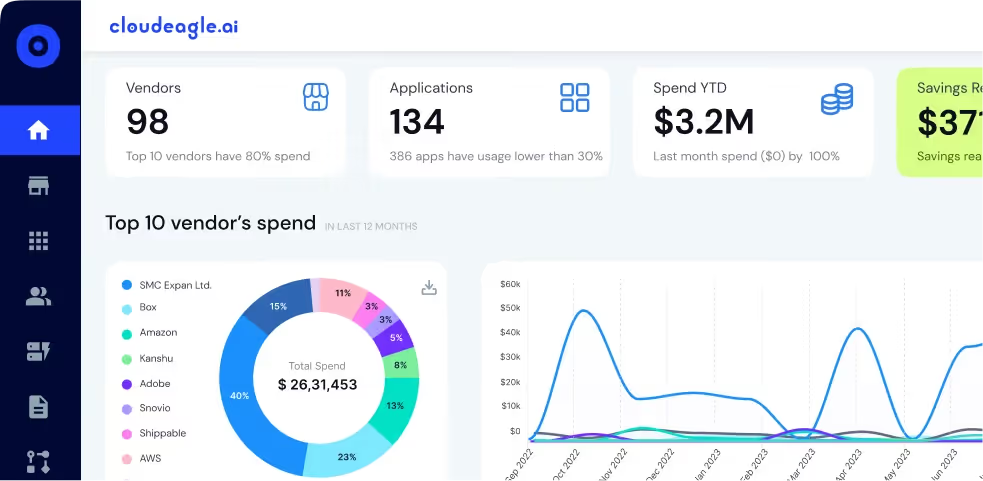
Finally, organizations should consolidate AI and SaaS management to unify visibility, governance, and cost control.
How to achieve it:
- Unified Discovery: Continuously scan your tech stack to uncover all AI tools in use, approved or not.
- Automated Governance Workflows: Streamline approvals, renewals, and compliance checks.
- Contract & Vendor Management: Centralize contracts to reduce shadow purchases and improve negotiation power.
- Reduce Duplication & Overspend: Identify overlapping AI licenses across departments.
- AI Lifecycle Management: Manage each tool from discovery to decommissioning, ensuring security and compliance throughout.
Outcome:
A single source of truth for all SaaS and AI applications — enabling control, visibility, and cost efficiency.
4. What Are the Benefits of Preventing Shadow AI?
Implementing structured AI governance offers measurable business outcomes:
- Improved Compliance: Stay aligned with SOC 2, GDPR, HIPAA, and other standards.
- Enhanced Data Security: Reduce data exposure from unvetted AI tools.
- Cost Optimization: Eliminate overlapping subscriptions and redundant AI apps.
- Greater Visibility: Gain full insight into who’s using what—and why.
- Operational Efficiency: Faster vendor evaluations and smoother onboarding.
- Safer Innovation: Enable AI adoption without compromising governance.
5. How CloudEagle.ai Empowers Enterprises to Govern AI and SaaS Ecosystems Efficiently
CloudEagle.ai AI governance capabilities help organizations effectively manage, govern, and optimize their AI and SaaS ecosystems while reducing Shadow AI risks. Here's how CloudEagle addresses these concerns across the four key pillars:
A. Discover
CloudEagle provides complete visibility into your organization’s software usage. It automatically discovers all active licenses across departments, teams, and users — including those that might be inactive or underutilized.
This discovery process helps you identify where licenses are sitting idle, enabling you to reassign or eliminate them before they turn into unnecessary costs. By mapping usage patterns, CloudEagle ensures you always know which tools are actively supporting business operations and which are simply draining your budget.
It also improves shadow AI visibility by surfacing unapproved AI applications, browser extensions, and subscriptions adopted outside standard procurement processes.

Tracking Spend and Usage: The platform helps track spending associated with AI tools, ensuring that no unauthorized or redundant tools are purchased, preventing unnecessary costs.
B. Govern
Managing access to software licenses can be complex, especially in large organizations with frequent role changes. CloudEagle simplifies governance through automated access controls and usage policies.
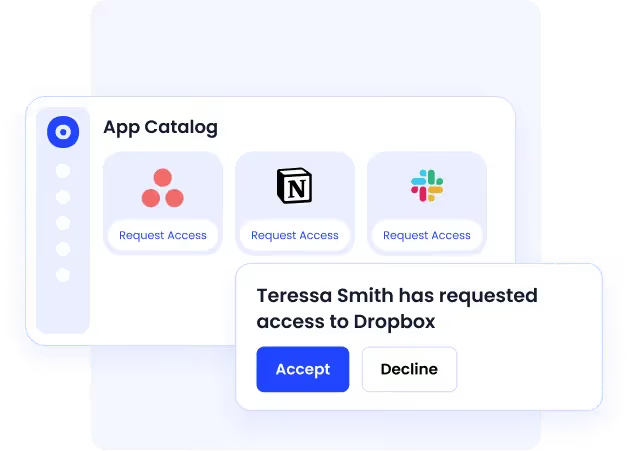
It continuously monitors user activity and ensures only authorized employees retain access to tools they actually need. Through policy-based workflows and automated reviews, IT and procurement teams can confidently enforce compliance, revoke inactive licenses, and maintain a secure, cost-efficient software environment without manual intervention.
C. Renew
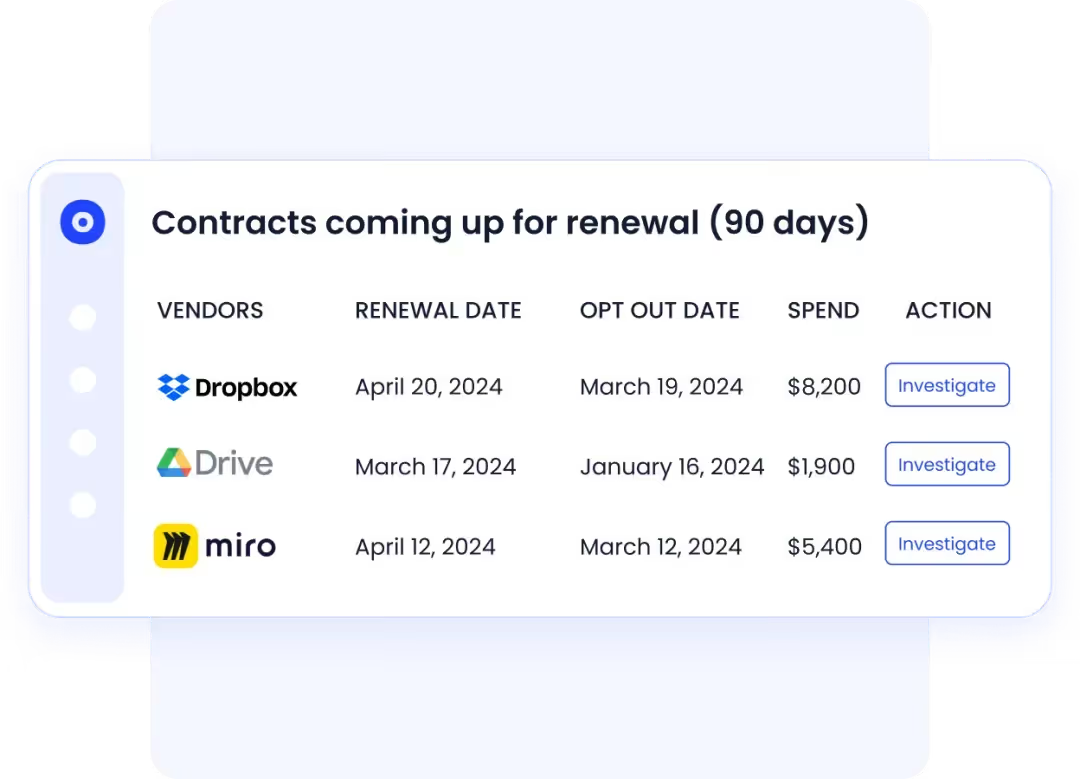
Renewals often sneak up on teams, leading to unplanned costs or auto-renewals for tools no longer in use. CloudEagle eliminates this challenge by centralizing all software contracts and renewal dates in one unified dashboard.
It automatically tracks renewal timelines, sends alerts well in advance, and provides data-backed insights into license utilization. This allows teams to make informed decisions — whether it’s to downsize, renegotiate, or cancel a contract — and ensures every renewal delivers measurable value to the business.
D. Optimize
Optimization is where real savings happen, and CloudEagle automates it at scale. The platform identifies unused or underused licenses and reclaims them through automated license harvesting, reallocating them to active users or retiring them altogether.
This process reduces the need for additional purchases and ensures every dollar spent on software contributes to productivity. Beyond harvesting, CloudEagle also supports app rationalization by identifying overlapping tools, consolidating subscriptions, and helping you streamline your SaaS stack for maximum efficiency and ROI.
Outcome
By leveraging CloudEagle, organizations can significantly reduce their shadow AI risks by improving visibility, automating governance, optimizing SaaS spend, and ensuring secure, efficient operations across their AI and SaaS tools. The result is reduced security risks, increased visibility into spend and usage, and maximized ROI on AI investments.
This comprehensive approach not only strengthens governance but also helps businesses save on SaaS costs by eliminating waste and improving overall procurement efficiency.
6. Final Takeaway
Shadow AI isn’t just a security risk, it’s a governance opportunity.
By combining clear policies, access governance, monitoring, education, and centralized management, enterprises can enable responsible AI adoption at scale.
Responsible AI requires visibility, not restriction.
When AI tools are governed effectively, teams can innovate freely, knowing that compliance, security, and cost control are built in.
With platforms like CloudEagle, organizations can transform Shadow AI chaos into a structured, secure, and scalable AI strategy.
Frequently Asked Questions
1. What is Shadow AI?
Shadow AI refers to the use of AI tools or services within an organization without IT or compliance approval. These tools often process sensitive data, creating potential security and privacy risks.
2. Why is Shadow AI dangerous?
Shadow AI exposes organizations to data leaks, compliance violations, and security breaches, as unvetted tools may not meet enterprise-grade security or data handling standards.
3. How can organizations prevent Shadow AI?
By implementing clear AI policies, centralized governance, continuous monitoring, employee training, and SaaS management tools, organizations can safely adopt AI without losing control or compliance.
4. How Does CloudEagle Help Mitigate Shadow IT and AI Sprawl?
CloudEagle detects both approved and unapproved AI/SaaS tools across your organization, providing full visibility into Shadow IT. It automates discovery, tracks usage, and allows IT teams to enforce policies, reduce risks, and eliminate unauthorized tools for improved security and compliance.
5. How Does CloudEagle Optimize SaaS Spend and Drive Cost Savings?
CloudEagle optimizes SaaS spend by automating license harvesting, identifying unused licenses, and removing duplicate apps. AI-driven insights guide procurement teams to negotiate better vendor terms, eliminate redundant tools, and save 10-30% on software spend annually.


.avif)


.avif)
.avif)




.png)




.avif)
.avif)
.avif)


