Continuous SaaS and Identity Control for Always-On Telecom Environments
Telecommunications teams rely on SaaS tools during outages, traffic surges, and live network changes. Control over access, tools, and licenses must work at the speed of operations, without slowing response.






The Operational Strain of SaaS in Telecommunications
Distributed infrastructure and 24/7 operations amplify the governance challenges created by SaaS sprawl in telecom.
Bring Operational-Grade Control to SaaS and AI in Telecom
Secure Access Across Telecom Operations
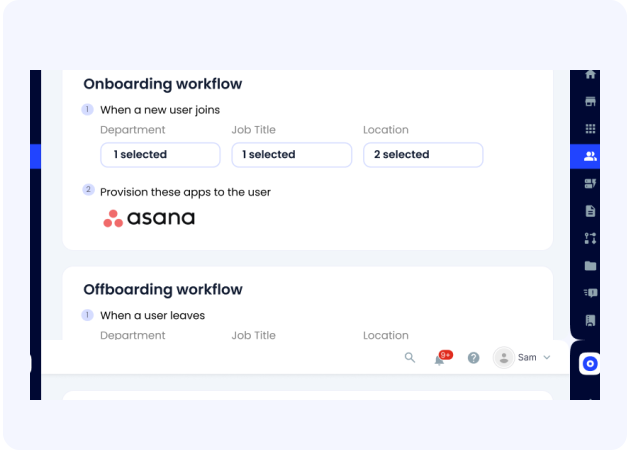
- Role-based access ensures employees are productive from their first day.
- Provisioning runs automatically across SSO and non-SSO applications.
- License inventory updates in real time, preventing urgent or excess purchases.
Govern Emergency Access During Network Incidents
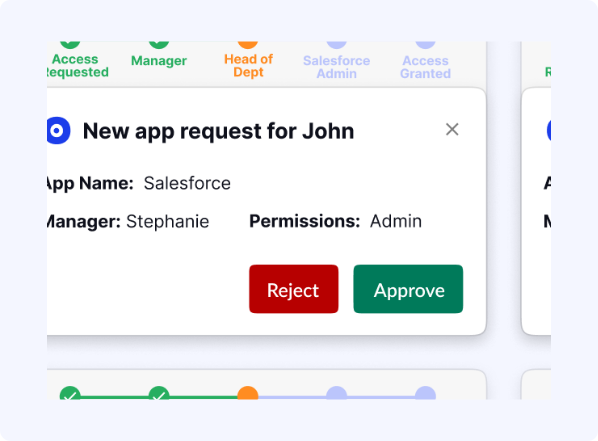
- Enable rapid temporary access to resolve incidents and escalations
- Automatically remove access once incidents close or engagements end
- Prevent silent permission buildup that increases long-term risk
Get Visibility Into All SaaS Tools Used in Telecom Operations

- Identify which applications operate across NOC, engineering, and support teams
- Detect unapproved or redundant tools before they impact security or operations
- Clarify ownership and accountability across distributed telecom environments

Automated App Access with a Self-Service Catalog
- Provide a centralized catalog of approved applications for network, engineering, and support teams
- Automate access requests and approvals to eliminate manual coordination
- Ensure every request follows policy without slowing response during incidents
Smarter Spend Optimization for Telecom
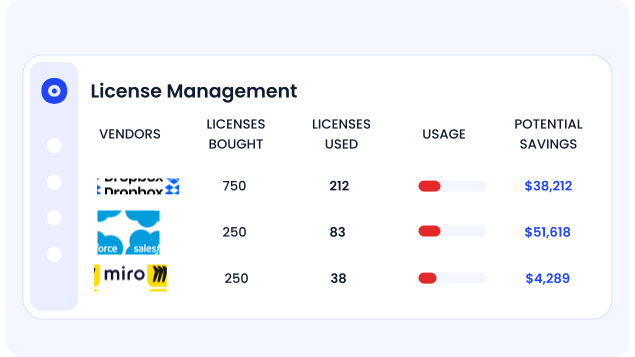
- Continuously surface unused and underutilized licenses across network, NOC, and field operations
- Act on real usage signals before renewals lock in unnecessary costs
- Reduce SaaS spend without disrupting systems critical to uptime, service delivery, and customer support
Frequently Asked Questions
Telecom teams adopt tools rapidly during incidents, launches, and expansions. Once stability returns, those tools often remain without review or ownership.
Temporary access granted under pressure is rarely revisited. Over time, this creates hidden security and compliance exposure across critical systems.
CloudEagle provides a centralized view of all SaaS and AI tools used across network, support, and engineering teams, including tools adopted outside standard workflows.
By automating access changes and standardizing approvals, teams respond quickly while controls operate in the background.
Licenses are added to solve immediate problems but rarely removed once urgency fades, leading to long-term waste.
CloudEagle identifies unused and underused licenses across teams and highlights opportunities to reclaim or reassign them before renewals.
Centralized approval trails and automatic documentation ensure evidence is always available, even during rapid operational change.
Telecom requires rapid, temporary access across many roles while maintaining uptime, making static approval models ineffective.
CloudEagle ties access to roles and engagements, ensuring permissions are granted quickly and removed automatically when no longer needed.
It reduces operational noise, limits tool sprawl, and ensures teams focus on keeping services running instead of managing software chaos.