CloudEagle for Healthcare
Bring Visibility, Control, and Compliance in Healthcare Environments
Enable secure access to approved healthcare and business applications from a single system. Teams get what they need quickly, while access stays controlled, auditable, and compliant across departments and locations.






SaaS Governance Challenges Across the Healthcare Industry
Healthcare environments operate under strict compliance requirements while managing complex SaaS ecosystems. Fragmented access and manual oversight increase security, compliance, and operational risk.
Keep Healthcare System Access Accurate as Roles, Teams, and Responsibilities Change
Reliable Access to Critical Healthcare Systems
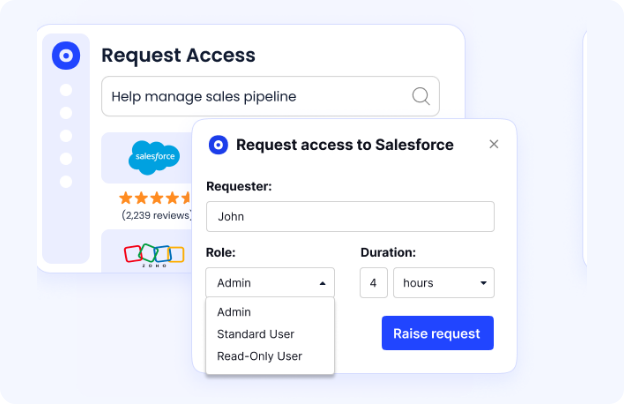
- Approved applications are easy to discover and request, reducing confusion and unnecessary back-and-forth
- Access remains consistent across roles, teams, and locations, even when responsibilities shift
- Temporary access expires automatically when no longer needed, preventing lingering permissions
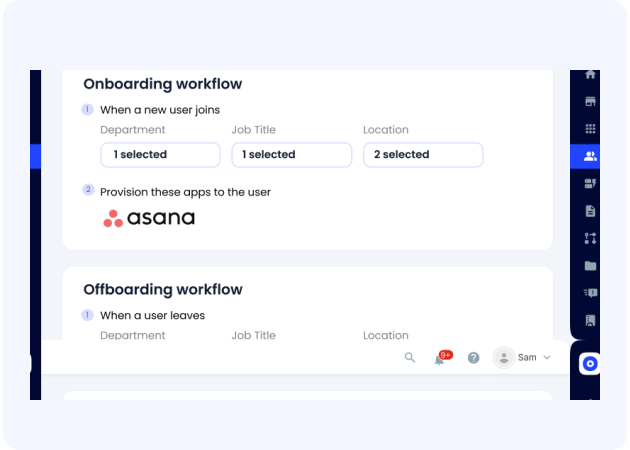
Consistent Joiner–Mover–Leaver Controls Across the Workforce
- Access is provisioned and revoked automatically so ex-employees don’t retain sensitive patient data
- Former users lose access immediately across connected systems, reducing exposure to sensitive data
- License availability stays accurate as teams scale up or down, avoiding last-minute purchases.
Continuous Compliance Without Audit Fire Drills

- Approval history is captured automatically across access requests, changes, and removals
- Reviews focus on high-risk and elevated access instead of repetitive, low-value checks
- Evidence is continuously available to reduce disruption when audits occur

Visibility Into Shadow AI and Unapproved Clinical Tools
- Applications are discovered via SSO, finance integrations and browser activity for a complete usage picture
- Unapproved tools are identified with clear ownership and usage context, not just names
- Approved alternatives are surfaced to guide safer adoption without blocking productivity
Cost Control Across Clinical SaaS
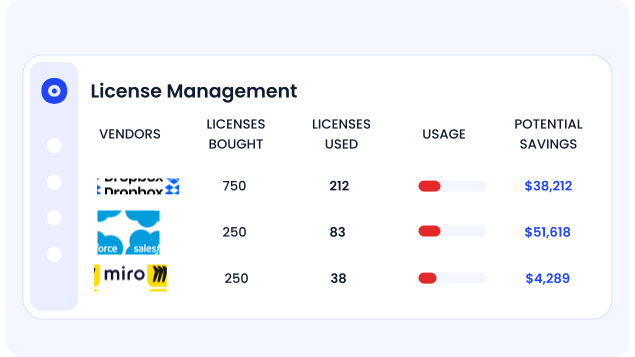
- Unused and underutilized licenses are identified continuously as usage patterns change
- Licenses are reclaimed or downgraded based on actual need, not assumptions
- SaaS costs decrease without disrupting access to systems critical for care delivery
Frequently Asked Questions
Healthcare environments combine clinical systems, operational tools, and external vendors, all while operating under strict privacy and compliance requirements. Without centralized governance, access inconsistencies and tool sprawl quickly create operational friction and compliance risk.
CloudEagle centralizes how applications are discovered, requested, approved, and reviewed across the organization. This helps healthcare teams reduce manual coordination while keeping access controlled, traceable, and compliant as environments grow.
When access changes are handled manually, former employees or contractors may retain access to sensitive systems. Over time, this increases exposure to privacy violations, audit findings, and operational risk.
By maintaining continuous records of access decisions, approvals, and removals, organizations avoid scrambling during audits. This reduces last-minute documentation efforts and minimizes disruption to care delivery and operations.
CloudEagle automatically captures access requests, approvals, reviews, and deprovisioning events in one system. This creates a defensible audit trail that healthcare organizations can rely on without manual evidence gathering.
Unapproved tools may handle or store sensitive patient data without proper controls. Without visibility into these tools, organizations face increased privacy, security, and compliance exposure.
CloudEagle identifies unapproved applications and provides visibility into their usage and ownership. This allows organizations to guide teams toward approved alternatives instead of reacting after risk or spend escalates.
AI tools can process sensitive data implicitly, even when used for productivity tasks. Without visibility and controls, organizations risk privacy violations, regulatory exposure, and inconsistent AI usage practices.
CloudEagle identifies AI applications across the environment and helps organizations guide users toward approved tools. This enables innovation while keeping AI usage aligned with privacy, security, and ethical standards.
By tracking real usage across clinical and business applications, organizations can reclaim unused licenses and reduce waste. This ensures cost savings without disrupting access to systems critical for patient care.