You need to enable JavaScript in order to use the AI chatbot tool powered by ChatBot

How Enterprises Optimize Grammarly Spend at Scale?

Share via:
blog-cms-banner-bg
Little-Known Negotiation Hacks to Get the Best Deal on Slack
cta-bg-blogDownload Your Copy

HIPAA Compliance Checklist for 2025

Download PDF

Optimize SaaS Spend Across AI Tools

Learn how enterprises optimize AI pricing by aligning usage, tiers, and costs with real business needs.

Read the Guide
CTA Thumbnail

Grammarly is one of those tools that almost never gets challenged in budget reviews.
It’s helpful, familiar, and relatively low-cost per user, especially when teams first look at grammarly pricing in isolation.

But in large enterprises, Grammarly enterprise pricing doesn’t stay small for long. 

As licenses spread across departments, premium access is over-provisioned, usage varies widely, and Grammarly cost optimization is rarely revisited. What starts as a productivity investment quietly turns into recurring SaaS waste, even though grammarly pricing plans initially appear straightforward.

Industry data shows that 25–35% of SaaS licenses in enterprises go unused or underutilized, and writing tools like Grammarly are among the most commonly over-licensed because they’re rolled out broadly without role alignment. 

This is especially common when grammarly pro pricing is applied across roles that don’t need advanced features.

That’s why Grammarly license management needs the same rigor as any other SaaS app.

TL;DR 

  • Grammarly spend grows quietly because licenses are rarely reviewed after rollout
  • Premium access is often assigned broadly instead of role-based, particularly under grammarly pro pricing
  • Manual audits miss the continuous underutilization of Grammarly licenses
  • Ongoing Grammarly license management is essential for cost control across grammarly pricing plans
  • CloudEagle.ai enables automated Grammarly license harvesting and SaaS license optimization at scale

1. Why Grammarly’s Spending Rarely Gets Scrutinized, Until It Adds Up?

Grammarly doesn’t trigger scrutiny because it doesn’t look risky.

From a finance perspective, it often appears as:

  • A small per-seat cost under standard grammarly pricing
  • A “productivity” line item
  • A tool employees genuinely like

But this perception masks how SaaS license optimization breaks down at scale, particularly when grammarly pricing plans expand quietly across departments.

Why spend slips through:

  • Grammarly costs are fragmented across teams and cost centers
  • Licenses are renewed automatically with little review, even as grammarly pro pricing tiers are added
  • There’s no clear owner responsible for usage efficiency

According to SaaS management benchmarks, low-cost tools account for nearly 40% of total SaaS waste, simply because they’re ignored longer. Grammarly fits this pattern almost perfectly, despite seemingly reasonable grammarly pricing.

FinOps Best Practices for Enterprise AI

Discover how FinOps teams manage AI consumption, forecast costs, and prevent budget overruns at scale.

Get FinOps Guide
CTA Thumbnail

2. How Grammarly Licenses Spread Across the Organization?

Grammarly adoption is usually organic, not intentional. That’s where the problem starts.

A. Grammarly rolled out broadly instead of role-based

Many enterprises enable Grammarly company-wide to “keep things simple,” often defaulting to higher-tier grammarly pricing plans.

The issue:

  • Not every employee writes customer-facing or high-stakes content
  • Some roles benefit daily, others barely use it

When Grammarly is deployed broadly instead of selectively:

  • Premium licenses are wasted on low-need roles
  • Grammarly enterprise pricing grows without proportional value, especially under grammarly pro pricing
  • Usage-to-cost ratios become distorted

Role-based deployment is foundational to effective Grammarly license management.

B. Premium licenses assigned “just in case.”

To avoid friction, teams often assign premium Grammarly licenses preemptively.

Common scenarios:

  • New hires get premium access automatically
  • Contractors retain access after projects end
  • Teams over-allocate licenses to avoid future approvals

Studies show that nearly 30% of premium SaaS licenses are assigned “just in case” and never fully used. This is where Grammarly license harvesting opportunities quietly accumulate under expanding grammarly pricing.

C. Little ownership once licenses are provisioned

After initial rollout, Grammarly licenses are rarely revisited.

What typically happens:

  • IT provisions access, then moves on
  • Managers don’t track adoption
  • Finance only sees renewal invoices

Without clear ownership:

  • No one reviews usage
  • No one reclaims unused licenses
  • Grammarly cost optimization never actually happens, even as grammarly pricing plans renew year after year

SaaS Procurement Best Practices

Learn how procurement teams standardize buying, negotiate better terms, and control renewals across SaaS vendors.

Read Best Practices
CTA Thumbnail

3. Why Grammarly Requires Ongoing License Management?

Grammarly is often treated as a lightweight productivity add-on, but at enterprise scale, it behaves like any other recurring SaaS subscription with compounding financial impact.

In large organizations, Grammarly license management breaks down because the tool sits at the intersection of IT, HR, and business teams, but is owned by none of them. That lack of ownership is what allows inefficiency to persist quietly.

A. Grammarly functions like any recurring SaaS expense

Once a Grammarly license is provisioned, it behaves exactly like other SaaS tools financially, even if it feels operationally small.

In practice:

  • Licenses auto-renew without validation
  • Access survives role changes and team transfers
  • Departed employees often retain licenses longer than expected

At enterprise scale, even a modest per-user price multiplies quickly. 

For example, 500–1,000 premium Grammarly licenses can easily turn into a six-figure annual commitment without any deliberate expansion decision being made.

This is why Grammarly should be governed under the same SaaS license optimization framework as collaboration, CRM, or project management tools.

B. Manual reviews miss continuous underutilization

Most enterprises rely on periodic, manual checks to evaluate Grammarly usage. This approach fundamentally doesn’t work for tools governed by flexible grammarly pricing plans, where usage declines gradually.

This approach fundamentally doesn’t work for tools like Grammarly, where usage declines slowly over time rather than dropping off suddenly.

What manual reviews fail to catch:

  • Users who stop writing frequently after onboarding
  • Teams that no longer need premium features
  • Gradual declines in usage masked by a few power users

CloudEagle benchmarks show that continuous monitoring identifies 2–3× more reclaimable licenses than annual audits, particularly for writing and productivity tools. 

Without continuous visibility, Grammarly cost optimization remains incomplete and reactive.

C. Optimizing at renewal time is already too late

Renewal-driven optimization puts enterprises at a disadvantage.

By the time renewal discussions start:

  • License counts are already baked into budgets
  • Stakeholders lack clean usage data
  • Teams default to renewing existing grammarly pricing plans, even if usage no longer supports them

At that point, teams often default to renewing “what we had last year,” even if actual usage no longer supports it. 

Effective Grammarly license management must happen months ahead of renewal, when there’s time to reclaim, reassign, or downgrade licenses without operational friction.

4. What Effective Grammarly License Optimization Looks Like?

Effective optimization is not about aggressively cutting access or limiting productivity. It’s about aligning Grammarly licenses with real, ongoing business usage, and doing so continuously rather than episodically.

In mature organizations, Grammarly cost optimization follows a clear operational pattern: visibility first, segmentation second, action third, regardless of grammarly pricing tier.

A. Discover every Grammarly license across the enterprise

Optimization starts with answering basic but often elusive questions.

Enterprises need a reliable, centralized view of:

  • All users with Grammarly access
  • Which departments or cost centers own those licenses
  • Whether licenses are tied to employees, contractors, or shared accounts

Without this discovery layer, teams underestimate their true Grammarly footprint. In many cases, enterprises discover 10–20% more active licenses than expected once they consolidate data across identity systems and expense records.

This visibility is the foundation of effective Grammarly license management.

B. Track usage frequency and feature adoption

Access alone does not justify premium licensing. Usage does.

Strong optimization tracks:

  • How frequently users engage with Grammarly
  • Whether premium features are actually used
  • How usage differs across teams and roles

This data allows enterprises to segment users into:

  • High-value, frequent users
  • Occasional or situational users
  • Inactive or near-zero usage accounts

This segmentation is critical for Grammarly license harvesting because it enables targeted action instead of blunt cuts.

C. Identify users who don’t need premium access

One of the largest sources of Grammarly waste is premium access assigned to users who don’t need advanced capabilities.

Common examples include:

  • Roles that write infrequently
  • Users who only rely on basic grammar checks
  • Employees whose responsibilities have changed

Downgrading or removing premium access typically yields 15–25% immediate savings in Grammarly spend, making this one of the fastest wins in grammarly enterprise pricing optimization, especially for organizations overusing grammarly pro pricing.

This is one of the fastest wins in Grammarly enterprise pricing optimization.

D. Harvest and reassign unused Grammarly licenses

License harvesting is where optimization turns into measurable savings.

Instead of purchasing additional licenses as demand grows, mature enterprises:

  • Reclaim unused Grammarly seats
  • Reassign them to teams with demonstrated need
  • Reduce or avoid net-new license purchases

This approach keeps Grammarly adoption flexible while preventing unnecessary expansion of recurring costs. It also reinforces disciplined SaaS license optimization across the organization.

E. Align license tiers with actual role requirements

Best-in-class organizations align Grammarly access to job function, not job title.

In practice:

  • Writing-intensive roles receive premium access
  • Occasional writers receive limited or no access
  • License tiers are reviewed as roles evolve

This alignment prevents long-term license drift and ensures Grammarly license management remains tied to real business value, not historical assumptions.

5. How CloudEagle.ai Helps Enterprises Reduce Grammarly Spend?

Grammarly is widely adopted across enterprises, but its spend is rarely governed with the same rigor as other SaaS tools, even though grammarly pricing plans scale just as aggressively.

CloudEagle.ai helps organizations bring Grammarly enterprise pricing under control by applying continuous SaaS license optimization principles.

By combining usage visibility, automated Grammarly license management, renewal intelligence, and harvesting workflows, CloudEagle helps enterprises reduce Grammarly spend by up to 30%, while ensuring access stays aligned with real business needs across all grammarly pricing tiers.

A. Identify unused and underutilized Grammarly licenses

One of the biggest drivers of Grammarly overspend is licenses that remain assigned but deliver little or no value.
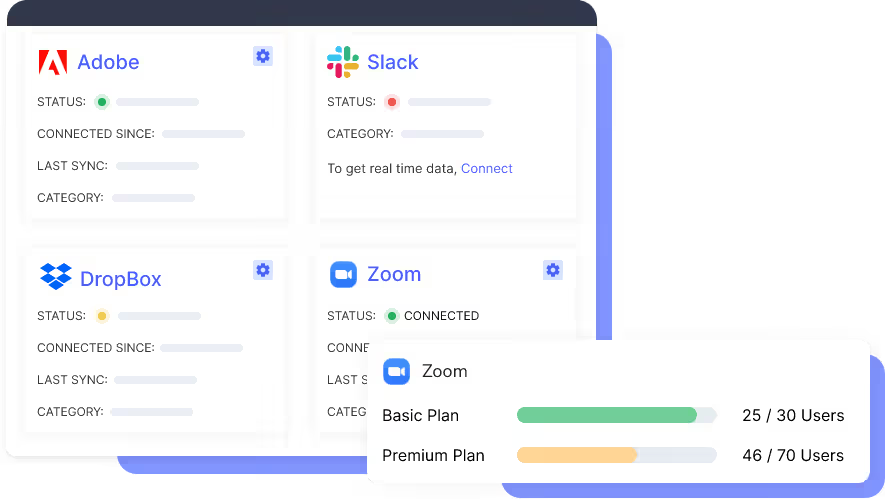
CloudEagle provides:

  • User-level visibility into Grammarly usage frequency
  • Insights into which premium features are actually being used
  • Clear identification of inactive or low-usage accounts

This allows enterprises to reclaim unused licenses early, rather than paying for them through renewal cycles. Customers typically uncover 15–30% reclaimable Grammarly licenses within the first optimization cycle.

B. Optimize license allocation across teams and roles

Not every role requires premium Grammarly access, yet many organizations deploy it broadly to avoid friction.
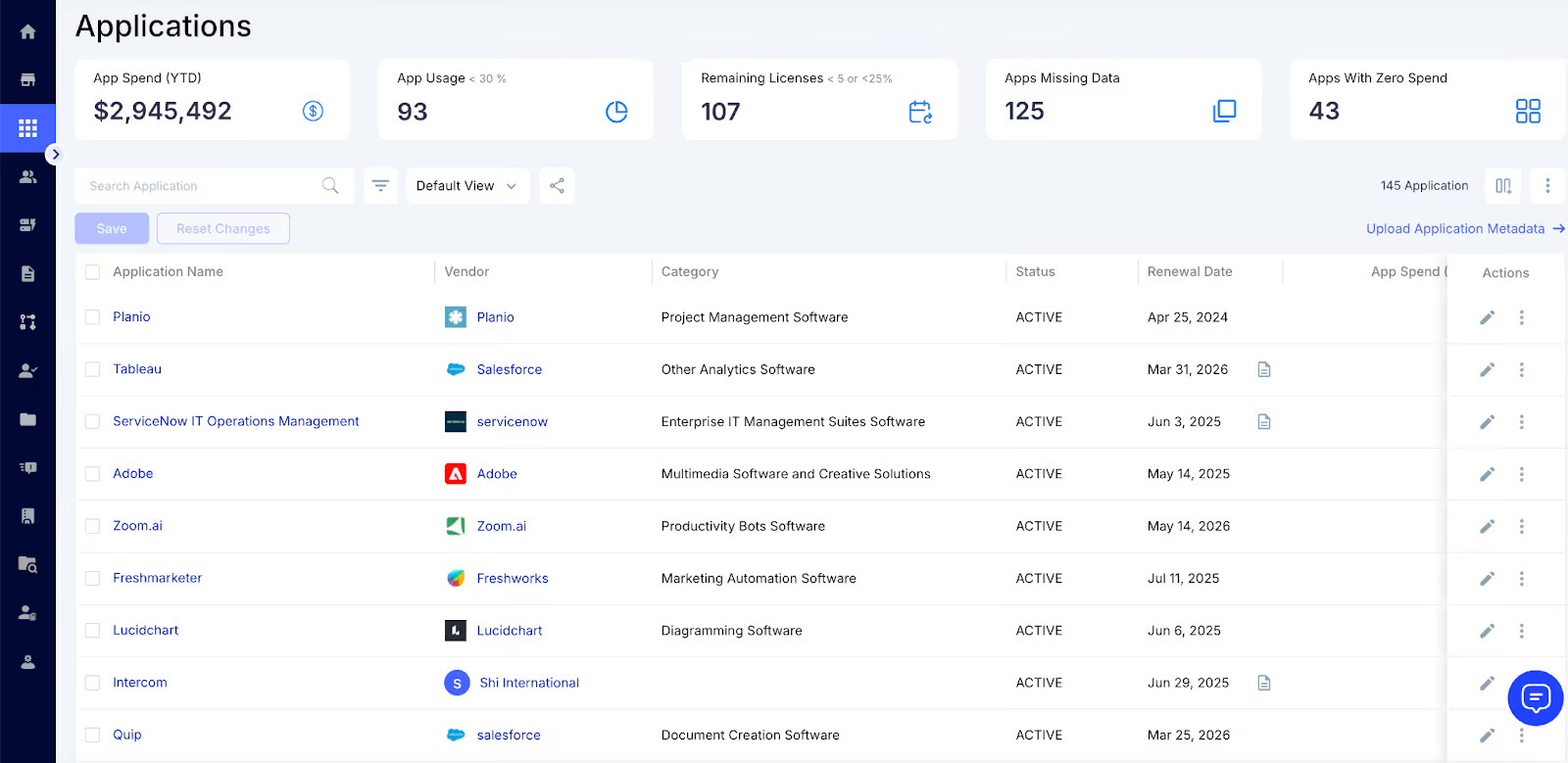
CloudEagle helps enterprises:

  • Reassign Grammarly licenses based on real usage patterns
  • Align premium access with writing-intensive roles
  • Downgrade or remove access for occasional users

This role-aligned approach ensures Grammarly cost optimization happens without impacting productivity.

C. Automate Grammarly license harvesting and reassignments

Manual license cleanup doesn’t scale, especially as teams grow and change.

CloudEagle automates Grammarly license harvesting by:

  • Continuously monitoring usage trends
  • Flagging licenses eligible for reclaiming
  • Supporting reassignment instead of new purchases

By recycling existing licenses, enterprises reduce net-new spend and keep Grammarly enterprise pricing predictable over time.

D. Streamline renewals and contract decisions

Grammarly renewals often happen without a full understanding of current usage.
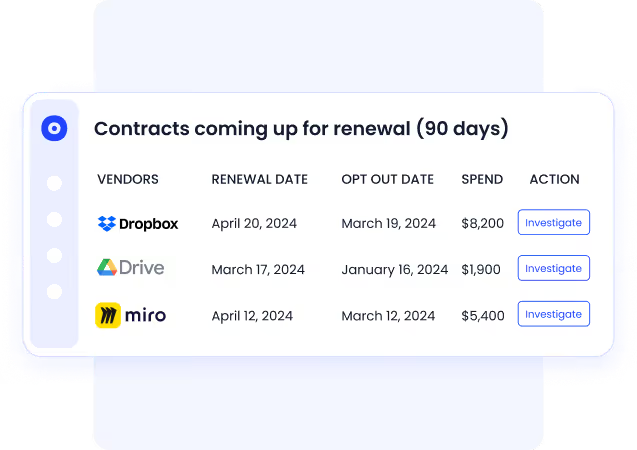
CloudEagle strengthens renewal decisions by:

  • Tracking renewal dates and contract terms
  • Mapping usage data to license counts and tiers
  • Highlighting opportunities to reduce or right-size subscriptions

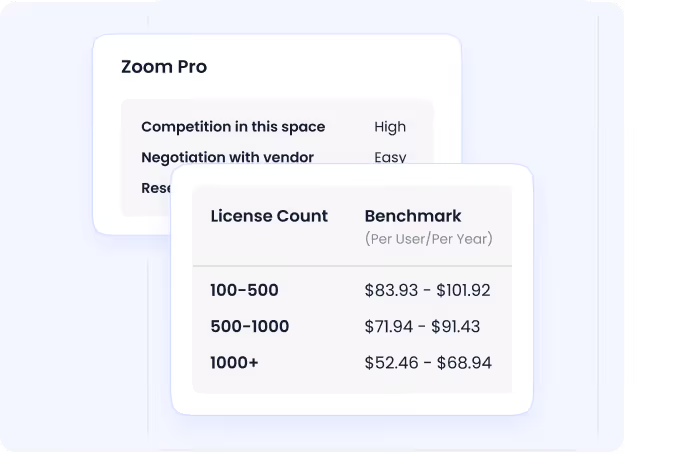
With usage-backed insights and pricing benchmarks, procurement teams enter renewal discussions with leverage instead of assumptions.
E. Eliminate redundant subscriptions and Shadow IT

In large organizations, Grammarly subscriptions often exist outside approved procurement channels.
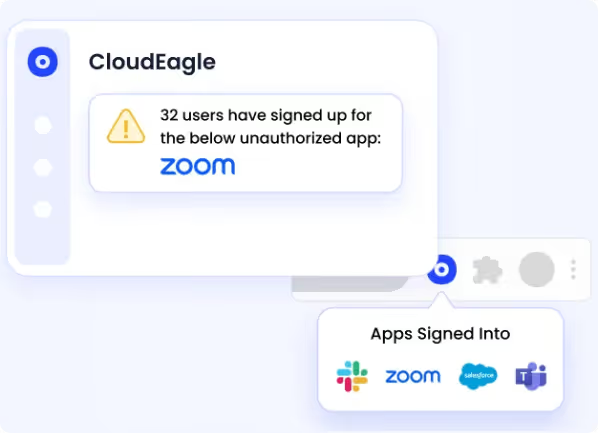
CloudEagle detects:

  • Individually purchased Grammarly subscriptions
  • Duplicate licenses across teams
  • Free or unapproved versions contributing to Shadow IT

By consolidating Grammarly usage under a governed framework, CloudEagle eliminates redundant spend and improves overall SaaS license optimization.

F. Why this matters for Grammarly at scale

CloudEagle doesn’t treat Grammarly as a “small tool.”
It treats it like what it becomes at scale: a recurring SaaS expense that requires discipline.

By combining usage visibility, automated Grammarly license management, renewal intelligence, and harvesting workflows, CloudEagle helps enterprises reduce Grammarly spend by up to 30%, while ensuring access stays aligned with real business needs.

Final Words

Grammarly may appear inexpensive on a per-user basis, but at enterprise scale, unmanaged licenses quietly compound into recurring waste. When premium access spreads broadly without usage visibility, Grammarly enterprise pricing becomes harder to justify over time.

Without continuous Grammarly license management, organizations renew licenses that no longer align with real usage, roles, or business value, especially under long-standing grammarly pricing plans.

CloudEagle.ai helps enterprises bring Grammarly under the same governance model as other SaaS tools by enabling usage visibility, automated Grammarly license harvesting, and continuous SaaS license optimization to keep spend efficient at scale.

Book a free demo to see how CloudEagle.ai helps you reduce Grammarly spend before unused licenses quietly renew.

Frequently Asked Questions 

  1. How much is a 12-month subscription to Grammarly?
    Pricing varies by plan and volume. Enterprise subscriptions are typically negotiated based on the number of users and required features.
  2. How much does Grammarly cost in India?
    Grammarly pricing in India depends on the plan and billing cycle. Enterprise customers usually receive custom pricing rather than standard list rates.
  3. Why did Grammarly charge me $200?
    This often happens due to annual renewals, premium upgrades, or multiple seats being billed together without review.
  4. Is ChatGPT better than Grammarly?
    They serve different purposes. Grammarly focuses on writing quality and correctness, while ChatGPT supports broader content generation and ideation.
  5. How do I manage my Grammarly subscriptions?
    Effective management requires tracking usage, reclaiming unused licenses, and aligning access with roles, often through SaaS license optimization platforms.
Advertisement for a SaaS Subscription Tracking Template with a call-to-action button to download and a partial graphic of a tablet showing charts.Banner promoting a SaaS Agreement Checklist to streamline SaaS management and avoid budget waste with a call-to-action button labeled Download checklist.Blue banner with text 'The Ultimate Employee Offboarding Checklist!' and a black button labeled 'Download checklist' alongside partial views of checklist documents from cloudeagle.ai.Digital ad for download checklist titled 'The Ultimate Checklist for IT Leaders to Optimize SaaS Operations' by cloudeagle.ai, showing checklist pages.Slack Buyer's Guide offer with text 'Unlock insider insights to get the best deal on Slack!' and a button labeled 'Get Your Copy', accompanied by a preview of the guide featuring Slack's logo.Monday Pricing Guide by cloudeagle.ai offering exclusive pricing secrets to maximize investment with a call-to-action button labeled Get Your Copy and an image of the guide's cover.Blue banner for Canva Pricing Guide by cloudeagle.ai offering a guide to Canva costs, features, and alternatives with a call-to-action button saying Get Your Copy.Blue banner with white text reading 'Little-Known Negotiation Hacks to Get the Best Deal on Slack' and a white button labeled 'Get Your Copy'.Blue banner with text 'Little-Known Negotiation Hacks to Get the Best Deal on Monday.com' and a white button labeled 'Get Your Copy'.Blue banner with text 'Little-Known Negotiation Hacks to Get the Best Deal on Canva' and a white button labeled 'Get Your Copy'.Banner with text 'Slack Buyer's Guide' and a 'Download Now' button next to images of a guide titled 'Slack Buyer’s Guide: Features, Pricing & Best Practices'.Digital cover of Monday Pricing Guide with a button labeled Get Your Copy on a blue background.Canva Pricing Guide cover with a button labeled Get Your Copy on a blue gradient background.

Enter your email to
unlock the report

Oops! Something went wrong while submitting the form.
License Count
Benchmark
Per User/Per Year

Enter your email to
unlock the report

Oops! Something went wrong while submitting the form.
License Count
Benchmark
Per User/Per Year

Enter your email to
unlock the report

Oops! Something went wrong while submitting the form.
Notion Plus
License Count
Benchmark
Per User/Per Year
100-500
$67.20 - $78.72
500-1000
$59.52 - $72.00
1000+
$51.84 - $57.60
Canva Pro
License Count
Benchmark
Per User/Per Year
100-500
$74.33-$88.71
500-1000
$64.74-$80.32
1000+
$55.14-$62.34

Enter your email to
unlock the report

Oops! Something went wrong while submitting the form.

Enter your email to
unlock the report

Oops! Something went wrong while submitting the form.
Zoom Business
License Count
Benchmark
Per User/Per Year
100-500
$216.00 - $264.00
500-1000
$180.00 - $216.00
1000+
$156.00 - $180.00

Enter your email to
unlock the report

Oops! Something went wrong while submitting the form.

Get the Right Security Platform To Secure Your Cloud Infrastructure

Please enter a business email
Thank you!
The 2023 SaaS report has been sent to your email. Check your promotional or spam folder.
Oops! Something went wrong while submitting the form.

Access full report

Please enter a business email
Thank you!
The 2023 SaaS report has been sent to your email. Check your promotional or spam folder.
Oops! Something went wrong while submitting the form.

Optimize SaaS Spend Across AI Tools

Learn how enterprises optimize AI pricing by aligning usage, tiers, and costs with real business needs.

Read the Guide
CTA Thumbnail

Grammarly is one of those tools that almost never gets challenged in budget reviews.
It’s helpful, familiar, and relatively low-cost per user, especially when teams first look at grammarly pricing in isolation.

But in large enterprises, Grammarly enterprise pricing doesn’t stay small for long. 

As licenses spread across departments, premium access is over-provisioned, usage varies widely, and Grammarly cost optimization is rarely revisited. What starts as a productivity investment quietly turns into recurring SaaS waste, even though grammarly pricing plans initially appear straightforward.

Industry data shows that 25–35% of SaaS licenses in enterprises go unused or underutilized, and writing tools like Grammarly are among the most commonly over-licensed because they’re rolled out broadly without role alignment. 

This is especially common when grammarly pro pricing is applied across roles that don’t need advanced features.

That’s why Grammarly license management needs the same rigor as any other SaaS app.

TL;DR 

  • Grammarly spend grows quietly because licenses are rarely reviewed after rollout
  • Premium access is often assigned broadly instead of role-based, particularly under grammarly pro pricing
  • Manual audits miss the continuous underutilization of Grammarly licenses
  • Ongoing Grammarly license management is essential for cost control across grammarly pricing plans
  • CloudEagle.ai enables automated Grammarly license harvesting and SaaS license optimization at scale

1. Why Grammarly’s Spending Rarely Gets Scrutinized, Until It Adds Up?

Grammarly doesn’t trigger scrutiny because it doesn’t look risky.

From a finance perspective, it often appears as:

  • A small per-seat cost under standard grammarly pricing
  • A “productivity” line item
  • A tool employees genuinely like

But this perception masks how SaaS license optimization breaks down at scale, particularly when grammarly pricing plans expand quietly across departments.

Why spend slips through:

  • Grammarly costs are fragmented across teams and cost centers
  • Licenses are renewed automatically with little review, even as grammarly pro pricing tiers are added
  • There’s no clear owner responsible for usage efficiency

According to SaaS management benchmarks, low-cost tools account for nearly 40% of total SaaS waste, simply because they’re ignored longer. Grammarly fits this pattern almost perfectly, despite seemingly reasonable grammarly pricing.

FinOps Best Practices for Enterprise AI

Discover how FinOps teams manage AI consumption, forecast costs, and prevent budget overruns at scale.

Get FinOps Guide
CTA Thumbnail

2. How Grammarly Licenses Spread Across the Organization?

Grammarly adoption is usually organic, not intentional. That’s where the problem starts.

A. Grammarly rolled out broadly instead of role-based

Many enterprises enable Grammarly company-wide to “keep things simple,” often defaulting to higher-tier grammarly pricing plans.

The issue:

  • Not every employee writes customer-facing or high-stakes content
  • Some roles benefit daily, others barely use it

When Grammarly is deployed broadly instead of selectively:

  • Premium licenses are wasted on low-need roles
  • Grammarly enterprise pricing grows without proportional value, especially under grammarly pro pricing
  • Usage-to-cost ratios become distorted

Role-based deployment is foundational to effective Grammarly license management.

B. Premium licenses assigned “just in case.”

To avoid friction, teams often assign premium Grammarly licenses preemptively.

Common scenarios:

  • New hires get premium access automatically
  • Contractors retain access after projects end
  • Teams over-allocate licenses to avoid future approvals

Studies show that nearly 30% of premium SaaS licenses are assigned “just in case” and never fully used. This is where Grammarly license harvesting opportunities quietly accumulate under expanding grammarly pricing.

C. Little ownership once licenses are provisioned

After initial rollout, Grammarly licenses are rarely revisited.

What typically happens:

  • IT provisions access, then moves on
  • Managers don’t track adoption
  • Finance only sees renewal invoices

Without clear ownership:

  • No one reviews usage
  • No one reclaims unused licenses
  • Grammarly cost optimization never actually happens, even as grammarly pricing plans renew year after year

SaaS Procurement Best Practices

Learn how procurement teams standardize buying, negotiate better terms, and control renewals across SaaS vendors.

Read Best Practices
CTA Thumbnail

3. Why Grammarly Requires Ongoing License Management?

Grammarly is often treated as a lightweight productivity add-on, but at enterprise scale, it behaves like any other recurring SaaS subscription with compounding financial impact.

In large organizations, Grammarly license management breaks down because the tool sits at the intersection of IT, HR, and business teams, but is owned by none of them. That lack of ownership is what allows inefficiency to persist quietly.

A. Grammarly functions like any recurring SaaS expense

Once a Grammarly license is provisioned, it behaves exactly like other SaaS tools financially, even if it feels operationally small.

In practice:

  • Licenses auto-renew without validation
  • Access survives role changes and team transfers
  • Departed employees often retain licenses longer than expected

At enterprise scale, even a modest per-user price multiplies quickly. 

For example, 500–1,000 premium Grammarly licenses can easily turn into a six-figure annual commitment without any deliberate expansion decision being made.

This is why Grammarly should be governed under the same SaaS license optimization framework as collaboration, CRM, or project management tools.

B. Manual reviews miss continuous underutilization

Most enterprises rely on periodic, manual checks to evaluate Grammarly usage. This approach fundamentally doesn’t work for tools governed by flexible grammarly pricing plans, where usage declines gradually.

This approach fundamentally doesn’t work for tools like Grammarly, where usage declines slowly over time rather than dropping off suddenly.

What manual reviews fail to catch:

  • Users who stop writing frequently after onboarding
  • Teams that no longer need premium features
  • Gradual declines in usage masked by a few power users

CloudEagle benchmarks show that continuous monitoring identifies 2–3× more reclaimable licenses than annual audits, particularly for writing and productivity tools. 

Without continuous visibility, Grammarly cost optimization remains incomplete and reactive.

C. Optimizing at renewal time is already too late

Renewal-driven optimization puts enterprises at a disadvantage.

By the time renewal discussions start:

  • License counts are already baked into budgets
  • Stakeholders lack clean usage data
  • Teams default to renewing existing grammarly pricing plans, even if usage no longer supports them

At that point, teams often default to renewing “what we had last year,” even if actual usage no longer supports it. 

Effective Grammarly license management must happen months ahead of renewal, when there’s time to reclaim, reassign, or downgrade licenses without operational friction.

4. What Effective Grammarly License Optimization Looks Like?

Effective optimization is not about aggressively cutting access or limiting productivity. It’s about aligning Grammarly licenses with real, ongoing business usage, and doing so continuously rather than episodically.

In mature organizations, Grammarly cost optimization follows a clear operational pattern: visibility first, segmentation second, action third, regardless of grammarly pricing tier.

A. Discover every Grammarly license across the enterprise

Optimization starts with answering basic but often elusive questions.

Enterprises need a reliable, centralized view of:

  • All users with Grammarly access
  • Which departments or cost centers own those licenses
  • Whether licenses are tied to employees, contractors, or shared accounts

Without this discovery layer, teams underestimate their true Grammarly footprint. In many cases, enterprises discover 10–20% more active licenses than expected once they consolidate data across identity systems and expense records.

This visibility is the foundation of effective Grammarly license management.

B. Track usage frequency and feature adoption

Access alone does not justify premium licensing. Usage does.

Strong optimization tracks:

  • How frequently users engage with Grammarly
  • Whether premium features are actually used
  • How usage differs across teams and roles

This data allows enterprises to segment users into:

  • High-value, frequent users
  • Occasional or situational users
  • Inactive or near-zero usage accounts

This segmentation is critical for Grammarly license harvesting because it enables targeted action instead of blunt cuts.

C. Identify users who don’t need premium access

One of the largest sources of Grammarly waste is premium access assigned to users who don’t need advanced capabilities.

Common examples include:

  • Roles that write infrequently
  • Users who only rely on basic grammar checks
  • Employees whose responsibilities have changed

Downgrading or removing premium access typically yields 15–25% immediate savings in Grammarly spend, making this one of the fastest wins in grammarly enterprise pricing optimization, especially for organizations overusing grammarly pro pricing.

This is one of the fastest wins in Grammarly enterprise pricing optimization.

D. Harvest and reassign unused Grammarly licenses

License harvesting is where optimization turns into measurable savings.

Instead of purchasing additional licenses as demand grows, mature enterprises:

  • Reclaim unused Grammarly seats
  • Reassign them to teams with demonstrated need
  • Reduce or avoid net-new license purchases

This approach keeps Grammarly adoption flexible while preventing unnecessary expansion of recurring costs. It also reinforces disciplined SaaS license optimization across the organization.

E. Align license tiers with actual role requirements

Best-in-class organizations align Grammarly access to job function, not job title.

In practice:

  • Writing-intensive roles receive premium access
  • Occasional writers receive limited or no access
  • License tiers are reviewed as roles evolve

This alignment prevents long-term license drift and ensures Grammarly license management remains tied to real business value, not historical assumptions.

5. How CloudEagle.ai Helps Enterprises Reduce Grammarly Spend?

Grammarly is widely adopted across enterprises, but its spend is rarely governed with the same rigor as other SaaS tools, even though grammarly pricing plans scale just as aggressively.

CloudEagle.ai helps organizations bring Grammarly enterprise pricing under control by applying continuous SaaS license optimization principles.

By combining usage visibility, automated Grammarly license management, renewal intelligence, and harvesting workflows, CloudEagle helps enterprises reduce Grammarly spend by up to 30%, while ensuring access stays aligned with real business needs across all grammarly pricing tiers.

A. Identify unused and underutilized Grammarly licenses

One of the biggest drivers of Grammarly overspend is licenses that remain assigned but deliver little or no value.

CloudEagle provides:

  • User-level visibility into Grammarly usage frequency
  • Insights into which premium features are actually being used
  • Clear identification of inactive or low-usage accounts

This allows enterprises to reclaim unused licenses early, rather than paying for them through renewal cycles. Customers typically uncover 15–30% reclaimable Grammarly licenses within the first optimization cycle.

B. Optimize license allocation across teams and roles

Not every role requires premium Grammarly access, yet many organizations deploy it broadly to avoid friction.

CloudEagle helps enterprises:

  • Reassign Grammarly licenses based on real usage patterns
  • Align premium access with writing-intensive roles
  • Downgrade or remove access for occasional users

This role-aligned approach ensures Grammarly cost optimization happens without impacting productivity.

C. Automate Grammarly license harvesting and reassignments

Manual license cleanup doesn’t scale, especially as teams grow and change.

CloudEagle automates Grammarly license harvesting by:

  • Continuously monitoring usage trends
  • Flagging licenses eligible for reclaiming
  • Supporting reassignment instead of new purchases

By recycling existing licenses, enterprises reduce net-new spend and keep Grammarly enterprise pricing predictable over time.

D. Streamline renewals and contract decisions

Grammarly renewals often happen without a full understanding of current usage.

CloudEagle strengthens renewal decisions by:

  • Tracking renewal dates and contract terms
  • Mapping usage data to license counts and tiers
  • Highlighting opportunities to reduce or right-size subscriptions

With usage-backed insights and pricing benchmarks, procurement teams enter renewal discussions with leverage instead of assumptions.

E. Eliminate redundant subscriptions and Shadow IT

In large organizations, Grammarly subscriptions often exist outside approved procurement channels.

CloudEagle detects:

  • Individually purchased Grammarly subscriptions
  • Duplicate licenses across teams
  • Free or unapproved versions contributing to Shadow IT

By consolidating Grammarly usage under a governed framework, CloudEagle eliminates redundant spend and improves overall SaaS license optimization.

F. Why this matters for Grammarly at scale

CloudEagle doesn’t treat Grammarly as a “small tool.”
It treats it like what it becomes at scale: a recurring SaaS expense that requires discipline.

By combining usage visibility, automated Grammarly license management, renewal intelligence, and harvesting workflows, CloudEagle helps enterprises reduce Grammarly spend by up to 30%, while ensuring access stays aligned with real business needs.

Final Words

Grammarly may appear inexpensive on a per-user basis, but at enterprise scale, unmanaged licenses quietly compound into recurring waste. When premium access spreads broadly without usage visibility, Grammarly enterprise pricing becomes harder to justify over time.

Without continuous Grammarly license management, organizations renew licenses that no longer align with real usage, roles, or business value, especially under long-standing grammarly pricing plans.

CloudEagle.ai helps enterprises bring Grammarly under the same governance model as other SaaS tools by enabling usage visibility, automated Grammarly license harvesting, and continuous SaaS license optimization to keep spend efficient at scale.

Book a free demo to see how CloudEagle.ai helps you reduce Grammarly spend before unused licenses quietly renew.

Frequently Asked Questions 

  1. How much is a 12-month subscription to Grammarly?
    Pricing varies by plan and volume. Enterprise subscriptions are typically negotiated based on the number of users and required features.
  2. How much does Grammarly cost in India?
    Grammarly pricing in India depends on the plan and billing cycle. Enterprise customers usually receive custom pricing rather than standard list rates.
  3. Why did Grammarly charge me $200?
    This often happens due to annual renewals, premium upgrades, or multiple seats being billed together without review.
  4. Is ChatGPT better than Grammarly?
    They serve different purposes. Grammarly focuses on writing quality and correctness, while ChatGPT supports broader content generation and ideation.
  5. How do I manage my Grammarly subscriptions?
    Effective management requires tracking usage, reclaiming unused licenses, and aligning access with roles, often through SaaS license optimization platforms.
CloudEagle.ai recognized in the 2025 Gartner® Magic Quadrant™ for SaaS Management Platforms
Download now
gartner chart
5x
Faster employee
onboarding
80%
Reduction in time for
user access reviews
30k
Workflows
automated
$15Bn
Analyzed in
contract spend
$2Bn
Saved in
SaaS spend

Recognized as an Industry leader for our AI

CloudEagle.ai is Recognized in the 2024 Gartner® Magic Quadrant™ for SaaS Management Platforms

Recognition highlights CloudEagle’s innovation and leadership in the rapidly evolving SaaS management and procurement space.
Read More
Gartner Magic Quadrant for SaaS Management Platforms showing a chart divided into Challengers and Leaders quadrants with various companies plotted as dots.

CloudEagle.ai Recognized in the GigaOm Radar for SaaS Management Platforms

CloudEagle named a Leader and Outperformer in GigaOm Radar Report, validating its impact in the SaaS management platform landscape.
Read More
gigaom

Everest Group Positions CloudEagle.ai as a Trailblazer in SaaS Management Platforms

CloudEagle recognized as a Trailblazer by Everest Group, showcasing its rapid growth and innovation in SaaS spend and operations management.
Read More
qks

CloudEagle.ai is Recognized in the 2024 Gartner® Magic Quadrant™ for SaaS Management Platforms

Recognition highlights CloudEagle’s innovation and leadership in the rapidly evolving SaaS management and procurement space.
Read More
gartner

Streamline SaaS governance and save 10-30%

Book a Demo with Expert
CTA image
One platform to Manage
all SaaS Products
Learn More