
%201.svg)


HIPAA Compliance Checklist for 2025

At first, Google Gemini pricing feels almost invisible.
It’s bundled into Google Workspace, integrated into everyday tools, and positioned as a productivity enhancer rather than a new line item, especially when viewed through high-level google gemini pricing plans rather than feature-level costs.
But once Gemini adoption scales inside large enterprises, a familiar pattern emerges.
Spending increases faster than expected, finance teams struggle to forecast costs, and leaders can’t clearly explain who is using Gemini and why the spending keeps rising, particularly as google gemini api pricing and usage-based components come into play.
This isn’t because Gemini enterprise pricing is inherently flawed. It’s because AI adoption scales faster than governance, and without Google Gemini license management, visibility gaps turn reasonable google gemini pricing into uncontrolled spend.
TL;DR
- Google Gemini pricing becomes hard to control as access spreads inside Google Workspace
- Gemini usage often grows without financial visibility or clear license ownership, especially under evolving google gemini pricing plans
- Lack of Google Gemini license management leads to unused and misaligned licenses
- AI cost governance requires the same discipline as enterprise SaaS tools
- CloudEagle.ai helps enterprises gain AI usage visibility, optimize Gemini licenses, and keep Gemini enterprise pricing predictable at scale, even as google gemini api pricing scales with usage
1. Why Does Google Gemini Spend Become Hard to Track in Large Enterprises?
Enterprise AI rarely enters through a single decision.
In fact, studies show that over 65% of enterprise AI usage originates from bottom-up adoption rather than centralized procurement.
Because Gemini is embedded into Google Workspace, its costs blend into broader collaboration spend governed by gemini google workspace pricing. Finance teams see the bill, but lack AI usage visibility into how Gemini access is distributed and consumed.
This is where enterprise AI license management starts to fall behind in adoption, and google gemini pricing becomes reactive instead of proactive.
2. How Gemini Access Proliferates Inside Google Workspace?
Google’s Gemini-powered AI is embedded across Google Workspace, acting as a context-aware assistant inside Gmail, Docs, Sheets, Drive, and Meet, all covered under broader gemini google workspace pricing structures.
A. Gemini is enabled by default across familiar workflows
Gemini lives inside Docs, Gmail, Sheets, and Slides, tools employees already use every day.
There’s no new login or obvious “AI purchase moment,” which makes google gemini pricing feel abstract to most users.
As a result:
- Users begin using Gemini organically
- Managers may not realize AI access is enabled
- Finance sees higher Workspace costs without clear attribution to google gemini pricing plans
According to Gartner, AI features embedded in productivity suites see adoption rates 2–3× higher than standalone AI tools, precisely because they’re frictionless.
That frictionless adoption is what makes google gemini pricing harder to track at scale.
B. Users experimenting without formal approval
Generative AI invites experimentation.
Employees use Gemini to draft content, summarize meetings, analyze data, and speed up routine tasks.
Research shows that nearly 45% of employees experiment with AI tools before formal approval or policy guidance. Gemini follows this same pattern, particularly when access is bundled and not itemized under google gemini api pricing or license-level reporting.
While experimentation creates value, it also leads to fragmented access and inconsistent Google Gemini license management across teams.
C. AI access is spreading faster than finance visibility
Finance teams typically track spend at the Workspace tier level, not at the feature or API usage level tied to google gemini api pricing.
This creates a gap where:
- AI access expands quietly
- Usage intensity varies widely
- Spend forecasts miss actual consumption patterns driven by google gemini pricing
In fact, over 60% of enterprises report low confidence in forecasting AI-related spend once generative AI tools are broadly deployed.
Without visibility, Gemini enterprise pricing feels unpredictable.
3. The Real Cost Problem with Google Gemini Isn’t Pricing, It’s Visibility
Gemini usage grows quietly inside Google Workspace, spreading across teams before anyone stops to ask who has access, how often it’s used, or whether it’s delivering measurable value.
By the time finance looks closely, google gemini pricing already feels inflated, even though the issue is really blind spots in access and usage, not flaws in google gemini pricing plans.
A. No clear inventory of who has Gemini access
In many enterprises, this simple question has no confident answer:
“Who actually has Gemini enabled today?”
Access is often scattered across:
- Workspace users are enabled by default
- Team-level add-ons
- Contractors and external collaborators
Without a centralized inventory, enterprise AI license management collapses early, making google gemini pricing difficult to rationalize.
B. Paid licenses assigned to low or zero-usage users
Once Gemini access is widespread, usage naturally polarizes.
A small group of power users relies on Gemini daily.
A much larger group uses it occasionally, or not at all.
This creates a familiar SaaS pattern:
- Licenses are assigned broadly for convenience
- Usage tapering off after initial experimentation
- Renewals are happening without review
Without deliberate Gemini cost optimization, low-value licenses quietly roll forward, inflating Gemini enterprise pricing and masking the true impact of google gemini api pricing on overall spend.
C. AI usage disconnected from business outcomes
Usage data alone doesn’t justify spending.
What matters is impact.
When Gemini usage isn’t connected to time saved, productivity gains, or workflow improvements, google gemini pricing starts to feel expensive, even if per-user or per-request costs are reasonable.
Google Gemini pricing starts to feel expensive, even if the per-user cost is reasonable. This disconnect weakens AI cost governance and makes spending harder to defend in budget reviews.
4. Why Does Gemini Need the Same License Discipline as SaaS Apps?
A. Gemini behaves like a core productivity SaaS tool
Look at how Gemini is used today:
- Embedded directly into Docs, Gmail, Sheets, and Slides
- Used daily across engineering, marketing, sales, and operations
- Handling internal data, strategy drafts, and customer-facing content
Despite this, Google Gemini license management is often far less structured than other Tier-1 SaaS tools, even though google gemini pricing plans scale similarly once adoption grows.
This inconsistency is where cost and risk creep in.
B. AI licenses without lifecycle management leak spend
SaaS governance works because licenses follow a lifecycle:
provision → use → review → adjust → offboard.
Gemini access often skips those steps.
When AI licenses aren’t reviewed during role changes or offboarding, google gemini pricing drifts upward through access inertia rather than deliberate expansion.
- Role changes
- Team transfers
- Offboarding
Access lingers, usage drifts, and enterprise AI license management breaks down. Over time, spending leakage becomes structural, not accidental.
C. Cost control starts with license accountability
Every well-governed SaaS tool has an owner.
Gemini often doesn’t.
Without accountability for who approves access and why, Gemini enterprise pricing becomes nobody’s problem until finance flags rising costs tied to google gemini api pricing.
- Who approves access
- Why access exists
- When should access be reviewed
Gemini enterprise pricing becomes nobody’s problem until finance flags it. Governance starts working only when ownership is explicit.
5. What Strong Google Gemini License Governance Looks Like?
A. Discover every Gemini license across users and teams
The first practical step is discovery, and most enterprises underestimate how hard this is.
Gemini access can exist across Workspace tiers governed by gemini google workspace pricing, add-ons, and legacy access.
Without this baseline, enterprise AI license management and google gemini pricing optimization fail immediately.
- Users enabled through Google Workspace tiers
- Department-level add-ons
- Contractors or external collaborators
- Legacy access that was never reviewed
Strong governance requires a single, authoritative inventory that answers:
- Who has Gemini access today?
- Which team or cost center owns that access?
- What Workspace tier or license type is attached?
Without this baseline, enterprise AI license management collapses immediately, because optimization decisions are made on incomplete data. Discovery isn’t a one-time exercise; it must be continuous, especially as users join, leave, or change roles.
B. Monitor Gemini usage at the user and department level
Once access is known, usage becomes the next control point.
Effective AI usage visibility goes beyond “is Gemini enabled?” and focuses on:
- How frequently users engage with Gemini
- Which departments rely on it daily versus occasionally
- Where usage spikes or drops over time
From a cost perspective, this is where google gemini pricing stops being abstract and becomes measurable, especially when usage intensity varies dramatically across teams.
C. Identify inactive and low-value usage patterns
Visibility without action doesn’t reduce spend.
The next step is identifying where Gemini access exists without a corresponding value.

Common low-value patterns include:
- Users who tried Gemini briefly and stopped
- Licenses assigned “just in case.”
- Teams with access but no defined AI use cases
Strong Gemini cost optimization ensures licenses align with real usage, rather than assumptions baked into google gemini pricing plans.
At this stage, enterprises typically segment users into:
- High-value, consistent users
- Occasional or role-specific users
- Inactive or low-impact users
This segmentation becomes the foundation for rational license decisions.
D. Harvest unused Gemini licenses and reassign access
This is where governance turns into real savings.
Instead of buying more licenses as demand grows, mature enterprises:
- Reclaim unused or low-usage Gemini licenses
- Reassign them to teams with proven demand
- Delay or avoid incremental license purchases
This approach stabilizes google gemini pricing without reducing productivity, even as AI adoption grows. Low usage licenses are recycled instead of renewed blindly.
E. Continuously optimize licenses ahead of renewals
The biggest mistake enterprises make is treating Gemini optimization as a renewal-time activity.
Strong governance embeds enterprise AI license management into regular operating cycles:
- Quarterly usage reviews
- Budget planning discussions
- Role-change and offboarding workflows
By the time renewal conversations begin, decisions around google gemini pricing plans should already be data-backed and clear.
- Which licenses to keep
- Which to reduce
- Which teams genuinely need expansion
This proactive approach ensures Gemini cost optimization happens before spend is locked in, not after finance is surprised by the invoice.
6. How CloudEagle.ai Helps Enterprises Optimize Google Gemini Spend?
CloudEagle.ai helps enterprises manage Google Gemini pricing the same way they manage Tier-1 SaaS tools, through continuous visibility, license accountability, and automated controls.
Instead of treating Gemini as an experimental add-on inside Google Workspace, CloudEagle brings it under structured enterprise AI license management.
A. Eliminate Shadow AI and untracked Gemini usage
Gemini often enters enterprises through personal logins, free trials, or team budgets, long before procurement or IT is involved. That’s where AI cost governance typically breaks.
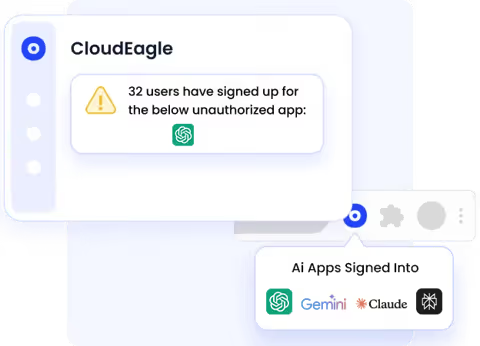
CloudEagle closes this gap by:
- Detecting Gemini usage using Google Workspace login data + card spend signals
- Surfacing unauthorized or unapproved Gemini access, even when it bypasses procurement
- Flagging overlapping AI tools (Gemini, ChatGPT, Claude) used by the same teams
CloudEagle delivers true AI usage visibility across Workspace environments governed by gemini google workspace pricing, not just approved licenses.
B. Optimize and harvest underused Gemini licenses
As Gemini adoption grows, license efficiency drops. Some users rely on Gemini daily, while others stop using it after initial experimentation.

CloudEagle enables practical Google Gemini license management by:
- Tracking user- and feature-level Gemini usage
- Identifying inactive, low-value, or misaligned licenses
- Automatically reclaiming, downgrading, or reassigning licenses via Okta or Microsoft AD
CloudEagle enables continuous Google Gemini license management by tracking usage patterns that directly influence google gemini api pricing exposure.
C. Enforce access governance and license accountability
Uncontrolled access is one of the fastest ways for Gemini's costs spiral.
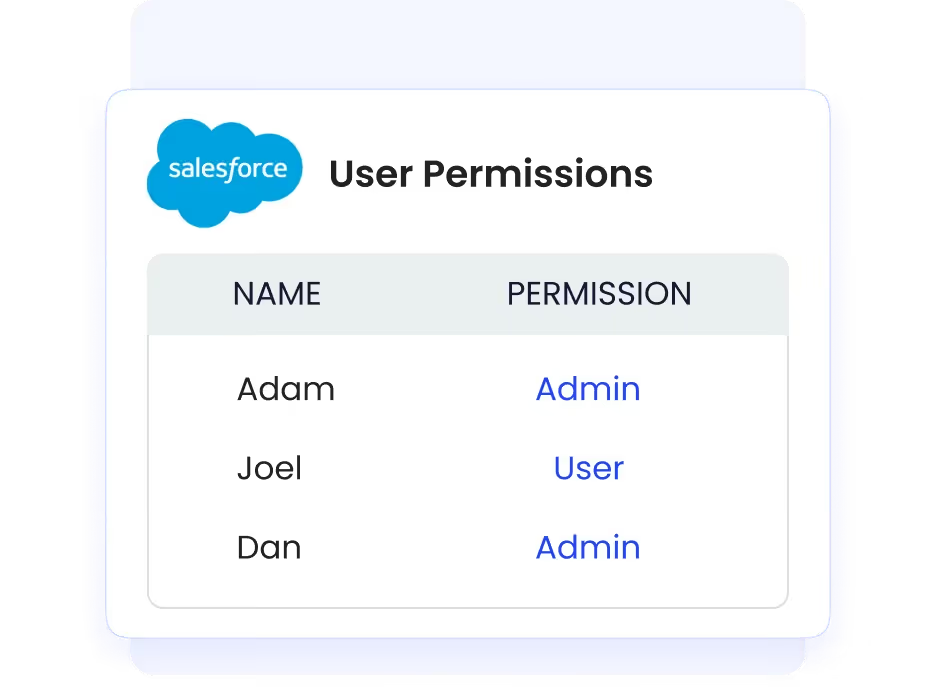
CloudEagle enforces:
- Role-based Gemini access aligned to job function
- Time-bound access for projects or temporary needs
- Automated access reviews to catch over-privileged users
This ensures Gemini enterprise pricing reflects active, justified usage, not historical access decisions embedded in older google gemini pricing plans.
D. Strengthen procurement and renewal decisions
Most enterprises renew Gemini licenses without understanding who actually needs which plan.
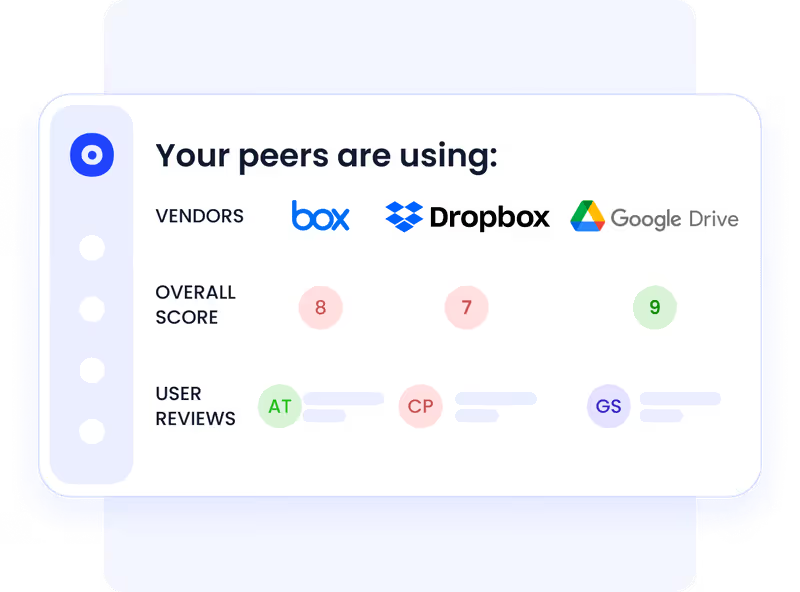
CloudEagle changes this by giving procurement teams:
- Usage-to-SKU mapping to align users with the right Gemini tier
- Pricing benchmarks across AI vendors to improve negotiation leverage
- Clear usage evidence before renewal conversations begin
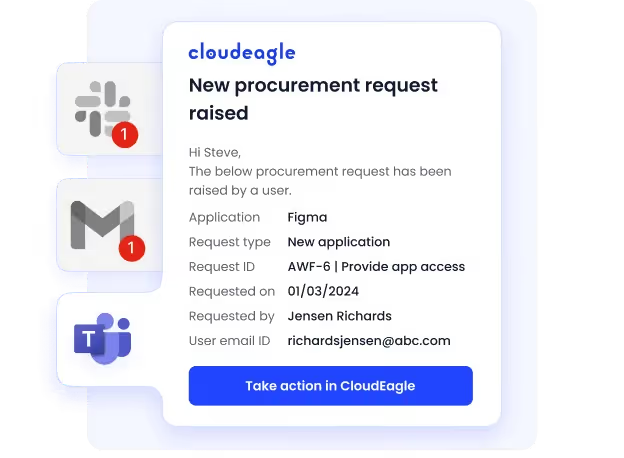
With usage-to-SKU mapping and pricing benchmarks, CloudEagle helps enterprises negotiate google gemini pricing from a position of data-backed leverage.
E. Why this matters for Gemini at scale
CloudEagle doesn’t just reduce spend, it operationalizes Gemini governance.
By combining AI usage visibility, automated Google Gemini license management, and renewal intelligence, CloudEagle keeps google gemini pricing predictable and aligned with business value.
In A Nutshell
Google Gemini pricing doesn’t become difficult because the tool is expensive. It becomes difficult when Gemini access spreads faster than visibility, ownership, and license discipline inside large enterprises.
Without structured Google Gemini license management, organizations struggle to forecast Gemini enterprise pricing or control costs tied to google gemini api pricing.
CloudEagle.ai helps enterprises bring Gemini under the same governance model as SaaS by combining AI usage visibility, license accountability, and continuous optimization to keep Gemini spend predictable at scale.
Book a free demo to see how CloudEagle.ai helps you optimize Google Gemini pricing before AI spend starts leaking across teams.
Frequently Asked Questions
- How much does Google Gemini cost?
Google Gemini pricing varies by Google Workspace plan and enterprise agreement. Costs increase as more users gain access and usage expands across workflows. - Is Google Gemini free or paid?
Gemini may be available in limited form in some Workspace plans, but enterprise-grade usage typically requires paid tiers with higher limits and controls. - Is Gemini cheaper than ChatGPT?
On paper, Gemini can appear cheaper because it’s bundled with Workspace. In practice, total cost depends on usage intensity and whether Gemini license management is in place. - Is Google Gemini worth the price?
Gemini delivers strong value when usage is visible and governed. Without AI usage visibility and optimization, ROI becomes harder to measure at an enterprise scale. - What is the difference between Gemini and Gemini Enterprise?
Gemini Enterprise includes higher usage limits, advanced capabilities, and stronger administrative controls designed for large organizations.


.avif)


.avif)
.avif)




.png)






.avif)
.avif)
.avif)


