You need to enable JavaScript in order to use the AI chatbot tool powered by ChatBot

Enterprise AI Tools: Discover the Top 12 Solutions for Business Success

Share via:
blog-cms-banner-bg
Little-Known Negotiation Hacks to Get the Best Deal on Slack
cta-bg-blogDownload Your Copy

HIPAA Compliance Checklist for 2025

Download PDF

Why do some companies outpace their competition, adapt faster, and consistently deliver more with less? 

The answer often lies in their tools, specifically, AI tools used in enterprises that act as silent powerhouses behind the scenes.

A recent report by McKinsey revealed that 55% of organizations have adopted AI in at least one business unit. Even more striking? Enterprises using AI at scale saw a 20% boost in operational efficiency and up to 40% cost savings in repetitive workflows. These aren't just numbers, they're real impacts, driven by the right AI stack.

If you’ve ever wondered which AI tools make the biggest difference in enterprise performance and why they matter, this guide will walk you through the top 12. Each one plays a unique role in automating, optimizing, or accelerating business operations.

Let’s dive into this intelligent toolbox that’s reshaping the enterprise world.

TL;DR

Top AI Tools Used In Enterprises

1. What is Enterprise AI?

Enterprise AI encompasses artificial intelligence systems and tools built to operate at scale across key business functions such as IT, security, procurement, finance, HR, and customer support. Unlike consumer AI, these enterprise solutions are tailored for complex workflows, regulatory compliance, robust security, and seamless integration with existing SaaS infrastructure.

  • Workflow Automation: Streamline repetitive tasks like license management and access reviews.
  • Decision Support: Leverage predictive analytics and benchmarking to enhance business decisions.
  • Enhance Governance: Gain visibility into SaaS usage, shadow IT, and optimize renewal cycles.
  • Productivity Tools: Accelerate content creation and meeting summaries with AI-driven assistants.
  • Security & Compliance: Automate access reviews and ensure regulatory compliance.
  • IT Operations: Detect anomalies and optimize workflows for greater efficiency.
  • Procurement & Spend Optimization: Benchmark pricing and manage renewals.
  • Development & QA: Enforce code quality and security standards.

Selecting the right enterprise AI tools is crucial for IT, security, and procurement leaders managing complex SaaS environments. Integrated AI platforms offer centralized visibility, automate governance, and optimize costs, transforming enterprise management from reactive to proactive, data-driven strategies

2. Why Enterprise AI Tools Matter in the Enterprise

AI tools in the enterprise go far beyond simple automation, they serve as powerful augmentation technologies that enhance workflows and drive better business outcomes. When implemented strategically, enterprise AI tools create tangible advantages for organizations seeking to remain competitive and future-ready.

  • Amplified Decision-Making: AI solutions empower teams with data-driven insights, leading to smarter and more timely decisions.
  • Error Reduction: By minimizing human error, AI-driven processes increase accuracy and reliability across business operations.
  • Time Reallocation: Employees can focus on high-value and strategic initiatives, as AI automates repetitive manual tasks—such as sales teams spending more time selling rather than on data entry, or developers detecting security threats early.
  • Substantial Economic Impact: According to PwC, AI technologies could add up to $15.7 trillion to the global economy by 2030, underlining their transformative potential for enterprises.
  • Foundation for Future Growth: Early adopters of enterprise AI tools are laying the groundwork for sustainable and scalable business growth.

In today’s landscape, adopting enterprise AI tools is no longer optional. They are now essential components of any robust and forward-thinking competitive strategy.

3. Benefits of AI Tools for Enterprises

So, what’s in it for you? Let’s break it down.

Significant Cost Savings Through Automation

AI tools help enterprises save substantial costs by automating repetitive and manual tasks. Instead of relying on large teams for mundane activities like data entry or note-taking, you can deploy tools like Fireflies AI to transcribe and summarize meetings automatically. This not only cuts down labor expenses but also frees up resources for more critical work.

Seamless Scalability Without Extra Overhead

As your enterprise grows, AI tools allow you to scale efficiently without a proportional increase in staff or infrastructure. Whether managing thousands of customer requests using ChatGPT or automating complex workflows with Workato Genie, AI provides the flexibility to handle increasing workloads smoothly and cost-effectively.

Improved Accuracy and Reduced Errors

AI enhances precision in various business processes by reducing human errors. Tools like SonarQube and Dependabot perform code reviews and security checks automatically, catching bugs and vulnerabilities that might be missed otherwise. This improves software quality and helps avoid costly mistakes.

Faster and Smarter Decision-Making

With AI-powered real-time analytics and predictive insights from platforms like Console IO and Gemini AI, you can make faster, more informed decisions. These tools analyze vast amounts of data quickly, providing actionable insights that keep your business ahead of market trends and operational challenges.

Better Resource Allocation and Focus on Strategic Work

By automating routine tasks, AI frees up your teams to focus on higher-value activities such as strategy, innovation, and customer engagement. Tools like Cursor and Unleashed help shift your workforce from repetitive tasks to creative problem-solving, maximizing productivity and business growth.

4. What are AI productivity tools?

AI productivity tools enhance existing enterprise software like email, chat, ITSM, ERP, and CRM by automating repetitive tasks through artificial intelligence. These tools streamline knowledge work without replacing your current systems.

  • Automate meeting transcriptions and extract action items
  • Streamline complex workflows with smart approvals
  • Identify and reclaim unused software licenses
  • Automatically route IT tickets to the right teams
  • Flag security risks during access reviews

By shifting teams from manual processes to proactive management, AI productivity tools help IT, security, procurement, and business leaders reduce operational costs and improve SaaS optimization.

5. These AI Tools Are Transforming the Modern Enterprise

Now that you understand the “why,” let’s dive into the “what.” Below are 12 of the most effective and widely adopted AI tools in enterprise environments today. Each one serves a unique purpose, from communication to coding to infrastructure management.

1. ChatGPT

ChatGPT is one of the most widely recognized AI tools in enterprises today. Its natural language processing capabilities allow it to understand and generate human-like text, making it an invaluable assistant for numerous communication and content-related tasks. Many businesses leverage ChatGPT to enhance productivity, customer service, and internal knowledge sharing.

ChatGPT

What It Does

ChatGPT generates text-based content like emails, reports, FAQs, and conversational responses. It understands context and tone, enabling it to provide tailored replies and draft documents quickly. It’s also used in chatbots to automate customer and employee interactions.

How It Helps

By automating routine writing and communication tasks, ChatGPT reduces workload and accelerates response times. It helps maintain consistency in messaging and enables employees to focus on higher-value tasks. Enterprises using ChatGPT can improve customer experience and internal communication without additional headcount.

Pricing

  • Free Tier: Basic access with limited features.
  • ChatGPT Plus: $20/month .
  • ChatGPT Pro: $200/month .

2. Fireflies AI

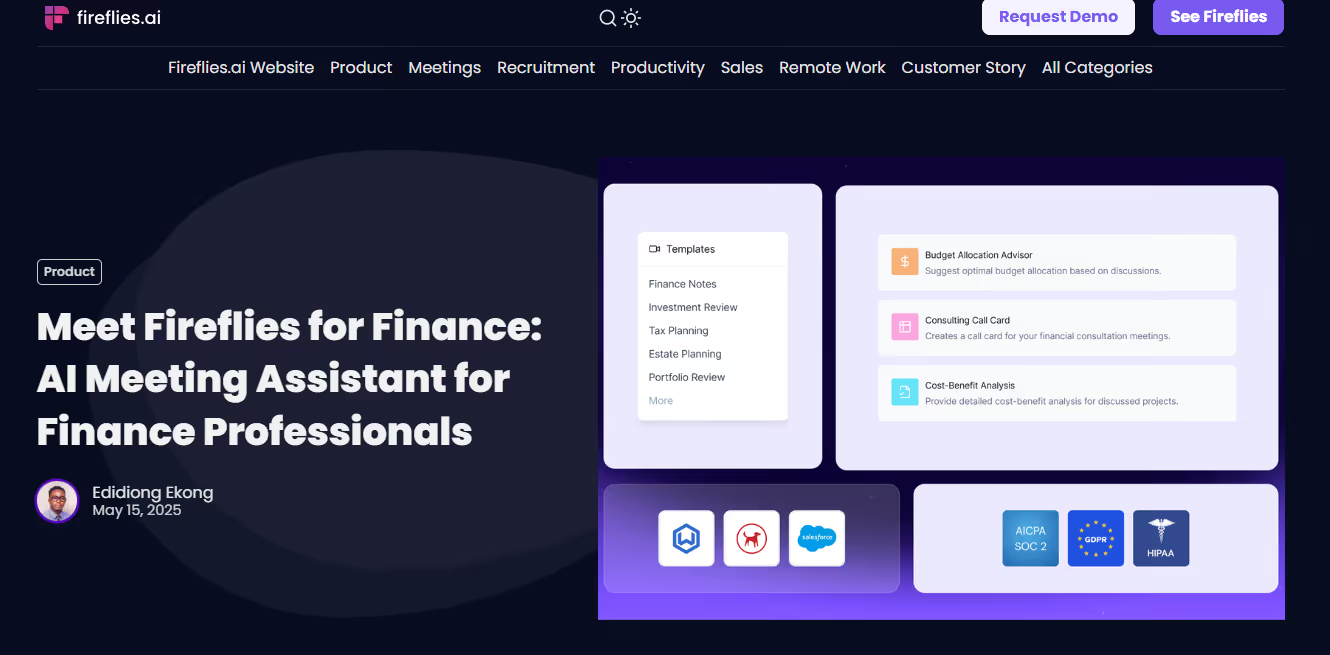
Fireflies AI specializes in automating meeting management, an area that often consumes valuable time and resources in enterprises. It uses AI to record, transcribe, and summarize meetings across multiple platforms, including Zoom and Microsoft Teams, making it easier to capture actionable insights without distraction.
Fireflies AI

What It Does

This tool records live meetings and converts speech into text. It then highlights important points, decisions, and action items. Integrations with CRM and project management systems allow automatic syncing of notes and follow-ups.

How It Helps

Fireflies AI removes the burden of manual note-taking, ensuring teams don’t miss crucial information. This results in better accountability and faster execution of tasks. With summaries automatically delivered to stakeholders, collaboration becomes more efficient and transparent.

Pricing

  • Free Plan: Limited transcription and storage.
  • Pro Plan: $10/month per user.
  • Business Plan: $19/month per user.
  • Enterprise Plan: $39/month per user.

3. Clay

In any enterprise, managing relationships is key to sales and partnership success. Clay offers an AI-powered CRM that dynamically updates contact details and aggregates data from emails, calendars, and social networks to create rich, actionable contact profiles.

Clay

What It Does

Clay continuously gathers and organizes contact information, providing a single source of truth about your business relationships. It surfaces reminders about important interactions and tracks relationship strength over time.

How It Helps

This AI-driven approach saves time that would otherwise be spent on manual data entry and research. Sales teams can quickly identify promising leads and personalize communication, improving conversion rates. Clay also helps maintain long-term relationships by reminding you to stay in touch.

Pricing

  • Free Plan: Up to 100 searches.
  • Pro Plan: $720/month. 
  • Explorer Plan: $314/month
  • Enterprise Plan: Custom pricing.

4. Gumloop

Gumloop offers a no-code AI platform designed to automate internal business workflows without requiring complex programming. Its user-friendly interface allows teams to create automated processes using natural language, making automation accessible to non-technical users.
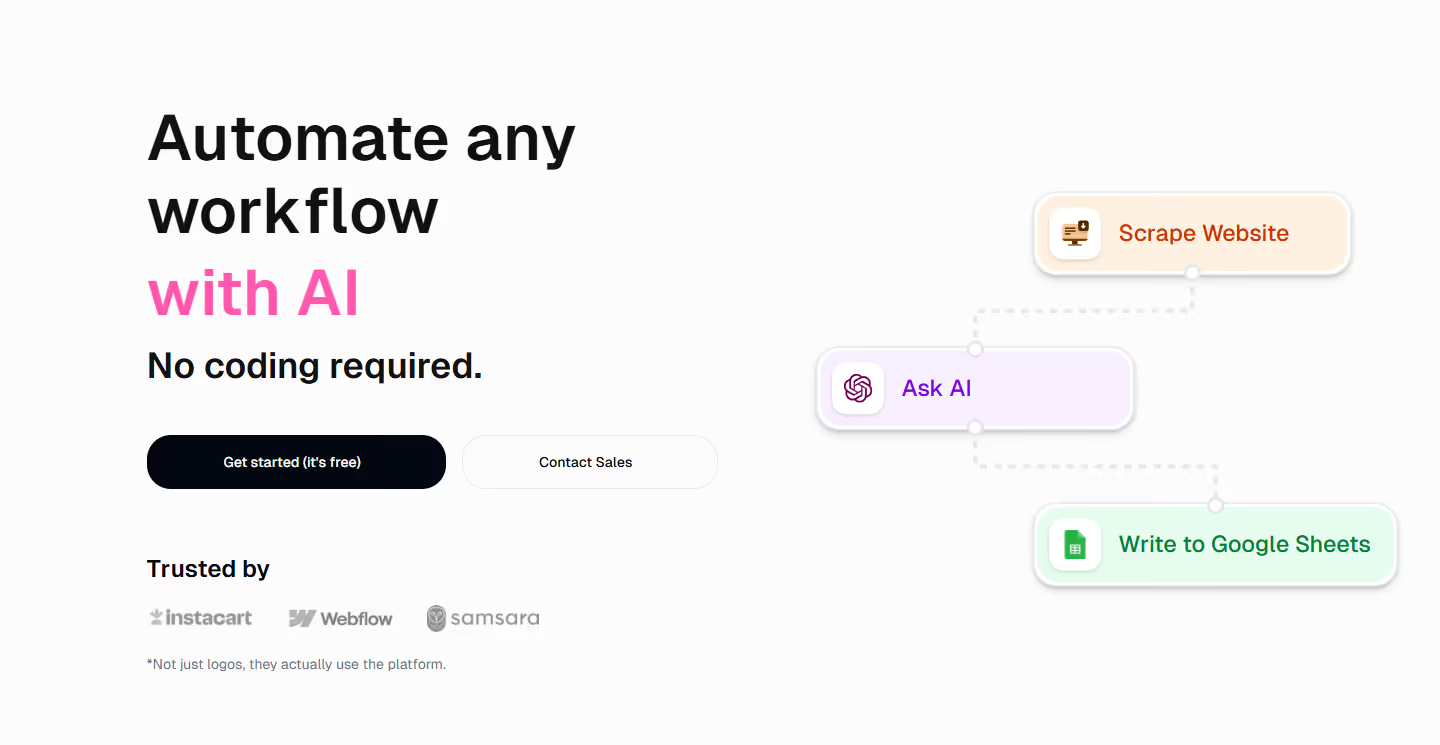
Gumloop

What It Does

It helps build automated workflows such as employee onboarding, approval routing, and task assignments by translating simple instructions into AI-driven processes.

How It Helps

By automating repetitive administrative tasks, Gumloop reduces manual errors and speeds up operations. This increases efficiency and allows HR and operations teams to focus on strategic priorities rather than routine follow-ups.

Pricing

  • Free Plan: 1,000 credits/month.
  • Starter Plan: $97/month for 30,000 credits.
  • Pro Plan: $297/month for 75,000 credits.
  • Enterprise Plan: Custom pricing.

5. Workato Genie

Workato Genie serves as an AI-powered assistant that analyzes your enterprise’s existing SaaS applications and recommends automation workflows tailored to your needs. It simplifies integrating and automating complex cross-application processes.
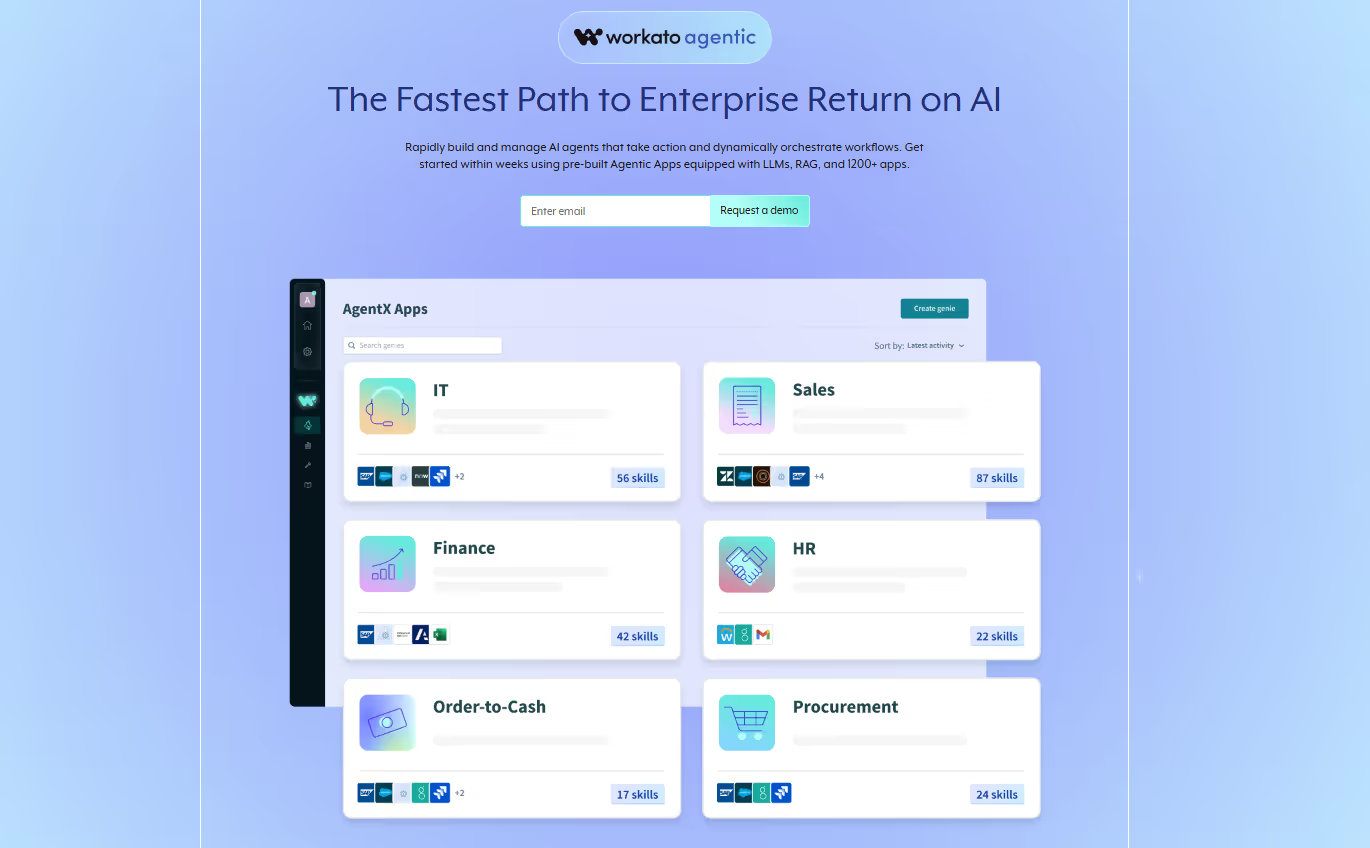
Workato Genie

What It Does

Workato Genie detects repetitive tasks like data entry or syncing information between apps and suggests workflows to automate these manually intensive processes.

How It Helps

Automating these processes reduces human error and frees your team’s time, increasing productivity. Workato Genie’s ability to learn your business logic over time means your automations become smarter and more aligned with your evolving needs.

Pricing

  • Custom Pricing: Based on usage and features; contact sales for a quote.

6. Atomicwork 

Atomicwork is an intelligent IT service management platform designed to automate routine tasks and streamline workflows across IT, HR, and other internal teams.
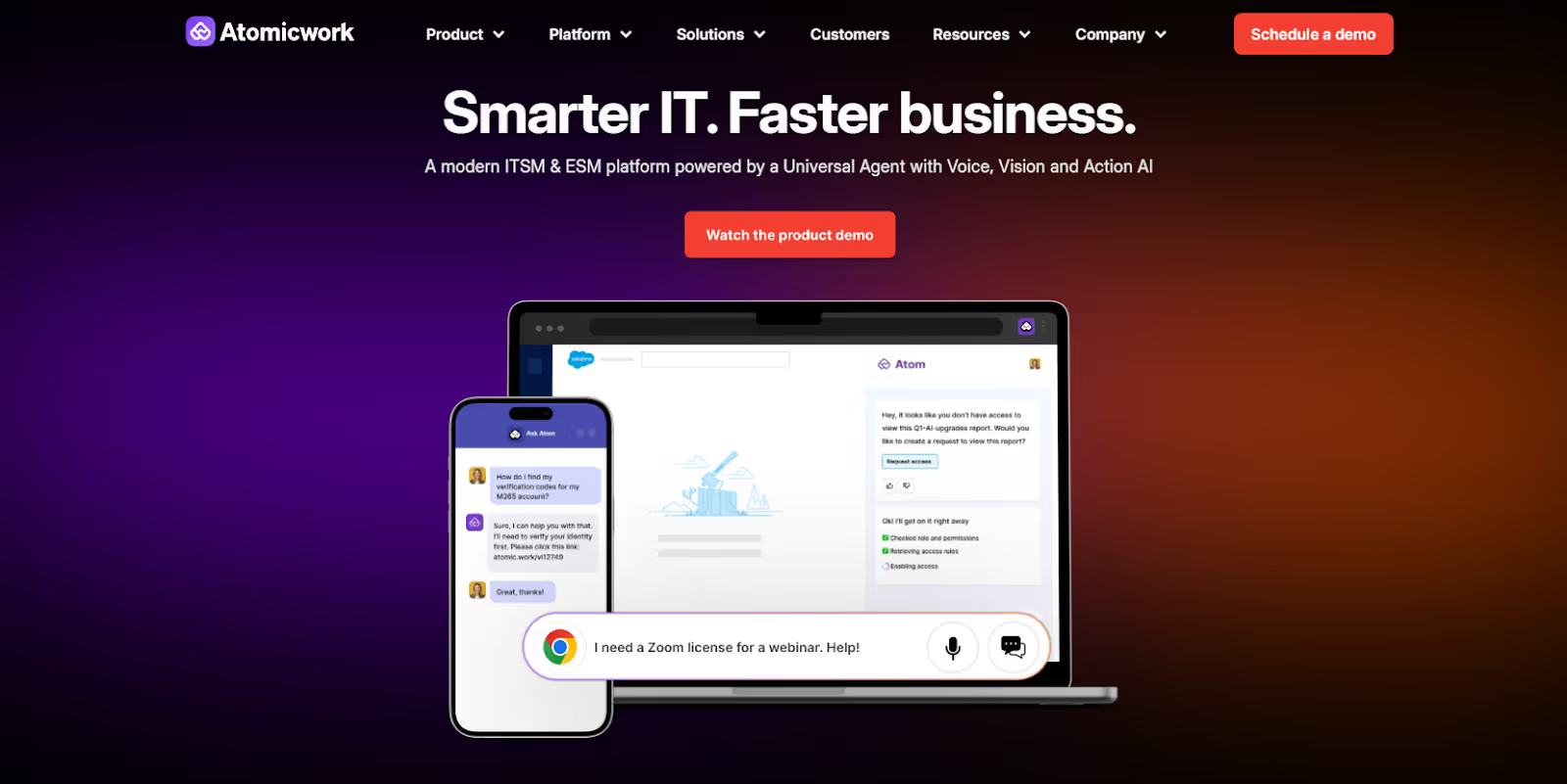
Atomicwork 

What It Does

It uses AI to manage internal service requests, automate ticket resolution, and orchestrate cross-functional workflows, reducing the need for manual intervention.

How It Helps

By centralizing service management and using generative AI to handle repetitive queries, Atomicwork improves employee experience and frees up IT teams to focus on more strategic initiatives.

Pricing

  • Professional: $90/user/year 
  • Business & Enterprise: Custom 

7. Dependabot

Dependabot, integrated with GitHub for vulnerability management, helps enterprises keep their codebases secure by automatically handling dependencies. It detects outdated or vulnerable software libraries and creates update requests to ensure your projects remain protected.

Dependabot

What It Does

Dependabot scans your code repositories regularly to detect dependencies needing updates due to security risks or improvements.

How It Helps

It automates the maintenance of dependencies, preventing vulnerabilities from entering production. This proactive approach reduces the risk of breaches and ensures compliance without requiring constant manual oversight.

Pricing

  • Free: For public repositories.
  • Paid: For private repositories; pricing varies based on usage.

8. SonarQube

SonarQube is an AI-driven code quality and security scanner that integrates into development pipelines. It continuously inspects your code for bugs, code smells, and security vulnerabilities to maintain high standards.
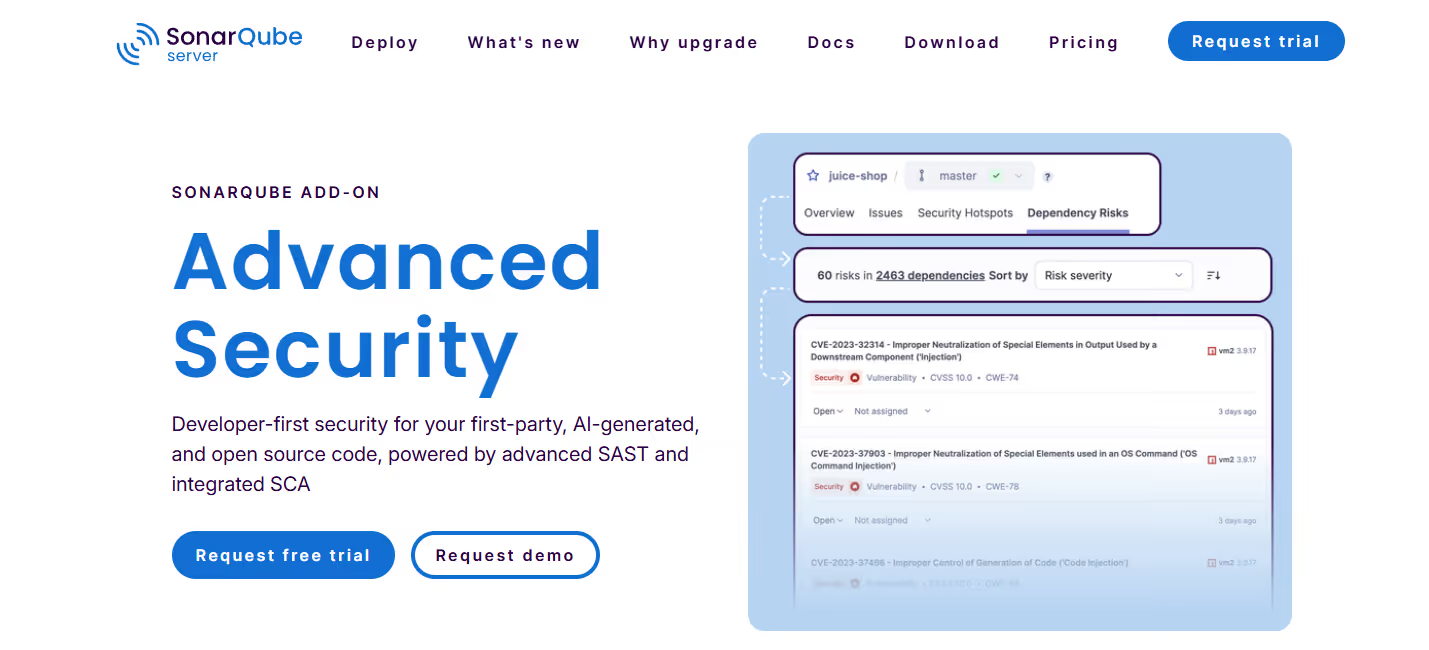
SonarQube

What It Does

SonarQube analyzes source code automatically during development, providing detailed reports on errors, potential risks, and areas for improvement.

How It Helps

By catching issues early, it prevents costly defects in production and reduces technical debt. This improves software reliability and security, ensuring smooth deployments and better user experiences.

Pricing

  • Free: Up to 50k lines of code
  • Team Plan: €32/month
  • Enterprise Plan: Pricing varies; contact sales for a quote.

9. Testlio

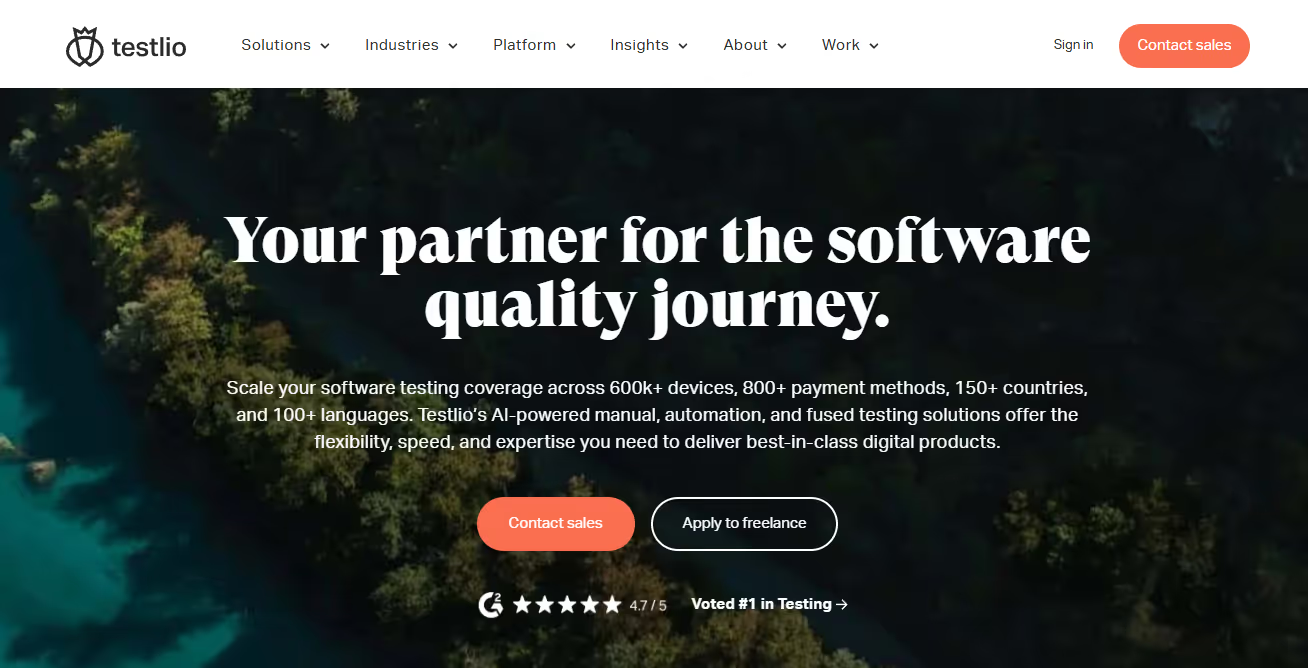
Testlio combines AI with a global network of professional testers to enhance software testing processes. It uses AI to identify high-risk areas and optimize test coverage, making quality assurance faster and more effective.
Testlio

What It Does

Testlio automates test case prioritization and execution, focusing human testing efforts where they matter most while automating repetitive checks.

How It Helps

This hybrid testing model accelerates release cycles without compromising quality. Enterprises benefit from higher confidence in software stability and quicker time-to-market.

Pricing

  • No pricing available 

10. Gemini AI

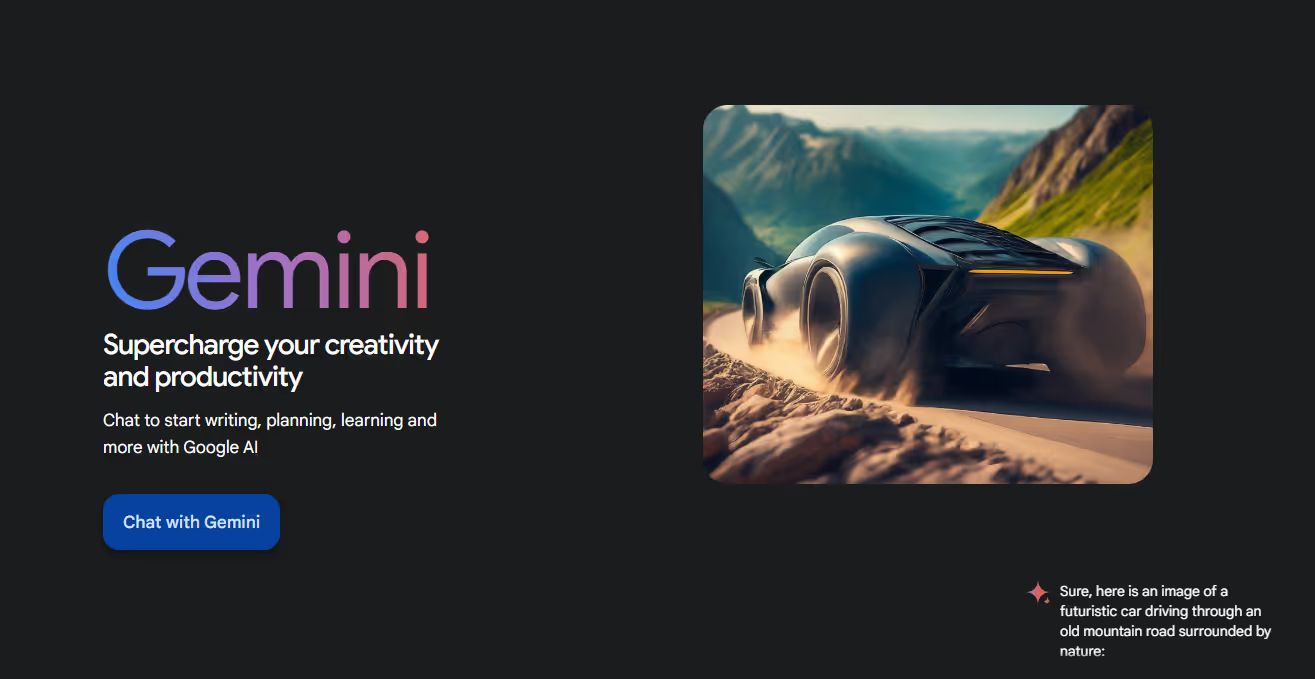
Gemini AI, developed by Google, brings generative AI capabilities directly into enterprise workflows via Google Workspace. It supports a range of tasks from drafting emails to coding and data analysis.
 Gemini

What It Does

Gemini AI assists users by generating content, summarizing documents, and writing code snippets, all integrated within familiar tools like Gmail and Google Docs.

How It Helps

Embedding AI into daily work reduces friction and increases productivity. Employees can complete tasks faster with AI support, improving efficiency across marketing, development, and data teams.

Pricing

  • Free Access: Gemini 2.5 Pro is now free to all users.
  • Advanced Features: $19.99/month; pricing varies.

11. Unleash

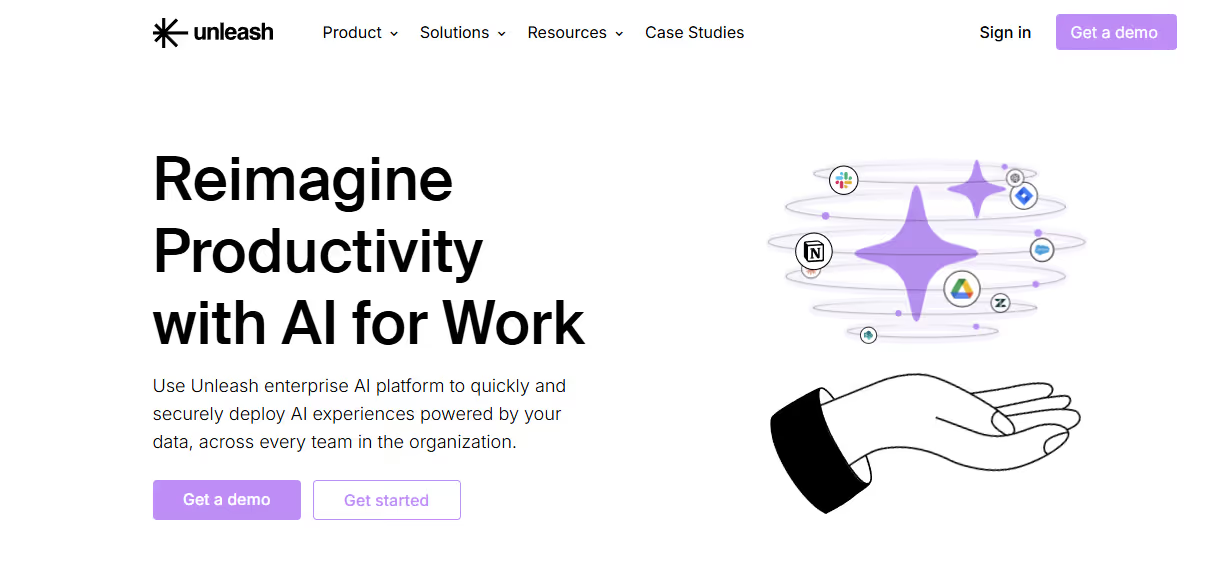
Unleash AI is also the name of a tool that integrates with Slack to provide AI-powered channel summaries and key insights. It’s especially useful for busy teams trying to keep up with ongoing conversations.
Unleash

What It Does

It uses natural language processing to summarize Slack threads, highlight decisions, and surface relevant information without scrolling endlessly.

How It Helps

It improves productivity by reducing noise and helping team members stay updated, even if they miss real-time discussions.

Pricing

  • No pricing available 

12. Cursor

Cursor is an AI coding assistant designed to work inside your development environment. It offers real-time code suggestions, documentation, and explanations tailored to your project context.

Cursor

What It Does

Cursor analyzes the code you write and provides autocomplete suggestions, error explanations, and quick access to documentation as you type.

How It Helps

It boosts developer productivity by reducing time spent debugging and searching for solutions. New team members ramp up faster with contextual guidance, improving overall code quality and speed.

Pricing

  • Free: Basic features are available for free.
  • Pro: $20/month 
  • Business: $40/user/month

6. Leading Generative AI Tools for Enterprises

When selecting AI tools, enterprises should focus on strategic categories and functionality rather than sheer quantity. The most valuable generative AI solutions fit four main archetypes, each serving critical business needs.

Core Categories of Enterprise AI Tools

  • Conversational Copilots: Tools like ChatGPT streamline content creation and automate customer support.
  • Productivity Suite Integrations: Embedded solutions such as Gemini AI in Google Workspace boost collaboration and document workflows.
  • AI Coding Assistants: Platforms like Cursor and Dependabot accelerate software development and automate dependency management.
  • Intelligent Automation: Workato Genie and Gumloop enable no-code workflow automation across business systems.

Key Considerations for Enterprise Adoption

  • Prioritize AI tools that support leading IT governance frameworks, including granular access controls, single sign-on (SSO) integration, automated compliance management, and transparent data residency options.
  • Choose solutions that seamlessly integrate with core departmental processes:
    • Examples: SonarQube and Testlio for direct integration into development and QA workflows.
    • Atomicwork and Fireflies AI for enhancing IT service management and meeting intelligence.
  • Look for enterprise AI tools featuring deep SaaS integration, API extensibility, and advanced usage analytics to help optimize costs and consolidate workflows.
  • By selecting robust, integrated platforms, organizations can drive greater efficiency, security, and business value from their enterprise AI investments.

7. Enterprise AI Solutions and Their Business Impact

Enterprise AI tools empower organizations to streamline operations, drive efficiency, and strengthen governance across key business functions. These solutions address specific challenges and integrate into a unified SaaS management strategy. Leading enterprise AI categories include:

  • Communication & knowledge assistants (e.g., ChatGPT, Fireflies AI)
  • Workflow & integration automation (e.g., Workato Genie, Gumloop)
  • IT service management platforms (e.g., Atomicwork)
  • Code quality & security scanners (e.g., SonarQube, Dependabot)
  • Automated testing tools (e.g., Testlio)
  • Productivity & collaboration assistants (e.g., Gemini AI, Unleash)

Strategic adoption of enterprise AI tools delivers measurable outcomes:

  • Automated user access governance to ensure secure, compliant access at scale
  • Intelligent triage and automation reduce IT support workload
  • Real-time insights empower procurement with data-driven decisions
  • Continuous license optimization and duplicate app removal, reducing SaaS costs by 10–30%

By uniting AI tools within a cohesive SaaS governance framework, organizations shift from reactive IT management to proactive, automated optimization. AI continuously monitors usage, flags compliance risks, streamlines approvals, and recovers unused licenses, resulting in a secure, self-optimizing SaaS ecosystem that maximizes ROI, especially valuable for enterprises managing numerous applications with lean IT teams.

8. Challenges in Adopting AI Tools in Enterprises

While AI tools can revolutionize how enterprises operate, adopting them isn’t always straightforward. Several challenges can slow down or complicate AI implementation if not addressed early on.

Data Privacy and Regulatory Compliance

AI tools handle massive amounts of sensitive data, which raises concerns around privacy and compliance. Regulations like GDPR and HIPAA require strict data protection measures that enterprises must follow to avoid penalties.

Ensuring that AI vendors securely store and process data with encryption, access controls, and audit trails is essential. Failure to comply with these standards can expose your enterprise to legal risks and damage its reputation.

Change Management and User Adoption

Employees may resist AI tools if they disrupt familiar workflows or feel intimidating. Lack of proper training and communication often results in low adoption and wasted investment.

To succeed, leadership should actively support change, communicate the benefits clearly, and provide ongoing training. This helps employees feel comfortable and motivated to embrace the new technology.

Integration Complexity with Legacy Systems

Most enterprises have legacy software and complex IT environments that aren’t always compatible with modern AI tools. Integration issues can cause costly delays and require custom development.

It’s important to evaluate AI tools for compatibility and available APIs before adoption. Seamless integration helps maintain smooth operations and maximizes the AI tool’s effectiveness.

Managing Expectations and Continuous Improvement

AI isn’t an instant fix and requires time to be tuned to your business needs. Unrealistic expectations about immediate results can lead to disappointment and abandoned projects.

Successful AI adoption demands patience, ongoing monitoring, and iterative improvements. Setting realistic goals and understanding AI’s evolving nature is key to long-term success.

9. Best AI tools for business leaders and executives

Top enterprise AI tools offer centralized visibility, automate governance, and deliver AI-powered dashboards for real-time spend, usage, and risk insights. These platforms help benchmark SaaS costs, consolidate vendors, eliminate redundancies, and provide automated renewal alerts and streamlined approvals, maximizing savings with pre-negotiated discounts.

CIOs and executives use AI tools to move from reactive to proactive procurement. They align SaaS investments with business goals, monitor spend at both department and user levels, and generate detailed budget reports, with alerts to prevent overruns and ensure compliance.

Automated access governance and compliance features reduce security risks and unauthorized app use. By applying AI-driven scenario planning and benchmarking, enterprises typically save 10-30% on software spend, supporting confident, data-driven decisions.

10. How Enterprises Should Choose the Right AI Tools

Choosing the right AI tool for your enterprise can feel overwhelming. But breaking the process down into clear steps makes it manageable and ensures you pick the best fit for your needs.

Identify Your Business Needs

Start by pinpointing the specific problems or gaps your enterprise wants to address. Are you looking to improve customer service, automate workflows, enhance data security, or optimize inventory? Defining clear goals narrows down your options.

Evaluate Tool Functionality

Once you know your needs, look for AI tools that directly address those areas. Assess features carefully, does the tool solve your problems? Check if it integrates smoothly with your current systems and software.

Consider User Adoption

Involve the actual users early on. Tools with complex interfaces or poor usability can hinder adoption. Run pilot programs with small teams to collect feedback and identify potential challenges before full deployment.

Analyze Pricing and ROI

Review the pricing models and compare them against your budget and expected return on investment. Choose tools that offer scalable plans and clear value without hidden costs.

Ensure Security and Compliance

Confirm the AI tool meets your enterprise’s security policies and regulatory requirements. Data protection should be a priority to avoid future risks and penalties.

Plan for Continuous Support and Improvement

AI tools evolve and may require ongoing updates and training. Choose vendors who provide reliable customer support and regular product improvements.

11. Key technology considerations in enterprise AI tools

When selecting and standardizing enterprise AI tools, it's essential that IT, security, and procurement teams thoroughly assess technical capabilities that affect both operational risk and scalability. Proper evaluation ensures secure, efficient, and future-ready adoption of AI solutions across the organization.

  • Extensive integrations: Look for AI tools offering deep, native integration with SaaS, HR, and finance platforms—ideally providing over 500+ direct connectors to ensure comprehensive visibility without manual data entry.
  • Identity and access management: Prioritize robust features such as Single Sign-On (SSO), SCIM provisioning, role-based access controls, and automated, time-bound access policies that expire as needed.
  • Automated governance and compliance: Critical features include automated access governance, continuous access reviews, detailed audit logs, data encryption at rest and in transit, and configurable data residency settings for handling sensitive SaaS usage, contract information, and employee data.
  • API and webhook support: Ensure the AI platform has strong API and webhook capabilities to embed insights into ITSM, procurement, and approval workflows, supporting seamless workflow integration and automation.
  • No-code workflow automation: Opt for tools that enable no-code automation for approvals, access reviews, and procurement requests, streamlining operational processes.
  • Advanced governance features: Key capabilities include approval routing, detailed activity logging, departmental reporting, and proactive budget alerts to reduce manual oversight while maintaining control.
  • Modern collaboration and automation: Support for Slack-enabled workflows and intelligent renewal automation empowers teams to act on AI-driven recommendations directly within their workspace.

By adopting enterprise AI tools with these foundational features, organizations can enhance security posture, drive compliance, and automate business processes at scale across their SaaS ecosystem.

12. How to Select the Best Enterprise Generative AI Tool

Choosing the right generative AI tool for your enterprise can significantly impact productivity, security, and ROI. With a wide range of options available, it's essential to follow a structured approach to ensure the selected solution aligns with both your business objectives and IT infrastructure.

Define Your Enterprise Use Case

Begin by identifying your specific requirements, whether you need a knowledge assistant, a coding copilot, or automation solutions for SaaS governance. Clearly outlining your primary use case will help narrow down the most suitable enterprise AI tools from the start.

Evaluate Performance, Security, and Privacy

Assess each tool’s model accuracy and the presence of robust safety guardrails. It’s crucial to ensure the AI solution offers strong data privacy controls to keep sensitive enterprise information secure. Pay close attention to compliance with industry regulations relevant to your business.

Prioritize Integrations for Seamless Workflows

Look for AI tools that offer deep integration with your existing SaaS infrastructure, identity providers such as Okta, and collaboration platforms like Slack or Microsoft Teams. Seamless integrations reduce manual data entry and help maintain efficient, automated workflows across teams.

Assess Governance and Compliance Features

Strong governance capabilities are a must for enterprise AI deployments. Evaluate features such as single sign-on (SSO), role-based access control, audit logging, and automated access reviews. These controls help maintain security, support compliance, and minimize risk throughout your organization.

Compare Pricing and Adoption Models

Analyze the pricing structures and usage limits of each AI tool, ensuring they align with your projected scale and adoption. Confirm that the solution is compatible with your IT, security, and procurement policies before making a commitment.

Pilot, Measure, and Standardize

Pilot your chosen AI tool with a small group of users, tracking productivity improvements through metrics like time saved or tasks automated. Gather user feedback to validate the tool’s effectiveness. Once confirmed, consolidate your list of approved generative AI solutions, document usage policies, and provide self-service access via a centralized catalog to prevent shadow IT while maximizing enterprise value.

Final Takeaway

AI tools are no longer optional; they’re essential. From automating tasks to optimizing decision-making, the right AI stack can unlock speed, efficiency, and smarter growth across your enterprise. Each tool featured here brings unique value depending on your goals.

But selecting the right tool is only half the job. Success depends on aligning those tools with your actual business needs, training your teams, and navigating challenges like integration or cost. A thoughtful, step-by-step approach ensures long-term value.

That’s where CloudEagle.ai helps. It helps you discover, track, and optimize AI tools as part of your SaaS stack. From managing spend to automating renewals and eliminating tool overlap, CloudEagle ensures your enterprise gets the most value from every AI investment.

Tired of AI tool overload? Book a free demo and let CloudEagle.ai take charge. 

Frequently Asked Questions 

1. What are the top 5 generative AI tools?

The top generative AI tools are ChatGPT, Midjourney, Jasper, GitHub Copilot, and DALL·E—used for generating text, images, and code across various industries and creative workflows.

2. What are the top 5 AI platforms?

Leading AI platforms include Google Cloud AI, Microsoft Azure AI, AWS AI, IBM Watson, and OpenAI. These offer robust tools for building, training, and deploying machine learning models.

3. Is ChatGPT the best AI tool?

ChatGPT is one of the most powerful conversational AIs, widely used for writing, coding, and research. Its effectiveness depends on your use case compared to other specialized tools.

4. What is the best free AI tool today?

ChatGPT (GPT-3.5) is a top free AI tool. Others include Canva AI for design, Notion AI for productivity, and Grammarly for writing assistance, all highly useful for daily tasks.

5. Is ChatGPT free?

Yes, ChatGPT offers a free version with GPT-3.5. A paid “Plus” plan with GPT-4 access is available for $20/month, offering better performance and additional capabilities.

Advertisement for a SaaS Subscription Tracking Template with a call-to-action button to download and a partial graphic of a tablet showing charts.Banner promoting a SaaS Agreement Checklist to streamline SaaS management and avoid budget waste with a call-to-action button labeled Download checklist.Blue banner with text 'The Ultimate Employee Offboarding Checklist!' and a black button labeled 'Download checklist' alongside partial views of checklist documents from cloudeagle.ai.Digital ad for download checklist titled 'The Ultimate Checklist for IT Leaders to Optimize SaaS Operations' by cloudeagle.ai, showing checklist pages.Slack Buyer's Guide offer with text 'Unlock insider insights to get the best deal on Slack!' and a button labeled 'Get Your Copy', accompanied by a preview of the guide featuring Slack's logo.Monday Pricing Guide by cloudeagle.ai offering exclusive pricing secrets to maximize investment with a call-to-action button labeled Get Your Copy and an image of the guide's cover.Blue banner for Canva Pricing Guide by cloudeagle.ai offering a guide to Canva costs, features, and alternatives with a call-to-action button saying Get Your Copy.Blue banner with white text reading 'Little-Known Negotiation Hacks to Get the Best Deal on Slack' and a white button labeled 'Get Your Copy'.Blue banner with text 'Little-Known Negotiation Hacks to Get the Best Deal on Monday.com' and a white button labeled 'Get Your Copy'.Blue banner with text 'Little-Known Negotiation Hacks to Get the Best Deal on Canva' and a white button labeled 'Get Your Copy'.Banner with text 'Slack Buyer's Guide' and a 'Download Now' button next to images of a guide titled 'Slack Buyer’s Guide: Features, Pricing & Best Practices'.Digital cover of Monday Pricing Guide with a button labeled Get Your Copy on a blue background.Canva Pricing Guide cover with a button labeled Get Your Copy on a blue gradient background.

Enter your email to
unlock the report

Oops! Something went wrong while submitting the form.
License Count
Benchmark
Per User/Per Year

Enter your email to
unlock the report

Oops! Something went wrong while submitting the form.
License Count
Benchmark
Per User/Per Year

Enter your email to
unlock the report

Oops! Something went wrong while submitting the form.
Notion Plus
License Count
Benchmark
Per User/Per Year
100-500
$67.20 - $78.72
500-1000
$59.52 - $72.00
1000+
$51.84 - $57.60
Canva Pro
License Count
Benchmark
Per User/Per Year
100-500
$74.33-$88.71
500-1000
$64.74-$80.32
1000+
$55.14-$62.34

Enter your email to
unlock the report

Oops! Something went wrong while submitting the form.

Enter your email to
unlock the report

Oops! Something went wrong while submitting the form.
Zoom Business
License Count
Benchmark
Per User/Per Year
100-500
$216.00 - $264.00
500-1000
$180.00 - $216.00
1000+
$156.00 - $180.00

Enter your email to
unlock the report

Oops! Something went wrong while submitting the form.

Get the Right Security Platform To Secure Your Cloud Infrastructure

Please enter a business email
Thank you!
The 2023 SaaS report has been sent to your email. Check your promotional or spam folder.
Oops! Something went wrong while submitting the form.

Access full report

Please enter a business email
Thank you!
The 2023 SaaS report has been sent to your email. Check your promotional or spam folder.
Oops! Something went wrong while submitting the form.

Why do some companies outpace their competition, adapt faster, and consistently deliver more with less? 

The answer often lies in their tools, specifically, AI tools used in enterprises that act as silent powerhouses behind the scenes.

A recent report by McKinsey revealed that 55% of organizations have adopted AI in at least one business unit. Even more striking? Enterprises using AI at scale saw a 20% boost in operational efficiency and up to 40% cost savings in repetitive workflows. These aren't just numbers, they're real impacts, driven by the right AI stack.

If you’ve ever wondered which AI tools make the biggest difference in enterprise performance and why they matter, this guide will walk you through the top 12. Each one plays a unique role in automating, optimizing, or accelerating business operations.

Let’s dive into this intelligent toolbox that’s reshaping the enterprise world.

TL;DR

Top AI Tools Used In Enterprises

1. What is Enterprise AI?

Enterprise AI encompasses artificial intelligence systems and tools built to operate at scale across key business functions such as IT, security, procurement, finance, HR, and customer support. Unlike consumer AI, these enterprise solutions are tailored for complex workflows, regulatory compliance, robust security, and seamless integration with existing SaaS infrastructure.

  • Workflow Automation: Streamline repetitive tasks like license management and access reviews.
  • Decision Support: Leverage predictive analytics and benchmarking to enhance business decisions.
  • Enhance Governance: Gain visibility into SaaS usage, shadow IT, and optimize renewal cycles.
  • Productivity Tools: Accelerate content creation and meeting summaries with AI-driven assistants.
  • Security & Compliance: Automate access reviews and ensure regulatory compliance.
  • IT Operations: Detect anomalies and optimize workflows for greater efficiency.
  • Procurement & Spend Optimization: Benchmark pricing and manage renewals.
  • Development & QA: Enforce code quality and security standards.

Selecting the right enterprise AI tools is crucial for IT, security, and procurement leaders managing complex SaaS environments. Integrated AI platforms offer centralized visibility, automate governance, and optimize costs, transforming enterprise management from reactive to proactive, data-driven strategies

2. Why Enterprise AI Tools Matter in the Enterprise

AI tools in the enterprise go far beyond simple automation, they serve as powerful augmentation technologies that enhance workflows and drive better business outcomes. When implemented strategically, enterprise AI tools create tangible advantages for organizations seeking to remain competitive and future-ready.

  • Amplified Decision-Making: AI solutions empower teams with data-driven insights, leading to smarter and more timely decisions.
  • Error Reduction: By minimizing human error, AI-driven processes increase accuracy and reliability across business operations.
  • Time Reallocation: Employees can focus on high-value and strategic initiatives, as AI automates repetitive manual tasks—such as sales teams spending more time selling rather than on data entry, or developers detecting security threats early.
  • Substantial Economic Impact: According to PwC, AI technologies could add up to $15.7 trillion to the global economy by 2030, underlining their transformative potential for enterprises.
  • Foundation for Future Growth: Early adopters of enterprise AI tools are laying the groundwork for sustainable and scalable business growth.

In today’s landscape, adopting enterprise AI tools is no longer optional. They are now essential components of any robust and forward-thinking competitive strategy.

3. Benefits of AI Tools for Enterprises

So, what’s in it for you? Let’s break it down.

Significant Cost Savings Through Automation

AI tools help enterprises save substantial costs by automating repetitive and manual tasks. Instead of relying on large teams for mundane activities like data entry or note-taking, you can deploy tools like Fireflies AI to transcribe and summarize meetings automatically. This not only cuts down labor expenses but also frees up resources for more critical work.

Seamless Scalability Without Extra Overhead

As your enterprise grows, AI tools allow you to scale efficiently without a proportional increase in staff or infrastructure. Whether managing thousands of customer requests using ChatGPT or automating complex workflows with Workato Genie, AI provides the flexibility to handle increasing workloads smoothly and cost-effectively.

Improved Accuracy and Reduced Errors

AI enhances precision in various business processes by reducing human errors. Tools like SonarQube and Dependabot perform code reviews and security checks automatically, catching bugs and vulnerabilities that might be missed otherwise. This improves software quality and helps avoid costly mistakes.

Faster and Smarter Decision-Making

With AI-powered real-time analytics and predictive insights from platforms like Console IO and Gemini AI, you can make faster, more informed decisions. These tools analyze vast amounts of data quickly, providing actionable insights that keep your business ahead of market trends and operational challenges.

Better Resource Allocation and Focus on Strategic Work

By automating routine tasks, AI frees up your teams to focus on higher-value activities such as strategy, innovation, and customer engagement. Tools like Cursor and Unleashed help shift your workforce from repetitive tasks to creative problem-solving, maximizing productivity and business growth.

4. What are AI productivity tools?

AI productivity tools enhance existing enterprise software like email, chat, ITSM, ERP, and CRM by automating repetitive tasks through artificial intelligence. These tools streamline knowledge work without replacing your current systems.

  • Automate meeting transcriptions and extract action items
  • Streamline complex workflows with smart approvals
  • Identify and reclaim unused software licenses
  • Automatically route IT tickets to the right teams
  • Flag security risks during access reviews

By shifting teams from manual processes to proactive management, AI productivity tools help IT, security, procurement, and business leaders reduce operational costs and improve SaaS optimization.

5. These AI Tools Are Transforming the Modern Enterprise

Now that you understand the “why,” let’s dive into the “what.” Below are 12 of the most effective and widely adopted AI tools in enterprise environments today. Each one serves a unique purpose, from communication to coding to infrastructure management.

1. ChatGPT

ChatGPT is one of the most widely recognized AI tools in enterprises today. Its natural language processing capabilities allow it to understand and generate human-like text, making it an invaluable assistant for numerous communication and content-related tasks. Many businesses leverage ChatGPT to enhance productivity, customer service, and internal knowledge sharing.

ChatGPT

What It Does

ChatGPT generates text-based content like emails, reports, FAQs, and conversational responses. It understands context and tone, enabling it to provide tailored replies and draft documents quickly. It’s also used in chatbots to automate customer and employee interactions.

How It Helps

By automating routine writing and communication tasks, ChatGPT reduces workload and accelerates response times. It helps maintain consistency in messaging and enables employees to focus on higher-value tasks. Enterprises using ChatGPT can improve customer experience and internal communication without additional headcount.

Pricing

  • Free Tier: Basic access with limited features.
  • ChatGPT Plus: $20/month .
  • ChatGPT Pro: $200/month .

2. Fireflies AI

Fireflies AI specializes in automating meeting management, an area that often consumes valuable time and resources in enterprises. It uses AI to record, transcribe, and summarize meetings across multiple platforms, including Zoom and Microsoft Teams, making it easier to capture actionable insights without distraction.

Fireflies AI

What It Does

This tool records live meetings and converts speech into text. It then highlights important points, decisions, and action items. Integrations with CRM and project management systems allow automatic syncing of notes and follow-ups.

How It Helps

Fireflies AI removes the burden of manual note-taking, ensuring teams don’t miss crucial information. This results in better accountability and faster execution of tasks. With summaries automatically delivered to stakeholders, collaboration becomes more efficient and transparent.

Pricing

  • Free Plan: Limited transcription and storage.
  • Pro Plan: $10/month per user.
  • Business Plan: $19/month per user.
  • Enterprise Plan: $39/month per user.

3. Clay

In any enterprise, managing relationships is key to sales and partnership success. Clay offers an AI-powered CRM that dynamically updates contact details and aggregates data from emails, calendars, and social networks to create rich, actionable contact profiles.

Clay

What It Does

Clay continuously gathers and organizes contact information, providing a single source of truth about your business relationships. It surfaces reminders about important interactions and tracks relationship strength over time.

How It Helps

This AI-driven approach saves time that would otherwise be spent on manual data entry and research. Sales teams can quickly identify promising leads and personalize communication, improving conversion rates. Clay also helps maintain long-term relationships by reminding you to stay in touch.

Pricing

  • Free Plan: Up to 100 searches.
  • Pro Plan: $720/month. 
  • Explorer Plan: $314/month
  • Enterprise Plan: Custom pricing.

4. Gumloop

Gumloop offers a no-code AI platform designed to automate internal business workflows without requiring complex programming. Its user-friendly interface allows teams to create automated processes using natural language, making automation accessible to non-technical users.

Gumloop

What It Does

It helps build automated workflows such as employee onboarding, approval routing, and task assignments by translating simple instructions into AI-driven processes.

How It Helps

By automating repetitive administrative tasks, Gumloop reduces manual errors and speeds up operations. This increases efficiency and allows HR and operations teams to focus on strategic priorities rather than routine follow-ups.

Pricing

  • Free Plan: 1,000 credits/month.
  • Starter Plan: $97/month for 30,000 credits.
  • Pro Plan: $297/month for 75,000 credits.
  • Enterprise Plan: Custom pricing.

5. Workato Genie

Workato Genie serves as an AI-powered assistant that analyzes your enterprise’s existing SaaS applications and recommends automation workflows tailored to your needs. It simplifies integrating and automating complex cross-application processes.

Workato Genie

What It Does

Workato Genie detects repetitive tasks like data entry or syncing information between apps and suggests workflows to automate these manually intensive processes.

How It Helps

Automating these processes reduces human error and frees your team’s time, increasing productivity. Workato Genie’s ability to learn your business logic over time means your automations become smarter and more aligned with your evolving needs.

Pricing

  • Custom Pricing: Based on usage and features; contact sales for a quote.

6. Atomicwork 

Atomicwork is an intelligent IT service management platform designed to automate routine tasks and streamline workflows across IT, HR, and other internal teams.

Atomicwork 

What It Does

It uses AI to manage internal service requests, automate ticket resolution, and orchestrate cross-functional workflows, reducing the need for manual intervention.

How It Helps

By centralizing service management and using generative AI to handle repetitive queries, Atomicwork improves employee experience and frees up IT teams to focus on more strategic initiatives.

Pricing

  • Professional: $90/user/year 
  • Business & Enterprise: Custom 

7. Dependabot

Dependabot, integrated with GitHub for vulnerability management, helps enterprises keep their codebases secure by automatically handling dependencies. It detects outdated or vulnerable software libraries and creates update requests to ensure your projects remain protected.

Dependabot

What It Does

Dependabot scans your code repositories regularly to detect dependencies needing updates due to security risks or improvements.

How It Helps

It automates the maintenance of dependencies, preventing vulnerabilities from entering production. This proactive approach reduces the risk of breaches and ensures compliance without requiring constant manual oversight.

Pricing

  • Free: For public repositories.
  • Paid: For private repositories; pricing varies based on usage.

8. SonarQube

SonarQube is an AI-driven code quality and security scanner that integrates into development pipelines. It continuously inspects your code for bugs, code smells, and security vulnerabilities to maintain high standards.

SonarQube

What It Does

SonarQube analyzes source code automatically during development, providing detailed reports on errors, potential risks, and areas for improvement.

How It Helps

By catching issues early, it prevents costly defects in production and reduces technical debt. This improves software reliability and security, ensuring smooth deployments and better user experiences.

Pricing

  • Free: Up to 50k lines of code
  • Team Plan: €32/month
  • Enterprise Plan: Pricing varies; contact sales for a quote.

9. Testlio

Testlio combines AI with a global network of professional testers to enhance software testing processes. It uses AI to identify high-risk areas and optimize test coverage, making quality assurance faster and more effective.

Testlio

What It Does

Testlio automates test case prioritization and execution, focusing human testing efforts where they matter most while automating repetitive checks.

How It Helps

This hybrid testing model accelerates release cycles without compromising quality. Enterprises benefit from higher confidence in software stability and quicker time-to-market.

Pricing

  • No pricing available 

10. Gemini AI

Gemini AI, developed by Google, brings generative AI capabilities directly into enterprise workflows via Google Workspace. It supports a range of tasks from drafting emails to coding and data analysis.

 Gemini

What It Does

Gemini AI assists users by generating content, summarizing documents, and writing code snippets, all integrated within familiar tools like Gmail and Google Docs.

How It Helps

Embedding AI into daily work reduces friction and increases productivity. Employees can complete tasks faster with AI support, improving efficiency across marketing, development, and data teams.

Pricing

  • Free Access: Gemini 2.5 Pro is now free to all users.
  • Advanced Features: $19.99/month; pricing varies.

11. Unleash

Unleash AI is also the name of a tool that integrates with Slack to provide AI-powered channel summaries and key insights. It’s especially useful for busy teams trying to keep up with ongoing conversations.

Unleash

What It Does

It uses natural language processing to summarize Slack threads, highlight decisions, and surface relevant information without scrolling endlessly.

How It Helps

It improves productivity by reducing noise and helping team members stay updated, even if they miss real-time discussions.

Pricing

  • No pricing available 

12. Cursor

Cursor is an AI coding assistant designed to work inside your development environment. It offers real-time code suggestions, documentation, and explanations tailored to your project context.

Cursor

What It Does

Cursor analyzes the code you write and provides autocomplete suggestions, error explanations, and quick access to documentation as you type.

How It Helps

It boosts developer productivity by reducing time spent debugging and searching for solutions. New team members ramp up faster with contextual guidance, improving overall code quality and speed.

Pricing

  • Free: Basic features are available for free.
  • Pro: $20/month 
  • Business: $40/user/month

6. Leading Generative AI Tools for Enterprises

When selecting AI tools, enterprises should focus on strategic categories and functionality rather than sheer quantity. The most valuable generative AI solutions fit four main archetypes, each serving critical business needs.

Core Categories of Enterprise AI Tools

  • Conversational Copilots: Tools like ChatGPT streamline content creation and automate customer support.
  • Productivity Suite Integrations: Embedded solutions such as Gemini AI in Google Workspace boost collaboration and document workflows.
  • AI Coding Assistants: Platforms like Cursor and Dependabot accelerate software development and automate dependency management.
  • Intelligent Automation: Workato Genie and Gumloop enable no-code workflow automation across business systems.

Key Considerations for Enterprise Adoption

  • Prioritize AI tools that support leading IT governance frameworks, including granular access controls, single sign-on (SSO) integration, automated compliance management, and transparent data residency options.
  • Choose solutions that seamlessly integrate with core departmental processes:
    • Examples: SonarQube and Testlio for direct integration into development and QA workflows.
    • Atomicwork and Fireflies AI for enhancing IT service management and meeting intelligence.
  • Look for enterprise AI tools featuring deep SaaS integration, API extensibility, and advanced usage analytics to help optimize costs and consolidate workflows.
  • By selecting robust, integrated platforms, organizations can drive greater efficiency, security, and business value from their enterprise AI investments.

7. Enterprise AI Solutions and Their Business Impact

Enterprise AI tools empower organizations to streamline operations, drive efficiency, and strengthen governance across key business functions. These solutions address specific challenges and integrate into a unified SaaS management strategy. Leading enterprise AI categories include:

  • Communication & knowledge assistants (e.g., ChatGPT, Fireflies AI)
  • Workflow & integration automation (e.g., Workato Genie, Gumloop)
  • IT service management platforms (e.g., Atomicwork)
  • Code quality & security scanners (e.g., SonarQube, Dependabot)
  • Automated testing tools (e.g., Testlio)
  • Productivity & collaboration assistants (e.g., Gemini AI, Unleash)

Strategic adoption of enterprise AI tools delivers measurable outcomes:

  • Automated user access governance to ensure secure, compliant access at scale
  • Intelligent triage and automation reduce IT support workload
  • Real-time insights empower procurement with data-driven decisions
  • Continuous license optimization and duplicate app removal, reducing SaaS costs by 10–30%

By uniting AI tools within a cohesive SaaS governance framework, organizations shift from reactive IT management to proactive, automated optimization. AI continuously monitors usage, flags compliance risks, streamlines approvals, and recovers unused licenses, resulting in a secure, self-optimizing SaaS ecosystem that maximizes ROI, especially valuable for enterprises managing numerous applications with lean IT teams.

8. Challenges in Adopting AI Tools in Enterprises

While AI tools can revolutionize how enterprises operate, adopting them isn’t always straightforward. Several challenges can slow down or complicate AI implementation if not addressed early on.

Data Privacy and Regulatory Compliance

AI tools handle massive amounts of sensitive data, which raises concerns around privacy and compliance. Regulations like GDPR and HIPAA require strict data protection measures that enterprises must follow to avoid penalties.

Ensuring that AI vendors securely store and process data with encryption, access controls, and audit trails is essential. Failure to comply with these standards can expose your enterprise to legal risks and damage its reputation.

Change Management and User Adoption

Employees may resist AI tools if they disrupt familiar workflows or feel intimidating. Lack of proper training and communication often results in low adoption and wasted investment.

To succeed, leadership should actively support change, communicate the benefits clearly, and provide ongoing training. This helps employees feel comfortable and motivated to embrace the new technology.

Integration Complexity with Legacy Systems

Most enterprises have legacy software and complex IT environments that aren’t always compatible with modern AI tools. Integration issues can cause costly delays and require custom development.

It’s important to evaluate AI tools for compatibility and available APIs before adoption. Seamless integration helps maintain smooth operations and maximizes the AI tool’s effectiveness.

Managing Expectations and Continuous Improvement

AI isn’t an instant fix and requires time to be tuned to your business needs. Unrealistic expectations about immediate results can lead to disappointment and abandoned projects.

Successful AI adoption demands patience, ongoing monitoring, and iterative improvements. Setting realistic goals and understanding AI’s evolving nature is key to long-term success.

9. Best AI tools for business leaders and executives

Top enterprise AI tools offer centralized visibility, automate governance, and deliver AI-powered dashboards for real-time spend, usage, and risk insights. These platforms help benchmark SaaS costs, consolidate vendors, eliminate redundancies, and provide automated renewal alerts and streamlined approvals, maximizing savings with pre-negotiated discounts.

CIOs and executives use AI tools to move from reactive to proactive procurement. They align SaaS investments with business goals, monitor spend at both department and user levels, and generate detailed budget reports, with alerts to prevent overruns and ensure compliance.

Automated access governance and compliance features reduce security risks and unauthorized app use. By applying AI-driven scenario planning and benchmarking, enterprises typically save 10-30% on software spend, supporting confident, data-driven decisions.

10. How Enterprises Should Choose the Right AI Tools

Choosing the right AI tool for your enterprise can feel overwhelming. But breaking the process down into clear steps makes it manageable and ensures you pick the best fit for your needs.

Identify Your Business Needs

Start by pinpointing the specific problems or gaps your enterprise wants to address. Are you looking to improve customer service, automate workflows, enhance data security, or optimize inventory? Defining clear goals narrows down your options.

Evaluate Tool Functionality

Once you know your needs, look for AI tools that directly address those areas. Assess features carefully, does the tool solve your problems? Check if it integrates smoothly with your current systems and software.

Consider User Adoption

Involve the actual users early on. Tools with complex interfaces or poor usability can hinder adoption. Run pilot programs with small teams to collect feedback and identify potential challenges before full deployment.

Analyze Pricing and ROI

Review the pricing models and compare them against your budget and expected return on investment. Choose tools that offer scalable plans and clear value without hidden costs.

Ensure Security and Compliance

Confirm the AI tool meets your enterprise’s security policies and regulatory requirements. Data protection should be a priority to avoid future risks and penalties.

Plan for Continuous Support and Improvement

AI tools evolve and may require ongoing updates and training. Choose vendors who provide reliable customer support and regular product improvements.

11. Key technology considerations in enterprise AI tools

When selecting and standardizing enterprise AI tools, it's essential that IT, security, and procurement teams thoroughly assess technical capabilities that affect both operational risk and scalability. Proper evaluation ensures secure, efficient, and future-ready adoption of AI solutions across the organization.

  • Extensive integrations: Look for AI tools offering deep, native integration with SaaS, HR, and finance platforms—ideally providing over 500+ direct connectors to ensure comprehensive visibility without manual data entry.
  • Identity and access management: Prioritize robust features such as Single Sign-On (SSO), SCIM provisioning, role-based access controls, and automated, time-bound access policies that expire as needed.
  • Automated governance and compliance: Critical features include automated access governance, continuous access reviews, detailed audit logs, data encryption at rest and in transit, and configurable data residency settings for handling sensitive SaaS usage, contract information, and employee data.
  • API and webhook support: Ensure the AI platform has strong API and webhook capabilities to embed insights into ITSM, procurement, and approval workflows, supporting seamless workflow integration and automation.
  • No-code workflow automation: Opt for tools that enable no-code automation for approvals, access reviews, and procurement requests, streamlining operational processes.
  • Advanced governance features: Key capabilities include approval routing, detailed activity logging, departmental reporting, and proactive budget alerts to reduce manual oversight while maintaining control.
  • Modern collaboration and automation: Support for Slack-enabled workflows and intelligent renewal automation empowers teams to act on AI-driven recommendations directly within their workspace.

By adopting enterprise AI tools with these foundational features, organizations can enhance security posture, drive compliance, and automate business processes at scale across their SaaS ecosystem.

12. How to Select the Best Enterprise Generative AI Tool

Choosing the right generative AI tool for your enterprise can significantly impact productivity, security, and ROI. With a wide range of options available, it's essential to follow a structured approach to ensure the selected solution aligns with both your business objectives and IT infrastructure.

Define Your Enterprise Use Case

Begin by identifying your specific requirements, whether you need a knowledge assistant, a coding copilot, or automation solutions for SaaS governance. Clearly outlining your primary use case will help narrow down the most suitable enterprise AI tools from the start.

Evaluate Performance, Security, and Privacy

Assess each tool’s model accuracy and the presence of robust safety guardrails. It’s crucial to ensure the AI solution offers strong data privacy controls to keep sensitive enterprise information secure. Pay close attention to compliance with industry regulations relevant to your business.

Prioritize Integrations for Seamless Workflows

Look for AI tools that offer deep integration with your existing SaaS infrastructure, identity providers such as Okta, and collaboration platforms like Slack or Microsoft Teams. Seamless integrations reduce manual data entry and help maintain efficient, automated workflows across teams.

Assess Governance and Compliance Features

Strong governance capabilities are a must for enterprise AI deployments. Evaluate features such as single sign-on (SSO), role-based access control, audit logging, and automated access reviews. These controls help maintain security, support compliance, and minimize risk throughout your organization.

Compare Pricing and Adoption Models

Analyze the pricing structures and usage limits of each AI tool, ensuring they align with your projected scale and adoption. Confirm that the solution is compatible with your IT, security, and procurement policies before making a commitment.

Pilot, Measure, and Standardize

Pilot your chosen AI tool with a small group of users, tracking productivity improvements through metrics like time saved or tasks automated. Gather user feedback to validate the tool’s effectiveness. Once confirmed, consolidate your list of approved generative AI solutions, document usage policies, and provide self-service access via a centralized catalog to prevent shadow IT while maximizing enterprise value.

Final Takeaway

AI tools are no longer optional; they’re essential. From automating tasks to optimizing decision-making, the right AI stack can unlock speed, efficiency, and smarter growth across your enterprise. Each tool featured here brings unique value depending on your goals.

But selecting the right tool is only half the job. Success depends on aligning those tools with your actual business needs, training your teams, and navigating challenges like integration or cost. A thoughtful, step-by-step approach ensures long-term value.

That’s where CloudEagle.ai helps. It helps you discover, track, and optimize AI tools as part of your SaaS stack. From managing spend to automating renewals and eliminating tool overlap, CloudEagle ensures your enterprise gets the most value from every AI investment.

Tired of AI tool overload? Book a free demo and let CloudEagle.ai take charge. 

Frequently Asked Questions 

1. What are the top 5 generative AI tools?

The top generative AI tools are ChatGPT, Midjourney, Jasper, GitHub Copilot, and DALL·E—used for generating text, images, and code across various industries and creative workflows.

2. What are the top 5 AI platforms?

Leading AI platforms include Google Cloud AI, Microsoft Azure AI, AWS AI, IBM Watson, and OpenAI. These offer robust tools for building, training, and deploying machine learning models.

3. Is ChatGPT the best AI tool?

ChatGPT is one of the most powerful conversational AIs, widely used for writing, coding, and research. Its effectiveness depends on your use case compared to other specialized tools.

4. What is the best free AI tool today?

ChatGPT (GPT-3.5) is a top free AI tool. Others include Canva AI for design, Notion AI for productivity, and Grammarly for writing assistance, all highly useful for daily tasks.

5. Is ChatGPT free?

Yes, ChatGPT offers a free version with GPT-3.5. A paid “Plus” plan with GPT-4 access is available for $20/month, offering better performance and additional capabilities.

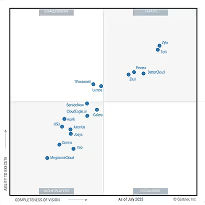
CloudEagle.ai recognized in the 2025 Gartner® Magic Quadrant™ for SaaS Management Platforms
Download now
gartner chart
5x
Faster employee
onboarding
80%
Reduction in time for
user access reviews
30k
Workflows
automated
$15Bn
Analyzed in
contract spend
$2Bn
Saved in
SaaS spend

Recognized as an Industry leader for our AI

CloudEagle.ai is Recognized in the 2024 Gartner® Magic Quadrant™ for SaaS Management Platforms

Recognition highlights CloudEagle’s innovation and leadership in the rapidly evolving SaaS management and procurement space.
Read More
Gartner Magic Quadrant for SaaS Management Platforms showing a chart divided into Challengers and Leaders quadrants with various companies plotted as dots.

CloudEagle.ai Recognized in the GigaOm Radar for SaaS Management Platforms

CloudEagle named a Leader and Outperformer in GigaOm Radar Report, validating its impact in the SaaS management platform landscape.
Read More
gigaom

Everest Group Positions CloudEagle.ai as a Trailblazer in SaaS Management Platforms

CloudEagle recognized as a Trailblazer by Everest Group, showcasing its rapid growth and innovation in SaaS spend and operations management.
Read More
qks

CloudEagle.ai is Recognized in the 2024 Gartner® Magic Quadrant™ for SaaS Management Platforms

Recognition highlights CloudEagle’s innovation and leadership in the rapidly evolving SaaS management and procurement space.
Read More
gartner

Streamline SaaS governance and save 10-30%

Book a Demo with Expert
CTA image
One platform to Manage
all SaaS Products
Learn More