You need to enable JavaScript in order to use the AI chatbot tool powered by ChatBot

Why ChatGPT Pricing Breaks Down at Enterprise Scale?

Share via:
blog-cms-banner-bg
Little-Known Negotiation Hacks to Get the Best Deal on Slack
cta-bg-blogDownload Your Copy

HIPAA Compliance Checklist for 2025

Download PDF

Optimize SaaS Spend for Usage-Based Pricing

Learn how enterprises manage usage-based pricing models and prevent AI costs from scaling unpredictably.

Download Guide
CTA Thumbnail

On day one, ChatGPT pricing feels refreshingly simple. A per-user cost. A usage-based model. Clear tiers. Easy to justify, especially for teams referencing a basic ChatGPT pricing guide to get started.

But here’s the uncomfortable stat most teams discover too late:
Over 40% of enterprise AI spend becomes untracked or poorly governed within the first 12 months of adoption.

That’s not because ChatGPT is overpriced or because the cost of ChatGPT is inherently high.

It’s because enterprise AI pricing behaves very differently once adoption spreads, usage fragments, and ownership disappears.

In this blog, we’ll break down why ChatGPT pricing breaks down at enterprise scale, where the real cost and governance risks hide, and why AI license management now needs to look a lot more like SaaS governance.

TL;DR 

  • ChatGPT pricing works at a small scale but breaks down in enterprise environments
  • Bottom-up adoption creates gaps in AI cost governance and ownership
  • Lack of AI usage visibility leads to unused and duplicate ChatGPT licenses, inflating overall cost of ChatGPT
  • Enterprise AI pricing requires a SaaS-style license and access controls
  • Structured ChatGPT license management is key to predictable, scalable AI spend, especially as organizations move beyond a basic ChatGPT pricing guide

FinOps Best Practices for AI Cost Management

Understand how FinOps frameworks help control AI spend, monitor usage, and allocate costs accurately.

Read FinOps Guide
CTA Thumbnail

1. Why ChatGPT Pricing Looks Simple, but Only on Day One?

At a small scale, ChatGPT pricing works exactly as advertised. A few users. Predictable usage. Clean invoices. Teams comparing chatgpt pro pricing or experimenting with Chat GPT 4 pricing can usually justify the expense quickly.

But enterprise environments don’t stay small for long.

As adoption spreads across engineering, marketing, sales, support, legal, and operations, enterprise AI pricing starts behaving less like a tool cost and more like a variable infrastructure expense, regardless of the original chatgpt subscription cost assumptions.

According to Gartner, enterprise AI usage grows 3–5× faster than initial forecasts once tools like ChatGPT go viral internally. 

The problem isn’t the price point or even Chat GPT 4 pricing. The problem is that ChatGPT pricing assumes centralized intent, while enterprises operate through decentralized behavior.

And that mismatch is where cost control starts breaking.

License Management Best Practices

Learn how enterprises track AI licenses, control access, and avoid uncontrolled subscription sprawl.

Download Guide
CTA Thumbnail

2. How ChatGPT Adoption Scales Faster Than Cost Controls?

The adoption of ChatGPT has surged more quickly than cost management due to its viral, bottom-up approach, enabling employees to integrate it into their workflows faster than companies can implement governance. 

As teams move from experimentation to paid plans, the cost of ChatGPT begins to vary widely across departments.

By late 2025, ChatGPT will boast over 800 million weekly active users and handle more than 29,000 prompts per second

A. Bottom-up ChatGPT adoption across teams and functions

Inside most enterprises, ChatGPT adoption looks like this:

  • Marketing experiments with content workflows
  • Engineering uses it for debugging and code review
  • Sales builds pitch personalization
  • HR drafts policies and job descriptions

None of these teams waits for central approval or evaluates the long-term chatgpt enterprise subscription cost.

Within months, ChatGPT license management becomes fragmented, and finance loses line of sight into who is using what, and why.

This is where AI cost governance starts lagging behind reality.

B. Usage-based pricing without usage visibility

Usage-based pricing only works if you can actually see usage. Most enterprises can’t, especially once teams move beyond a simple ChatGPT pricing guide comparison.
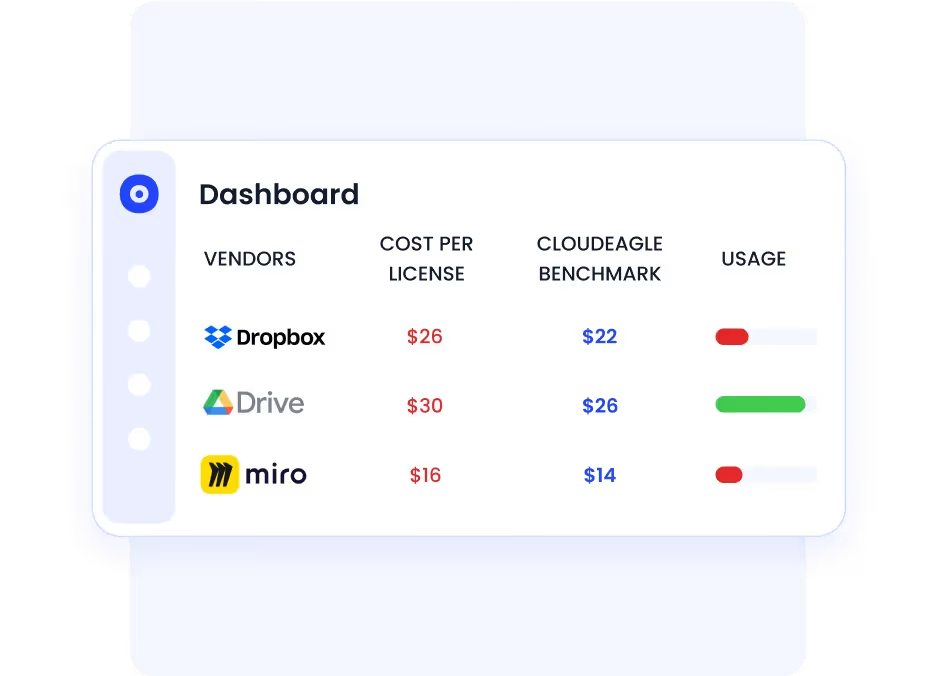
A CIO study found that nearly 60% of companies using generative AI lack real-time AI usage visibility across teams

Without granular visibility:

  • High-usage users go unnoticed
  • Low-usage licenses keep renewing
  • Forecasting the true chatgpt subscription cost becomes guesswork

This turns ChatGPT pricing into a black box instead of a controllable lever.

C. No ownership for AI spend across the enterprise

One of the biggest failure points in enterprise AI pricing is ownership.

Ask three people who own ChatGPT spend:

  • IT says “business teams”.
  • Finance says, “IT approved.”
  • Business leaders say, “It’s cheap anyway.”

That mindset breaks down quickly as chatgpt pro pricing and advanced models drive higher usage-based costs. This ownership gap guarantees AI spend leakage.

Without defined owners, AI license management never matures, and costs drift silently.

3. The Hidden Cost and Governance Risks of ChatGPT at Scale

Deploying ChatGPT at scale can boost productivity, but it also introduces hidden costs that go far beyond the advertised cost of ChatGPT.

As companies shift from testing to full integration, expenses can rise sharply, and data security risks increase with extensive, unchecked usage.

A. Unused and underutilized ChatGPT licenses

Just like SaaS, AI tools accumulate shelfware.

Internal audits across large enterprises show:

  • 25–35% of ChatGPT licenses are underutilized or unused after 6 months
  • Power users drive most consumption
  • Casual users quietly inflate the overall chatgpt enterprise subscription cost

Without active ChatGPT license management, waste compounds every renewal cycle.

B. Duplicate ChatGPT subscriptions across teams

In many enterprises:

  • Teams expense ChatGPT individually
  • Departments buy separate plans
  • Contractors bring their own licenses

The result is duplicate subscriptions layered across different chatgpt subscription cost structures, destroying AI cost governance.
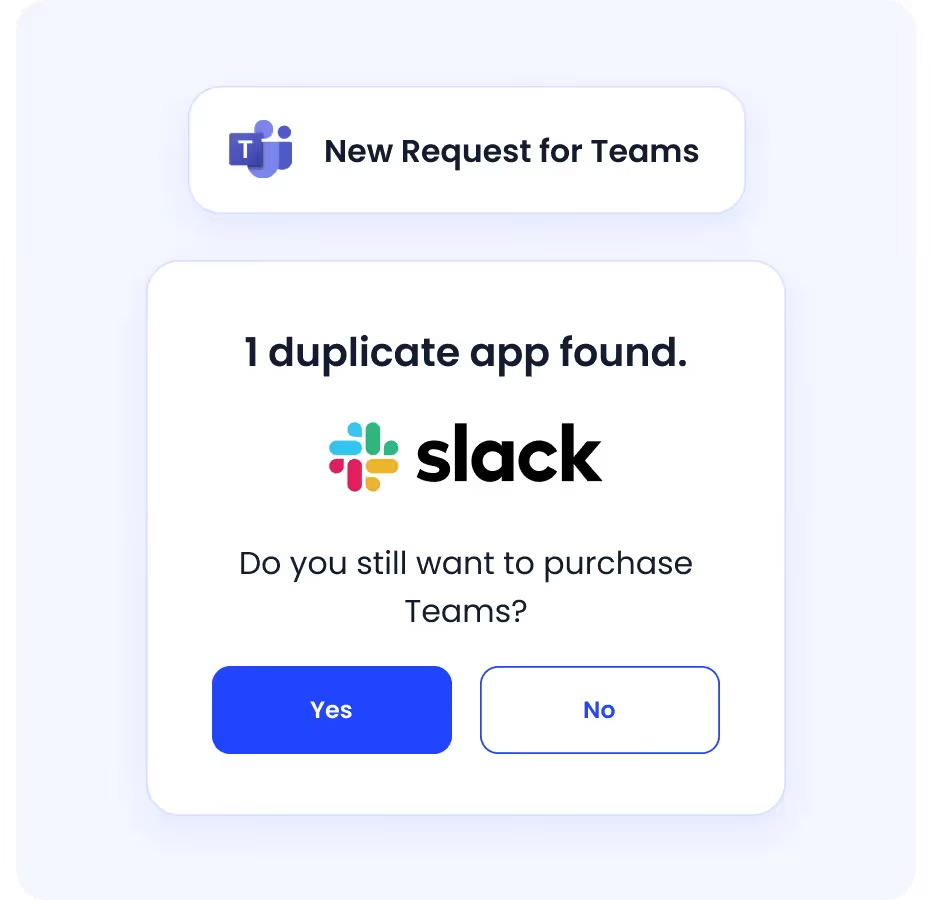
This fragmentation destroys AI cost governance and makes consolidated pricing or forecasting nearly impossible.

C. Unforecastable ChatGPT spends month over month

Finance teams hate volatility, and ChatGPT introduces plenty of it.

McKinsey reports that AI usage-based spend can fluctuate 20–40% month over month without governance controls. 

When AI costs behave like cloud infrastructure but are managed like simple seat-based pricing, enterprise AI pricing fails, even if Chat GPT 4 pricing looks reasonable on paper.

4. Why ChatGPT Needs the Same Governance as Your SaaS Stack?

Despite being treated casually in many organizations, ChatGPT now operates like a Tier-1 SaaS app.

Yet ChatGPT pricing, including chatgpt pro pricing and enterprise plans, is rarely governed with the same discipline as CRM or collaboration tools. When a tool is this embedded but lacks governance, enterprise AI pricing inevitably becomes unstable.

A. ChatGPT is already a Tier-1 SaaS app inside enterprises

ChatGPT is no longer a side experiment or innovation sandbox.
In most enterprises, it already meets the criteria of a Tier-1 SaaS application.

It is:

  • Used daily across multiple teams
  • Embedded into core workflows like engineering, marketing, and support
  • Handling proprietary data, internal documentation, and customer-facing outputs

Despite this, ChatGPT pricing is often treated differently from other Tier-1 tools. There are no consistent approval flows, no standardized ownership, and limited AI usage visibility.

When a tool is this embedded but lacks governance, enterprise AI pricing inevitably becomes unstable.

B. The absence of ChatGPT license management

One of the biggest reasons ChatGPT spend escalates quietly is the lack of basic ChatGPT license management.

Many enterprises cannot confidently answer:

  • How many ChatGPT licenses exist across the organization
  • Which teams or users own those licenses
  • How frequently are those licenses actually used

Without this inventory, AI license management never matures. Licenses accumulate through direct purchases, expense reimbursements, and team-level subscriptions, all operating outside a centralized system.

This creates a perfect storm:

  • Licenses renew automatically
  • Low-usage users retain access
  • Finance sees spend, but not value

Without structured ChatGPT license management, AI cost governance remains reactive instead of preventive.

C. AI spend without SaaS-style controls is guaranteed to leak

Enterprises have seen this story before with SaaS sprawl. The same conditions always produce the same outcome.

When AI spends lacks:

  • Clear ownership
  • License-level visibility
  • Usage-driven controls

…it will leak.

ChatGPT pricing, especially when usage-based, amplifies this risk. Without SaaS-style controls like access reviews, usage thresholds, and renewal governance, AI license management fails by design.

5. What “Good” ChatGPT License Governance Looks Like in Enterprises?

Good governance starts by treating ChatGPT spend with the same rigor applied to SaaS and infrastructure, especially when evaluating chatgpt enterprise subscription cost across teams.

Discovery, usage tracking, and license harvesting turn ChatGPT pricing from a black box into a controllable operating expense, rather than a growing line item hidden behind a generic ChatGPT pricing guide.

A. Discover every ChatGPT license across the organization

Good AI license management starts with discovery.

Enterprises need a complete, real-time view of:

  • Individually purchased ChatGPT licenses
  • Team-based or departmental subscriptions
  • Contractor, agency, and third-party access

Without this baseline, AI cost governance cannot exist. Discovery is what turns ChatGPT pricing from a black box into something finance and IT can actually manage.

This step alone often reveals:

  • Duplicate licenses
  • Shadow AI usage
  • Unnecessary parallel subscriptions

B. Track ChatGPT usage at the user and team level

Access alone doesn’t tell the full story. Effective AI usage visibility focuses on how ChatGPT is actually used.

That includes:

  • Frequency of use per user
  • Intensity of usage across teams
  • Patterns that separate power users from casual users

This level of visibility allows enterprises to:

  • Identify underutilized ChatGPT licenses
  • Understand which teams derive the most value
  • Align ChatGPT pricing with real business outcomes

Without usage data, enterprise AI pricing decisions are guesswork.

C. Harvest and reassign unused ChatGPT licenses

Once usage is visible, optimization becomes straightforward.

Mature organizations treat ChatGPT like any other SaaS asset:

  • Unused licenses are flagged
  • Low-usage access is reviewed
  • Licenses are reclaimed and reassigned

This is where ChatGPT license management directly reduces cost, without restricting high-value usage.

Instead of buying more licenses, enterprises reuse existing ones, stabilizing ChatGPT pricing and strengthening overall AI cost governance.

D. Why this governance model works

This approach works because it mirrors what enterprises already do successfully with SaaS:

  • Visibility before optimization
  • Usage before expansion
  • Governance before scale

When ChatGPT is managed through structured AI license management, enterprise AI pricing stops being volatile and starts behaving like a controllable operating expense.

6. How CloudEagle.ai Helps Enterprises Take Control of ChatGPT Pricing

CloudEagle.ai helps enterprises govern ChatGPT pricing the same way they govern critical SaaS tools, across free usage, paid tiers, and advanced plans tied to Chat GPT 4 pricing.

By combining usage visibility, automated license management, and forecasting intelligence, CloudEagle enables organizations to stabilize the cost of ChatGPT as adoption scales.

A. Complete visibility into ChatGPT usage

CloudEagle provides centralized AI usage visibility across users, teams, and departments. Enterprises can see who is using ChatGPT, how often, and at what intensity, closing the gap between access and actual value.

This visibility helps teams:

  • Identify underutilized ChatGPT licenses
  • Understand usage patterns across functions
  • Align ChatGPT pricing with real business outcomes

Without this foundation, enterprise AI pricing remains reactive.

B. AI tool discovery and Shadow IT control

ChatGPT often enters organizations outside formal IT processes. CloudEagle automatically detects unauthorized or unapproved ChatGPT usage, bringing Shadow AI into a governed framework.
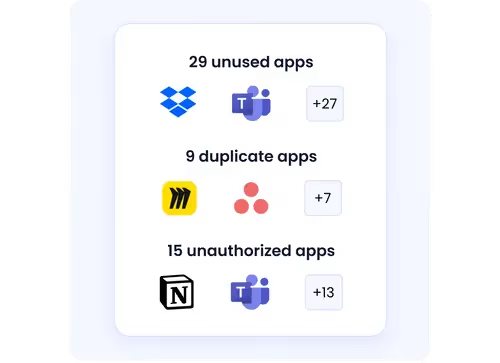
This enables:

  • Discovery of hidden ChatGPT licenses
  • Reduction of compliance and security risks
  • Stronger enforcement of AI usage policies

By eliminating blind spots, CloudEagle strengthens AI cost governance and prevents untracked spend.

C. Cost optimization through license management

CloudEagle applies proven SaaS principles to ChatGPT license management. The platform continuously identifies unused or underutilized licenses and enables automated reclamation and reassignment.
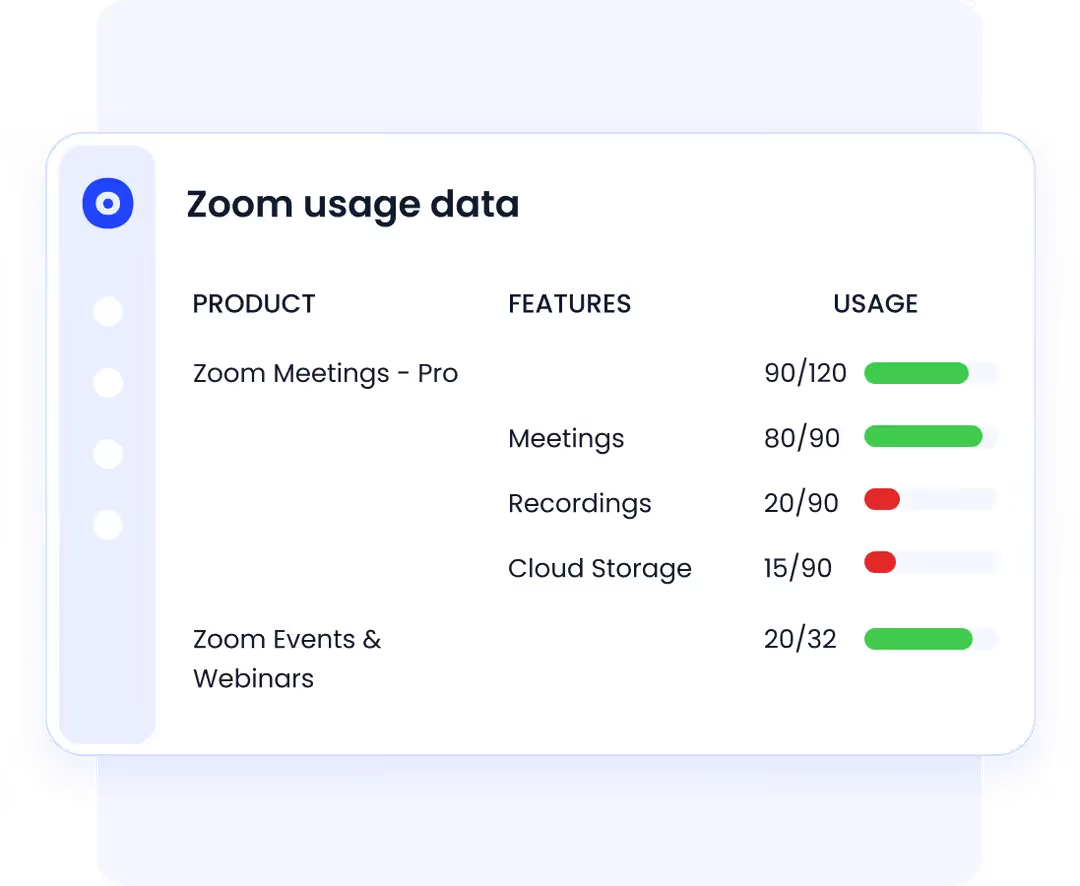
Key outcomes include:

  • Fewer duplicate ChatGPT subscriptions
  • Reduced net-new license purchases
  • Improved efficiency across AI spend

This is where AI license management directly stabilizes ChatGPT pricing.

D. Risk-based governance and access controls

CloudEagle enforces contextual access policies for ChatGPT based on role, usage, and risk. Enterprises can ensure that only authorized users access ChatGPT, and only at the appropriate level.

This approach:

  • Reduces data exposure and misuse
  • Aligns AI usage with compliance requirements
  • Brings AI tools under the same control model as SaaS

Governance becomes continuous, not reactive.

E. Audit-ready access reviews and compliance support

With automated access reviews and SOC 2–ready audit logs, CloudEagle helps enterprises maintain oversight of ChatGPT access over time.

This supports:

  • Regular access validation
  • Easier audit preparation
  • Ongoing compliance with internal and regulatory standards

Strong ChatGPT license management also strengthens security posture.

D. AI-powered forecasting and spend intelligence

CloudEagle aggregates usage, license, and financial data to provide predictive insights into future ChatGPT spend. This enables finance teams to forecast costs more accurately and reduce volatility in enterprise AI pricing.
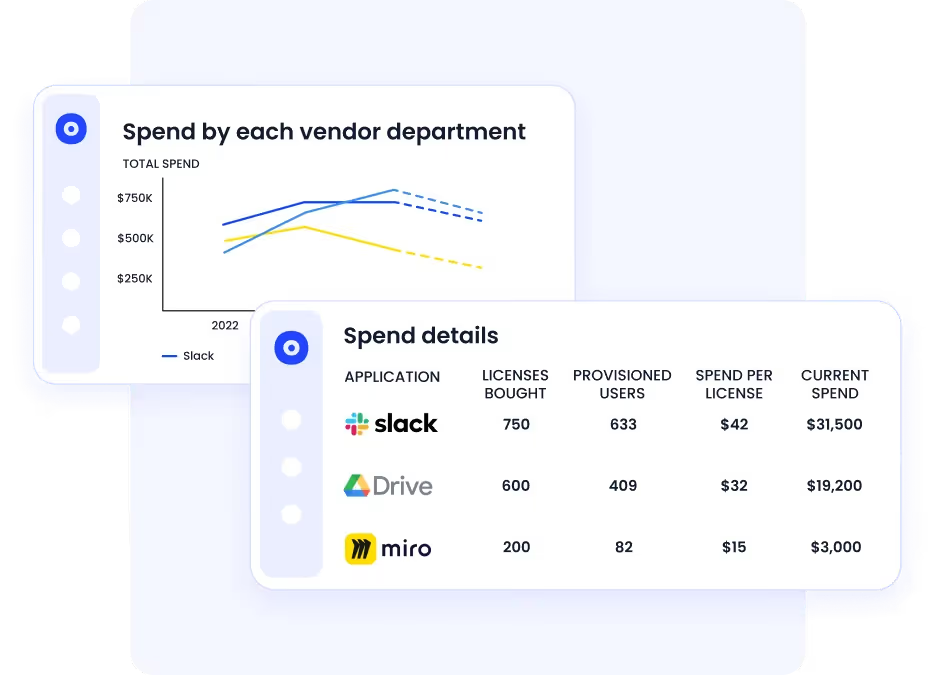
Instead of surprises, enterprises gain:

  • Budget predictability
  • Spend accountability
  • Clear linkage between usage and cost

Conclusion: ChatGPT isn’t Too Expensive, it’s just ungoverned

At a small scale, ChatGPT pricing feels simple and easy to justify.

At enterprise scale, the problem isn’t the tool; it’s the absence of visibility, ownership, and structured AI cost governance. As adoption grows, unmanaged chatgpt subscription cost and fragmented ownership turn predictable pricing into volatility.

CloudEagle.ai helps enterprises bring ChatGPT under the same governance model as their SaaS stack by combining AI license management, usage visibility, and automated controls, ensuring chatgpt enterprise subscription cost stays aligned with real business value.

Book a free demo to see how CloudEagle.ai helps you regain control of ChatGPT spend before it breaks down at scale.

Frequently Asked Questions 

  1. How much does ChatGPT cost?
    ChatGPT pricing varies by plan and usage. Individual plans are relatively inexpensive, but enterprise AI pricing becomes complex as usage scales across teams and departments.
  2. How much does ChatGPT Go cost?
    ChatGPT Go pricing depends on region and plan type and is designed for individual or lightweight use. It is not optimized for enterprise-wide governance or centralized cost control.
  3. How does AI licensing work?
    AI licensing typically combines per-user access with usage-based pricing. Without AI license management and usage visibility, costs can fluctuate significantly at scale.
  4. Is ChatGPT-4 worth buying?
    GPT-4 delivers stronger reasoning and output quality for advanced use cases. For enterprises, its value depends on whether usage is governed and aligned with business outcomes.
  5. Is GPT-4 or GPT-4o better?
    GPT-4o is optimized for faster responses and multimodal use cases, while GPT-4 excels in deeper reasoning. The better choice depends on workload type, performance needs, and cost governance strategy.

Advertisement for a SaaS Subscription Tracking Template with a call-to-action button to download and a partial graphic of a tablet showing charts.Banner promoting a SaaS Agreement Checklist to streamline SaaS management and avoid budget waste with a call-to-action button labeled Download checklist.Blue banner with text 'The Ultimate Employee Offboarding Checklist!' and a black button labeled 'Download checklist' alongside partial views of checklist documents from cloudeagle.ai.Digital ad for download checklist titled 'The Ultimate Checklist for IT Leaders to Optimize SaaS Operations' by cloudeagle.ai, showing checklist pages.Slack Buyer's Guide offer with text 'Unlock insider insights to get the best deal on Slack!' and a button labeled 'Get Your Copy', accompanied by a preview of the guide featuring Slack's logo.Monday Pricing Guide by cloudeagle.ai offering exclusive pricing secrets to maximize investment with a call-to-action button labeled Get Your Copy and an image of the guide's cover.Blue banner for Canva Pricing Guide by cloudeagle.ai offering a guide to Canva costs, features, and alternatives with a call-to-action button saying Get Your Copy.Blue banner with white text reading 'Little-Known Negotiation Hacks to Get the Best Deal on Slack' and a white button labeled 'Get Your Copy'.Blue banner with text 'Little-Known Negotiation Hacks to Get the Best Deal on Monday.com' and a white button labeled 'Get Your Copy'.Blue banner with text 'Little-Known Negotiation Hacks to Get the Best Deal on Canva' and a white button labeled 'Get Your Copy'.Banner with text 'Slack Buyer's Guide' and a 'Download Now' button next to images of a guide titled 'Slack Buyer’s Guide: Features, Pricing & Best Practices'.Digital cover of Monday Pricing Guide with a button labeled Get Your Copy on a blue background.Canva Pricing Guide cover with a button labeled Get Your Copy on a blue gradient background.

Enter your email to
unlock the report

Oops! Something went wrong while submitting the form.
License Count
Benchmark
Per User/Per Year

Enter your email to
unlock the report

Oops! Something went wrong while submitting the form.
License Count
Benchmark
Per User/Per Year

Enter your email to
unlock the report

Oops! Something went wrong while submitting the form.
Notion Plus
License Count
Benchmark
Per User/Per Year
100-500
$67.20 - $78.72
500-1000
$59.52 - $72.00
1000+
$51.84 - $57.60
Canva Pro
License Count
Benchmark
Per User/Per Year
100-500
$74.33-$88.71
500-1000
$64.74-$80.32
1000+
$55.14-$62.34

Enter your email to
unlock the report

Oops! Something went wrong while submitting the form.

Enter your email to
unlock the report

Oops! Something went wrong while submitting the form.
Zoom Business
License Count
Benchmark
Per User/Per Year
100-500
$216.00 - $264.00
500-1000
$180.00 - $216.00
1000+
$156.00 - $180.00

Enter your email to
unlock the report

Oops! Something went wrong while submitting the form.

Get the Right Security Platform To Secure Your Cloud Infrastructure

Please enter a business email
Thank you!
The 2023 SaaS report has been sent to your email. Check your promotional or spam folder.
Oops! Something went wrong while submitting the form.

Access full report

Please enter a business email
Thank you!
The 2023 SaaS report has been sent to your email. Check your promotional or spam folder.
Oops! Something went wrong while submitting the form.

Optimize SaaS Spend for Usage-Based Pricing

Learn how enterprises manage usage-based pricing models and prevent AI costs from scaling unpredictably.

Download Guide
CTA Thumbnail

On day one, ChatGPT pricing feels refreshingly simple. A per-user cost. A usage-based model. Clear tiers. Easy to justify, especially for teams referencing a basic ChatGPT pricing guide to get started.

But here’s the uncomfortable stat most teams discover too late:
Over 40% of enterprise AI spend becomes untracked or poorly governed within the first 12 months of adoption.

That’s not because ChatGPT is overpriced or because the cost of ChatGPT is inherently high.

It’s because enterprise AI pricing behaves very differently once adoption spreads, usage fragments, and ownership disappears.

In this blog, we’ll break down why ChatGPT pricing breaks down at enterprise scale, where the real cost and governance risks hide, and why AI license management now needs to look a lot more like SaaS governance.

TL;DR 

  • ChatGPT pricing works at a small scale but breaks down in enterprise environments
  • Bottom-up adoption creates gaps in AI cost governance and ownership
  • Lack of AI usage visibility leads to unused and duplicate ChatGPT licenses, inflating overall cost of ChatGPT
  • Enterprise AI pricing requires a SaaS-style license and access controls
  • Structured ChatGPT license management is key to predictable, scalable AI spend, especially as organizations move beyond a basic ChatGPT pricing guide

FinOps Best Practices for AI Cost Management

Understand how FinOps frameworks help control AI spend, monitor usage, and allocate costs accurately.

Read FinOps Guide
CTA Thumbnail

1. Why ChatGPT Pricing Looks Simple, but Only on Day One?

At a small scale, ChatGPT pricing works exactly as advertised. A few users. Predictable usage. Clean invoices. Teams comparing chatgpt pro pricing or experimenting with Chat GPT 4 pricing can usually justify the expense quickly.

But enterprise environments don’t stay small for long.

As adoption spreads across engineering, marketing, sales, support, legal, and operations, enterprise AI pricing starts behaving less like a tool cost and more like a variable infrastructure expense, regardless of the original chatgpt subscription cost assumptions.

According to Gartner, enterprise AI usage grows 3–5× faster than initial forecasts once tools like ChatGPT go viral internally. 

The problem isn’t the price point or even Chat GPT 4 pricing. The problem is that ChatGPT pricing assumes centralized intent, while enterprises operate through decentralized behavior.

And that mismatch is where cost control starts breaking.

License Management Best Practices

Learn how enterprises track AI licenses, control access, and avoid uncontrolled subscription sprawl.

Download Guide
CTA Thumbnail

2. How ChatGPT Adoption Scales Faster Than Cost Controls?

The adoption of ChatGPT has surged more quickly than cost management due to its viral, bottom-up approach, enabling employees to integrate it into their workflows faster than companies can implement governance. 

As teams move from experimentation to paid plans, the cost of ChatGPT begins to vary widely across departments.

By late 2025, ChatGPT will boast over 800 million weekly active users and handle more than 29,000 prompts per second

A. Bottom-up ChatGPT adoption across teams and functions

Inside most enterprises, ChatGPT adoption looks like this:

  • Marketing experiments with content workflows
  • Engineering uses it for debugging and code review
  • Sales builds pitch personalization
  • HR drafts policies and job descriptions

None of these teams waits for central approval or evaluates the long-term chatgpt enterprise subscription cost.

Within months, ChatGPT license management becomes fragmented, and finance loses line of sight into who is using what, and why.

This is where AI cost governance starts lagging behind reality.

B. Usage-based pricing without usage visibility

Usage-based pricing only works if you can actually see usage. Most enterprises can’t, especially once teams move beyond a simple ChatGPT pricing guide comparison.

A CIO study found that nearly 60% of companies using generative AI lack real-time AI usage visibility across teams

Without granular visibility:

  • High-usage users go unnoticed
  • Low-usage licenses keep renewing
  • Forecasting the true chatgpt subscription cost becomes guesswork

This turns ChatGPT pricing into a black box instead of a controllable lever.

C. No ownership for AI spend across the enterprise

One of the biggest failure points in enterprise AI pricing is ownership.

Ask three people who own ChatGPT spend:

  • IT says “business teams”.
  • Finance says, “IT approved.”
  • Business leaders say, “It’s cheap anyway.”

That mindset breaks down quickly as chatgpt pro pricing and advanced models drive higher usage-based costs. This ownership gap guarantees AI spend leakage.

Without defined owners, AI license management never matures, and costs drift silently.

3. The Hidden Cost and Governance Risks of ChatGPT at Scale

Deploying ChatGPT at scale can boost productivity, but it also introduces hidden costs that go far beyond the advertised cost of ChatGPT.

As companies shift from testing to full integration, expenses can rise sharply, and data security risks increase with extensive, unchecked usage.

A. Unused and underutilized ChatGPT licenses

Just like SaaS, AI tools accumulate shelfware.

Internal audits across large enterprises show:

  • 25–35% of ChatGPT licenses are underutilized or unused after 6 months
  • Power users drive most consumption
  • Casual users quietly inflate the overall chatgpt enterprise subscription cost

Without active ChatGPT license management, waste compounds every renewal cycle.

B. Duplicate ChatGPT subscriptions across teams

In many enterprises:

  • Teams expense ChatGPT individually
  • Departments buy separate plans
  • Contractors bring their own licenses

The result is duplicate subscriptions layered across different chatgpt subscription cost structures, destroying AI cost governance.

This fragmentation destroys AI cost governance and makes consolidated pricing or forecasting nearly impossible.

C. Unforecastable ChatGPT spends month over month

Finance teams hate volatility, and ChatGPT introduces plenty of it.

McKinsey reports that AI usage-based spend can fluctuate 20–40% month over month without governance controls. 

When AI costs behave like cloud infrastructure but are managed like simple seat-based pricing, enterprise AI pricing fails, even if Chat GPT 4 pricing looks reasonable on paper.

4. Why ChatGPT Needs the Same Governance as Your SaaS Stack?

Despite being treated casually in many organizations, ChatGPT now operates like a Tier-1 SaaS app.

Yet ChatGPT pricing, including chatgpt pro pricing and enterprise plans, is rarely governed with the same discipline as CRM or collaboration tools. When a tool is this embedded but lacks governance, enterprise AI pricing inevitably becomes unstable.

A. ChatGPT is already a Tier-1 SaaS app inside enterprises

ChatGPT is no longer a side experiment or innovation sandbox.
In most enterprises, it already meets the criteria of a Tier-1 SaaS application.

It is:

  • Used daily across multiple teams
  • Embedded into core workflows like engineering, marketing, and support
  • Handling proprietary data, internal documentation, and customer-facing outputs

Despite this, ChatGPT pricing is often treated differently from other Tier-1 tools. There are no consistent approval flows, no standardized ownership, and limited AI usage visibility.

When a tool is this embedded but lacks governance, enterprise AI pricing inevitably becomes unstable.

B. The absence of ChatGPT license management

One of the biggest reasons ChatGPT spend escalates quietly is the lack of basic ChatGPT license management.

Many enterprises cannot confidently answer:

  • How many ChatGPT licenses exist across the organization
  • Which teams or users own those licenses
  • How frequently are those licenses actually used

Without this inventory, AI license management never matures. Licenses accumulate through direct purchases, expense reimbursements, and team-level subscriptions, all operating outside a centralized system.

This creates a perfect storm:

  • Licenses renew automatically
  • Low-usage users retain access
  • Finance sees spend, but not value

Without structured ChatGPT license management, AI cost governance remains reactive instead of preventive.

C. AI spend without SaaS-style controls is guaranteed to leak

Enterprises have seen this story before with SaaS sprawl. The same conditions always produce the same outcome.

When AI spends lacks:

  • Clear ownership
  • License-level visibility
  • Usage-driven controls

…it will leak.

ChatGPT pricing, especially when usage-based, amplifies this risk. Without SaaS-style controls like access reviews, usage thresholds, and renewal governance, AI license management fails by design.

5. What “Good” ChatGPT License Governance Looks Like in Enterprises?

Good governance starts by treating ChatGPT spend with the same rigor applied to SaaS and infrastructure, especially when evaluating chatgpt enterprise subscription cost across teams.

Discovery, usage tracking, and license harvesting turn ChatGPT pricing from a black box into a controllable operating expense, rather than a growing line item hidden behind a generic ChatGPT pricing guide.

A. Discover every ChatGPT license across the organization

Good AI license management starts with discovery.

Enterprises need a complete, real-time view of:

  • Individually purchased ChatGPT licenses
  • Team-based or departmental subscriptions
  • Contractor, agency, and third-party access

Without this baseline, AI cost governance cannot exist. Discovery is what turns ChatGPT pricing from a black box into something finance and IT can actually manage.

This step alone often reveals:

  • Duplicate licenses
  • Shadow AI usage
  • Unnecessary parallel subscriptions

B. Track ChatGPT usage at the user and team level

Access alone doesn’t tell the full story. Effective AI usage visibility focuses on how ChatGPT is actually used.

That includes:

  • Frequency of use per user
  • Intensity of usage across teams
  • Patterns that separate power users from casual users

This level of visibility allows enterprises to:

  • Identify underutilized ChatGPT licenses
  • Understand which teams derive the most value
  • Align ChatGPT pricing with real business outcomes

Without usage data, enterprise AI pricing decisions are guesswork.

C. Harvest and reassign unused ChatGPT licenses

Once usage is visible, optimization becomes straightforward.

Mature organizations treat ChatGPT like any other SaaS asset:

  • Unused licenses are flagged
  • Low-usage access is reviewed
  • Licenses are reclaimed and reassigned

This is where ChatGPT license management directly reduces cost, without restricting high-value usage.

Instead of buying more licenses, enterprises reuse existing ones, stabilizing ChatGPT pricing and strengthening overall AI cost governance.

D. Why this governance model works

This approach works because it mirrors what enterprises already do successfully with SaaS:

  • Visibility before optimization
  • Usage before expansion
  • Governance before scale

When ChatGPT is managed through structured AI license management, enterprise AI pricing stops being volatile and starts behaving like a controllable operating expense.

6. How CloudEagle.ai Helps Enterprises Take Control of ChatGPT Pricing

CloudEagle.ai helps enterprises govern ChatGPT pricing the same way they govern critical SaaS tools, across free usage, paid tiers, and advanced plans tied to Chat GPT 4 pricing.

By combining usage visibility, automated license management, and forecasting intelligence, CloudEagle enables organizations to stabilize the cost of ChatGPT as adoption scales.

A. Complete visibility into ChatGPT usage

CloudEagle provides centralized AI usage visibility across users, teams, and departments. Enterprises can see who is using ChatGPT, how often, and at what intensity, closing the gap between access and actual value.

This visibility helps teams:

  • Identify underutilized ChatGPT licenses
  • Understand usage patterns across functions
  • Align ChatGPT pricing with real business outcomes

Without this foundation, enterprise AI pricing remains reactive.

B. AI tool discovery and Shadow IT control

ChatGPT often enters organizations outside formal IT processes. CloudEagle automatically detects unauthorized or unapproved ChatGPT usage, bringing Shadow AI into a governed framework.

This enables:

  • Discovery of hidden ChatGPT licenses
  • Reduction of compliance and security risks
  • Stronger enforcement of AI usage policies

By eliminating blind spots, CloudEagle strengthens AI cost governance and prevents untracked spend.

C. Cost optimization through license management

CloudEagle applies proven SaaS principles to ChatGPT license management. The platform continuously identifies unused or underutilized licenses and enables automated reclamation and reassignment.

Key outcomes include:

  • Fewer duplicate ChatGPT subscriptions
  • Reduced net-new license purchases
  • Improved efficiency across AI spend

This is where AI license management directly stabilizes ChatGPT pricing.

D. Risk-based governance and access controls

CloudEagle enforces contextual access policies for ChatGPT based on role, usage, and risk. Enterprises can ensure that only authorized users access ChatGPT, and only at the appropriate level.

This approach:

  • Reduces data exposure and misuse
  • Aligns AI usage with compliance requirements
  • Brings AI tools under the same control model as SaaS

Governance becomes continuous, not reactive.

E. Audit-ready access reviews and compliance support

With automated access reviews and SOC 2–ready audit logs, CloudEagle helps enterprises maintain oversight of ChatGPT access over time.

This supports:

  • Regular access validation
  • Easier audit preparation
  • Ongoing compliance with internal and regulatory standards

Strong ChatGPT license management also strengthens security posture.

D. AI-powered forecasting and spend intelligence

CloudEagle aggregates usage, license, and financial data to provide predictive insights into future ChatGPT spend. This enables finance teams to forecast costs more accurately and reduce volatility in enterprise AI pricing.

Instead of surprises, enterprises gain:

  • Budget predictability
  • Spend accountability
  • Clear linkage between usage and cost

Conclusion: ChatGPT isn’t Too Expensive, it’s just ungoverned

At a small scale, ChatGPT pricing feels simple and easy to justify.

At enterprise scale, the problem isn’t the tool; it’s the absence of visibility, ownership, and structured AI cost governance. As adoption grows, unmanaged chatgpt subscription cost and fragmented ownership turn predictable pricing into volatility.

CloudEagle.ai helps enterprises bring ChatGPT under the same governance model as their SaaS stack by combining AI license management, usage visibility, and automated controls, ensuring chatgpt enterprise subscription cost stays aligned with real business value.

Book a free demo to see how CloudEagle.ai helps you regain control of ChatGPT spend before it breaks down at scale.

Frequently Asked Questions 

  1. How much does ChatGPT cost?
    ChatGPT pricing varies by plan and usage. Individual plans are relatively inexpensive, but enterprise AI pricing becomes complex as usage scales across teams and departments.
  2. How much does ChatGPT Go cost?
    ChatGPT Go pricing depends on region and plan type and is designed for individual or lightweight use. It is not optimized for enterprise-wide governance or centralized cost control.
  3. How does AI licensing work?
    AI licensing typically combines per-user access with usage-based pricing. Without AI license management and usage visibility, costs can fluctuate significantly at scale.
  4. Is ChatGPT-4 worth buying?
    GPT-4 delivers stronger reasoning and output quality for advanced use cases. For enterprises, its value depends on whether usage is governed and aligned with business outcomes.
  5. Is GPT-4 or GPT-4o better?
    GPT-4o is optimized for faster responses and multimodal use cases, while GPT-4 excels in deeper reasoning. The better choice depends on workload type, performance needs, and cost governance strategy.

CloudEagle.ai recognized in the 2025 Gartner® Magic Quadrant™ for SaaS Management Platforms
Download now
gartner chart
5x
Faster employee
onboarding
80%
Reduction in time for
user access reviews
30k
Workflows
automated
$15Bn
Analyzed in
contract spend
$2Bn
Saved in
SaaS spend

Recognized as an Industry leader for our AI

CloudEagle.ai is Recognized in the 2024 Gartner® Magic Quadrant™ for SaaS Management Platforms

Recognition highlights CloudEagle’s innovation and leadership in the rapidly evolving SaaS management and procurement space.
Read More
Gartner Magic Quadrant for SaaS Management Platforms showing a chart divided into Challengers and Leaders quadrants with various companies plotted as dots.

CloudEagle.ai Recognized in the GigaOm Radar for SaaS Management Platforms

CloudEagle named a Leader and Outperformer in GigaOm Radar Report, validating its impact in the SaaS management platform landscape.
Read More
gigaom

Everest Group Positions CloudEagle.ai as a Trailblazer in SaaS Management Platforms

CloudEagle recognized as a Trailblazer by Everest Group, showcasing its rapid growth and innovation in SaaS spend and operations management.
Read More
qks

CloudEagle.ai is Recognized in the 2024 Gartner® Magic Quadrant™ for SaaS Management Platforms

Recognition highlights CloudEagle’s innovation and leadership in the rapidly evolving SaaS management and procurement space.
Read More
gartner

Streamline SaaS governance and save 10-30%

Book a Demo with Expert
CTA image
One platform to Manage
all SaaS Products
Learn More