
%201.svg)


HIPAA Compliance Checklist for 2025

SaaS spend doesn’t spiral out of control because teams are careless.
It becomes unmanageable because controls don’t scale at the same pace as adoption.
Most enterprises believe they have SaaS spend governance in place, until finance reviews the annual SaaS bill and realizes 20–30% of licenses are unused, duplicated, or misaligned with real usage. At that point, visibility alone is too late.
This blog breaks down what SaaS spend governance really means, why it collapses at scale, and, most importantly, a controls-level SaaS spend governance checklist you can apply immediately to stop overspend before it compounds.
TL;DR
- SaaS overspend is a control failure, not a visibility issue
- SaaS spend governance works only when usage, access, and cost are connected
- License sprawl and auto-renewals drive the majority of SaaS waste
- Traditional tools lack the SaaS spend controls needed at scale
- Control-level governance delivers sustainable SaaS cost governance, not one-time savings
1. What Is SaaS Spend Governance?
SaaS spend governance is the set of financial, operational, and access controls that determine how SaaS applications are requested, approved, used, renewed, and paid for across the organization.
Unlike basic expense tracking, SaaS spend governance focuses on preventing waste, not just reporting it. That includes enforcing SaaS spend controls that connect cost, usage, ownership, and risk at every stage of the SaaS lifecycle.
At a controls level, effective SaaS spend governance ensures:
- Every dollar of SaaS spend has an accountable owner
- Licenses align with real usage, not headcount assumptions
- Renewals are reviewed with cost and access context
- SaaS financial controls operate continuously, not quarterly
Without these guardrails, SaaS cost governance becomes reactive by default.
2. Why SaaS Spend Becomes Uncontrollable at Scale?
SaaS overspend rarely comes from one bad decision.
It builds up when scale exposes gaps in ownership, visibility, and enforcement, especially once SaaS buying decentralizes across teams.
Below are the three structural reasons SaaS spend governance breaks down as organizations grow.
A. Decentralized purchasing without financial oversight
As teams scale, SaaS buying shifts closer to end users. Marketing, Sales, Product, and Ops often procure tools independently to move faster.
While this improves agility, it weakens SaaS spend governance when financial oversight is removed from the purchase moment.
What typically happens:
- Teams purchase tools using corporate cards or expense reimbursements
- Finance only sees spending after invoices are paid
- Procurement is looped in too late, or not at all
- Duplicate tools enter the SaaS stack unnoticed
Without centralized guardrails, SaaS spend grows laterally across teams, making SaaS cost governance reactive instead of preventive.
B. Licenses grow independently of active usage
License counts often scale with headcount, not with actual product adoption.
In the absence of strong SaaS spend controls, licenses are added automatically during onboarding but rarely removed or downgraded later.
Common patterns:
- New hires are provisionedwith default license bundles
- Role changes don’t trigger license reviews
- Inactive users retain paid access for months
- Premium licenses are assigned “just in case.”
C. Renewals occur without usage or access context
Renewals are the most expensive failure point in SaaS spend governance.
Most SaaS contracts auto-renew annually, yet renewal decisions are often made with cost data alone, not operational context.
What renewal reviews usually miss:
- How many licenses were actually used
- Whether usage declined over the contract term
- If access is still compliant or secure
- Whether the team still needs the same license tier
Without usage- and access-aware SaaS spend controls, renewals simply lock in past inefficiencies and multiply them.
3. SaaS Spend Governance Checklist (Controls-Level)
Most organizations believe they have SaaS spend governance because they can see the spend.
In reality, governance only exists when controls actively shape behavior before money is committed.
This checklist focuses on control-level SaaS spend governance, the policies and enforcement mechanisms that prevent overspend from occurring in the first place, not after finance reviews the damage.
A. Establish spend visibility by app, team, and owner
SaaS spend visibility is not about knowing how much you spend; it’s about knowing who is accountable for every dollar.
At scale, spend becomes fragmented across departments, cost centers, and cards. Without structured visibility, SaaS spend governance collapses because no one feels responsible for optimization.
What strong SaaS spend visibility enables:
- Clear ownership for every application
- Faster identification of redundant or low-value tools
- Accurate cost attribution for budgeting and forecasting SaaS
Control checklist
- Maintain a centralized inventory of all SaaS applications
- Assign a named business owner for every app (not a team alias)
- Attribute spend by department, team, and cost center
- Track total contract value, annual spend, and license count per app
- Separate core business apps from experimental or low-risk tools
B. Define budget ownership and approval thresholds
SaaS overspend accelerates when budget responsibility is unclear.
In many organizations, teams can expand licenses freely while finance absorbs the cost later. True SaaS spend governance requires explicit financial ownership tied to decision rights.
Why this control matters:
- Prevents silent license expansion
- Forces prioritization when spending increases
- Creates accountability before renewals and upgrades
Control checklist
- Assign a budget owner per SaaS application
- Define spend thresholds that trigger finance or procurement review
- Require documented justification for license expansions
- Enforce approvals for mid-contract upgrades or add-ons
- Review budget ownership quarterly as org structures change
These SaaS financial controls ensure spend decisions are intentional, not incidental.
C. Control license provisioning and deprovisioning
Manual provisioning is one of the biggest hidden drivers of SaaS waste.
When access is granted without guardrails, licenses accumulate faster than teams can track them, especially during hiring surges or reorgs.
Why this breaks SaaS spend governance:
- Licenses are provisioned “by default.”
- Deprovisioning on manual follow-ups
- Former employees retain paid access
Control checklist
- Standardize license provisioning by role, not by request
- Integrate access changes with onboarding and offboarding workflows
- Automatically revoke licenses when employees leave
- Audit inactive users and dormant accounts monthly
- Block ad-hoc license creation outside approved workflows
Organizations that enforce this control consistently reduce orphaned license costs by 20–30%.
D. Enforce usage-based license right-sizing rules
Most SaaS contracts are priced for peak usage, but most teams operate well below it.
Without usage-aware SaaS spend controls, organizations overpay for premium tiers that deliver little incremental value.

Why right-sizing is critical to SaaS cost governance:
- Premium licenses are often underutilized
- Usage declines over time, but pricing does not
- Teams resist downgrades without enforced policies
Control checklist
- Define minimum usage thresholds per license tier
- Review premium license usage on a fixed cadence
- Automatically downgrade or reclaim underused licenses
- Require justification for high-cost licenses
- Align license tiers with actual job function needs
E. Track renewals with cost, usage, and risk signals
Renewals are where weak SaaS spend governance becomes expensive.
Most renewals happen under time pressure, with limited data, and default to “do nothing”, locking in inefficiencies for another year.
Why renewal controls matter:
- Auto-renewals preserve waste
- Late reviews reduce negotiation leverage
- Usage and risk signals are ignored
Control checklist
- Centralize all renewal dates in one system
- Trigger renewal reviews 90–120 days in advance
- Review usage trends over the full contract term
- Flag access, compliance, or security risks before renewal
- Involve finance, IT, and app owners in renewal decisions
Enterprises that operationalize renewal controls typically achieve 10–15% annual SaaS savings without cutting tools.
F. Monitor contract commitments and true-up exposure
True-ups are one of the most underestimated SaaS cost risks.
Contracts often include minimum commitments, growth clauses, and penalties that finance teams only discover after the bill arrives.
Why this undermines SaaS spend governance:
- Commitments outpace real usage
- Growth assumptions go unchecked
- True-up costs bypass normal approvals
Control checklist
- Track committed license minimums vs actual usage
- Monitor growth and overage clauses continuously
- Model potential true-up exposure quarterly
- Align renewals with realistic usage forecasts
- Flag contracts with high financial risk early
Strong SaaS financial controls protect organizations from budget shocks that bypass normal spend reviews.
4. Why Finance and Procurement Tools Fall Short?
Finance and procurement tools fall short because data is fragmented across silos, processes are manual and complex, and legacy systems lack modern integration capabilities.
A. Spend data without usage intelligence
Finance tools show what was paid, not how tools are used.
They lack real SaaS spend visibility into active users, license tiers, and feature adoption.
This limits effective SaaS spend governance.
What’s missing:
- Active vs inactive license data
- Role-based usage patterns
- Signals for right-sizing
Without this, SaaS spend controls rely on assumptions, weakening SaaS cost governance and SaaS financial controls.
B. Reactive reporting instead of preventive controls
Most reports explain spending after the fact.
They don’t enforce SaaS spend governance at the request, upgrade, or provisioning stages.
The impact:
- No guardrails before purchase
- Late intervention at renewal
- Manual clean-up work
This reactive model reduces the effectiveness of SaaS spend controls and long-term SaaS cost governance.
C. Manual renewal tracking and negotiations
Renewals are often tracked in spreadsheets.
Usage context is missing.
Negotiations happen under time pressure.
What this causes:
- Auto-renewals by default
- Missed savings opportunities
- Weak SaaS spend governance
Without usage-led insights, SaaS financial controls fail to influence renewal outcomes.
5. How CloudEagle.ai Enforces SaaS Spend Governance?
CloudEagle.ai is built to operationalize SaaS spend governance at the control level.
Instead of dashboards alone, it embeds SaaS spend controls directly into how applications are discovered, licensed, renewed, and governed across the organization.
A. Centralized SaaS Spend Visibility Across the Stack
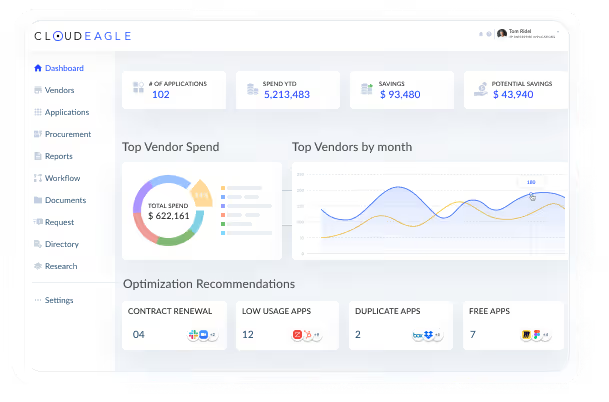
CloudEagle.ai provides a single system of record for all SaaS applications, licenses, and costs.
This establishes consistent SaaS spend visibility across finance, IT, and procurement.
Key controls enforced:
- Centralized inventory of all SaaS applications
- Spend visibility by app, team, owner, and license type
- Detection of duplicate and overlapping tools
- Consolidation of data from SSO, identity providers, and contracts
This eliminates blind spots that weaken SaaS spend governance.
B. Automated License Harvesting and Optimization
CloudEagle.ai continuously analyzes usage data to identify unused or underutilized licenses.
This ensures SaaS spend controls are applied after onboarding, not just at purchase.

Key controls enforced:
- Identification of inactive and low-usage licenses
- Automated license reclamation and reallocation
- Reduction of manual clean-up efforts
- Continuous optimization of license tiers
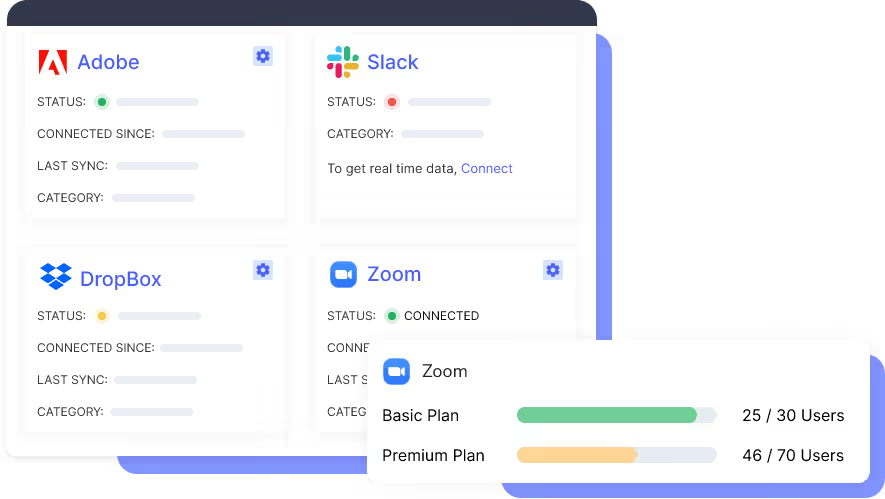
These controls directly strengthen SaaS cost governance and reduce waste.
C. Price Benchmarking and Vendor Intelligence
CloudEagle.ai benchmarks SaaS pricing against industry standards.
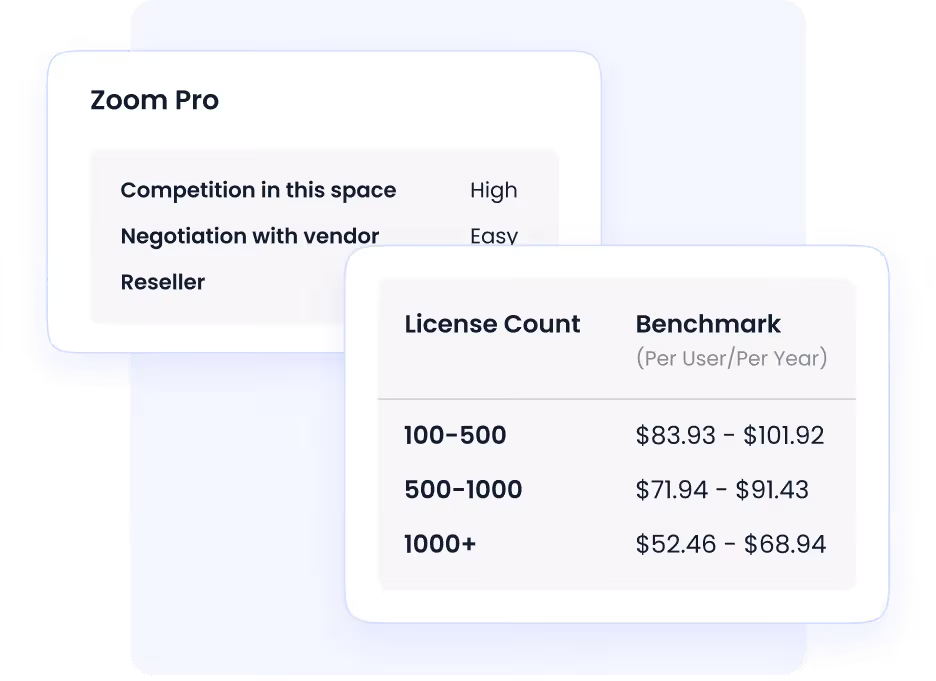
This gives finance and procurement teams leverage during negotiations.
Key controls enforced:
- Visibility into fair-market pricing
- Identification of overpriced contracts
- Data-backed renewal negotiations
- Better enforcement of SaaS financial controls
Pricing intelligence turns renewals into optimization opportunities.
D. Spend Forecasting and Budget Governance
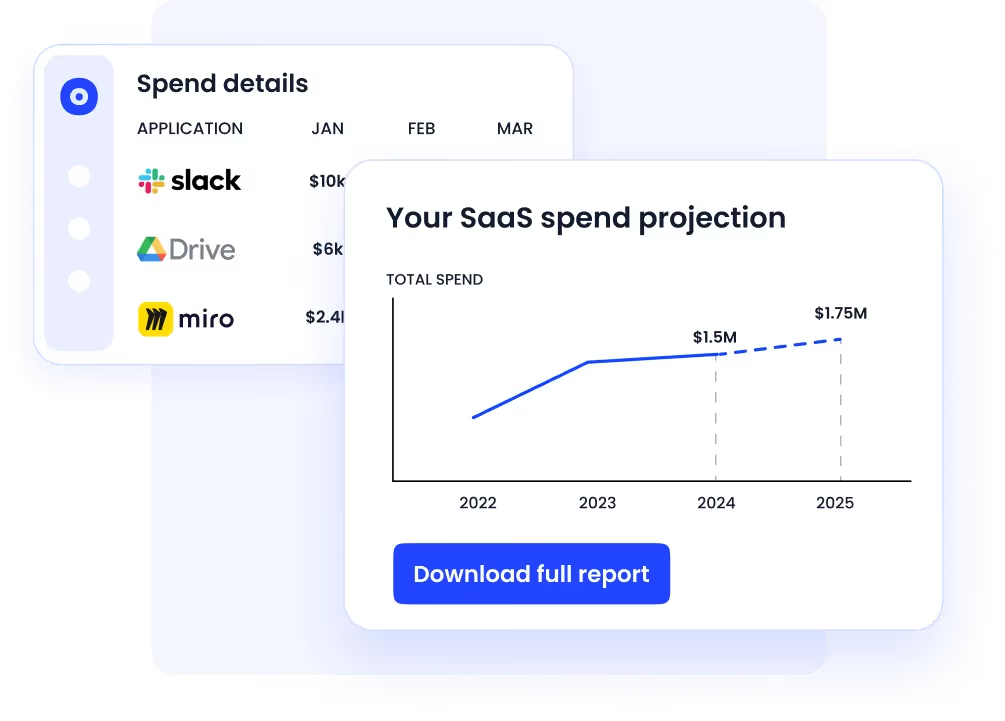
CloudEagle.ai enables proactive budgeting by tracking spend trends and usage patterns.
This helps teams prevent surprises instead of reacting to them.
Key controls enforced:
- Real-time spend tracking
- Usage-informed budget forecasts
- Department-level cost allocation
- Early detection of budget overruns
These capabilities reinforce long-term SaaS spend governance.
E. Centralized SaaS Contract Management
CloudEagle.ai centralizes all SaaS contracts and extracts key metadata automatically.
This ensures renewals are governed, not forgotten.
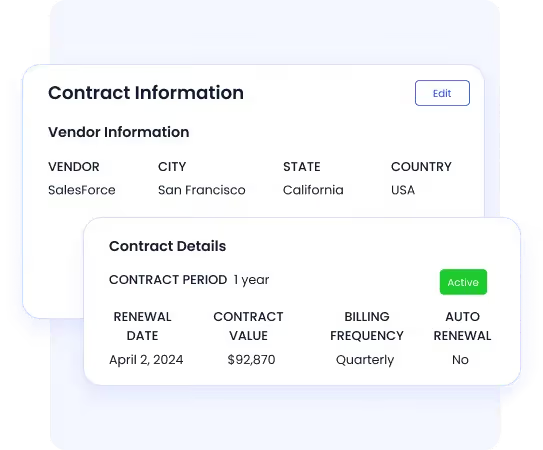
Key controls enforced:
- Unified contract repository
- Tracking of renewal dates and notice periods
- Visibility into SKUs and contract commitments
- Reduced auto-renewal risk
Contract governance becomes a continuous control, not a last-minute scramble.
F. Automated Renewals and Procurement Workflows
CloudEagle.ai replaces manual renewal tracking with automated workflows.
This embeds SaaS spend controls directly into procurement processes.
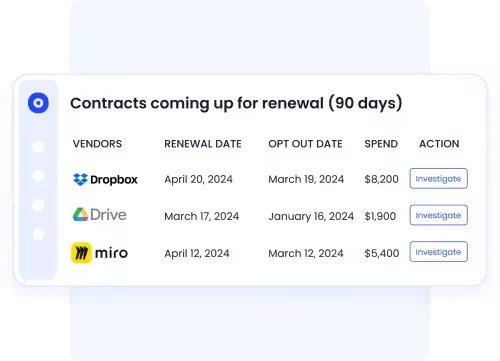
Key controls enforced:
- Renewal workflows triggered in advance
- Budget and approval enforcement
- Faster procurement cycles
- Reduced human error
Automation ensures governance scales with SaaS growth.
G. Shadow IT Discovery and Control
CloudEagle.ai detects unapproved and unknown SaaS applications across the organization.
This closes a major gap in SaaS spend governance.
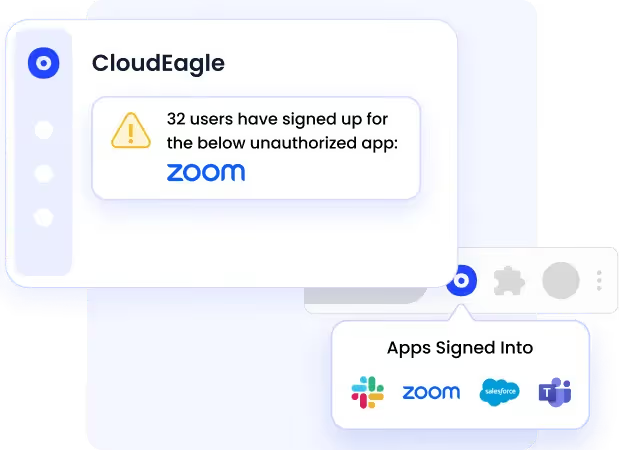
Key controls enforced:
- Discovery of shadow IT and AI tools
- Visibility into rogue spend
- Risk and compliance awareness
- Integration of shadow apps into governance
This prevents unmanaged tools from silently inflating SaaS costs.
H. Continuous Access Reviews and Entitlement Governance
CloudEagle.ai automates access reviews across SaaS applications.
This ensures licenses remain aligned with active users and roles.
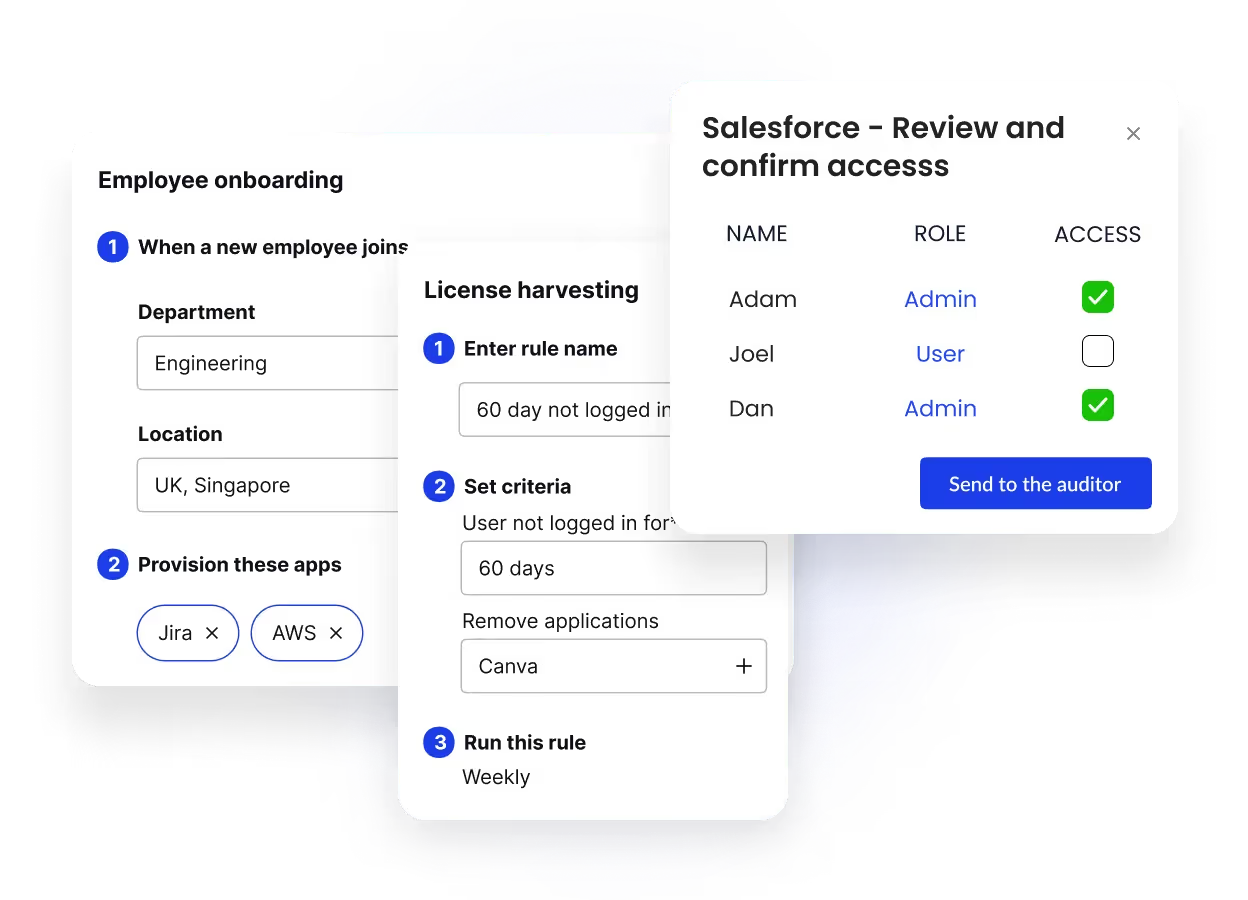
Key controls enforced:
- Regular access reviews
- Detection of over-privileged users
- Automatic cleanup of unused access
- Reduced compliance and security risk
Access governance directly supports SaaS financial controls.
Conclusion
SaaS spend becomes unmanageable when growth outpaces governance.
Without enforceable SaaS spend controls, visibility turns into reporting, and reporting turns into damage control.
The most effective organizations don’t rely on quarterly reviews. They embed SaaS financial controls into provisioning, usage monitoring, and renewals.
CloudEagle.ai enables this control-first approach by connecting spend, usage, access, and contracts into a single governance layer.
Book a free demo to see how CloudEagle.ai helps you take control of SaaS spend.
FAQ
1. How is SaaS spend governance different from SaaS spend management?
SaaS spend management focuses on tracking and optimization. SaaS spend governance enforces rules, ownership, and controls that prevent overspend before it occurs.
2. When should companies start implementing SaaS spend governance?
Once organizations cross 50–100 SaaS applications, manual controls break down. Governance should start early to avoid compounding waste.
3. Who should own SaaS spend governance internally?
Effective SaaS spend governance is shared across finance, IT, and procurement, with clear ownership assigned per application.
4. Can SaaS governance reduce costs without cutting tools?
Yes. Most savings come from license right-sizing, renewal optimization, and access cleanup, not app elimination.
5. How often should SaaS spend controls be reviewed?
Core SaaS spend controls should run continuously, with deeper license and renewal reviews conducted quarterly.


.avif)


.avif)
.avif)




.png)





.avif)
.avif)
.avif)


