
%201.svg)


HIPAA Compliance Checklist for 2025

The average enterprise now runs over 300 SaaS applications. Finance doesn't know the full cost. Security doesn't have full visibility. And IT is fielding requests for AI tools that didn't exist six months ago.
For CIOs and CSOs, SaaS management has quietly become one of the highest-risk, highest-cost functions in the organization and most teams are still running it on spreadsheets and gut feel. This guide is built for leaders who are done with reactive SaaS management and ready to operationalize it properly."
This guide is designed as a practical, execution-ready SaaS management checklist for 2026. It goes beyond generic best practices and focuses on what IT leaders actually need to run, secure, and optimize their SaaS ecosystem at scale.
Did you know 67% of employees at Fortune 1000 companies use unapproved SaaS applications, putting your organization at serious compliance and security risk?
Here's why getting your SaaS management right in 2026 is no longer optional.
TL;DR
- SaaS management in 2026 is an operating model, not a license-tracking task.
- A strong checklist brings visibility, governance, security, and cost control into one system.
- Shadow IT, Shadow AI, and decentralized buying make manual processes obsolete.
- SaaS security posture management and access automation are now core IT responsibilities.
- Platforms like CloudEagle.ai help teams move from reactive chaos to proactive control.
1. Why Does Your Organization Need a SaaS Management Checklist?
SaaS management has expanded well beyond IT's traditional remit. Today it sits at the intersection of financial governance, security posture, and regulatory compliance, three areas that report directly to the board.
A modern SaaS management checklist exists to bring structure to chaos. As SaaS adoption accelerates, IT leaders need a way to standardize how SaaS is discovered, approved, secured, optimized, and retired, without slowing down the business.
A well-defined SaaS management checklist typically covers:
- SaaS discovery and application inventory
- Subscription and license lifecycle management
- Cost optimization and spend governance
- SaaS security posture management
- Identity and access lifecycle controls
- Compliance and audit readiness
- Reporting, metrics, and continuous improvement
The goal is not control for control’s sake. The goal is predictability, accountability, and resilience in how SaaS is managed across the organization.
Without a checklist-driven approach:
- Shadow IT grows unchecked
- Security teams operate reactively
- Finance struggles to forecast SaaS spend
- IT becomes a bottleneck instead of an enabler
In contrast, organizations that operationalize SaaS management through a checklist gain repeatability. Every new app, renewal, audit, or offboarding event follows a consistent, auditable process.
This is why the SaaS management checklist has evolved from a tactical document into a core pillar of modern IT operations.
Your employees are using apps you don't even know about. Tune into our podcast, "Optimizing Shadow IT Risks and Innovations in SaaS Management" and learn how top IT leaders are getting ahead of Shadow IT before it spirals out of control. Listen now →
2. Is Your SaaS Management Strategy Actually Ready for 2026?
In 2026, a "ready" SaaS management strategy is no longer about static inventory or manual audits; it is defined by continuous automation, shadow AI visibility, and financial accountability.
Organizations now manage an average of 305 applications, and without a centralized SaaS Management Platform (SMP), companies are projected to overspend by 25% and remain 5x more susceptible to cyber incidents
This checklist is designed to help IT teams take control of their SaaS stack, govern licenses and optimize spend:

1. Complete SaaS Visibility and Discovery
You can't manage what you can't see and in 2026, there's a lot hiding in plain sight. SaaS sprawl is accelerating as AI tools, browser-based apps, and business-led purchases multiply faster than IT can track.
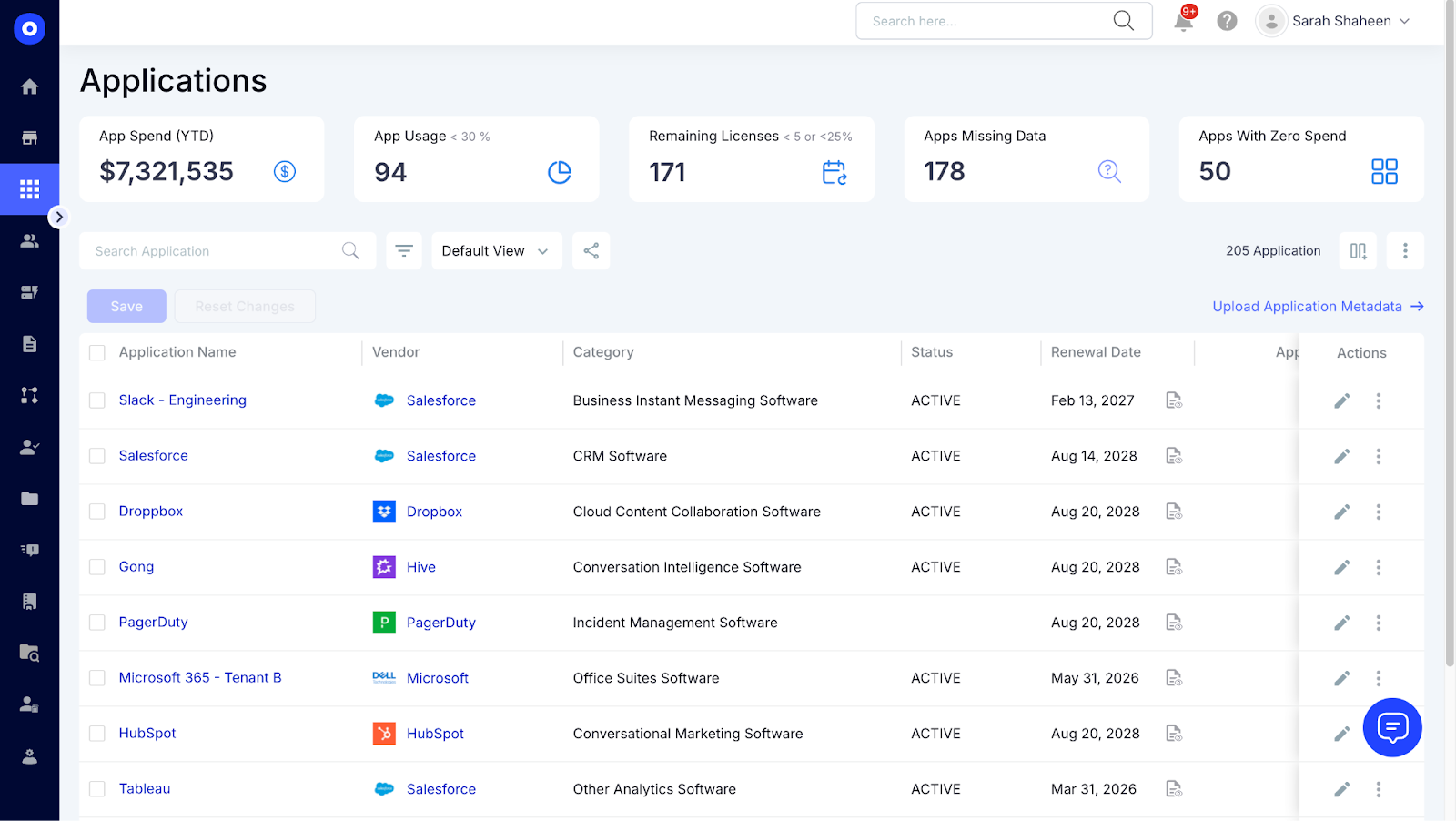
Surveys and spreadsheets were never built for this scale. The first step in any serious SaaS management checklist is establishing a real-time, automated inventory of every application in use across the organization, sanctioned or not.
Shadow IT isn't just a policy problem, it's a breach waiting to happen. Discover how a forward-thinking team made AI adoption fully secure, auditable, and IT-approved across every department. Read the case study →
2. Centralized SaaS Subscription Management
Most organizations don't realize how much they're overspending on SaaS until it's already a problem. Unused licenses, auto-renewed contracts, and overlapping tools quietly drain budgets.
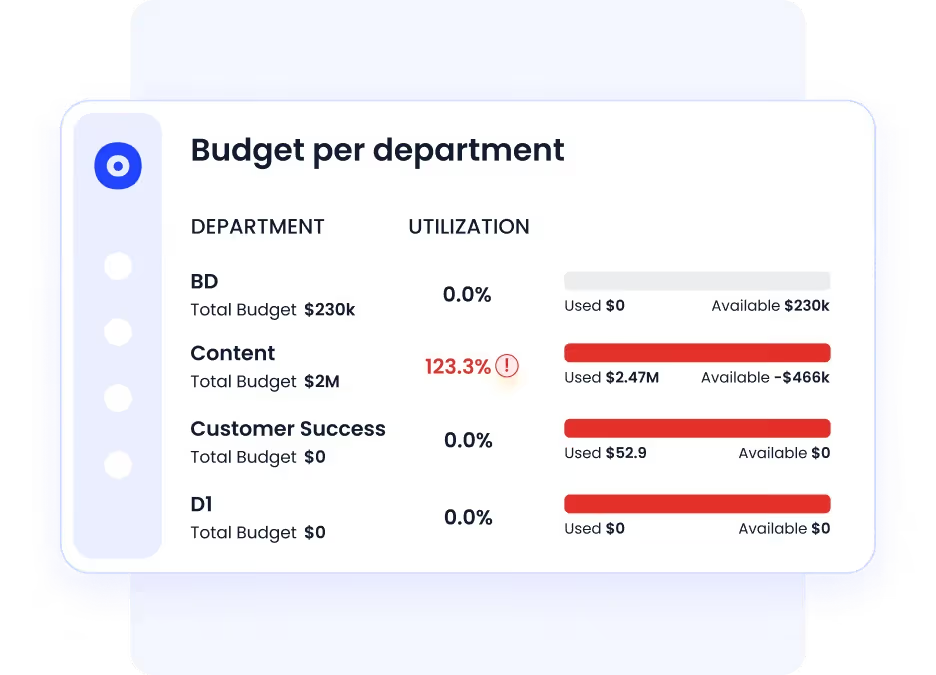
With SaaS spend now one of the fastest-growing line items, centralizing subscription visibility isn't a nice-to-have, it's the only way to make cost decisions based on facts rather than guesswork.
3. SaaS Cost Optimization and Spend Control
Cost optimization in 2026 isn't something you do at the end of a quarter. SaaS pricing has become increasingly complex, AI add-ons, usage-based tiers, and bundled plans make it easy to overpay without realizing it.
IT leaders need a continuous, data-backed approach to right-sizing licenses, eliminating redundant tools, and entering renewal conversations with leverage.
4. SaaS Governance Best Practices
As SaaS buying becomes more decentralized, governance is what prevents speed from turning into chaos.
A strong governance framework doesn't slow teams down, it gives them a clear path to get the tools they need without creating security gaps, compliance risks, or budget surprises. It also removes the friction that tends to build between IT and business teams when there are no agreed-upon rules of the road.
5. SaaS Security Posture Management
The threat landscape has shifted. Most breaches today don't come through the network, they come through compromised SaaS identities, misconfigured permissions, and overlooked third-party integrations. SaaS security posture management (SSPM) is no longer a security team concern alone.
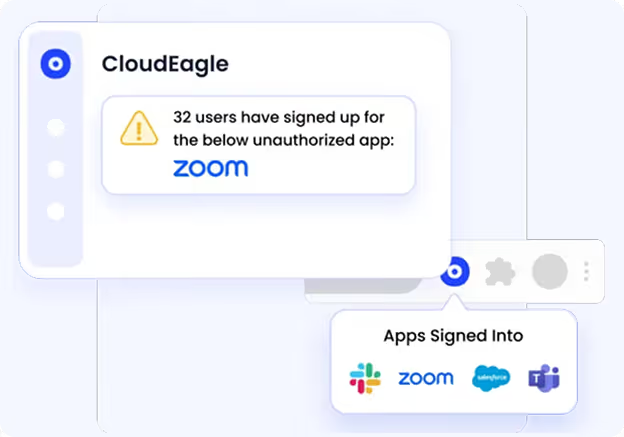
IT leaders need continuous configuration monitoring, integration visibility, and clear ownership of every connected application.
6. Identity, Access, and Lifecycle Automation
With hybrid work, frequent contractor engagements, and fast-moving hiring cycles, manual access management creates risk at every stage. Provisioning delays, forgotten offboarding, and stale permissions are common and costly. Automating the full access lifecycle, from onboarding to role changes to departure, is the only way to keep pace without introducing security gaps.
7. Compliance and Audit Readiness
Compliance pressure is no longer limited to heavily regulated industries. Auditors increasingly expect organizations to demonstrate centralized SaaS visibility, documented access controls, and a clear chain of ownership for every application. A point-in-time report pulled together before an audit is no longer enough, readiness needs to be continuous and built into day-to-day operations.
8. Reporting, Metrics, and Continuous Improvement
A SaaS management checklist isn't a one-time project, it's an ongoing operating rhythm. SaaS environments change constantly: new tools get added, usage patterns shift, and business needs evolve.
Without consistent reporting and defined metrics, it's impossible to know whether your approach is working or where it needs to improve. What gets measured is what actually gets managed.
4. How to Streamline SaaS Management with CloudEagle.ai in 2026?
CloudEagle.ai approaches SaaS Management in 2026 through a bold, AI-powered strategy centered on visibility, governance, optimization, and cost control. It goes beyond traditional SaaS management by integrating procurement, license optimization, and risk-based access governance into one streamlined platform.
1. Total Visibility Across SaaS + AI Tools
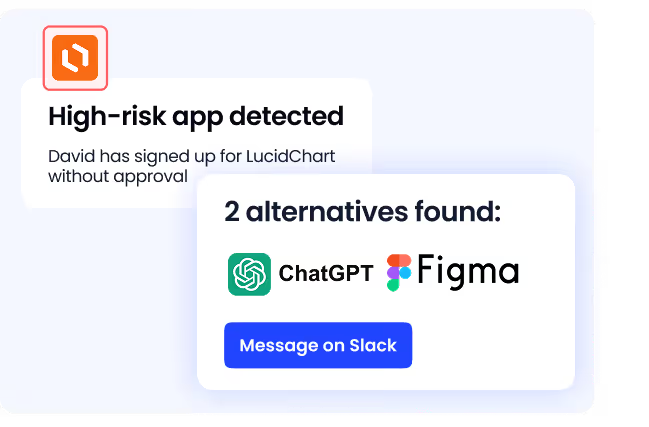
CloudEagle solves one of the biggest enterprise challenges today: lack of visibility. With 500+ direct integrations, organizations gain 100% visibility into:
- All SaaS and AI applications
- License utilization
- Application spend
- Shadow IT and unapproved tool usage
According to CloudEagle.ai's IGA Report, 60% of AI and SaaS tools remain completely outside IT visibility and 48% of former employees still have active app access months after leaving. The breach risk is hiding in plain sight.
Download the full report →
Unlike legacy tools that rely only on SSO/IDP coverage, CloudEagle tracks login + spend signals to uncover even free and browser-based apps that evade firewalls or IT controls.
2. Automated Governance & Access Control
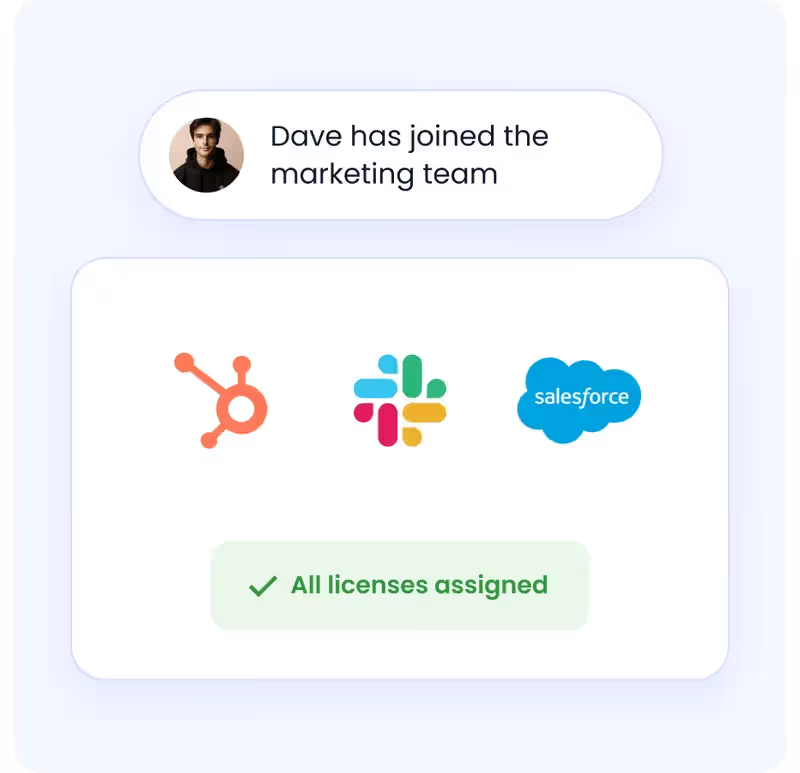
CloudEagle uses AI to automate access governance, enabling:
- Zero-touch provisioning/deprovisioning based on roles and departments
- Access reviews that are SOC2-ready and continuous (not just quarterly)
- Time-based access for contractors or temporary users
- Shadow IT remediation workflows with Slack/Email alerts
With nearly 48% of ex-employees retaining access in many orgs, CloudEagle’s real-time access controls help eliminate stale permissions and insider threats.
3. Optimize Spend with License Harvesting & App Rationalization
CloudEagle’s optimization engine delivers 10–30% SaaS savings by:
- Reclaiming unused licenses via automated harvesting
- Identifying duplicate tools across departments
- Downgrading SKUs based on actual feature usage
- Benchmarking vendor pricing for smarter renewals
Customer Impact Examples:
RingCentral saved $250K by consolidating duplicate apps
4. Renewal & Procurement Intelligence
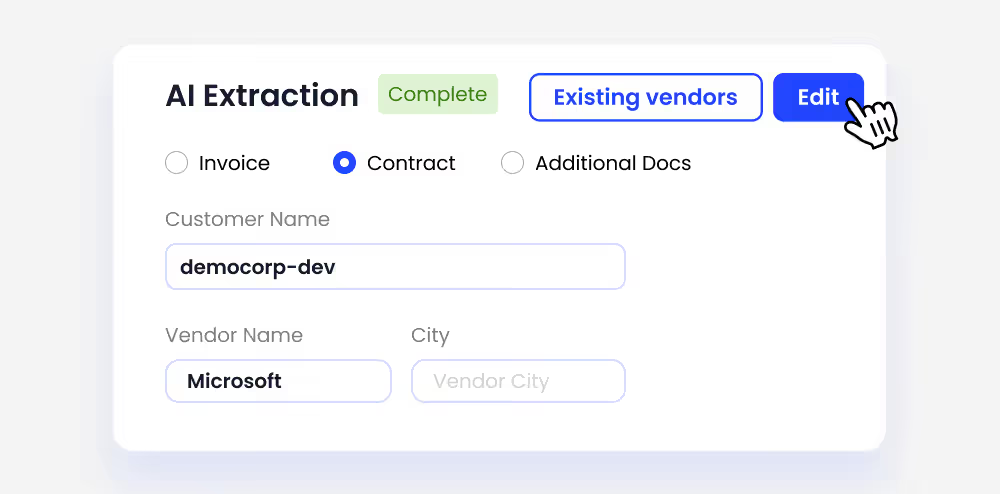
The platform centralizes all vendor contracts with AI-extracted metadata like:
- Renewal dates
- Opt-out clauses
- License counts
- SKU-level details
This enables:
- Smart renewal alerts and workflows
- Contract negotiation based on usage + benchmark data
- Procurement orchestration with intake-to-procure modules
5. AI-Powered Governance for the Future
CloudEagle’s strategic roadmap includes:
- Real-time AI risk dashboards
- Detection of unsanctioned AI tools like ChatGPT, Midjourney
- Self-remediation workflows
- DLP triggers for high-risk applications
As 60% of SaaS and AI tools now operate outside IT visibility, CloudEagle offers the only AI-native governance platform built for today’s dynamic, decentralized tech environments.
Your SaaS Governance Starts Today


5. Where Most Organizations Fall Short
Even well-resourced IT teams consistently hit the same walls. Governance frameworks exist on paper but aren't enforced at the point of purchase. Access reviews happen quarterly at best, leaving stale permissions in place for months.
SaaS spend is tracked by finance and IT separately, with neither team having the full picture. And when auditors arrive, compliance evidence gets assembled manually from scattered sources rather than pulled from a live system.
These aren't process failures, they're symptoms of managing a 2026 SaaS environment with 2020 tools and workflows
6. Conclusion
The organizations winning on SaaS management in 2026 aren't necessarily the ones with the biggest IT teams or the largest budgets. They're the ones that stopped treating SaaS as a procurement problem and started treating it as a governance mandate.
The checklist in this guide isn't a one-time exercise, it's an operating rhythm. Build it into your quarterly reviews, your security audits, your renewal cycles, and your onboarding workflows. That's how SaaS management stops being a fire you're always fighting and starts becoming a capability that actually moves the business forward.
FAQs
1. What should be included in a SaaS management checklist for 2026?
A modern SaaS management checklist should include discovery, subscription tracking, cost optimization, governance workflows, security posture management, access automation, compliance controls, and reporting metrics.
2. How can IT teams enforce effective SaaS governance across the organization?
IT teams should implement standardized intake workflows, clear ownership models, centralized renewal reviews, and automated controls that balance speed with oversight.
3. What core SaaS security strategies are essential for 2026?
Key strategies include SaaS security posture management, least-privilege access, automated offboarding, OAuth monitoring, and continuous configuration assessments.


.avif)


.avif)
.avif)




.png)




.avif)
.avif)
.avif)


