You need to enable JavaScript in order to use the AI chatbot tool powered by ChatBot

How FinOps Is Expanding Into SaaS Procurement and Renewals

Share via:
blog-cms-banner-bg
Little-Known Negotiation Hacks to Get the Best Deal on Slack
cta-bg-blogDownload Your Copy

HIPAA Compliance Checklist for 2025

Download PDF

For years, FinOps was synonymous with cloud cost optimization. AWS bills, Azure reservations, and usage forecasts were its primary playground. 

But today, a much bigger cost center is demanding attention: SaaS.

Organizations now run hundreds of SaaS applications across teams, each with its own pricing model, renewal cycle, and usage pattern. What started as decentralized, team-led buying has quietly turned into one of the largest and least visible areas of enterprise spend. 

As a result, FinOps teams are expanding their mandate, moving beyond cloud infrastructure into FinOps SaaS procurement and renewals.

This shift isn’t optional anymore. It’s a natural evolution driven by scale, complexity, and the need for real-time financial accountability.

In this blog, we’ll explore how FinOps SaaS procurement is taking shape, why renewals are a critical leverage point, and what best practices leading organizations are adopting to manage SaaS spend more effectively.

Want to know the Best Practices for SaaS Spend ?

Learn 6 FinOps best practices from CloudEagle.ai to optimize SaaS

Download Resource
CTA Thumbnail

TL;DR

  • FinOps is expanding beyond the cloud to manage growing SaaS procurement and renewal costs.
  • Decentralized SaaS buying has created visibility gaps that procurement alone can’t fix.
  • FinOps brings data-driven insights to SaaS purchasing, license optimization, and renewals.
  • Proactive renewal management helps eliminate shelfware and avoid surprise cost increases.
  • The future of FinOps focuses on SaaS value optimization, not just cost control.

1. What Is FinOps and Why It’s No Longer Just About Cloud

FinOps, short for Financial Operations, is a discipline that brings finance, engineering, and business teams together to manage technology spend using shared accountability and real-time data.

The traditional scope of FinOps

Historically, FinOps focused on:

  • Cloud usage monitoring and allocation
  • Cost forecasting and budgeting
  • Commitment planning (RIs, Savings Plans)
  • Chargebacks and showbacks

The common thread was infrastructure, highly variable, usage-based, and complex to predict without engineering context.

Why SaaS spend forced FinOps to evolve

SaaS flipped the problem in a different way. Instead of variable compute, organizations faced:

Despite appearing “predictable,” SaaS spend quickly became fragmented and opaque. Licenses went unused, renewals auto-extended without review, and finance teams struggled to explain why costs kept rising.

This is where FinOps SaaS management naturally entered the picture. The same principles, visibility, accountability, and optimization apply just as strongly to SaaS as they do to cloud.

2. The Growing Overlap Between FinOps and SaaS Procurement

SaaS procurement was traditionally owned by procurement or IT. But modern SaaS environments exposed limitations in that model.

a. SaaS sprawl and decentralized buying

Today, teams can buy tools with a credit card in minutes. Marketing, sales, HR, and engineering often procure software independently, leading to:

  • Duplicate tools serving the same purpose
  • Inconsistent pricing across departments
  • Shadow IT and unapproved vendors

From a FinOps perspective, this fragmentation makes forecasting and cost control nearly impossible.

b. Lack of visibility into SaaS usage and renewals

Unlike cloud usage metrics, SaaS usage data often lives in silos:

  • Admin dashboards
  • Vendor portals
  • Contract PDFs
  • Finance systems

Without unified visibility, organizations don’t know:

  • Which licenses are actively used
  • When renewals are coming up
  • Whether contracts align with actual needs

c. Why procurement alone can’t solve SaaS cost issues

Procurement excels at negotiation and compliance, but SaaS optimization requires ongoing, data-driven decisions, not just annual reviews.

This is why FinOps SaaS procurement is becoming a shared responsibility. FinOps brings continuous cost tracking and usage analysis, while procurement executes vendor strategy and negotiations.

Are You Still Buying SaaS the Old Way?

These 7 procurement best practices reveal what high-performing teams do differently before signing the contract.

Download Resource
CTA Thumbnail

3. How FinOps Teams Are Influencing SaaS Procurement Decisions

FinOps teams aren’t replacing procurement, they’re strengthening it with financial and usage intelligence.

a. Budget ownership and forecast accuracy

FinOps teams understand:

  • Department-level budgets
  • Growth projections
  • Historical spend trends

By applying this context to FinOps SaaS procurement strategy, organizations can:

  • Avoid overbuying licenses upfront
  • Align contracts with realistic headcount plans
  • Reduce mid-cycle true-ups

b. Data-backed vendor evaluations

Instead of relying on feature lists or stakeholder opinions, FinOps teams evaluate SaaS tools using:

  • Cost per active user
  • Utilization rates over time
  • Overlap with existing tools

This approach helps leadership answer a critical question: Are we paying for value or just access?

c. Standardizing SaaS purchasing workflows

With FinOps involvement, companies are introducing guardrails such as:

These controls don’t slow teams down, they prevent unnecessary spend before it happens.

4. FinOps’ Role in SaaS Contract Renewals

If procurement is where SaaS spend begins, renewals are where it compounds.

a. Identifying shelfware before renewal cycles

One of the most impactful FinOps SaaS procurement activities is identifying unused or underutilized licenses well before renewal dates.

By analyzing usage trends, FinOps teams can:

  • Flag inactive users
  • Recommend downsizing plans
  • Prevent automatic renewals at inflated counts

b. Rightsizing licenses ahead of negotiations

Renewals are often negotiated under time pressure. FinOps changes this dynamic by:

  • Providing early insights into actual usage
  • Modeling multiple license scenarios
  • Supporting procurement with data-backed positions

This shifts negotiations from reactive to strategic.

c. Preventing auto-renewals and surprise price hikes

Missed renewals are expensive. Auto-renew clauses can lock companies into:

  • Higher prices
  • Unfavorable terms
  • Longer commitments

FinOps-led SaaS renewals management focuses on proactive tracking, ensuring no contract renews without review.

5. FinOps Metrics That Matter for SaaS Spend

Managing SaaS without metrics is guesswork. FinOps introduces clarity by tracking what actually matters.

a. Cost per user and cost per team

This metric helps organizations understand:

  • Which teams drive the most SaaS spend
  • Whether costs scale reasonably with headcount

It also supports fair chargeback models.

b. Utilization vs. purchased licenses

A core indicator of SaaS license optimization, this metric highlights:

  • Shelfware risk
  • Opportunities for consolidation
  • Candidates for license tier downgrades

c. Renewal risk and commitment tracking

FinOps teams increasingly track:

  • Renewal timelines
  • Contract values at risk
  • Notice periods and termination clauses

This prevents last-minute decisions and rushed approvals.

6. Challenges FinOps Teams Face Managing SaaS Procurement

Despite its value, FinOps-driven SaaS management isn’t without hurdles.

a. Fragmented ownership across IT, finance, and procurement

Without clear accountability, decisions stall. Successful organizations define:

  • Who owns usage data
  • Who approves spend
  • Who negotiates vendors

FinOps often acts as the connective tissue between these teams.

b. Incomplete usage and license data

Many SaaS vendors provide limited or inconsistent usage metrics. This makes it difficult to:

  • Compare tools
  • Track engagement over time
  • Justify optimization decisions

c. Manual renewal tracking and contract visibility gaps

Spreadsheets and calendars don’t scale. As SaaS portfolios grow, manual processes lead to missed opportunities and higher costs.

7. How CloudEagle Supports FinOps-Driven SaaS Procurement

Think Your SaaS Spend Is Already Optimized?

Chances are, it isn’t. Discover 5 practical tactics used by high-performing teams.

Download Resource
CTA Thumbnail

CloudEagle plays a crucial role in supporting FinOps-driven SaaS procurement by optimizing SaaS spend, improving procurement processes, and enhancing visibility into software-related expenses. Here’s a detailed breakdown of how CloudEagle supports each aspect of FinOps in the context of SaaS procurement:

1. SaaS Spend Optimization

CloudEagle’s platform enables organizations to continuously track and analyze their SaaS spend. It identifies areas of waste and inefficiency, such as:
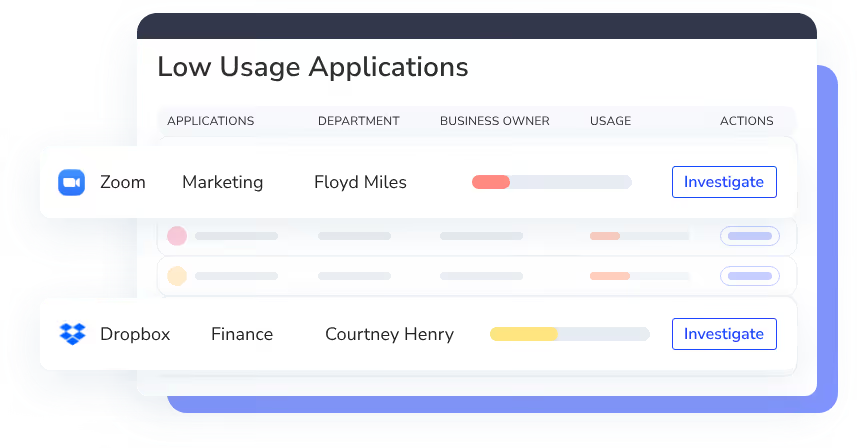
Unused or underutilized licenses: CloudEagle automatically detects licenses that are not being used or that are being over-allocated (e.g., employees with licenses for tools they rarely or never use). The platform then provides recommendations for reallocating or eliminating these licenses to avoid unnecessary costs.

App Consolidation: CloudEagle’s AI-powered insights can identify duplicate SaaS applications across departments, which helps organizations consolidate these tools into one, reducing both the licensing costs and management complexity.

This results in a 10–30% reduction in SaaS spend by eliminating unnecessary licenses, consolidating redundant apps, and optimizing contract terms.

2. Automated License Management

Managing licenses across multiple SaaS applications can be a time-consuming and error-prone process. CloudEagle automates this by:

License Harvesting: The platform can automatically identify unused or underused licenses and initiate workflows to reallocate them. For example, if an employee leaves the company or switches roles, their unused licenses can be reassigned to someone else, ensuring that organizations maximize their investment in software tools.

Granular Control: CloudEagle offers feature-level insights into app usage, not just login data. This level of granularity helps IT and procurement teams understand which features are being used, and by whom, and optimize the number of licenses based on actual usage.

By automating this process, CloudEagle reduces manual work for IT teams, frees up valuable resources, and ensures that software licenses are fully optimized.

3. Budgeting & Reporting

For FinOps teams, visibility into SaaS spend is essential for managing budgets effectively. CloudEagle provides several tools to facilitate this:
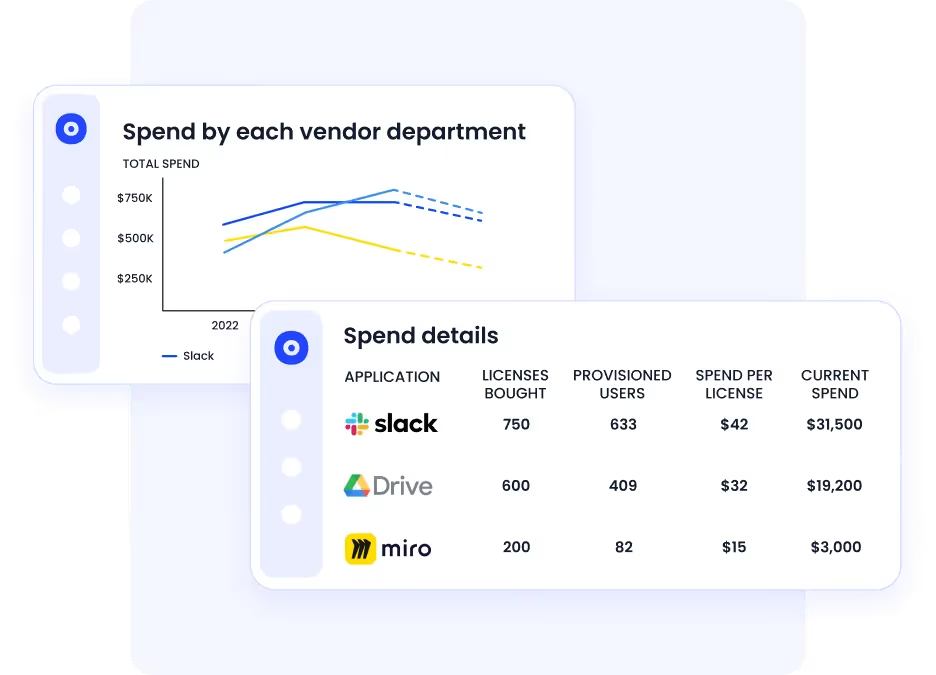
Spend Tracking: CloudEagle offers a centralized view of all SaaS applications, including contract details, renewal dates, usage data, and spending. This helps finance teams get a real-time view of their current SaaS spend and identify areas where they can cut costs.

Forecasting: The platform leverages historical data and AI-driven insights to help organizations forecast future SaaS expenses. This predictive capability allows teams to better plan for upcoming renewals, new app purchases, or other changes in their SaaS portfolio.

Reporting: CloudEagle generates detailed reports that show trends in SaaS usage, spending, and contract terms. These reports can be customized for specific departments, vendors, or applications and serve as a valuable resource for budget meetings and financial planning.

With these features, CloudEagle empowers FinOps teams to have better control over their SaaS budget, ensuring that spending aligns with organizational goals.

4. Contract & Renewal Management

SaaS procurement often involves numerous contracts and complex renewal cycles. CloudEagle streamlines this process in several ways:

Centralized Contract Repository: CloudEagle stores all SaaS contracts in a single, AI-powered repository. This centralization makes it easy to access key contract details such as renewal dates, pricing terms, and opt-out clauses. The platform automatically extracts important metadata from contracts, ensuring that teams don’t miss critical deadlines or overlook unfavorable terms.
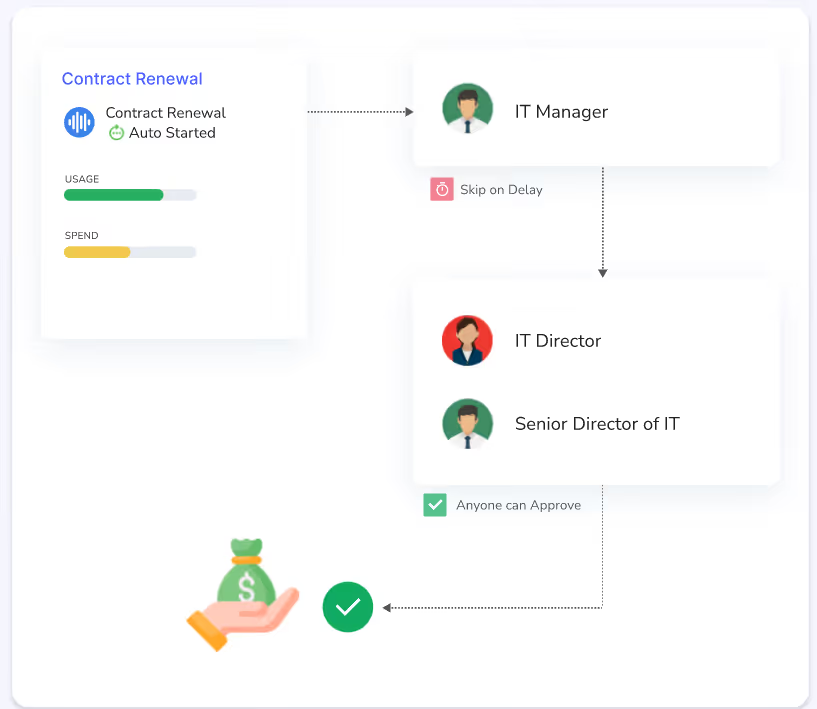
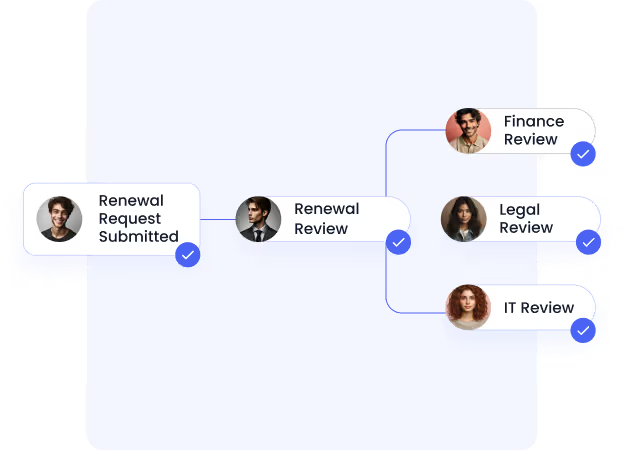
Automated Renewal Workflows: CloudEagle helps organizations automate renewal workflows. For instance, the platform can trigger notifications well in advance of a renewal date, ensuring that procurement teams have ample time to renegotiate terms or reassess the need for the software.
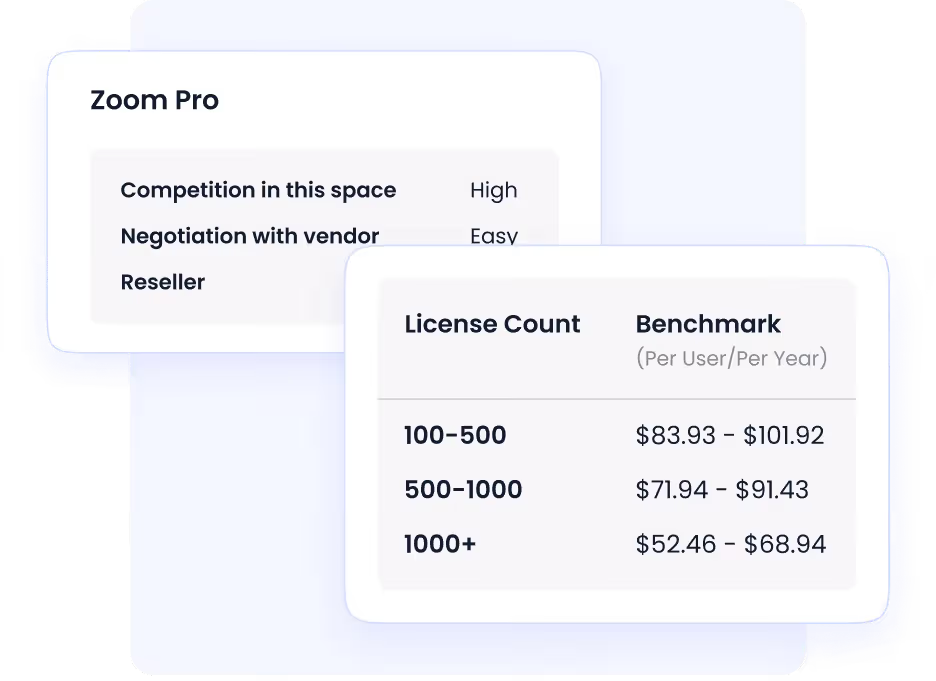
Pricing Benchmarking: CloudEagle provides price benchmarking insights, allowing procurement teams to compare their current SaaS contract terms against industry standards. This enables teams to negotiate better rates with vendors and secure favorable terms during renewal discussions.
This ability to manage contracts more effectively helps FinOps teams prevent costly auto-renewals at unfavorable rates and allows them to engage in proactive contract negotiations.

5. Shadow IT Discovery and Risk Mitigation

Shadow IT refers to unauthorized applications that employees use without IT’s knowledge, which can create security and compliance risks, as well as budget inefficiencies. CloudEagle helps mitigate these risks by:
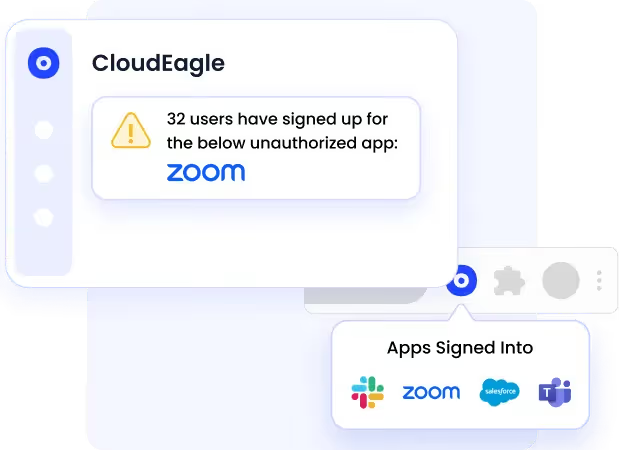
Shadow IT Discovery: The platform can detect all applications being used across the organization, including those that may have been purchased or adopted without IT’s approval. CloudEagle tracks login data, browser activity, and even purchases made with personal credit cards to identify these shadow applications.
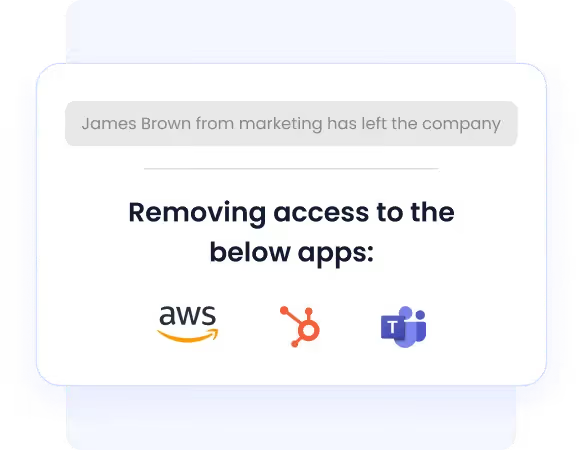
Risk-Based Governance: Once shadow IT is discovered, CloudEagle provides workflows for addressing these unauthorized apps. This includes flagging risky tools, notifying users, and blocking unapproved access. For FinOps teams, this helps ensure that only approved applications are being purchased, reducing unnecessary SaaS spending.

6. Compliance and Audit Readiness

For FinOps and procurement teams, compliance and audit readiness are critical. CloudEagle supports these efforts by providing:

SOC2-Ready Access Reviews: The platform automates access reviews, ensuring that employees only have the necessary access to the tools they need. These reviews are crucial for meeting compliance requirements and ensuring that security risks are minimized.
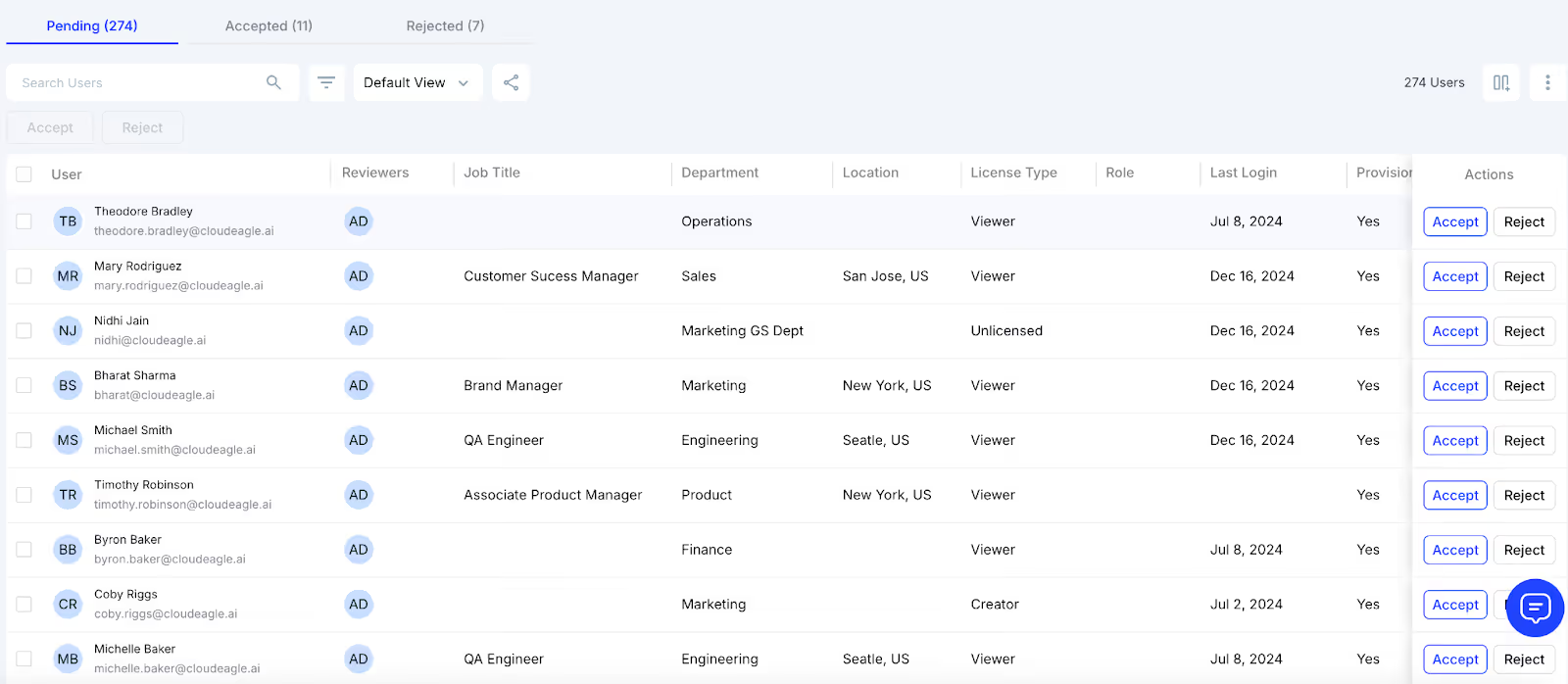
Audit Logs: CloudEagle generates detailed audit logs of all access provisioning and deprovisioning actions, which are essential for proving compliance during internal or external audits.

By automating access reviews and maintaining a comprehensive audit trail, CloudEagle helps organizations stay compliant with security regulations and reduce the time spent on audit preparations.

8. Best Practices for Expanding FinOps Into SaaS Procurement

Organizations successfully extending FinOps SaaS procurement into SaaS follow a few proven principles.

Build a shared FinOps, Procurement operating model

Define roles clearly:

  • FinOps owns cost visibility and analysis
  • Procurement owns vendor strategy and execution
  • IT ensures technical alignment and security

Track SaaS spend continuously, not annually

SaaS spend changes monthly with hires, role changes, and new tools. Continuous tracking enables faster, smarter decisions.

Use data to drive renewals, not assumptions

Renewals should be informed by:

  • Actual usage trends
  • Business value delivered
  • Cost efficiency relative to alternatives

This mindset turns renewals into optimization opportunities.

9. The Future of FinOps in SaaS Management

FinOps is no longer just about controlling costs, it’s about maximizing value.

As organizations mature, FinOps will evolve from:

  • Reactive cost tracking
  • To proactive spend governance
  • To strategic value optimization

SaaS will play a central role in this journey. With its recurring nature and business-wide impact, SaaS spend is becoming a defining factor in FinOps maturity models.

Teams that extend FinOps into SaaS procurement and renewals today — supported by platforms like CloudEagle — will be better positioned to scale efficiently tomorrow.

Frequently Asked Questions

1. How does FinOps help improve SaaS procurement decisions?

FinOps brings financial visibility, usage data, and forecasting accuracy into SaaS procurement, enabling data-backed purchasing instead of assumptions or urgency-driven decisions.

2. Why should FinOps teams be involved in SaaS renewals?

Renewals are where SaaS costs compound. FinOps teams help identify unused licenses, prevent auto-renewals, and support negotiations with real usage insights.

3. What’s the difference between FinOps and traditional procurement for SaaS?

Traditional procurement focuses on negotiation and compliance, while FinOps focuses on continuous cost optimization, usage tracking, and financial accountability.

4. How can FinOps teams reduce SaaS costs without impacting productivity?

By identifying shelfware, rightsizing licenses, consolidating overlapping tools, and aligning subscriptions with actual usage patterns.

5. What tools support FinOps-led SaaS procurement and renewals?

Platforms that provide unified visibility into SaaS spend, usage, contracts, and renewals enable FinOps teams to manage SaaS proactively and at scale.

Advertisement for a SaaS Subscription Tracking Template with a call-to-action button to download and a partial graphic of a tablet showing charts.Banner promoting a SaaS Agreement Checklist to streamline SaaS management and avoid budget waste with a call-to-action button labeled Download checklist.Blue banner with text 'The Ultimate Employee Offboarding Checklist!' and a black button labeled 'Download checklist' alongside partial views of checklist documents from cloudeagle.ai.Digital ad for download checklist titled 'The Ultimate Checklist for IT Leaders to Optimize SaaS Operations' by cloudeagle.ai, showing checklist pages.Slack Buyer's Guide offer with text 'Unlock insider insights to get the best deal on Slack!' and a button labeled 'Get Your Copy', accompanied by a preview of the guide featuring Slack's logo.Monday Pricing Guide by cloudeagle.ai offering exclusive pricing secrets to maximize investment with a call-to-action button labeled Get Your Copy and an image of the guide's cover.Blue banner for Canva Pricing Guide by cloudeagle.ai offering a guide to Canva costs, features, and alternatives with a call-to-action button saying Get Your Copy.Blue banner with white text reading 'Little-Known Negotiation Hacks to Get the Best Deal on Slack' and a white button labeled 'Get Your Copy'.Blue banner with text 'Little-Known Negotiation Hacks to Get the Best Deal on Monday.com' and a white button labeled 'Get Your Copy'.Blue banner with text 'Little-Known Negotiation Hacks to Get the Best Deal on Canva' and a white button labeled 'Get Your Copy'.Banner with text 'Slack Buyer's Guide' and a 'Download Now' button next to images of a guide titled 'Slack Buyer’s Guide: Features, Pricing & Best Practices'.Digital cover of Monday Pricing Guide with a button labeled Get Your Copy on a blue background.Canva Pricing Guide cover with a button labeled Get Your Copy on a blue gradient background.

Enter your email to
unlock the report

Oops! Something went wrong while submitting the form.
License Count
Benchmark
Per User/Per Year

Enter your email to
unlock the report

Oops! Something went wrong while submitting the form.
License Count
Benchmark
Per User/Per Year

Enter your email to
unlock the report

Oops! Something went wrong while submitting the form.
Notion Plus
License Count
Benchmark
Per User/Per Year
100-500
$67.20 - $78.72
500-1000
$59.52 - $72.00
1000+
$51.84 - $57.60
Canva Pro
License Count
Benchmark
Per User/Per Year
100-500
$74.33-$88.71
500-1000
$64.74-$80.32
1000+
$55.14-$62.34

Enter your email to
unlock the report

Oops! Something went wrong while submitting the form.

Enter your email to
unlock the report

Oops! Something went wrong while submitting the form.
Zoom Business
License Count
Benchmark
Per User/Per Year
100-500
$216.00 - $264.00
500-1000
$180.00 - $216.00
1000+
$156.00 - $180.00

Enter your email to
unlock the report

Oops! Something went wrong while submitting the form.

Get the Right Security Platform To Secure Your Cloud Infrastructure

Please enter a business email
Thank you!
The 2023 SaaS report has been sent to your email. Check your promotional or spam folder.
Oops! Something went wrong while submitting the form.

Access full report

Please enter a business email
Thank you!
The 2023 SaaS report has been sent to your email. Check your promotional or spam folder.
Oops! Something went wrong while submitting the form.

For years, FinOps was synonymous with cloud cost optimization. AWS bills, Azure reservations, and usage forecasts were its primary playground. 

But today, a much bigger cost center is demanding attention: SaaS.

Organizations now run hundreds of SaaS applications across teams, each with its own pricing model, renewal cycle, and usage pattern. What started as decentralized, team-led buying has quietly turned into one of the largest and least visible areas of enterprise spend. 

As a result, FinOps teams are expanding their mandate, moving beyond cloud infrastructure into FinOps SaaS procurement and renewals.

This shift isn’t optional anymore. It’s a natural evolution driven by scale, complexity, and the need for real-time financial accountability.

In this blog, we’ll explore how FinOps SaaS procurement is taking shape, why renewals are a critical leverage point, and what best practices leading organizations are adopting to manage SaaS spend more effectively.

Want to know the Best Practices for SaaS Spend ?

Learn 6 FinOps best practices from CloudEagle.ai to optimize SaaS

Download Resource
CTA Thumbnail

TL;DR

  • FinOps is expanding beyond the cloud to manage growing SaaS procurement and renewal costs.
  • Decentralized SaaS buying has created visibility gaps that procurement alone can’t fix.
  • FinOps brings data-driven insights to SaaS purchasing, license optimization, and renewals.
  • Proactive renewal management helps eliminate shelfware and avoid surprise cost increases.
  • The future of FinOps focuses on SaaS value optimization, not just cost control.

1. What Is FinOps and Why It’s No Longer Just About Cloud

FinOps, short for Financial Operations, is a discipline that brings finance, engineering, and business teams together to manage technology spend using shared accountability and real-time data.

The traditional scope of FinOps

Historically, FinOps focused on:

  • Cloud usage monitoring and allocation
  • Cost forecasting and budgeting
  • Commitment planning (RIs, Savings Plans)
  • Chargebacks and showbacks

The common thread was infrastructure, highly variable, usage-based, and complex to predict without engineering context.

Why SaaS spend forced FinOps to evolve

SaaS flipped the problem in a different way. Instead of variable compute, organizations faced:

Despite appearing “predictable,” SaaS spend quickly became fragmented and opaque. Licenses went unused, renewals auto-extended without review, and finance teams struggled to explain why costs kept rising.

This is where FinOps SaaS management naturally entered the picture. The same principles, visibility, accountability, and optimization apply just as strongly to SaaS as they do to cloud.

2. The Growing Overlap Between FinOps and SaaS Procurement

SaaS procurement was traditionally owned by procurement or IT. But modern SaaS environments exposed limitations in that model.

a. SaaS sprawl and decentralized buying

Today, teams can buy tools with a credit card in minutes. Marketing, sales, HR, and engineering often procure software independently, leading to:

  • Duplicate tools serving the same purpose
  • Inconsistent pricing across departments
  • Shadow IT and unapproved vendors

From a FinOps perspective, this fragmentation makes forecasting and cost control nearly impossible.

b. Lack of visibility into SaaS usage and renewals

Unlike cloud usage metrics, SaaS usage data often lives in silos:

  • Admin dashboards
  • Vendor portals
  • Contract PDFs
  • Finance systems

Without unified visibility, organizations don’t know:

  • Which licenses are actively used
  • When renewals are coming up
  • Whether contracts align with actual needs

c. Why procurement alone can’t solve SaaS cost issues

Procurement excels at negotiation and compliance, but SaaS optimization requires ongoing, data-driven decisions, not just annual reviews.

This is why FinOps SaaS procurement is becoming a shared responsibility. FinOps brings continuous cost tracking and usage analysis, while procurement executes vendor strategy and negotiations.

Are You Still Buying SaaS the Old Way?

These 7 procurement best practices reveal what high-performing teams do differently before signing the contract.

Download Resource
CTA Thumbnail

3. How FinOps Teams Are Influencing SaaS Procurement Decisions

FinOps teams aren’t replacing procurement, they’re strengthening it with financial and usage intelligence.

a. Budget ownership and forecast accuracy

FinOps teams understand:

  • Department-level budgets
  • Growth projections
  • Historical spend trends

By applying this context to FinOps SaaS procurement strategy, organizations can:

  • Avoid overbuying licenses upfront
  • Align contracts with realistic headcount plans
  • Reduce mid-cycle true-ups

b. Data-backed vendor evaluations

Instead of relying on feature lists or stakeholder opinions, FinOps teams evaluate SaaS tools using:

  • Cost per active user
  • Utilization rates over time
  • Overlap with existing tools

This approach helps leadership answer a critical question: Are we paying for value or just access?

c. Standardizing SaaS purchasing workflows

With FinOps involvement, companies are introducing guardrails such as:

These controls don’t slow teams down, they prevent unnecessary spend before it happens.

4. FinOps’ Role in SaaS Contract Renewals

If procurement is where SaaS spend begins, renewals are where it compounds.

a. Identifying shelfware before renewal cycles

One of the most impactful FinOps SaaS procurement activities is identifying unused or underutilized licenses well before renewal dates.

By analyzing usage trends, FinOps teams can:

  • Flag inactive users
  • Recommend downsizing plans
  • Prevent automatic renewals at inflated counts

b. Rightsizing licenses ahead of negotiations

Renewals are often negotiated under time pressure. FinOps changes this dynamic by:

  • Providing early insights into actual usage
  • Modeling multiple license scenarios
  • Supporting procurement with data-backed positions

This shifts negotiations from reactive to strategic.

c. Preventing auto-renewals and surprise price hikes

Missed renewals are expensive. Auto-renew clauses can lock companies into:

  • Higher prices
  • Unfavorable terms
  • Longer commitments

FinOps-led SaaS renewals management focuses on proactive tracking, ensuring no contract renews without review.

5. FinOps Metrics That Matter for SaaS Spend

Managing SaaS without metrics is guesswork. FinOps introduces clarity by tracking what actually matters.

a. Cost per user and cost per team

This metric helps organizations understand:

  • Which teams drive the most SaaS spend
  • Whether costs scale reasonably with headcount

It also supports fair chargeback models.

b. Utilization vs. purchased licenses

A core indicator of SaaS license optimization, this metric highlights:

  • Shelfware risk
  • Opportunities for consolidation
  • Candidates for license tier downgrades

c. Renewal risk and commitment tracking

FinOps teams increasingly track:

  • Renewal timelines
  • Contract values at risk
  • Notice periods and termination clauses

This prevents last-minute decisions and rushed approvals.

6. Challenges FinOps Teams Face Managing SaaS Procurement

Despite its value, FinOps-driven SaaS management isn’t without hurdles.

a. Fragmented ownership across IT, finance, and procurement

Without clear accountability, decisions stall. Successful organizations define:

  • Who owns usage data
  • Who approves spend
  • Who negotiates vendors

FinOps often acts as the connective tissue between these teams.

b. Incomplete usage and license data

Many SaaS vendors provide limited or inconsistent usage metrics. This makes it difficult to:

  • Compare tools
  • Track engagement over time
  • Justify optimization decisions

c. Manual renewal tracking and contract visibility gaps

Spreadsheets and calendars don’t scale. As SaaS portfolios grow, manual processes lead to missed opportunities and higher costs.

7. How CloudEagle Supports FinOps-Driven SaaS Procurement

Think Your SaaS Spend Is Already Optimized?

Chances are, it isn’t. Discover 5 practical tactics used by high-performing teams.

Download Resource
CTA Thumbnail

CloudEagle plays a crucial role in supporting FinOps-driven SaaS procurement by optimizing SaaS spend, improving procurement processes, and enhancing visibility into software-related expenses. Here’s a detailed breakdown of how CloudEagle supports each aspect of FinOps in the context of SaaS procurement:

1. SaaS Spend Optimization

CloudEagle’s platform enables organizations to continuously track and analyze their SaaS spend. It identifies areas of waste and inefficiency, such as:

Unused or underutilized licenses: CloudEagle automatically detects licenses that are not being used or that are being over-allocated (e.g., employees with licenses for tools they rarely or never use). The platform then provides recommendations for reallocating or eliminating these licenses to avoid unnecessary costs.

App Consolidation: CloudEagle’s AI-powered insights can identify duplicate SaaS applications across departments, which helps organizations consolidate these tools into one, reducing both the licensing costs and management complexity.

This results in a 10–30% reduction in SaaS spend by eliminating unnecessary licenses, consolidating redundant apps, and optimizing contract terms.

2. Automated License Management

Managing licenses across multiple SaaS applications can be a time-consuming and error-prone process. CloudEagle automates this by:

License Harvesting: The platform can automatically identify unused or underused licenses and initiate workflows to reallocate them. For example, if an employee leaves the company or switches roles, their unused licenses can be reassigned to someone else, ensuring that organizations maximize their investment in software tools.

Granular Control: CloudEagle offers feature-level insights into app usage, not just login data. This level of granularity helps IT and procurement teams understand which features are being used, and by whom, and optimize the number of licenses based on actual usage.

By automating this process, CloudEagle reduces manual work for IT teams, frees up valuable resources, and ensures that software licenses are fully optimized.

3. Budgeting & Reporting

For FinOps teams, visibility into SaaS spend is essential for managing budgets effectively. CloudEagle provides several tools to facilitate this:

Spend Tracking: CloudEagle offers a centralized view of all SaaS applications, including contract details, renewal dates, usage data, and spending. This helps finance teams get a real-time view of their current SaaS spend and identify areas where they can cut costs.

Forecasting: The platform leverages historical data and AI-driven insights to help organizations forecast future SaaS expenses. This predictive capability allows teams to better plan for upcoming renewals, new app purchases, or other changes in their SaaS portfolio.

Reporting: CloudEagle generates detailed reports that show trends in SaaS usage, spending, and contract terms. These reports can be customized for specific departments, vendors, or applications and serve as a valuable resource for budget meetings and financial planning.

With these features, CloudEagle empowers FinOps teams to have better control over their SaaS budget, ensuring that spending aligns with organizational goals.

4. Contract & Renewal Management

SaaS procurement often involves numerous contracts and complex renewal cycles. CloudEagle streamlines this process in several ways:

Centralized Contract Repository: CloudEagle stores all SaaS contracts in a single, AI-powered repository. This centralization makes it easy to access key contract details such as renewal dates, pricing terms, and opt-out clauses. The platform automatically extracts important metadata from contracts, ensuring that teams don’t miss critical deadlines or overlook unfavorable terms.

Automated Renewal Workflows: CloudEagle helps organizations automate renewal workflows. For instance, the platform can trigger notifications well in advance of a renewal date, ensuring that procurement teams have ample time to renegotiate terms or reassess the need for the software.

Pricing Benchmarking: CloudEagle provides price benchmarking insights, allowing procurement teams to compare their current SaaS contract terms against industry standards. This enables teams to negotiate better rates with vendors and secure favorable terms during renewal discussions.

This ability to manage contracts more effectively helps FinOps teams prevent costly auto-renewals at unfavorable rates and allows them to engage in proactive contract negotiations.

5. Shadow IT Discovery and Risk Mitigation

Shadow IT refers to unauthorized applications that employees use without IT’s knowledge, which can create security and compliance risks, as well as budget inefficiencies. CloudEagle helps mitigate these risks by:

Shadow IT Discovery: The platform can detect all applications being used across the organization, including those that may have been purchased or adopted without IT’s approval. CloudEagle tracks login data, browser activity, and even purchases made with personal credit cards to identify these shadow applications.

Risk-Based Governance: Once shadow IT is discovered, CloudEagle provides workflows for addressing these unauthorized apps. This includes flagging risky tools, notifying users, and blocking unapproved access. For FinOps teams, this helps ensure that only approved applications are being purchased, reducing unnecessary SaaS spending.

6. Compliance and Audit Readiness

For FinOps and procurement teams, compliance and audit readiness are critical. CloudEagle supports these efforts by providing:

SOC2-Ready Access Reviews: The platform automates access reviews, ensuring that employees only have the necessary access to the tools they need. These reviews are crucial for meeting compliance requirements and ensuring that security risks are minimized.

Audit Logs: CloudEagle generates detailed audit logs of all access provisioning and deprovisioning actions, which are essential for proving compliance during internal or external audits.

By automating access reviews and maintaining a comprehensive audit trail, CloudEagle helps organizations stay compliant with security regulations and reduce the time spent on audit preparations.

8. Best Practices for Expanding FinOps Into SaaS Procurement

Organizations successfully extending FinOps SaaS procurement into SaaS follow a few proven principles.

Build a shared FinOps, Procurement operating model

Define roles clearly:

  • FinOps owns cost visibility and analysis
  • Procurement owns vendor strategy and execution
  • IT ensures technical alignment and security

Track SaaS spend continuously, not annually

SaaS spend changes monthly with hires, role changes, and new tools. Continuous tracking enables faster, smarter decisions.

Use data to drive renewals, not assumptions

Renewals should be informed by:

  • Actual usage trends
  • Business value delivered
  • Cost efficiency relative to alternatives

This mindset turns renewals into optimization opportunities.

9. The Future of FinOps in SaaS Management

FinOps is no longer just about controlling costs, it’s about maximizing value.

As organizations mature, FinOps will evolve from:

  • Reactive cost tracking
  • To proactive spend governance
  • To strategic value optimization

SaaS will play a central role in this journey. With its recurring nature and business-wide impact, SaaS spend is becoming a defining factor in FinOps maturity models.

Teams that extend FinOps into SaaS procurement and renewals today — supported by platforms like CloudEagle — will be better positioned to scale efficiently tomorrow.

Frequently Asked Questions

1. How does FinOps help improve SaaS procurement decisions?

FinOps brings financial visibility, usage data, and forecasting accuracy into SaaS procurement, enabling data-backed purchasing instead of assumptions or urgency-driven decisions.

2. Why should FinOps teams be involved in SaaS renewals?

Renewals are where SaaS costs compound. FinOps teams help identify unused licenses, prevent auto-renewals, and support negotiations with real usage insights.

3. What’s the difference between FinOps and traditional procurement for SaaS?

Traditional procurement focuses on negotiation and compliance, while FinOps focuses on continuous cost optimization, usage tracking, and financial accountability.

4. How can FinOps teams reduce SaaS costs without impacting productivity?

By identifying shelfware, rightsizing licenses, consolidating overlapping tools, and aligning subscriptions with actual usage patterns.

5. What tools support FinOps-led SaaS procurement and renewals?

Platforms that provide unified visibility into SaaS spend, usage, contracts, and renewals enable FinOps teams to manage SaaS proactively and at scale.

CloudEagle.ai recognized in the 2025 Gartner® Magic Quadrant™ for SaaS Management Platforms
Download now
gartner chart
5x
Faster employee
onboarding
80%
Reduction in time for
user access reviews
30k
Workflows
automated
$15Bn
Analyzed in
contract spend
$2Bn
Saved in
SaaS spend

Recognized as an Industry leader for our AI

CloudEagle.ai is Recognized in the 2024 Gartner® Magic Quadrant™ for SaaS Management Platforms

Recognition highlights CloudEagle’s innovation and leadership in the rapidly evolving SaaS management and procurement space.
Read More
Gartner Magic Quadrant for SaaS Management Platforms showing a chart divided into Challengers and Leaders quadrants with various companies plotted as dots.

CloudEagle.ai Recognized in the GigaOm Radar for SaaS Management Platforms

CloudEagle named a Leader and Outperformer in GigaOm Radar Report, validating its impact in the SaaS management platform landscape.
Read More
gigaom

Everest Group Positions CloudEagle.ai as a Trailblazer in SaaS Management Platforms

CloudEagle recognized as a Trailblazer by Everest Group, showcasing its rapid growth and innovation in SaaS spend and operations management.
Read More
qks

CloudEagle.ai is Recognized in the 2024 Gartner® Magic Quadrant™ for SaaS Management Platforms

Recognition highlights CloudEagle’s innovation and leadership in the rapidly evolving SaaS management and procurement space.
Read More
gartner

Streamline SaaS governance and save 10-30%

Book a Demo with Expert
CTA image
One platform to Manage
all SaaS Products
Learn More