
%201.svg)


HIPAA Compliance Checklist for 2025

Most enterprises believe their SaaS spend is under control until finance reviews renewal forecasts and finds costs growing faster than headcount. The issue isn’t too many tools. There are too many licenses drifting away from real usage.
Industry studies consistently show that 20–35% of SaaS licenses go unused or underutilized at any given time.
Enterprises that address this gap through structured SaaS license optimization routinely reduce SaaS spend by 10–15% annually, without disrupting teams or cutting core applications.
This blog breaks down why SaaS costs spiral without license optimization, how license waste accumulates, and how enterprises operationalize SaaS cost optimization at scale.
TL;DR
- Enterprises overspend on SaaS primarily due to unused and misaligned licenses
- Continuous SaaS license optimization can reduce SaaS spend by 10–15%
- License waste grows through role changes, offboarding gaps, and over-provisioning
- Optimization must happen before renewals, not after
- Platforms like CloudEagle.ai make license optimization scalable through automation and AI
1. Why SaaS Spend Becomes Unmanageable Without License Optimization?
SaaS pricing scales by license volume, not by business value.
When license utilization isn’t actively managed, spend rises automatically while actual usage quietly declines.
This happens because:
- Licenses are added faster than they’re reviewed
- Usage drops over time, but pricing stays fixed
- Inactive and low usage licenses go unnoticed
In most enterprises, attempts to reduce SaaS spend focus on vendor consolidation or renegotiation.
But without continuous SaaS license optimization, inefficiencies remain embedded in contracts.
As a result:
- Unused SaaS licenses persist across renewals
- Waste gets locked into multi-year agreements
- SaaS cost optimization becomes reactive, not preventive
2. How License Waste Creeps into Enterprise SaaS Stacks?
License waste is rarely intentional.
It emerges from everyday operating decisions that don’t scale.
A. Licenses purchased for scale, not usage
Enterprises often buy licenses based on projected growth, hiring plans, or peak demand scenarios. Actual adoption rarely matches those assumptions.
Over time, this leads to:
- Excess licenses sitting idle
- Premium tiers are assigned broadly “just in case.”
- Declining license utilization
This mismatch between scale and usage is one of the largest contributors to unused SaaS licenses.
B. Role changes without license reallocation
Employees change roles, teams, and responsibilities far more often than licenses are reviewed. Access persists even when job requirements shift.
As a result:
- High-cost licenses remain tied to outdated roles
- License utilization drops without visibility
- SaaS spend inflates without adding value
Without automated workflows, SaaS license optimization becomes impossible to sustain.
C. Inactive and offboarded users retaining access
Offboarding is one of the most common license failure points. Manual processes can’t keep up with employee exits, leaves, and internal transfers.
Enterprise audits routinely reveal that 20–30% of paid SaaS licenses belong to inactive or offboarded users.
3. How Do Enterprises Operationalize SaaS License Optimization at Scale?
Enterprises that achieve consistent SaaS cost optimization don’t treat license cleanup as an annual event. They embed SaaS license optimization into daily operations by continuously connecting usage, access, and cost.
This shift, from periodic audits to ongoing discipline, is what enables sustained reductions in SaaS spend.
A. Establishing continuous license usage visibility
Basic login data isn’t enough. Enterprises that optimize effectively track feature-level and activity-based usage across their SaaS portfolio.
This visibility allows teams to:
- Identify declining adoption early
- Compare license utilization across roles
- Build a data foundation for SaaS license optimization
Without continuous usage insights, efforts to reduce SaaS spend remain reactive.
B. Surfacing license waste and misalignment early
Not all waste comes from completely unused licenses. Many licenses are technically active but misaligned with actual needs.
Leading enterprises continuously surface:
- Unused SaaS licenses
- Underutilized premium tiers
- Licenses mismatched to job roles
Early identification prevents waste from compounding and strengthens long-term SaaS cost optimization.
C. Aligning license tiers with actual role requirements
The fastest savings often come from right-sizing, not removals. Downgrading licenses to match real usage preserves productivity while cutting costs.
Enterprises that succeed:
- Define clear usage thresholds per license tier
- Review premium access on a regular cadence
- Improve license utilization without friction
Right-sizing is one of the most effective SaaS license optimization levers available.
D. Embedding license optimization into offboarding processes
Manual offboarding doesn’t scale in large organizations. Automation is essential to prevent license leakage.
High-performing teams:
- Tie license removal directly to HR workflows
- Reclaim licenses immediately on employee exit
- Prevent dormant access from lingering
This alone can eliminate a significant share of unused SaaS licenses year over year.
E. Optimizing licenses ahead of renewals to protect budgets
Renewals are where waste becomes permanent. Once a contract is renewed, inefficiencies are locked in for another term.
Enterprises that consistently reduce SaaS spend:
- Review license utilization 90–120 days before renewal
- Reduce license counts before negotiations
- Align tiers with current usage patterns
This timing is what enables 10–15% savings, not last-minute cleanups.
4. Why Most License Optimization Efforts Fail?
Many enterprises recognize license waste but struggle to sustain results.
The issue isn’t awareness; it’s how license optimization is executed over time.
A. Optimization is treated as a one-time audit
License optimization is often triggered by renewals or budget pressure.
Teams clean up unused SaaS licenses, realize short-term savings, and move on.
Without ongoing review, usage patterns change again, licenses accumulate, and SaaS cost optimization resets within months.
This audit-driven approach makes it difficult to consistently reduce SaaS spend.
B. No linkage between access, usage, and cost
License decisions are frequently made with incomplete data. Usage metrics, access rights, and spend information live in separate systems.
Without a unified view, license utilization insights don’t translate into action.
This disconnect weakens SaaS license optimization and limits long-term SaaS cost optimization.
C. Insights arrive too late in the renewal cycle
Many organizations review license data only when renewals are imminent.
At that point, pricing is already locked in, and leverage is limited.
Late insights force teams into reactive decisions, allowing unused SaaS licenses to roll forward. As a result, opportunities to reduce SaaS spend are missed year after year.
5. How CloudEagle.ai Drives License Optimization at Scale?
CloudEagle.ai enables enterprises to operationalize SaaS license optimization by combining AI-driven insights, automation, and integrated workflows.
Instead of treating optimization as a periodic clean-up, the platform makes license utilization a continuous, enforceable process across the SaaS lifecycle.
A. AI-driven license discovery and usage intelligence
CloudEagle.ai automatically discovers all SaaS licenses across the organization, including active, inactive, and redundant entitlements. AI-driven analysis ensures that no license goes unnoticed, even in large and distributed SaaS environments.
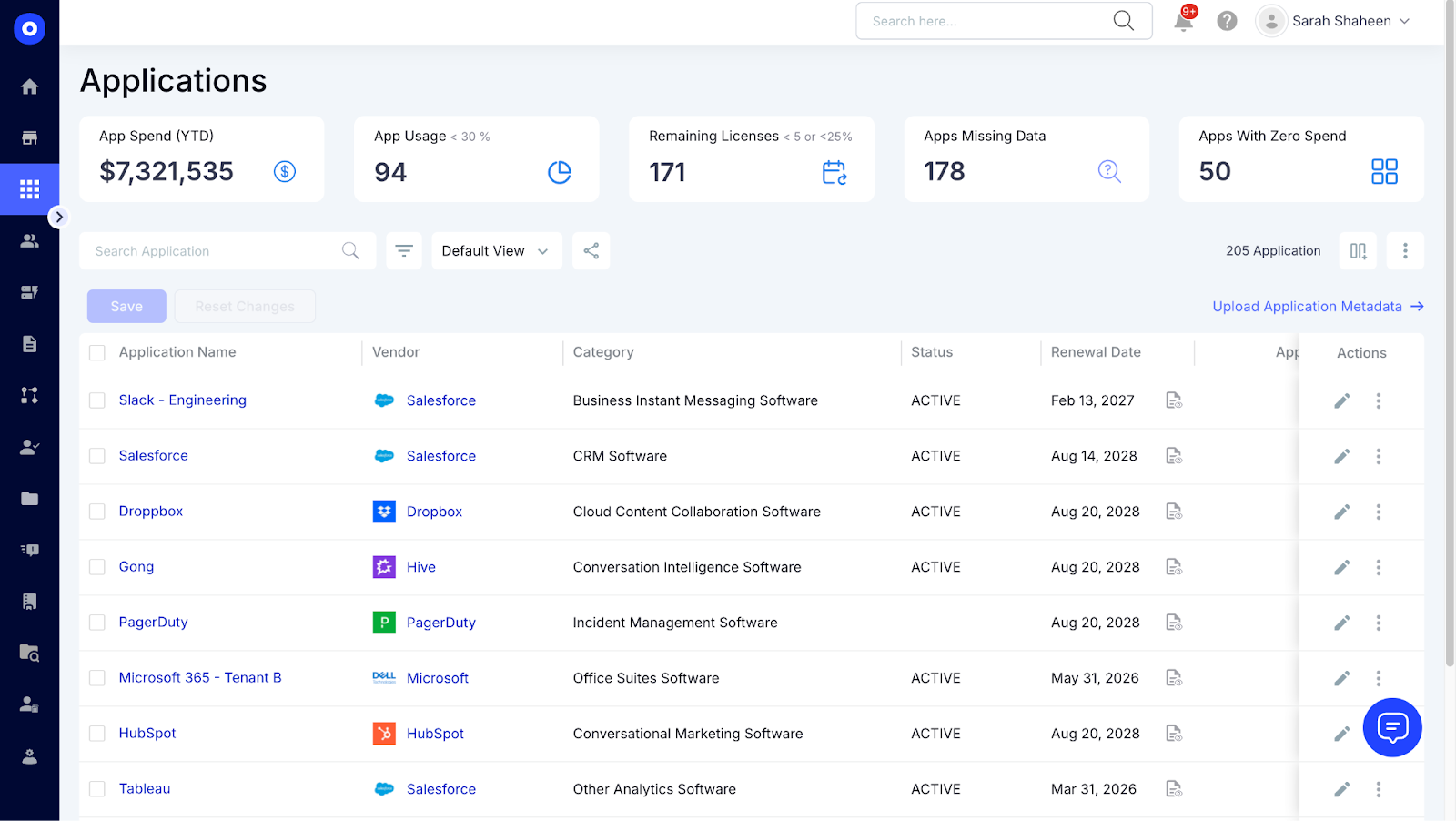
This enables teams to:
- Identify unused and underutilized SaaS licenses
- Surface hidden license sprawl across apps
- Build accurate license utilization baselines
B. Automated license harvesting and continuous optimization
License waste accumulates when cleanup depends on manual effort. CloudEagle.ai automates license harvesting by continuously identifying users who no longer use specific applications or features.

With automation in place:
- Unused licenses are reclaimed in real time
- Licenses are reassigned instead of repurchased
- SaaS license optimization runs continuously
This reduces long-term dependency on one-time audits.
C. Granular visibility into license and feature usage
CloudEagle.ai provides detailed, feature-level usage visibility across SaaS applications. This goes beyond simple login data to show how licenses are actually consumed.
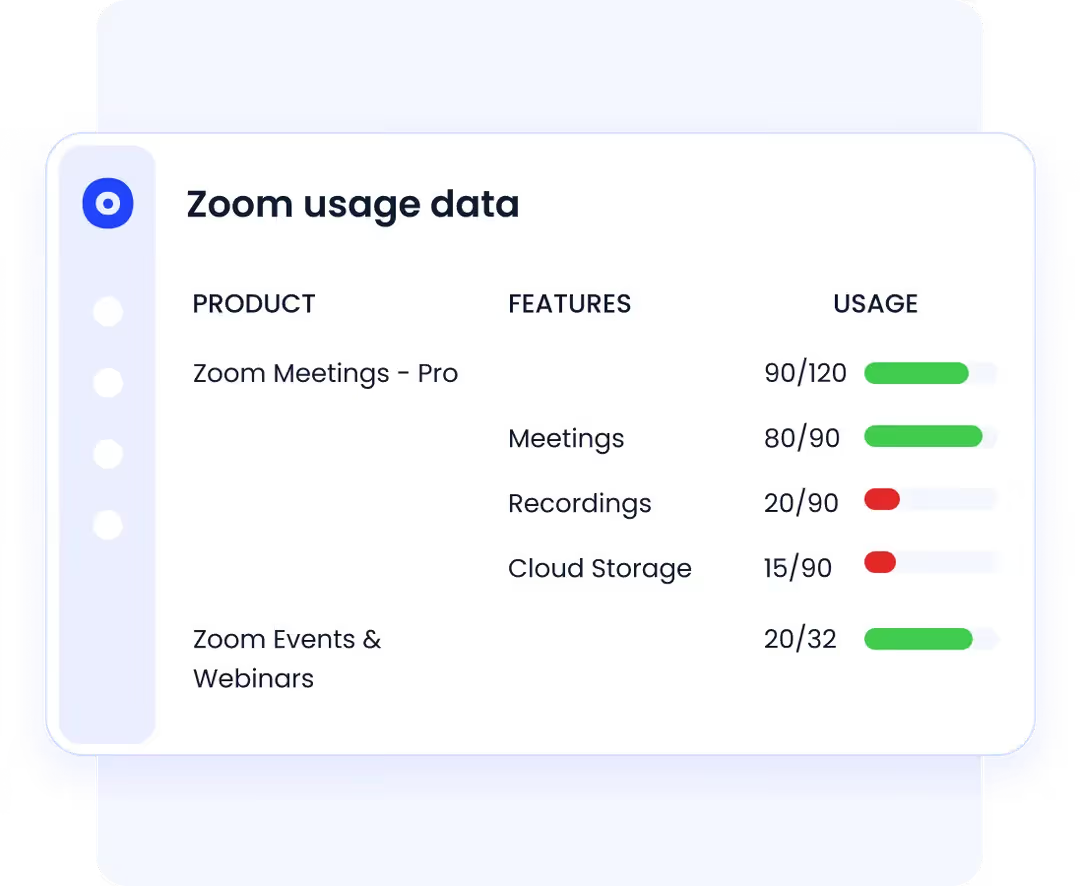
Granular insights help enterprises:
- Distinguish active usage from superficial activity
- Improve license utilization accuracy
- Make confident optimization decisions
D. License right-sizing based on real usage patterns
Many enterprises overspend by assigning high-tier licenses where basic access would suffice. CloudEagle.ai compares actual usage against license tiers and recommends right-sizing actions.
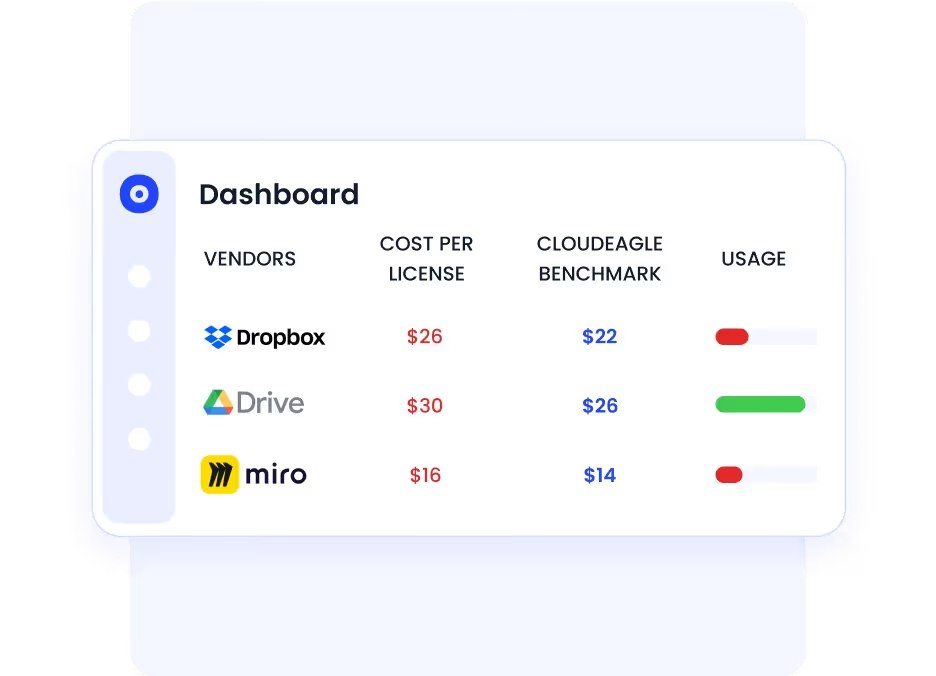
This allows organizations to:
- Downgrade misaligned premium licenses
- Preserve productivity while reducing cost
- Drive sustainable SaaS cost optimization
E. Centralized license and contract alignment
CloudEagle.ai centralizes license data across hundreds of applications and correlates it with contract terms and renewal timelines. This ensures licenses are optimized in the context of actual contractual commitments.
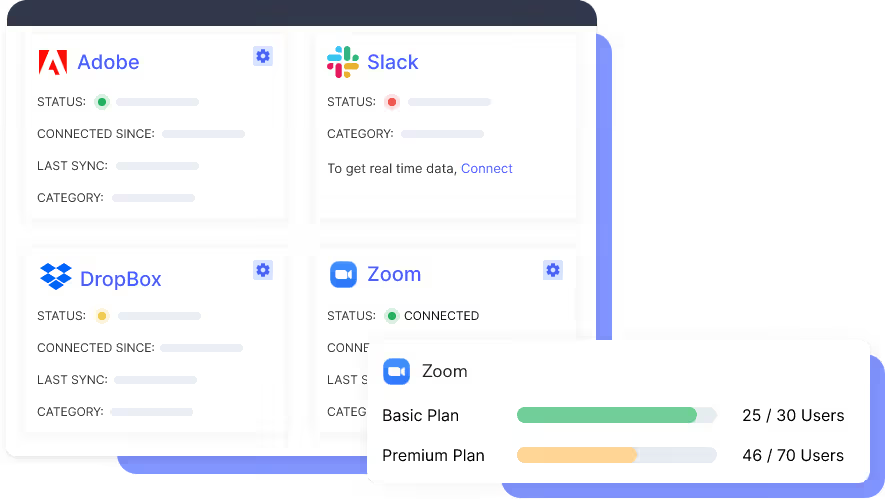
With centralized governance:
- License counts align with contract terms
- Over-purchasing is avoided
- Renewals reflect real usage needs
F. Why CloudEagle.ai makes license optimization scalable
License optimization fails when it relies on manual effort and delayed insights. CloudEagle.ai replaces that model with continuous intelligence, automation, and enforcement, making SaaS license optimization scalable across the enterprise.
By ensuring organizations only pay for what they actually use, CloudEagle.ai turns license optimization into a repeatable driver of SaaS cost optimization.
Conclusion
SaaS spend becomes unmanageable when licenses drift away from real usage.
Unused SaaS licenses, declining license utilization, and misaligned tiers quietly inflate budgets as organizations scale.
Enterprises that consistently reduce SaaS spend treat SaaS license optimization as an ongoing discipline. By continuously aligning usage, access, and cost, they turn SaaS cost optimization from a reactive exercise into a predictable outcome.
CloudEagle.ai enables this shift by embedding license optimization into everyday operations, renewals, and access workflows, helping enterprises control SaaS costs without disrupting productivity.
Book a free demo to see how this works across your SaaS stack in real time.
FAQ
1. How much SaaS spend can enterprises realistically reduce through license optimization?
Most enterprises see 10–15% savings annually, with some achieving higher reductions depending on license sprawl and usage maturity.
2. How long does it take to see results from SaaS license optimization?
Meaningful savings typically appear within one renewal cycle, often in 60–90 days.
3. Does license optimization require removing access from active users?
No. Effective optimization focuses on unused or misaligned licenses, not limiting necessary access.
4. Who should own SaaS license optimization in large organizations?
Ownership is shared across finance, IT, and procurement, with clear accountability per application.
5. Why do manual license audits fail over time?
Because license usage changes continuously. Without automation and real-time insights, unused licenses quickly reaccumulate.


.avif)


.avif)
.avif)




.png)




.avif)
.avif)
.avif)


