Benchmarking Guides

How to Govern Grammarly Pricing Across Your Enterprise

Share via:
Written by:
CloudEagle.ai Team
Reviewed by
Nidhi Jain
Last Updated:
February 4, 2026
blog-cms-banner-bg
Little-Known Negotiation Hacks to Get the Best Deal on Slack
cta-bg-blogDownload Your Copy

HIPAA Compliance Checklist for 2025

Download PDF

‍

Grammarly pricing used to be a simple question: Free, Pro, or a Business seat. 

That changed in October 2025, when Grammarly's parent company renamed itself Superhuman and folded Grammarly into a wider suite alongside Coda and Superhuman Mail, with a cross-app AI agent called Superhuman Go sitting on top. The seat price is still the easy part of the decision. 

What's harder to see is everywhere that suite now touches, and everywhere someone in your org is already paying for it.

‍

1. Why Grammarly Pricing Gets Harder to Control at Scale

Grammarly's pricing page looks simple: three tiers, one clear upgrade path. What it doesn't show is how many of those tiers are already running inside your company without IT ever approving them, or how much of what you're buying now overlaps with tools you already own.

Plan Cost AI Prompts Best For
Free $0 100/month Individuals doing basic grammar and spelling checks
Pro $12/user/month (billed annually) or $30/month (monthly); $60/quarter option 2,000/month Individuals and teams up to 149 seats needing rewrites, plagiarism detection, and tone control
Enterprise Custom, contact sales Unlimited Large organizations needing SSO, SCIM, DLP, BYOK, and centralized admin

‍

Two changes matter more than the sticker price:

  • The Free plan now includes 100 AI prompts a month, so even unpaid usage generates AI-processed content nobody's tracking.
  • The standalone Business plan is gone, absorbed into Pro, so any procurement record still referencing "Grammarly Business" is out of date.

The Superhuman Suite Sits on Top

Grammarly's Enterprise tier now runs through what the company calls "Grammarly and Superhuman Go." 

Superhuman Go is a cross-app AI agent built into the Grammarly extension, connecting to Gmail, Jira, Google Drive, and Google Calendar to summarize meetings, draft replies, and pull context from documents. It ships inside the wider Superhuman Suite, which also bundles Coda (a workspace and docs tool) and Superhuman Mail (a paid email client).

That bundle creates a specific overlap risk:

  • A team already running Notion or Confluence and paying for Coda too is paying twice for the same job.
  • A team on Outlook that adds Superhuman Mail is doing the same with email.

None of it shows up as "Grammarly spend" in a normal SaaS inventory, since the invoice still says Grammarly or Superhuman, not the redundant tool underneath it.

The Gap Between Plan and Practice

You're billed for what got provisioned, not what's actually used:

  • A Pro seat assigned to someone who never opens the app costs the same as one in daily use.
  • A Superhuman Mail license sitting next to an active Outlook account is redundant the day it's issued.

List price is all the Grammarly pricing page can show you; it can't show you either one.

‍

Paying for Seats Nobody Opens Is Still Paying.

Find every idle Grammarly license before renewal.
Download Checklist

‍

2. How CloudEagle.ai Gets Grammarly Spend Under Control

Grammarly rarely shows up as one clean line item. People sign up on the Free tier with a work email, teams expense Pro individually, and now Enterprise buyers are paying for a bundle that includes tools they may not need. 

Nobody's looking across all of it, and that's exactly where the waste hides.

CloudEagle.ai works in that order. It discovers every place Grammarly and the Superhuman Suite are being paid for, shows who's using each piece, then governs access and gets the combined spend under control. 

Each lever below closes part of that gap on its own, and they compound when run together.

Right-Size Licenses, Including the Double-Pay Case

Because Grammarly now ships as part of a bundle, right-sizing means more than reclaiming idle logins.

  • Pull active versus inactive users across every Grammarly and Superhuman seat, and flag anything unopened in 30, 60, or 90 days ahead of renewal.
  • Match the tier to real usage. Someone on Enterprise who never touches unlimited prompts is spend that can move down a tier.
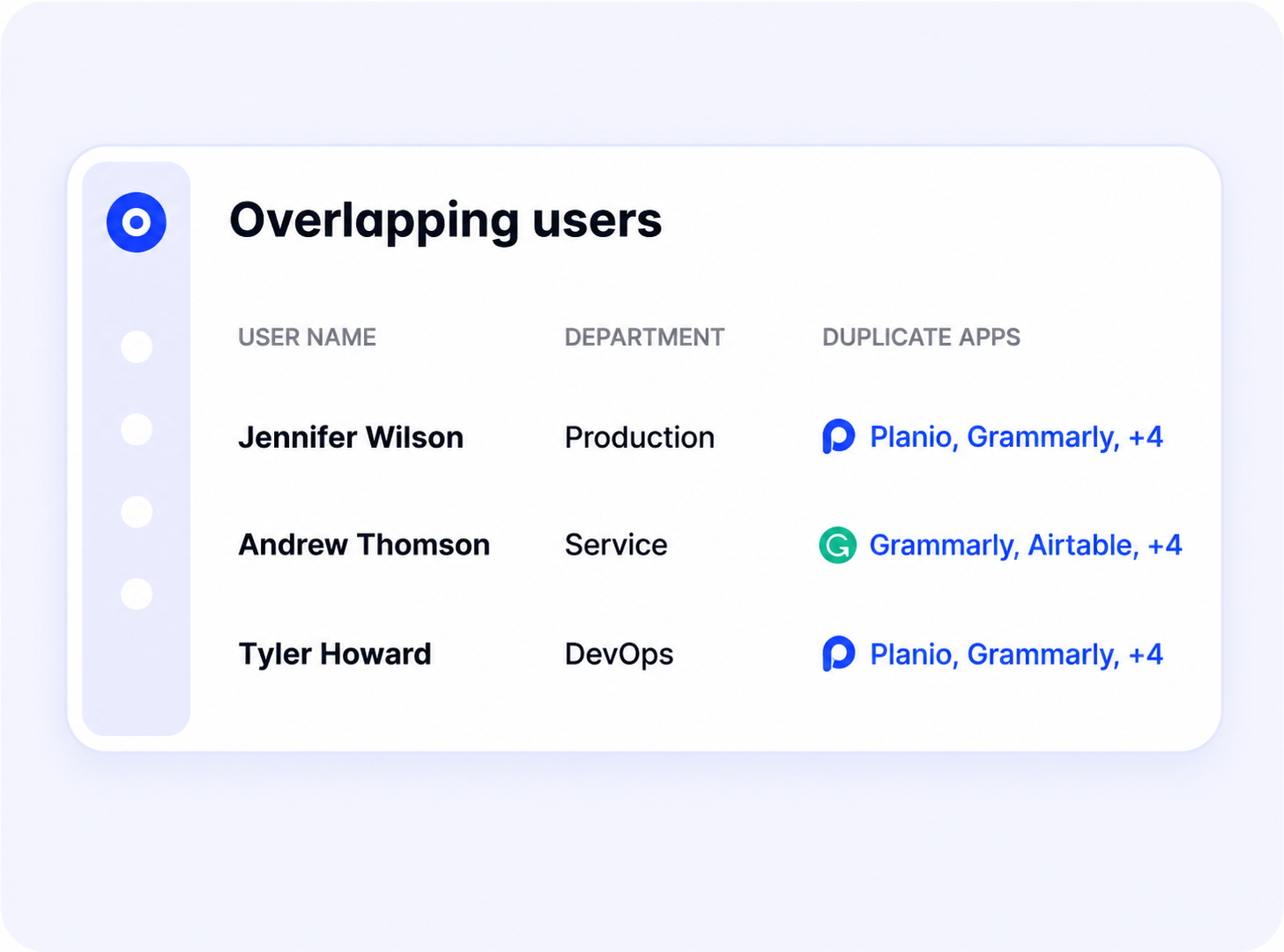
  • Catch the double-pay. A Superhuman Mail seat next to an active Outlook license, or a Coda seat next to an active Notion or Confluence one, is the same job billed twice.
‍

CloudEagle.ai tracks this continuously and flags it between renewal cycles, not once a year at contract time.

Govern What Superhuman Go Can Touch

This is the lever that didn't exist before the rebrand, because the product didn't either. Superhuman Go isn't a passive grammar checker; it's an agent with standing access to Gmail, Jira, Drive, and Calendar.

That access changes the risk, not just the feature set:

  • Grammarly's earlier risk was employees pasting sensitive text into a suggestion box.
  • Superhuman Go's risk is broader. The agent reads and writes into Gmail, Jira, Drive, and Calendar directly, so confidential content can move through it without anyone treating it as a data transfer at all.

Agentic AI governance is the discipline built for exactly this shift, where the tool doing the reading and writing is an agent rather than a person.

That access needs the same governance as any other integration with reach into company systems:

  • Who has it
  • What it can read
  • Whether it's still tied to an active role

CloudEagle.ai extends the same access-governance model it applies across your SaaS stack to agentic tools like Superhuman Go, so an AI agent's reach into email and documents doesn't become the one integration nobody's reviewing.

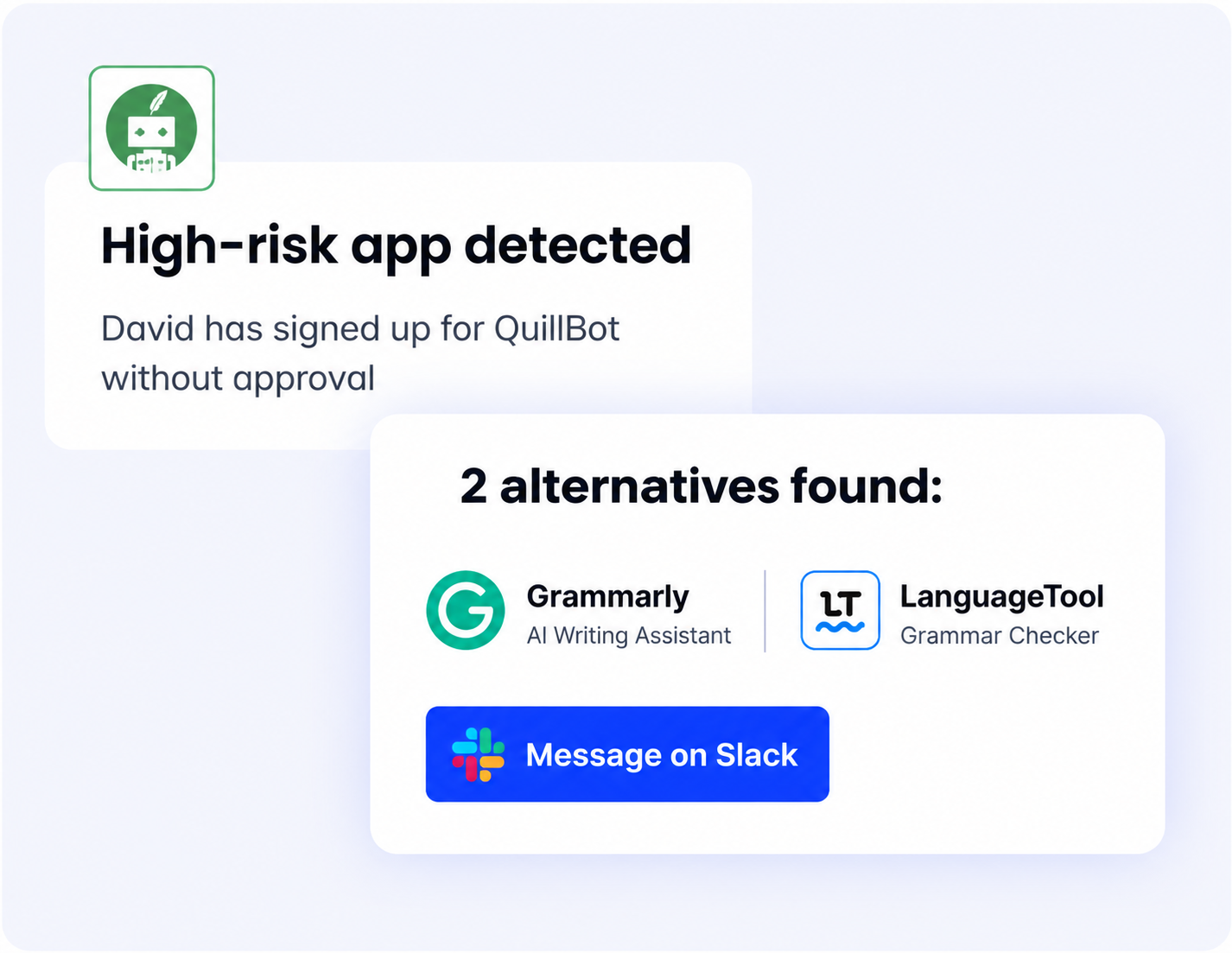
Surface Shadow Grammarly and Superhuman Signups

Individual employees have been signing up for Grammarly with a work email since long before the rebrand, and that pattern doesn't stop because the parent company changed its name. 
‍

Shadow AI discovery pulls in the personal-account and browser-extension signups that SSO never sees, so that usage stops being invisible and can be moved onto governed corporate access with the same data and access policies sanctioned tools already carry.

Match Access to Role with Automated Reviews

Access granted for one project often outlives that project, so the license (and now, the agent's reach into that person's inbox) keeps running long after the reason for it ended. 

‍

CloudEagle.ai runs access reviews tied to current role, turning stale access into a reclaimed seat on a schedule instead of by luck.

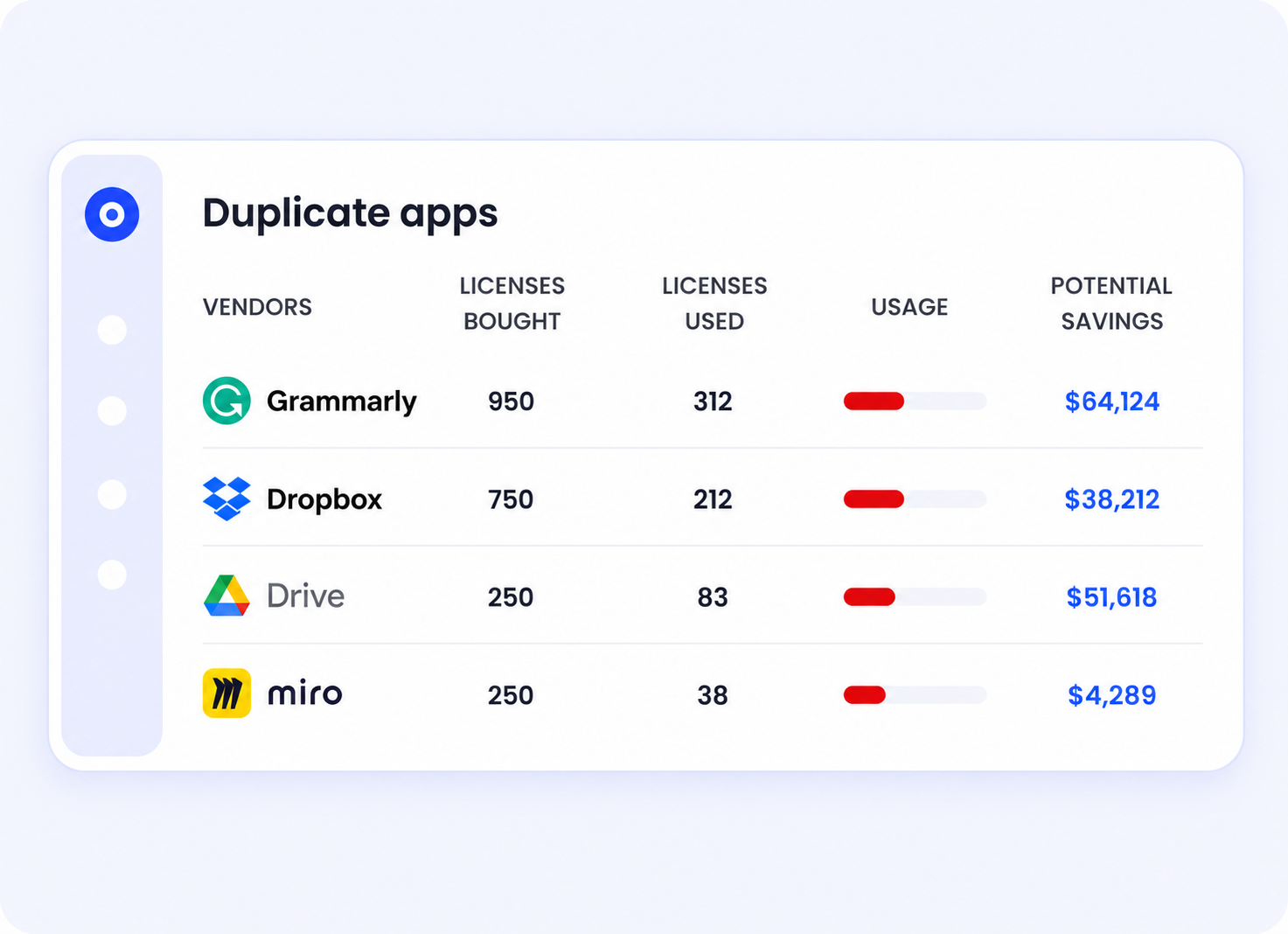
Walk Into Renewals with Usage Data

Grammarly's Enterprise tier is quote-based, which means the number you get depends entirely on what you walk in with:

  • Utilization by team
  • The seats that went unused
  • A clear read on which parts of the Superhuman bundle you actually need
‍

Walking in with that data puts the negotiation on your terms instead of theirs.

‍

‍

3. What Companies Actually Pay for Grammarly

Grammarly Enterprise pricing is quote-based, and unlike some categories, there isn't reliable third-party deal data available for it yet. What's genuinely verifiable is smaller than a full benchmark table, so here it is straight rather than padded out.

Annual billing on Pro locks in $12/month against $30/month billed monthly, a real difference of roughly 60% for the same seat.

Beyond plan choice, a few levers move an Enterprise quote, even though Grammarly doesn't publish the ranges:

  • Reseller channel. Grammarly sells Enterprise through authorized resellers including Insight, SoftwareOne, CDW, and SHI, worth raising with your rep even without a quoted discount attached.
  • Contract length. Grammarly itself points to longer commitments as a lever that moves the quote.
  • Seat volume. Larger deployments carry more negotiating room, per Grammarly's own guidance.

With CloudEagle.ai, you can compare whatever quote you receive against price benchmark data drawn from real transactions across the rest of your SaaS stack, so a Grammarly renewal isn't the one negotiation happening without any market reference at all.

‍

Enterprise Pricing Is Custom, But Your Leverage Shouldn't Be.

Get benchmarks that show what others actually negotiated.
Download Checklist

‍

4. Grammarly Cost Control Best Practices

Most Grammarly pricing waste isn't in the plan you picked; it's in what happens after you pick it. A few practices keep that gap from growing between renewals.

  • Don't let the AI-prompt ceiling drive the seat decision: Most users never approach 2,000 prompts a month, so provisioning Enterprise for prompt volume alone is usually the wrong lever to pull.
  • Check for the bundle overlap before renewing: If a team is paying for Coda or Superhuman Mail on top of a tool they already use for the same job, that's the fastest reduction available.
  • Run the annual math before committing: The gap between monthly and annual billing is large enough to change the total cost conversation on its own.
  • Ask about non-standard pricing for the right org type: Grammarly has historically offered adjusted rates for education and nonprofit buyers; it's worth a direct conversation with sales rather than assuming the published tiers are the only option.
  • Track prompts and access the same way you'd track a budget: CloudEagle.ai flags usage against the thresholds you set, so a seat's activity is visible before the renewal conversation, not during it.

‍

5. Bring Grammarly Spend and Access Under One View

The plan you pick is the easy decision. The harder part is seeing every seat, every bundled tool, and every point of agent access in one place, then acting on what you find before the bill or the audit forces the question. That's the layer CloudEagle.ai puts over Grammarly and the rest of your AI stack.

Book a demo to see how CloudEagle.ai brings Grammarly spend and access under control.

‍

6. Frequently Asked Questions

1. How much does Grammarly cost? 

Grammarly Pro starts at $12/month billed annually ($30/month billed monthly). Enterprise pricing is custom, based on team size and requirements.

2. Is Grammarly still called Grammarly? 

Yes. The product keeps the Grammarly name. Only the parent company changed its name to Superhuman in October 2025, after acquiring Superhuman Mail and Coda.

3. What happened to Grammarly Business? 

It's discontinued as a standalone plan. Its features were folded into Pro, which now supports up to 149 seats.

4. Is Grammarly Pro or Enterprise better? 

Pro suits individuals and small teams. Enterprise adds SSO, SCIM, DLP, BYOK, and unlimited AI prompts for larger organizations with security and compliance requirements.

5. Does Grammarly work with Google Docs? 

Yes, through its browser extension, alongside Gmail, Microsoft Word, Slack, and other integrations.

6. What is Superhuman Go? 

It's the cross-app AI agent included in Grammarly's higher tiers, with reach into Gmail, Jira, Google Drive, and Google Calendar to summarize, draft, and pull context across those apps.

‍

Advertisement for a SaaS Subscription Tracking Template with a call-to-action button to download and a partial graphic of a tablet showing charts.Banner promoting a SaaS Agreement Checklist to streamline SaaS management and avoid budget waste with a call-to-action button labeled Download checklist.Blue banner with text 'The Ultimate Employee Offboarding Checklist!' and a black button labeled 'Download checklist' alongside partial views of checklist documents from cloudeagle.ai.Digital ad for download checklist titled 'The Ultimate Checklist for IT Leaders to Optimize SaaS Operations' by cloudeagle.ai, showing checklist pages.Slack Buyer's Guide offer with text 'Unlock insider insights to get the best deal on Slack!' and a button labeled 'Get Your Copy', accompanied by a preview of the guide featuring Slack's logo.Monday Pricing Guide by cloudeagle.ai offering exclusive pricing secrets to maximize investment with a call-to-action button labeled Get Your Copy and an image of the guide's cover.Blue banner for Canva Pricing Guide by cloudeagle.ai offering a guide to Canva costs, features, and alternatives with a call-to-action button saying Get Your Copy.Blue banner with white text reading 'Little-Known Negotiation Hacks to Get the Best Deal on Slack' and a white button labeled 'Get Your Copy'.Blue banner with text 'Little-Known Negotiation Hacks to Get the Best Deal on Monday.com' and a white button labeled 'Get Your Copy'.Blue banner with text 'Little-Known Negotiation Hacks to Get the Best Deal on Canva' and a white button labeled 'Get Your Copy'.Banner with text 'Slack Buyer's Guide' and a 'Download Now' button next to images of a guide titled 'Slack Buyer’s Guide: Features, Pricing & Best Practices'.Digital cover of Monday Pricing Guide with a button labeled Get Your Copy on a blue background.Canva Pricing Guide cover with a button labeled Get Your Copy on a blue gradient background.

Enter your email to
unlock the report

Oops! Something went wrong while submitting the form.
License Count
Benchmark
Per User/Per Year

Enter your email to
unlock the report

Oops! Something went wrong while submitting the form.
License Count
Benchmark
Per User/Per Year

Enter your email to
unlock the report

Oops! Something went wrong while submitting the form.
Notion Plus
License Count
Benchmark
Per User/Per Year
100-500
$67.20 - $78.72
500-1000
$59.52 - $72.00
1000+
$51.84 - $57.60
Canva Pro
License Count
Benchmark
Per User/Per Year
100-500
$74.33-$88.71
500-1000
$64.74-$80.32
1000+
$55.14-$62.34

Enter your email to
unlock the report

Oops! Something went wrong while submitting the form.

Enter your email to
unlock the report

Oops! Something went wrong while submitting the form.
Zoom Business
License Count
Benchmark
Per User/Per Year
100-500
$216.00 - $264.00
500-1000
$180.00 - $216.00
1000+
$156.00 - $180.00

Enter your email to
unlock the report

Oops! Something went wrong while submitting the form.

Get the Right Security Platform To Secure Your Cloud Infrastructure

Please enter a business email
Thank you!
The 2023 SaaS report has been sent to your email. Check your promotional or spam folder.
Oops! Something went wrong while submitting the form.

Access full report

Please enter a business email
Thank you!
The 2023 SaaS report has been sent to your email. Check your promotional or spam folder.
Oops! Something went wrong while submitting the form.

TL;DR

  • Grammarly's parent company is now Superhuman, and Grammarly pricing today means Free, Pro, Enterprise, plus a bundled Superhuman Suite that adds Coda and Superhuman Mail.
  • The plan price is the predictable part. What's hard to see: personal-account signups, seats nobody uses, and an AI agent, Superhuman Go, that now reaches into Gmail, Jira, Drive, and Calendar.
  • List price and what an organization actually pays diverge fast once annual billing, reseller channels, and Enterprise's quote-only pricing enter the picture.
  • The fix is one view across every Grammarly and Superhuman instance, who's active, and what the agent can touch, refreshed continuously instead of at renewal.
  • CloudEagle.ai is how enterprises get all three under control before the bill or the audit forces the question.

‍

‍

Grammarly pricing used to be a simple question: Free, Pro, or a Business seat. 

That changed in October 2025, when Grammarly's parent company renamed itself Superhuman and folded Grammarly into a wider suite alongside Coda and Superhuman Mail, with a cross-app AI agent called Superhuman Go sitting on top. The seat price is still the easy part of the decision. 

What's harder to see is everywhere that suite now touches, and everywhere someone in your org is already paying for it.

‍

1. Why Grammarly Pricing Gets Harder to Control at Scale

Grammarly's pricing page looks simple: three tiers, one clear upgrade path. What it doesn't show is how many of those tiers are already running inside your company without IT ever approving them, or how much of what you're buying now overlaps with tools you already own.

Plan Cost AI Prompts Best For
Free $0 100/month Individuals doing basic grammar and spelling checks
Pro $12/user/month (billed annually) or $30/month (monthly); $60/quarter option 2,000/month Individuals and teams up to 149 seats needing rewrites, plagiarism detection, and tone control
Enterprise Custom, contact sales Unlimited Large organizations needing SSO, SCIM, DLP, BYOK, and centralized admin

‍

Two changes matter more than the sticker price:

  • The Free plan now includes 100 AI prompts a month, so even unpaid usage generates AI-processed content nobody's tracking.
  • The standalone Business plan is gone, absorbed into Pro, so any procurement record still referencing "Grammarly Business" is out of date.

The Superhuman Suite Sits on Top

Grammarly's Enterprise tier now runs through what the company calls "Grammarly and Superhuman Go." 

Superhuman Go is a cross-app AI agent built into the Grammarly extension, connecting to Gmail, Jira, Google Drive, and Google Calendar to summarize meetings, draft replies, and pull context from documents. It ships inside the wider Superhuman Suite, which also bundles Coda (a workspace and docs tool) and Superhuman Mail (a paid email client).

That bundle creates a specific overlap risk:

  • A team already running Notion or Confluence and paying for Coda too is paying twice for the same job.
  • A team on Outlook that adds Superhuman Mail is doing the same with email.

None of it shows up as "Grammarly spend" in a normal SaaS inventory, since the invoice still says Grammarly or Superhuman, not the redundant tool underneath it.

The Gap Between Plan and Practice

You're billed for what got provisioned, not what's actually used:

  • A Pro seat assigned to someone who never opens the app costs the same as one in daily use.
  • A Superhuman Mail license sitting next to an active Outlook account is redundant the day it's issued.

List price is all the Grammarly pricing page can show you; it can't show you either one.

‍

Paying for Seats Nobody Opens Is Still Paying.

Find every idle Grammarly license before renewal.
Download Checklist

‍

2. How CloudEagle.ai Gets Grammarly Spend Under Control

Grammarly rarely shows up as one clean line item. People sign up on the Free tier with a work email, teams expense Pro individually, and now Enterprise buyers are paying for a bundle that includes tools they may not need. 

Nobody's looking across all of it, and that's exactly where the waste hides.

CloudEagle.ai works in that order. It discovers every place Grammarly and the Superhuman Suite are being paid for, shows who's using each piece, then governs access and gets the combined spend under control. 

Each lever below closes part of that gap on its own, and they compound when run together.

Right-Size Licenses, Including the Double-Pay Case

Because Grammarly now ships as part of a bundle, right-sizing means more than reclaiming idle logins.

  • Pull active versus inactive users across every Grammarly and Superhuman seat, and flag anything unopened in 30, 60, or 90 days ahead of renewal.
  • Match the tier to real usage. Someone on Enterprise who never touches unlimited prompts is spend that can move down a tier.
  • Catch the double-pay. A Superhuman Mail seat next to an active Outlook license, or a Coda seat next to an active Notion or Confluence one, is the same job billed twice.

‍

CloudEagle.ai tracks this continuously and flags it between renewal cycles, not once a year at contract time.

Govern What Superhuman Go Can Touch

This is the lever that didn't exist before the rebrand, because the product didn't either. Superhuman Go isn't a passive grammar checker; it's an agent with standing access to Gmail, Jira, Drive, and Calendar.

That access changes the risk, not just the feature set:

  • Grammarly's earlier risk was employees pasting sensitive text into a suggestion box.
  • Superhuman Go's risk is broader. The agent reads and writes into Gmail, Jira, Drive, and Calendar directly, so confidential content can move through it without anyone treating it as a data transfer at all.

Agentic AI governance is the discipline built for exactly this shift, where the tool doing the reading and writing is an agent rather than a person.

That access needs the same governance as any other integration with reach into company systems:

  • Who has it
  • What it can read
  • Whether it's still tied to an active role

CloudEagle.ai extends the same access-governance model it applies across your SaaS stack to agentic tools like Superhuman Go, so an AI agent's reach into email and documents doesn't become the one integration nobody's reviewing.

Surface Shadow Grammarly and Superhuman Signups

Individual employees have been signing up for Grammarly with a work email since long before the rebrand, and that pattern doesn't stop because the parent company changed its name. 

‍

Shadow AI discovery pulls in the personal-account and browser-extension signups that SSO never sees, so that usage stops being invisible and can be moved onto governed corporate access with the same data and access policies sanctioned tools already carry.

Match Access to Role with Automated Reviews

Access granted for one project often outlives that project, so the license (and now, the agent's reach into that person's inbox) keeps running long after the reason for it ended. 

‍

CloudEagle.ai runs access reviews tied to current role, turning stale access into a reclaimed seat on a schedule instead of by luck.

Walk Into Renewals with Usage Data

Grammarly's Enterprise tier is quote-based, which means the number you get depends entirely on what you walk in with:

  • Utilization by team
  • The seats that went unused
  • A clear read on which parts of the Superhuman bundle you actually need

‍

Walking in with that data puts the negotiation on your terms instead of theirs.

‍

‍

3. What Companies Actually Pay for Grammarly

Grammarly Enterprise pricing is quote-based, and unlike some categories, there isn't reliable third-party deal data available for it yet. What's genuinely verifiable is smaller than a full benchmark table, so here it is straight rather than padded out.

Annual billing on Pro locks in $12/month against $30/month billed monthly, a real difference of roughly 60% for the same seat.

Beyond plan choice, a few levers move an Enterprise quote, even though Grammarly doesn't publish the ranges:

  • Reseller channel. Grammarly sells Enterprise through authorized resellers including Insight, SoftwareOne, CDW, and SHI, worth raising with your rep even without a quoted discount attached.
  • Contract length. Grammarly itself points to longer commitments as a lever that moves the quote.
  • Seat volume. Larger deployments carry more negotiating room, per Grammarly's own guidance.

With CloudEagle.ai, you can compare whatever quote you receive against price benchmark data drawn from real transactions across the rest of your SaaS stack, so a Grammarly renewal isn't the one negotiation happening without any market reference at all.

‍

Enterprise Pricing Is Custom, But Your Leverage Shouldn't Be.

Get benchmarks that show what others actually negotiated.
Download Checklist

‍

4. Grammarly Cost Control Best Practices

Most Grammarly pricing waste isn't in the plan you picked; it's in what happens after you pick it. A few practices keep that gap from growing between renewals.

  • Don't let the AI-prompt ceiling drive the seat decision: Most users never approach 2,000 prompts a month, so provisioning Enterprise for prompt volume alone is usually the wrong lever to pull.
  • Check for the bundle overlap before renewing: If a team is paying for Coda or Superhuman Mail on top of a tool they already use for the same job, that's the fastest reduction available.
  • Run the annual math before committing: The gap between monthly and annual billing is large enough to change the total cost conversation on its own.
  • Ask about non-standard pricing for the right org type: Grammarly has historically offered adjusted rates for education and nonprofit buyers; it's worth a direct conversation with sales rather than assuming the published tiers are the only option.
  • Track prompts and access the same way you'd track a budget: CloudEagle.ai flags usage against the thresholds you set, so a seat's activity is visible before the renewal conversation, not during it.

‍

5. Bring Grammarly Spend and Access Under One View

The plan you pick is the easy decision. The harder part is seeing every seat, every bundled tool, and every point of agent access in one place, then acting on what you find before the bill or the audit forces the question. That's the layer CloudEagle.ai puts over Grammarly and the rest of your AI stack.

Book a demo to see how CloudEagle.ai brings Grammarly spend and access under control.

‍

6. Frequently Asked Questions

1. How much does Grammarly cost? 

Grammarly Pro starts at $12/month billed annually ($30/month billed monthly). Enterprise pricing is custom, based on team size and requirements.

2. Is Grammarly still called Grammarly? 

Yes. The product keeps the Grammarly name. Only the parent company changed its name to Superhuman in October 2025, after acquiring Superhuman Mail and Coda.

3. What happened to Grammarly Business? 

It's discontinued as a standalone plan. Its features were folded into Pro, which now supports up to 149 seats.

4. Is Grammarly Pro or Enterprise better? 

Pro suits individuals and small teams. Enterprise adds SSO, SCIM, DLP, BYOK, and unlimited AI prompts for larger organizations with security and compliance requirements.

5. Does Grammarly work with Google Docs? 

Yes, through its browser extension, alongside Gmail, Microsoft Word, Slack, and other integrations.

6. What is Superhuman Go? 

It's the cross-app AI agent included in Grammarly's higher tiers, with reach into Gmail, Jira, Google Drive, and Google Calendar to summarize, draft, and pull context across those apps.

‍

CloudEagle.ai recognized in the 2025 Gartner® Magic Quadrant™ for SaaS Management Platforms
Download now
gartner chart
5x
Faster employee
onboarding
80%
Reduction in time for
user access reviews
30k
Workflows
automated
$15Bn
Analyzed in
contract spend
$2Bn
Saved in
SaaS spend

Streamline SaaS governance and save 10-30%

Book a Demo with Expert
CTA image