

%201.svg)


HIPAA Compliance Checklist for 2025

ClickUp is one of the most-adopted project management platforms for teams that want tasks, docs, goals, and chat in one place. What it costs to run depends on more than the number on the pricing page.
Between a per-seat AI add-on, a workspace-wide upgrade rule, and a tier that no longer shows up publicly, the gap between ClickUp's list price and what a team actually pays has widened.
This ClickUp pricing guide breaks down what each tier costs today, where the real spend hides, and how to keep ClickUp costs under control.
1. Why ClickUp Pricing Gets Harder to Control at Scale
ClickUp's core plans are simple at a glance. The complexity sits in what's layered on top, and that's where most ClickUp cost surprises come from.
ClickUp's Workspace Pricing Tiers
- Free Forever covers unlimited tasks with 60MB of shared storage and basic views. Enough for a solo user, not much past that.
- Unlimited removes the storage cap and adds integrations, dashboards, and time tracking.
- Business adds Google SSO, private whiteboards, and workload management. ClickUp markets this as its most popular tier.
- Enterprise is quote-only. It adds SAML SSO, SCIM provisioning, audit logs, and HIPAA availability.
ClickUp Brain AI Pricing Is Billed Separately
ClickUp's AI is not bundled into any workspace tier. It's billed separately, per seat, on top of whatever plan a team already pays for.
Brain AI: $9/user/month: Unlimited AI chat, unlimited AI writing, Enterprise Search across the workspace.
Everything AI: $28/user/month: Adds unlimited AI automations, image generation, and a larger pool of AI Super Credits for Super Agents.
A 10-person team on Business ($12/user) that adds Brain AI pays $21/user/month, not $12. Swap in Everything AI and that same seat runs $40/user/month, more than triple the workspace list price.
Both AI tiers also draw down a shared pool of AI Super Credits, priced around $0.001 each, for heavier automation and agent use. That's a usage-based line item most teams don't budget for at signup.
ClickUp's Workspace-Wide Upgrade Rule
ClickUp says this directly in its own pricing FAQ: moving to a higher tier means the entire workspace moves together. There's no upgrading a handful of power users to Business while the rest of the team stays on Unlimited.
In practice, one team's need for advanced automation can push every seat in the company onto a more expensive tier, including people who will never touch the feature that justified the move.
ClickUp Business Plus Pricing Isn't Public Anymore
Business Plus, the tier between Business and Enterprise, was pulled from ClickUp's public marketing page. It still exists as an in-app upgrade path, with roughly 50,000 automations per month.
Buyers comparing plans from the pricing page alone won't see it as an option. The four-tier comparison most teams start with is missing a step.

2. How CloudEagle.ai Gets ClickUp Spend Under Control
Knowing what ClickUp costs on paper is one part of the problem. Knowing what your organization is paying for, and whether every seat, tier, and AI add-on is earning its place, is the harder part.
CloudEagle.ai discovers every place ClickUp is being paid for, shows who actually uses it, then governs access and spend so it stays that way. Each lever below closes part of the gap on its own. Run together, they compound.
License Harvesting: Continuously monitors ClickUp license activity, flags unused or underutilized seats, and automates the outreach and deprovisioning process. Reclaims the license back to the pool instead of letting it renew unnoticed.
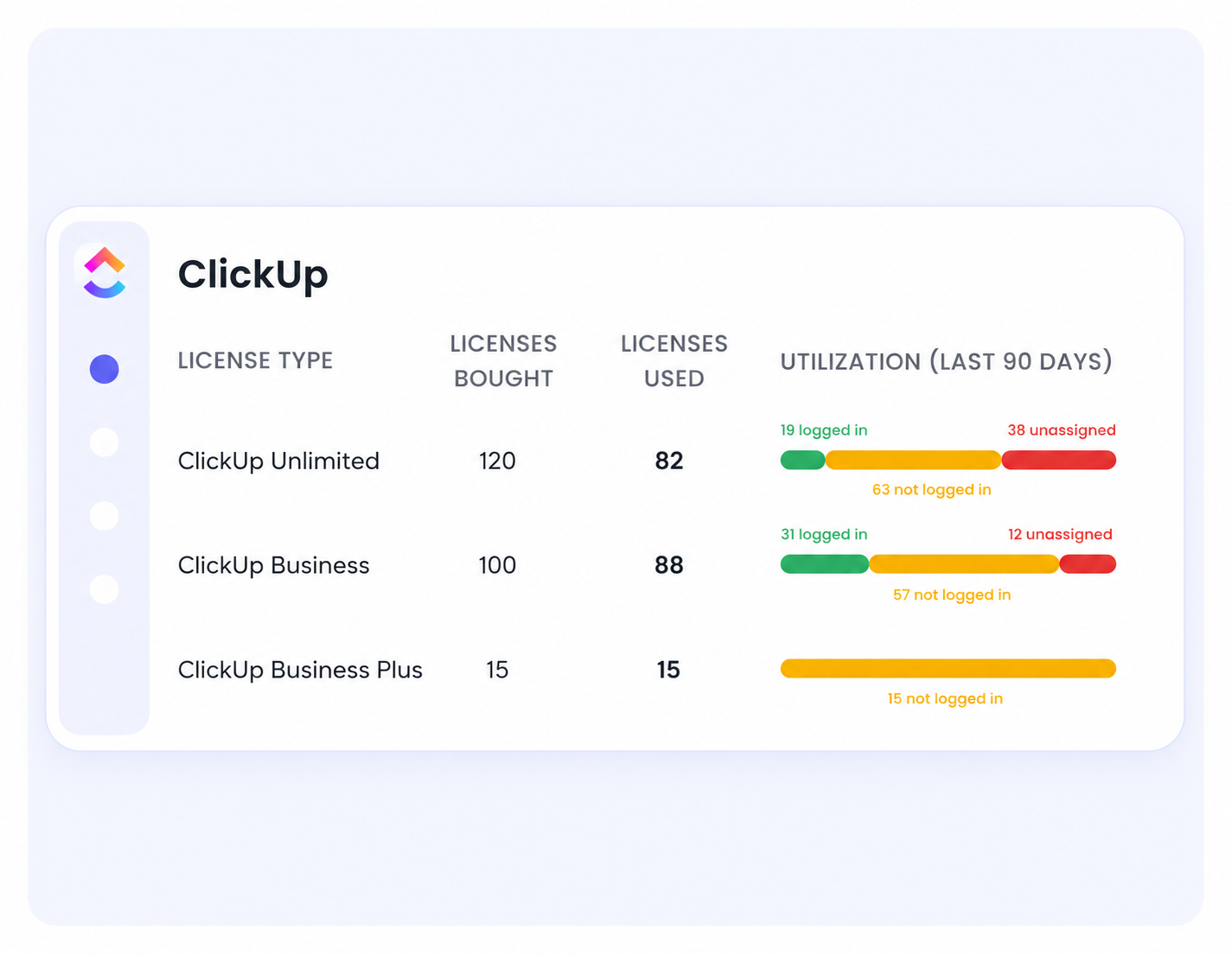
License Management: Real-time tracking of who holds what tier. Decisions about moving the workspace to Business, or adding Brain AI, get made on actual usage patterns instead of the loudest request in the room.
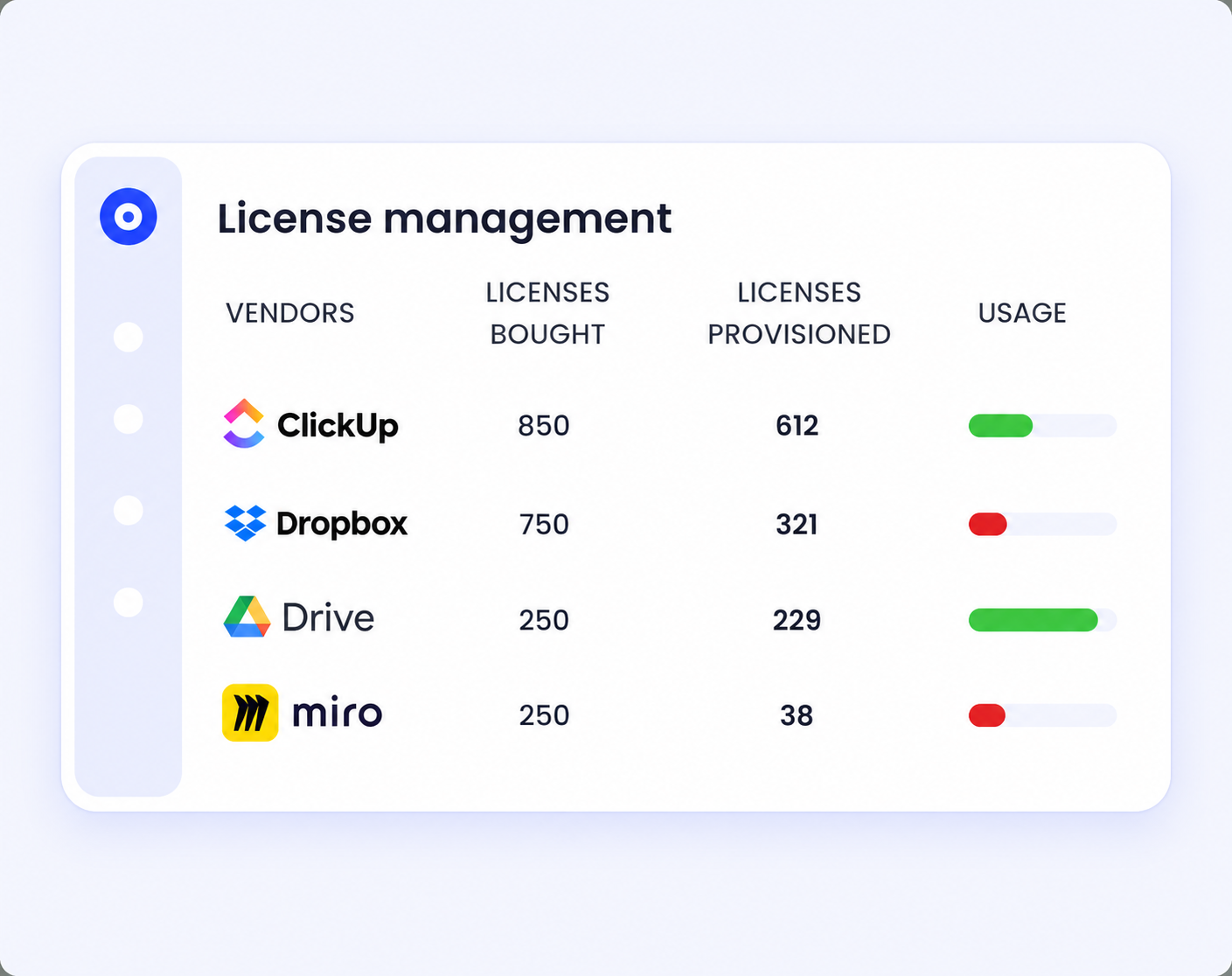
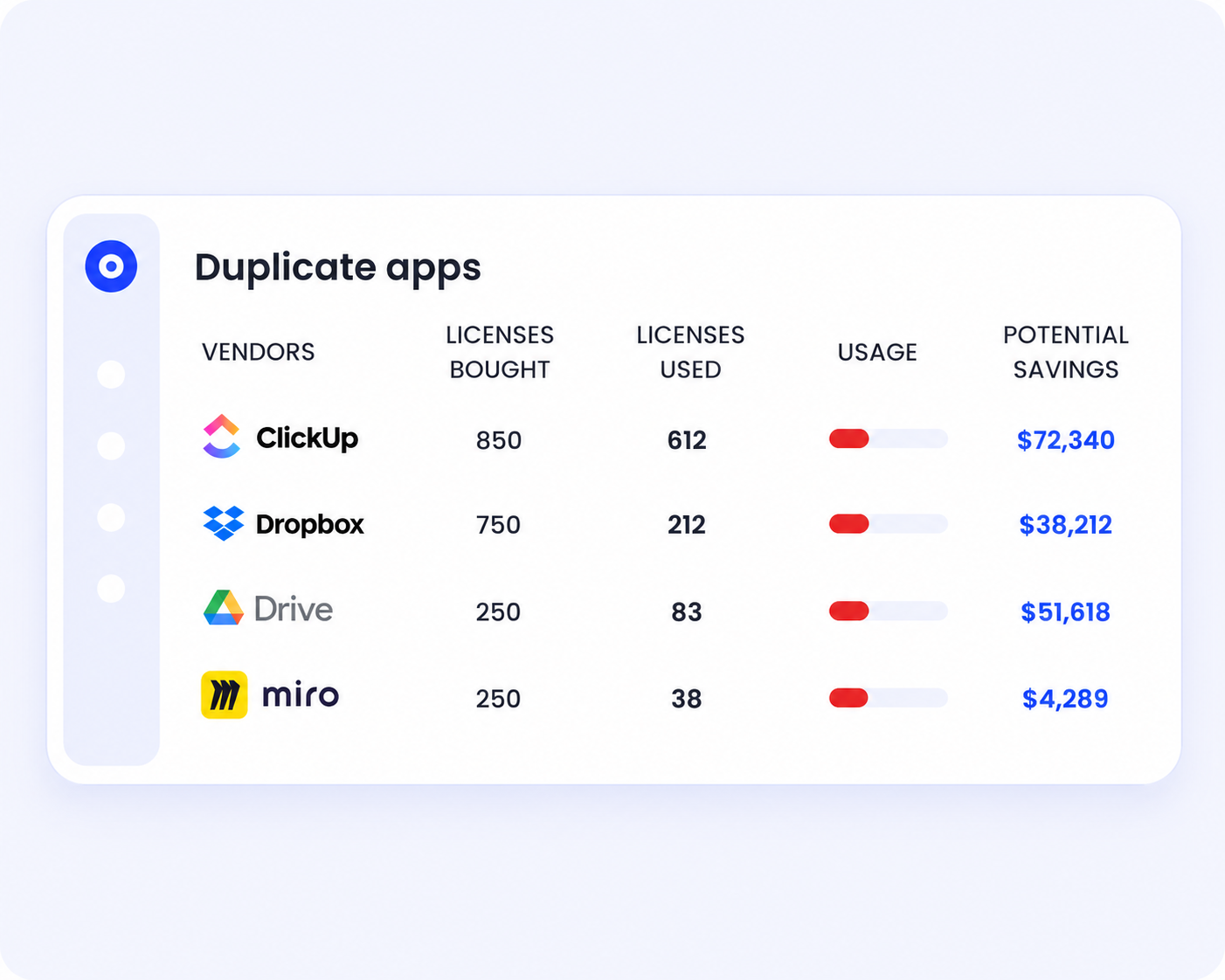
SaaS Spend Optimization: Because Brain AI and Everything AI bill per seat regardless of use, this is where waste concentrates fastest. Correlates usage, contract, and financial data to surface seats paying for an AI tier nobody opens.
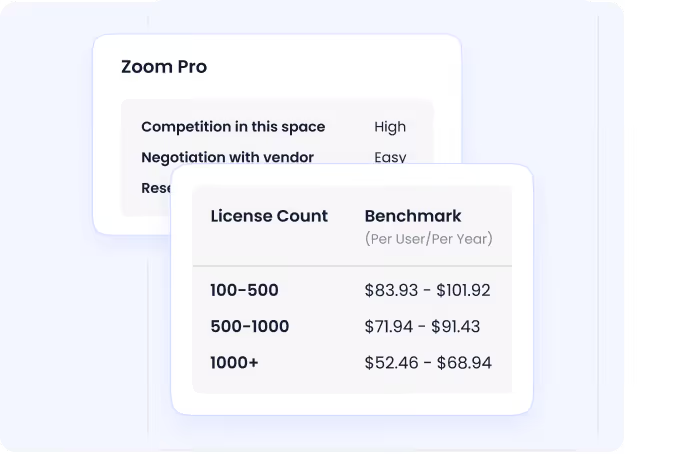
Price Benchmarking & Buying Guides: Market pricing intelligence and buying guides available on demand, no contract upload required, to support the renewal conversation with data instead of a vendor's opening offer.
Renewal & Intake Orchestration: Workflows trigger up to 90 days before a ClickUp renewal, with a first-touch message that already includes current usage and benchmark data. Procurement walks in prepared instead of reactive.
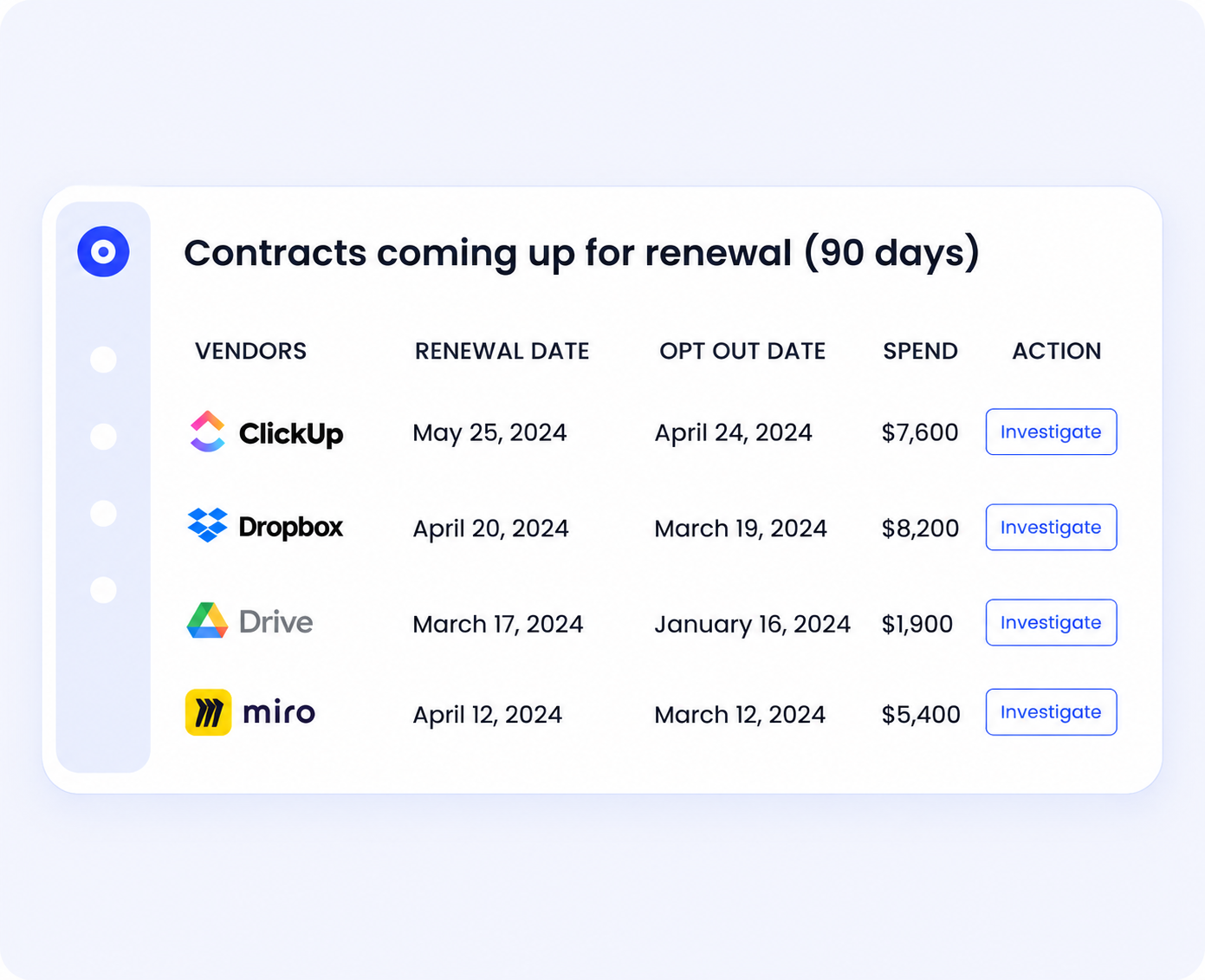
Together, these turn ClickUp spend from a single per-seat number on an invoice into something a team can see, right-size, and negotiate against.
See Every ClickUp Seat You're Paying For But Not Using.


3. What Companies Actually Pay for ClickUp
ClickUp pricing at list is the starting point, not the number most teams land on.
Market data from Vendr shows teams with 25 to 100 seats commonly negotiate rates between $5 and $6.50 per user per month, below the $7 annual list price, when committing to annual or multi-year terms.
Across the wider market, most organizations report paying somewhere between $5 and $25 per user per month depending on tier, seat count, and whether an AI add-on is layered on top.
That range is wide enough that list price alone isn't a reliable budgeting anchor. Where a given team lands inside it comes down to which levers they pull and when.
The Levers That Actually Move ClickUp Pricing
Not every ask carries the same weight. Some levers move the needle hard on both renewals and new deals. Others barely register.
Strong on both renewals and new purchases:
- Multi-year commitment: The single most reliable lever. High success on renewals and new deals alike.
- Bundling: Combining ClickUp with other spend or line items reliably works both directions.
- Free months: High success on renewals, high on new purchases too, and cheaper for the vendor to give than a rate cut.
- Expected growth/economies of scale: Committing to a growth trajectory moves the number on both sides.
Strong mainly on new purchases, weaker on renewals:
- End-of-quarter timing: High success closing a new deal, only medium leverage once you're already a customer up for renewal.
- Auto-renewal removal, payment term flexibility, tiered pricing for growth, platform fee reduction: All read as medium leverage at renewal, high leverage on a first purchase, since a new vendor has more reason to concede to win the account.
Weak, regardless of timing:
- Case study reference: Low leverage at renewal, only medium on a new deal. Offering ClickUp a testimonial isn't worth much at the negotiating table.
- Free product or implementation-fee reduction: Low to medium at best. Ask for something else first.
The pattern holds across most SaaS renewals, not just ClickUp: commitment length and bundled scope move price further than a flat discount ask ever does.
4. How to Control ClickUp Costs
A few decisions matter more for ClickUp than for a typical per-seat SaaS tool, because of how its AI pricing and upgrade rules work.
1. Decide Brain AI seat-by-seat, not workspace-wide: The add-on bills per seat whether or not someone uses it. Confirm actual AI usage before assuming every seat needs it.
2. Pressure-test a workspace-wide upgrade before approving it: If one team's need for Business-tier automation is about to move the whole org's pricing, get a usage count on how many seats actually require the new tier first.
3. Confirm Business Plus pricing directly: It's no longer public. Don't assume the last quoted number still holds; benchmark it before signing.
4. Lead renewal conversations with a multi-year ask or bundled scope: Those are the levers most likely to actually move ClickUp's number.
5. ClickUp Alternatives: 4 Tools to Consider
ClickUp is broad by design, but some teams are better served by a narrower tool.
1. Asana
It suits teams that want task-focused workflows with clear visual timelines and straightforward deadline tracking.
2. Trello
The ClickUp alternative keeps things simple with Kanban boards and a drag-and-drop interface. A fit for small teams that don't need ClickUp's full feature set.
3. Monday.com
It leans into advanced reporting and workflow customization for teams managing several complex projects at once.
4. Wrike
The tool is built for enterprise-scale project management, with the reporting and oversight larger, cross-departmental teams tend to need.
ClickUp Pricing: The Bottom Line
ClickUp's list price is the easy part. The real number depends on whether Brain AI or Everything AI gets added, whether a workspace-wide upgrade is worth what it costs everyone else on the team, and whether the current rate still reflects what similar teams are paying.
For teams that want to keep ClickUp spend visible and under control, CloudEagle.ai helps track license usage, right-size AI add-ons, and walk into renewals with real data instead of a guess.
Book a free demo with CloudEagle.ai to see what your ClickUp workspace is actually costing you.
Frequently Asked Questions
1. Is ClickUp really free forever?
Yes. The Free Forever plan includes unlimited tasks, 60MB of shared storage, collaborative docs, and basic views, though storage and automation limits mean most growing teams outgrow it within a few months.
2. Does ClickUp AI cost extra?
Yes. Brain AI and Everything AI are billed separately from the workspace plan, at $9 and $28 per user per month, and apply to every paid seat regardless of individual usage.
3. Can I upgrade only some users in my workspace?
No. ClickUp requires the entire workspace to move to a new tier together; you can't mix Unlimited and Business seats in the same workspace.
4. Is ClickUp cheaper than Asana?
ClickUp's paid plans start lower than Asana's entry-level paid tier, but the comparison changes once AI add-ons are factored in on either platform. Worth comparing at the usage level you actually need.
5. How much does ClickUp cost per month?
Workspace plans range from $0 to $19 per user per month depending on tier and billing frequency, with Enterprise on a custom quote. Add Brain AI or Everything AI and the effective per-seat cost can run from $16 to $40 or more per month.
Your ClickUp Bill Has Room to Move.


.avif)


.avif)
.avif)




.png)






.avif)
.avif)
.avif)


