You need to enable JavaScript in order to use the AI chatbot tool powered by ChatBot

Dropbox Pricing Guide: Manage File Access, Sharing, and Storage Costs

Share via:
blog-cms-banner-bg
Little-Known Negotiation Hacks to Get the Best Deal on Slack
cta-bg-blogDownload Your Copy

HIPAA Compliance Checklist for 2025

Download PDF

Dropbox pricing decisions often begin with storage needs, file sharing, and collaboration features. Teams evaluate plans based on how much data they need to store and how easily they can access it across devices.

But as usage grows, Dropbox becomes more than just storage. It turns into a system where files are shared across users, external collaborators, and multiple endpoints, all tied to identities and access permissions.

For CIOs and CISOs, this shifts the conversation beyond cost. The focus moves to who can access files, how permissions are managed, and whether sensitive data remains controlled as sharing increases.

In this Dropbox pricing guide, we break down plans, features, and costs, while also exploring how organizations can manage identity, access, and data governance as Dropbox usage scales.

TL;DR

  • Dropbox offers cloud storage with file syncing, collaboration tools, and security features. Plans range from a free 2GB option to premium business plans with up to 15TB of storage.
  • Paid plans provide larger storage, file sharing with security controls, offline access, and integrations with Microsoft 365, Google Workspace, and more.
  • Plans start at $9.99/month (2TB for individuals) and go up to $24/user/month (15TB for enterprises). Per-user pricing makes business plans scalable but costly for large teams.
  • As Dropbox usage expands, pricing decisions also define how files are shared, who can access them, and how permissions are managed across users and devices.
  • Without structured governance, external sharing, link-based access, and multiple identities can reduce visibility and increase the risk of uncontrolled data exposure.
  • CloudEagle.ai helps with price benchmarking, negotiation strategies, and cost-saving insights to secure better deals.

Secure file access before data spreads

Best practices to control sharing and prevent exposure across users and tools
Download SaaS Security Best Practices

1. What is Dropbox?

Dropbox is a cloud storage service that lets you store, access, and share different types of files like DOCX, PDF, HTML online. It syncs your files across devices, making them available on computers, smartphones, and tablets. You can use it for personal storage or business file management. Some key features are:

  • File Syncing & Backup: Automatically sync files across devices.
  • Collaboration Tools: Share files, leave comments, and work on documents with others.
  • Security & Encryption: Protect files with passwords and permissions.
  • Integrations: Works with tools like Microsoft 365, Google Workspace, Slack, and more.

However, the features you get from Dropbox will depend highly on the Dropbox pricing plan you choose. Some plans come with certain features that can prove beneficial for certain business industries. So, you need a detailed Dropbox pricing guide to know which can prove effective. 

2. Should You Purchase Dropbox?

Dropbox comes with a free plan, but it's hardly of any use. You will only get 2GB of free storage, which is way too low. To leverage the best benefits of cloud storage, you need paid Drop plans. Here are some reasons why upgrading to a paid plan is worth the investment:

  • Advanced File Sharing & Collaboration: Share large files with password protection, expiration dates, and granular permissions. Real-time document collaboration makes teamwork smoother.
  • Enhanced Security & Backup: Enjoy features like file recovery, remote device wipe, and Dropbox Vault for extra protection.
  • Smart Sync & Offline Access: Premium Dropbox pricing lets you access files without taking up local storage, and work offline when needed.
  • Seamless Integrations: Works with Microsoft 365, Google Workspace, Slack, Zoom, and more, keeping your workflow connected.
  • Priority Support & Admin Controls: Business plans include admin controls, activity tracking, and 24/7 support for teams.

A Dropbox paid plan is a great investment if you rely on cloud storage for work, need advanced sharing controls, or require strong security features. Thanks to our Dropbox buying guide, you can make data-driven decisions for choosing the right plan. 

Also Read: Zoom Buying Guide: Everything You Need to Know

3. Dropbox Pricing and Governance Impact: What to Expect?

Dropbox has five different pricing plans, including a free one. While the free one has zero to no features, the premium plans are excellent. But more often than not, knowing which premium Dropbox plan to go with can become a hurdle. That said, here’s a detailed breakdown of all Dropbox pricing plans:

A. Basic

  • Cost: $0
  • Best For: This standard plan is for individuals seeking basic cloud storage and file-sharing capabilities
  • Features: 2 GB of storage, 3 device connection, automatic backup
  • Drawbacks: Limited storage capacity

Enterprise Risk Breakdown:

  • Files may be shared across personal accounts, bypassing organizational control
  • Limited visibility into who accesses or downloads shared content
  • No centralized management of identities or permissions

B. Plus

  • Cost: $9.99/month (billed yearly) or $11.99/month (billed monthly)
  • Best For: Dropbox plus plan is for individuals requiring additional storage and advanced features
  • Features: 2 TB of storage, 50GB file transfer, 30-day file recovery, and version history
  • Drawbacks: No advanced collaboration tools

Enterprise Risk Breakdown:

  • Large file transfers increase risk of external data sharing without oversight
  • Link-based sharing can allow access beyond intended recipients
  • No administrative controls to enforce access policies

C. Essentials

  • Cost: $16.58/month (billed yearly) or $19.99/month (billed monthly)
  • Best For: This DropBox pricing is made for professionals needing advanced tools and increased storage
  • Features: 3 TB of storage, 100GB file transfer, advanced sharing controls
  • Drawbacks: Still limited in team collaboration features

Enterprise Risk Breakdown:

  • Advanced sharing features can expand access without consistent governance
  • Multiple versions of files may exist across users, reducing control
  • Identity-level tracking remains limited across shared assets

D. Business

  • Cost: $15/user/month (billed annually) or $18/user/month (billed monthly)
  • Best For: The Business Dropbox plan is best for small teams needing more storage
  • Features: Up to 9TB cloud storage, 100 GB file transfer, admin console with user management
  • Drawbacks: Per-user pricing can add up for larger teams

Enterprise Risk Breakdown:

  • User access can expand quickly without regular permission reviews
  • Shared folders may be accessible across teams without clear ownership
  • Admin controls require active management to maintain governance

E. Business Plus

  • Cost: $24/user/month (billed annually) or $30/user/month (billed monthly)
  • Best For: Enterprises needing extensive storage and advanced administrative features
  • Features: Starts at 15 TB of shared storage, 1-year file recovery and version history, priority email support, live chat support, detailed activity tracking and reporting
  • Drawbacks: Higher per-user cost

Enterprise Risk Breakdown:

  • Large-scale sharing increases complexity in managing access across identities
  • Activity logs require continuous monitoring to detect misuse or anomalies
  • Misconfigured permissions can expose sensitive data across teams and external users

When choosing a Dropbox plan, consider your storage needs, collaboration requirements, and budget to select the option that best fits your situation. Without these factors, you might fail to make a relevant decision. 

Control file access and permissions early

Download the best practices to manage identities, sharing, and compliance before risks increase
Download SaaS Compliance Best Practices

4. The Hidden Cost of Dropbox for CIOs and CISOs: When File Access Outpaces Control

Dropbox works well when teams share files within defined boundaries. But as usage expands across users, devices, and external collaborators, access patterns become harder to track and control.

The real cost isn’t just storage or SaaS licensing models. It shows up in how identities, permissions, and shared links evolve without consistent oversight.

  • Uncontrolled external sharing through links: Files are often shared via links that can be forwarded, reused, or accessed beyond intended users
  • Identity sprawl across users and devices: Multiple logins, devices, and accounts make it difficult to track who truly has access to what
  • Permission drift over time: Access granted for short-term needs often remains active, leading to overexposed files and folders
  • Limited visibility into file access behavior: Organizations struggle to see who viewed, downloaded, or modified sensitive content
  • Data duplication across folders and users: Files are copied and shared across multiple locations, reducing control over the source of truth
  • Inconsistent enforcement of sharing policies: Teams may follow different practices for file sharing, leading to uneven governance
  • Licenses not aligned with actual usage: Storage and user licenses may scale without reflecting real collaboration needs

For CIOs and CISOs, the challenge is not just managing file storage. It’s ensuring that access remains controlled, identities are governed, and data sharing stays within defined security boundaries as usage grows.

5. Dropbox Buying Guide: How to Control File Access, Identities, and Sharing with CloudEagle.ai?

As Dropbox usage expands, files move across users, devices, and external collaborators. Over time, this creates a mix of shared links, duplicated data, and access management protocols that are difficult to track and govern.

For enterprise teams, the goal is not just to manage storage costs, but to bring visibility and control to how files are accessed, shared, and secured.

A. Discover Shadow AI and Unapproved File-Sharing Tools

Teams often use AI tools or alternative file-sharing apps alongside Dropbox, especially for quick transfers or automation. These tools can interact with sensitive data without proper oversight.

CloudEagle.ai uses SaaSMap to build a complete inventory of AI and SaaS tools, helping you understand where data flows beyond Dropbox.

  • Identify every AI and file-sharing tool in use across teams, including unapproved ones
  • Map tool usage across departments, users, and workflows
  • Distinguish between sanctioned tools and those that require review

Instead of fragmented visibility, teams gain a clear view of all tools interacting with organizational data.

B. Enforce Access and Sharing Policies in Real Time

File sharing often happens through links, external invites, or integrations. Without enforcement at the point of action, policies remain theoretical.

CloudEagle real-time AI usage control flash page redirecting an employee from an unapproved AI tool to the company-approved alternative

CloudEagle.ai enforces usage policies in real time, ensuring file access and sharing stay aligned with organizational standards.

  • Maintain a centralized list of approved tools and sharing practices
  • Control external sharing and link-based access across teams
  • Guide users toward compliant sharing methods when deviations occur

AI Governance becomes embedded into how files are shared, not reviewed after exposure.

C. Automate Access and Identity Management

As users join, leave, or change roles, access to files and folders often remains unchanged. This creates identity-level risk across shared data.

CloudEagle configurable access workflow builder showing approval paths by app sensitivity, role, entitlement type, and time-based access controls

CloudEagle.ai streamlines identity and access control, reducing manual effort while maintaining consistency.

  • Automate provisioning and deprovisioning of access based on roles
  • Ensure users only retain access relevant to their responsibilities
  • Align identity management with real-time usage and organizational changes

Access remains structured and aligned with actual user roles.

Must Read: What is Identity and Access Management?

D. Reclaim Unused Licenses and Optimize Storage Spend

Dropbox licenses and storage are often over-allocated, especially when users become inactive or usage patterns shift.

CloudEagle.ai automates license and usage optimization, handling tracking, notifications, and deprovisioning.

  • Identify inactive users and underutilized storage
  • Automatically notify users and reclaim unused licenses
  • Schedule regular checks to align spend with actual usage

Cost management becomes continuous and tied directly to real activity.

E. Price Benchmarking Data

CloudEagle.ai gives you direct access to a powerful network of experienced SaaS buyers and real-time benchmarking data from over a billion transactions. With these insights, you can see exactly how your Dropbox pricing stacks up against what other companies pay across different plans.  

Planning your purchase? This data will prove highly beneficial for making a more refined decision. You will be in a better negotiation position and get to secure the best possible deal.

F. Proven Negotiation Tips to Secure the Best Dropbox Plan

Sometimes, getting the best Dropbox deal can become a lot harder than it seems. You cannot just focus only on getting a discounted rate on the Dropbox enterprise plan. There are some other factors that make the negotiation much more effective and the deal more beneficial. Here are some great Dropbox pricing negotiation tips you should remember:

  • Negotiate Early: Start negotiations early to set a collaborative tone and maximize flexibility. Keep your budget confidential to prevent vendors from shaping offers around it.
  • Research the Market and Use Price Benchmarks: Thorough market research helps you make informed purchasing decisions. You can analyze what other companies pay for similar services. With the Dropbox pricing guide, you will know how much your peers are paying for Dropbox. 
  • Have a Backup Plan: Always be prepared with a strong alternative (BATNA) in case negotiations don’t go your way. Also, never accept the vendor’s first offer. 
  • Negotiate Every Detail of Your SLA: A SaaS service level agreement (SLA) defines the provider’s commitments, covering uptime, response times, penalties, billing, and SaaS security checklist.

G. Breaking Down the Data

Curious about what other companies pay for Dropbox pricing plans? Get exclusive insights with our in-depth Dropbox buying guide!  

Download now for detailed pricing data, industry benchmarks, and expert tips to help you negotiate the best deal.

H. Advantages of Dropbox Pricing Guide

Leveraging Dropbox benchmarking data can transform how you control costs and negotiate with vendors. Here’s how it helps:

  • Accurate Pricing Insights: Access real-world Dropbox pricing data beyond standard listed rates. CloudEagle.ai’s benchmarks reveal actual costs and usage trends.
  • Enhanced Negotiation Leverage: Use industry data to negotiate better deals and prevent overpaying.
  • Optimized Budgeting: Gain precise cost estimates to plan your SaaS expenses efficiently and maximize your budget.

I. Premium Negotiation Insights

Why pay more when CloudEagle.ai can make your negotiation process smarter? With the right insights, you can reduce costs, access exclusive benefits, and maximize your Dropbox pricing investment.  

Avoid overpaying! Download our Dropbox buying guide now to learn expert negotiation strategies that have helped businesses save thousands.

6. Which Dropbox Plan is Suitable for Which Companies?

Choosing the right Dropbox pricing will depend on various factors including your company’s unique needs and budget. So, a wrong pricing plan can put a toll on your budget. Here’s a detailed breakdown:

  • Free Plan: If your company is just starting or only needs basic cloud storage, the free plan is a good option. It’s ideal for freelancers, solo entrepreneurs, or small teams. 
  • Plus Plan: The Plus plan is a great fit for independent professionals, freelancers, and startups that need more storage but don’t require team collaboration features.
  • Essentials Plan: The Essentials Plan is designed for small teams, content creators, and businesses handling large files like graphic designers, videographers, and consultants.
  • Business Plan: The Business Dropbox pricing plan is ideal for small to mid-sized companies that require team collaboration, shared storage, and admin controls.
  • Business Plus Plan: The Business Plus Plan is designed for larger teams, enterprises, or companies handling massive data storage needs. 

7. Top Dropbox Alternatives to Consider

If Dropbox doesn’t meet your needs, several other cloud storage solutions offer similar or better features. Here are five great alternatives:

Google Drive

Google Drive is a top alternative to Dropbox, especially for businesses that use Google Workspace. It provides 15 GB of free storage, seamless integration with Google Docs, Sheets, and Slides, and real-time collaboration features. It’s ideal for teams that rely on Google’s ecosystem and need a cost-effective cloud solution.

OneDrive

Microsoft’s OneDrive is perfect for businesses and individuals using Microsoft 365. It offers 5 GB of free storage, deep integration with Word, Excel, and Teams, and enterprise-grade security features. If your company works heavily with Microsoft products, OneDrive is a great alternative to Dropbox.

pCloud

pCloud is known for its lifetime storage plans, which make it a unique alternative to Dropbox. It provides zero-knowledge encryption, file versioning, and media playback features, making it ideal for photographers, videographers, and businesses focused on security. Compared to Dropbox pricing, pCloud is more affordable. 

Box

Box is designed for businesses that need strong collaboration and security controls. It offers workflow automation, unlimited storage (on business plans), and advanced security features. It integrates with tools like Microsoft 365, Google Workspace, and Slack, making it great for large enterprises with strict compliance requirements.

Sync.com

Sync.com is a privacy-focused alternative that provides end-to-end encryption for all files. It offers generous storage plans, unlimited file transfers, and SOC 2 Type 2 compliance with strict data privacy laws (such as GDPR and HIPAA). If security is your top priority, Sync.com is a solid choice.

8. Conclusion

Choosing the right Dropbox plan is not just about storage capacity or pricing tiers. As files move across users, devices, and external collaborators, those decisions shape how access is granted, how data is shared, and how securely information is handled across your organization.

For CIOs and CISOs, the focus shifts to maintaining control over identities, permissions, and sharing practices. Without that control, even simple file workflows can lead to visibility gaps and increased exposure risk.

CloudEagle.ai helps bring structure to this complexity. With clear visibility into tool usage, automated access management, and continuous license optimization, it enables organizations to scale file sharing without losing control.

Get the Dropbox pricing guide to make informed decisions, reduce unnecessary spend, and ensure your data remains governed as usage grows.

9. Frequently Asked Questions

1. Can you have more than 2 TB in Dropbox?

Yes, you can get more than 2 TB in Dropbox by choosing the Essentials (3 TB), Business (9 TB), or Business Plus (15 TB) plans. For even more storage, Dropbox offers Enterprise solutions with custom limits. CloudEagle.ai will help you save money and negotiate better. 

2. Is Dropbox free unlimited?

No, Dropbox does not offer unlimited free storage. The Free (Basic) plan provides only 2 GB of storage, while unlimited storage is available only on custom Enterprise plans.

3. Is Dropbox 100% private?

No, Dropbox is not 100% private because it does not offer end-to-end encryption for files stored on its servers. While it uses strong security measures like AES-256 encryption and two-factor authentication, Dropbox employees can technically access your files if required by law or for maintenance. For full privacy, consider zero-knowledge encryption services like pCloud or Sync.com.

4. Can Dropbox lose my files?

Dropbox offers file recovery and version history (30 days to 1 year, depending on your plan) to help restore lost files. To prevent data loss, it’s best to turn on backups and use multiple storage solutions.

5. Does Dropbox delete files if I stop paying?

After your subscription expires, Dropbox typically gives you a grace period to download or move your files. However, after an extended period of inactivity, Dropbox may delete excess files or deactivate your Dropbox account.

Advertisement for a SaaS Subscription Tracking Template with a call-to-action button to download and a partial graphic of a tablet showing charts.Banner promoting a SaaS Agreement Checklist to streamline SaaS management and avoid budget waste with a call-to-action button labeled Download checklist.Blue banner with text 'The Ultimate Employee Offboarding Checklist!' and a black button labeled 'Download checklist' alongside partial views of checklist documents from cloudeagle.ai.Digital ad for download checklist titled 'The Ultimate Checklist for IT Leaders to Optimize SaaS Operations' by cloudeagle.ai, showing checklist pages.Slack Buyer's Guide offer with text 'Unlock insider insights to get the best deal on Slack!' and a button labeled 'Get Your Copy', accompanied by a preview of the guide featuring Slack's logo.Monday Pricing Guide by cloudeagle.ai offering exclusive pricing secrets to maximize investment with a call-to-action button labeled Get Your Copy and an image of the guide's cover.Blue banner for Canva Pricing Guide by cloudeagle.ai offering a guide to Canva costs, features, and alternatives with a call-to-action button saying Get Your Copy.Blue banner with white text reading 'Little-Known Negotiation Hacks to Get the Best Deal on Slack' and a white button labeled 'Get Your Copy'.Blue banner with text 'Little-Known Negotiation Hacks to Get the Best Deal on Monday.com' and a white button labeled 'Get Your Copy'.Blue banner with text 'Little-Known Negotiation Hacks to Get the Best Deal on Canva' and a white button labeled 'Get Your Copy'.Banner with text 'Slack Buyer's Guide' and a 'Download Now' button next to images of a guide titled 'Slack Buyer’s Guide: Features, Pricing & Best Practices'.Digital cover of Monday Pricing Guide with a button labeled Get Your Copy on a blue background.Canva Pricing Guide cover with a button labeled Get Your Copy on a blue gradient background.
What to consider when buying Dropbox
Based on the latest community trends and observations
Billing
Standard billing is Annual Net 30 and customers have cited limited flexibility.
Free Credits / Months
Customers have mentioned receiving Dropbox Credits when signing an early renewal.
Free Product / Trials Considerations
Dropbox provides 30-day free trials on the majority of their plans and add-ons (ex. Dropbox Sign).
Plans
A full breakdown of plan differences can be found here: Dropbox Plans.
Pricing
Customers have stated renewal uplifts can be as high as 10% if not negotiated down in the sales order. If purchasing through a reseller, they historically raise prices beyond standard to increase their margins.
Upgrades / Downgrades
Upgrades can be made at any time and are most frequently done to accommodate certain security requirements. To downgrade, storage space would likely need to be reduced, which can be difficult.
Product
Dropbox acquired HelloSign in 2019 and is pushing to expand into the e-signature space.

Enter your email to
unlock the report

Oops! Something went wrong while submitting the form.
License Count
Benchmark
Per User/Per Year

Enter your email to
unlock the report

Oops! Something went wrong while submitting the form.
License Count
Benchmark
Per User/Per Year

Enter your email to
unlock the report

Oops! Something went wrong while submitting the form.
Notion Plus
License Count
Benchmark
Per User/Per Year
100-500
$67.20 - $78.72
500-1000
$59.52 - $72.00
1000+
$51.84 - $57.60
Canva Pro
License Count
Benchmark
Per User/Per Year
100-500
$74.33-$88.71
500-1000
$64.74-$80.32
1000+
$55.14-$62.34

Enter your email to
unlock the report

Oops! Something went wrong while submitting the form.

Enter your email to
unlock the report

Oops! Something went wrong while submitting the form.
Zoom Business
License Count
Benchmark
Per User/Per Year
100-500
$216.00 - $264.00
500-1000
$180.00 - $216.00
1000+
$156.00 - $180.00

Enter your email to
unlock the report

Oops! Something went wrong while submitting the form.

Get the Right Security Platform To Secure Your Cloud Infrastructure

Please enter a business email
Thank you!
The 2023 SaaS report has been sent to your email. Check your promotional or spam folder.
Oops! Something went wrong while submitting the form.

Access full report

Please enter a business email
Thank you!
The 2023 SaaS report has been sent to your email. Check your promotional or spam folder.
Oops! Something went wrong while submitting the form.

Dropbox pricing decisions often begin with storage needs, file sharing, and collaboration features. Teams evaluate plans based on how much data they need to store and how easily they can access it across devices.

But as usage grows, Dropbox becomes more than just storage. It turns into a system where files are shared across users, external collaborators, and multiple endpoints, all tied to identities and access permissions.

For CIOs and CISOs, this shifts the conversation beyond cost. The focus moves to who can access files, how permissions are managed, and whether sensitive data remains controlled as sharing increases.

In this Dropbox pricing guide, we break down plans, features, and costs, while also exploring how organizations can manage identity, access, and data governance as Dropbox usage scales.

TL;DR

  • Dropbox offers cloud storage with file syncing, collaboration tools, and security features. Plans range from a free 2GB option to premium business plans with up to 15TB of storage.
  • Paid plans provide larger storage, file sharing with security controls, offline access, and integrations with Microsoft 365, Google Workspace, and more.
  • Plans start at $9.99/month (2TB for individuals) and go up to $24/user/month (15TB for enterprises). Per-user pricing makes business plans scalable but costly for large teams.
  • As Dropbox usage expands, pricing decisions also define how files are shared, who can access them, and how permissions are managed across users and devices.
  • Without structured governance, external sharing, link-based access, and multiple identities can reduce visibility and increase the risk of uncontrolled data exposure.
  • CloudEagle.ai helps with price benchmarking, negotiation strategies, and cost-saving insights to secure better deals.

Secure file access before data spreads

Best practices to control sharing and prevent exposure across users and tools
Download SaaS Security Best Practices

1. What is Dropbox?

Dropbox is a cloud storage service that lets you store, access, and share different types of files like DOCX, PDF, HTML online. It syncs your files across devices, making them available on computers, smartphones, and tablets. You can use it for personal storage or business file management. Some key features are:

  • File Syncing & Backup: Automatically sync files across devices.
  • Collaboration Tools: Share files, leave comments, and work on documents with others.
  • Security & Encryption: Protect files with passwords and permissions.
  • Integrations: Works with tools like Microsoft 365, Google Workspace, Slack, and more.

However, the features you get from Dropbox will depend highly on the Dropbox pricing plan you choose. Some plans come with certain features that can prove beneficial for certain business industries. So, you need a detailed Dropbox pricing guide to know which can prove effective. 

2. Should You Purchase Dropbox?

Dropbox comes with a free plan, but it's hardly of any use. You will only get 2GB of free storage, which is way too low. To leverage the best benefits of cloud storage, you need paid Drop plans. Here are some reasons why upgrading to a paid plan is worth the investment:

  • Advanced File Sharing & Collaboration: Share large files with password protection, expiration dates, and granular permissions. Real-time document collaboration makes teamwork smoother.
  • Enhanced Security & Backup: Enjoy features like file recovery, remote device wipe, and Dropbox Vault for extra protection.
  • Smart Sync & Offline Access: Premium Dropbox pricing lets you access files without taking up local storage, and work offline when needed.
  • Seamless Integrations: Works with Microsoft 365, Google Workspace, Slack, Zoom, and more, keeping your workflow connected.
  • Priority Support & Admin Controls: Business plans include admin controls, activity tracking, and 24/7 support for teams.

A Dropbox paid plan is a great investment if you rely on cloud storage for work, need advanced sharing controls, or require strong security features. Thanks to our Dropbox buying guide, you can make data-driven decisions for choosing the right plan. 

Also Read: Zoom Buying Guide: Everything You Need to Know

3. Dropbox Pricing and Governance Impact: What to Expect?

Dropbox has five different pricing plans, including a free one. While the free one has zero to no features, the premium plans are excellent. But more often than not, knowing which premium Dropbox plan to go with can become a hurdle. That said, here’s a detailed breakdown of all Dropbox pricing plans:

A. Basic

  • Cost: $0
  • Best For: This standard plan is for individuals seeking basic cloud storage and file-sharing capabilities
  • Features: 2 GB of storage, 3 device connection, automatic backup
  • Drawbacks: Limited storage capacity

Enterprise Risk Breakdown:

  • Files may be shared across personal accounts, bypassing organizational control
  • Limited visibility into who accesses or downloads shared content
  • No centralized management of identities or permissions

B. Plus

  • Cost: $9.99/month (billed yearly) or $11.99/month (billed monthly)
  • Best For: Dropbox plus plan is for individuals requiring additional storage and advanced features
  • Features: 2 TB of storage, 50GB file transfer, 30-day file recovery, and version history
  • Drawbacks: No advanced collaboration tools

Enterprise Risk Breakdown:

  • Large file transfers increase risk of external data sharing without oversight
  • Link-based sharing can allow access beyond intended recipients
  • No administrative controls to enforce access policies

C. Essentials

  • Cost: $16.58/month (billed yearly) or $19.99/month (billed monthly)
  • Best For: This DropBox pricing is made for professionals needing advanced tools and increased storage
  • Features: 3 TB of storage, 100GB file transfer, advanced sharing controls
  • Drawbacks: Still limited in team collaboration features

Enterprise Risk Breakdown:

  • Advanced sharing features can expand access without consistent governance
  • Multiple versions of files may exist across users, reducing control
  • Identity-level tracking remains limited across shared assets

D. Business

  • Cost: $15/user/month (billed annually) or $18/user/month (billed monthly)
  • Best For: The Business Dropbox plan is best for small teams needing more storage
  • Features: Up to 9TB cloud storage, 100 GB file transfer, admin console with user management
  • Drawbacks: Per-user pricing can add up for larger teams

Enterprise Risk Breakdown:

  • User access can expand quickly without regular permission reviews
  • Shared folders may be accessible across teams without clear ownership
  • Admin controls require active management to maintain governance

E. Business Plus

  • Cost: $24/user/month (billed annually) or $30/user/month (billed monthly)
  • Best For: Enterprises needing extensive storage and advanced administrative features
  • Features: Starts at 15 TB of shared storage, 1-year file recovery and version history, priority email support, live chat support, detailed activity tracking and reporting
  • Drawbacks: Higher per-user cost

Enterprise Risk Breakdown:

  • Large-scale sharing increases complexity in managing access across identities
  • Activity logs require continuous monitoring to detect misuse or anomalies
  • Misconfigured permissions can expose sensitive data across teams and external users

When choosing a Dropbox plan, consider your storage needs, collaboration requirements, and budget to select the option that best fits your situation. Without these factors, you might fail to make a relevant decision. 

Control file access and permissions early

Download the best practices to manage identities, sharing, and compliance before risks increase
Download SaaS Compliance Best Practices

4. The Hidden Cost of Dropbox for CIOs and CISOs: When File Access Outpaces Control

Dropbox works well when teams share files within defined boundaries. But as usage expands across users, devices, and external collaborators, access patterns become harder to track and control.

The real cost isn’t just storage or SaaS licensing models. It shows up in how identities, permissions, and shared links evolve without consistent oversight.

  • Uncontrolled external sharing through links: Files are often shared via links that can be forwarded, reused, or accessed beyond intended users
  • Identity sprawl across users and devices: Multiple logins, devices, and accounts make it difficult to track who truly has access to what
  • Permission drift over time: Access granted for short-term needs often remains active, leading to overexposed files and folders
  • Limited visibility into file access behavior: Organizations struggle to see who viewed, downloaded, or modified sensitive content
  • Data duplication across folders and users: Files are copied and shared across multiple locations, reducing control over the source of truth
  • Inconsistent enforcement of sharing policies: Teams may follow different practices for file sharing, leading to uneven governance
  • Licenses not aligned with actual usage: Storage and user licenses may scale without reflecting real collaboration needs

For CIOs and CISOs, the challenge is not just managing file storage. It’s ensuring that access remains controlled, identities are governed, and data sharing stays within defined security boundaries as usage grows.

5. Dropbox Buying Guide: How to Control File Access, Identities, and Sharing with CloudEagle.ai?

As Dropbox usage expands, files move across users, devices, and external collaborators. Over time, this creates a mix of shared links, duplicated data, and access management protocols that are difficult to track and govern.

For enterprise teams, the goal is not just to manage storage costs, but to bring visibility and control to how files are accessed, shared, and secured.

A. Discover Shadow AI and Unapproved File-Sharing Tools

Teams often use AI tools or alternative file-sharing apps alongside Dropbox, especially for quick transfers or automation. These tools can interact with sensitive data without proper oversight.

CloudEagle.ai uses SaaSMap to build a complete inventory of AI and SaaS tools, helping you understand where data flows beyond Dropbox.

  • Identify every AI and file-sharing tool in use across teams, including unapproved ones
  • Map tool usage across departments, users, and workflows
  • Distinguish between sanctioned tools and those that require review

Instead of fragmented visibility, teams gain a clear view of all tools interacting with organizational data.

B. Enforce Access and Sharing Policies in Real Time

File sharing often happens through links, external invites, or integrations. Without enforcement at the point of action, policies remain theoretical.

CloudEagle real-time AI usage control flash page redirecting an employee from an unapproved AI tool to the company-approved alternative

CloudEagle.ai enforces usage policies in real time, ensuring file access and sharing stay aligned with organizational standards.

  • Maintain a centralized list of approved tools and sharing practices
  • Control external sharing and link-based access across teams
  • Guide users toward compliant sharing methods when deviations occur

AI Governance becomes embedded into how files are shared, not reviewed after exposure.

C. Automate Access and Identity Management

As users join, leave, or change roles, access to files and folders often remains unchanged. This creates identity-level risk across shared data.

CloudEagle configurable access workflow builder showing approval paths by app sensitivity, role, entitlement type, and time-based access controls

CloudEagle.ai streamlines identity and access control, reducing manual effort while maintaining consistency.

  • Automate provisioning and deprovisioning of access based on roles
  • Ensure users only retain access relevant to their responsibilities
  • Align identity management with real-time usage and organizational changes

Access remains structured and aligned with actual user roles.

Must Read: What is Identity and Access Management?

D. Reclaim Unused Licenses and Optimize Storage Spend

Dropbox licenses and storage are often over-allocated, especially when users become inactive or usage patterns shift.

CloudEagle.ai automates license and usage optimization, handling tracking, notifications, and deprovisioning.

  • Identify inactive users and underutilized storage
  • Automatically notify users and reclaim unused licenses
  • Schedule regular checks to align spend with actual usage

Cost management becomes continuous and tied directly to real activity.

E. Price Benchmarking Data

CloudEagle.ai gives you direct access to a powerful network of experienced SaaS buyers and real-time benchmarking data from over a billion transactions. With these insights, you can see exactly how your Dropbox pricing stacks up against what other companies pay across different plans.  

Planning your purchase? This data will prove highly beneficial for making a more refined decision. You will be in a better negotiation position and get to secure the best possible deal.

F. Proven Negotiation Tips to Secure the Best Dropbox Plan

Sometimes, getting the best Dropbox deal can become a lot harder than it seems. You cannot just focus only on getting a discounted rate on the Dropbox enterprise plan. There are some other factors that make the negotiation much more effective and the deal more beneficial. Here are some great Dropbox pricing negotiation tips you should remember:

  • Negotiate Early: Start negotiations early to set a collaborative tone and maximize flexibility. Keep your budget confidential to prevent vendors from shaping offers around it.
  • Research the Market and Use Price Benchmarks: Thorough market research helps you make informed purchasing decisions. You can analyze what other companies pay for similar services. With the Dropbox pricing guide, you will know how much your peers are paying for Dropbox. 
  • Have a Backup Plan: Always be prepared with a strong alternative (BATNA) in case negotiations don’t go your way. Also, never accept the vendor’s first offer. 
  • Negotiate Every Detail of Your SLA: A SaaS service level agreement (SLA) defines the provider’s commitments, covering uptime, response times, penalties, billing, and SaaS security checklist.

G. Breaking Down the Data

Curious about what other companies pay for Dropbox pricing plans? Get exclusive insights with our in-depth Dropbox buying guide!  

Download now for detailed pricing data, industry benchmarks, and expert tips to help you negotiate the best deal.

H. Advantages of Dropbox Pricing Guide

Leveraging Dropbox benchmarking data can transform how you control costs and negotiate with vendors. Here’s how it helps:

  • Accurate Pricing Insights: Access real-world Dropbox pricing data beyond standard listed rates. CloudEagle.ai’s benchmarks reveal actual costs and usage trends.
  • Enhanced Negotiation Leverage: Use industry data to negotiate better deals and prevent overpaying.
  • Optimized Budgeting: Gain precise cost estimates to plan your SaaS expenses efficiently and maximize your budget.

I. Premium Negotiation Insights

Why pay more when CloudEagle.ai can make your negotiation process smarter? With the right insights, you can reduce costs, access exclusive benefits, and maximize your Dropbox pricing investment.  

Avoid overpaying! Download our Dropbox buying guide now to learn expert negotiation strategies that have helped businesses save thousands.

6. Which Dropbox Plan is Suitable for Which Companies?

Choosing the right Dropbox pricing will depend on various factors including your company’s unique needs and budget. So, a wrong pricing plan can put a toll on your budget. Here’s a detailed breakdown:

  • Free Plan: If your company is just starting or only needs basic cloud storage, the free plan is a good option. It’s ideal for freelancers, solo entrepreneurs, or small teams. 
  • Plus Plan: The Plus plan is a great fit for independent professionals, freelancers, and startups that need more storage but don’t require team collaboration features.
  • Essentials Plan: The Essentials Plan is designed for small teams, content creators, and businesses handling large files like graphic designers, videographers, and consultants.
  • Business Plan: The Business Dropbox pricing plan is ideal for small to mid-sized companies that require team collaboration, shared storage, and admin controls.
  • Business Plus Plan: The Business Plus Plan is designed for larger teams, enterprises, or companies handling massive data storage needs. 

7. Top Dropbox Alternatives to Consider

If Dropbox doesn’t meet your needs, several other cloud storage solutions offer similar or better features. Here are five great alternatives:

Google Drive

Google Drive is a top alternative to Dropbox, especially for businesses that use Google Workspace. It provides 15 GB of free storage, seamless integration with Google Docs, Sheets, and Slides, and real-time collaboration features. It’s ideal for teams that rely on Google’s ecosystem and need a cost-effective cloud solution.

OneDrive

Microsoft’s OneDrive is perfect for businesses and individuals using Microsoft 365. It offers 5 GB of free storage, deep integration with Word, Excel, and Teams, and enterprise-grade security features. If your company works heavily with Microsoft products, OneDrive is a great alternative to Dropbox.

pCloud

pCloud is known for its lifetime storage plans, which make it a unique alternative to Dropbox. It provides zero-knowledge encryption, file versioning, and media playback features, making it ideal for photographers, videographers, and businesses focused on security. Compared to Dropbox pricing, pCloud is more affordable. 

Box

Box is designed for businesses that need strong collaboration and security controls. It offers workflow automation, unlimited storage (on business plans), and advanced security features. It integrates with tools like Microsoft 365, Google Workspace, and Slack, making it great for large enterprises with strict compliance requirements.

Sync.com

Sync.com is a privacy-focused alternative that provides end-to-end encryption for all files. It offers generous storage plans, unlimited file transfers, and SOC 2 Type 2 compliance with strict data privacy laws (such as GDPR and HIPAA). If security is your top priority, Sync.com is a solid choice.

8. Conclusion

Choosing the right Dropbox plan is not just about storage capacity or pricing tiers. As files move across users, devices, and external collaborators, those decisions shape how access is granted, how data is shared, and how securely information is handled across your organization.

For CIOs and CISOs, the focus shifts to maintaining control over identities, permissions, and sharing practices. Without that control, even simple file workflows can lead to visibility gaps and increased exposure risk.

CloudEagle.ai helps bring structure to this complexity. With clear visibility into tool usage, automated access management, and continuous license optimization, it enables organizations to scale file sharing without losing control.

Get the Dropbox pricing guide to make informed decisions, reduce unnecessary spend, and ensure your data remains governed as usage grows.

9. Frequently Asked Questions

1. Can you have more than 2 TB in Dropbox?

Yes, you can get more than 2 TB in Dropbox by choosing the Essentials (3 TB), Business (9 TB), or Business Plus (15 TB) plans. For even more storage, Dropbox offers Enterprise solutions with custom limits. CloudEagle.ai will help you save money and negotiate better. 

2. Is Dropbox free unlimited?

No, Dropbox does not offer unlimited free storage. The Free (Basic) plan provides only 2 GB of storage, while unlimited storage is available only on custom Enterprise plans.

3. Is Dropbox 100% private?

No, Dropbox is not 100% private because it does not offer end-to-end encryption for files stored on its servers. While it uses strong security measures like AES-256 encryption and two-factor authentication, Dropbox employees can technically access your files if required by law or for maintenance. For full privacy, consider zero-knowledge encryption services like pCloud or Sync.com.

4. Can Dropbox lose my files?

Dropbox offers file recovery and version history (30 days to 1 year, depending on your plan) to help restore lost files. To prevent data loss, it’s best to turn on backups and use multiple storage solutions.

5. Does Dropbox delete files if I stop paying?

After your subscription expires, Dropbox typically gives you a grace period to download or move your files. However, after an extended period of inactivity, Dropbox may delete excess files or deactivate your Dropbox account.

Recognized as an Industry leader for our AI

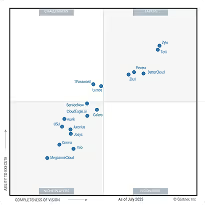
CloudEagle.ai is Recognized in the 2024 Gartner® Magic Quadrant™ for SaaS Management Platforms

Recognition highlights CloudEagle’s innovation and leadership in the rapidly evolving SaaS management and procurement space.
Read More
Gartner Magic Quadrant for SaaS Management Platforms showing a chart divided into Challengers and Leaders quadrants with various companies plotted as dots.

CloudEagle.ai Recognized in the GigaOm Radar for SaaS Management Platforms

CloudEagle named a Leader and Outperformer in GigaOm Radar Report, validating its impact in the SaaS management platform landscape.
Read More
gigaom

Everest Group Positions CloudEagle.ai as a Trailblazer in SaaS Management Platforms

CloudEagle recognized as a Trailblazer by Everest Group, showcasing its rapid growth and innovation in SaaS spend and operations management.
Read More
qks

CloudEagle.ai is Recognized in the 2024 Gartner® Magic Quadrant™ for SaaS Management Platforms

Recognition highlights CloudEagle’s innovation and leadership in the rapidly evolving SaaS management and procurement space.
Read More
gartner
CloudEagle.ai recognized in the 2025 Gartner® Magic Quadrant™ for SaaS Management Platforms
Download now
gartner chart
5x
Faster employee
onboarding
80%
Reduction in time for
user access reviews
30k
Workflows
automated
$15Bn
Analyzed in
contract spend
$2Bn
Saved in
SaaS spend

Streamline SaaS governance and save 10-30%

Book a Demo with Expert
CTA image
One platform to Manage
all SaaS Products
Learn More