
%201.svg)


HIPAA Compliance Checklist for 2025

Are you struggling to keep your organization's software spending in check? As businesses increasingly rely on SaaS applications to drive efficiency and productivity, it's no surprise that managing software expenses has become a daunting challenge.
With annual software spend often exceeding allocated budgets, finding a solution that provides visibility into your software ecosystem and helps you optimize your spending effectively is crucial.
This is where Tropic comes in—a SaaS spend management platform designed to tackle the challenges you're facing in optimizing SaaS spend. Whether it's the chaos of too many software applications or the need to balance your budget with operational efficiency, Tropic has you covered.
But here's the crucial question: is Tropic the right fit for your organization? To make an informed decision, you must delve into the nitty-gritty of Tropic's pricing strategy. In this article, we'll explore Tropic's pricing guide and show you how it can be the missing piece in your software management puzzle.
Tropic: What does it do?
Tropic is your all-in-one solution for efficient and cost-effective SaaS and spend management. With a strong focus on responsible spending, Tropic's unified platform offers modern businesses the visibility and control to eliminate redundancies and optimize spending.
It taps into a vast SaaS sourcing database to provide insights into pricing benchmarks and alternatives to enhance your negotiation process.

Tropic automates approvals, freeing your team from the tedious manual approval and onboarding procedures. You can accelerate stakeholder approvals, streamlining the process while ensuring compliance and preventing delays and bottlenecks.
Tropic consolidates contract, usage, and spending data into a single platform, providing a complete view of vendors. Identify and act on savings opportunities quickly. It supercharges savings with one-click procurement services.
Features
Tropic’s platform features are split into four solutions:
1. Discover
- Sourcing Intelligence
- Pre-negotiated deals
- Intelligent Intake
2. Approve
- Workflows
- Collaboration
- Financial Controls
- Supplier Onboarding
3. Manage
- Supplier Management
- Accounting Automation
- SaaS management
- Budget Tracking
4. Save
- Spend Optimization
- Expert Advisory
- Assisted Purchasing
Tropic is an ideal solution for organizations looking to streamline their procurement processes. Assisted buying, expert advisory, approval workflows, pre-negotiated deals, etc. make Tropic a robust SaaS procurement solution.
However, the lack of deeper integrations can be a deal breaker for organizations looking to manage their entire SaaS app lifecycle, from app management, cost optimization, user onboarding, vendor management, and procurement.
Before we get to the nuances, let us look at how Tropic pricing works.
Tropic Pricing - Will it align with your immediate needs?
Despite being vocal about its features, Tropic is silent about its pricing plans. Two pricing tiers are available: Procurement Starter and Procurement Advanced, with no transparent pricing provided.

Tropic's pricing structure starts at $3,167 per month, with pricing based on the number of employees. The base package includes:
- Spend Intelligence – Likely providing insights into spend patterns and cost optimization.
- Workflow Automation – Streamlining procurement and approval processes.
- Data Unification – Consolidating financial data for better visibility.
- Unlimited Services – Possibly related to support, integrations, or transactions.
Unlike competitors that offer over 300 integrations in their Starter plans, Tropic’s offering may require businesses to upgrade to access key integrations like HRIS and SSO. This could be a limitation for small and mid-sized organizations seeking a more comprehensive solution at a lower price point.
Additionally, the lack of transparent pricing can be a concern for SaaS buyers:
- Decision-making delays – Customers must contact sales for pricing details.
- Budgeting challenges – Without clear costs, planning becomes difficult.
- Hidden costs – Potential for extra fees related to onboarding, updates, and support.
For organizations with flexible budgets, this pricing model may not be an issue. However, for cost-conscious businesses, Tropic’s Starter plans may not offer the best value compared to alternatives that provide a more extensive feature set at a lower cost.
Our thoughts
Tropic offers a decent set of features, but its pricing plans may not provide the best value for organizations looking for a comprehensive SaaS management and spend optimization platform.
The Starter and Advanced tiers focus primarily on vendor, contract, and request management. However, they lack essential capabilities in SaaS management, procurement automation, and spend optimization.
In contrast, CloudEagle offers more robust SaaS and spend management features even in its Starter plan, making it a better investment for businesses that want end-to-end visibility and control over their SaaS stack.
Integrations: A Key Limitation
A major drawback of Tropic’s pricing structure is the limited integrations available in the Starter plan.
Essential integrations like SSO and HRIS are only available in the Advanced tier. Many organizations rely on these integrations for seamless identity and access management, making Tropic’s limited support a potential roadblock. In contrast, other platforms—including CloudEagle, provide hundreds of integrations within their basic plans, ensuring organizations can optimize their SaaS lifecycle without requiring expensive upgrades.
Add-ons: A Positive Aspect
One positive aspect of Tropic’s pricing structure is its add-ons, such as:
- Savings Machine – Potentially aimed at cost-saving optimizations.
- Procurement Services – Likely assisting with contract negotiations and vendor management.
While these add-ons may enhance Tropic’s offering, the need to purchase them separately raises concerns about the overall affordability.
Pros and Cons of Tropic
✅ Pros:
✔ Vendor, contract, and request management are included in basic plans.
✔ Savings Machine and Procurement Services add-ons could provide additional value.
✔ Approval workflows streamline procurement.
✔ Pre-negotiated vendor deals help secure better pricing.
✔ Assisted purchasing and expert advisory services support procurement decisions.
✔ Pricing benchmarks and supplier sourcing database enhance vendor selection.
❌ Cons:
❌ Limited SaaS and spend management capabilities in base plans.
❌ Lack of key integrations (SSO & HRIS) in Starter plan, making automation difficult.
❌ No workflows for license reclamation, renewals, user onboarding, and offboarding.
❌ No app catalog, limiting software discovery.
❌ Lack of proactive alerts for shadow IT.
❌ Slackbot for procurement is not available.
❌ Limited vendor research module.
❌ Only provides high-level usage and spend insights due to limited integrations.
❌ Non-customer-friendly pricing model with hidden costs for onboarding, support, and feature add-ons.
There you go. If your goal is to streamline your procurement process, then Tropic can be suitable. But suppose you have a non-lenient budget strategy and want to utilize it to purchase a comprehensive platform that fits all your needs. In that case, there are platforms like CloudEagle that offer more than Tropic without emptying your budget.
Why is CloudEagle superior to Tropic?
CloudEagle.ai is an AI-powered SaaS Management, Security and Identity Governance platform that gives enterprises a unified command center to discover, secure, govern, and optimize their entire SaaS and AI ecosystem, while enforcing AI usage control and securing both human and non-human identities.
That scope is the difference. Tropic is built for finance and procurement teams working the buying cycle. It does that job well. But procurement is one slice of the SaaS lifecycle, and the other slices are where the risk lives now: ungoverned access, shadow AI, orphaned identities, and access reviews nobody has time to run properly.
CloudEagle.ai covers procurement alongside identity governance, security, and AI governance in one platform. With 500+ direct integrations pulling from IdP, HR, finance, firewall, MDM, and browser sources, it also holds something a procurement tool structurally cannot: the depth of usage signal that tells you what people actually do inside an app, not just that they logged in.
Features
SaaS and AI discovery, including shadow AI
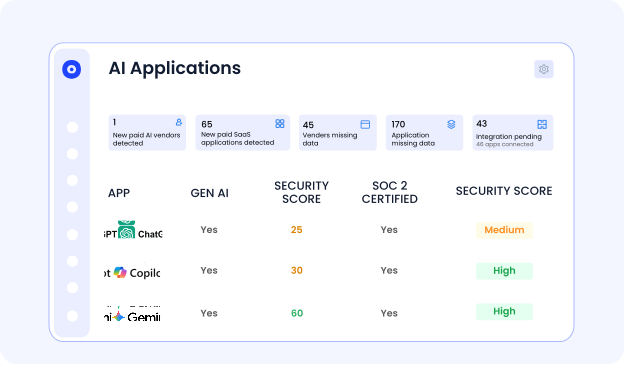
CloudEagle.ai connects to your internal systems to build a full picture of the SaaS and AI stack. Discovery runs across multiple sources rather than a single connector, so apps bought on a corporate card, adopted through a browser extension, or signed up for with an SSO login all surface in the same inventory.
The platform separates active from inactive apps and SaaS from non-SaaS automatically. Inside the application module you can see usage, spend, contract data, license purchases, provisioning, and renewal dates in one view.
Shadow AI is the newer half of this problem. AI tools get adopted department by department with no central approval, and each one is a potential path for sensitive data to leave the company through a prompt. CloudEagle.ai detects unsanctioned AI apps, scores them for risk, and maintains a centralized inventory of every AI tool in use. It correlates browser activity with Zscaler and CrowdStrike signals, so AI usage shows up even when it never touches your SSO.

Proactive alerts notify administrators the moment a new unsanctioned application appears, which stops SaaS sprawl and AI sprawl before either becomes a procurement problem.
Here's Paul Lanzi, the COO & Co-founder of Remediant shares his success story of how CloudEagle helped his team streamline SaaS management by providing complete visibility into their SaaS portfolio.
AI governance and non-human identities
This is the capability gap that matters most in 2026, and procurement platforms do not address it.
CloudEagle.ai enforces AI usage policies across the organization and governs non-human identities: the service accounts, bots, and API tokens that AI tools spin up and nobody tracks. These identities hold standing access, rarely get reviewed, and do not appear in a headcount-based license audit.
The platform maps who is using which AI tool, scores each app for risk, and gives security and AI teams a defensible record of what is running. For a Chief AI Officer facing board or auditor questions about AI oversight, that record is the answer.
Identity Governance and Access Management
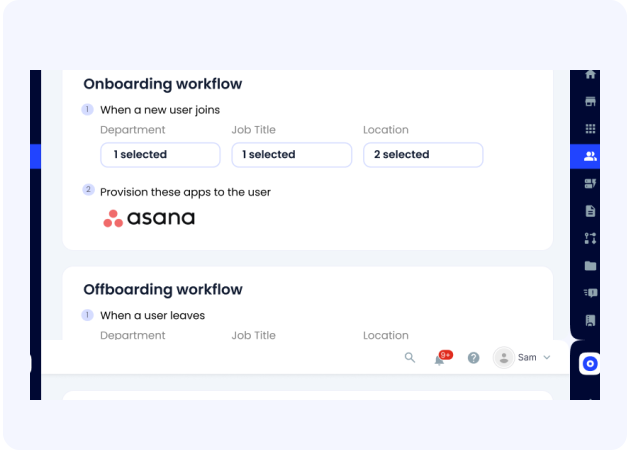
Joiner-Mover-Leaver automation runs onboarding and offboarding without a ticket queue. New employees get the right apps for their role and department on day one. When someone leaves, access is revoked across every connected application, which closes the orphaned-identity gap that manual offboarding always leaves open.
Employees request access through a self-service app catalog in Slack, so IT stops fielding one-off requests. Time-based and just-in-time access grants temporary permissions to sensitive apps and revokes them automatically once the work is done, which means standing access stops accumulating quietly.
Role-based access control keeps employees scoped to applications relevant to their role. Automated access requests route approvals to the right owner without anyone chasing them.
Security and Compliance
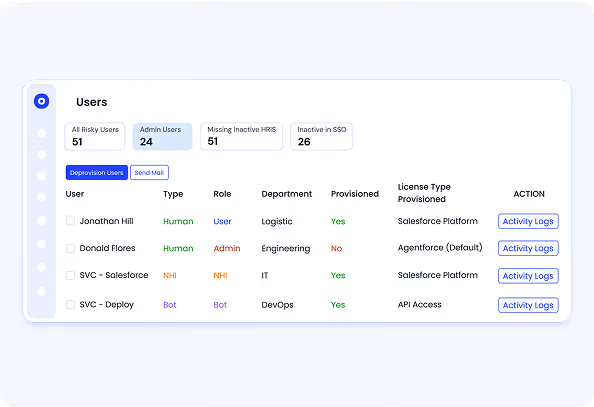
User access reviews run continuously instead of as a quarterly scramble. The platform surfaces who has access to what, flags excessive privileges, and gives reviewers the usage context to make a real decision rather than rubber-stamping a spreadsheet.
Privileged access visibility shows which accounts hold elevated permissions and whether anyone still needs them. Risk correlation pulls signals across SSO, HR, finance, firewall, and usage data to flag anomalous behavior as it happens. Real-time audit trails mean audit readiness is a running state, not a project.
SaaS and AI optimization
Unused, free, and redundant applications are identified automatically and surfaced in dedicated dashboards. Application rationalization shows where two departments bought the same tool, so you can consolidate with the usage data to back the decision.
License Management and Harvesting handles the license side. Configure a workflow against usage thresholds, and users below the line are deprovisioned automatically with the license reclaimed and returned to the pool. No manual review cycle, no spreadsheet.

Spend intelligence tracks where money is going and flags unexpected increases before they land in a renewal. Customers typically cut SaaS and AI spend by 10 to 30%.
Procurement and Vendor Management
Renewal dates are extracted from contracts automatically and built into a renewal calendar, with reminders through Slack and email at 30, 60, or 90 days out. Reminders escalate through stakeholders until someone acts, and only stop once the contract is handled. That is the difference between a calendar entry and a process.
Autonomous renewal agents now handle the prep work that used to take a week: pulling usage, surfacing benchmark pricing, identifying unused licenses, and assembling the negotiation position before anyone sits down with the vendor.
Procurement workflow orchestration covers software, hardware, and other categories, configured through customizable intake forms and triggered per request.
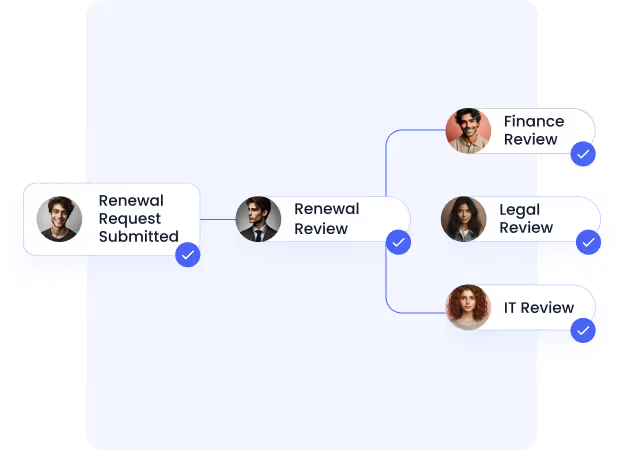
Stakeholders are notified through Slack, email, and in-app alerts, and a private Slack channel can be created per workflow so the whole approval chain happens where people already work. Employees can raise purchase requests directly from Slack without opening the platform.
Price benchmarking shows what comparable companies actually pay, so renewal conversations start from data. Contract metadata extraction pulls key terms, dates, and obligations out of agreements automatically into a central repository.
Falkonry used CloudEagle.ai to automate their renewal workflows with escalating reminders. Here's their story.
Assisted buying
If your procurement team does not have capacity to run negotiations, CloudEagle.ai's SaaS buying experts take the process on. They evaluate requirements, run market research and competitive analysis, apply current pricing benchmarks, and either support your team through the negotiation or handle it end to end. You decide which.
Here's Lucas Dermois from ICEYE on how CloudEagle.ai helped ICEYE cut SaaS spend.
Vendor research
Instead of working through review sites, describe the problem in plain terms and get back a shortlist of software that fits. The platform surfaces the reviews that matter, the tradeoffs on each option, and the features your peers in your industry and company size weight most heavily. Compare vendors side by side and move faster to a decision.
Contract management
All SaaS contracts, licenses, and agreements live in one repository. Renewal deadlines, termination notice windows, and key terms are tracked rather than rediscovered.
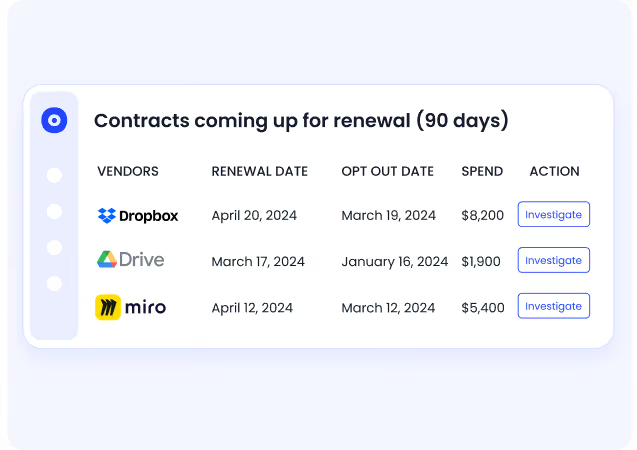
Oyster HR moved off spreadsheets to centralized contract management in CloudEagle.ai and got real visibility into their agreements. Here's the full story.
Platform and integration layer
500+ direct integrations across SaaS, AI, SSO, HRIS, finance, and security tools. Deep access visibility that goes past logins into roles, entitlements, permissions, and feature-level usage. Cross-system correlation that connects signals no single source can see on its own.
Workflows are no-code and Slack-enabled. EagleEye, the AI-powered SaaS assistant, surfaces what needs attention and answers questions about the stack without anyone building a report. Onboarding takes about 30 minutes, and the integrations are bi-directional, so CloudEagle.ai works alongside your ITSM, CLM, Okta, and risk tools rather than replacing them.
Quick rundown of why CloudEagle.ai wins
- Breadth. Procurement, identity governance, security, and AI governance in one platform. Tropic covers procurement.
- Depth. Usage insight past the login, down to features, roles, and permissions.
- AI governance. Shadow AI discovery, AI usage control, and non-human identity management. Most competitors have none of it.
- 500+ direct integrations across SaaS, AI, SSO, HRIS, finance, and security.
- Action, not dashboards. Automated license harvesting, renewal agents, and JML workflows that execute instead of reporting.
- Any purchase type, not just SaaS.
- 30-minute onboarding, with savings starting in week one.
CloudEagle Pricing
CloudEagle prices by module, so teams pay for the piece they actually need instead of buying a full platform to get one workflow. Five modules are available: AI Governance, SaaS Security & Compliance, Identity Governance, SaaS Management, and SaaS Procurement. You can start with one and add others as your stack grows. Pricing is scoped on a call with a product specialist.
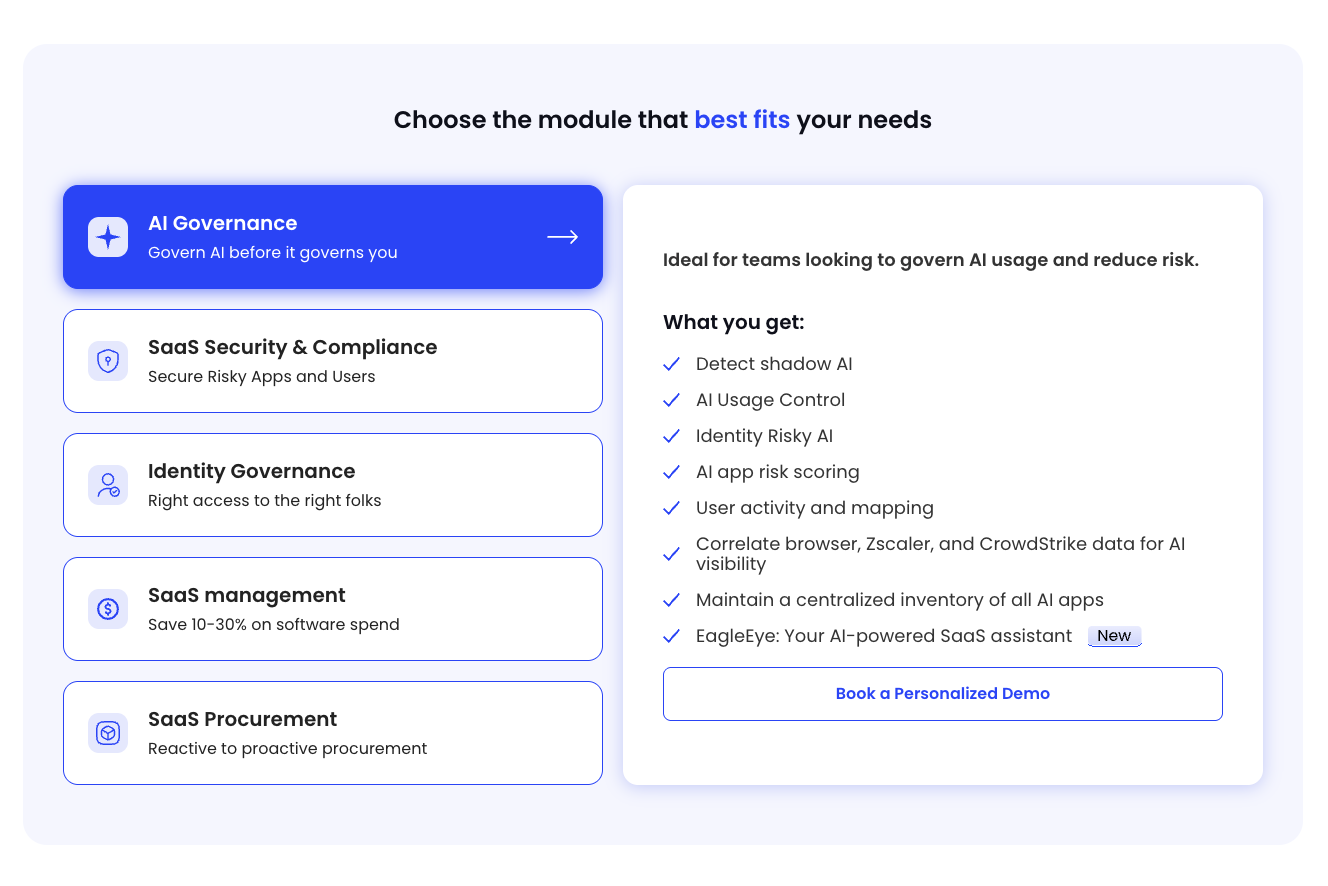
1. AI Governance: For teams that want visibility into AI usage before it becomes a risk.
2. SaaS Security & Compliance: For keeping the SaaS environment secure and audit-ready year-round.
3. Identity Governance: For access control across the employee lifecycle.
4. SaaS Management: For cutting software spend and cleaning up licenses.
5. SaaS Procurement: For procurement teams that want to move from reactive to proactive.
Conclusion
Suppose you're seeking an all-in-one platform to effectively manage and optimize your entire SaaS lifecycle. Tropic might not be ideal as it focuses more on procurement services and lacks deeper integrations.
A holistic solution such as CloudEagle is essential for optimizing your complete SaaS lifecycle. It's worth noting that CloudEagle recently gained recognition on Forbes, TechCrunch, and Nasdaq for its impressive SaaS spend report in 2023.
CloudEagle is renowned for its exceptionally rapid onboarding process, a fact supported by Devin Murphy, a Senior Accounting Manager at RecRoom.
So, what do you think? If you're interested in a brief demonstration of CloudEagle to experience firsthand how it can transform your SaaS management, feel free to book a demo with our expert team.


.avif)


.avif)
.avif)



.png)






.avif)
.avif)
.avif)


