AI Model Governance: What It Is and Who Owns It

Share via:
blog-cms-banner-bg
Little-Known Negotiation Hacks to Get the Best Deal on Slack
cta-bg-blogDownload Your Copy

HIPAA Compliance Checklist for 2025

Download PDF

A board asks the CIO about AI model governance. The CIO refers to it as the CISO. The CISO refers it to the Chief AI Officer. The CAIO refers to it as Legal. By the time anyone answers, nobody has said the same thing twice.

That is not a coordination failure. It is a definitional problem. AI model governance means different things depending on whether you built the model, deployed it, or are simply using it through a vendor product. 

Most organizations are in the third category, but the governance frameworks being discussed were written for the first.

This blog gives you a clear definition of AI model governance, what it actually covers for enterprise users, and a practical answer to who should own each part of it.

TL;DR

  • AI model governance is the set of policies, controls, and accountability structures that determine how AI models are selected, deployed, used, and retired, and who is responsible for each decision
  • For enterprise users, not model builders, governance focuses on the deployment and use layer: which models are approved, what data can go into them, and who is accountable when an output causes a problem
  • No single function owns AI model governance. It is a shared accountability across CISO, CAIO, Legal, Privacy, and business unit leads, and it fails when ownership is ambiguous
  • The most common governance program failure is writing policy before building the inventory. You cannot govern models you don't know are in use
  • CloudEagle.ai provides the AI tool and model inventory and usage visibility layer that AI model governance requires to move from a policy document to an operational program

1. What AI Model Governance Actually Means

Most AI model governance guidance is written for organizations that build and train AI models. But that's not how most enterprises use AI today.

Instead, they consume models from providers like OpenAI, Anthropic, Google, and Microsoft through applications such as ChatGPT Enterprise, Claude, and Microsoft Copilot. That changes what governance actually needs to cover.

Rather than governing model development, enterprises must govern how approved models are selected, accessed, used, monitored, and retired across the business. Confusing these two approaches often leads organizations to adopt governance frameworks that don't match how they actually use AI.
What AI Model Governance Is

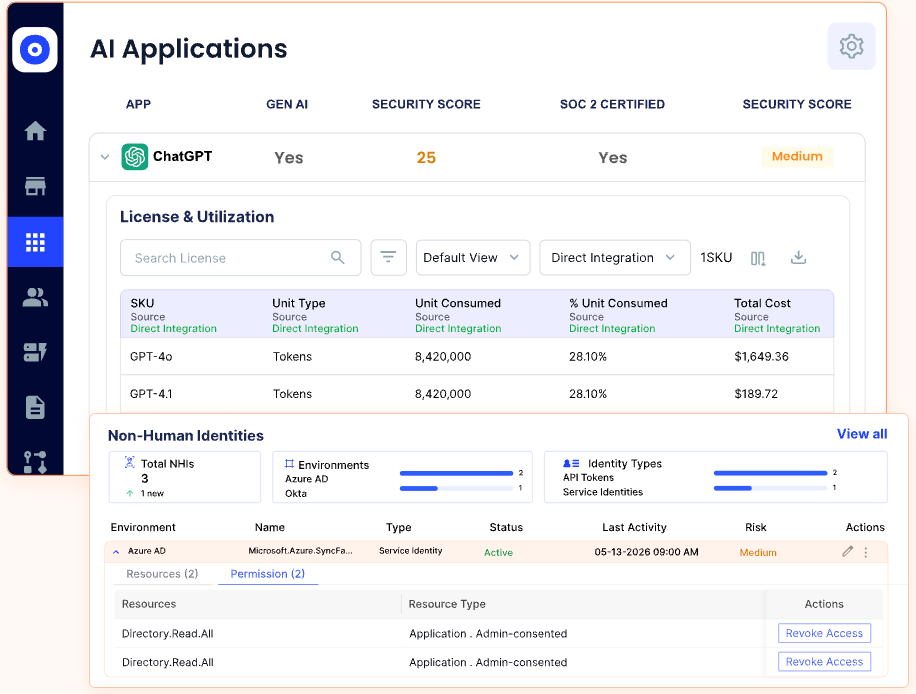
AI model governance is the set of policies, controls, and accountability structures that determine how AI models are selected, deployed, used, and retired within an organization, and who is responsible for each decision.

It covers three distinct questions:

  • Which models are approved for use and under what conditions
  • Who is accountable when a model's output causes a problem
  • What happens when a vendor changes the model's behavior or data handling terms

For enterprise users, governance focuses on the deployment and use layer, not the training data, architecture, or evaluation benchmarks that model builders govern. That is a narrower and more actionable scope than most frameworks acknowledge.

What AI Model Governance Is Not

These are the four things AI model governance gets most commonly confused with:

  • Not AI ethics: Ethics is a values framework. Governance is the operational structure that makes ethical commitments enforceable. You can have excellent ethics principles and no governance program at all
  • Not AI safety in the technical sense: Safety research focuses on model behavior at training. Governance focuses on how deployed models are used in organizational workflows
  • Not data governance: Data governance covers how data is managed and protected. AI model governance covers how models that process that data are selected, approved, and overseen. Both are necessary. Neither replaces the other
  • Not a single team's responsibility: This one matters most. AI model governance is a cross-functional operating model, not a task that belongs exclusively to Security, IT, Legal, or the AI team

AI Governance Starts With Knowing What's in Use.

Learn how to discover every AI tool and model before you can govern it.
Get the Guide

2. What AI Model Governance Covers for Enterprise Users

Once the definitional confusion is cleared, the governance domains that matter for enterprise users are specific and practical.

Model Selection and Approval

Which AI models are approved for enterprise use, by vendor, by model version, and by use case.

The same vendor offers multiple models with different capability and data handling profiles. GPT-4o and GPT-4o mini have different performance and cost profiles. Claude Sonnet and Claude Haiku have different context windows. 

Approval criteria should cover:

  • Data handling terms: does the model train on your inputs by default at the tier you are using?
  • Security posture: SOC 2, ISO 27001 coverage, and available certifications
  • Performance fit for the specific use case
  • Regulatory considerations: HIPAA, GDPR, SOX implications for the specific workflow the model is being used in

Data Classification and Model Matching

Which data categories can be sent to which models.

A model approved for internal knowledge management may not be appropriate for processing customer PII, financial records, or health information. 

Most AI acceptable use policies gesture at this without operationalizing it. "Don't send sensitive data to AI tools" is not governance without a classification framework that defines what sensitive means and enforcement controls that prevent violations before they happen, not after.

Output Governance

How AI model outputs are used in decisions, particularly consequential decisions where model outputs carry regulatory and liability implications.

This domain requires answers to two questions:

  • Who is required to review model outputs before they are acted on?
  • What is the escalation path when outputs are flagged as incorrect, biased, or harmful?

Model Change Management

What happens when a vendor updates a model.

Changes to behavior, capability, or data handling terms affect approved use cases. Most enterprise teams have no process for monitoring model version changes from approved vendors. AI model governance requires one.

Model Retirement

When an approved model is retired, whether because the vendor deprecates it, because a security finding changes its risk profile, or because a better-governed alternative exists, there needs to be a defined process for identifying the retirement trigger and managing the transition.

3. Who Owns AI Model Governance: The Accountability Map

The honest answer is that no single role owns AI model governance. It is shared accountability across at least four functions, and the governance structure fails when any one function tries to own all of it or when no function is assigned ownership of a specific domain.

Here is the accountability map that works in practice:

Governance Domain Primary Owner Why
Model selection and approval CISO + CAIO jointly Security owns risk assessment; AI team owns capability assessment. Neither can approve unilaterally.
Data classification and model matching Chief Privacy Officer / DPO + IT Classification is a privacy function; enforcement at the model usage layer is an IT control function.
Output governance Business unit leads + Legal Business units use the output; Legal owns the regulatory exposure in consequential contexts.
Model change management CISO + IT Vendor model updates are a technical risk function with integration implications.
Model retirement CAIO + IT AI team owns the capability decision; IT owns the technical decommissioning.

A few things worth naming directly:

  • Security teams are not well-positioned to own output governance. They lack the context for how outputs are being used in business workflows
  • Business units are not well-positioned to own model selection and approval. They do not have the security and risk assessment expertise the decision requires
  • Legal ownership of output governance is specifically about the regulatory exposure when model outputs are used in consequential decisions, not general oversight of AI

AI model governance works when each domain has a named owner and a defined escalation path. It fails when it is everyone's responsibility and therefore nobody's.

📖 Worth a Read 👉 10 AI Governance Trends in 2026 and What CISOs Are Doing About Them

4. Why AI Model Governance Is Harder Than It Sounds

The concepts are not complex. The execution is, and for specific reasons worth naming.

The Velocity Problem

AI vendors release new models, update existing ones, and change data handling terms faster than any governance cycle was designed to track. A model approved in January may have meaningfully different behavior by March. 

Most organizations have no process for detecting the change, let alone assessing its implications for approved use cases.

The Shadow Usage Problem

AI adoption inside the enterprise is happening bottom-up. Employees are independently accessing models outside the approved list through personal accounts, browser extensions, and direct API access. 
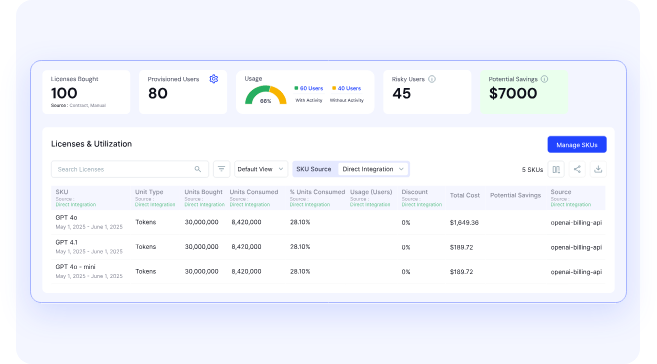
Governance is being applied to the models IT knows about while employees use models IT does not. The models most in need of governance are often the ones outside the approved list.

The Use Case Explosion Problem

A single approved model may be used for dozens of different use cases across the organization:

  • Drafting internal documents: low risk
  • Processing customer data: higher risk, may require GDPR compliance review
  • Influencing hiring decisions: triggers state AI law requirements in multiple states
  • Summarizing financial records: may carry SOX implications

Approving the model does not govern the use cases. That requires a separate policy layer most organizations have not built.

The Accountability Diffusion Problem

Because AI model governance is cross-functional, accountability for specific decisions is often unclear until something goes wrong. The governance gap that allowed the problem is obvious in retrospect but was not assigned to anyone in advance.

AI model governance is hard not because the concepts are complex but because the accountability is distributed across functions that were not designed to coordinate on this topic.

5. How Visibility Into AI Model Usage Supports Governance

The governance domains covered above all require one thing most organizations do not have: a current, accurate picture of which AI models are in use, by whom, for what purpose, and with what data.

Without that visibility:

  • Model selection and approval is a policy exercise with no enforcement layer
  • Data classification and model matching is a guideline with no monitoring
  • Model change management has no baseline to compare against when a vendor update lands

Three visibility requirements that AI model governance assumes are in place:

  • A live AI model inventory: Which models are in use, through which vendor products, by which teams, and under what approved use cases. Not a quarterly audit, a continuous picture that reflects what is actually running in the environment.
  • Usage monitoring: Which employees are using which models, whether usage patterns suggest data classification policy compliance or violation, and whether unsanctioned models are being accessed outside the approved list.
  • Vendor change detection: When an approved vendor updates a model or changes its data handling terms, the governance program needs to know before the change affects live workflows, not after.

CloudEagle.ai provides the inventory and usage visibility layer that AI model governance requires to move from a policy document to an operational program, surfacing which AI tools and models are in use across the environment, sanctioned and shadow, with usage signals attached.

6. AI Model Governance vs. AI Tool Governance: The Distinction That Creates Gaps

These two terms get conflated regularly, and conflating them creates specific governance gaps.

  • AI tool governance covers whether a specific product is approved for use: Copilot, ChatGPT Enterprise, Cursor.
  • AI model governance covers whether the underlying model that product uses is appropriate for a specific use case, and what happens when the product switches models or when multiple products use the same underlying model.

Three scenarios where the distinction creates real exposure:

Scenario 1: A vendor switches the underlying model powering an approved product without proactive customer notification. The tool approval remains valid. The model governance review has not happened.

Scenario 2: Two approved tools use the same underlying model with different data handling configurations. Governance of one does not cover the other, even though the model is the same.

Scenario 3: An employee accesses a model directly through API that is also available through an approved tool. The tool approval does not extend to direct API access. The governance review that covered the tool did not cover this access pattern.

The AI tool inventory CloudEagle.ai maintains both the tool layer and the underlying model context, giving governance teams visibility into both dimensions simultaneously rather than requiring separate discovery processes for each.

7. How to Start an AI Model Governance Program When You're Starting From Zero

Four steps, in the order that actually works:

Step 1: Inventory Before Governing

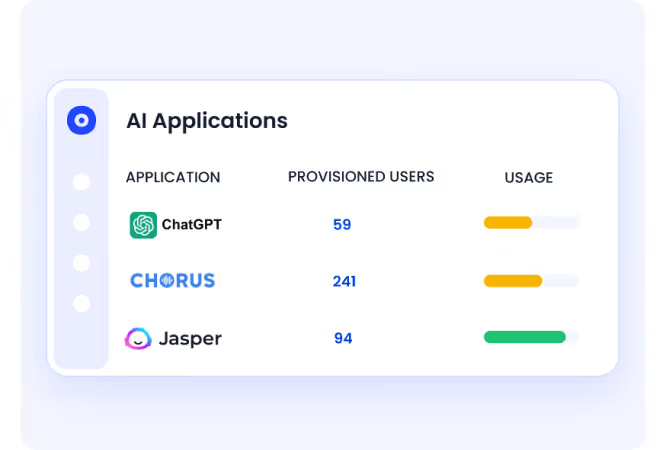
You cannot govern models you don't know are in use. The most common governance program failure is writing policy before building the inventory. Start with a complete picture of which AI tools and models are active in the environment before writing a single policy.

This step will surface more than you expect. Shadow AI tools, personal API accounts, and AI features activating inside approved SaaS products will all appear. That is the point.
Step 2: Define the Approval Criteria

Document what makes a model approvable:

  • Minimum data handling requirements: what the vendor must commit to around training data opt-outs and retention
  • Security certification expectations: which certifications are required for which data sensitivity tiers
  • Use case restrictions: which workflows a given model can and cannot be used for

This becomes the standard every model is assessed against. Without it, approval decisions are ad hoc and inconsistent.

Step 3: Assign Ownership by Domain

Use the accountability map in the section above as a starting point. Assign a named owner to each governance domain before the program launches.

Ambiguous ownership is the most common reason governance programs stall. When something goes wrong and the accountability question cannot be answered, the program has failed regardless of how good the policy document looks.

Step 4: Build the Monitoring Layer

Policy without monitoring is aspiration. Once approvals are in place, activate the usage monitoring layer that detects:

  • When employees use unapproved models
  • When approved models are used outside their approved use cases
  • When vendor model updates change the behavior or terms of an approved deployment

The most common governance program failure is trying to build the policy before the inventory. Start with what is in use. Build the governance around reality, not the approved list.

Conclusion

AI model governance is not a framework to implement once. It is an operating model to run continuously, and it starts with knowing which models your organization is already using.

The definition is clearer than most discussions make it. The accountability map is more specific than most organizations have documented. And the governance program works when each domain has a named owner, the inventory is current, and the monitoring layer catches what the policy was intended to prevent.

See how CloudEagle.ai surfaces AI model and tool usage across your environment so governance starts from an accurate picture, not an assumed one. 

Frequently Asked Questions

1. What is AI model governance?
AI model governance is the framework of policies, controls, and ownership that governs how AI models are approved, deployed, monitored, and retired. It helps organizations ensure the right models are used for the right data and business use cases.

2. Who should own AI model governance in an enterprise?
AI model governance is a shared responsibility. Security, IT, privacy, legal, business leaders, and AI teams each own different decisions, from model approval and data protection to monitoring, compliance, and retirement.

3. What is the difference between AI model governance and AI tool governance?
AI tool governance determines whether an AI application is approved for use, while AI model governance focuses on the underlying model powering that application. Both are required because approved tools can change the models they use over time.

4. How do you start an AI model governance program?
Start by creating an inventory of the AI models used across your organization. Then define approval criteria, assign ownership, establish governance policies, and continuously monitor models for changes that could introduce security, compliance, or business risk.

5. Why is AI model governance becoming more important?
AI models are updated frequently, and different models have different capabilities, risks, and data handling practices. AI model governance helps organizations track these changes, enforce approved model usage, and reduce security, privacy, and compliance risks as AI adoption grows.

Advertisement for a SaaS Subscription Tracking Template with a call-to-action button to download and a partial graphic of a tablet showing charts.Banner promoting a SaaS Agreement Checklist to streamline SaaS management and avoid budget waste with a call-to-action button labeled Download checklist.Blue banner with text 'The Ultimate Employee Offboarding Checklist!' and a black button labeled 'Download checklist' alongside partial views of checklist documents from cloudeagle.ai.Digital ad for download checklist titled 'The Ultimate Checklist for IT Leaders to Optimize SaaS Operations' by cloudeagle.ai, showing checklist pages.Slack Buyer's Guide offer with text 'Unlock insider insights to get the best deal on Slack!' and a button labeled 'Get Your Copy', accompanied by a preview of the guide featuring Slack's logo.Monday Pricing Guide by cloudeagle.ai offering exclusive pricing secrets to maximize investment with a call-to-action button labeled Get Your Copy and an image of the guide's cover.Blue banner for Canva Pricing Guide by cloudeagle.ai offering a guide to Canva costs, features, and alternatives with a call-to-action button saying Get Your Copy.Blue banner with white text reading 'Little-Known Negotiation Hacks to Get the Best Deal on Slack' and a white button labeled 'Get Your Copy'.Blue banner with text 'Little-Known Negotiation Hacks to Get the Best Deal on Monday.com' and a white button labeled 'Get Your Copy'.Blue banner with text 'Little-Known Negotiation Hacks to Get the Best Deal on Canva' and a white button labeled 'Get Your Copy'.Banner with text 'Slack Buyer's Guide' and a 'Download Now' button next to images of a guide titled 'Slack Buyer’s Guide: Features, Pricing & Best Practices'.Digital cover of Monday Pricing Guide with a button labeled Get Your Copy on a blue background.Canva Pricing Guide cover with a button labeled Get Your Copy on a blue gradient background.

Enter your email to
unlock the report

Oops! Something went wrong while submitting the form.
License Count
Benchmark
Per User/Per Year

Enter your email to
unlock the report

Oops! Something went wrong while submitting the form.
License Count
Benchmark
Per User/Per Year

Enter your email to
unlock the report

Oops! Something went wrong while submitting the form.
Notion Plus
License Count
Benchmark
Per User/Per Year
100-500
$67.20 - $78.72
500-1000
$59.52 - $72.00
1000+
$51.84 - $57.60
Canva Pro
License Count
Benchmark
Per User/Per Year
100-500
$74.33-$88.71
500-1000
$64.74-$80.32
1000+
$55.14-$62.34

Enter your email to
unlock the report

Oops! Something went wrong while submitting the form.

Enter your email to
unlock the report

Oops! Something went wrong while submitting the form.
Zoom Business
License Count
Benchmark
Per User/Per Year
100-500
$216.00 - $264.00
500-1000
$180.00 - $216.00
1000+
$156.00 - $180.00

Enter your email to
unlock the report

Oops! Something went wrong while submitting the form.

Get the Right Security Platform To Secure Your Cloud Infrastructure

Please enter a business email
Thank you!
The 2023 SaaS report has been sent to your email. Check your promotional or spam folder.
Oops! Something went wrong while submitting the form.

Access full report

Please enter a business email
Thank you!
The 2023 SaaS report has been sent to your email. Check your promotional or spam folder.
Oops! Something went wrong while submitting the form.

A board asks the CIO about AI model governance. The CIO refers to it as the CISO. The CISO refers it to the Chief AI Officer. The CAIO refers to it as Legal. By the time anyone answers, nobody has said the same thing twice.

That is not a coordination failure. It is a definitional problem. AI model governance means different things depending on whether you built the model, deployed it, or are simply using it through a vendor product. 

Most organizations are in the third category, but the governance frameworks being discussed were written for the first.

This blog gives you a clear definition of AI model governance, what it actually covers for enterprise users, and a practical answer to who should own each part of it.

TL;DR

  • AI model governance is the set of policies, controls, and accountability structures that determine how AI models are selected, deployed, used, and retired, and who is responsible for each decision
  • For enterprise users, not model builders, governance focuses on the deployment and use layer: which models are approved, what data can go into them, and who is accountable when an output causes a problem
  • No single function owns AI model governance. It is a shared accountability across CISO, CAIO, Legal, Privacy, and business unit leads, and it fails when ownership is ambiguous
  • The most common governance program failure is writing policy before building the inventory. You cannot govern models you don't know are in use
  • CloudEagle.ai provides the AI tool and model inventory and usage visibility layer that AI model governance requires to move from a policy document to an operational program

1. What AI Model Governance Actually Means

Most AI model governance guidance is written for organizations that build and train AI models. But that's not how most enterprises use AI today.

Instead, they consume models from providers like OpenAI, Anthropic, Google, and Microsoft through applications such as ChatGPT Enterprise, Claude, and Microsoft Copilot. That changes what governance actually needs to cover.

Rather than governing model development, enterprises must govern how approved models are selected, accessed, used, monitored, and retired across the business. Confusing these two approaches often leads organizations to adopt governance frameworks that don't match how they actually use AI.

What AI Model Governance Is

AI model governance is the set of policies, controls, and accountability structures that determine how AI models are selected, deployed, used, and retired within an organization, and who is responsible for each decision.

It covers three distinct questions:

  • Which models are approved for use and under what conditions
  • Who is accountable when a model's output causes a problem
  • What happens when a vendor changes the model's behavior or data handling terms

For enterprise users, governance focuses on the deployment and use layer, not the training data, architecture, or evaluation benchmarks that model builders govern. That is a narrower and more actionable scope than most frameworks acknowledge.

What AI Model Governance Is Not

These are the four things AI model governance gets most commonly confused with:

  • Not AI ethics: Ethics is a values framework. Governance is the operational structure that makes ethical commitments enforceable. You can have excellent ethics principles and no governance program at all
  • Not AI safety in the technical sense: Safety research focuses on model behavior at training. Governance focuses on how deployed models are used in organizational workflows
  • Not data governance: Data governance covers how data is managed and protected. AI model governance covers how models that process that data are selected, approved, and overseen. Both are necessary. Neither replaces the other
  • Not a single team's responsibility: This one matters most. AI model governance is a cross-functional operating model, not a task that belongs exclusively to Security, IT, Legal, or the AI team

AI Governance Starts With Knowing What's in Use.

Learn how to discover every AI tool and model before you can govern it.
Get the Guide

2. What AI Model Governance Covers for Enterprise Users

Once the definitional confusion is cleared, the governance domains that matter for enterprise users are specific and practical.

Model Selection and Approval

Which AI models are approved for enterprise use, by vendor, by model version, and by use case.

The same vendor offers multiple models with different capability and data handling profiles. GPT-4o and GPT-4o mini have different performance and cost profiles. Claude Sonnet and Claude Haiku have different context windows. 

Approval criteria should cover:

  • Data handling terms: does the model train on your inputs by default at the tier you are using?
  • Security posture: SOC 2, ISO 27001 coverage, and available certifications
  • Performance fit for the specific use case
  • Regulatory considerations: HIPAA, GDPR, SOX implications for the specific workflow the model is being used in

Data Classification and Model Matching

Which data categories can be sent to which models.

A model approved for internal knowledge management may not be appropriate for processing customer PII, financial records, or health information. 

Most AI acceptable use policies gesture at this without operationalizing it. "Don't send sensitive data to AI tools" is not governance without a classification framework that defines what sensitive means and enforcement controls that prevent violations before they happen, not after.

Output Governance

How AI model outputs are used in decisions, particularly consequential decisions where model outputs carry regulatory and liability implications.

This domain requires answers to two questions:

  • Who is required to review model outputs before they are acted on?
  • What is the escalation path when outputs are flagged as incorrect, biased, or harmful?

Model Change Management

What happens when a vendor updates a model.

Changes to behavior, capability, or data handling terms affect approved use cases. Most enterprise teams have no process for monitoring model version changes from approved vendors. AI model governance requires one.

Model Retirement

When an approved model is retired, whether because the vendor deprecates it, because a security finding changes its risk profile, or because a better-governed alternative exists, there needs to be a defined process for identifying the retirement trigger and managing the transition.

3. Who Owns AI Model Governance: The Accountability Map

The honest answer is that no single role owns AI model governance. It is shared accountability across at least four functions, and the governance structure fails when any one function tries to own all of it or when no function is assigned ownership of a specific domain.

Here is the accountability map that works in practice:

Governance Domain Primary Owner Why
Model selection and approval CISO + CAIO jointly Security owns risk assessment; AI team owns capability assessment. Neither can approve unilaterally.
Data classification and model matching Chief Privacy Officer / DPO + IT Classification is a privacy function; enforcement at the model usage layer is an IT control function.
Output governance Business unit leads + Legal Business units use the output; Legal owns the regulatory exposure in consequential contexts.
Model change management CISO + IT Vendor model updates are a technical risk function with integration implications.
Model retirement CAIO + IT AI team owns the capability decision; IT owns the technical decommissioning.

A few things worth naming directly:

  • Security teams are not well-positioned to own output governance. They lack the context for how outputs are being used in business workflows
  • Business units are not well-positioned to own model selection and approval. They do not have the security and risk assessment expertise the decision requires
  • Legal ownership of output governance is specifically about the regulatory exposure when model outputs are used in consequential decisions, not general oversight of AI

AI model governance works when each domain has a named owner and a defined escalation path. It fails when it is everyone's responsibility and therefore nobody's.

📖 Worth a Read 👉 10 AI Governance Trends in 2026 and What CISOs Are Doing About Them

4. Why AI Model Governance Is Harder Than It Sounds

The concepts are not complex. The execution is, and for specific reasons worth naming.

The Velocity Problem

AI vendors release new models, update existing ones, and change data handling terms faster than any governance cycle was designed to track. A model approved in January may have meaningfully different behavior by March. 

Most organizations have no process for detecting the change, let alone assessing its implications for approved use cases.

The Shadow Usage Problem

AI adoption inside the enterprise is happening bottom-up. Employees are independently accessing models outside the approved list through personal accounts, browser extensions, and direct API access. 

Governance is being applied to the models IT knows about while employees use models IT does not. The models most in need of governance are often the ones outside the approved list.

The Use Case Explosion Problem

A single approved model may be used for dozens of different use cases across the organization:

  • Drafting internal documents: low risk
  • Processing customer data: higher risk, may require GDPR compliance review
  • Influencing hiring decisions: triggers state AI law requirements in multiple states
  • Summarizing financial records: may carry SOX implications

Approving the model does not govern the use cases. That requires a separate policy layer most organizations have not built.

The Accountability Diffusion Problem

Because AI model governance is cross-functional, accountability for specific decisions is often unclear until something goes wrong. The governance gap that allowed the problem is obvious in retrospect but was not assigned to anyone in advance.

AI model governance is hard not because the concepts are complex but because the accountability is distributed across functions that were not designed to coordinate on this topic.

5. How Visibility Into AI Model Usage Supports Governance

The governance domains covered above all require one thing most organizations do not have: a current, accurate picture of which AI models are in use, by whom, for what purpose, and with what data.

Without that visibility:

  • Model selection and approval is a policy exercise with no enforcement layer
  • Data classification and model matching is a guideline with no monitoring
  • Model change management has no baseline to compare against when a vendor update lands

Three visibility requirements that AI model governance assumes are in place:

  • A live AI model inventory: Which models are in use, through which vendor products, by which teams, and under what approved use cases. Not a quarterly audit, a continuous picture that reflects what is actually running in the environment.
  • Usage monitoring: Which employees are using which models, whether usage patterns suggest data classification policy compliance or violation, and whether unsanctioned models are being accessed outside the approved list.
  • Vendor change detection: When an approved vendor updates a model or changes its data handling terms, the governance program needs to know before the change affects live workflows, not after.

CloudEagle.ai provides the inventory and usage visibility layer that AI model governance requires to move from a policy document to an operational program, surfacing which AI tools and models are in use across the environment, sanctioned and shadow, with usage signals attached.

6. AI Model Governance vs. AI Tool Governance: The Distinction That Creates Gaps

These two terms get conflated regularly, and conflating them creates specific governance gaps.

  • AI tool governance covers whether a specific product is approved for use: Copilot, ChatGPT Enterprise, Cursor.
  • AI model governance covers whether the underlying model that product uses is appropriate for a specific use case, and what happens when the product switches models or when multiple products use the same underlying model.

Three scenarios where the distinction creates real exposure:

Scenario 1: A vendor switches the underlying model powering an approved product without proactive customer notification. The tool approval remains valid. The model governance review has not happened.

Scenario 2: Two approved tools use the same underlying model with different data handling configurations. Governance of one does not cover the other, even though the model is the same.

Scenario 3: An employee accesses a model directly through API that is also available through an approved tool. The tool approval does not extend to direct API access. The governance review that covered the tool did not cover this access pattern.

The AI tool inventory CloudEagle.ai maintains both the tool layer and the underlying model context, giving governance teams visibility into both dimensions simultaneously rather than requiring separate discovery processes for each.

7. How to Start an AI Model Governance Program When You're Starting From Zero

Four steps, in the order that actually works:

Step 1: Inventory Before Governing

You cannot govern models you don't know are in use. The most common governance program failure is writing policy before building the inventory. Start with a complete picture of which AI tools and models are active in the environment before writing a single policy.

This step will surface more than you expect. Shadow AI tools, personal API accounts, and AI features activating inside approved SaaS products will all appear. That is the point.

Step 2: Define the Approval Criteria

Document what makes a model approvable:

  • Minimum data handling requirements: what the vendor must commit to around training data opt-outs and retention
  • Security certification expectations: which certifications are required for which data sensitivity tiers
  • Use case restrictions: which workflows a given model can and cannot be used for

This becomes the standard every model is assessed against. Without it, approval decisions are ad hoc and inconsistent.

Step 3: Assign Ownership by Domain

Use the accountability map in the section above as a starting point. Assign a named owner to each governance domain before the program launches.

Ambiguous ownership is the most common reason governance programs stall. When something goes wrong and the accountability question cannot be answered, the program has failed regardless of how good the policy document looks.

Step 4: Build the Monitoring Layer

Policy without monitoring is aspiration. Once approvals are in place, activate the usage monitoring layer that detects:

  • When employees use unapproved models
  • When approved models are used outside their approved use cases
  • When vendor model updates change the behavior or terms of an approved deployment

The most common governance program failure is trying to build the policy before the inventory. Start with what is in use. Build the governance around reality, not the approved list.

Conclusion

AI model governance is not a framework to implement once. It is an operating model to run continuously, and it starts with knowing which models your organization is already using.

The definition is clearer than most discussions make it. The accountability map is more specific than most organizations have documented. And the governance program works when each domain has a named owner, the inventory is current, and the monitoring layer catches what the policy was intended to prevent.

See how CloudEagle.ai surfaces AI model and tool usage across your environment so governance starts from an accurate picture, not an assumed one. 

Frequently Asked Questions

1. What is AI model governance?
AI model governance is the framework of policies, controls, and ownership that governs how AI models are approved, deployed, monitored, and retired. It helps organizations ensure the right models are used for the right data and business use cases.

2. Who should own AI model governance in an enterprise?
AI model governance is a shared responsibility. Security, IT, privacy, legal, business leaders, and AI teams each own different decisions, from model approval and data protection to monitoring, compliance, and retirement.

3. What is the difference between AI model governance and AI tool governance?
AI tool governance determines whether an AI application is approved for use, while AI model governance focuses on the underlying model powering that application. Both are required because approved tools can change the models they use over time.

4. How do you start an AI model governance program?
Start by creating an inventory of the AI models used across your organization. Then define approval criteria, assign ownership, establish governance policies, and continuously monitor models for changes that could introduce security, compliance, or business risk.

5. Why is AI model governance becoming more important?
AI models are updated frequently, and different models have different capabilities, risks, and data handling practices. AI model governance helps organizations track these changes, enforce approved model usage, and reduce security, privacy, and compliance risks as AI adoption grows.

CloudEagle.ai recognized in the 2025 Gartner® Magic Quadrant™ for SaaS Management Platforms
Download now
gartner chart
5x
Faster employee
onboarding
80%
Reduction in time for
user access reviews
30k
Workflows
automated
$15Bn
Analyzed in
contract spend
$2Bn
Saved in
SaaS spend

Streamline SaaS governance and save 10-30%

Book a Demo with Expert
CTA image