AI Usage Control
Take AI Usage Out Of The Black Box
Your AI stack bills in licenses, tokens, and credits, across a dozen vendor consoles. We bring it into one view, down to the model, the user, and the API key behind it.







Nobody Can Say Where The Tokens Are Going
Imagine: Teams opened the floodgates on AI. Different pods build the same thing, one in Claude, one in Codex, one in Gemini. Most of it runs through tokens and credits, not fixed licenses. Nobody, from local IT to the product owner to finance, can say where it is going, who is driving it, or what it is costing. And it is growing like crazy.
Without CloudEagle.ai
With CloudEagle.ai
Nobody Can Say Where The Tokens Are Going


See And Govern Every AI Tool Your Teams Actually Use
See Everything Your AI Tools Consume
.svg "See everything your AI tools consume")
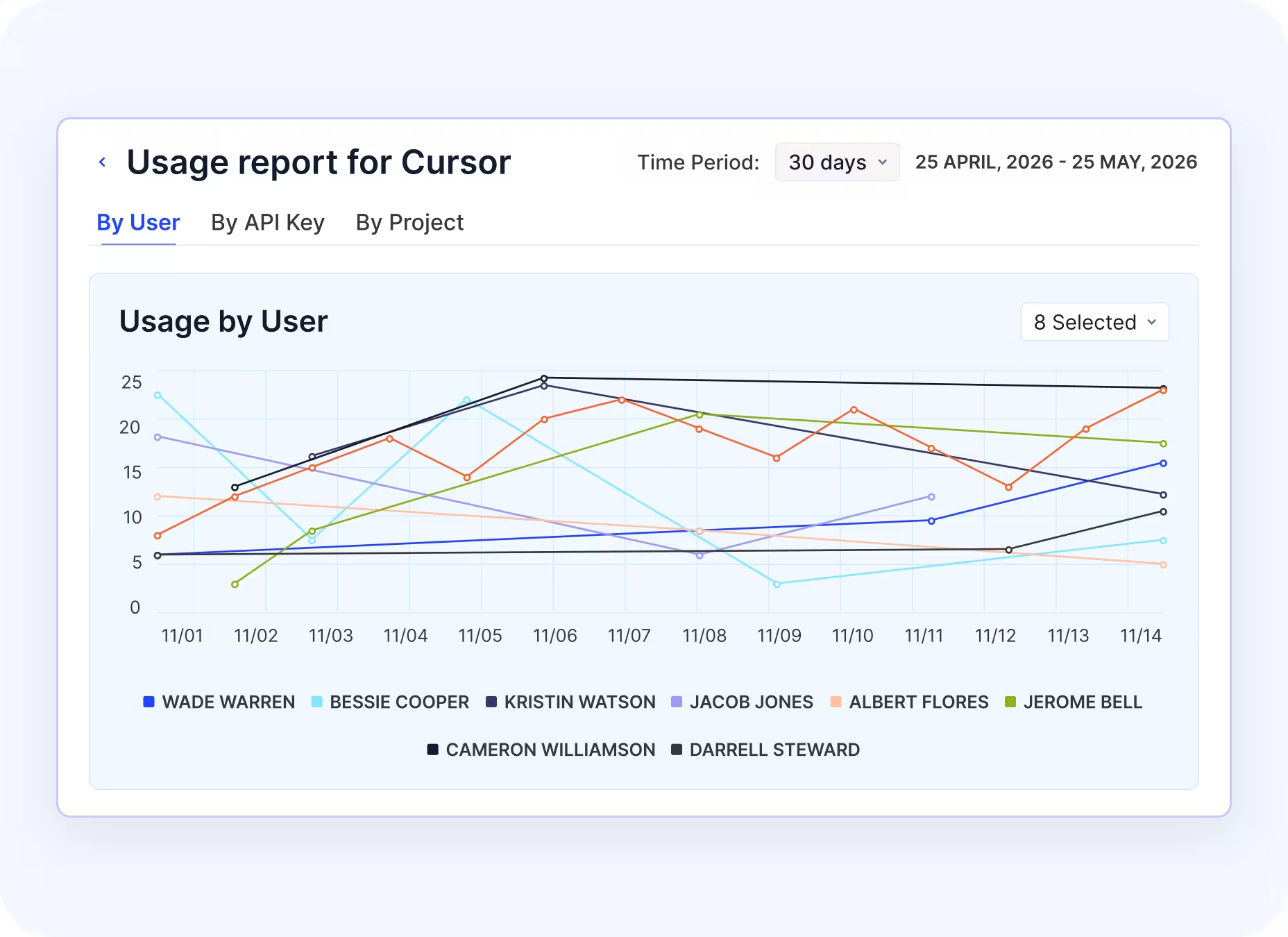
Tie Every Token To Who Drove It
Right-Size AI Usage Before It Compounds
.svg "Right-Size AI Usage Before It Compounds")
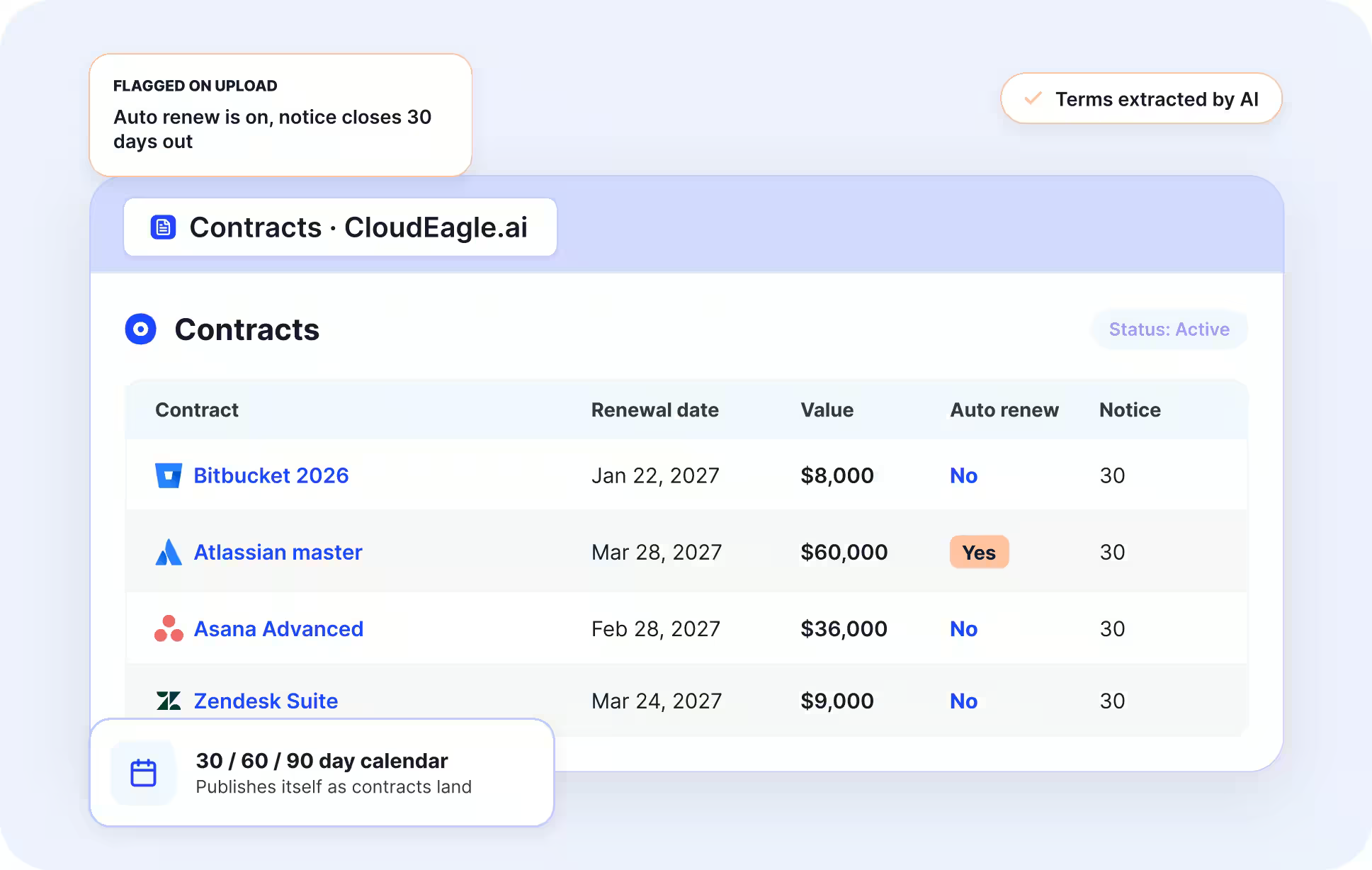
Keep Your Data And Build Your Own View
Chargeback AI Costs To Every Department

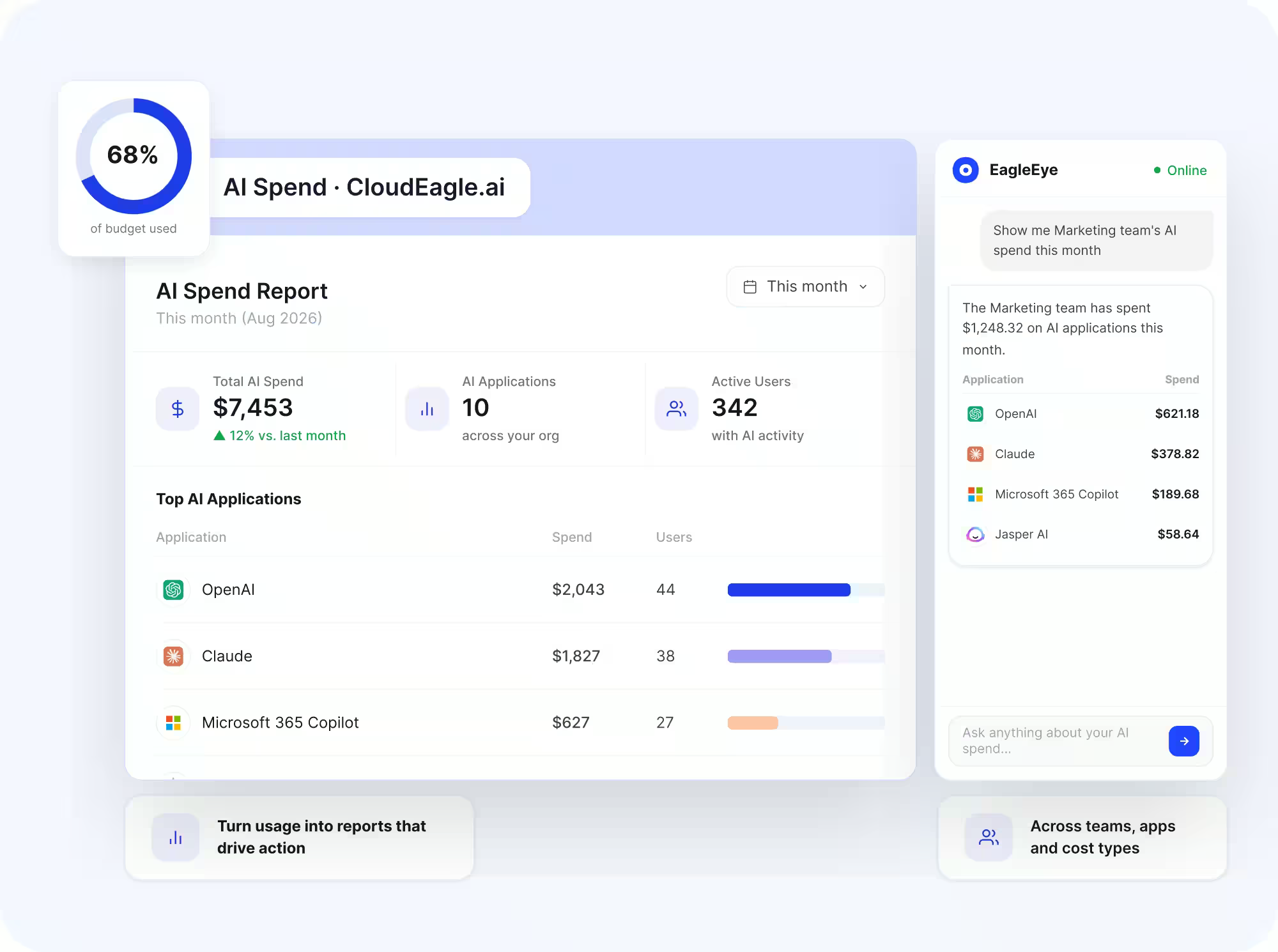
Report On AI Spend However Your Stakeholders Need It
Budget For AI Like Any Other Line Item
%20(1).avif "Budget For AI Like Any Other Line Item")
Manage Your Entire AI And SaaS Stack From One Platform
Frequently Asked Questions
Tokens, credits, and licenses across every AI tool, with the cost of each, tied to the user, team, model, and API key behind it. Agents and service accounts are counted too, not just people.
We connect to each AI vendor and pull token and credit usage with its cost. Where the API carries no price, you set your unit cost once and we apply it everywhere
Direct connectors for Claude, ChatGPT, OpenAI API, Cursor, Copilot, and Gemini, with more added regularly. For tools without a connector, CloudEagle can build custom connectors for apps outside the 500+ library in days.
We flag AI licenses nobody has opened in 90 or 180 days. Reclaim and reassign them, and you get more from what you already pay for.
The charge you only notice when the invoice lands. We watch usage build and alert you when a team trends high, so you act before it, not after.
Yes, as an outcome. Once you see usage by model, license, and team, the waste is obvious: idle licenses, overlapping tools, expensive models on cheap work. Domo saved $1.2M in a quarter that way.
No, and we will not promise a number we cannot stand behind. You get real-time usage, historical baselines, trend alerts, and clean data through MCP, so your team can forecast on numbers it trusts.
Netskope and Zscaler show who is active, but that is activity, not consumption. They cannot tell you the tokens, the model, or the cost. We pull that from each vendor and tie it to the user and team.
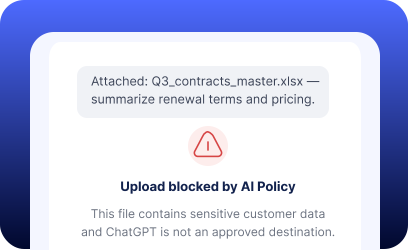
AI Usage Control covers what your AI tools consume and what it costs. AI Policy Control covers what data goes into them and whether it is safe. Both live in the same platform as your SaaS, identity, and governance, not separate tools.
Fast. Connect a tool and its usage and cost flow in right away, no long implementation.
Take Control Of Your AI Usage
AI Governance & Shadow IT Best Practices Checklist
