
%201.svg)


HIPAA Compliance Checklist for 2025

Most enterprises cannot cleanly answer one question: who is actually responsible for AI governance right now?
Not who should be. Who is.
IT points to Security. Security points to Finance. Finance points to IT. The CIO gets asked in a board meeting and has no data to answer with.
The governance model is not the end goal. Monitoring, controlling, and optimizing AI usage is.
The model is what gets you there, and without it, all three break by default. In this quick guide, we’ll take you through how to establish a practical, proven AI governance model.
TL;DR
- AI monitoring, control, and optimization all break without a governance model because no single team owns the full picture: IT, Security, Finance, and the CIO each see only their slice.
- A working governance model assigns four distinct mandates: IT owns discovery, Security owns risk scoring, Finance owns spend attribution, and the CIO/CAIO owns strategy and board accountability.
- Good governance in practice means IT surfaces shadow AI continuously, Security scores every tool in real time, Finance enforces spend thresholds before budgets are exhausted, and the CIO has a data-backed answer for the board.
- Most organizations already have a governance policy. What's missing is the operating model that defines who enforces it, with what data, and how often.
- CloudEagle.ai is the shared data layer that connects all four functions, giving each team its view from one source so governance runs as an operational system, not a quarterly audit.
1. Why AI Monitoring, Control, and Optimization Break Without a Model?
When AI governance has no structure, three things fail simultaneously.
→ Monitoring becomes incomplete: IT sees some tools. Security sees some risk. Finance sees the invoice. Nobody has the full picture. Shadow AI grows in the gaps between teams.
→ Control becomes reactive: Policies exist on paper. Nothing steps in at the point of behavior. An employee opens an unapproved tool, pastes sensitive data into a model, or runs up a $2,000 token bill, and nobody finds out until after the fact.
→ Optimization stops: You cannot right-size the AI spend you cannot measure. You cannot eliminate licenses you cannot see. You cannot make smart renewal decisions without usage data.
The root cause is always the same: AI governance is cross-functional by nature, but gets assigned to one team by default.
That team (which in most companies is the IT team) sees only part of the problem.

2. How to Establish a Working AI Governance Model?
A governance model is not an org chart. It is the operating structure that defines how AI-related decisions get made, who makes them, what data they use, and how often they review it.
Most organizations skip straight to assigning ownership. That is not a governance model. That is a job description. A working model needs four things:
- A clear owner for each function
- A defined set of decisions each owner is accountable for
- The data each owner needs to make those decisions
- A shared platform that gives all four a consistent view
Without all four, governance exists on paper but not in practice. Here is how each function fits into the model.
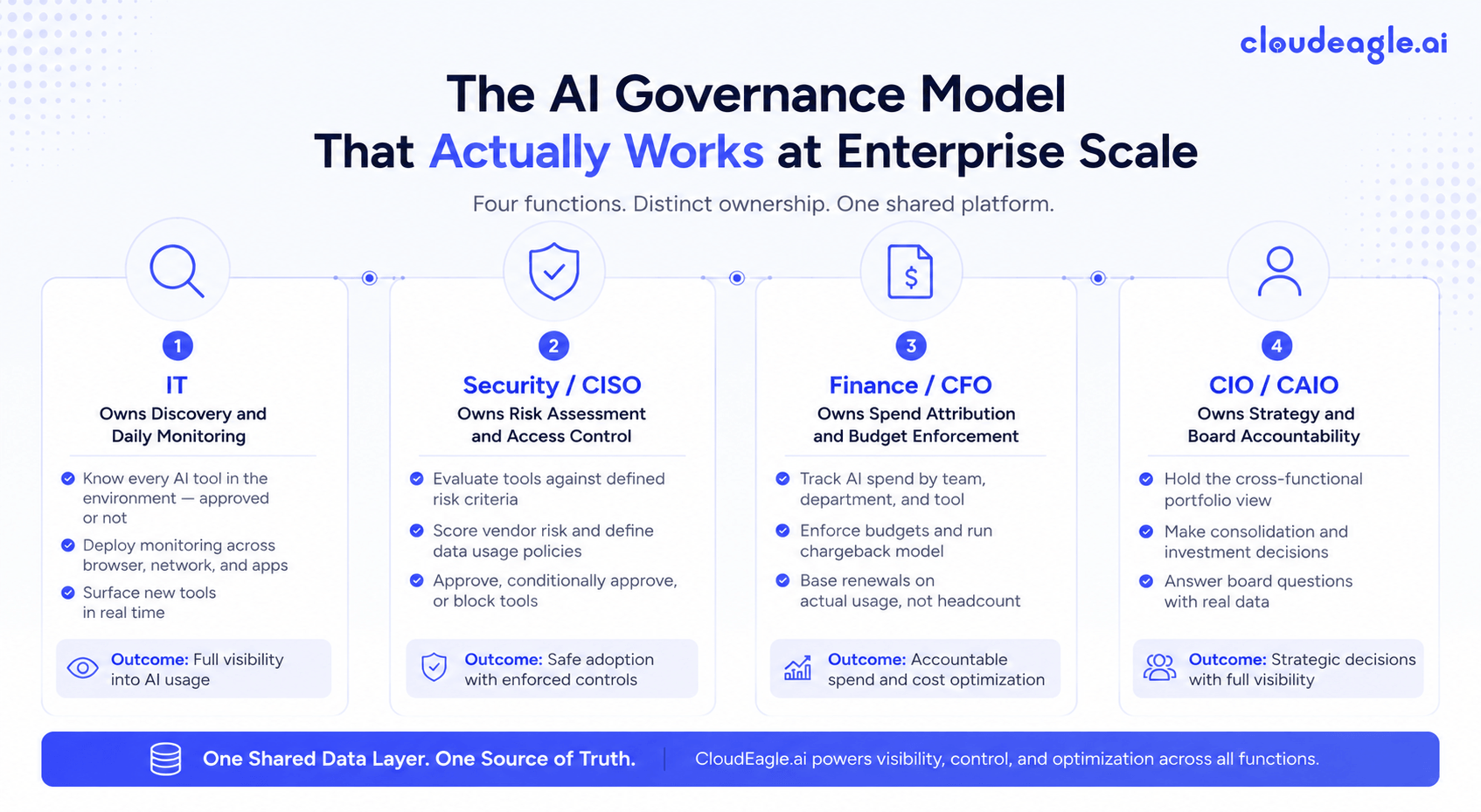
1. IT - Owns Discovery and Daily Monitoring
What IT decides: Which AI tools are in the environment, which are new, and which need to be escalated for review.
What IT needs to make that decision: A live, continuously updated inventory of every AI tool employees are accessing, approved or not, across SSO, browser activity, finance systems, and endpoint data.
IT deploys the monitoring infrastructure: browser plugin for device-level visibility, firewall log ingestion for network coverage, and direct integrations for known applications.
When a new tool appears, IT surfaces it. Without this, every other function is governing blind.
2. Security/CISO - Owns Risk Assessment and Access Control
What Security decides: Whether a tool is approved, conditionally approved, or blocked, and what data classifications are permitted to enter it.
What Security needs to make that decision: Vendor risk scores based on data retention practices, security certifications, breach history, and compliance posture — updated continuously, not pulled manually.
When IT surfaces a new tool, Security scores it. That score is what turns a discovery event into a governance decision. Without Security in the model, every tool IT finds sits in a queue with no action.
3. Finance/CFO - Owns Spend Attribution and Budget Enforcement
What Finance decides: How AI spend is allocated by team, when budgets are at risk, and what the right license quantities are at renewal.
What Finance needs to make that decision: Token consumption and API spend broken down by user, team, and department, not a consolidated vendor invoice.
Token costs compound in ways seat licenses never did. One team can exhaust a quarterly budget in weeks on an approved tool with no cap. Finance needs visibility before it happens, not after.
This also means running a chargeback model, with each business unit accountable for its own AI consumption.
4. CIO/CAIO - Owns Strategy and Board Accountability
What the CIO decides: Which tools stay in the portfolio, where the next AI investment goes, and how to answer the board's questions about AI risk and spend.
What the CIO needs to make that decision: The full cross-functional view, every tool, its cost, its risk posture, its approval status, and its usage, without pulling separate reports from IT, Security, and Finance.
One of our customers had the CIO driving the entire governance evaluation himself because the board was asking questions for which nobody had data to answer.
The Deputy CTO was weeks away from being named Chief AI Officer. A bi-weekly AI strategy meeting was already running. The structure was there; what was missing was the shared data to run it on.
The Rule That Makes It Work
Each function owns a distinct mandate. None can fulfill it without the others.
- IT surfaces the tools but cannot make the risk call
- Security scores the risk, but cannot attribute the cost
- Finance tracks the spend, but cannot enforce the policy
- The CIO needs data from all three to report to the board
The fix is not a new org chart. It is a shared data layer all four functions pull from, one platform, one source of truth. That is what turns four separate job descriptions into a working governance model.
3. What Good AI Governance Looks Like in Practice
This is the payoff, what each function can do once the model is running.
1. Monitor
IT sees every AI tool in the environment, its approval status, risk score, who uses it, and how often. Shadow AI surfaces continuously, not in a quarterly audit. Every policy event is logged automatically.
Security sees shadow AI flagged as it appears. Vendor risk scores are always current. Any tool whose posture changes gets surfaced before it becomes an incident.
Finance sees AI spend by team, department, and tool, updated daily. Budget alerts fire before spending runs out.
The CIO has the full portfolio view for board reporting, every tool, its cost, its risk posture, and its status. The board question has a data-backed answer.
2. Control
IT enforces the approved tool list in the browser. When an employee navigates to an unapproved tool, a flash page fires and redirects them to the approved alternative — before the session starts.
Security enforces data classification policies at the prompt layer. When an employee attempts to paste sensitive content into an AI tool, CloudEagle's soft DLP fires before the content is submitted to the model.
Finance enforces spend thresholds per user, per team, and per tool. When consumption hits 75% of the configured limit, an automated alert fires. No manual monitoring required.
3. Optimize
Finance eliminates duplicate AI subscriptions. Users with active paid licenses in two tools doing the same job get flagged and automatically prompted to choose one.
Renewal quantities come from real usage data, not estimates. If 200 of 500 licensed users haven't touched a tool in 90 days, that is the renewal number.
The CIO makes portfolio consolidation decisions from real data, which tools are delivering value, which are generating cost without output, and where the next AI investment should go.
4. How CloudEagle.ai Can Make Your Model Operational?
Each function needs different things from the same underlying data. Without a shared platform, each builds its own reporting, spreadsheets, manual exports, and numbers that never reconcile.
CloudEagle.ai gives IT, Security, Finance, and the CIO their view from one source, and each capability maps directly to a team's accountability.
Shadow AI Discovery Across Telemetry
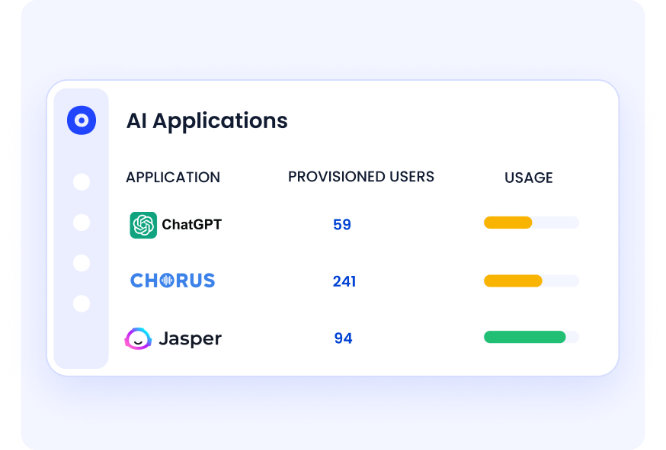
- Correlates signals across SSO, browser activity, finance systems, and endpoint data
- Surfaces every AI tool employees are using, including tools accessed through personal accounts, browser extensions, and OAuth consent flows that CASB and SSO tools never see
Who it serves: IT gives them the complete, continuously updated inventory they need to monitor the environment and surface shadow AI before it becomes a risk
AI Usage Control and Secure Browser
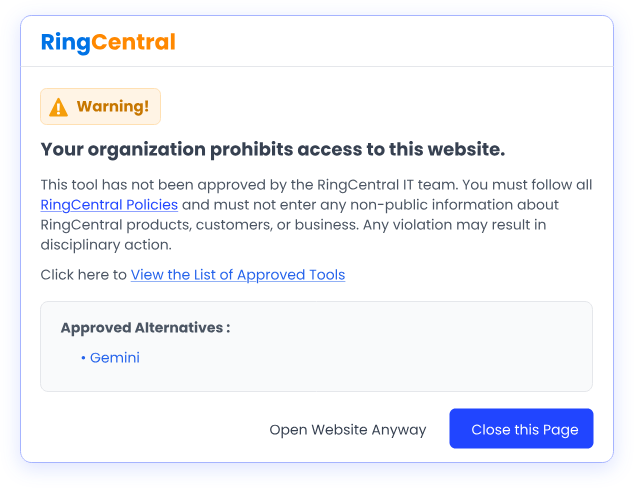
- Enforces the approved tool list at the browser level
- When an employee navigates to an unapproved AI tool, a flash page fires immediately, redirecting them to the approved alternative before the session starts
- Soft redirect by default; hard block via firewall integration available for organizations that need it
Who it serves: IT and the CIO, IT deploys and manages the enforcement; the CIO gets visibility into whether policy is being followed organization-wide.
Gen AI Risk Scores
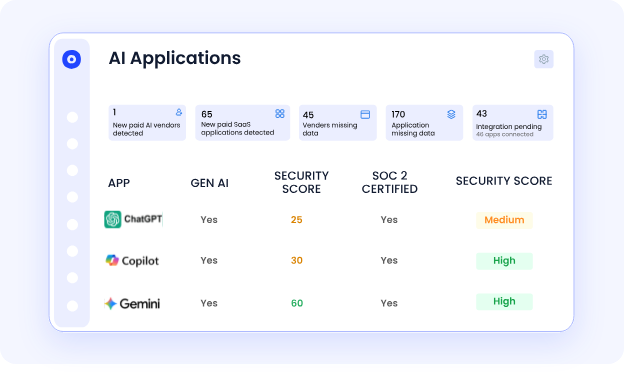
- Every AI tool in the environment gets a risk score based on data retention practices, security certifications, compliance posture, and breach history
- Sourced from Netskope's CCI index, not a manual assessment
- Scores are updated continuously as vendor postures change
Who it serves: Security, gives the CISO the risk signal needed to triage, approve, block, or conditionally approve every tool IT surfaces
Soft DLP at the Prompt Layer
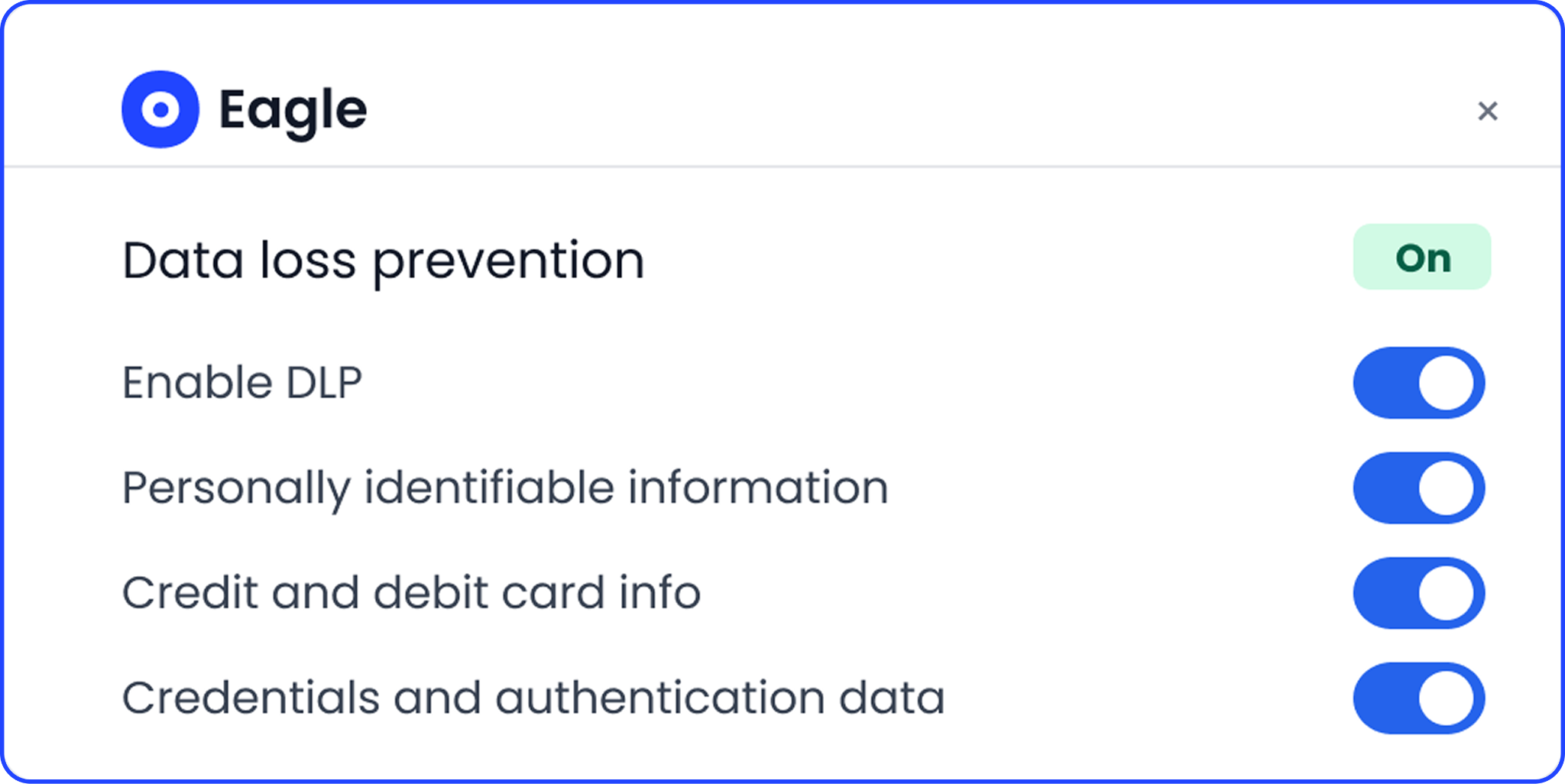
- Monitors what employees type into AI tool interfaces in real time
- When content matches a configured data classification, PII, financial data, credentials, or healthcare records, a flash page fires before the content is submitted to the model
- Catches what most enterprise DLP tools miss entirely: the point of entry into the AI prompt, not just outbound network traffic
Who it serves: Security, giving the CISO continuous control over what data leaves the organization through AI tools, with an automatic audit trail for compliance
Token Consumption and Spend Tracking
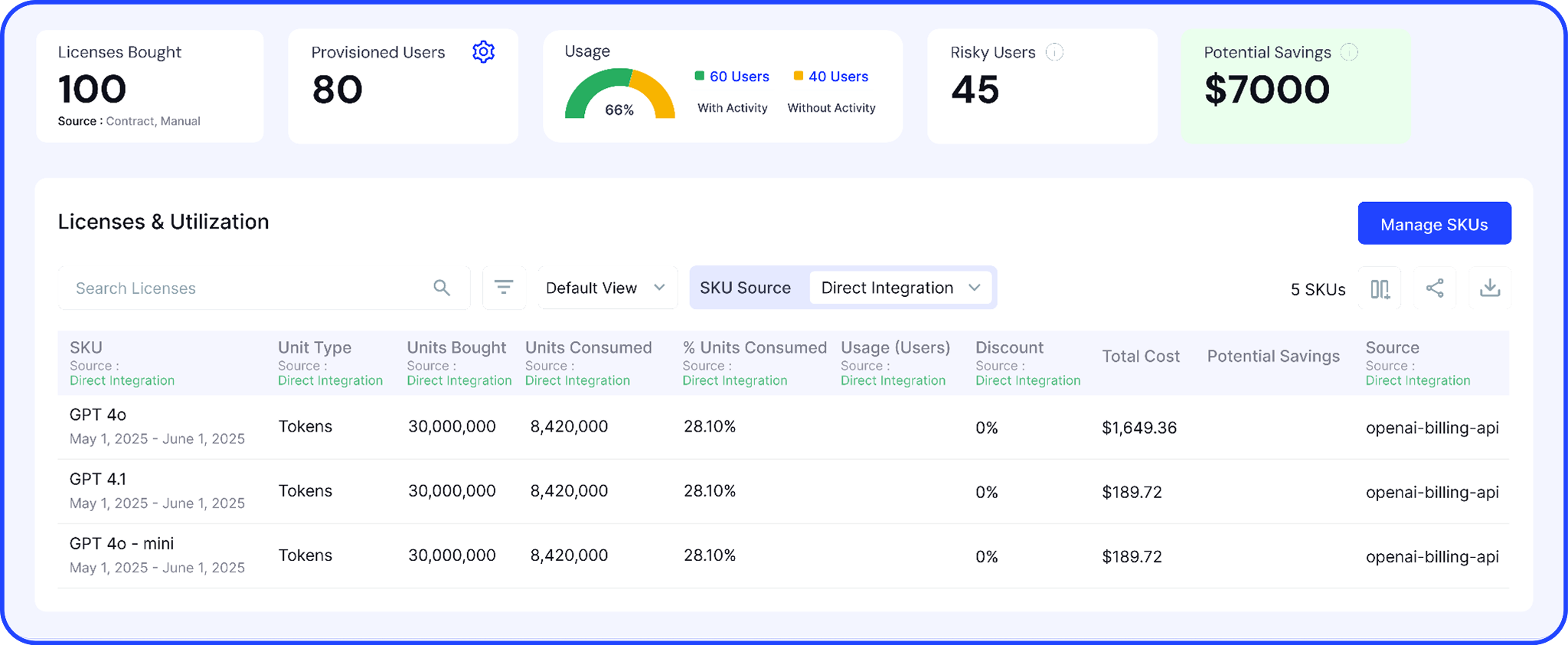
- Tracks token consumption and API spend for Claude, ChatGPT, Cursor, Gemini, and GitHub Copilot, per user, per team, per department
- Threshold alerts fire automatically via MCP when consumption hits a configured limit
- Surfaces duplicate AI subscriptions and unused licenses for elimination at renewal
Who it serves: Finance and the CIO. Finance gets the chargeback data and spend attribution needed to enforce budget accountability; the CIO gets the full portfolio view needed to make consolidation and investment decisions.
Governance on Paper Doesn't Stop a $670K Breach


5. Conclusion
The governance model is the cause. Monitoring, control, and optimization are the effects.
Without the model, all three break, not because teams don't care, but because no single team can see the full picture.
Four functions, distinct mandates, a shared data platform, and a simple operating cadence. That is what makes governance operational rather than theoretical.
CloudEagle is the shared data layer that connects all four.
6. FAQs
Who should own AI governance in an enterprise?
Ownership should be distributed across four functions: IT owns discovery and monitoring, Security owns risk and access control, Finance owns spend attribution, and the CIO or CAIO owns strategy and board accountability. No single function can govern AI completely on its own.
How is the CAIO's role different from the CIO's?
The CIO owns the infrastructure and is accountable for what gets deployed. The CAIO owns the portfolio strategy, which includes the tools for delivering value, where consolidation makes sense, and how AI investment aligns with business priorities. Both need the same underlying data; they make different decisions from it.
How do you govern AI agents and non-human identities?
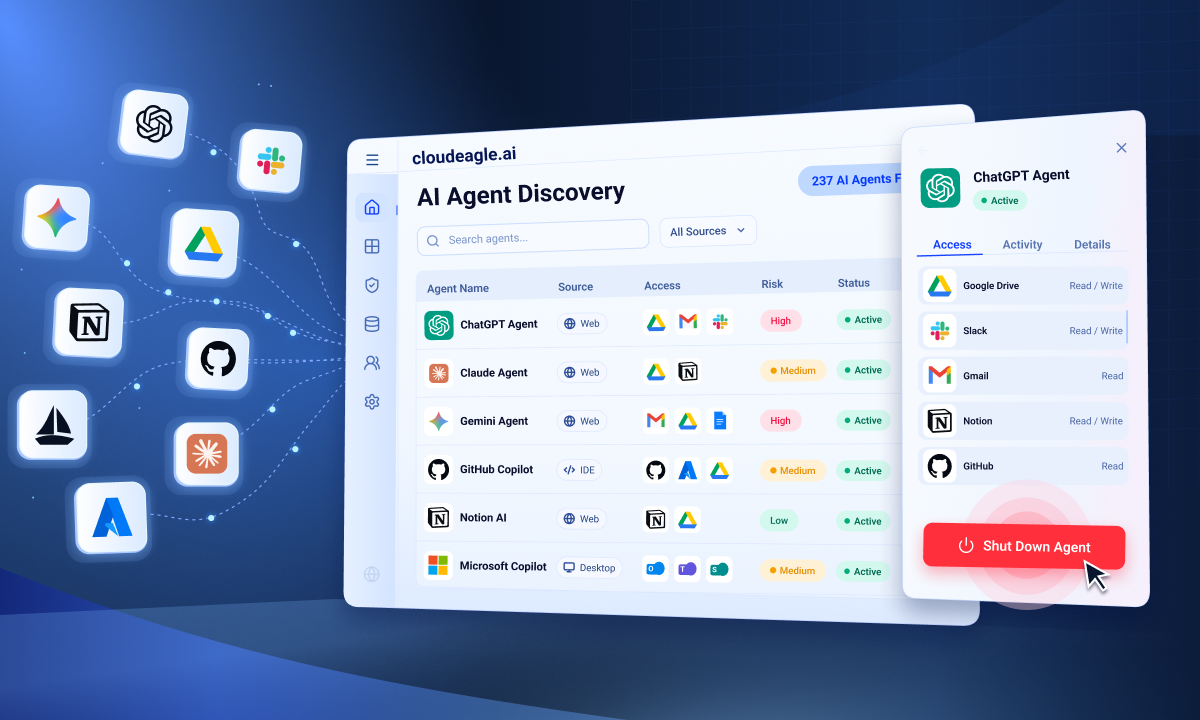
Every AI agent action needs to trace back to a person, team, or department. CloudEagle surfaces non-human identities, service accounts, API keys, bots, and maps them back to the team that deployed them.
How often should the AI governance model be reviewed?
Monitoring should be continuous. The cross-functional review should happen monthly. The model itself, ownership structures, policies, and approved tool list should be reviewed quarterly as AI adoption evolves.
What is the difference between an AI governance policy and an AI governance model?
A policy defines the rules, which tools are approved, what data can enter AI systems, and who approves exceptions. A governance model defines how those rules are owned, enforced, and updated. Most organizations have the policy. The model is what is missing.
Your Board Is Already Asking About AI Risk


.avif)


.avif)
.avif)




.png)




.avif)
.avif)
.avif)


