You need to enable JavaScript in order to use the AI chatbot tool powered by ChatBot

SaaS Spend Management Playbook for CFOs and Finance Teams

Share via:
blog-cms-banner-bg
Little-Known Negotiation Hacks to Get the Best Deal on Slack
cta-bg-blogDownload Your Copy

HIPAA Compliance Checklist for 2025

Download PDF

Still Overspending on SaaS Without Visibility?

Get the CFO playbook to control spend, renewals, and forecasting.

Download The Checklist
CTA Thumbnail

Modern finance leaders face a paradox. SaaS applications promise agility, scalability, and faster innovation, yet for many CFOs, SaaS has quietly become one of the least controlled expense categories on the balance sheet.

What began as a few departmental subscriptions often grows into hundreds of tools, overlapping licenses, silent auto-renewals, and opaque vendor contracts. Finance teams are increasingly asked questions they can’t confidently answer:

How much are we really spending on SaaS? Which tools are driving value versus sitting idle?, What’s renewing next quarter and at what financial risk?

This is why SaaS spend management is no longer an IT clean-up task. It is a core finance responsibility tied directly to margins, forecasting accuracy, and financial governance.

TL;DR 

  • Most companies overspend 20–30% on SaaS due to poor visibility and unused licenses
  • SaaS renewals, not new purchases, create the biggest budget risks
  • Usage data, not vendor benchmarks should drive renewals and negotiations
  • CFOs need structured governance, not ad hoc cost cutting
  • Centralized platforms like CloudEagle.ai turn SaaS into a predictable, controllable spend category

1. Why Is SaaS Spend Management Now a CFO-Level Problem?

SaaS has changed the nature of operating expenses.

Unlike traditional software, SaaS:

  • Is purchased continuously, not periodically
  • Renews automatically
  • Scales independently of finance controls
  • Is often bought outside procurement

In many organizations, SaaS now represents 20–30% of total IT spend and continues to grow faster than cloud infrastructure costs. Yet it lacks the discipline applied to cloud FinOps or capital expenditures.

For CFOs, unmanaged SaaS spend leads to:

  • Budget overruns caused by surprise renewals
  • Forecast inaccuracies during board planning cycles
  • Limited leverage in vendor negotiations
  • Poor accountability for software ROI

This makes SaaS spend management for CFOs and finance teams a strategic priority, not a cost-containment exercise.

Do You Know Where SaaS Money Goes?

Use this playbook to track spend, cut waste, and optimize renewals.

Download The Checklist
CTA Thumbnail

2. What Is SaaS Spend Management?

SaaS spend management is the practice of tracking, governing, optimizing, and forecasting all subscription software expenses across the organization.

It connects financial oversight with operational usage by answering four critical questions:

  • What SaaS tools do we have?
  • Who owns and uses them?
  • What are we paying vs. what we’re using?
  • What will this cost us next quarter and next year?

A mature SaaS spend management playbook spans:

  • Spend visibility
  • Governance and procurement
  • Usage-based optimization
  • Renewal management
  • Vendor strategy
  • Budget planning and forecasting

3. What Are the Hidden Causes of SaaS Overspending?

Before finance teams can reduce SaaS spend, they need to understand why it escalates so quietly.

a. Decentralized Purchasing

Teams can buy SaaS with minimal friction. While this speeds innovation, it also creates:

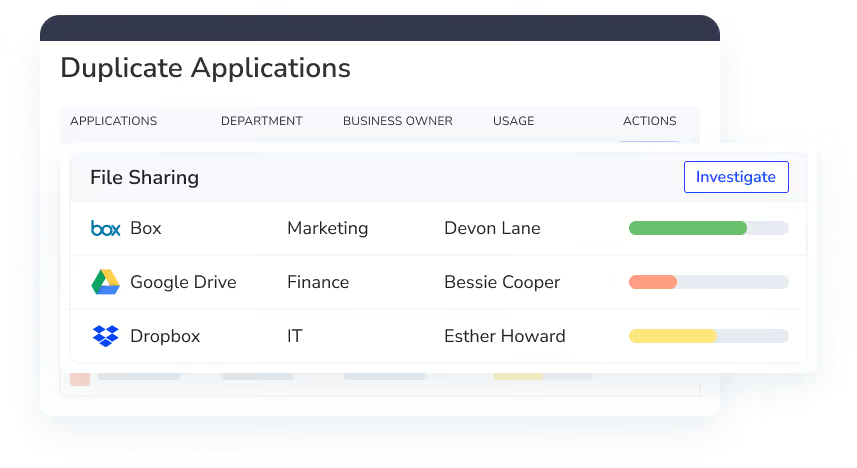
  • Duplicate tools with overlapping functionality
  • Unapproved vendors and contracts
  • Spend outside finance oversight

b. License Overprovisioning and Shelfware

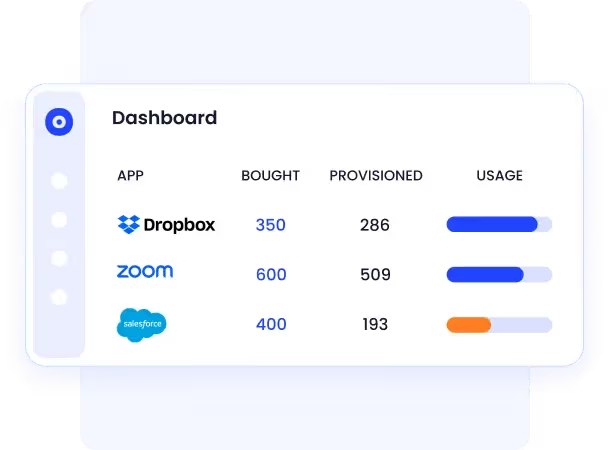
Licenses are often purchased based on headcount estimates rather than actual usage. Over time, this creates shelfware, licenses that are paid for but never used.

c. Auto-Renewals Without Financial Review

Most SaaS contracts auto-renew. If finance is alerted only after renewal, price increases and unnecessary commitments are already locked in.

d. Lack of SaaS Usage Analytics

Without usage data, finance teams renew contracts based on assumptions or vendor-provided reports, which rarely reflect real adoption.

e. Weak SaaS Financial Governance

When ownership is unclear and approval processes vary by department, SaaS spend grows without accountability.

4. 7-Step SaaS Spend Management Playbook for CFOs (Visibility → FinOps)

Step 1: Establish SaaS Spend Visibility

Every SaaS optimization initiative starts with visibility.

SaaS spend visibility means having a centralized, real-time view of:

For finance teams, visibility enables:

Without visibility, SaaS spend management becomes reactive, spreadsheet-driven, and unreliable.

Step 2: Build Scalable SaaS Financial Governance

Effective SaaS financial governance balances control with speed.

Define Ownership Clearly

Every SaaS application should have:

  • A business owner accountable for value
  • A finance owner accountable for cost and renewals
  • A technical or security owner accountable for access

This eliminates orphaned tools and last-minute renewal decisions.

Standardize the SaaS Procurement Process

A consistent SaaS procurement process ensures:

  • Business justification before purchase
  • Budget alignment and approval
  • Security and compliance checks
  • License planning before contract signing

Governance does not mean blocking purchases, it ensures purchases are intentional and measurable.

Step 3: Optimize Spend Using SaaS Usage Analytics

Usage data is the most powerful lever for SaaS cost optimization.

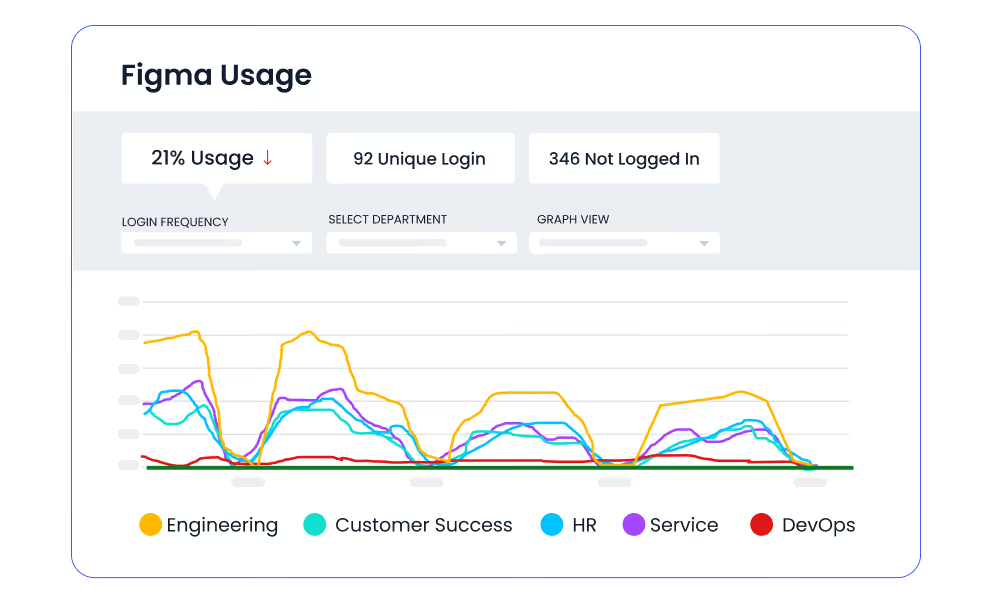
With accurate SaaS usage analytics, finance teams can:

  • Identify unused or underused licenses
  • Right-size license tiers
  • Reclaim access from inactive users
  • Validate whether tools deliver value

This approach allows finance to reduce SaaS spend quickly without disrupting productive teams or critical workflows.

Step 4: Take Control of SaaS Renewal Management

Renewals are where SaaS waste becomes permanent.

Why Renewals Are High-Risk for CFOs

  • They often happen automatically
  • Pricing increases are common
  • Multi-year contracts hide long-term exposure
  • Finance involvement comes too late

Best Practices for SaaS Renewal Management

  • Track renewals 90–120 days in advance
  • Review usage and adoption before renewal
  • Renegotiate using real usage data
  • Eliminate or downgrade low-value tools

Proactive renewal planning converts SaaS from an unpredictable expense into a managed financial commitment.

Step 5: Strengthen SaaS Vendor Management

SaaS vendor management is about leverage, consistency, and accountability.

Finance teams should:

  • Identify overlapping vendors and consolidation opportunities
  • Standardize vendor evaluations annually
  • Benchmark pricing across the portfolio
  • Align contract terms to financial cycles

Vendor discipline ensures SaaS spend aligns with business priorities—not legacy decisions.

Step 6: Improve SaaS Budget Planning and Forecasting

Traditional budgeting models fail in a SaaS-first environment.

Effective SaaS budget planning requires:

  • Separating committed spend from discretionary spend
  • Modeling renewals independently from net-new tools
  • Using historical usage trends instead of vendor forecasts
  • Aligning SaaS growth to headcount and revenue plans

For CFOs, this improves forecast accuracy, reduces last-minute approvals, and builds confidence during board reviews.

Step 7: Apply FinOps Principles to SaaS

FinOps for SaaS adapts cloud cost management practices to subscription software.

Key principles include:

  • Shared accountability between finance, IT, and business teams
  • Continuous optimization rather than annual audits
  • Data-driven decisions based on usage and spend
  • Cultural alignment around value, not just cost

This transforms SaaS spend management into an ongoing operational discipline.

Ready to Fix SaaS Spend Leakages Fast?

Download the playbook to improve budgeting, compliance, and vendor negotiations.

Download The Checklist
CTA Thumbnail

5. Which KPIs Should CFOs Track for SaaS Spend Management?

Tracking the right KPIs is essential for measuring maturity and impact.

Core SaaS Spend Metrics

  • Total SaaS spend as a percentage of revenue
  • SaaS spend growth rate quarter-over-quarter
  • Committed vs. discretionary SaaS spend

Utilization and Efficiency Metrics

  • License utilization rate by application
  • Percentage of unused or inactive licenses
  • Cost per active user

Renewal and Optimization Metrics

  • Renewal savings achieved
  • Percentage of renewals reviewed before auto-renewal
  • Shelfware reduction rate

Forecasting and Governance Metrics

  • SaaS budget forecast variance
  • Spend outside approved procurement process
  • Number of tools without assigned owners

These KPIs help CFOs demonstrate financial discipline without constraining innovation.

6. What Common SaaS Spend Management Mistakes Should Finance Teams Avoid?

  • Treating SaaS as Fixed Overhead - SaaS is often assumed to be non-negotiable, when in reality most contracts are flexible with the right data.
  • Reviewing Spend Only at Renewal Time - Waiting until renewal eliminates negotiation leverage and forces rushed decisions.
  • Relying on Vendors for Usage Data - Vendor-provided reports often overstate adoption and understate waste.
  • Managing SaaS in Spreadsheets - Spreadsheets become outdated instantly and don’t scale with portfolio growth.
  • Optimizing Without Stakeholder Alignment - Cutting tools without involving business owners creates resistance and shadow IT. Avoiding these mistakes accelerates ROI from SaaS spend management initiatives.

7. How Does CloudEagle.ai Enable SaaS Spend Management for CFOs and Finance Teams?

CloudEagle.ai offers a comprehensive solution for managing SaaS spend, designed to help CFOs optimize their budgets and improve financial oversight across the organization. By providing visibility into all applications in use, CloudEagle ensures that businesses can track both approved and unapproved software (i.e., shadow IT), helping to reduce unnecessary expenditures and security risks.

Here are key features that benefit CFOs:

SaaS Spend Optimization

CloudEagle helps finance teams move from “we think we’re overspending” to exactly where and why overspending is happening.

It identifies:

  • Redundant applications (multiple tools doing the same job — e.g., 3 project tools, 2 e-sign tools)
  • Overlapping functionality across departments (marketing vs sales vs product buying similar tools separately)
  • Underutilized features (paying for premium plans but using only basic functionality)
  • Low ROI vendors (high cost + low adoption)

CloudEagle enables application rationalization by showing:

  • App usage trends over time (not just “active users”)
  • Department-wise adoption
  • Spend vs usage correlation
  • Consolidation opportunities (tool A + tool B → tool C)

Outcome for CFOs: reduced software sprawl, fewer vendors to manage, and immediate cost savings through consolidation/downgrades.

License Management

License waste is one of the biggest hidden drains in SaaS spend, because licenses keep renewing even when people stop using them.

CloudEagle provides:

  • Real-time license utilization tracking across all SaaS apps
  • Visibility into:
    • inactive users
    • rarely used accounts
    • over-provisioned license tiers
    • “paid but not assigned” licenses

The platform automates:

  • License harvesting (reclaiming unused licenses based on inactivity rules)
  • License reallocation workflows (reassign licenses before buying new ones)
  • Tier optimization (downgrade premium → standard for users who don’t need advanced features)

Example:

  • A company paying for 200 premium seats in a tool but only 40 users use premium features.
  • CloudEagle flags this and helps shift the rest to standard/basic tiers.

Outcome for CFOs: immediate reduction in recurring spend without affecting productivity.

SaaS Budgeting & Forecasting

Traditional budgeting fails with SaaS because spend is distributed, renewals happen anytime, and usage changes monthly.

CloudEagle improves SaaS budgeting by giving finance:

  • department-level and user-level spend data
  • visibility into:
    • committed spend (existing contracts)
    • discretionary spend (monthly subscriptions, new tools)
    • upcoming renewals and expected increases

Key capabilities:

  • Budget tracking by department (Marketing, Engineering, Sales, HR)
  • Spending limits and guardrails
  • Forecasting based on usage trends, not vendor projections
  • Reports for: board review readiness
  • cost center accountability
  • SaaS spend allocation and chargebacks

CloudEagle also integrates with finance systems to support:

  • cleaner reporting
  • accurate spend categorization
  • faster monthly close

Outcome for CFOs: predictable SaaS spend, fewer surprises, and stronger budget control across teams.

Automated Procurement & Contract Management

CloudEagle centralizes SaaS contracts and procurement workflows so finance teams can stay ahead of renewals and avoid costly auto-renewals. It tracks renewal dates, notice periods, contract terms, and owners in one place. 

With 90–120 day renewal alerts and usage-based insights, teams can renegotiate confidently, eliminate low-value tools, and make data-driven renewal decisions.

Security and Compliance

CloudEagle helps reduce financial and compliance risk by identifying unauthorized apps, streamlining access reviews, and ensuring timely deprovisioning during offboarding. 

This prevents shadow IT, access creep, and untracked tools, while also reclaiming unused licenses to cut spend.

8. What Is the Key Takeaway for CFOs Managing SaaS Spend?

SaaS is no longer a background expense, it’s a major driver of operating costs and financial risk.

For CFOs and finance teams, the goal isn’t to restrict SaaS adoption. It’s to ensure every dollar spent is intentional, visible, and tied to measurable value.

With the right governance, usage insights, and renewal discipline, SaaS spend management becomes a strategic advantage, not a recurring headache.

FAQs

1. Why do CFOs need SaaS spend visibility?

CFOs need SaaS spend visibility to understand where money is being spent, identify waste, and prevent surprise renewals. Without centralized visibility, SaaS costs remain fragmented across departments, making it difficult to control budgets, enforce governance, or forecast accurately.

2. What are the biggest causes of SaaS overspending?

The most common causes of SaaS overspending include decentralized purchasing, unused or underutilized licenses, automatic renewals, lack of usage analytics, and poor ownership accountability. These issues compound over time, locking unnecessary spend into long-term contracts.

3. How can finance teams reduce SaaS spend quickly?

Finance teams can reduce SaaS spend quickly by reclaiming unused licenses, downgrading overprovisioned plans, eliminating redundant tools, and renegotiating renewals using actual usage data. Focusing on optimization before renewals delivers the fastest impact without disrupting business operations.

4. What is the best way to manage SaaS renewals?

The best way to manage SaaS renewals is to track them at least 90–120 days in advance, assign clear ownership, review usage data before renewal, and negotiate based on adoption rather than vendor benchmarks. 

5. How do CFOs forecast SaaS spend accurately?

CFOs forecast SaaS spend accurately by separating committed and discretionary spend, modeling renewals independently, using historical usage trends, and aligning SaaS budgets with headcount and revenue growth. This approach reduces forecast variance and improves confidence during planning cycles.

6. What role does FinOps play in SaaS spend management?

FinOps for SaaS brings shared accountability between finance, IT, and business teams. It emphasizes continuous optimization, data-driven decisions, and ongoing value tracking rather than one-time cost-cutting exercises.

Advertisement for a SaaS Subscription Tracking Template with a call-to-action button to download and a partial graphic of a tablet showing charts.Banner promoting a SaaS Agreement Checklist to streamline SaaS management and avoid budget waste with a call-to-action button labeled Download checklist.Blue banner with text 'The Ultimate Employee Offboarding Checklist!' and a black button labeled 'Download checklist' alongside partial views of checklist documents from cloudeagle.ai.Digital ad for download checklist titled 'The Ultimate Checklist for IT Leaders to Optimize SaaS Operations' by cloudeagle.ai, showing checklist pages.Slack Buyer's Guide offer with text 'Unlock insider insights to get the best deal on Slack!' and a button labeled 'Get Your Copy', accompanied by a preview of the guide featuring Slack's logo.Monday Pricing Guide by cloudeagle.ai offering exclusive pricing secrets to maximize investment with a call-to-action button labeled Get Your Copy and an image of the guide's cover.Blue banner for Canva Pricing Guide by cloudeagle.ai offering a guide to Canva costs, features, and alternatives with a call-to-action button saying Get Your Copy.Blue banner with white text reading 'Little-Known Negotiation Hacks to Get the Best Deal on Slack' and a white button labeled 'Get Your Copy'.Blue banner with text 'Little-Known Negotiation Hacks to Get the Best Deal on Monday.com' and a white button labeled 'Get Your Copy'.Blue banner with text 'Little-Known Negotiation Hacks to Get the Best Deal on Canva' and a white button labeled 'Get Your Copy'.Banner with text 'Slack Buyer's Guide' and a 'Download Now' button next to images of a guide titled 'Slack Buyer’s Guide: Features, Pricing & Best Practices'.Digital cover of Monday Pricing Guide with a button labeled Get Your Copy on a blue background.Canva Pricing Guide cover with a button labeled Get Your Copy on a blue gradient background.

Enter your email to
unlock the report

Oops! Something went wrong while submitting the form.
License Count
Benchmark
Per User/Per Year

Enter your email to
unlock the report

Oops! Something went wrong while submitting the form.
License Count
Benchmark
Per User/Per Year

Enter your email to
unlock the report

Oops! Something went wrong while submitting the form.
Notion Plus
License Count
Benchmark
Per User/Per Year
100-500
$67.20 - $78.72
500-1000
$59.52 - $72.00
1000+
$51.84 - $57.60
Canva Pro
License Count
Benchmark
Per User/Per Year
100-500
$74.33-$88.71
500-1000
$64.74-$80.32
1000+
$55.14-$62.34

Enter your email to
unlock the report

Oops! Something went wrong while submitting the form.

Enter your email to
unlock the report

Oops! Something went wrong while submitting the form.
Zoom Business
License Count
Benchmark
Per User/Per Year
100-500
$216.00 - $264.00
500-1000
$180.00 - $216.00
1000+
$156.00 - $180.00

Enter your email to
unlock the report

Oops! Something went wrong while submitting the form.

Get the Right Security Platform To Secure Your Cloud Infrastructure

Please enter a business email
Thank you!
The 2023 SaaS report has been sent to your email. Check your promotional or spam folder.
Oops! Something went wrong while submitting the form.

Access full report

Please enter a business email
Thank you!
The 2023 SaaS report has been sent to your email. Check your promotional or spam folder.
Oops! Something went wrong while submitting the form.

Still Overspending on SaaS Without Visibility?

Get the CFO playbook to control spend, renewals, and forecasting.

Download The Checklist
CTA Thumbnail

Modern finance leaders face a paradox. SaaS applications promise agility, scalability, and faster innovation, yet for many CFOs, SaaS has quietly become one of the least controlled expense categories on the balance sheet.

What began as a few departmental subscriptions often grows into hundreds of tools, overlapping licenses, silent auto-renewals, and opaque vendor contracts. Finance teams are increasingly asked questions they can’t confidently answer:

How much are we really spending on SaaS? Which tools are driving value versus sitting idle?, What’s renewing next quarter and at what financial risk?

This is why SaaS spend management is no longer an IT clean-up task. It is a core finance responsibility tied directly to margins, forecasting accuracy, and financial governance.

TL;DR 

  • Most companies overspend 20–30% on SaaS due to poor visibility and unused licenses
  • SaaS renewals, not new purchases, create the biggest budget risks
  • Usage data, not vendor benchmarks should drive renewals and negotiations
  • CFOs need structured governance, not ad hoc cost cutting
  • Centralized platforms like CloudEagle.ai turn SaaS into a predictable, controllable spend category

1. Why Is SaaS Spend Management Now a CFO-Level Problem?

SaaS has changed the nature of operating expenses.

Unlike traditional software, SaaS:

  • Is purchased continuously, not periodically
  • Renews automatically
  • Scales independently of finance controls
  • Is often bought outside procurement

In many organizations, SaaS now represents 20–30% of total IT spend and continues to grow faster than cloud infrastructure costs. Yet it lacks the discipline applied to cloud FinOps or capital expenditures.

For CFOs, unmanaged SaaS spend leads to:

  • Budget overruns caused by surprise renewals
  • Forecast inaccuracies during board planning cycles
  • Limited leverage in vendor negotiations
  • Poor accountability for software ROI

This makes SaaS spend management for CFOs and finance teams a strategic priority, not a cost-containment exercise.

Do You Know Where SaaS Money Goes?

Use this playbook to track spend, cut waste, and optimize renewals.

Download The Checklist
CTA Thumbnail

2. What Is SaaS Spend Management?

SaaS spend management is the practice of tracking, governing, optimizing, and forecasting all subscription software expenses across the organization.

It connects financial oversight with operational usage by answering four critical questions:

  • What SaaS tools do we have?
  • Who owns and uses them?
  • What are we paying vs. what we’re using?
  • What will this cost us next quarter and next year?

A mature SaaS spend management playbook spans:

  • Spend visibility
  • Governance and procurement
  • Usage-based optimization
  • Renewal management
  • Vendor strategy
  • Budget planning and forecasting

3. What Are the Hidden Causes of SaaS Overspending?

Before finance teams can reduce SaaS spend, they need to understand why it escalates so quietly.

a. Decentralized Purchasing

Teams can buy SaaS with minimal friction. While this speeds innovation, it also creates:

  • Duplicate tools with overlapping functionality
  • Unapproved vendors and contracts
  • Spend outside finance oversight

b. License Overprovisioning and Shelfware

Licenses are often purchased based on headcount estimates rather than actual usage. Over time, this creates shelfware, licenses that are paid for but never used.

c. Auto-Renewals Without Financial Review

Most SaaS contracts auto-renew. If finance is alerted only after renewal, price increases and unnecessary commitments are already locked in.

d. Lack of SaaS Usage Analytics

Without usage data, finance teams renew contracts based on assumptions or vendor-provided reports, which rarely reflect real adoption.

e. Weak SaaS Financial Governance

When ownership is unclear and approval processes vary by department, SaaS spend grows without accountability.

4. 7-Step SaaS Spend Management Playbook for CFOs (Visibility → FinOps)

Step 1: Establish SaaS Spend Visibility

Every SaaS optimization initiative starts with visibility.

SaaS spend visibility means having a centralized, real-time view of:

For finance teams, visibility enables:

Without visibility, SaaS spend management becomes reactive, spreadsheet-driven, and unreliable.

Step 2: Build Scalable SaaS Financial Governance

Effective SaaS financial governance balances control with speed.

Define Ownership Clearly

Every SaaS application should have:

  • A business owner accountable for value
  • A finance owner accountable for cost and renewals
  • A technical or security owner accountable for access

This eliminates orphaned tools and last-minute renewal decisions.

Standardize the SaaS Procurement Process

A consistent SaaS procurement process ensures:

  • Business justification before purchase
  • Budget alignment and approval
  • Security and compliance checks
  • License planning before contract signing

Governance does not mean blocking purchases, it ensures purchases are intentional and measurable.

Step 3: Optimize Spend Using SaaS Usage Analytics

Usage data is the most powerful lever for SaaS cost optimization.

With accurate SaaS usage analytics, finance teams can:

  • Identify unused or underused licenses
  • Right-size license tiers
  • Reclaim access from inactive users
  • Validate whether tools deliver value

This approach allows finance to reduce SaaS spend quickly without disrupting productive teams or critical workflows.

Step 4: Take Control of SaaS Renewal Management

Renewals are where SaaS waste becomes permanent.

Why Renewals Are High-Risk for CFOs

  • They often happen automatically
  • Pricing increases are common
  • Multi-year contracts hide long-term exposure
  • Finance involvement comes too late

Best Practices for SaaS Renewal Management

  • Track renewals 90–120 days in advance
  • Review usage and adoption before renewal
  • Renegotiate using real usage data
  • Eliminate or downgrade low-value tools

Proactive renewal planning converts SaaS from an unpredictable expense into a managed financial commitment.

Step 5: Strengthen SaaS Vendor Management

SaaS vendor management is about leverage, consistency, and accountability.

Finance teams should:

  • Identify overlapping vendors and consolidation opportunities
  • Standardize vendor evaluations annually
  • Benchmark pricing across the portfolio
  • Align contract terms to financial cycles

Vendor discipline ensures SaaS spend aligns with business priorities—not legacy decisions.

Step 6: Improve SaaS Budget Planning and Forecasting

Traditional budgeting models fail in a SaaS-first environment.

Effective SaaS budget planning requires:

  • Separating committed spend from discretionary spend
  • Modeling renewals independently from net-new tools
  • Using historical usage trends instead of vendor forecasts
  • Aligning SaaS growth to headcount and revenue plans

For CFOs, this improves forecast accuracy, reduces last-minute approvals, and builds confidence during board reviews.

Step 7: Apply FinOps Principles to SaaS

FinOps for SaaS adapts cloud cost management practices to subscription software.

Key principles include:

  • Shared accountability between finance, IT, and business teams
  • Continuous optimization rather than annual audits
  • Data-driven decisions based on usage and spend
  • Cultural alignment around value, not just cost

This transforms SaaS spend management into an ongoing operational discipline.

Ready to Fix SaaS Spend Leakages Fast?

Download the playbook to improve budgeting, compliance, and vendor negotiations.

Download The Checklist
CTA Thumbnail

5. Which KPIs Should CFOs Track for SaaS Spend Management?

Tracking the right KPIs is essential for measuring maturity and impact.

Core SaaS Spend Metrics

  • Total SaaS spend as a percentage of revenue
  • SaaS spend growth rate quarter-over-quarter
  • Committed vs. discretionary SaaS spend

Utilization and Efficiency Metrics

  • License utilization rate by application
  • Percentage of unused or inactive licenses
  • Cost per active user

Renewal and Optimization Metrics

  • Renewal savings achieved
  • Percentage of renewals reviewed before auto-renewal
  • Shelfware reduction rate

Forecasting and Governance Metrics

  • SaaS budget forecast variance
  • Spend outside approved procurement process
  • Number of tools without assigned owners

These KPIs help CFOs demonstrate financial discipline without constraining innovation.

6. What Common SaaS Spend Management Mistakes Should Finance Teams Avoid?

  • Treating SaaS as Fixed Overhead - SaaS is often assumed to be non-negotiable, when in reality most contracts are flexible with the right data.
  • Reviewing Spend Only at Renewal Time - Waiting until renewal eliminates negotiation leverage and forces rushed decisions.
  • Relying on Vendors for Usage Data - Vendor-provided reports often overstate adoption and understate waste.
  • Managing SaaS in Spreadsheets - Spreadsheets become outdated instantly and don’t scale with portfolio growth.
  • Optimizing Without Stakeholder Alignment - Cutting tools without involving business owners creates resistance and shadow IT. Avoiding these mistakes accelerates ROI from SaaS spend management initiatives.

7. How Does CloudEagle.ai Enable SaaS Spend Management for CFOs and Finance Teams?

CloudEagle.ai offers a comprehensive solution for managing SaaS spend, designed to help CFOs optimize their budgets and improve financial oversight across the organization. By providing visibility into all applications in use, CloudEagle ensures that businesses can track both approved and unapproved software (i.e., shadow IT), helping to reduce unnecessary expenditures and security risks.

Here are key features that benefit CFOs:

SaaS Spend Optimization

CloudEagle helps finance teams move from “we think we’re overspending” to exactly where and why overspending is happening.

It identifies:

  • Redundant applications (multiple tools doing the same job — e.g., 3 project tools, 2 e-sign tools)
  • Overlapping functionality across departments (marketing vs sales vs product buying similar tools separately)
  • Underutilized features (paying for premium plans but using only basic functionality)
  • Low ROI vendors (high cost + low adoption)

CloudEagle enables application rationalization by showing:

  • App usage trends over time (not just “active users”)
  • Department-wise adoption
  • Spend vs usage correlation
  • Consolidation opportunities (tool A + tool B → tool C)

Outcome for CFOs: reduced software sprawl, fewer vendors to manage, and immediate cost savings through consolidation/downgrades.

License Management

License waste is one of the biggest hidden drains in SaaS spend, because licenses keep renewing even when people stop using them.

CloudEagle provides:

  • Real-time license utilization tracking across all SaaS apps
  • Visibility into:
    • inactive users
    • rarely used accounts
    • over-provisioned license tiers
    • “paid but not assigned” licenses

The platform automates:

  • License harvesting (reclaiming unused licenses based on inactivity rules)
  • License reallocation workflows (reassign licenses before buying new ones)
  • Tier optimization (downgrade premium → standard for users who don’t need advanced features)

Example:

  • A company paying for 200 premium seats in a tool but only 40 users use premium features.
  • CloudEagle flags this and helps shift the rest to standard/basic tiers.

Outcome for CFOs: immediate reduction in recurring spend without affecting productivity.

SaaS Budgeting & Forecasting

Traditional budgeting fails with SaaS because spend is distributed, renewals happen anytime, and usage changes monthly.

CloudEagle improves SaaS budgeting by giving finance:

  • department-level and user-level spend data
  • visibility into:
    • committed spend (existing contracts)
    • discretionary spend (monthly subscriptions, new tools)
    • upcoming renewals and expected increases

Key capabilities:

  • Budget tracking by department (Marketing, Engineering, Sales, HR)
  • Spending limits and guardrails
  • Forecasting based on usage trends, not vendor projections
  • Reports for: board review readiness
  • cost center accountability
  • SaaS spend allocation and chargebacks

CloudEagle also integrates with finance systems to support:

  • cleaner reporting
  • accurate spend categorization
  • faster monthly close

Outcome for CFOs: predictable SaaS spend, fewer surprises, and stronger budget control across teams.

Automated Procurement & Contract Management

CloudEagle centralizes SaaS contracts and procurement workflows so finance teams can stay ahead of renewals and avoid costly auto-renewals. It tracks renewal dates, notice periods, contract terms, and owners in one place. 

With 90–120 day renewal alerts and usage-based insights, teams can renegotiate confidently, eliminate low-value tools, and make data-driven renewal decisions.

Security and Compliance

CloudEagle helps reduce financial and compliance risk by identifying unauthorized apps, streamlining access reviews, and ensuring timely deprovisioning during offboarding. 

This prevents shadow IT, access creep, and untracked tools, while also reclaiming unused licenses to cut spend.

8. What Is the Key Takeaway for CFOs Managing SaaS Spend?

SaaS is no longer a background expense, it’s a major driver of operating costs and financial risk.

For CFOs and finance teams, the goal isn’t to restrict SaaS adoption. It’s to ensure every dollar spent is intentional, visible, and tied to measurable value.

With the right governance, usage insights, and renewal discipline, SaaS spend management becomes a strategic advantage, not a recurring headache.

FAQs

1. Why do CFOs need SaaS spend visibility?

CFOs need SaaS spend visibility to understand where money is being spent, identify waste, and prevent surprise renewals. Without centralized visibility, SaaS costs remain fragmented across departments, making it difficult to control budgets, enforce governance, or forecast accurately.

2. What are the biggest causes of SaaS overspending?

The most common causes of SaaS overspending include decentralized purchasing, unused or underutilized licenses, automatic renewals, lack of usage analytics, and poor ownership accountability. These issues compound over time, locking unnecessary spend into long-term contracts.

3. How can finance teams reduce SaaS spend quickly?

Finance teams can reduce SaaS spend quickly by reclaiming unused licenses, downgrading overprovisioned plans, eliminating redundant tools, and renegotiating renewals using actual usage data. Focusing on optimization before renewals delivers the fastest impact without disrupting business operations.

4. What is the best way to manage SaaS renewals?

The best way to manage SaaS renewals is to track them at least 90–120 days in advance, assign clear ownership, review usage data before renewal, and negotiate based on adoption rather than vendor benchmarks. 

5. How do CFOs forecast SaaS spend accurately?

CFOs forecast SaaS spend accurately by separating committed and discretionary spend, modeling renewals independently, using historical usage trends, and aligning SaaS budgets with headcount and revenue growth. This approach reduces forecast variance and improves confidence during planning cycles.

6. What role does FinOps play in SaaS spend management?

FinOps for SaaS brings shared accountability between finance, IT, and business teams. It emphasizes continuous optimization, data-driven decisions, and ongoing value tracking rather than one-time cost-cutting exercises.

CloudEagle.ai recognized in the 2025 Gartner® Magic Quadrant™ for SaaS Management Platforms
Download now
gartner chart
5x
Faster employee
onboarding
80%
Reduction in time for
user access reviews
30k
Workflows
automated
$15Bn
Analyzed in
contract spend
$2Bn
Saved in
SaaS spend

Recognized as an Industry leader for our AI

CloudEagle.ai is Recognized in the 2024 Gartner® Magic Quadrant™ for SaaS Management Platforms

Recognition highlights CloudEagle’s innovation and leadership in the rapidly evolving SaaS management and procurement space.
Read More
Gartner Magic Quadrant for SaaS Management Platforms showing a chart divided into Challengers and Leaders quadrants with various companies plotted as dots.

CloudEagle.ai Recognized in the GigaOm Radar for SaaS Management Platforms

CloudEagle named a Leader and Outperformer in GigaOm Radar Report, validating its impact in the SaaS management platform landscape.
Read More
gigaom

Everest Group Positions CloudEagle.ai as a Trailblazer in SaaS Management Platforms

CloudEagle recognized as a Trailblazer by Everest Group, showcasing its rapid growth and innovation in SaaS spend and operations management.
Read More
qks

CloudEagle.ai is Recognized in the 2024 Gartner® Magic Quadrant™ for SaaS Management Platforms

Recognition highlights CloudEagle’s innovation and leadership in the rapidly evolving SaaS management and procurement space.
Read More
gartner

Streamline SaaS governance and save 10-30%

Book a Demo with Expert
CTA image
One platform to Manage
all SaaS Products
Learn More