
%201.svg)


HIPAA Compliance Checklist for 2025

SaaS ecosystems inside enterprises are expanding at an unprecedented pace.
What once meant managing a few tools has now turned into governing hundreds of distributed SaaS applications across finance, procurement, IT, engineering, sales, and HR, each with different access permissions, renewal terms, and compliance requirements.
The result? Lack of visibility, overspending, and uncontrolled access risk.
Gartner reports that 30% of SaaS spend is wasted due to unused licenses and duplicate apps.
This is exactly why modern SaaS spend management tools are evolving into more than budget dashboards; they now include SaaS compliance tools and SaaS access control software features to protect data, enforce security policies, and prevent identity sprawl from turning into a breach.
TL;DR
- SaaS spend management tools now offer governance, compliance, and access control capabilities
- They help eliminate shadow IT, automate provisioning and access reviews, and improve compliance reporting
- Access control protects against risky privileges and offboarding failures
- Compliance features ensure audit readiness and prevent financial leakage
- CloudEagle.ai leads the category by combining spend, access, usage, renewals, and compliance in one system.
1. What Are SaaS Spend Management Tools?
SaaS spend management tools help organizations monitor, control, and optimize spending across all SaaS applications by consolidating visibility into license usage, vendor contracts, renewals, and subscription costs.
Instead of managing SaaS applications through spreadsheets and guesswork, these platforms provide real-time insights into actual consumption, ownership, and financial impact.
Core goals of SaaS spend management tools
- Reduce wasted spend from unused or duplicate licenses
- Provide visibility into app usage and vendor renewals
- Improve financial forecasting and vendor negotiation power
- Centralize control of distributed SaaS buying and ownership
According to BetterCloud, 84% of organizations consider visibility into SaaS usage their top IT priority, and compliance + access control are now equally urgent capabilities.
2. Why Compliance and Access Control Matter?
When organizations scale without governance, risk grows faster than spend.
SaaS compliance tools and SaaS access control software ensure that the right users have the right access at the right time, and help enforce compliance standards such as SOC 2, ISO 27001, HIPAA, SOX, and GDPR.
a. Risk of Shadow IT and Unauthorized Access
Shadow IT, applications purchased or used without IT knowledge, is one of the leading drivers of compliance breakdowns and financial exposure.
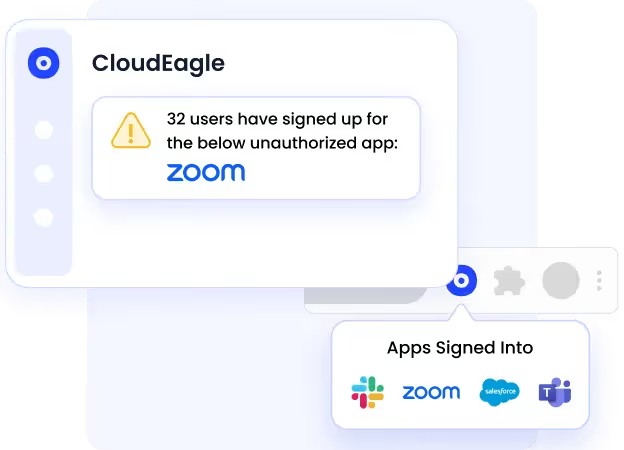
Why it matters
- Unknown tools store sensitive data without oversight
- No visibility into who has access, and why
- No security controls guarding identity and permissions
CloudEagle’s 2025 IGA Report states that 70% of CIOs identify unmanaged AI and SaaS tools as their top emerging security threat.
b. Compliance and Audit Challenges
Without centralized visibility, audits become slow, expensive, and inaccurate. Compliance documentation often lives in emails, PDF folders, or separate SaaS apps.
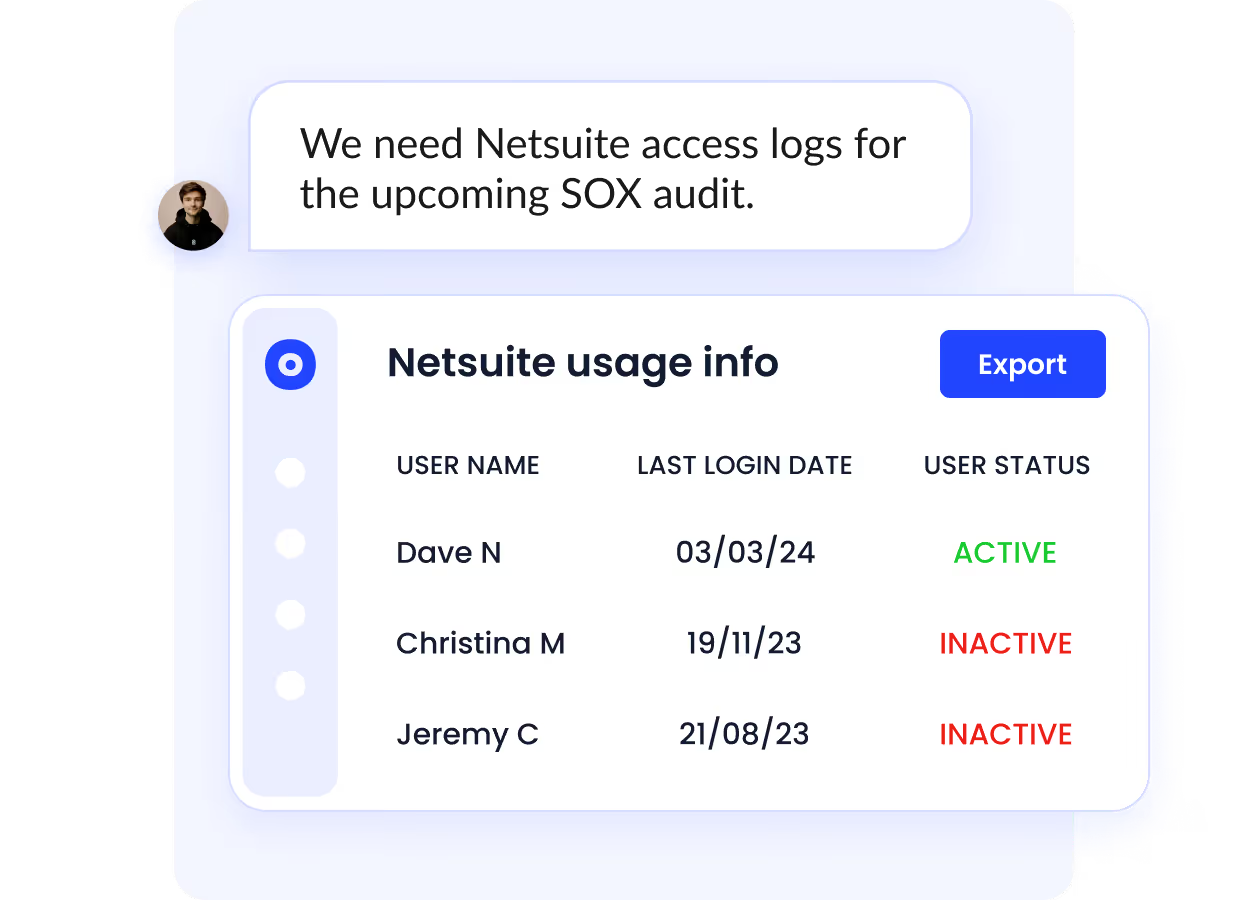
Resulting pain
- Manual evidence collection for audits
- No clear access ownership tracking
- Difficulty proving compliance alignment
WorldCC notes that businesses lose up to 30% of contract value due to post-signature compliance failures and missed obligations.
c. User Offboarding & License Reclamation Gaps
Offboarding is where security risk peaks. If access isn’t removed properly, ex-employees retain entry to live systems.
CloudEagle reports that 48% of former employees still have access to company applications after departure, increasing data leakage and unnecessary spend.
Impacts
- Unused licenses continue billing
- Ex-user access becomes a security vulnerability
- IT loses control over identity governance
3. Access Control Features in SaaS Spend Management Tools
Access control features in SaaS spend management tools include role-based access control (RBAC), granular permissions, and integration with identity providers for centralized user management.
These capabilities ensure the right people have the right access while protecting sensitive subscription, usage, and payment data.
They also support security enforcement measures such as MFA to reduce unauthorized access and risk.
a. Role-Based Access Control (RBAC)
Roles define who can access which SaaS tools and what permissions they hold, preventing excessive privileges and internal security risk.

Benefits
- Least-privilege enforcement
- Easier access to standardization across teams
- Stronger audit documentation
b. Automated User Provisioning & Deprovisioning
Instead of manually granting and removing access, automated workflows handle onboarding, role change, and offboarding.
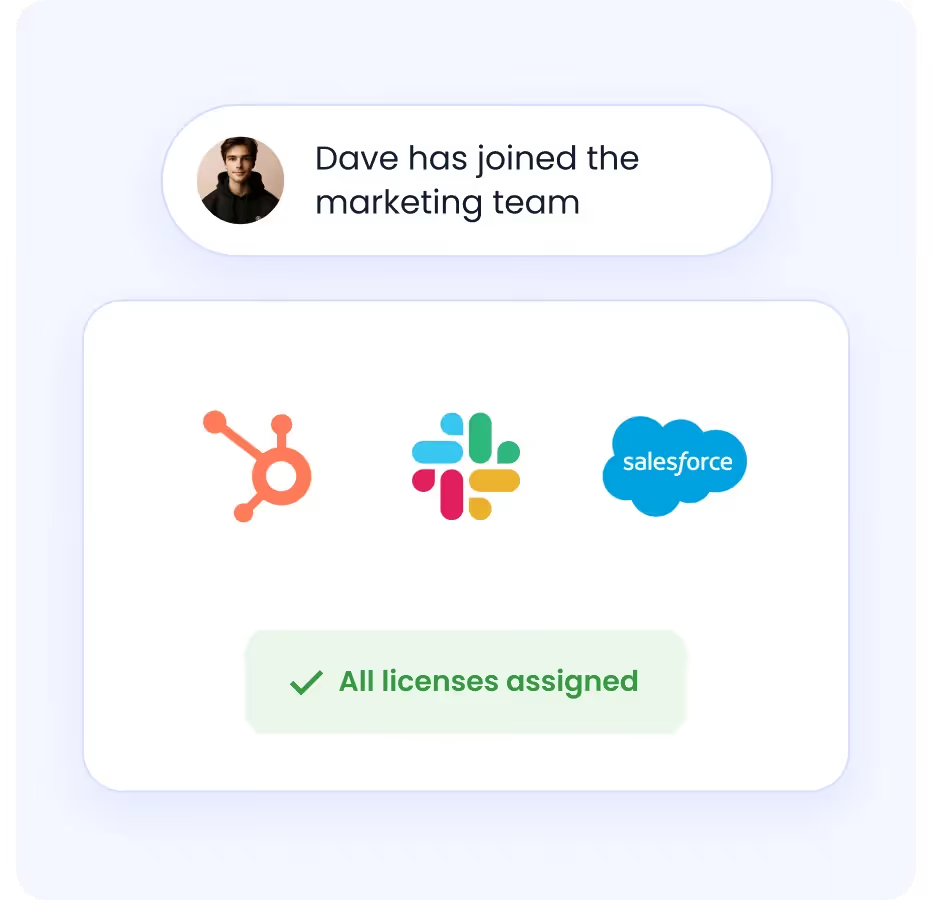
Benefits
- Instant provisioning eliminates lost time
- Automatic offboarding removes unused access
- Reduces security and financial exposure
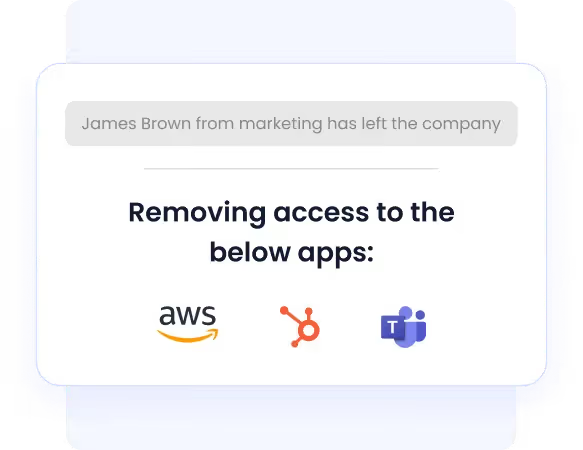
80% of employee onboarding delays are caused by manual provisioning (CloudEagle 2025 IGA Report).
c. Access Certification & Review Cycles
Periodic reviews ensure every user still needs the access they hold.
Benefits
- Eliminates privilege creep
- Ensures alignment with compliance frameworks
- Improves audit transparency
4. Compliance Features in SaaS Spend Management Tools
Compliance features in SaaS spend management tools include security monitoring, automated app discovery, access and license controls, policy enforcement, and integration with compliance frameworks.
These capabilities give organizations visibility and control while ensuring SaaS usage meets data privacy, financial, and security regulations.
a. Usage Audit Logs & Reporting
Modern SaaS spend management tools provide detailed logs that show who accessed which app, when, and how frequently, enabling full traceability across the SaaS ecosystem.
- Supplies audit-ready evidence for internal and external compliance reviews
- Helps identify unusual access behavior or risky usage trends
- Enables accurate forensic review in case of security or financial incidents
Deloitte notes that audit reporting and traceability reduce compliance review time by up to 30%, reinforcing the need for automated activity logs.
b. Security Policy Enforcement
Centralized security policy enforcement ensures that every SaaS tool follows consistent approval rules and provisioning standards, rather than relying on ad-hoc decisions or shadow IT.
- Creates standardized governance across every business application
- Enforces least-privilege and zero-trust access principles
- Blocks unauthorized procurement and unsanctioned software adoption
This ensures software access decisions aren’t driven by individuals, but by policy-based control aligned to enterprise security frameworks.
c. Vendor Compliance Tracking
SaaS spend management tools monitor vendor risk scores, certifications (SOC2, ISO 27001, HIPAA, GDPR), and compliance status throughout the contract lifecycle.
- Prevents onboarding vendors who fail security or regulatory requirements
- Reduces third-party and data-sharing threats
- Supports compliance for regulated industries such as finance, healthcare, government, and education
According to WorldCC, 64% of contract-related risk originates with third-party vendors, making vendor compliance tracking a core requirement for enterprise SaaS governance.
5. Why CloudEagle.ai Leads in Spend + Compliance + Access
Most SaaS governance tools solve visibility or cost reduction, not both, and rarely security.
CloudEagle.ai unifies SaaS spend management tools, SaaS compliance tools, and SaaS access control software into one governance platform.
a. Spend: Immediate, Deep, and Verified Savings
CloudEagle doesn't just show waste, it eliminates it.
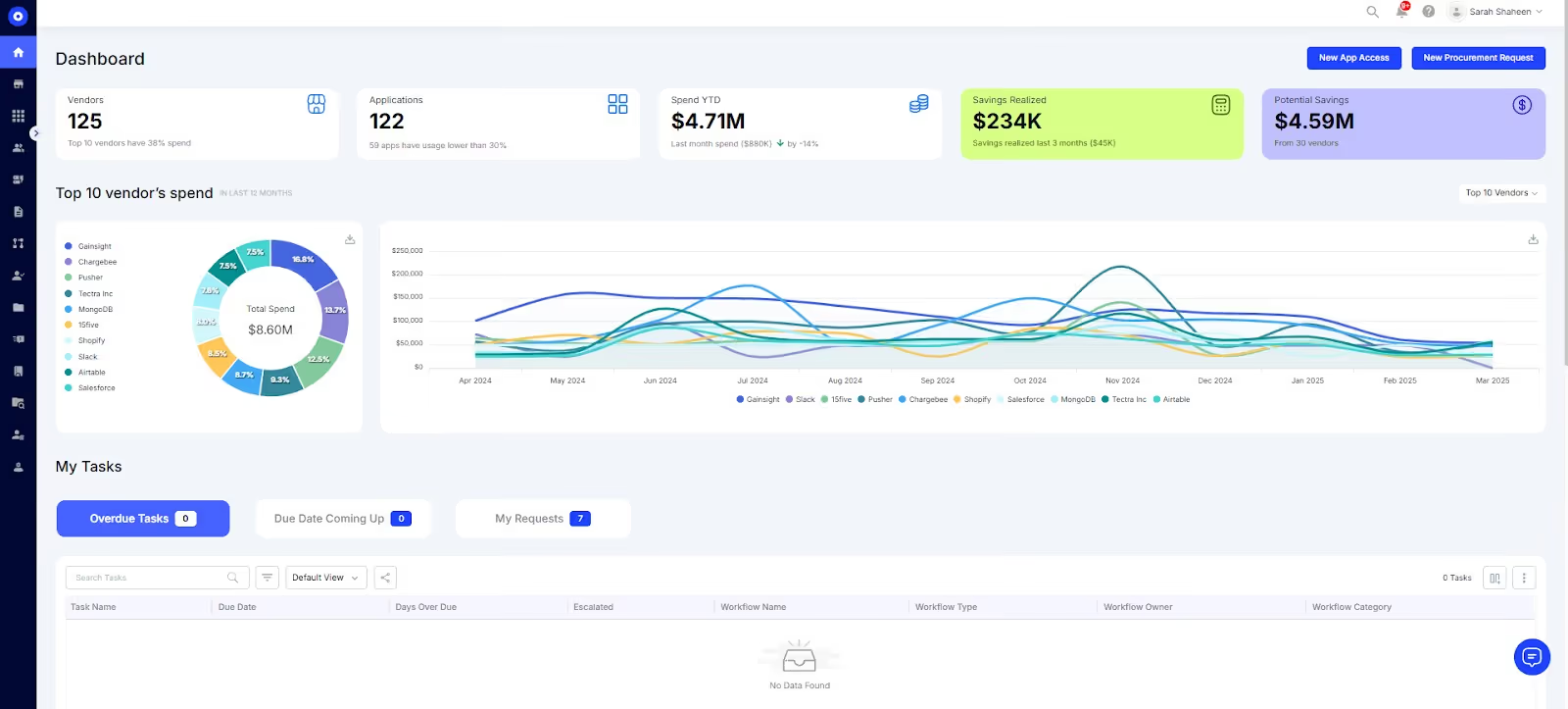
Why CloudEagle wins on Spend
- Delivers 10–30% savings by identifying unused licenses, duplicate apps, and downgrade opportunities.
- Processes $3.5B+ in SaaS spend and delivered $250M+ in verified customer savings.
- Feature-level usage insights (not just logins) enable accurate rightsizing and SKU optimization.
- Automated license harvesting reclaims inactive seats every week.
- Identifies duplicate and overlapping apps via AI-based categorization.
CloudEagle combines procurement intelligence + usage insights + automated workflows, allowing customers to save from day 1, not just at renewal.
b. Compliance: SOC2-Ready Access Governance for the SaaS & AI Era
Traditional IAM tools were built for on-prem or SSO-only environments. CloudEagle is built for today’s world, where 60% of apps and AI tools sit outside IT visibility.
Why CloudEagle wins on Compliance
- Automated Access Reviews with risk scoring and SOC2-ready audit logs.
- Detects unapproved AI & SaaS tools using login + finance data, not just SSO logs.
- Identifies overprivileged users, stale access, and risky permissions, problems impacting up to 48% of ex-employees.
- AI-driven governance that flags anomalies, excessive privileges, and shadow AI.
- Continuous, automated review cycles instead of quarterly manual audits.
Why this matters
Organizations today face:
- Shadow IT across departments (Marketing leading with 25%+)
- 70% of CIOs identify AI usage as a top security risk
- 1 in 2 employees retain unnecessary privileges
CloudEagle closes these gaps automatically, something legacy IAM tools simply cannot do.
c. Access: Full IGA for All SaaS + AI Tools
CloudEagle is the only SaaS platform combining spend + provisioning, + access governance in one product.

Why CloudEagle wins on Access
- Zero-touch onboarding/offboarding across all apps, even those not behind Okta/SailPoint.
- Role-based Employee App Catalog for instant, accurate provisioning.
- Time-based access for contractors and short-term workers (self-expiring).
- Automatic detection + removal of orphaned accounts.
- Matches risk findings in the IGA Report showing 48% of ex-employees retain access.
- Tracks admin/superadmin privileges across apps to prevent privilege creep.
CloudEagle provides true end-to-end identity lifecycle management for SaaS and AI, from request → approve → provision → review → revoke.
6. Conclusion
Compliance and access control can no longer be optional features inside SaaS spend management tools; they are critical components of security, governance, and financial responsibility.
Businesses that unify spend visibility, compliance automation, and identity management reduce waste, lower risk, accelerate audits, and protect both data and budgets.
CloudEagle.ai is designed for this reality, enabling enterprises to control SaaS environments with full transparency across spend, users, contracts, renewals, and access, all in one platform.
Book a free demo and see how CloudEagle.ai eliminates wasted SaaS spend, strengthens compliance, and automates access governance.
7. FAQ
1. What is compliance in SaaS spend management?
It ensures SaaS applications meet security, regulatory, and internal policy requirements by tracking vendor certifications, enforcing controls, and proving audit readiness across usage, access, and spend.
2. How do SaaS spend management tools help with data security and audits?
They centralize visibility, track access logs, automate audit reporting, enforce policy controls, and provide evidence trails to support SOC2, ISO27001, HIPAA, SOX, and GDPR frameworks.
3. What role do access reviews play in SaaS compliance?
Access reviews confirm that users have only the access they need, reducing excess privilege risk and supporting audit integrity.
4. What industries require strict SaaS access control for compliance?
Healthcare, finance, government, education, banking, and cybersecurity sectors must meet strict regulatory requirements and rely heavily on structured access control.
5. How do SaaS spend tools integrate with IAM platforms like Okta or Entra ID?
They sync provisioning, roles, and access status, enabling automated onboarding, offboarding, and periodic certifications while maintaining visibility into app usage and spend.


.avif)


.avif)
.avif)


.png)






%20(1).avif)
.avif)
.avif)
.avif)


