
%201.svg)


HIPAA Compliance Checklist for 2025

Productiv shutdown was disruptive. Losing it mid-renewal, workflows still being built, made it worse. The bigger issue is tracking two budgets: SaaS licenses and AI spend from one place.
Most tools in this category, Productiv included, were built to give visibility into one side of that equation, not to help teams act on renewals, reclaim unused licenses, negotiate contracts, and govern AI spend.
That gap is why CloudEagle.ai has come up as a common next step: one platform for usage insights, license optimization, procurement, renewal management, and AI governance.
In this article, we'll break down why optimizing SaaS and AI spend has gotten harder without Productiv, where visibility-only platforms fall short, and why CloudEagle.ai is one of the best Productiv alternatives worth evaluating.
TL;DR
- Productiv’s shutdown disrupted renewal planning, contract management, and ongoing SaaS optimization workflows.
- Visibility alone isn't enough as enterprises also need license reclamation, renewal automation, procurement, and AI spend governance.
- Modern spend optimization requires managing SaaS licenses, AI subscriptions, and token consumption from a single platform.
- CloudEagle.ai automates license harvesting, contract intelligence, renewals, benchmarking, negotiation, and Shadow AI discovery.
- CloudEagle.ai replaces visibility-only SaaS management with end-to-end SaaS and AI spend optimization, procurement, and governance
1. The Spend-Optimization Gap Productiv's Shutdown Left Behind
Productiv shutdown wasn't just the loss of a tool. It interrupted renewal planning, contract organization, and workflow automation that were already in progress.
Replacing momentum is often harder than replacing software. Here's what that disruption actually looks like.

A. What Teams Were Mid-Cycle On When Access Ended
For many teams, Productiv wasn't fully implemented yet. They were still connecting integrations, importing contracts, configuring workflows, and preparing for upcoming SaaS contract renewals when Productiv shutdowni announced.
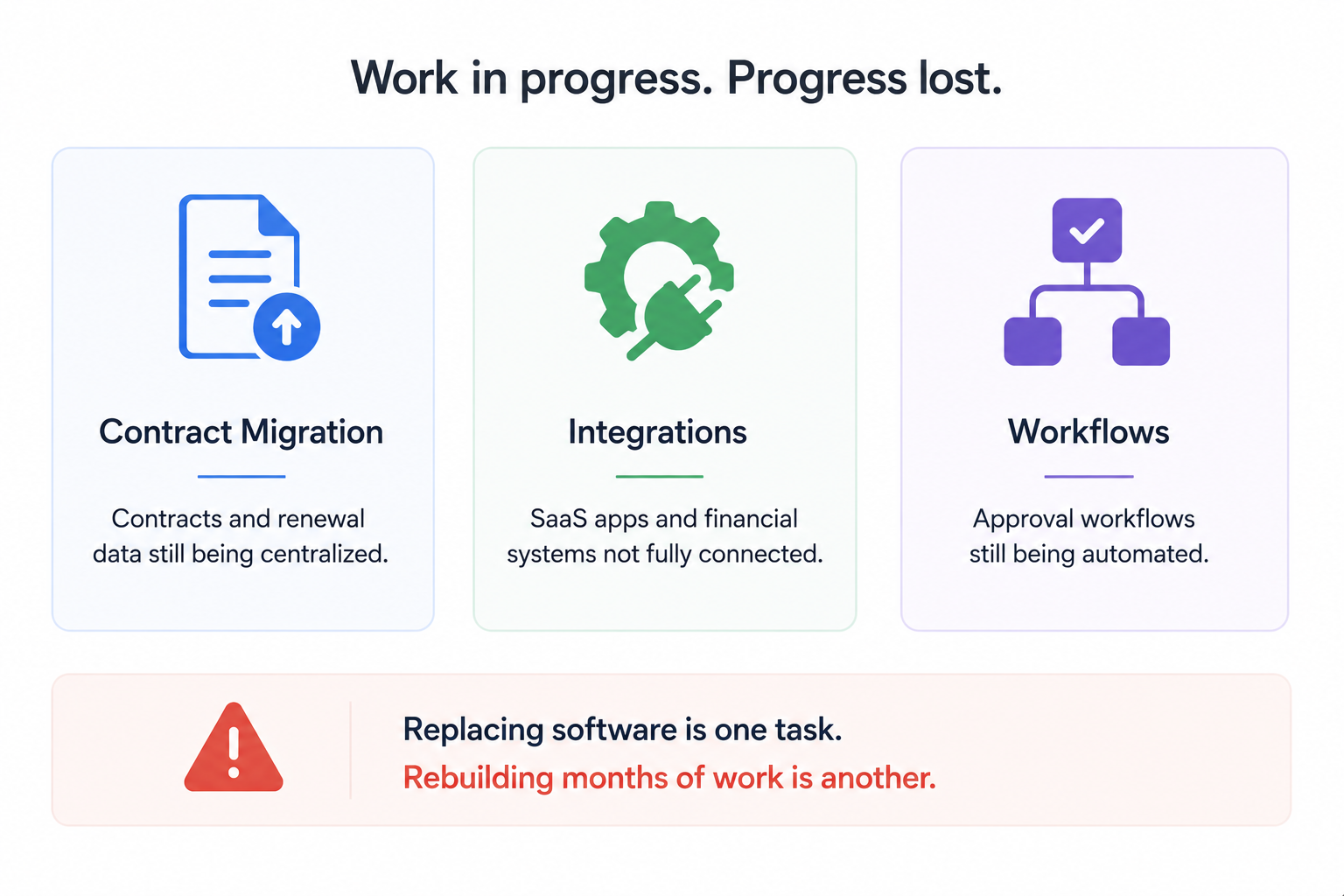
That meant losing more than a dashboard, like losing progress.
- Contract Migration in Progress: Contracts, renewal dates, and pricing history were still being centralized.
- Integrations Still Being Configured: SaaS applications and financial systems hadn't been fully connected.
- Approval Workflows Not Yet Live: Renewal reviews and approval processes were still being automated.
Replacing with Productiv alternatives is one task. Rebuilding months of implementation work is another.
B. Why the Real Cost Is Momentum, Not Just the Tool
Spend optimization is a continuous cycle, not a one-time activity. It moves from discovery → benchmarking → negotiation → license optimization → ongoing review.
When that cycle is interrupted, teams lose momentum. Here are the things that actually breaks:
- Renewal Dates Go Untracked: Upcoming renewals become easier to miss.
- Negotiation Context Is Lost: Historical pricing and vendor discussions are no longer readily available.
- Approval Workflows Revert to Manual: Teams fall back to emails and spreadsheets to coordinate renewals.
- Optimization Efforts Restart: License reviews, benchmarking, and savings initiatives have to begin again.
The challenge isn't finding Productiv alternatives but getting the entire cycle moving again.
C. SaaS Spend and AI Spend Are Now One Problem
The category has evolved. Teams are no longer managing just SaaS licenses but paying for ChatGPT, Claude, Gemini, Copilot, Cursor, and other AI tools across seat-based, token-based, and hybrid pricing.
Visibility-only platforms weren't built to track both. Modern spend optimization needs SaaS licenses, AI subscriptions, and token usage in one view, not separate workflows.
2. Why Point-In-Time Visibility Isn't Enough Anymore
Application visibility is still an important starting point, but it's no longer enough to optimize SaaS and AI spend.
Enterprises need to move beyond knowing what they have to understanding what should be renewed, reclaimed, negotiated, or governed.
A. What Productiv Did Well
Productiv helped organizations understand SaaS usage through centralized analytics and dashboards, giving IT teams better visibility into application adoption and license utilization.
B. Where Visibility-Only Tools Stall Out
Visibility is only the first step. However, most people find it challenging to turn that insight into action.
- Unused Licenses Stay Assigned: Identifying inactive users doesn't automatically reclaim or reassign licenses.
- Renewals Remain Manual: Seeing an upcoming renewal doesn't manage the procurement or negotiation process.
- AI Spend Is Missing: Modern spend optimization requires tracking AI subscriptions, model tiers, and token consumption alongside SaaS licenses.
- Access and Spend Stay Disconnected: Without tying identity changes to license management, organizations miss optimization opportunities when employees join, leave, or change roles.
One enterprise, for example, had visibility into nearly 180 applications through its SSO environment but still relied on separate manual processes to manage renewals and procurement decisions.
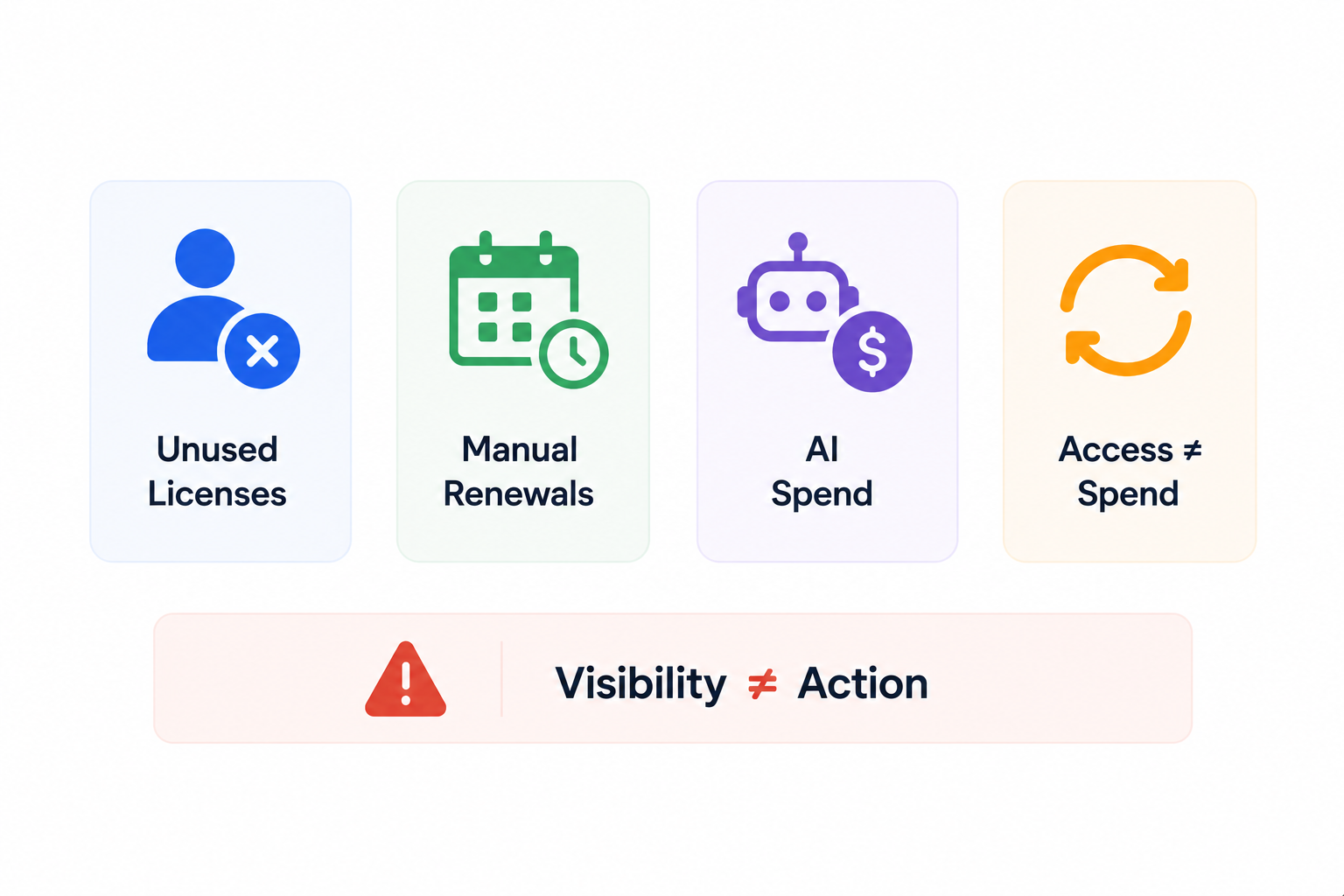
Visibility alone didn't eliminate the operational work. The actual work that enterprises put in the real thing.
C. The Full Loop Spend Optimization Actually Requires
Optimization only works as a connected loop, not a series of one-off reports. To optimize software investments effectively, organizations should evaluate whether their platform supports the complete lifecycle:
- Discovery: Identify every SaaS application and AI tool across the organization.
- Benchmarking: Compare pricing and identify negotiation opportunities before renewal.
- Automated Harvesting: Reclaim and reassign unused licenses to eliminate waste.
- Renewal Workflows: Track contracts, automate approvals, and manage vendor negotiations proactively.
- AI Governance: Monitor AI subscriptions, model usage, and token consumption alongside traditional SaaS spend.
The more stages a platform supports, the less manual work your team has to stitch together and the more value you can capture from every renewal cycle.
3. Why is CloudEagle.ai an Excellent Productiv Alternative?
If you're evaluating alternatives to Productiv, the goal shouldn't be to replace a dashboard, it should be to upgrade your entire spend optimization workflow.
CloudEagle.ai goes beyond application visibility by helping organizations discover savings, automate action, and optimize both SaaS and AI spend from a single platform.
A. License Management: Establish the True Seat Count Before the Negotiation Starts
CloudEagle.ai connects to 500+ applications and pulls real-time license data such as purchased, assigned, and actively used, across every vendor in the stack.
Here's how license management surfaces the usage baseline that the negotiation should be built from:
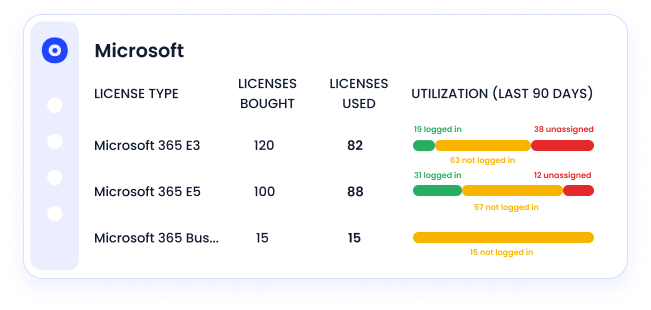
In CloudEagle.ai's license management view, every vendor shows purchased count, assigned count, and actively used count side by side:
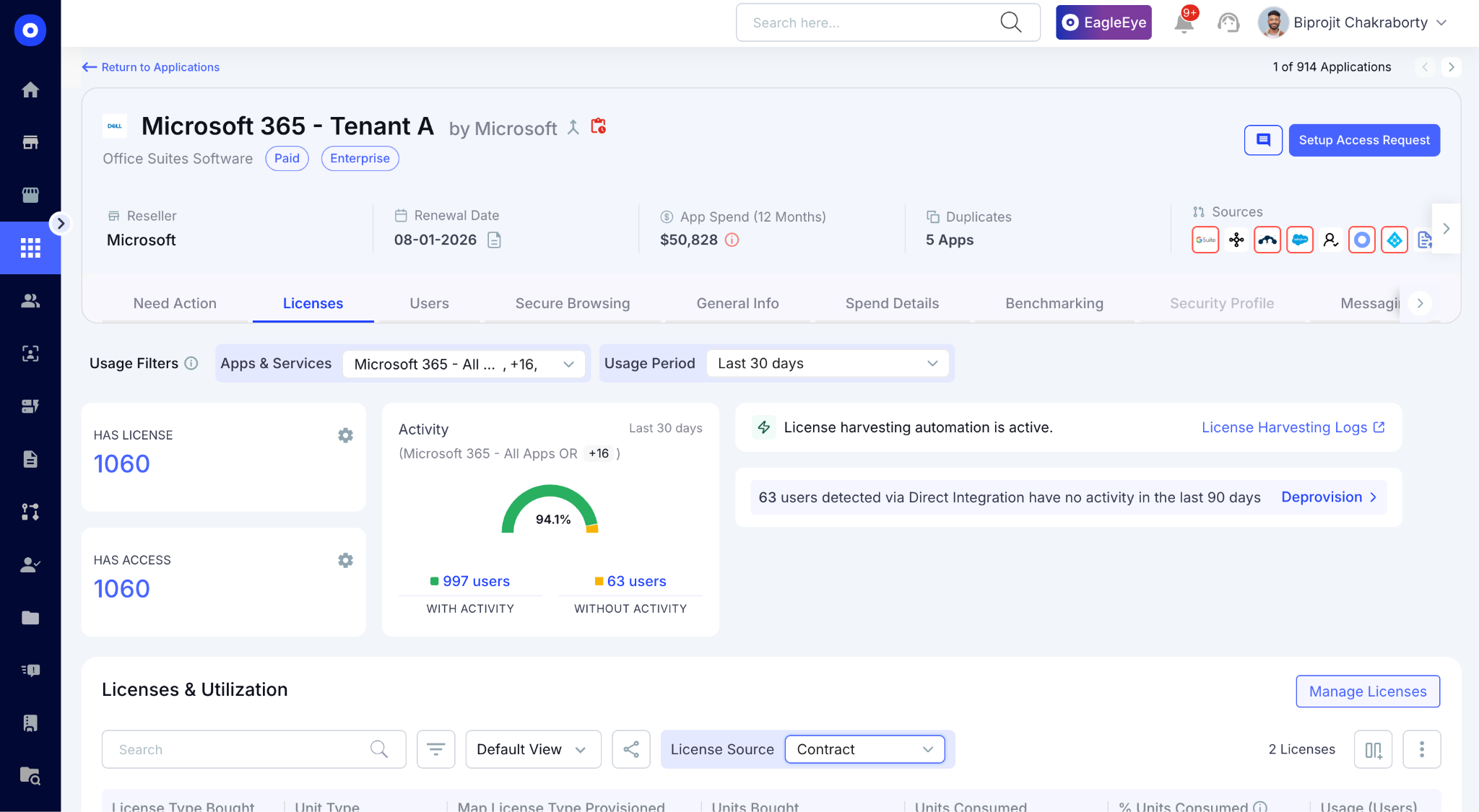
A team negotiating 200 seats because that's the contract number, when only 130 are active, is negotiating the wrong contract from sentence one. This view closes that gap before the vendor call is scheduled.
B. License Harvesting: Surface Dormant Seats in Time to Act
License harvesting identifies which seats have gone dormant and triggers the reclaim workflow early enough that the right-sized number is confirmed before the renewal window closes, not after.
Here's how license harvesting flags inactive seats and builds the right-sized contract number:

In CloudEagle.ai's license harvesting view, every seat inactive for 30, 60, or 90 days is flagged with the last activity date and cost, so the dormant seat count is visible and actionable before renewal:
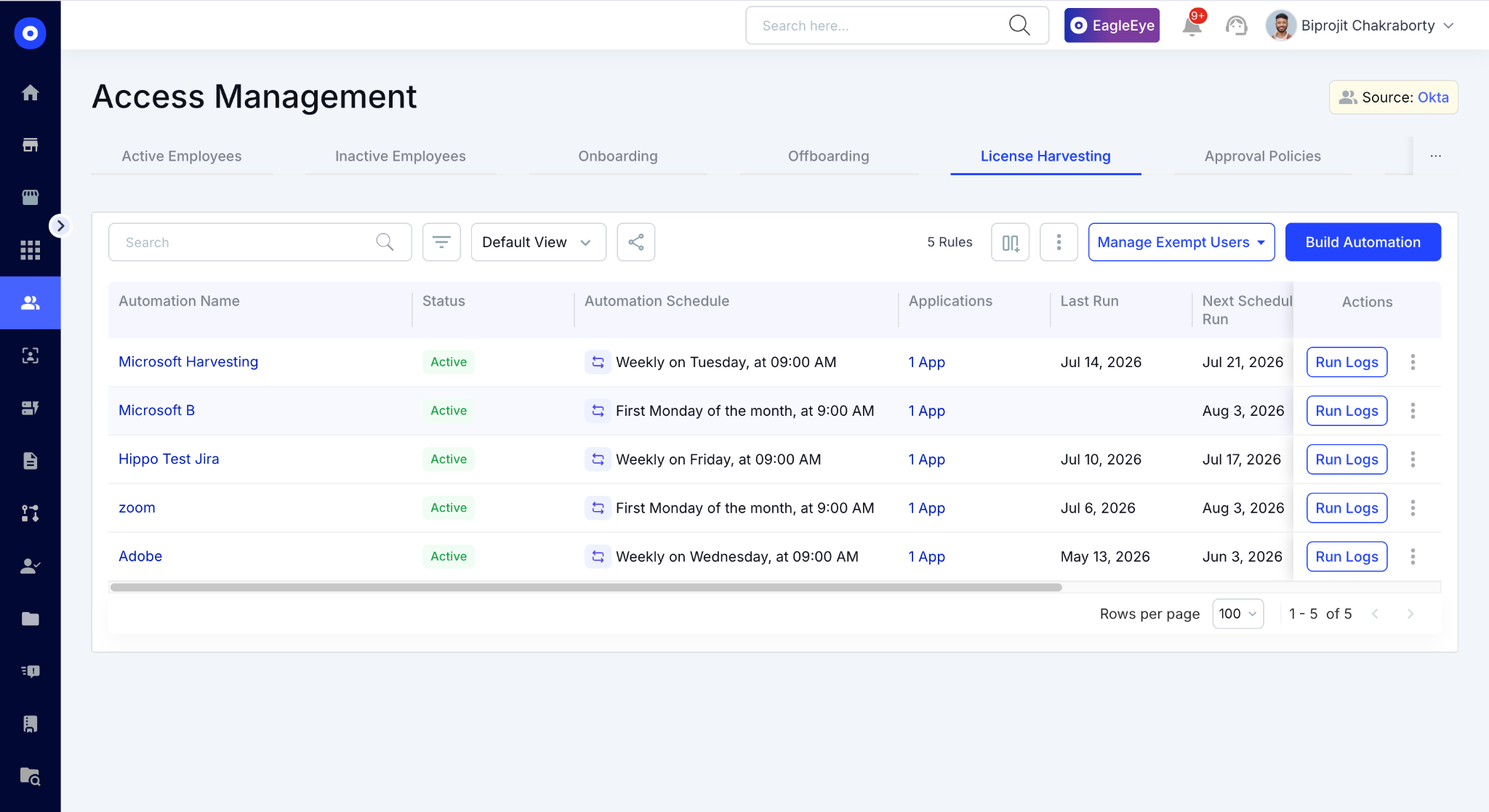
Customers typically recover 10 to 30% of annual SaaS spend within the first 90 days, not from negotiating a better price per seat, but knowing the right seat count before the call.
C. AI Contract Metadata Extraction: Make Sure There's Time to Use the Data
CloudEagle.ai extracts renewal dates, notice periods, opt-out clauses, and auto-renewal terms from uploaded contracts using AIm and builds a live renewal calendar from that data automatically.
Here's how AI contract metadata extraction surfaces the renewal window before it closes:
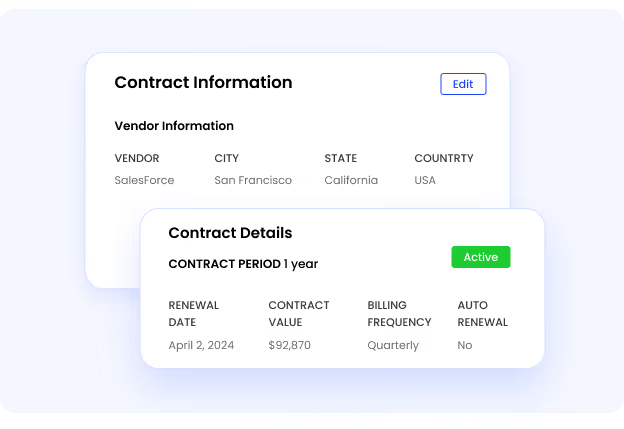
In CloudEagle.ai's contract view, every vendor shows the AI-extracted renewal date, notice period, and opt-out deadline alongside current usage data:

The timing cost from the previous section, losing leverage before the negotiation starts, is closed here. Usage data is only useful if it arrives before the auto-renewal clause fires.
D. 90-Day Renewal Workflow: Usage, Benchmarking, Alternatives, and AI Recommendation in the First Message
CloudEagle.ai triggers a renewal workflow 90 days before every contract date. The first message that goes to stakeholders already contains the full negotiation context and an AI-generated recommendation on whether to renew, right-size, or switch.
No one has to pull the usage report separately. No one has to look up the benchmark. No one has to remember to check whether there's a notice period. It's all in the first message, 90 days out.
Stakeholders are notified via Slack, Teams, and email. Approvals route through Jira, Coupa, or Ironclad, wherever the team already works.

In CloudEagle.ai's renewal calendar, every upcoming contract shows the days remaining, the usage trend, the benchmark price, and the AI recommendation:

Tom Baroch, Head of Global Supply Management at Outrider, described the impact directly:
"We faced a major issue with missed contract renewals due to manual tracking methods, often leading to automatic renewals at unfavorable terms. CloudEagle.ai automatically extracted critical contract dates and set up timely reminders, ensuring we were always ahead of upcoming renewals."
E. Price Benchmarking and Buying Guides: The Benchmark Applied to the Right Number
CloudEagle.ai's SaaSMap benchmarking database is compiled from over 2 billion transactions across an extensive network of SaaS buyers. The benchmark data covers the same pricing intelligence Vendr provides.
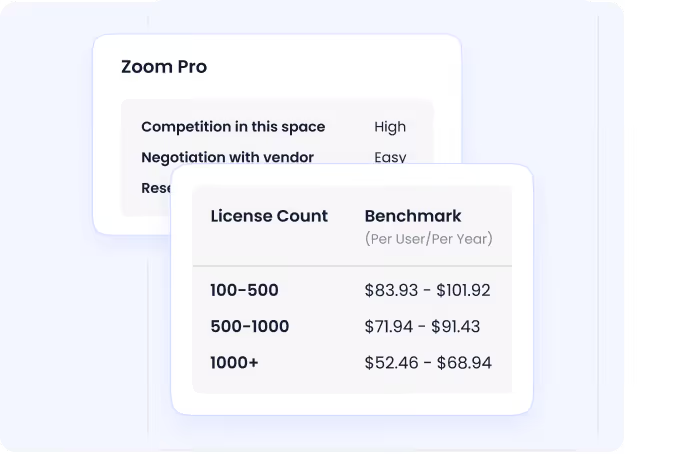
The difference in this workflow: the benchmark is applied to the right-sized seat count that license harvesting already confirmed. The team sees what the market pays for 130 seats, not 200.
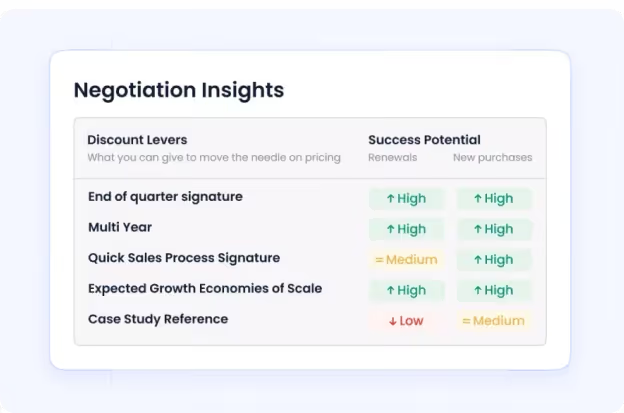
Vendor-specific buying guides surface the negotiation levers, discount patterns, and renewal behaviors that have delivered savings on that specific vendor.
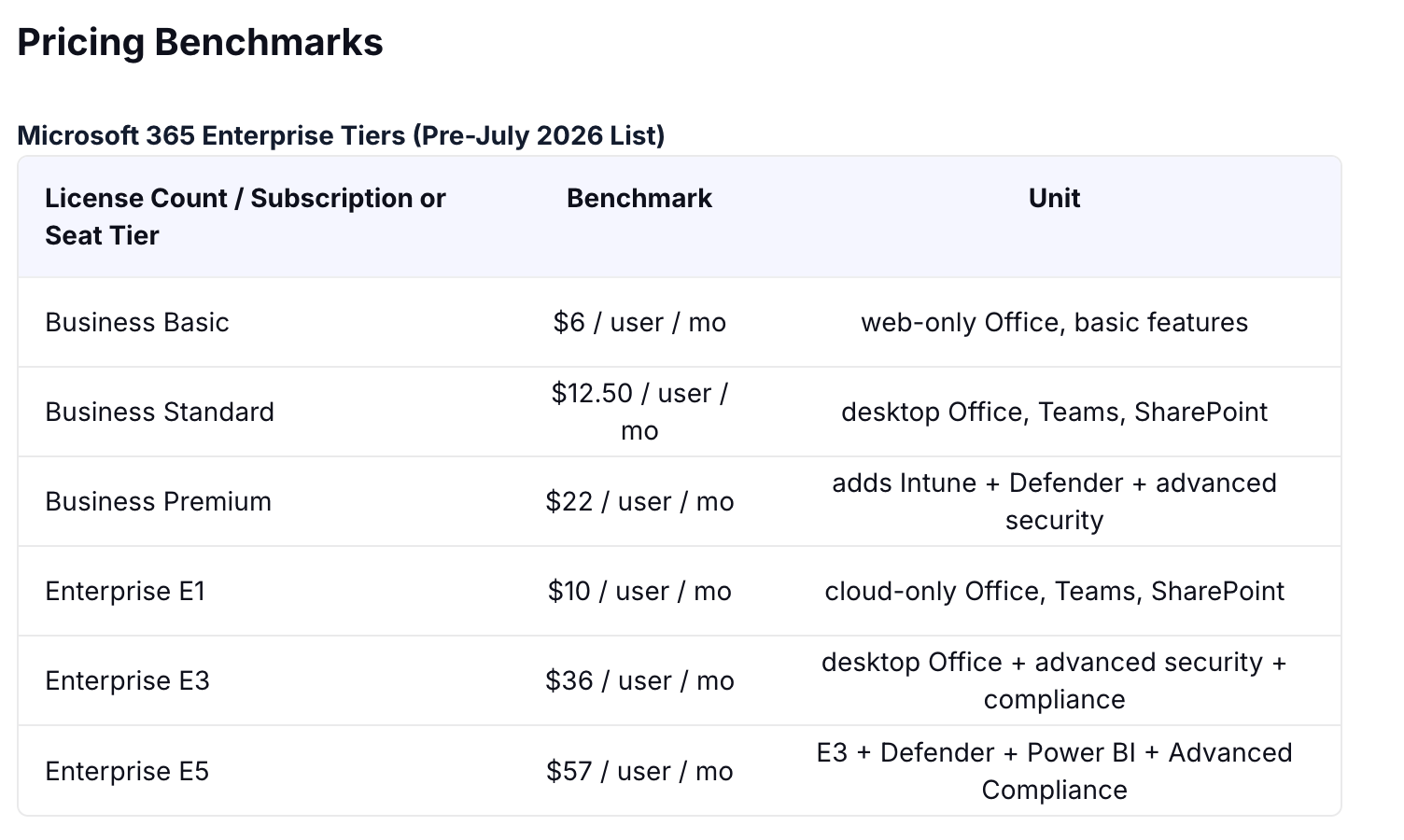
In CloudEagle.ai's benchmarking view, the market rate is shown against the actual seat count the team is negotiating, with the vendor-specific buying guide available in the same workflow:
F. Negotiation Support and Expert Help: Strategy Built From Your Data, Not a Generic Playbook
For high-stakes renewals, CloudEagle.ai provides on-demand negotiation advisory, an analysis of the vendor quote and a strategy to get a better deal.
It’s built from your specific usage history, contract terms, and benchmark data rather than a generic buying guide that every other customer of that tool also has access to.
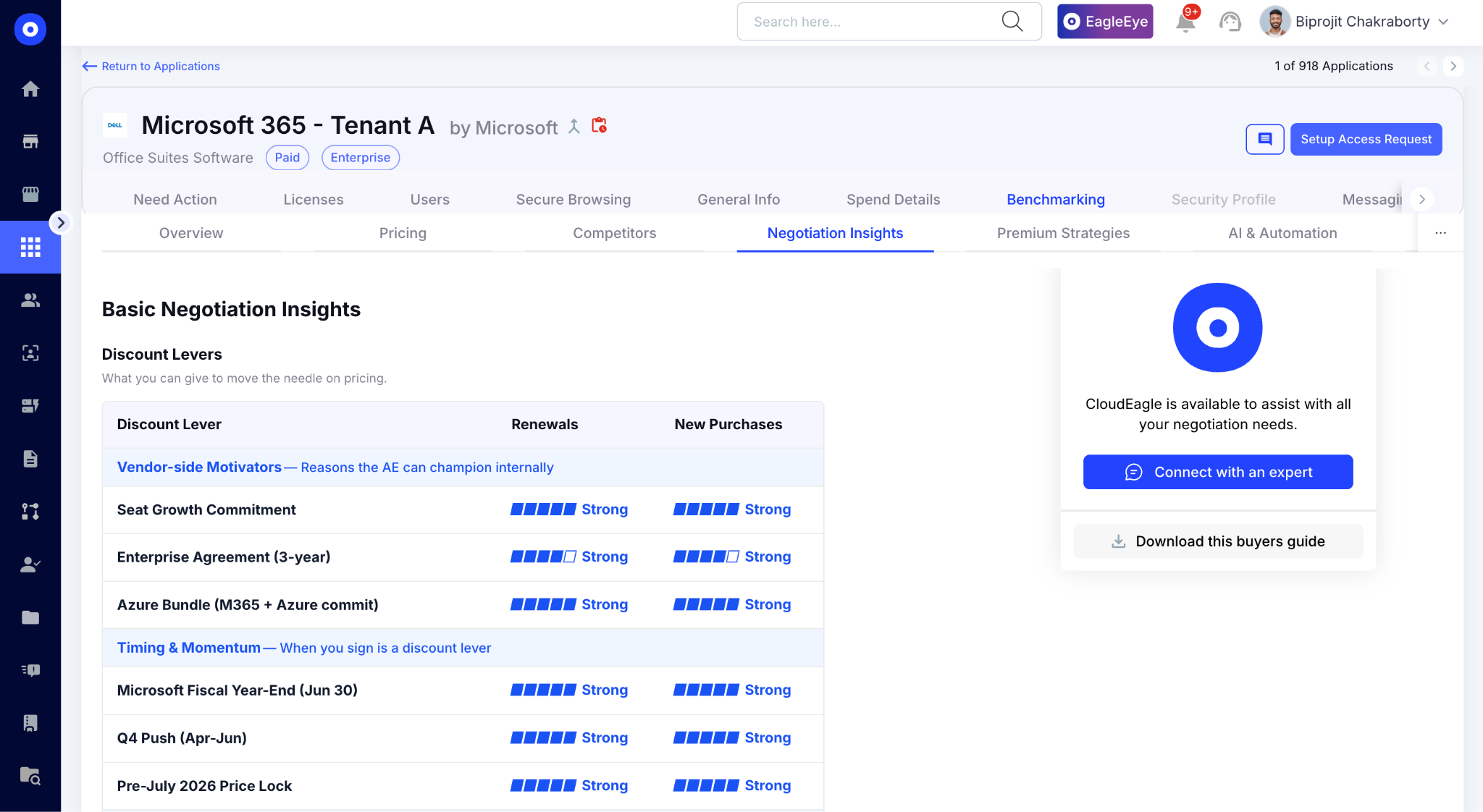
Your usage data is the one input in a negotiation that's specific to your account. CloudEagle.ai's expert advisory uses it, alongside your contract history and the benchmarking database, to build a strategy that reflects your situation.
The difference between a buying guide and a negotiation strategy is the usage data that makes the general advice specific to you. That's what CloudEagle.ai's expert support delivers.
G. CloudEagle.ai's NHI Dashboard: Inventory and Risk in One View
The moment CloudEagle.ai connects to your environment, the NHI dashboard surfaces total NHIs, environment breakdown, identity type split, and a risk-prioritized insights panel that tells your security team exactly where to start.
Here's how the NHI dashboard surfaces inventory and risk simultaneously:
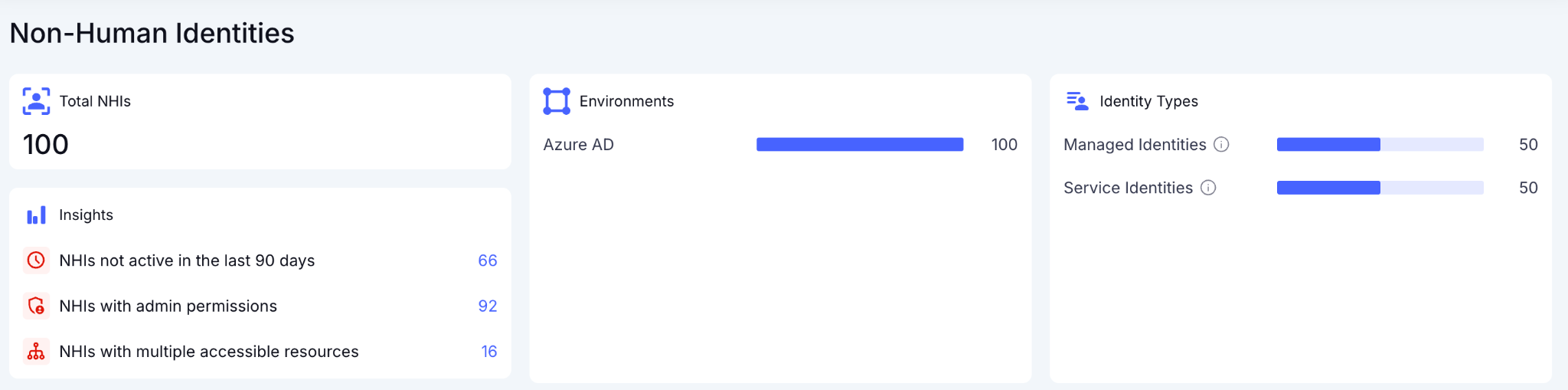
In CloudEagle.ai's NHI dashboard, the insights panel flags the three highest-priority risk categories immediately: NHIs not active in the last 90 days, NHIs with admin permissions, and NHIs with multiple accessible resources:
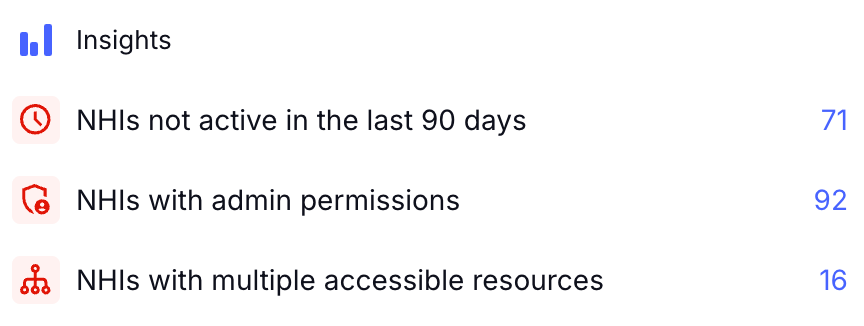
In the Freshworks deployment, this view was live in production the moment Azure AD was connected without separate data collection exercise and manual export.
AWS and GCP are confirmed on the roadmap, expanding the same inventory and risk layer to cloud infrastructure NHIs in phase two.
H. Shadow AI Discovery: Surface Every Tool Before You Govern It
CloudEagle.ai detects Shadow AI through browser extensions, firewall logs, Zscaler, CrowdStrike, and finance signals simultaneously, building a single source of truth across every AI tool in use, sanctioned or not.
Here's how multi-signal Shadow AI discovery is designed to work:
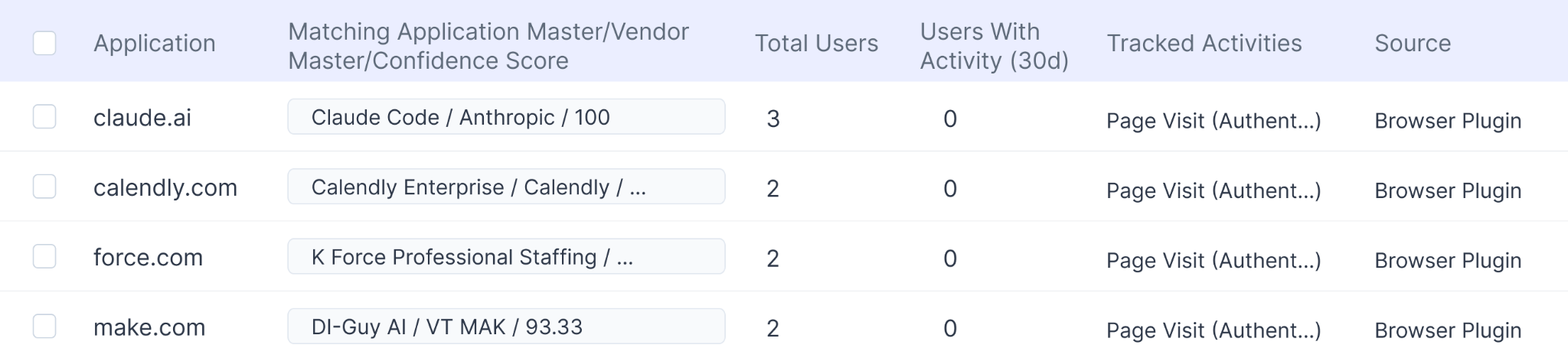
In CloudEagle.ai's AI application inventory, every tool appears with adoption by team and department.

It surfaces whether it was sanctioned or discovered through external signals, and whether it carries GenAI capabilities that were never part of the original procurement decision.
I. Secure Browser and Flash Page: Redirect Before Data Enters an Unapproved Session
CloudEagle.ai's browser plugin catches what CASB, DLP, and LLM gateways all miss, the moment an employee opens an unapproved AI tool in a browser tab. Here’s how the browser plugin works:
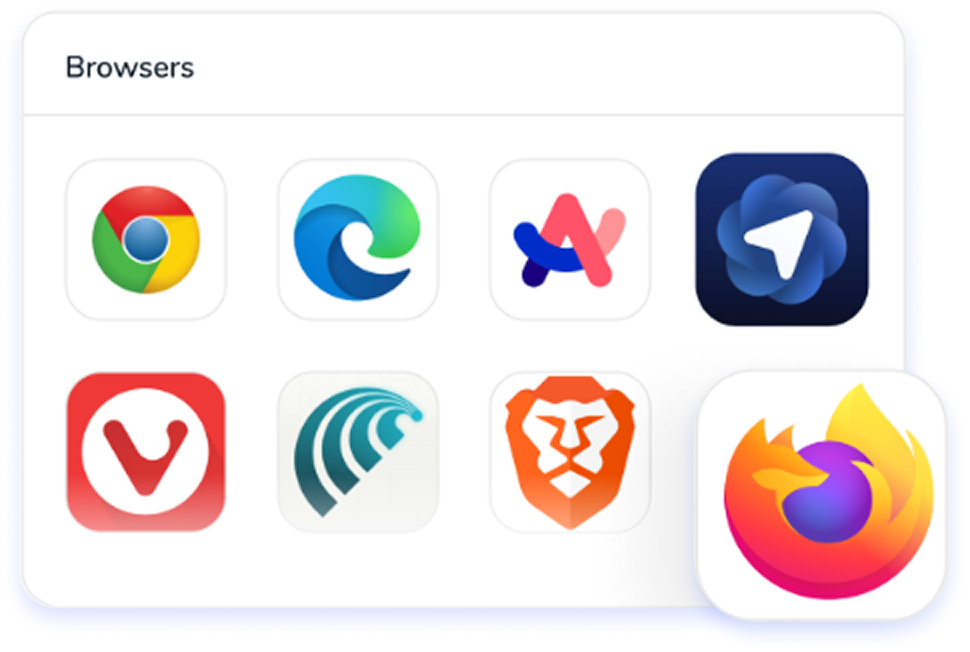
When that happens, a real-time flash page steps in before any company data is entered, redirecting the employee to the approved alternative automatically.
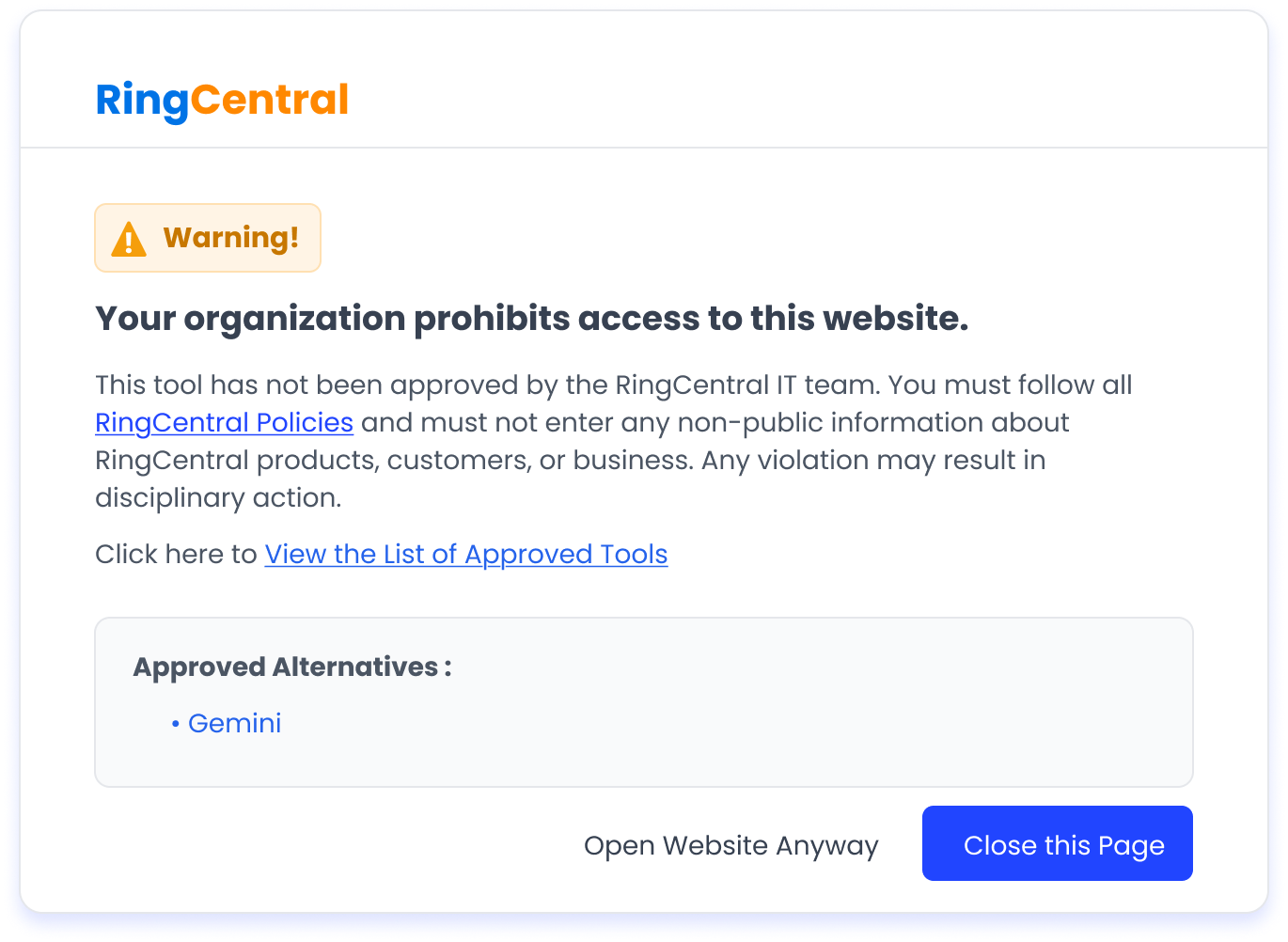
In CloudEagle.ai's Secure Browser policy view, flash page rules are configurable by team, department, and tool so Engineering can be permitted Cursor while redirected away from consumer ChatGPT.

Every redirect is logged automatically, tool accessed, sanctioned status, flash page triggered, and timestamp. The audit record exists in real time without additional effort.
Don't Just Replace Productiv. Upgrade It.


4. Conclusion
Productiv shutdown didn't just remove a tool. It exposed how much of spend optimization still depended on manual work behind the dashboard.
Visibility was never the hard part. Acting on it such as reclaiming licenses, running renewals, tracking AI consumption is where most platforms in this category fall short.
That's the gap CloudEagle.ai is built to close: one platform covering discovery, benchmarking, automated harvesting, renewal workflows, and AI governance, instead of five separate problems to manage on your own.
5. FAQs
1. Why did Productiv shut down?
Productiv ceased operations in early August 2026, ending customer access to the platform. Many organizations had to identify a replacement for SaaS management, license optimization, and renewal tracking on short notice.
2. What happens to my SaaS renewal and contract data if I was using Productiv?
Once access ends, any contracts, renewal dates, or pricing history stored in the platform become inaccessible. This is why migrating to a new platform with historical data import rather than starting from scratch matters for teams switching tools.
3. Is a visibility-only SaaS management tool enough to optimize spend?
Visibility helps identify issues like unused licenses or upcoming renewals, but it doesn't resolve them. Optimizing spend requires acting on that visibility, reclaiming licenses, running renewal workflows, and negotiating contracts, not just reporting on it.
4. How is AI spend different from traditional SaaS spend management?
AI tools like ChatGPT, Claude, Gemini, and Copilot often use seat-based, token-based, or hybrid pricing, which traditional SaaS management platforms weren't built to track. Managing AI spend requires visibility into consumption patterns, not just subscription counts.
5. How does CloudEagle.ai compare to Productiv as an alternative?
CloudEagle.ai combines usage insights, automated license optimization, procurement workflows, renewal management, and AI spend governance in a single platform, along with support for migrating historical contract and renewal data from previous tools.
Move Beyond Productiv With Confidence.


.avif)


.avif)
.avif)




.png)







.avif)
.avif)
.avif)


