
%201.svg)


HIPAA Compliance Checklist for 2025

Most security leaders running both IT and security functions today have the same blind spot.
They have Claude, Cursor, and Copilot in use across teams.
Their invoices don't match usage data. Developers are downloading AI tools freely, and every new tool adds patching overhead and security exposure nobody can fully account for.
They have an identity provider. They have a governance platform. They have the compliance tools that have always told them what they needed to know about their environment. None of them are telling them what they need to know about AI.
That is not a gap in execution. It is a gap in what those tools were ever designed to see. Here are the four specific failure modes creating that exposure, and exactly why the tools sitting in your stack right now miss every one of them.
TL;DR
- Shadow AI bypasses corporate identity entirely. CASBs and SSO integrations only see what authenticates through them, and most AI tool adoption does not
- Prompt-level data exposure doesn't look like a file transfer, so DLP, which was built to catch file transfers, never sees it
- AI agents built inside platforms like Copilot Studio have data access but no user identity, making them invisible to IAM and PAM
- AI consumption is a financial and behavioral signal that no traditional security or finance tool was built to track
- These are not gaps in execution. They are gaps in design. Traditional tools were never built with AI in mind
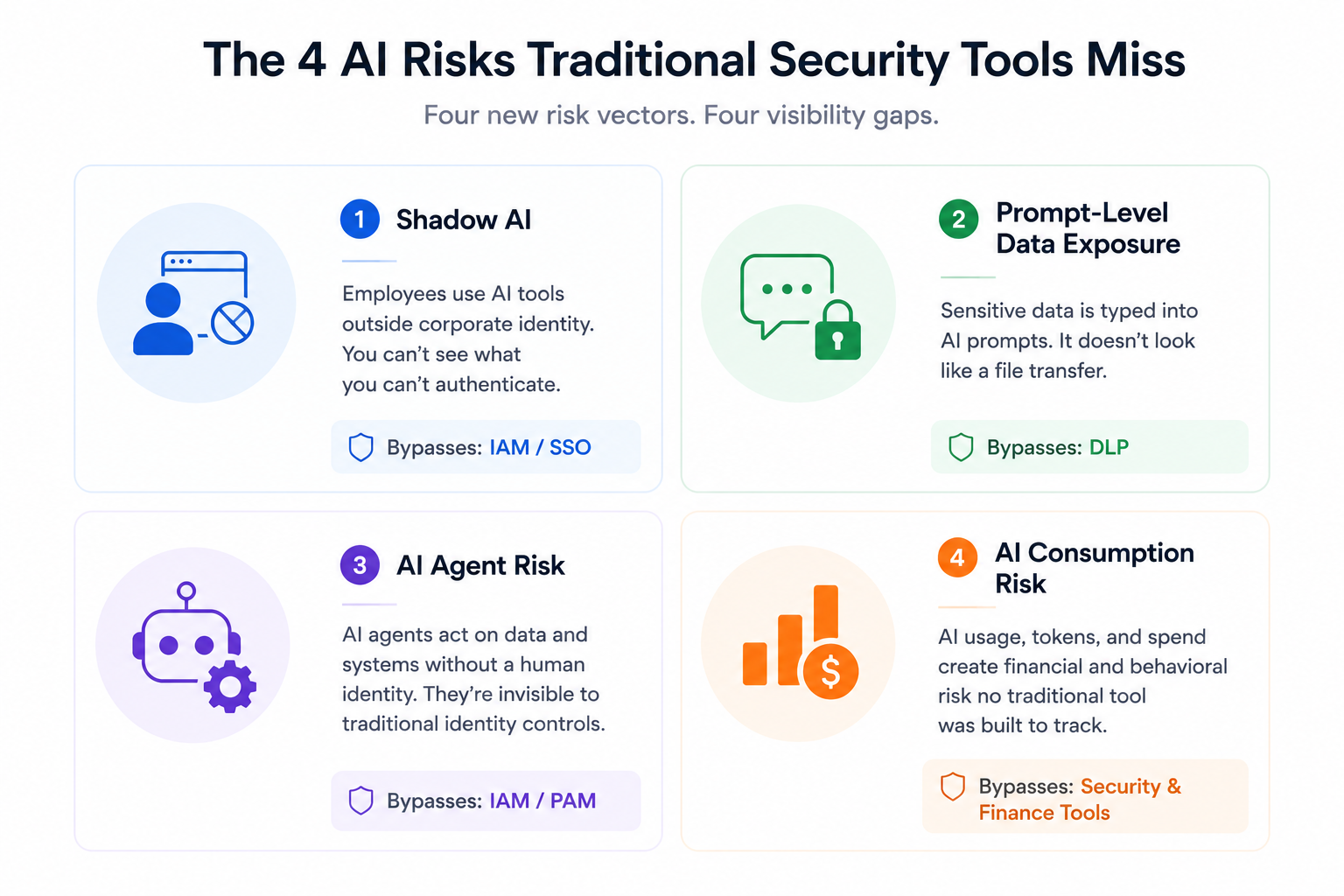
Type 1: Shadow AI: The Tools You Can't See Because They Don't Go Through Corporate Identity
Employees are adopting AI tools using personal email accounts, browser extensions, direct API keys, and mobile apps, completely outside corporate SSO, outside the identity provider, and outside anything IT manages.
Traditional security controls assume applications enter through approved channels. AI tools increasingly bypass those channels entirely, creating a visibility gap that most enterprise security stacks were never designed to address.
Why Traditional Tools Miss It
CASBs and firewalls can block a known URL. They cannot tell you that an employee opened a personal Gmail account, visited Claude.ai, and has been using it daily for three months. The session never touches anything those tools were built to inspect.
One security leader at a regulated pharma company asked the right question when an SSO integration surfaced 1,600 apps:
"What about the apps not behind SSO?" That single question captures the entire problem.
What traditional tools fail to see:
- AI tools accessed through personal accounts
- Browser-based AI adoption outside corporate identity systems
- AI applications that never pass through procurement or IT approval
- The long tail of employee-discovered tools beyond approved AI platforms

Type 2: Prompt-Level Data Exposure: The Leak That Doesn't Look Like a File Transfer
Employees are entering sensitive company data directly into AI chat interfaces as part of a prompt. Customer contracts, financial projections, internal code, PII, and PHI are being typed into text fields to get faster answers.
The challenge is that this behavior does not resemble a traditional data-loss event. To most security tools, it looks like ordinary web activity rather than sensitive data leaving the organization.
Why Traditional Tools Miss It
DLP was designed for file transfers, email attachments, USB exports, and cloud uploads. A prompt typed into ChatGPT or Claude is simply text entered into a browser form field.
From DLP's perspective, that activity looks no different than an employee drafting an email or filling out a support ticket. There is no file transfer event for the system to inspect.
Why prompt-based exposure slips through DLP:
- No file is being uploaded
- No attachment is being transferred
- No traditional data-loss event is created
- Prompt content is not inspected by most DLP systems
Type 3: AI Agent Risk: Automated Identities That Don't Show Up in Your Identity Provider
AI agents are automated workflows employees build inside tools like Copilot Studio or Zapier. They connect to SharePoint, CRM systems, internal databases, and other business applications while acting on behalf of users.
Unlike human users, these agents often operate without traditional identities, ownership models, or governance processes. That creates a new category of access risk that existing controls struggle to address.
Why Traditional Tools Miss It
IAM and PAM were built for human users. They govern who can log in, what they can access, and what actions they can take.
An AI agent created by a finance analyst can access sensitive systems and data sources without appearing as a user account requiring governance or review.
What makes AI agents difficult to govern:
- They do not have traditional usernames
- They may not appear in identity governance systems
- They can access multiple business systems simultaneously
- Ownership and accountability are often unclear
Type 4: AI Consumption Risk: The Signal Traditional Security Tools Have No Category For
Untracked AI token consumption creates both a financial exposure and a behavioral anomaly signal. Yet most organizations have no centralized way to monitor either.
As AI usage grows, understanding who is consuming AI resources, how much they are spending, and whether usage patterns are normal becomes increasingly important for both finance and security teams.
Why Traditional Tools Miss It
Security tools do not track spend. Finance tools track invoices, not actual AI usage. That leaves organizations without visibility into consumption patterns at the individual employee level.
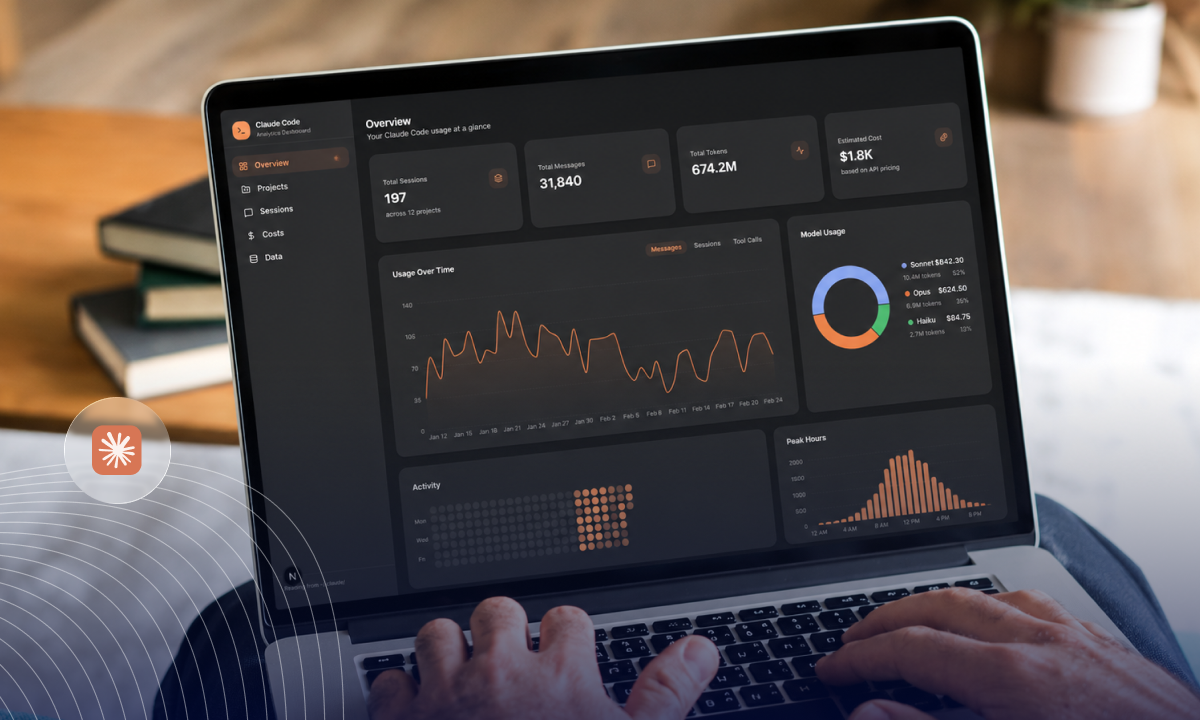
One IT and security leader summarized the gap clearly: "I want to say Brian used $2k of spend this week." Most organizations cannot answer that question today.
What existing tools cannot measure:
- Per-user AI token consumption
- Individual AI spend by employee
- Abnormal AI usage patterns
- AI consumption as a behavioral risk signal
Why This Matters More Than It Looks Like It Should
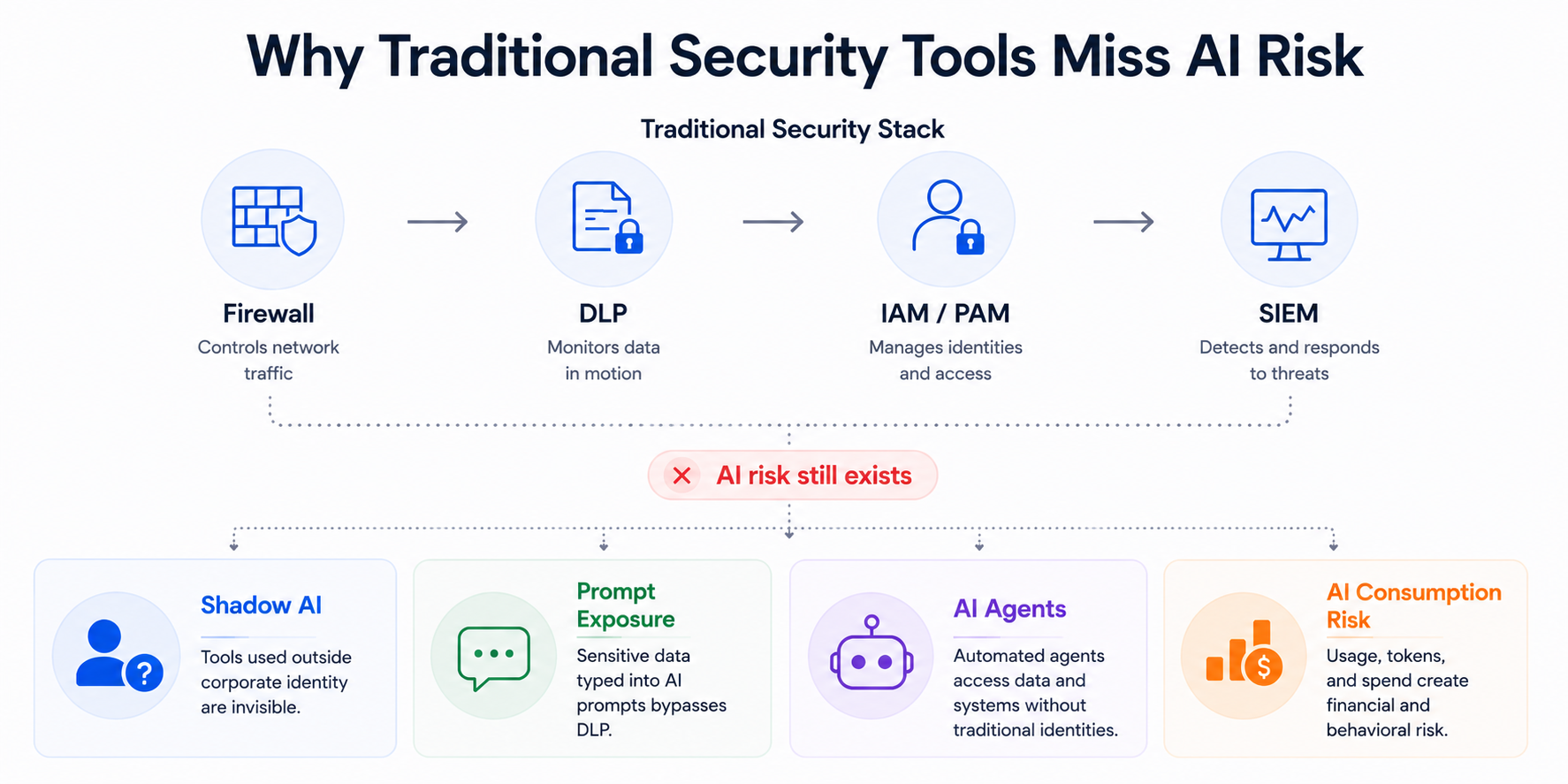
None of this means firewalls, DLP, IAM, and SIEM are broken. They still do exactly what they were designed to do, and they remain necessary.
The problem is that AI created four new risk surfaces simultaneously, and none of the tools enterprises already had were built with any of them in mind.
- Shadow AI bypasses identity controls
- Prompt exposure bypasses DLP
- AI agent risk bypasses IAM and PAM
- Consumption risk bypasses both security and finance monitoring
The gap between what these tools cover and what AI actually does is where enterprises are most exposed today. And that gap is widening faster than most governance programs are adapting to it.
📖 Worth a Read: 👉 How Enterprises Can Track Claude, Cursor, and Gemini Spend in One Place
The organizations that will manage this well are the ones that recognize AI risk as its own category. Not a subset of SaaS governance. Not an extension of network security. A distinct governance challenge that requires its own visibility, controls, and oversight.
Strengthening email authentication with solutions like PowerDMARC also helps reduce phishing and domain spoofing risks that often accompany modern AI-driven threats.
How CloudEagle.ai Helps Govern All Four AI Risk Surfaces
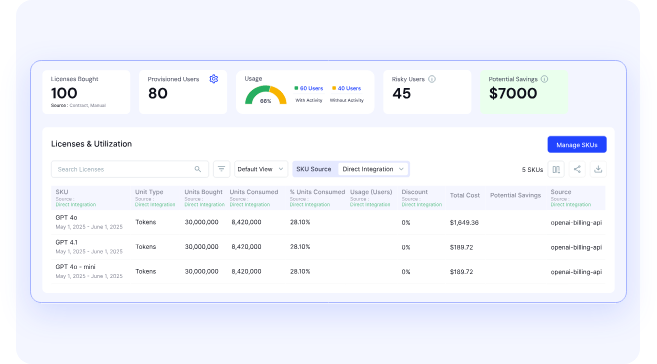
Most organizations are trying to manage AI risk with tools designed for a pre-AI environment. CloudEagle.ai provides a dedicated AI governance layer that helps security teams discover shadow AI, govern AI agents, enforce approved AI usage policies, and monitor AI spend and token consumption from a single platform.
- Discovers shadow AI through browser signals, firewall logs, Zscaler, CrowdStrike, SSO, and finance integrations
- Detects AI agents, OAuth connections, API tokens, and GenAI capabilities embedded inside SaaS applications
- Uses flash-page redirects and policy enforcement to guide employees toward approved AI tools
- Applies GenAI risk scores and monitors AI usage, spend, and token consumption across the organization
This gives security teams visibility and control across the four AI risk areas that traditional security and governance tools were never designed to address.
AI Created Four New Risk Surfaces. Can You See Any of Them?


Final Thoughts
Traditional security tools are not broken. The challenge is that AI introduced new risk surfaces they were never designed to govern.
Shadow AI, prompt exposure, AI agents, and AI consumption all exist outside the assumptions that firewalls, DLP, IAM, and SIEM were built around. That is where many organizations are most exposed today.
See how CloudEagle.ai's AI Governance module helps organizations manage all four AI risk surfaces from a single platform.
Frequently Asked Questions
- Why don't traditional security tools catch shadow AI?
Traditional tools rely on corporate identity, approved apps, and known networks. Shadow AI often uses personal accounts, browser extensions, and APIs that bypass SSO, making it invisible to existing security controls. - Can DLP detect sensitive data entered into AI chat tools?
Usually not. DLP is designed for files, attachments, and uploads. AI prompts are simply text entered into a browser field, which often looks like normal web activity and does not trigger data loss alerts. - What is an AI agent and why is it a governance risk?
An AI agent is an automated workflow that can access systems and data on a user's behalf. Because it is not a traditional user account, it may fall outside IAM and PAM controls, creating visibility and ownership gaps. - How do you track AI token consumption for security purposes?
Organizations must collect usage data directly from AI platforms and APIs. This provides visibility into per-user consumption, costs, and unusual usage patterns that could indicate risky behavior or unauthorized AI activity. - What are the biggest AI risks that traditional security tools miss?
The biggest gaps are shadow AI, prompt-level data exposure, AI agent risk, and AI consumption risk. These risks operate outside the assumptions traditional security and governance tools were originally built around.
AI Created Four New Risk Surfaces. Can You See Any of Them?


.avif)


.avif)
.avif)




.png)




.avif)
.avif)
.avif)


