HIPAA Compliance Checklist for 2025

As businesses scale AI adoption, they need governance platforms that do more than document risks. They need to identify AI usage, assess model and third-party risks, enforce policies, and maintain oversight as AI systems evolve.
While Credo AI supports AI risk management, its capabilities may not align with every organization’s compliance, technical, or operational needs.
According to Credo AI’s 2026 State of AI Governance Report, 60% of enterprises are scaling AI, but only 4% have governance mature enough to keep pace.
This guide compares nine Credo AI alternatives and Credo AI competitors, evaluating their key features, use cases, and pricing to help businesses find a solution that fits their AI governance priorities.
1. Why Consider Credo AI Alternatives in 2026?
Credo AI supports structured AI risk management and governance, but organizations differ in how they need to oversee AI. Some prioritize regulatory compliance and audit readiness, while others need technical model monitoring or visibility into employee use of AI applications.
Comparing Credo AI alternatives helps businesses identify platforms that better fit their governance priorities, existing workflows, and budgets.
When evaluating Credo AI competitors, focus on these practical differences:
- Governance coverage: Determine whether the platform supports the full AI lifecycle, from inventory and risk classification to ongoing monitoring and audit documentation.
- Regulatory requirements: Check whether it maps AI systems to relevant regulations and frameworks and helps teams maintain evidence for internal reviews and external audits.
- Employee AI usage: If teams use multiple AI applications, assess whether the platform can discover unsanctioned tools, track usage, and enforce access policies.
- Technical capabilities: Organizations developing AI models may need model evaluation, performance monitoring, and risk testing beyond policy management and documentation.
- Implementation and cost: Consider integration requirements, deployment effort, pricing structure, and the administrative workload involved in maintaining governance as AI adoption grows.
The right alternative depends on the gap an organization needs to close. A compliance-led team may prioritize regulatory mapping and audit trails, while a security team may focus on AI discovery and access controls. Defining these requirements first makes it easier to compare AI governance software on practical value rather than feature counts alone.

2. How to Evaluate and Choose the Right Credo AI Alternative
Choose a platform based on your governance gaps, risk exposure, and operational requirements, not just its feature list.
- Define governance priorities: Identify whether you need regulatory compliance, model monitoring, third-party AI risk management, or employee AI usage controls.
- Assess risk management workflows: Check whether the platform classifies risks, assigns ownership, tracks mitigation, and reassesses AI systems when conditions change.
- Verify monitoring and enforcement: Confirm it can detect policy violations and enforce controls, rather than simply providing dashboards and reports.
- Check compliance and audit readiness: Look for relevant regulatory frameworks, traceable risk decisions, audit trails, and evidence collection.
- Compare integrations and total cost: Evaluate compatibility with existing systems, implementation effort, licensing, and ongoing maintenance.
Before shortlisting Credo AI competitors, validate key capabilities through vendor demos. Organizations prioritizing compliance may need different solutions from those focused on shadow AI discovery and employee access controls. Choose the platform that addresses your highest-priority risks without unnecessary complexity or cost.
3. Quick Comparison of the 9 Best Credo AI Alternatives in 2026
The best Credo AI alternatives vary by governance priorities, from employee AI usage controls to regulatory compliance and model risk management.
These platforms differ in scope, so compare their capabilities against your specific requirements before shortlisting. In particular, employee AI usage controls and formal model governance address different problems and should not be treated as interchangeable.
4. 9 Best Credo AI Governance Alternatives in 2026
The best Credo AI alternatives depend on whether an organization needs formal AI risk assessments, regulatory compliance, technical model oversight, or controls over employee AI usage. These nine platforms differ in their focus, capabilities, and implementation requirements, making it important to compare them against specific governance needs.
A. CloudEagle.ai
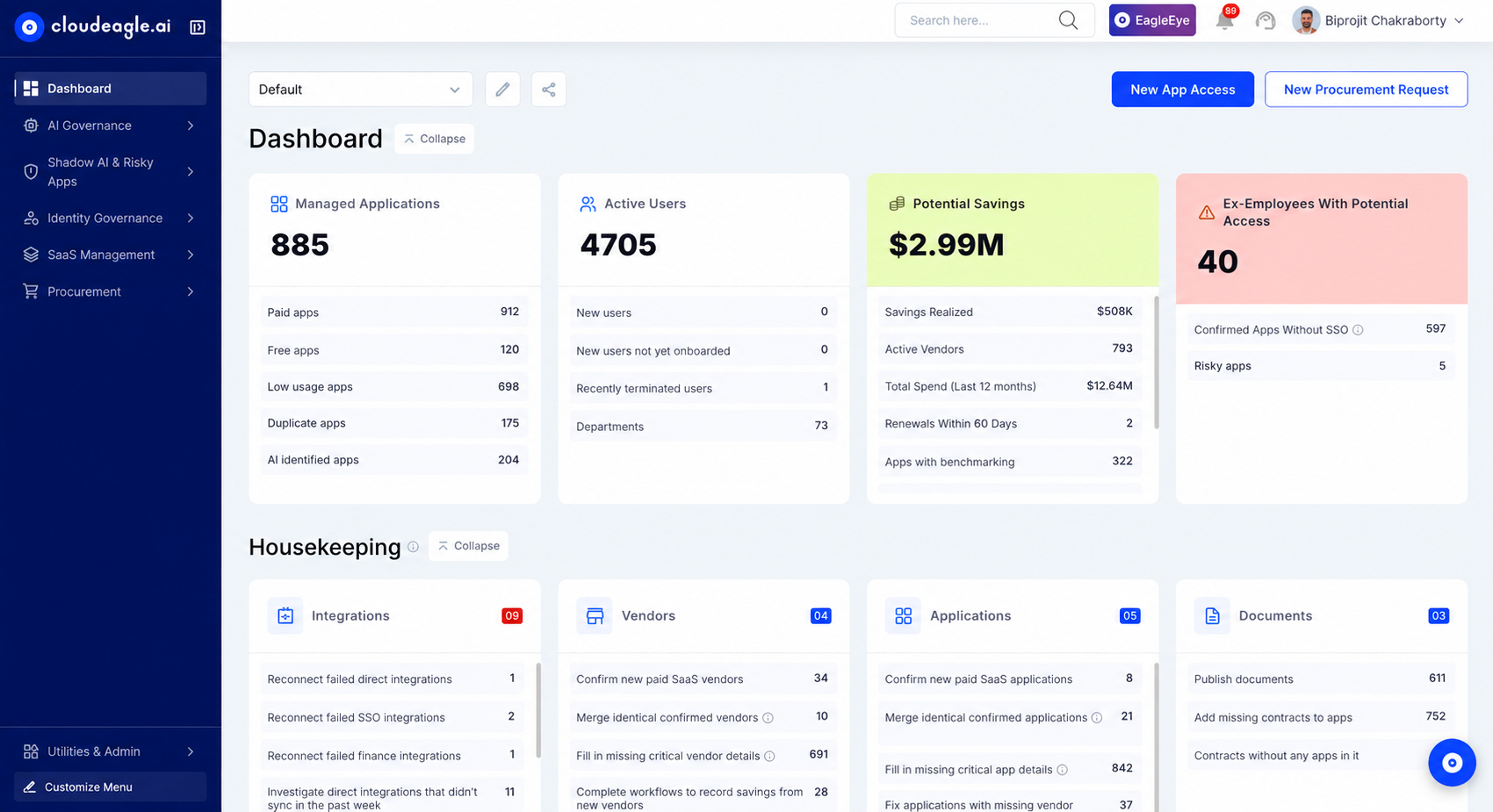
CloudEagle.ai helps organizations govern AI adoption by discovering shadow AI, controlling employee usage, enforcing policies, monitoring token consumption, and managing AI agents.
It connects AI usage visibility with security and cost controls, helping organizations identify unapproved tools, prevent risky AI usage, track spending across teams, and maintain oversight of AI agents.
This allows businesses to move beyond documenting AI risks and enforce governance controls as AI adoption expands.
Key features:
Shadow AI Discovery: Discovers AI applications employees use across the organization, including tools operating outside approved IT processes.
It helps teams identify unapproved applications, assess potential risks, and maintain visibility into AI adoption through shadow AI discovery.
AI Usage Control: Tracks token consumption, credits, licenses, and costs across supported AI tools.
Teams can review usage by user, team, model, project, and API key to understand consumption patterns, identify underused licenses, and improve cost accountability through AI usage control.
AI Policy Enforcement: Helps organizations enforce AI usage policies at the point of access. When employees attempt to access unapproved tools, browser-based controls can redirect them to approved alternatives.
Configured controls can also help prevent sensitive information from being submitted to unmanaged AI applications through AI policy enforcement.
AI Spend Limits and Budgeting: Tracks AI consumption and costs by application, team, and department. Organizations can monitor spending against configured thresholds, receive alerts as usage approaches budget limits, and allocate costs to the teams responsible.
CloudEagle.ai also supports AI token cost management to help organizations improve budget oversight and reduce unexpected spending.
AI Model Recommendations: Provides model-level usage and cost visibility to help teams compare consumption across AI models and identify opportunities to optimize spending.
These insights can inform model selection based on workload requirements and cost considerations, helping teams avoid unnecessary spending on more expensive models.
AI Agent Management: CloudEagle.ai’s AI agent security platform helps organizations discover AI agents and govern their associated identities, ownership, credentials, and permissions.
Teams can identify what each agent can access, review excessive privileges, and revoke credentials when an agent is no longer needed. Its non-human identity management capabilities support oversight of service accounts, API keys, and other machine identities. These capabilities complement AI agent discovery and governance.
Pros:
- Connects shadow AI discovery, usage control, and policy enforcement within one AI governance platform.
- Provides token-level consumption and cost visibility to support AI budgeting and spending decisions.
- Helps organizations enforce AI usage policies and direct employees toward approved tools.
- Extends governance to AI agents, API keys, service accounts, and associated access permissions.
Pricing: Contact CloudEagle.ai for a quote based on the organization's requirements, selected capabilities, and implementation needs.
Looking Beyond Credo AI?


B. Enzai
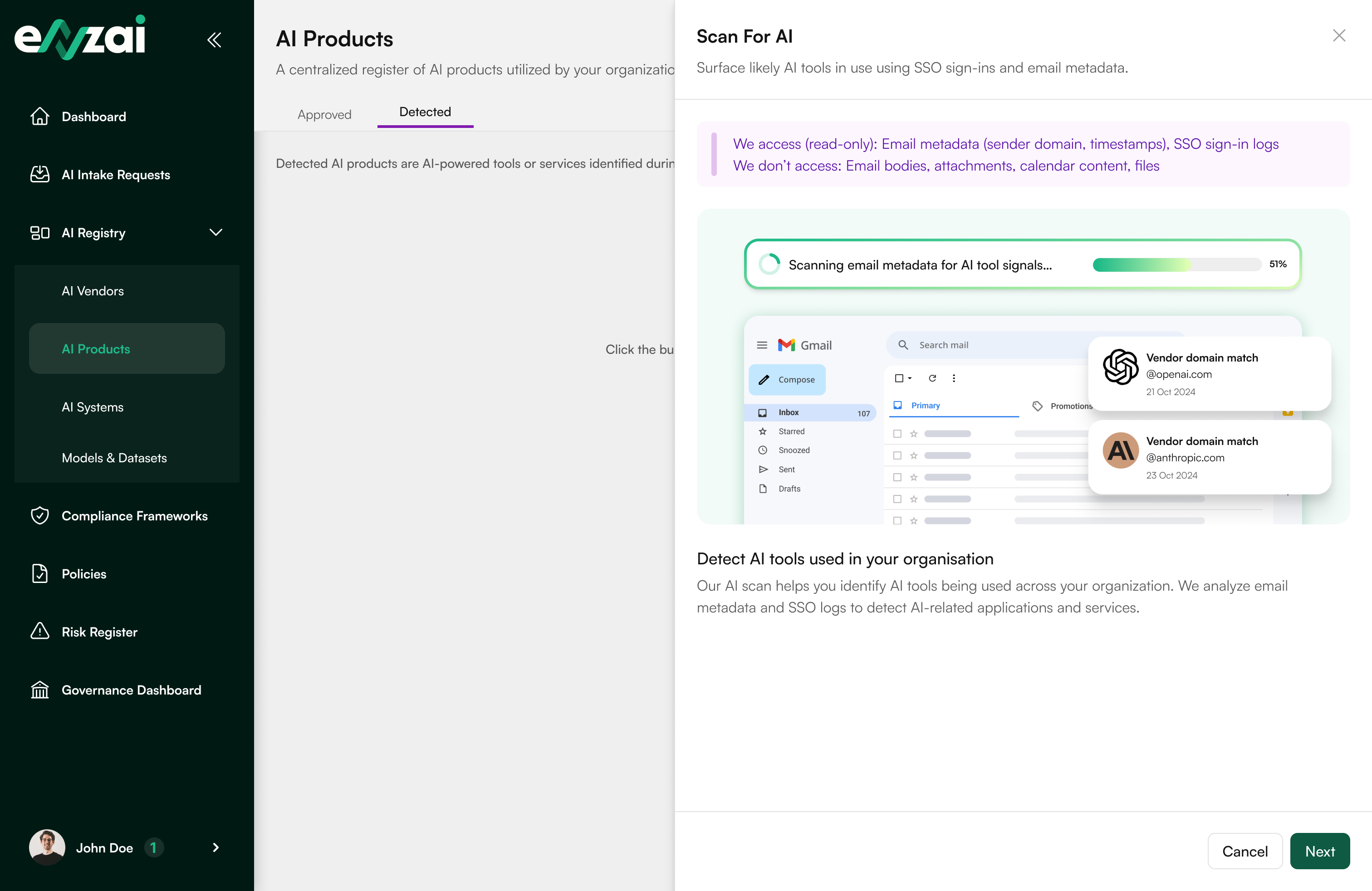
Best for: Structured AI governance and regulatory compliance
Enzai helps organizations establish consistent governance processes for AI systems, from initial registration and risk assessment to approvals and oversight. It is relevant to teams that need a structured alternative to managing AI governance through spreadsheets and disconnected reviews.
Key features
- AI inventory: Maintains records of AI systems and their associated governance information.
- Risk assessments: Supports structured reviews to identify and classify AI-related risks.
- Regulatory mapping: Helps align governance processes with applicable frameworks and requirements.
- Approval workflows: Coordinates reviews across legal, privacy, security, and risk teams.
- Governance documentation: Centralizes records of assessments, decisions, and controls.
Pricing: Contact Enzai for a quote based on governance requirements and deployment scope.
C. Holistic AI
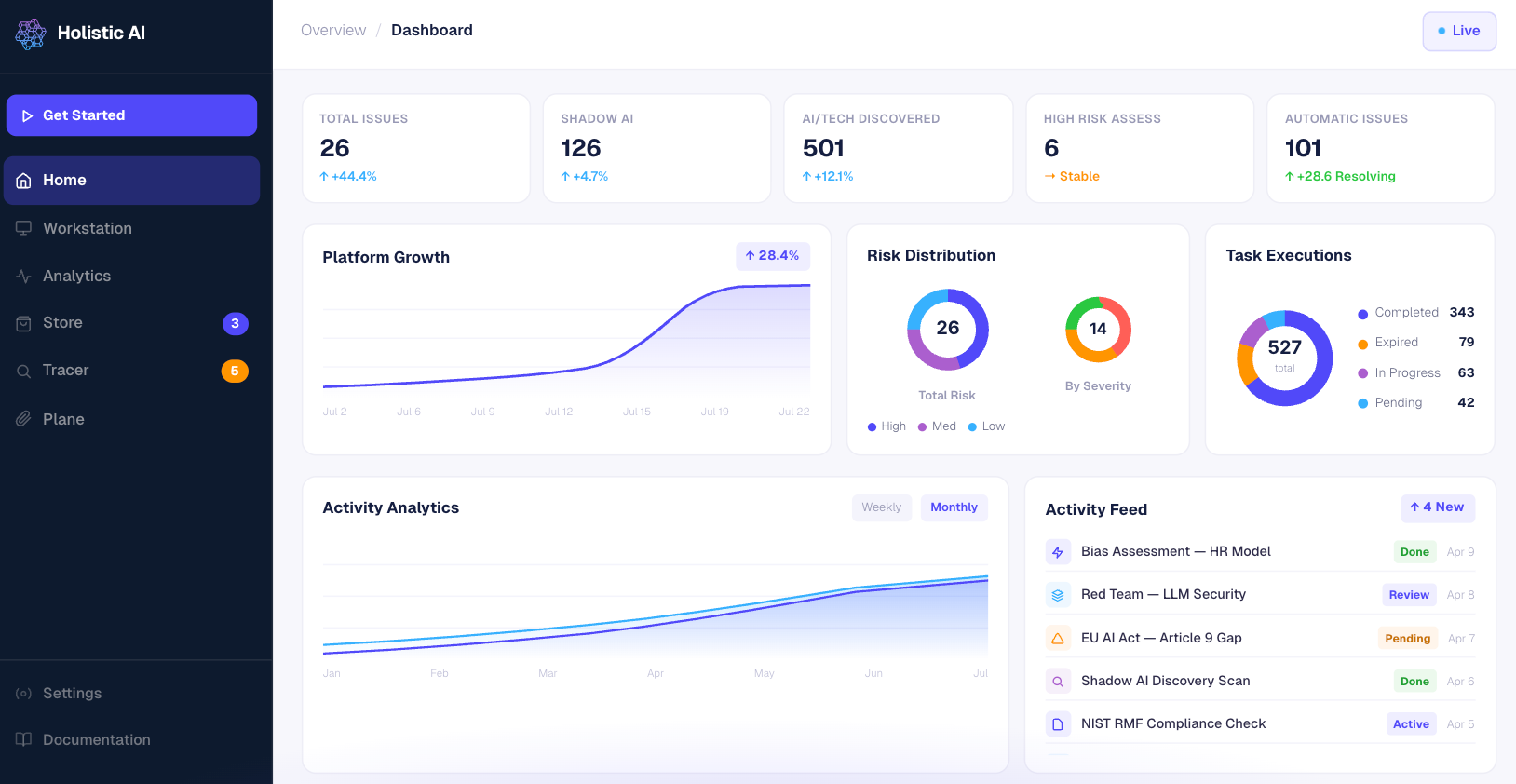
Best for: AI risk testing, technical assurance, and model evaluation
Holistic AI is suited to organizations that need to evaluate AI systems for technical and responsible-AI risks. Its testing-oriented approach can complement governance processes by helping teams identify issues that policy documentation alone may not reveal.
Key features
- AI discovery: Helps identify AI systems that require governance or risk review.
- Red teaming: Tests AI applications for vulnerabilities such as prompt injection and jailbreak attempts.
- Bias and fairness testing: Evaluates models for potential fairness-related issues.
- Risk assessment: Helps teams prioritize identified risks and remediation activities.
- AI monitoring: Supports ongoing assessment of relevant model risks and performance indicators.
Pricing: Contact Holistic AI for current pricing and available modules.
D. IBM watsonx.governance
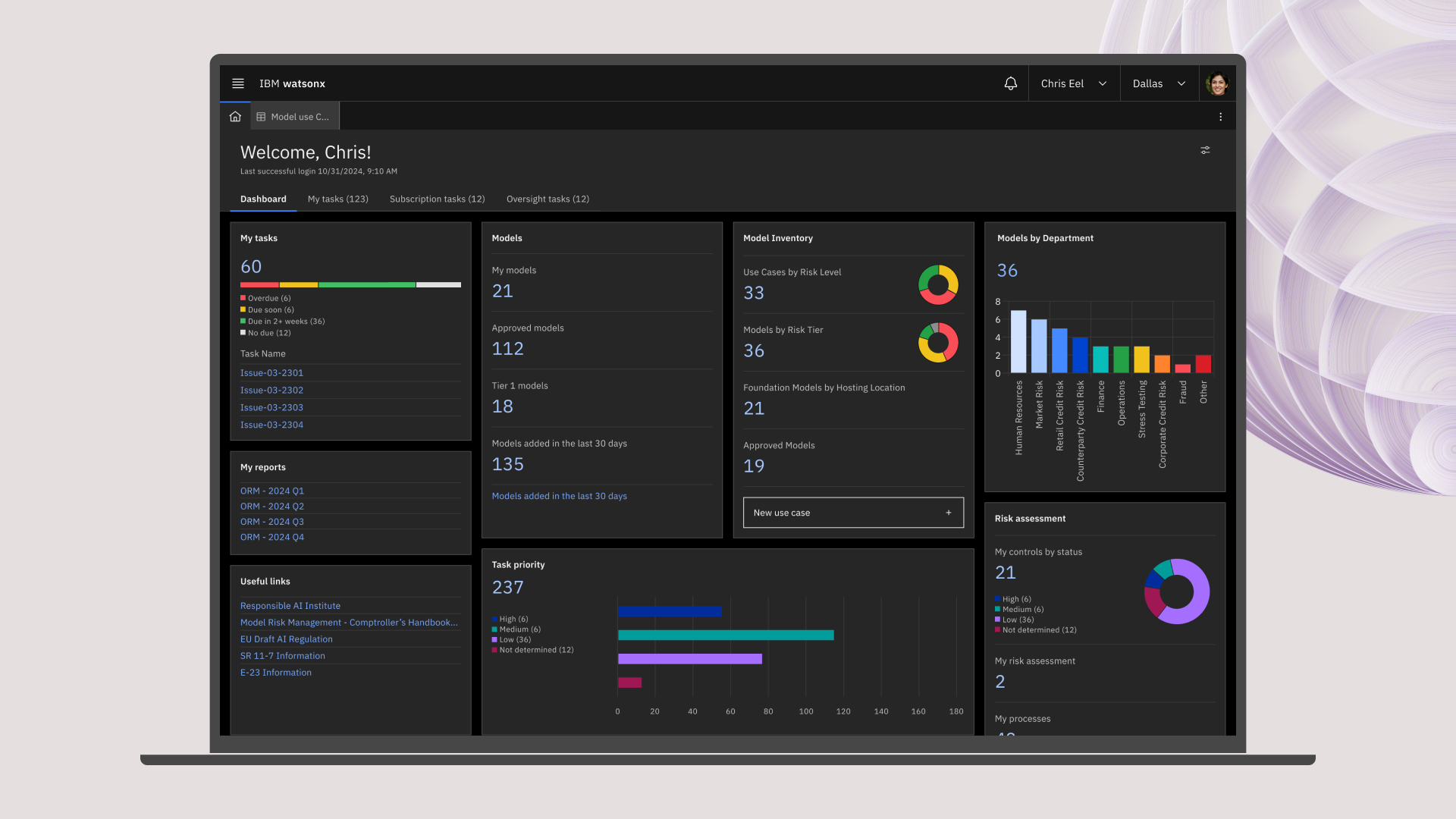
Best for: Enterprise AI lifecycle governance and model oversight
IBM watsonx.governance supports governance of machine learning and generative AI models across development and deployment. Its model factsheets, evaluation capabilities, and monitoring workflows help organizations maintain visibility into model behaviour and governance decisions.
Key features
- AI Factsheets: Records model metadata, lifecycle details, and governance information for tracked assets.
- Model evaluation: Evaluates models and prompts against relevant quality, fairness, and risk criteria.
- Performance monitoring: Monitors model behaviour and identifies issues such as drift and changes in quality.
- Lifecycle tracking: Supports oversight from AI use-case definition through development and production.
- Governance documentation: Maintains records that help teams explain model decisions and support audits.
Pricing: IBM publishes several pricing options, including a free trial and paid plans. Its pricing page lists indicative rates, such as Risk & Compliance Basic starting at $3,500 per month; actual costs vary by offering, region, and configuration.
E. ModelOp
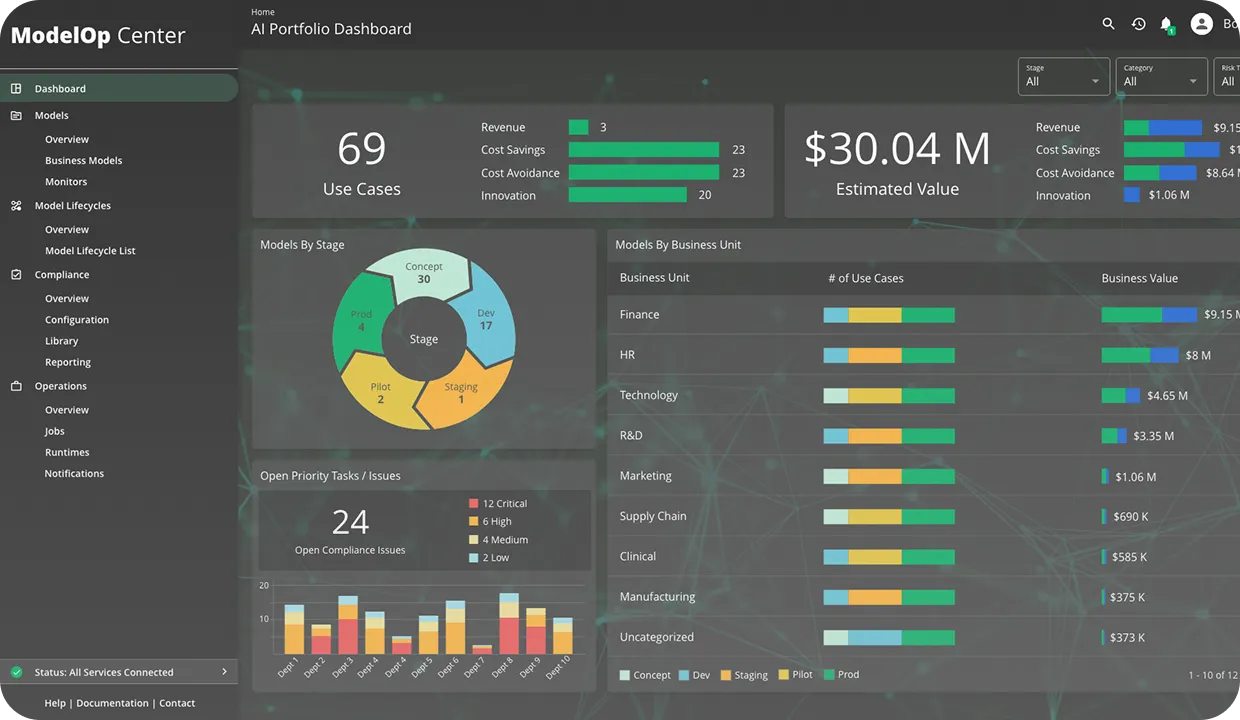
Best for: Enterprise AI governance orchestration
ModelOp focuses on coordinating AI governance across teams, models, and business use cases. It is worth considering when organizations need consistent intake, approvals, risk controls, and documentation across a large AI portfolio.
Key features
- Centralized AI inventory: Tracks AI use cases and associated governance information.
- Standardized intake: Establishes a consistent process for registering AI initiatives.
- Risk-based approvals: Routes use cases through relevant governance reviews.
- Lifecycle oversight: Tracks governance milestones and activities as AI systems progress.
- Evidence management: Organizes documentation needed for reviews and compliance processes.
Pricing: Contact ModelOp for enterprise pricing and implementation details.
F. Monitaur
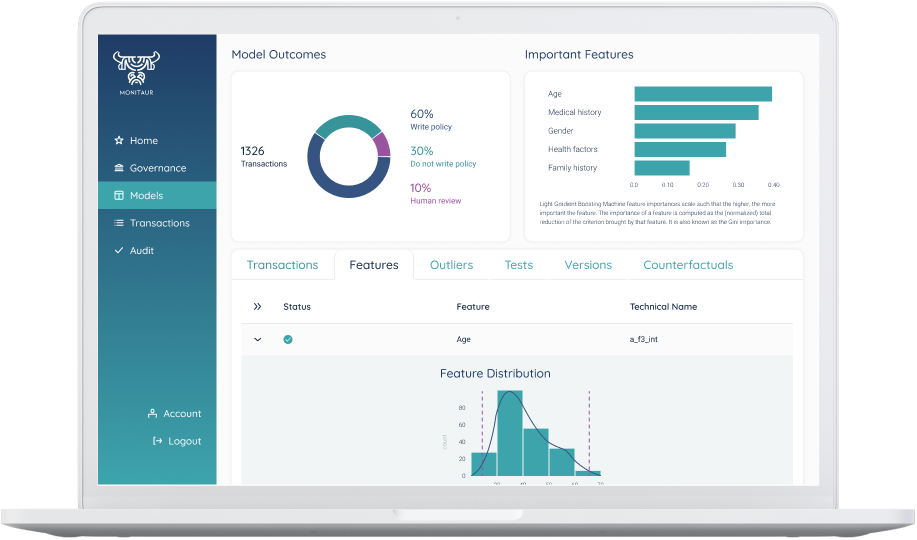
Best for: Model risk management and documented oversight
Monitaur is an option for organizations that need structured model governance, validation records, and evidence of oversight. It is particularly relevant when teams must demonstrate how models are assessed, reviewed, and managed throughout their use.
Key features
- Model inventory: Maintains centralized records of models and associated governance information.
- Risk assessments: Documents model risks and the controls used to address them.
- Validation workflows: Supports structured model review and validation processes.
- Governance records: Organizes model documentation and decisions for internal oversight.
- Audit evidence: Helps maintain traceable records for governance reviews.
Pricing: Contact Monitaur to confirm current offerings and pricing.
G. OneTrust AI Governance
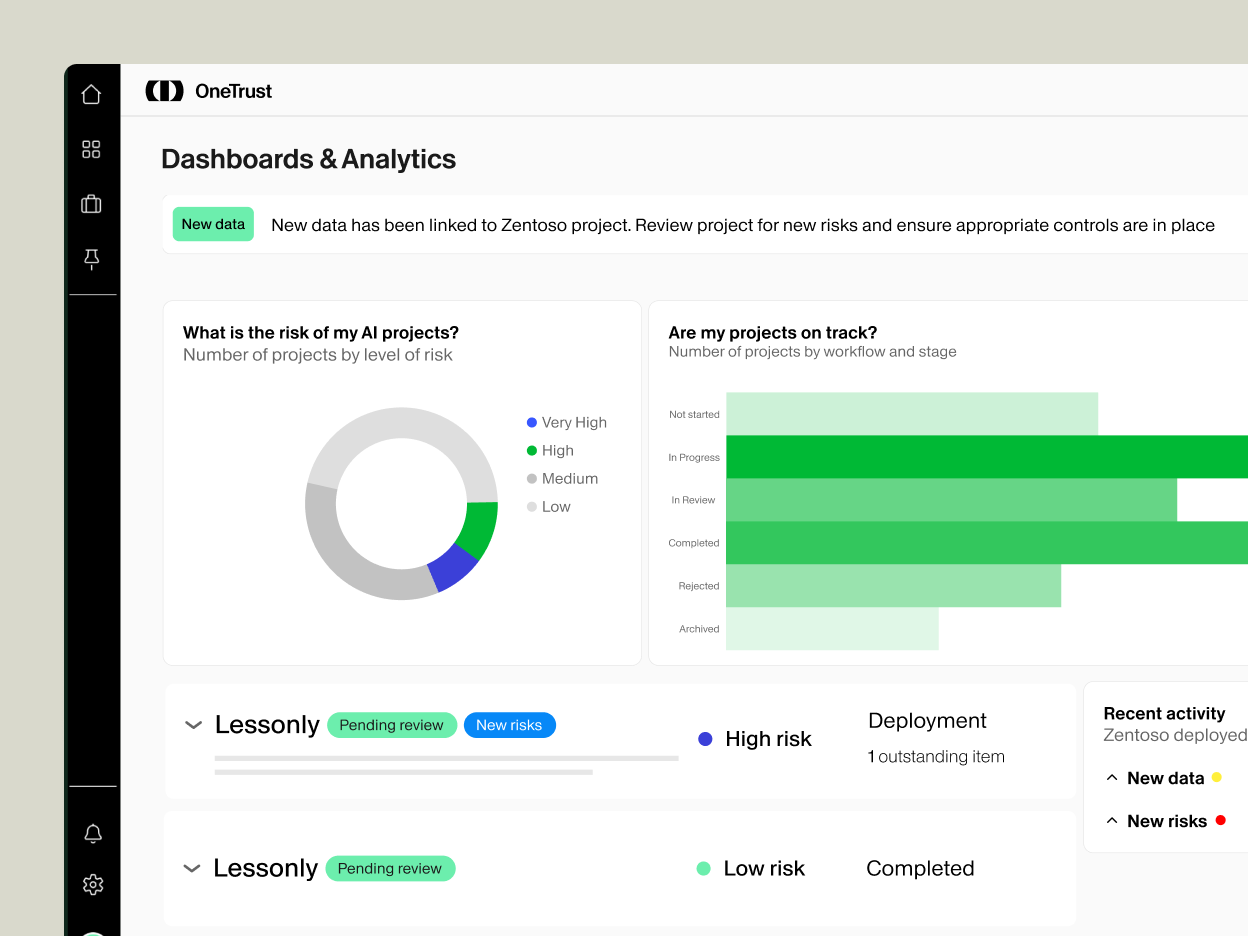
Best for: AI governance integrated with privacy and enterprise risk management
OneTrust is worth considering for organizations that already use its privacy and governance, risk, and compliance (GRC) capabilities. Connecting AI oversight with existing compliance workflows can help teams coordinate risk reviews and documentation rather than manage separate processes.
Key features
- AI discovery and inventory: Maintains records of AI systems and their governance status.
- Risk assessments: Helps teams evaluate AI use cases and prioritize oversight.
- Regulatory alignment: Supports governance processes mapped to relevant regulations and frameworks.
- Policy workflows: Coordinates reviews, approvals, and remediation activities.
- Compliance documentation: Helps maintain evidence and records for audits.
Pricing: Contact OneTrust for a quote based on the selected modules and organizational requirements.
H. Saidot
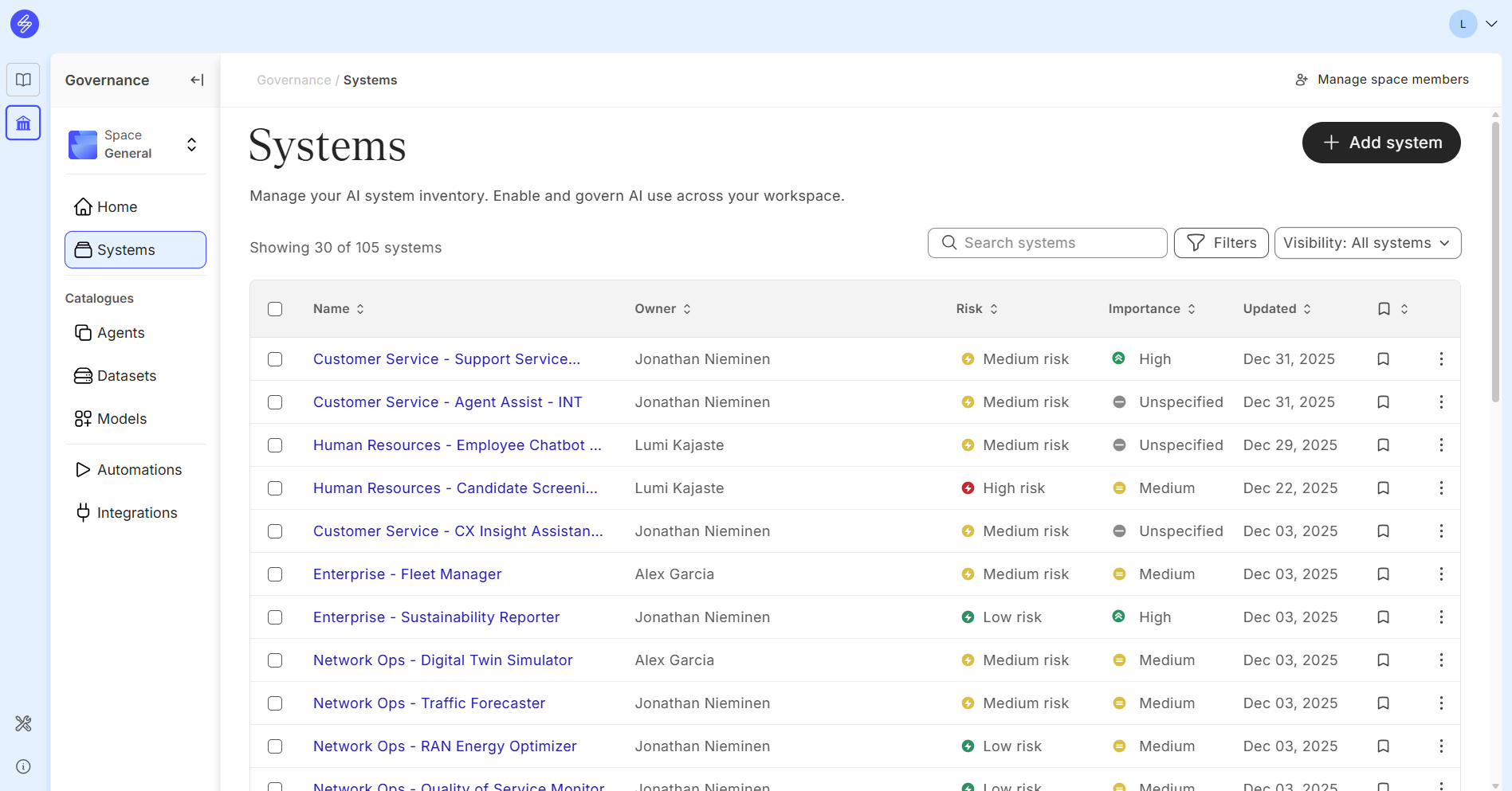
Best for: Connected AI inventories and lifecycle governance
Saidot takes a connected approach to AI governance by linking systems with related models, datasets, risks, policies, and controls. This can help organizations understand dependencies between AI assets and avoid repeating governance work when related information is already documented.
Key features
- Connected AI inventory: Links AI systems and related governance information.
- Risk management: Helps teams document and track risks associated with AI use cases.
- AI agent governance: Supports documenting agents and their relevant governance requirements.
- Policy and control mapping: Connects identified risks with applicable policies and controls.
- Governance documentation: Maintains records that support reviews and oversight.
Pricing: Contact Saidot for current plans and enterprise pricing.
I. Trustible
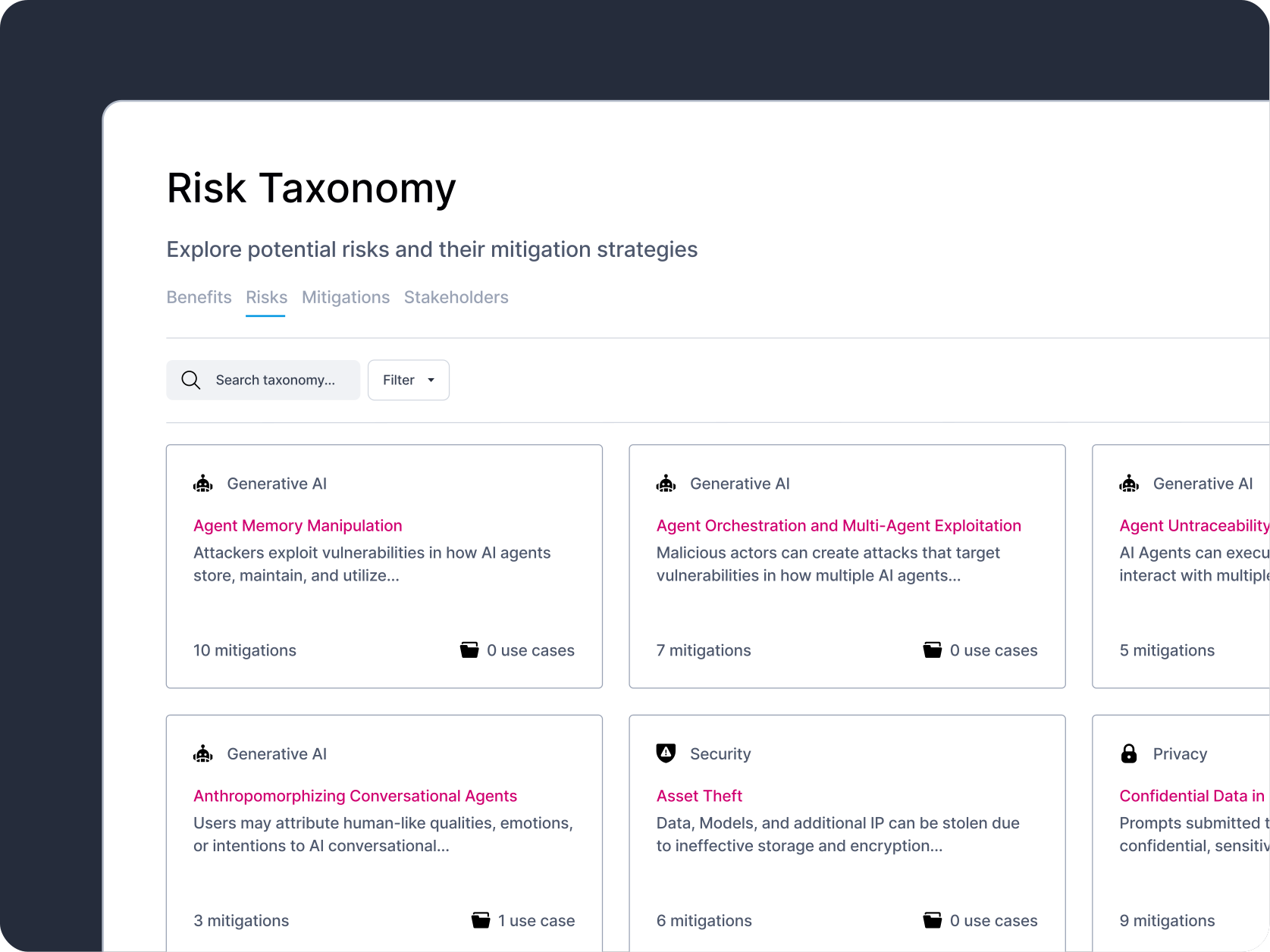
Best for: Formal AI risk management and compliance workflows
Trustible helps organizations establish repeatable processes for evaluating AI use cases, documenting risks, assigning responsibility, and tracking governance activities. It is relevant to teams that need a dedicated system for managing AI risk and demonstrating how oversight decisions are made.
Key features
- AI intake workflows: Captures information about AI use cases before deployment or approval.
- Risk and impact assessments: Helps teams identify risks and document mitigation measures.
- Vendor reviews: Supports governance reviews for third-party AI tools and services.
- Monitoring and follow-up: Helps teams track governance activities and reassessment needs.
- Compliance evidence: Organizes records supporting internal reviews and compliance requirements.
Pricing: Contact Trustible for a quote based on the organization's needs and platform scope.
5. How to Choose the Right Credo AI Competitor
The right Credo AI alternative depends on the governance gaps your organization needs to address:
- Employee AI usage and access controls: CloudEagle.ai for shadow AI discovery, usage visibility, and policy enforcement.
- AI lifecycle governance: IBM watsonx.governance and ModelOp for model oversight and enterprise governance workflows.
- Risk assessment and compliance: Enzai, OneTrust, and Trustible for structured assessments, governance policies, and compliance documentation.
- Technical testing and model risk: Holistic AI and Monitaur for AI testing, assurance, and model risk management.
- Connected AI governance: Saidot for linking AI systems with related risks, policies, and controls.
Before choosing, verify each platform's integrations, implementation requirements, and pricing. Most importantly, distinguish between documenting AI risks, testing model behaviour, and enforcing controls on employee AI usage, these are different capabilities, and not every platform covers them equally.
6. Choosing the Right Credo AI Alternative in 2026
The right Credo AI alternative depends on your priorities, from regulatory compliance and model risk management to employee AI usage and access controls. Compare capabilities, integrations, and costs to find the best fit.
CloudEagle.ai helps organizations identify shadow AI, manage employee access, and gain visibility into AI usage and spending.
7. FAQs
1. What is the diffrence between AI governance and AI risk management?
AI risk management focuses on identifying, assessing, and mitigating risks associated with AI systems. AI governance is broader: it establishes the policies, accountability, approval processes, and ongoing oversight used to manage those risks throughout the AI lifecycle.
2. Can AI governance platforms manage generative AI and AI agents?
Some platforms support generative AI applications and AI agents, but capabilities vary. Before choosing a solution, check whether it can inventory agents, document their permissions, assess risks associated with their actions, and monitor relevant activity after deployment.
3. How can organizations measure the effectiveness of an AI governance programme?
Organizations can track metrics such as the percentage of AI systems inventoried, completion rates for risk assessments, time taken to approve AI use cases, unresolved high-risk findings, and remediation completion rates. These measures help demonstrate whether governance processes are working in practice.
4. When should a business reassess an AI system's risk?
Risk assessments should be revisited when a model changes, a new use case is introduced, data access or permissions expand, a vendor changes its product, or monitoring reveals unexpected behaviour. Periodic reviews are also important because an AI system's risk can change after its initial approval.
5. Who should be responsible for AI governance within an organization?
AI governance typically requires shared accountability across IT, security, legal, compliance, data science, and business teams. Organizations should assign a clear owner for each AI system and define who approves use cases, reviews risks, implements controls, and handles incidents.
Govern the AI Your Employees Actually Use.