HIPAA Compliance Checklist for 2025

Employees are adopting AI tools faster than organizations can approve them. Unapproved AI assistants, SaaS features, and agents create shadow AI, increasing the risk of data exposure and unauthorized access.
OneTrust's 2026 AI-Ready Governance Report found that 33% of surveyed organizations reported employees using unapproved AI tools because approved alternatives or processes were not readily available.
IBM watsonx.governance helps manage AI risks and govern the AI lifecycle. However, organizations needing stronger shadow AI discovery and employee usage controls may require additional capabilities.
This guide compares the 7 best IBM watsonx.governance alternatives in 2026, highlighting their features and ideal use cases.
1. Why Consider IBM watsonx.governance Alternatives in 2026?
IBM watsonx.governance helps organizations manage AI risks, evaluate models, and govern the AI lifecycle. However, businesses addressing shadow AI may need greater visibility into employee AI usage, connected applications, and access permissions.
When comparing alternatives, prioritize these capabilities:
- Shadow AI discovery: Identify unapproved AI tools used across the organization.
- AI usage control: Guide employees toward approved tools and enforce internal policies.
- Access governance: Monitor user permissions and connections to AI applications.
- Risk management: Assess data exposure, security vulnerabilities, and compliance gaps.
- Monitoring and reporting: Track AI usage and maintain evidence for governance reviews.
- Integration: Ensure compatibility with existing SaaS applications, identity systems, and security tools.
The right choice depends on the organization's primary governance needs. IBM watsonx.governance focuses on AI lifecycle governance, while CloudEagle.ai emphasizes shadow AI discovery, employee AI usage control, and SaaS access governance.
Understanding this distinction helps businesses select a platform that addresses their specific requirements.
2. How to Choose the Right IBM watsonx.governance Alternative
Choosing the right IBM watsonx.governance alternative starts with identifying the organization's biggest AI governance gaps. Evaluate platforms against these key requirements:
- Discovery coverage: Check whether the platform identifies unapproved AI applications, embedded AI features, and AI agents.
- Policy enforcement: Confirm whether it can enforce usage policies or guide employees toward approved tools.
- Identity and data security: Assess visibility into user permissions, connected accounts, and sensitive data risks.
- Governance workflows: Review support for risk assessments, policy management, monitoring, and audit evidence.
- Integrations and costs: Verify compatibility with existing systems and understand licensing requirements.
Before making a decision, test the platform against a real scenario. Check whether it can identify an unapproved AI tool, show who uses it, assess the associated risk, and help the organization respond.
This practical evaluation helps businesses compare platforms based on their actual capabilities rather than feature lists alone.

3. Quick Comparison: 7 Best IBM watsonx.governance Alternatives in 2026
Each platform addresses a different part of AI governance. Some focus on discovering shadow AI and managing employee access, while others prioritize AI security, risk assessment, or compliance workflows.
4. 7 Best IBM watsonx.governance Alternatives in 2026
The right AI governance platform depends on whether an organization needs to discover shadow AI, control employee AI usage, strengthen AI security, or manage risk and compliance.
These seven alternatives address different governance needs, from workforce AI discovery to technical security and responsible AI management.
A. CloudEagle.ai
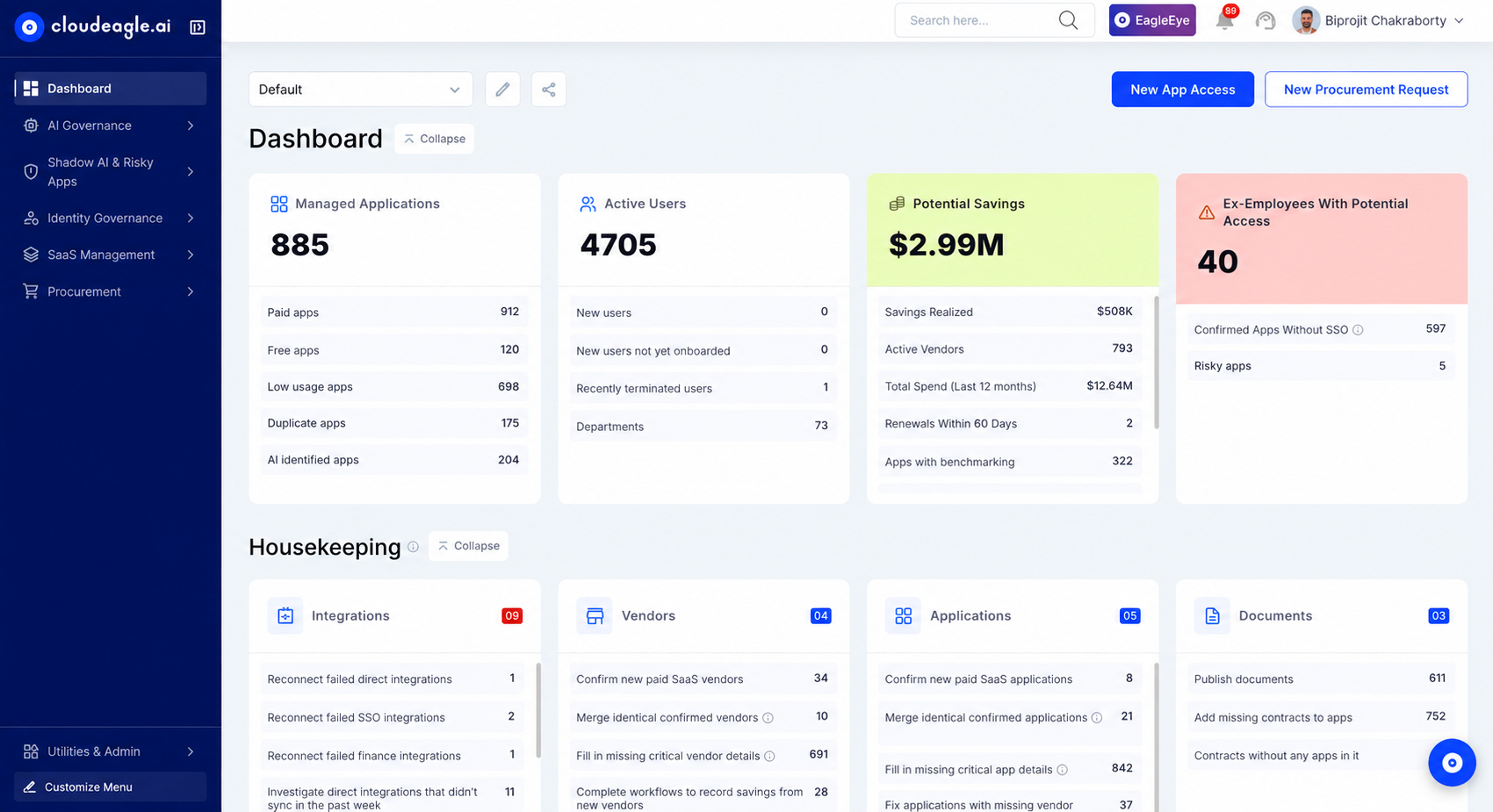
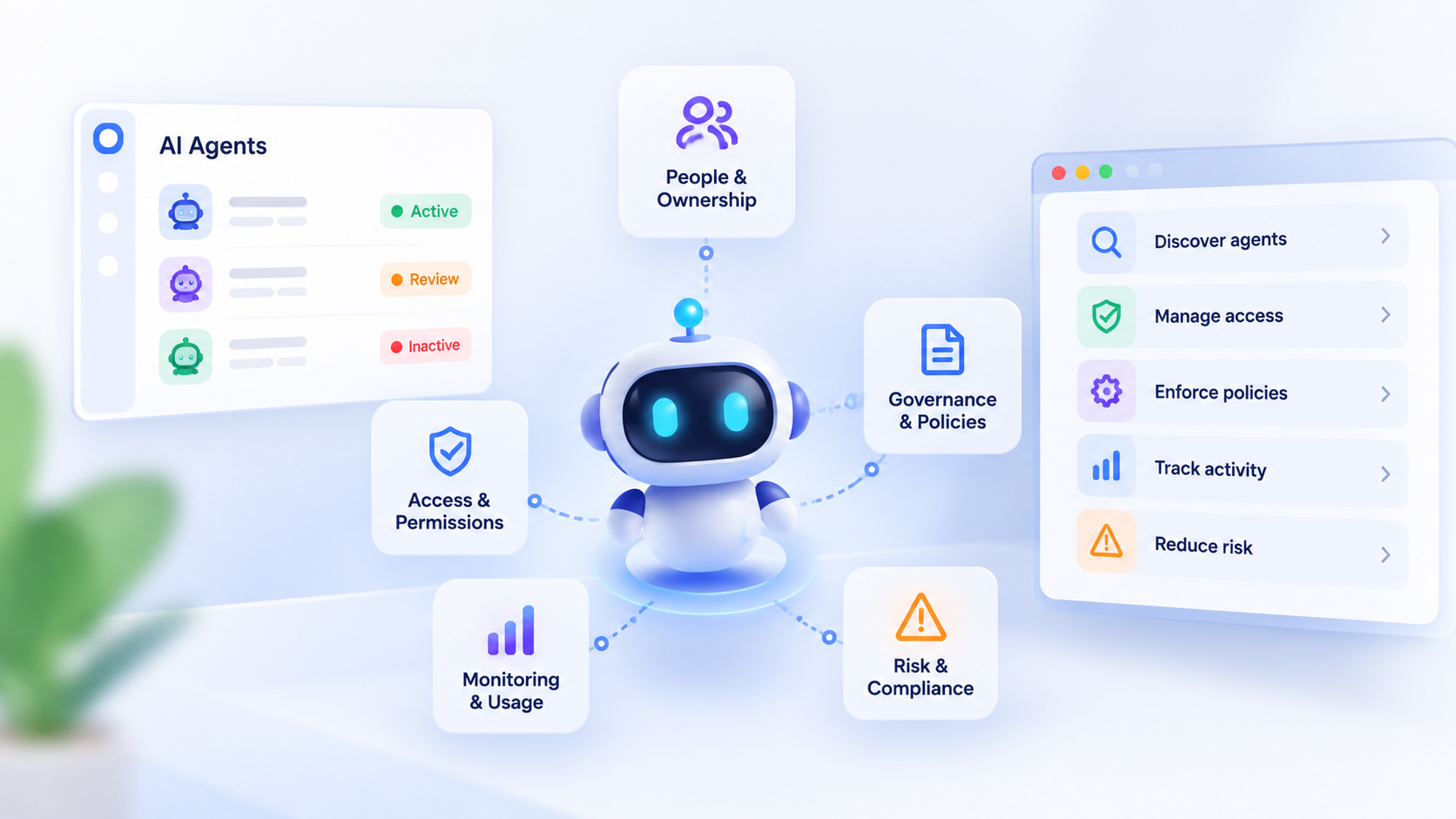
CloudEagle.ai is an AI governance platform that helps organizations discover AI applications, monitor usage, enforce policies, and govern access to AI tools and agents. It connects AI governance with SaaS management and identity governance, giving IT, security, and finance teams visibility into AI adoption, access risks, and spending.
For businesses evaluating IBM watsonx.governance alternatives in 2026, CloudEagle.ai is particularly relevant when the priority is controlling how employees use AI across the workplace.
While IBM focuses on AI lifecycle governance and model-related risk management, CloudEagle.ai emphasizes workforce AI discovery, usage controls, and SaaS access governance. These capabilities address different but potentially complementary needs.
Key Features
Discover shadow AI across the organization
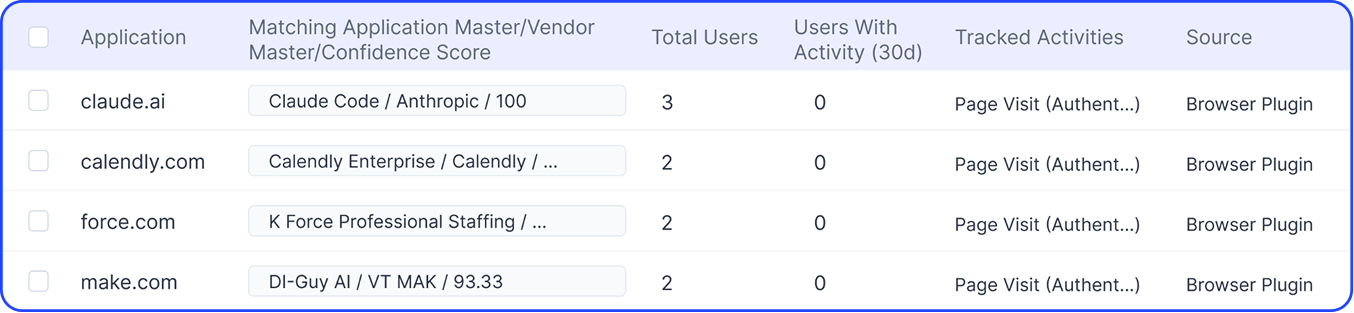
AI tools can enter the workplace through direct sign-ups, browser activity, and application integrations without formal IT approval. CloudEagle.ai helps organizations build a centralized inventory of AI applications and identify tools operating outside established procurement and governance processes.
- Maintain a centralized inventory of AI applications through SaaSMap.
- Identify sanctioned and unsanctioned AI tools across the organization.
- Use connected data sources, including supported browser and security-tool signals, to improve visibility.
- Review AI adoption across users, teams, and departments.
Monitor AI usage and control spending
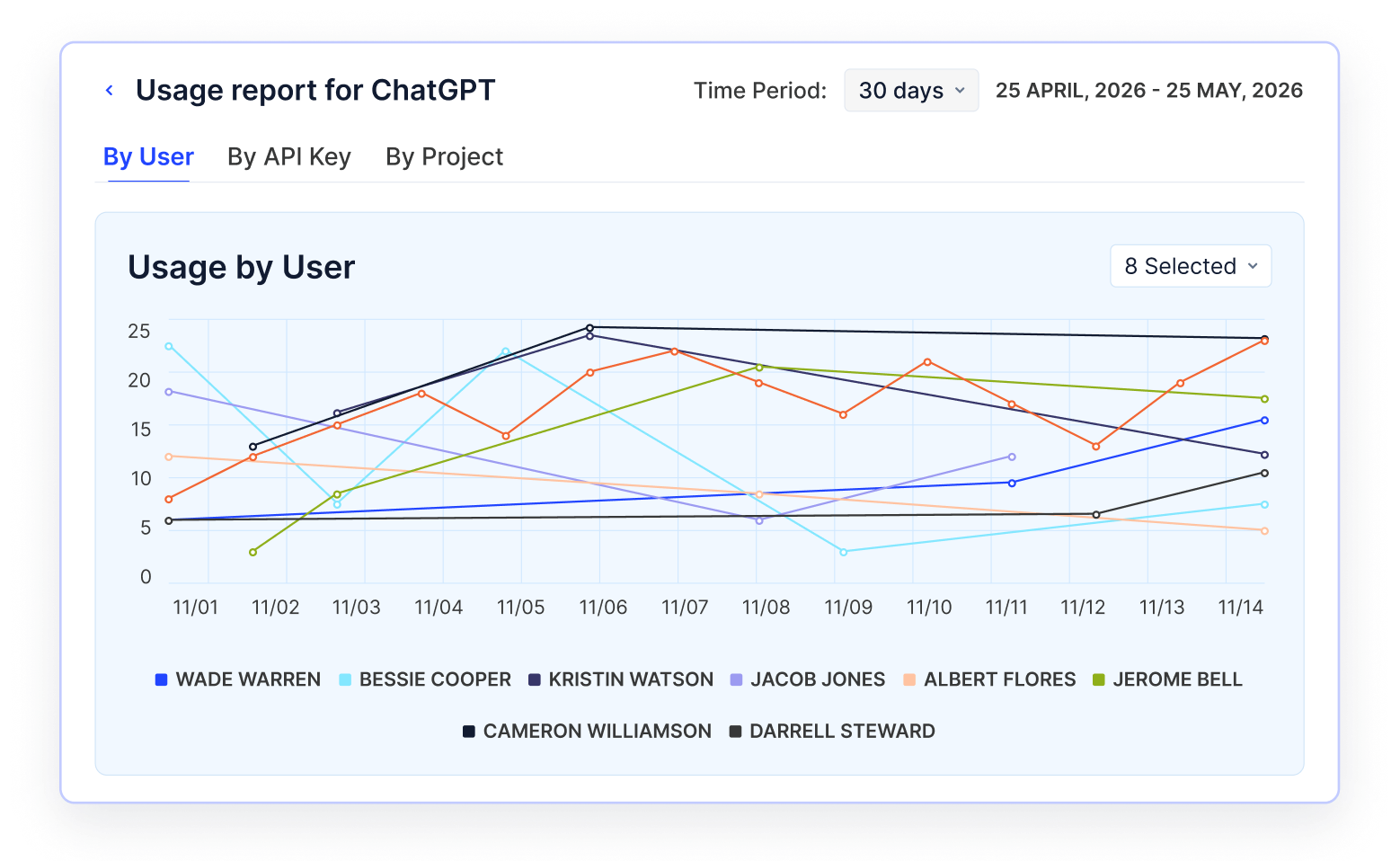
AI spending can be distributed across subscriptions, tokens, API calls, and credits. CloudEagle.ai’s AI usage control capabilities help organizations track consumption across supported tools and understand usage by user, team, and other relevant cost dimensions.
- Track AI spending and token consumption across supported tools.
- Connect usage data with users, teams, cost centers, and API keys where supported.
- Identify underused AI licenses and potential opportunities to reduce waste.
- Set spending thresholds and receive alerts to support budget management.
Enforce AI usage policies
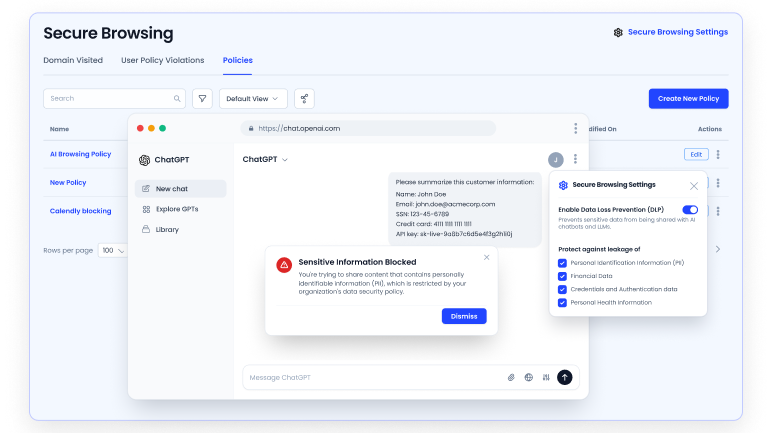
Discovering unapproved AI tools is only the first step. Organizations also need practical controls to guide employees toward approved alternatives and reduce the risk of sensitive information being shared with unauthorized AI services.
CloudEagle.ai offers AI policy enforcement capabilities that help organizations apply usage rules at the point of access.
- Maintain a list of approved AI applications.
- Display warnings and redirect employees from unapproved tools to approved alternatives where supported.
- Apply policies designed to reduce sensitive data exposure.
- Record policy warnings, blocks, and overrides for governance reviews, where supported.
Govern AI agents and non-human identities

AI agents, API keys, and service accounts can create security gaps when ownership and permissions are not properly managed. CloudEagle.ai’s AI agent security platform helps organizations improve visibility into AI agents and manage associated access risks.
Its non-human identity management capabilities support oversight of machine identities and their permissions.
- Discover supported AI agents, MCP servers, API keys, and service accounts.
- Track ownership and access permissions for non-human identities.
- Include machine identities in access reviews and least-privilege checks.
Customer Success Story
CloudEagle.ai helped Plex strengthen its AI governance program by identifying unapproved tools and applying risk-based controls. According to CloudEagle.ai's Plex case study, Plex discovered 73 shadow AI tools, blocked 18 high-risk tools, and brought 100% of its AI applications under policy.
These results demonstrate how CloudEagle.ai can help organizations turn shadow AI discovery into actionable governance and policy enforcement.
Pricing: CloudEagle.ai provides enterprise-focused AI governance, SaaS management, and identity governance capabilities. Pricing depends on the organization's requirements and selected modules.
IBM Isn't Your Entire AI Governance Strategy.


B. Nudge Security
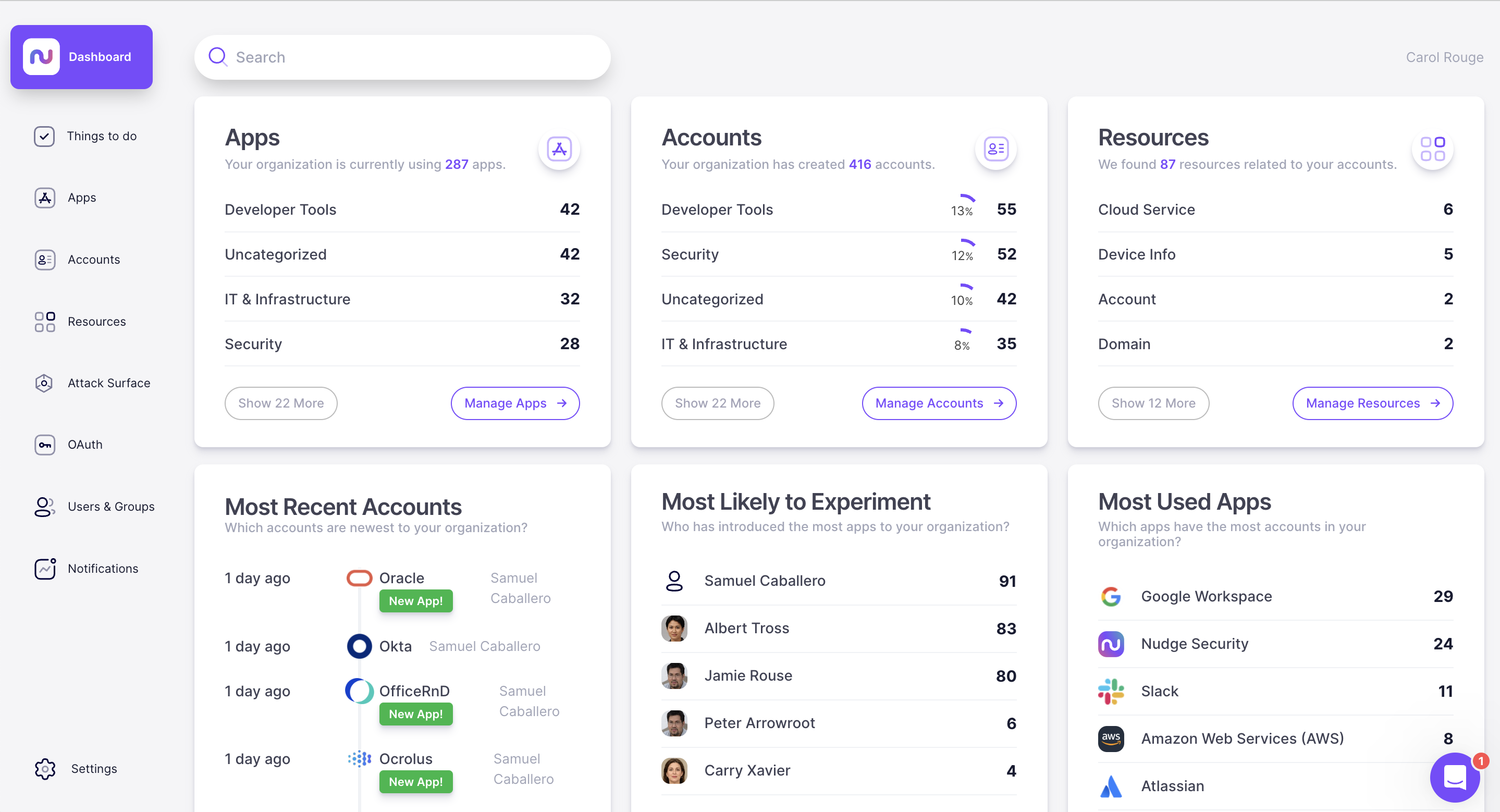
Best for: Shadow AI discovery and AI agent security
Nudge Security helps security teams discover AI applications and agents employees introduce into the workplace. It is particularly useful for organizations that need to identify unapproved AI tools, understand who owns them, and investigate potential security risks.
Key Features
- Shadow AI discovery: Identify AI applications employees use outside formal IT approval processes.
- AI agent discovery: Discover agents through connected application integrations and browser-based discovery for supported platforms.
- Identity and access visibility: Connect discovered applications and agents with employee identities and organizational accounts.
- Risk identification: Surface concerns such as risky permissions, exposed credentials, and agents connected to high-risk applications.
- Remediation workflows: Help teams assign ownership, investigate risks, and request corrective action.
Nudge Security's browser-based AI agent discovery was announced in May 2026. The feature is available through its research preview, with coverage dependent on supported platforms and discovery methods.
Pricing: Nudge Security publishes the following pricing tiers, billed annually:
- Essential: $750 per month for up to 150 users.
- Growth: $5 per user per month for organizations with 150–1,500 users.
- Enterprise: Custom pricing for organizations with more than 1,500 users.
The published plans include platform features, while enterprise customers can receive customized contracts and onboarding support.
C. Cranium AI
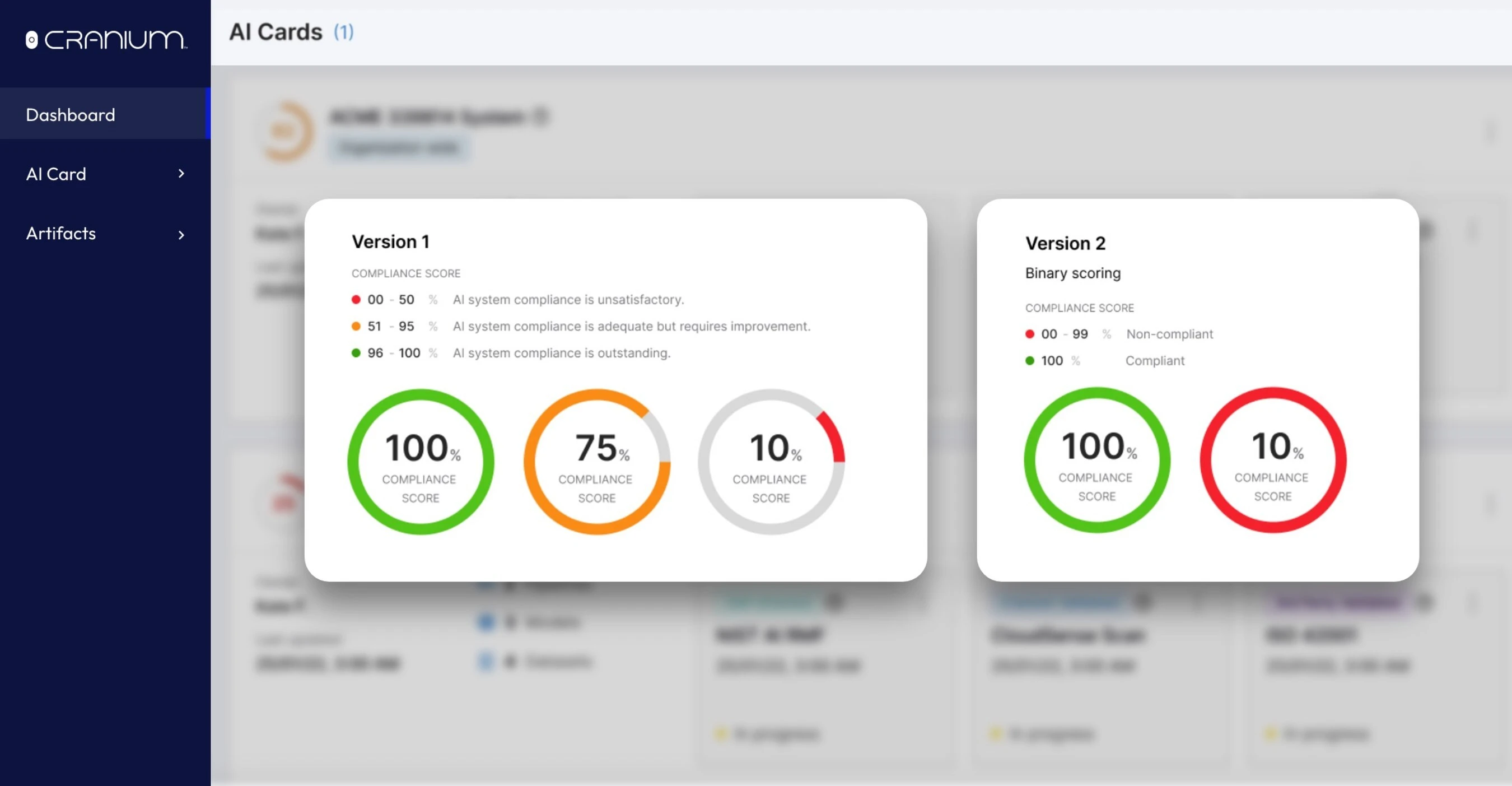
Best for: AI security, shadow AI discovery, and technical risk management
Cranium AI focuses on securing and governing AI systems across the enterprise. Its platform, Cranium ONE, brings AI discovery, runtime observation, policy governance, security testing, and compliance evidence into a connected workflow.
Key Features
- AI discovery and inventory: Identify AI models, agents, datasets, and vendors across supported environments.
- Shadow AI detection: Surface undocumented or unapproved AI systems.
- Runtime observation: Monitor supported AI systems and investigate relevant behavior and risk signals.
- Security testing: Use adversarial testing and red teaming to assess potential vulnerabilities.
- Policy governance: Define and enforce AI policies aligned with frameworks such as NIST AI RMF and the EU AI Act.
- Compliance evidence: Maintain documentation to demonstrate governance activities and security posture.
Cranium AI is worth evaluating when organizations need more than employee AI discovery and want to assess the technical security of models, agents, and third-party AI systems. Its focus is broader AI security and governance rather than SaaS access management alone.
Pricing: Its licensing options are tailored to the organization's requirements and scale. Businesses need to contact the sales team for a quote based on their AI security and governance needs
D. Holistic AI
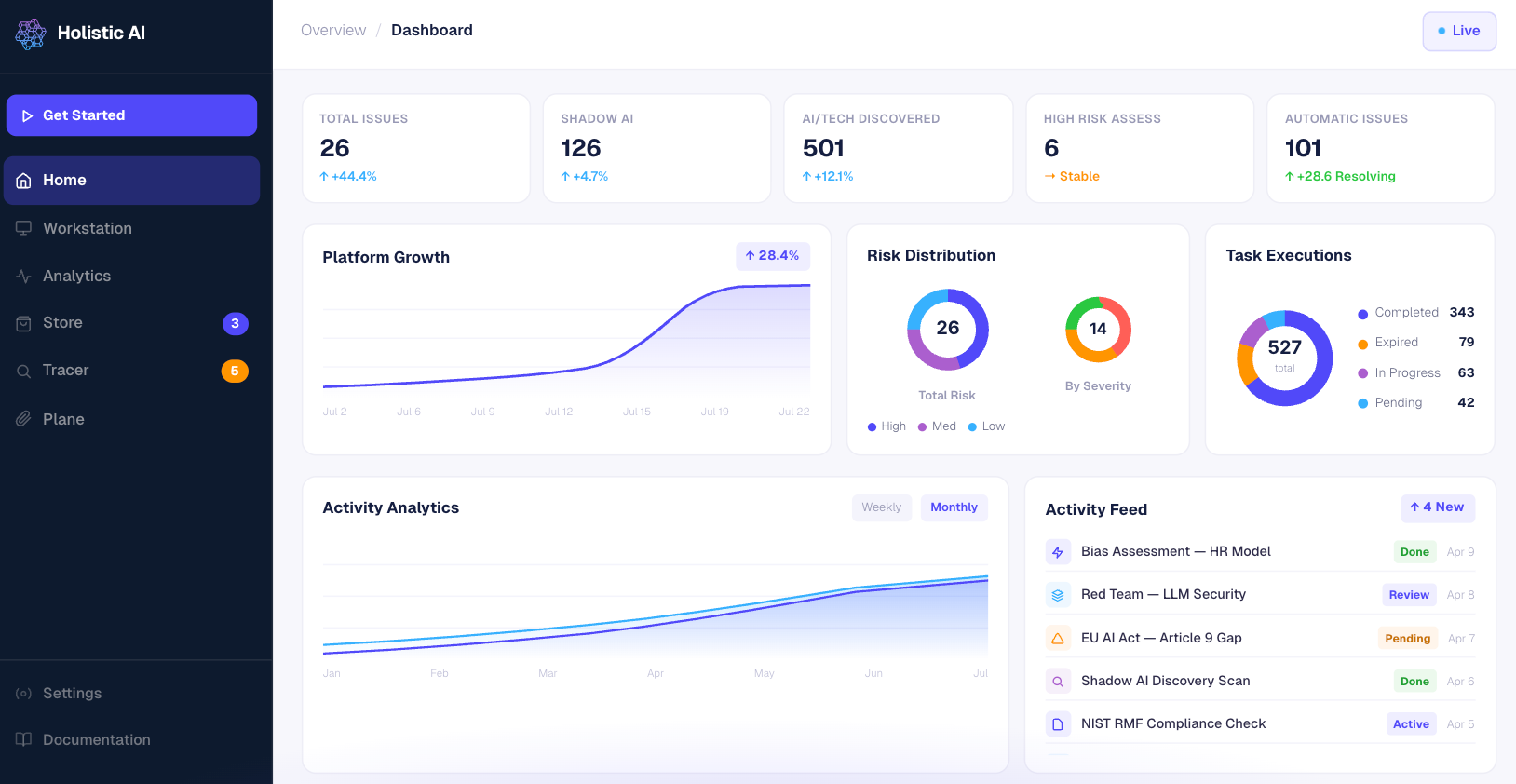
Best for: AI risk assessment, testing, and responsible AI governance
Holistic AI helps organizations evaluate AI systems, assess potential risks, and manage governance requirements. It is relevant to businesses that need a structured way to assess AI use cases and maintain oversight as adoption grows.
Key Features
- AI inventory: Maintain visibility into AI systems used across the organization.
- Risk assessment: Map potential risks and identify suitable mitigation measures.
- AI testing: Assess systems for issues such as bias, robustness, and other relevant risks, depending on the selected assessment.
- Governance workflows: Coordinate risk reviews, internal controls, and compliance activities.
- Risk monitoring: Support ongoing oversight of AI systems and their changing risk profiles.
- Reporting: Provide governance teams with a consolidated view of risk posture and remediation activities.
Holistic AI is a suitable option for organizations that prioritize AI assurance, structured risk assessments, and responsible AI practices. Businesses should verify how its discovery and enforcement capabilities cover their specific shadow AI use cases.
Pricing: Pricing depends on the organization's requirements and selected capabilities
E. Credo AI
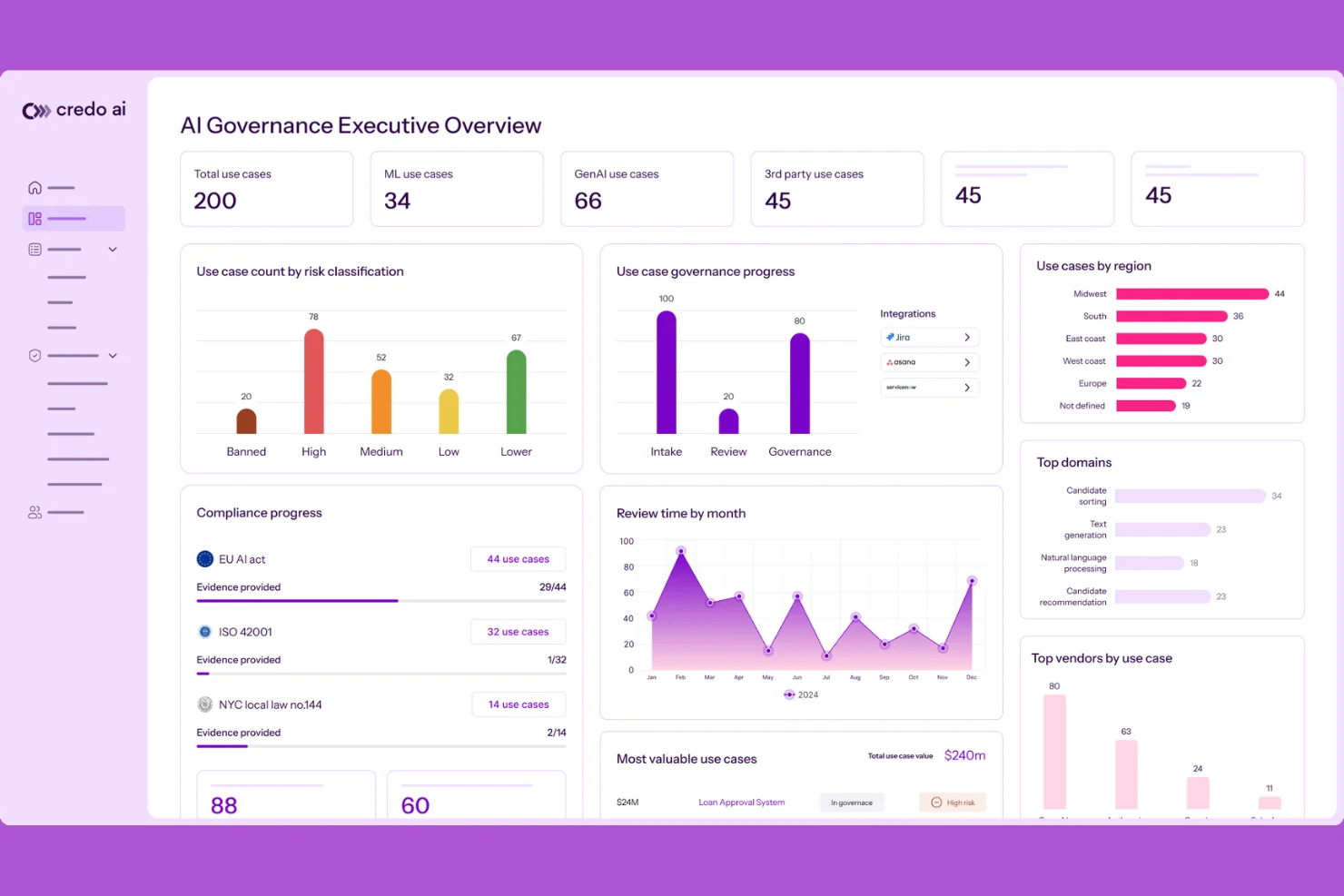
Best for: Responsible AI governance and policy-based risk management
Credo AI helps organizations discover AI systems, assess risks, manage compliance, and maintain oversight throughout the AI lifecycle. Its platform is relevant to businesses that need a centralized governance process for AI applications, models, and agents.
Key Features
- Shadow AI discovery: Identify AI applications and systems that may operate outside established governance processes.
- AI registry: Maintain an inventory of AI systems and their associated governance information.
- Risk management: Assess AI systems in context and track potential risks and mitigation measures.
- Policy and compliance management: Connect governance requirements with internal policies and relevant regulatory frameworks.
- Monitoring: Track AI systems and surface changes or issues that require governance attention.
- Governance workflows: Coordinate assessments, approvals, documentation, and remediation.
Credo AI is worth considering when an organization needs structured risk assessments, policy-based oversight, and documented accountability. Its discovery and governance capabilities make it relevant to shadow AI programs, although buyers should validate the specific employee-level controls they require.
Pricing: Organizations need to request a quote based on their governance requirements and the capabilities they need. Visit Credo AI to discuss pricing and availability.
F. OneTrust AI Governance
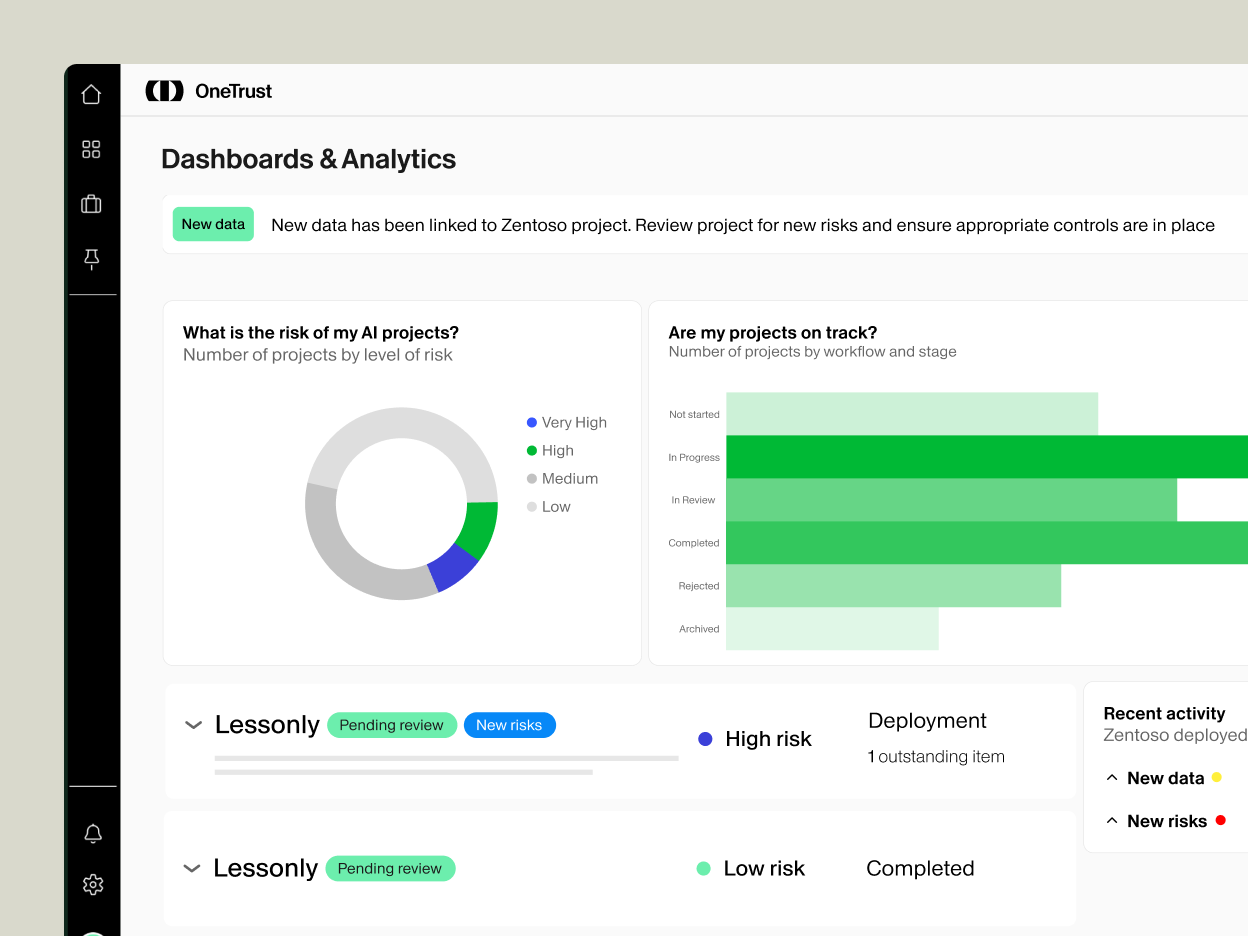
Best for: Enterprise AI risk management and compliance
OneTrust AI Governance helps organizations assess AI-related risks, manage policies, and coordinate governance activities. It is particularly relevant to enterprises that want to connect AI oversight with existing privacy, risk, and compliance programs.
Key Features
- AI inventory and discovery: Improve visibility into AI systems, models, use cases, and related assets.
- Risk assessments: Evaluate AI use cases against internal requirements and applicable frameworks.
- Governance workflows: Manage ownership, reviews, approvals, and remediation activities.
- Policy management: Establish governance requirements and track compliance activities.
- Risk monitoring: Support ongoing oversight across applicable governance domains.
- Audit documentation: Maintain evidence of assessments, approvals, and governance decisions.
OneTrust is a strong option for organizations that already manage privacy and enterprise risk through its platform. Its suitability for shadow AI discovery and technical enforcement depends on the specific products, integrations, and capabilities selected.
Pricing: The costs are based on the number of administrator users and AI inventory. Organizations can request pricing from OneTrust based on their deployment and governance requirements.
G. Microsoft Purview
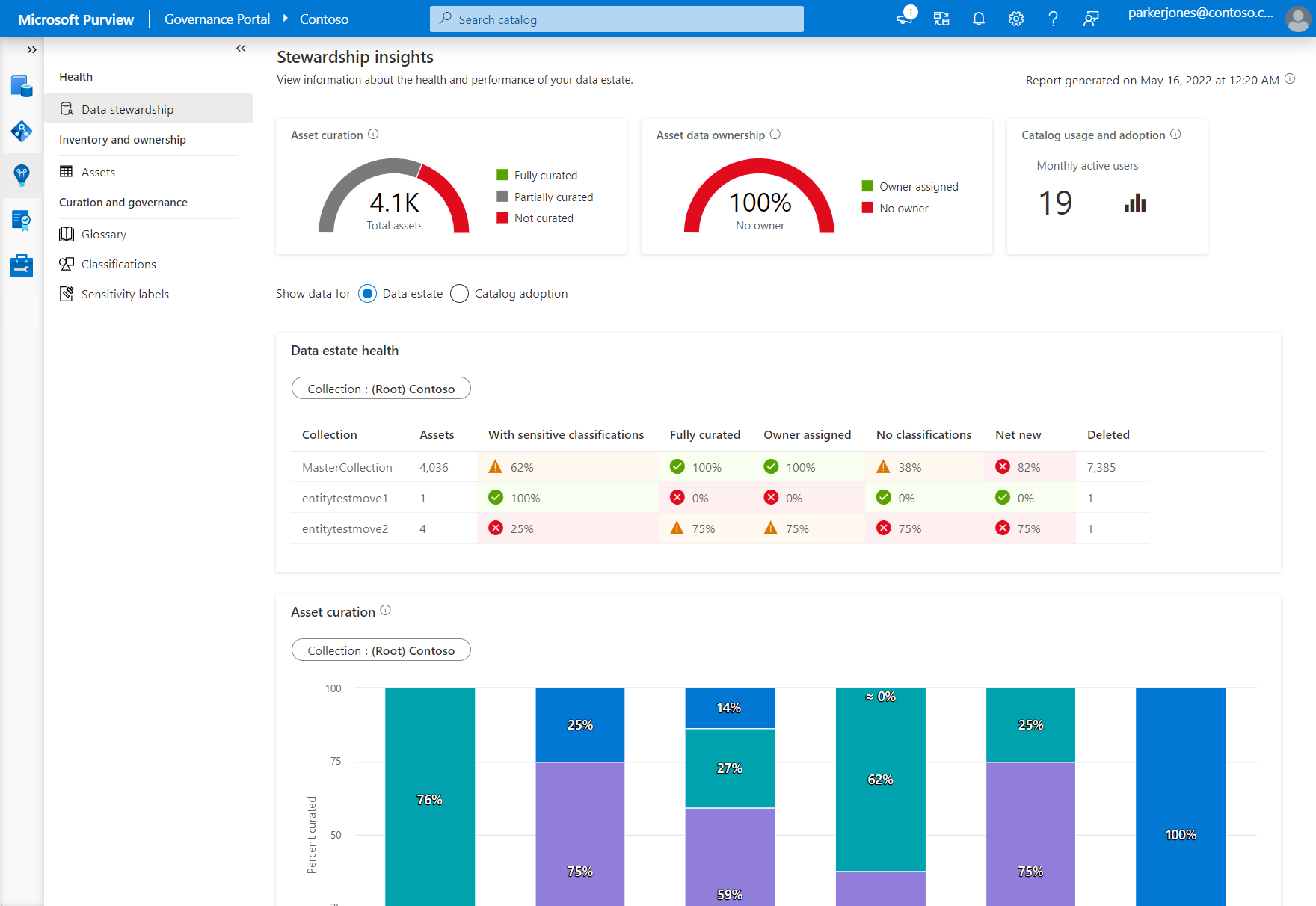
Best for: Data security and compliance across supported Microsoft AI environments
Microsoft Purview provides data security, information governance, and compliance capabilities for supported Microsoft services. It is relevant to organizations that already use Microsoft's security ecosystem and want to improve oversight of eligible AI interactions.
Key Features
- AI usage visibility: Use supported Data Security Posture Management capabilities to gain insight into AI usage and associated data risks.
- Auditing: Maintain records of supported AI interactions for investigation and compliance needs.
- Data classification: Apply supported classification capabilities to help identify and protect sensitive information.
- Insider risk management: Investigate potentially risky user activity in supported workloads.
- Compliance tools: Use applicable eDiscovery, communication compliance, and data lifecycle capabilities.
- Microsoft integration: Connect AI oversight with existing Microsoft security and compliance workflows.
Microsoft Purview may be a practical choice for organizations already invested in Microsoft services. However, its coverage is workload-specific. For example, Microsoft's documentation lists data loss prevention and sensitivity labels as unsupported for Microsoft Security Copilot interactions in the documented scenario.
Pricing: Microsoft Purview Suite is listed at $12 per user per month, billed annually. This plan requires Microsoft 365 E3, or Office 365 E3 with Enterprise Mobility + Security E3.
Additional Microsoft Purview data governance, security, and compliance capabilities may use pay-as-you-go pricing and require an Azure subscription. Actual costs depend on the services and licenses selected. Review the official Microsoft Purview pricing page for details.
5. How to Choose the Right IBM watsonx.governance Alternative
The right alternative depends on how well a platform addresses your organization's shadow AI risks and governance requirements. Evaluate these key capabilities before making a decision:
- Shadow AI discovery: Check whether the platform identifies unapproved AI applications, browser activity, and supported AI agents.
- Usage policy enforcement: Confirm whether it can restrict access, flag policy violations, or direct employees to approved AI tools.
- Identity and data security: Assess visibility into user permissions, connected accounts, and potential sensitive data exposure.
- Risk and compliance management: Review support for risk assessments, monitoring, governance workflows, and audit documentation.
- Integrations and pricing: Verify compatibility with existing systems and confirm which capabilities are included in the quoted price.
Before committing, run a proof of concept. Test whether the platform can identify an unapproved AI tool, show who is using it, assess the associated risk, and help your team respond.
This approach helps organizations compare alternatives based on practical coverage and control rather than feature lists alone.
6. Find the Right IBM watsonx.governance Alternative for Your Business
Choosing the right IBM watsonx.governance alternative depends on your organization's priorities, whether that means governing AI models, managing compliance, or controlling shadow AI. Compare each platform's discovery capabilities, access controls, integrations, and ability to address your security requirements.
For organizations looking to discover shadow AI, govern employee AI usage, enforce access policies, and improve AI spending visibility, CloudEagle.ai connects AI governance with SaaS and identity management.
This helps IT, security, and procurement teams identify potential risks, understand AI adoption, and make informed decisions about access and spending.
7. FAQs
1. What is the best alternative to IBM watsonx.governance for shadow AI management?
The best alternative depends on your organization's needs. CloudEagle.ai is worth considering for shadow AI discovery, employee AI usage controls, and SaaS access governance. Nudge Security focuses on workforce AI and agent discovery, while Cranium AI emphasizes AI security and technical risk management.
2. How does shadow AI governance differ from AI lifecycle governance?
Shadow AI governance focuses on discovering unapproved AI tools, understanding employee usage, and controlling access. AI lifecycle governance covers activities such as model evaluation, risk assessment, monitoring, and compliance throughout development and deployment.
3. How can organizations identify shadow AI in the workplace?
Organizations can use AI discovery tools, SaaS inventories, identity integrations, and supported browser or security telemetry to identify AI applications employees use. Combining discovery with user ownership and access information helps teams assess risks and prioritize remediation.
4. Can AI governance platforms prevent employees from using unapproved AI tools?
Some platforms support access restrictions, browser-level warnings, policy enforcement, or redirection to approved alternatives. However, enforcement coverage varies by product, integration, and configuration. Organizations should verify that controls cover their specific applications and usage scenarios.
5. What should businesses evaluate before choosing an IBM watsonx.governance alternative?
Businesses should compare AI discovery coverage, usage controls, identity and data security, risk assessment, compliance reporting, integrations, and pricing. A proof of concept can help verify whether a platform detects unapproved AI tools and provides practical ways to address the risks.
Don't Stop at AI Model Governance.