HIPAA Compliance Checklist for 2025

A CISO at an aviation company thought he had 20 AI agents. He had 80. Nobody had gone rogue; employees had built them to work faster, exactly as the business asked. But for the person accountable for securing them, three out of four agents didn’t exist.
Boards are approving AI budgets, signing off on agent roadmaps and reporting AI progress to investors, all on a number that could be off by four times. If you can’t count your agents, you don’t have an AI strategy. You have a guess with credentials attached.
The fix doesn’t start with slowing teams down or buying another console. It starts with an honest count.
AI agent sprawl is the uncontrolled growth of AI agents across an organization, to the point where IT can no longer say how many exist, who owns them, or what they can access.
What Is AI Agent Sprawl?
AI agent sprawl is what happens when AI agents multiply across a company’s platforms, SaaS tools and code faster than IT can register them, assign owners, or review their access. The result is an agent estate nobody can fully count or control.
Sprawl rarely starts with bad decisions. It starts with success: a team builds an agent that saves time, others copy the idea, and low-code platforms make building one easy.
Gartner's April 2026 guidance expects the average Fortune 500 enterprise to go from fewer than 15 agents in 2025 to over 150,000 by 2028. Only 13% of organizations think they have the right agent governance in place.
A large number of agents is not the problem in itself. The problem is agents nobody can account for, holding access nobody has reviewed.
AI Agent Sprawl vs. Shadow AI
The two overlap but are not the same:
- Shadow AI is employees using AI tools IT hasn't approved, such as a personal ChatGPT account
- Agent sprawl is agents multiplying without inventory or ownership, including agents built on approved platforms
A company can have no shadow AI and still have sprawl. Every agent can sit on a sanctioned platform and still have no owner on record.
What Counts as an AI Agent?
Every count depends on the definition, and many published numbers don't state one. A practical test uses three questions.
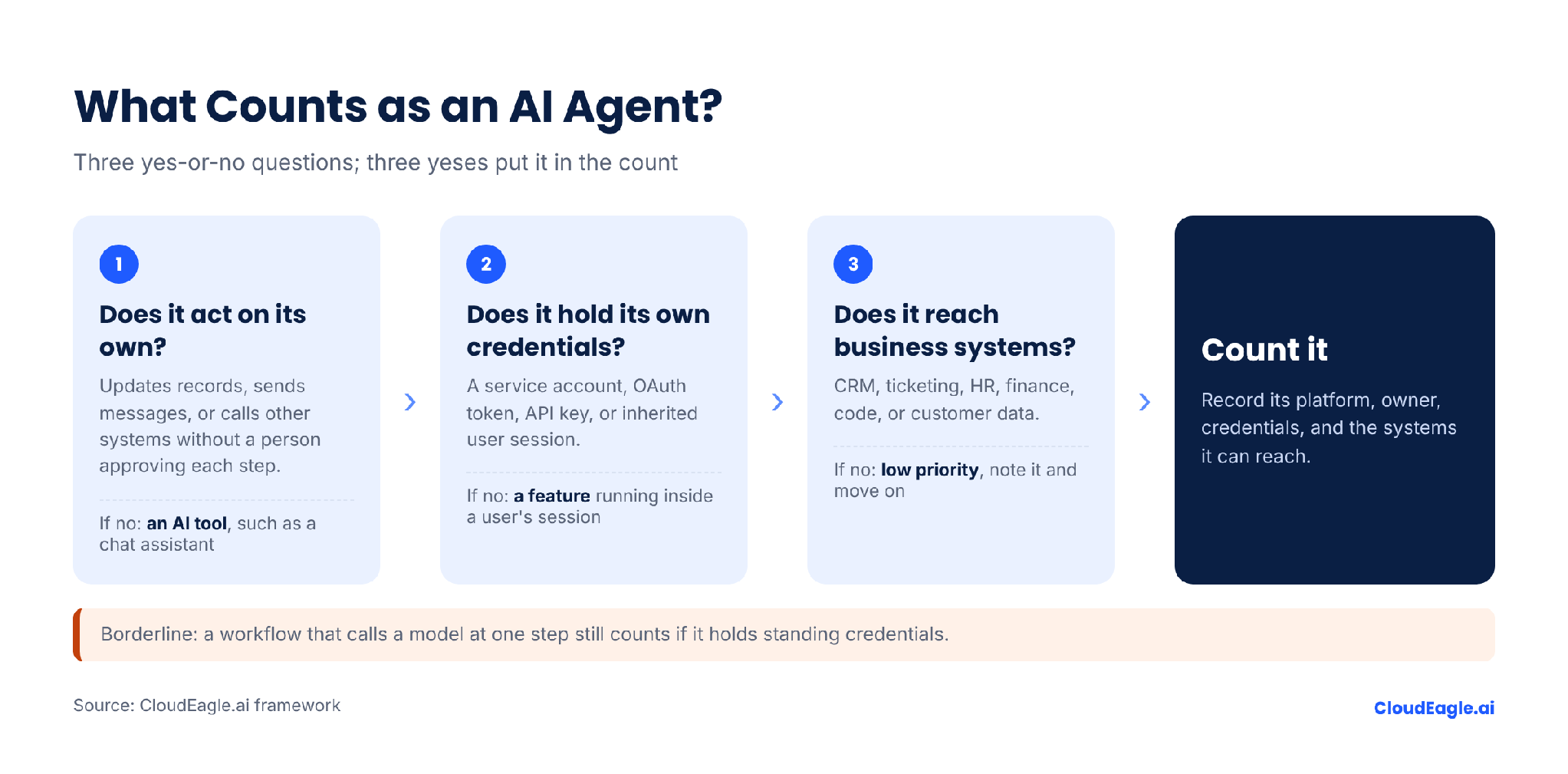
If something takes actions on its own, holds credentials to do so, and reaches business systems, count it as an agent. A chatbot that only answers questions is an AI tool. A scheduled script with no model behind it is automation.
Borderline cases, such as a workflow that calls a model at one step, belong in the count when they hold standing credentials. Those credentials are what create the risk.
How Many AI Agents Does a Typical Company Run?
Most companies run more agents than they have on record, and the published figures show why.
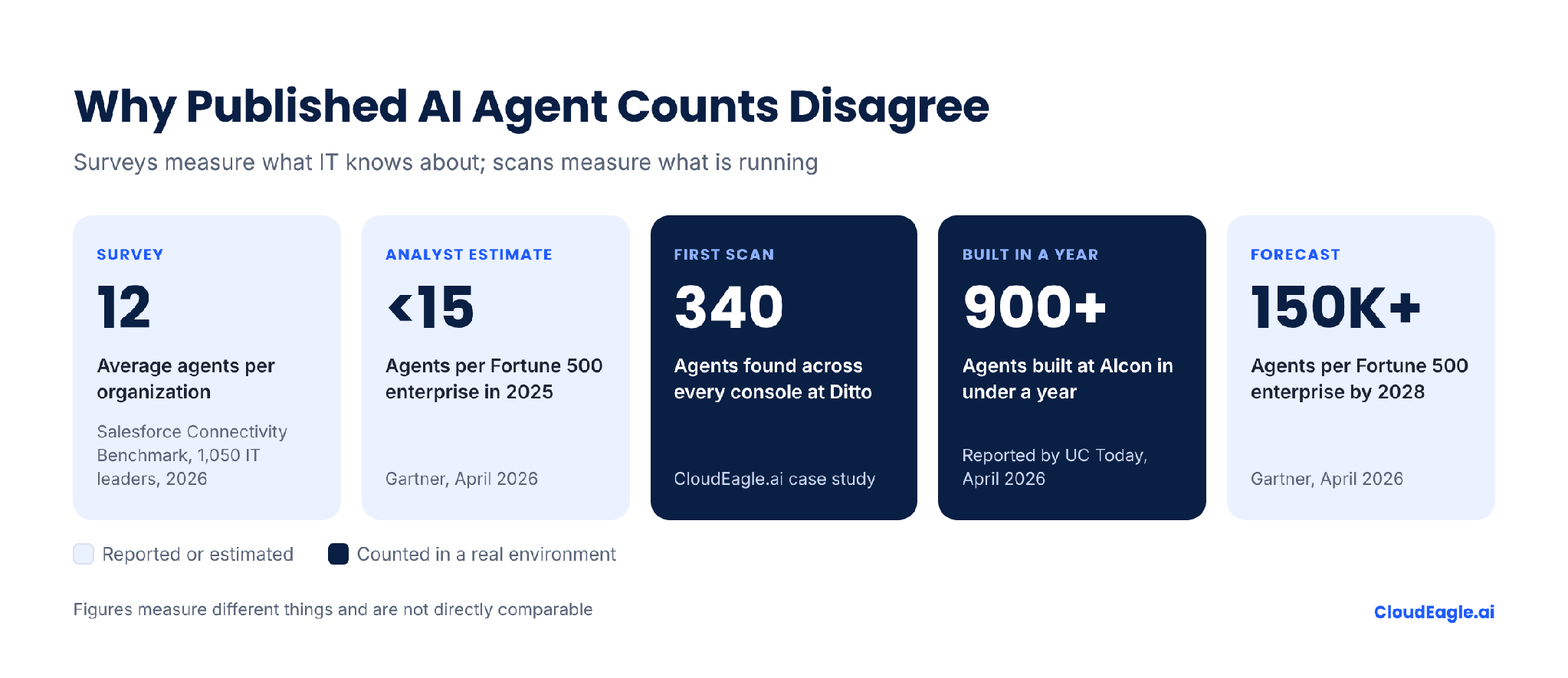
Salesforce's 2026 Connectivity Benchmark, a survey of 1,050 IT leaders, found an average of 12 agents per organization, expected to reach 20 by 2027.
The same report found about half of those agents run in silos, disconnected from each other and often from central oversight.
Scans of real environments tell a different story. Alcon built more than 900 agents in under a year, and Ditto's first cross-platform scan found 340 agents.
As Alcon's director of system integrations put it, "Everyone went and built their own agents."
Neither number is wrong. Surveys capture what IT leaders know about; scans capture what is actually running.The distance between the two is your AI agent sprawl.
Where Does AI Agent Sprawl Come From?
Most uncounted agents are not hidden on purpose. They sit in places no single team checks.
Low-Code Agent Builders
Copilot Studio, Agentforce, and similar tools let business users build agents without IT. Each platform keeps its own list, and many enterprises use more than one.
Agents Inside SaaS Tools You Already Pay For
Vendors keep adding agents to products you licensed for other reasons. They can arrive through a product update and be switched on by that tool's admin, without IT reviewing them.
Integrations and Connectors
An agent that reaches your CRM usually does it through an OAuth grant, a service account, or an API key. These grants often outlast the pilots they were created for and rarely appear on an agent list.
Once its owner moves on, that grant is effectively a bot with standing access and nobody accountable for it.
MCP Servers and Developer Tools
Engineers connect coding assistants and MCP servers to internal systems to move faster. Those connections can run under personal credentials, outside identity reviews.
For the full operating model once you've counted, see how CloudEagle.ai approaches governing AI agents.

How Do You Count the AI Agents in Your Company?
Count by source, then reconcile. AI agent sprawl spreads across identity providers, agent platforms and SaaS tools, so no single source sees everything; pull from each and remove duplicates.
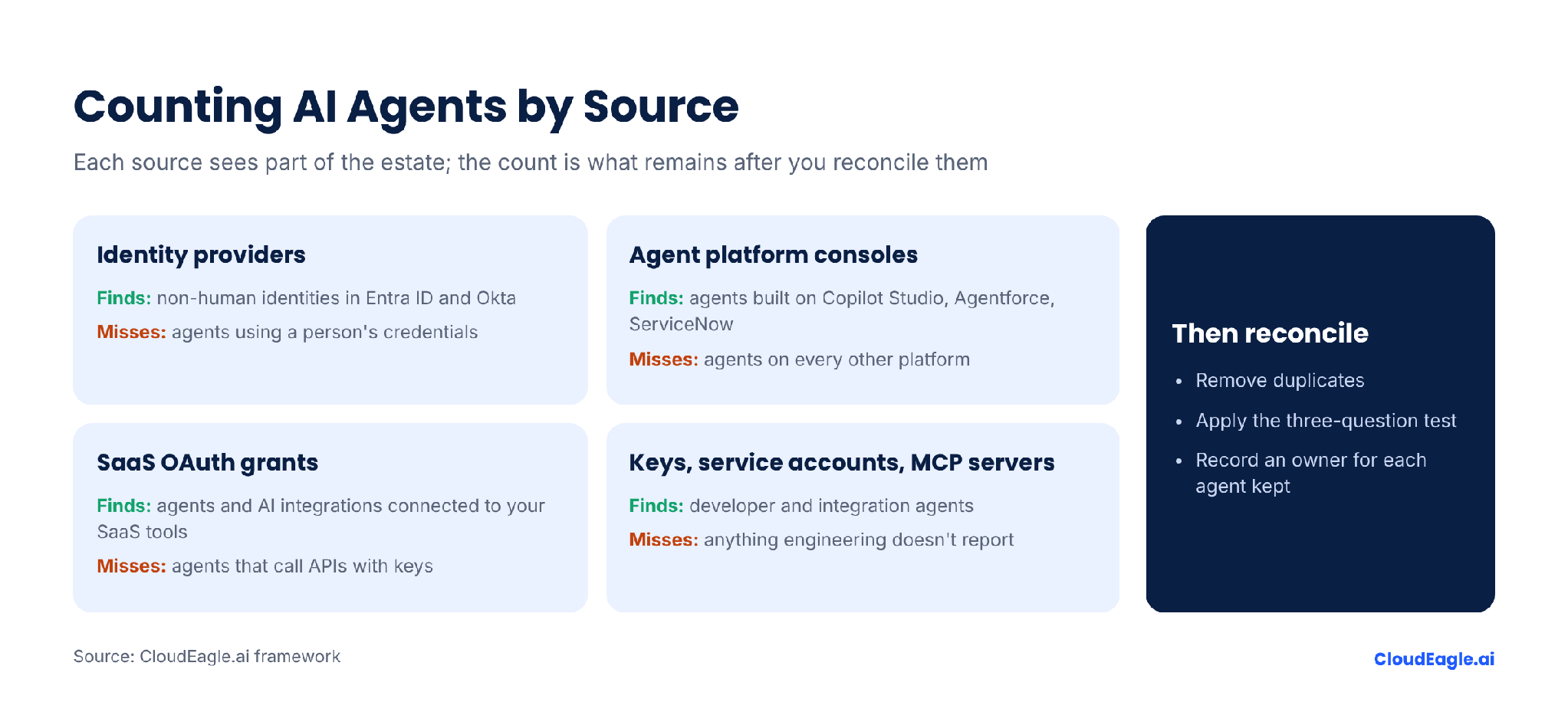
- Pull non-human identities from your identity providers, such as Microsoft Entra ID and Okta, and flag the ones tied to agent platforms.
- Export each agent platform's admin inventory. Microsoft's Copilot Studio inventory, for example, lists custom agents and helps admins find orphaned ones.
- Review OAuth grants, connected apps, and AI features switched on in your major SaaS tools.
- Ask engineering for service accounts, API keys, and MCP servers connected to production systems.
- Deduplicate across sources, apply the three-question test, and record an owner for each agent you keep.
Expect the first pass to take the longest. After that, the work is keeping the count current so AI agent sprawl doesn’t rebuild between scans, which is where tooling earns its place.
What Should You Do With the Number?
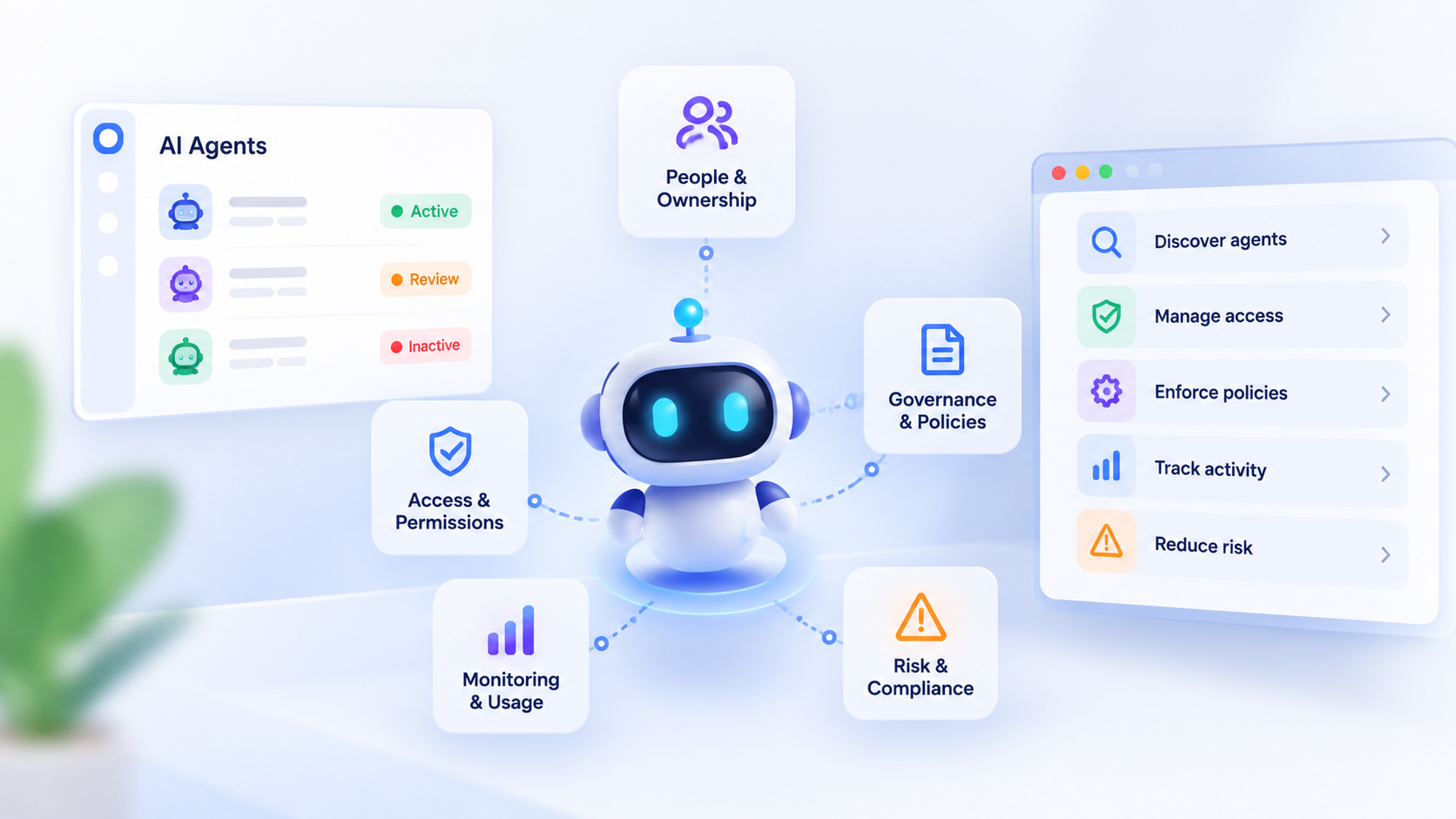
A count only matters if it changes what you do next. Sorting by risk rather than volume is how you shrink AI agent sprawl without stalling the teams building agents. Sort each agent by two things the count reveals: how much access it has, and whether anyone owns it.
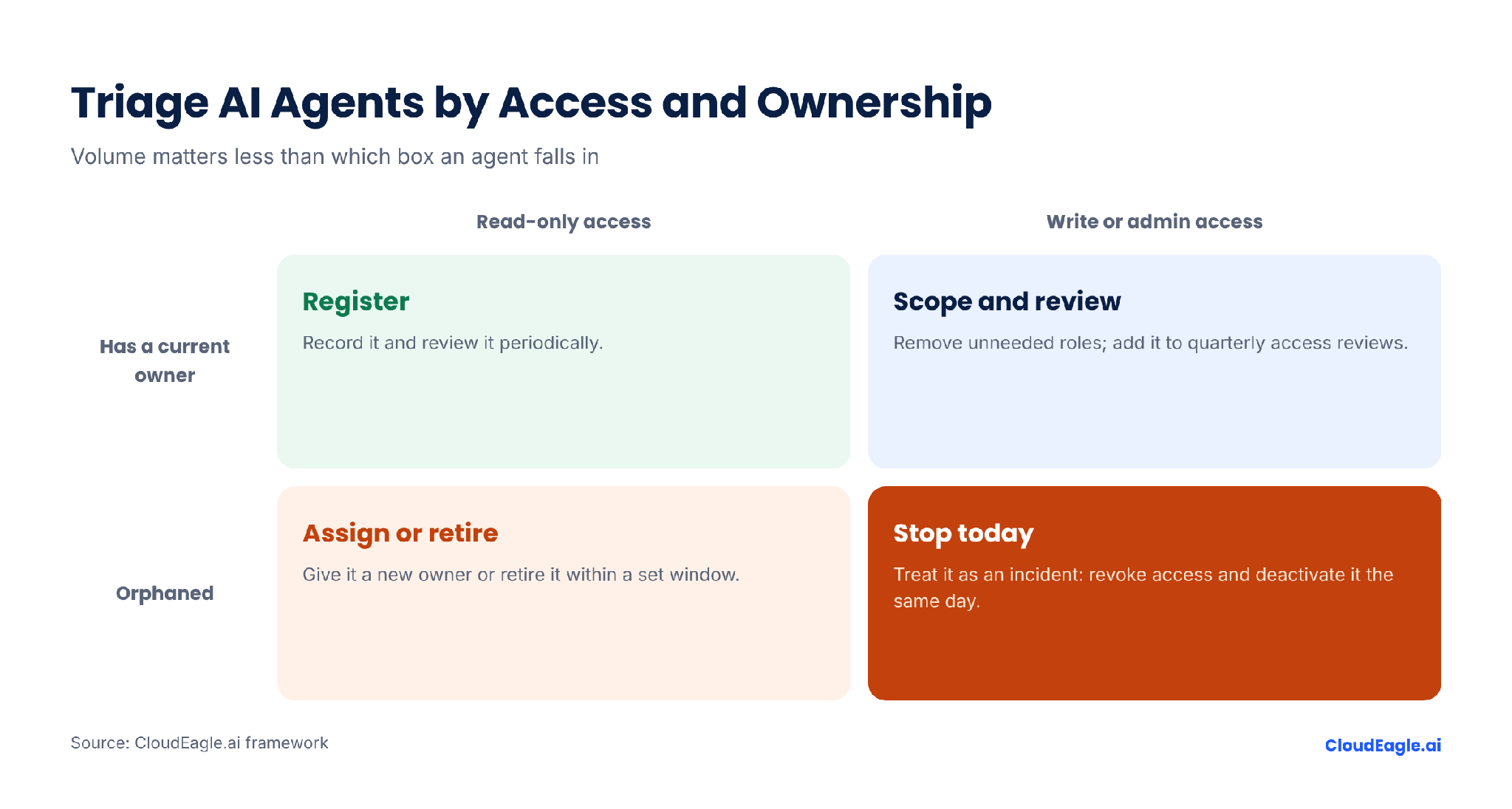
Register owned read-only agents, scope down owned agents with write access, and assign or retire orphaned read-only agents. Orphaned agents with write or admin access are incidents: stop them the same day.
That last group is often small, which keeps the first month focused. At Ditto, it was 19 agents, all created by former employees and still holding admin access.
Is AI Agent Sprawl Getting Better or Worse?
One count is a snapshot. Tracking a few measures monthly shows whether sprawl is shrinking.
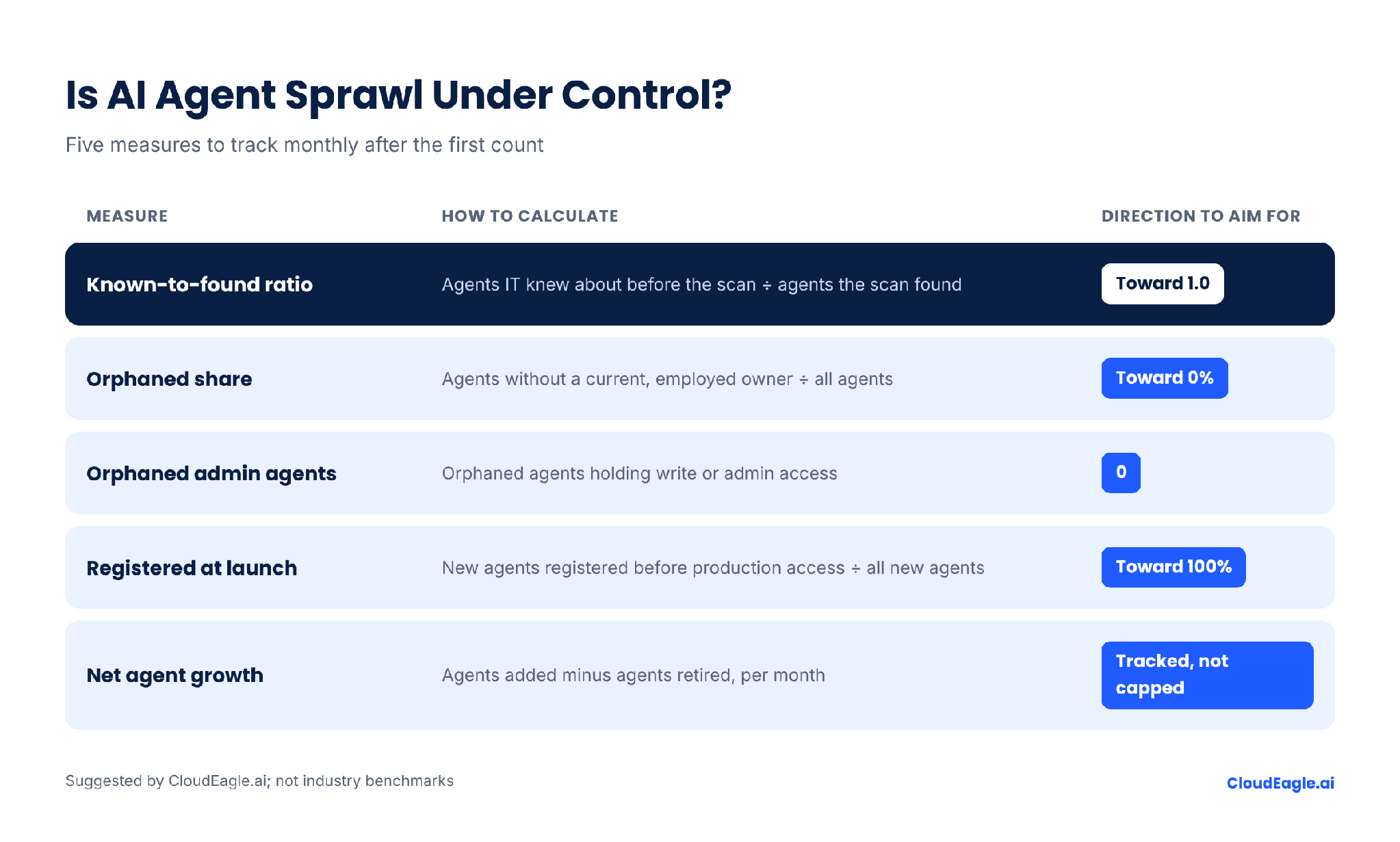
The known-to-found ratio is the number to report upward: agents IT knew about before the scan divided by agents the scan found. As registration improves, it should climb toward 1.
How CloudEagle.ai Helps You Count and Contain Agents
CloudEagle.ai is an AI governance, SaaS management and SaaS security platform that gives enterprises one command center to discover, govern and optimize their SaaS and AI stack, including human and non-human identities. Every agent runs under a machine identity, so CloudEagle.ai reads those identities from Microsoft Entra ID, Okta and your connected apps. That means agents show up in the count whether or not anyone registered them.
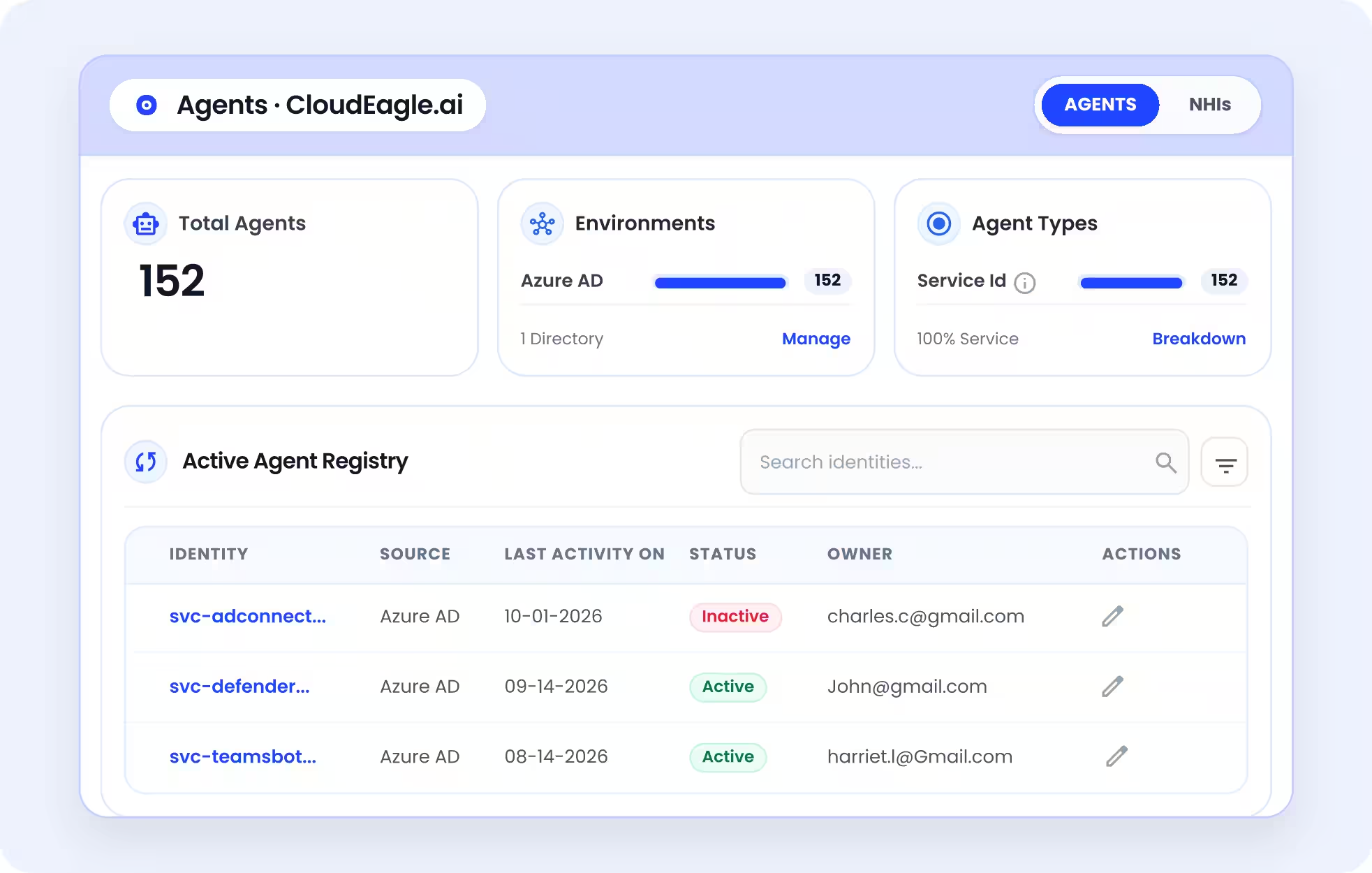
Find Every Agent Running in Your Environment
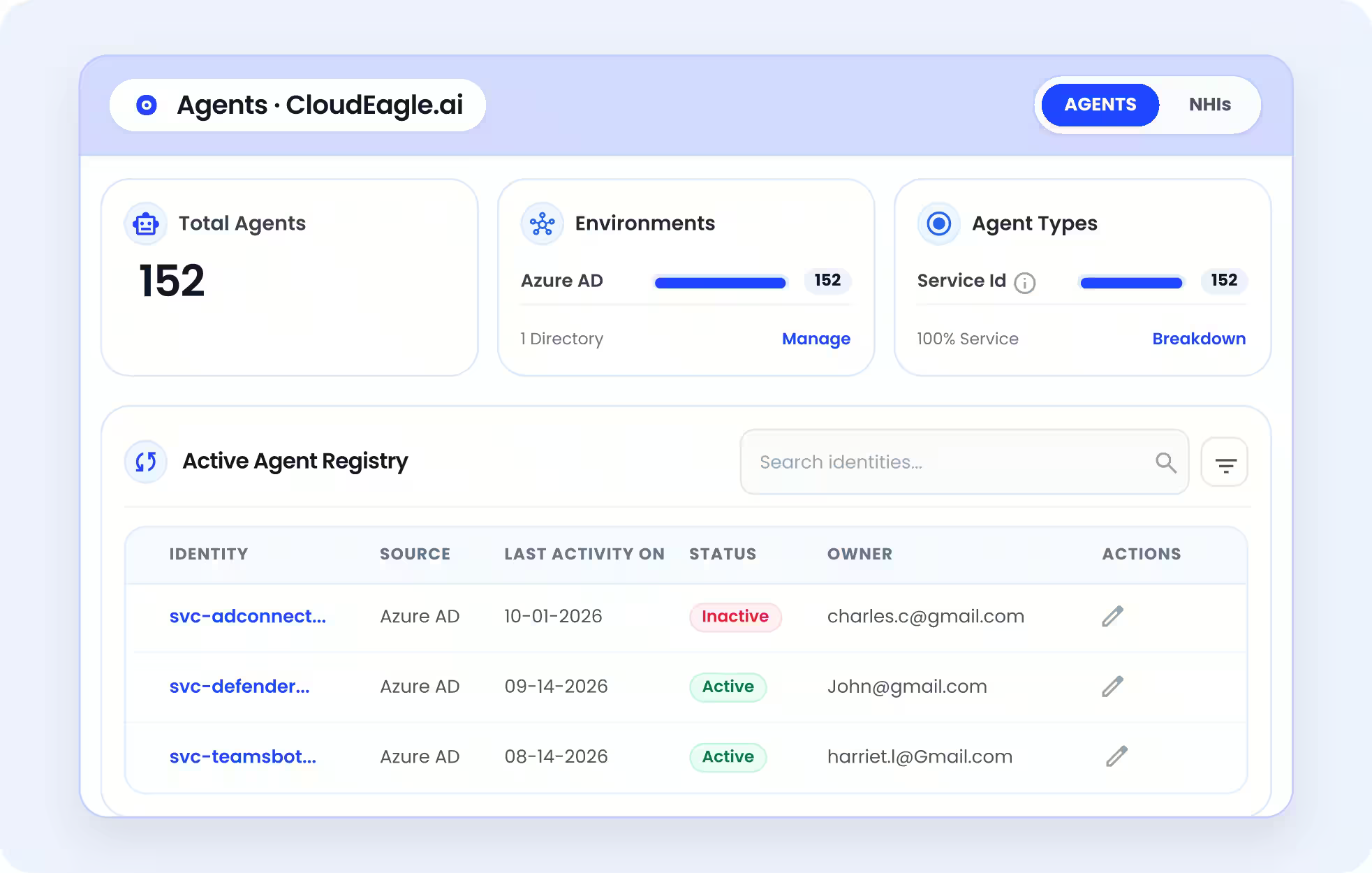
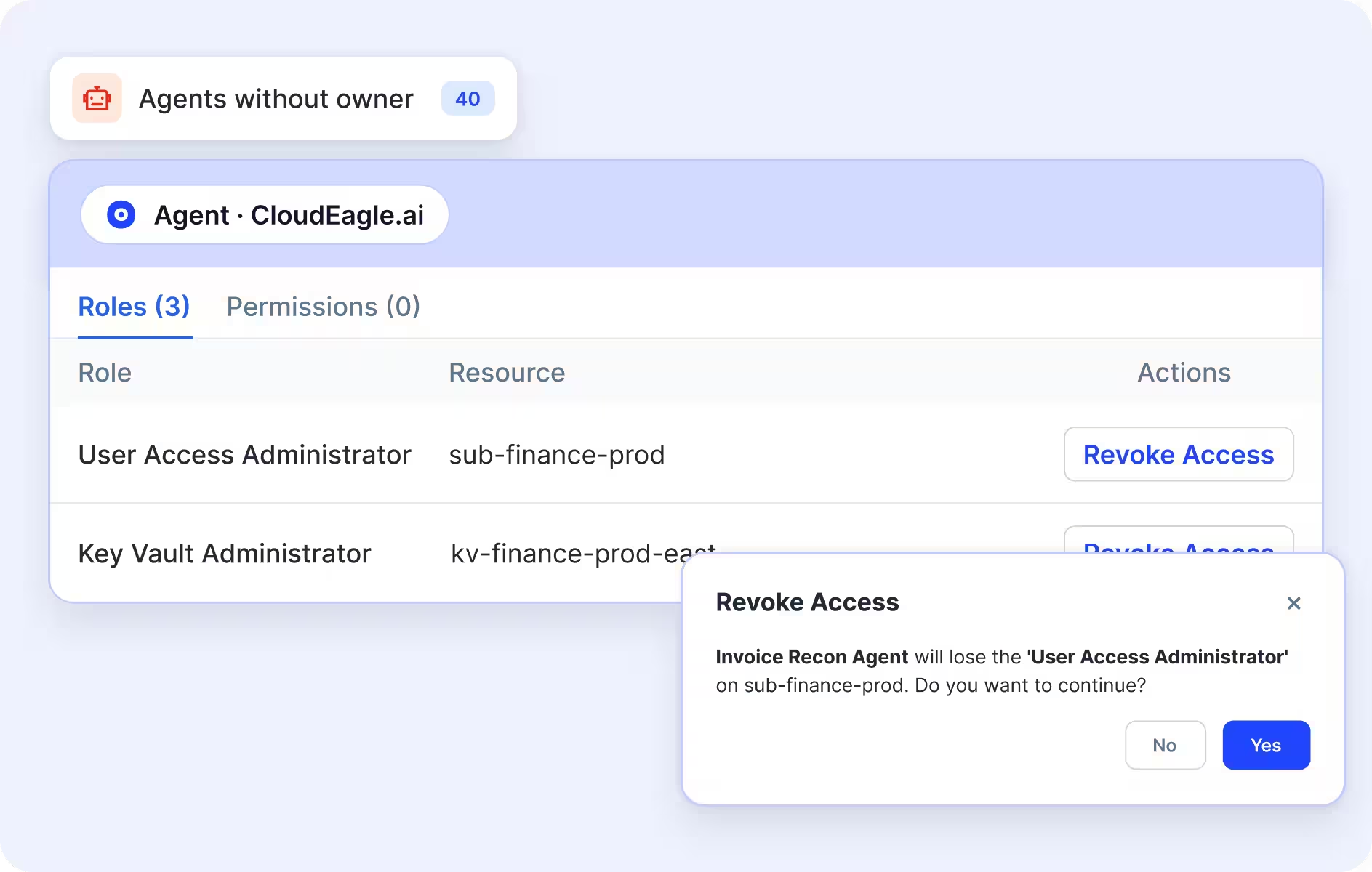
Every agent appears in one inventory with its source, last activity, status and owner, including shadow agents IT never approved. Agents left behind by former employees are flagged automatically.
See What Each Agent Can Reach
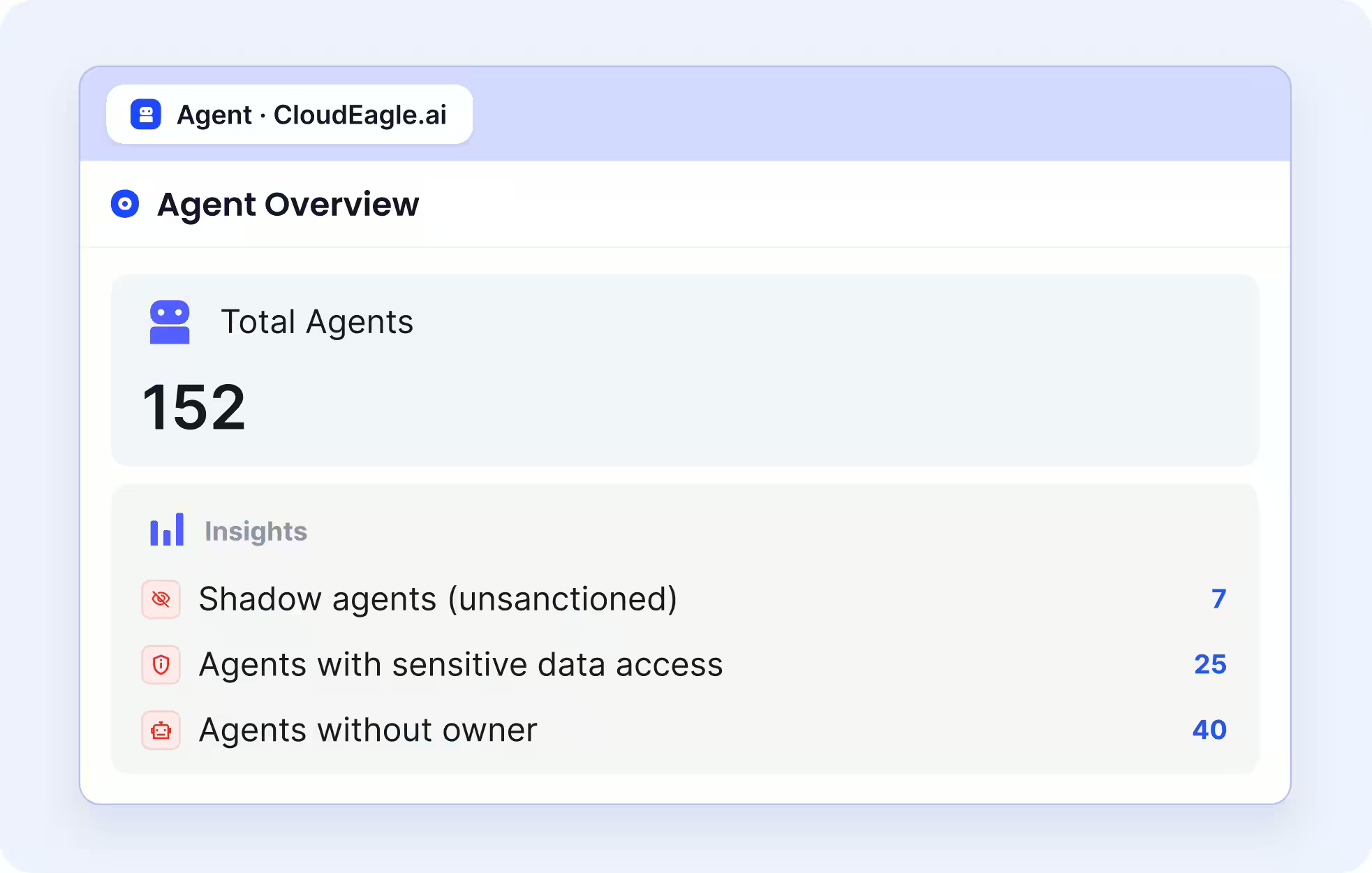
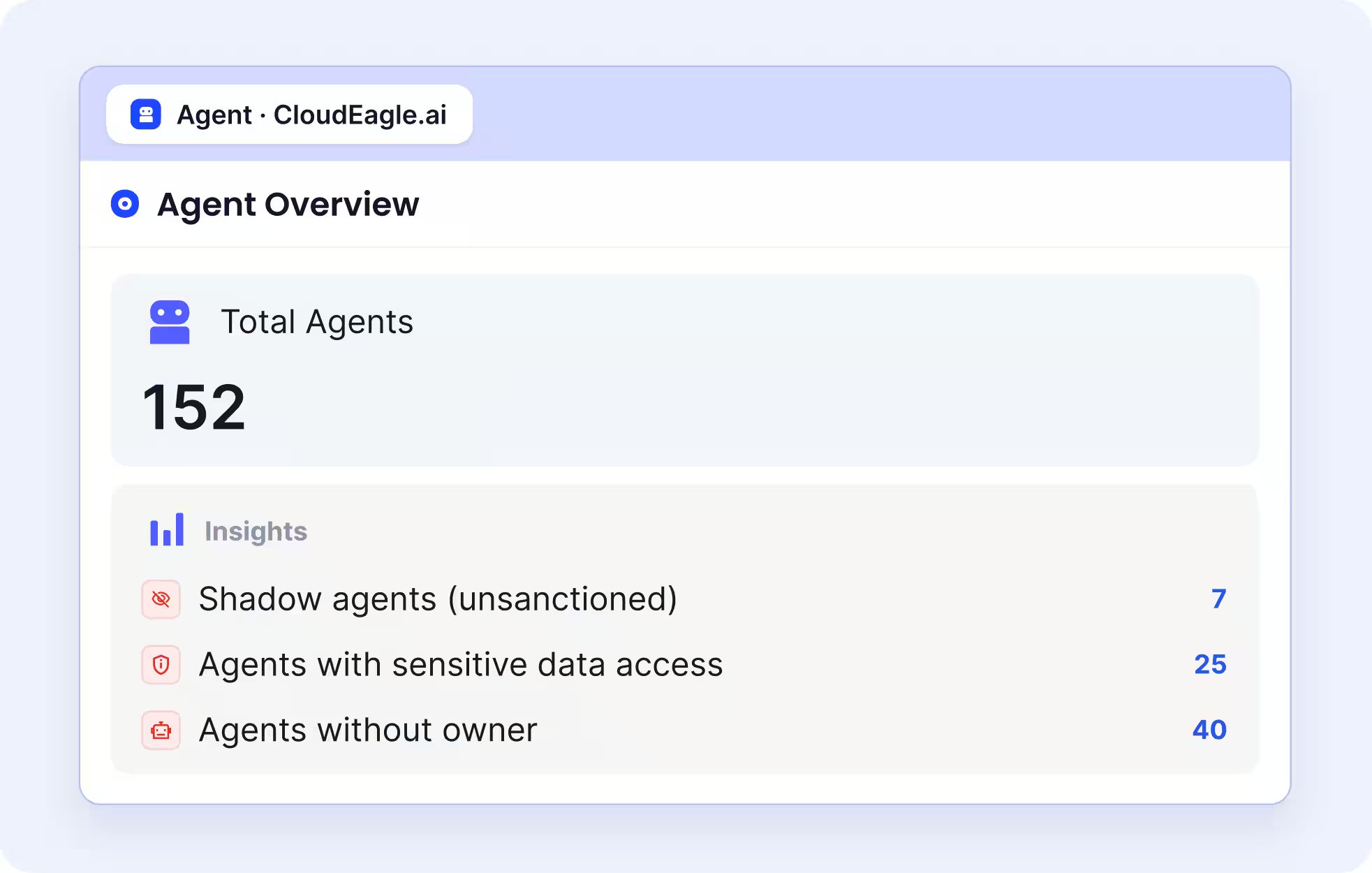
Each record shows the apps and data sources an agent connects to, from Salesforce to your HR system, and flags agents with sensitive-data access or no owner. Agents sit alongside service accounts and API keys in NHI management, so their access goes through the same reviews as employee access.
Cut Agents Back to Least Privilege
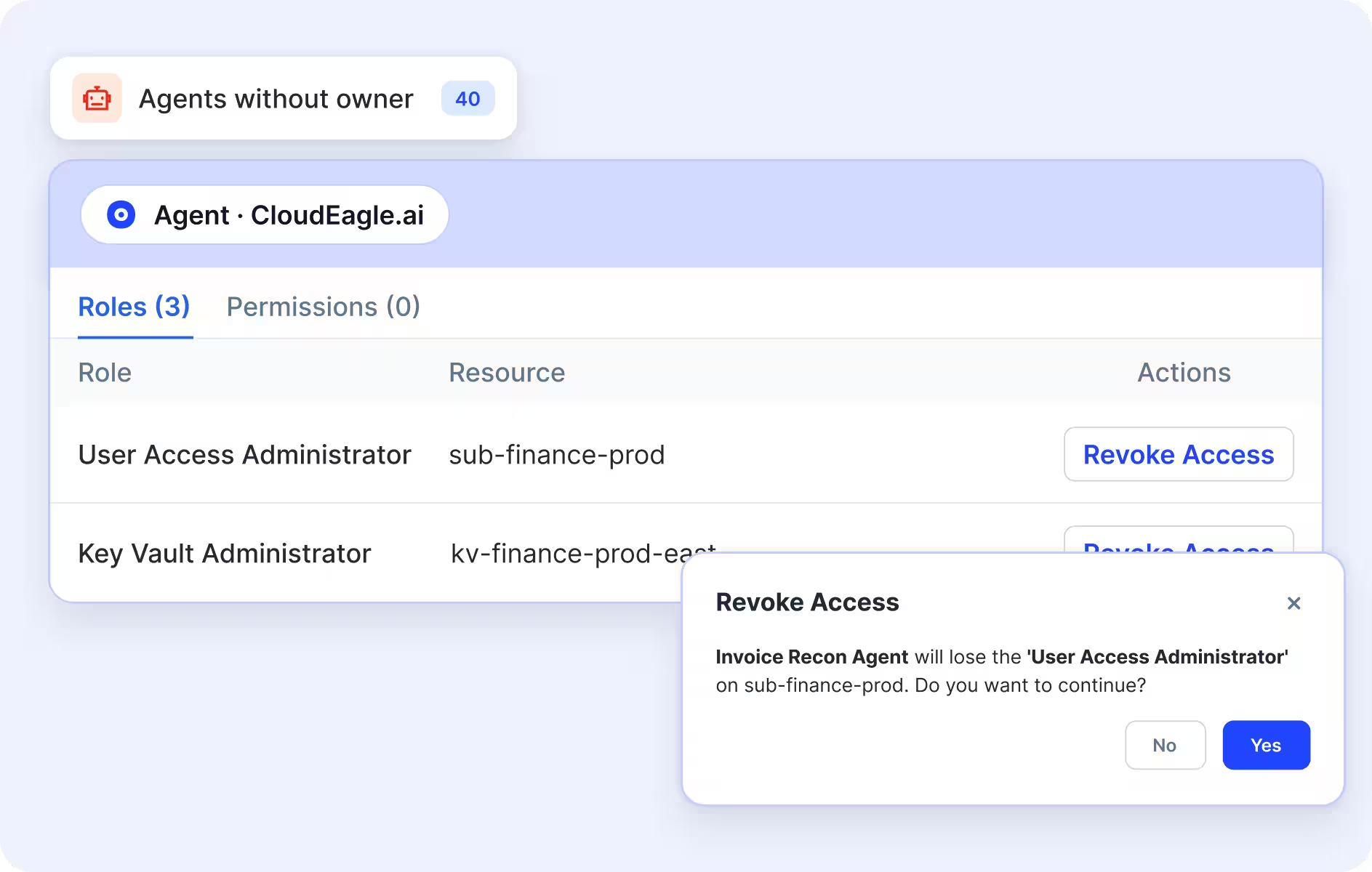
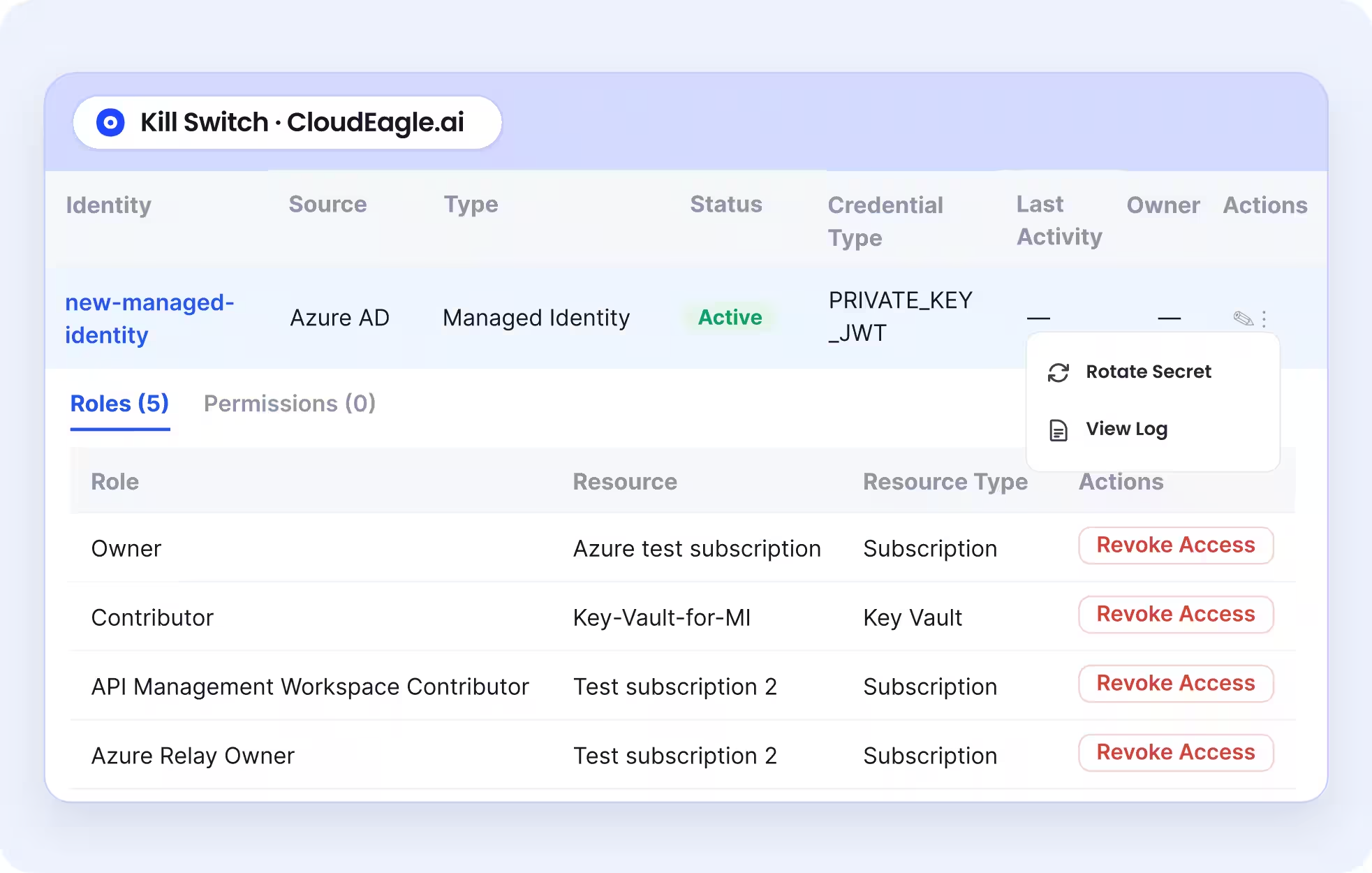
Admins see every role an agent holds, down to the resource, and can strip what its task doesn’t need. This is the scope-down step from the triage above, done from the same screen.
Trace What Each Agent Did
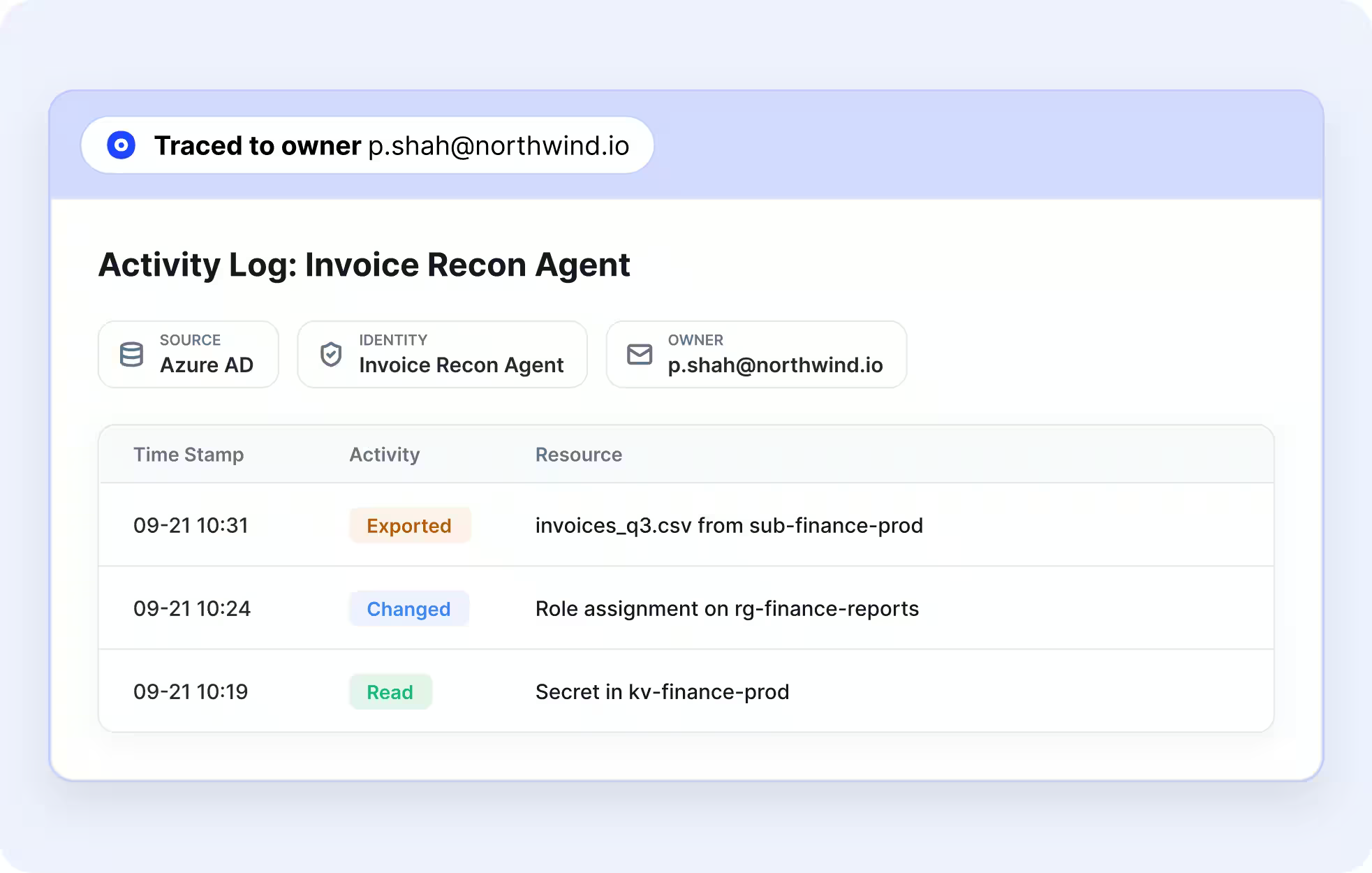
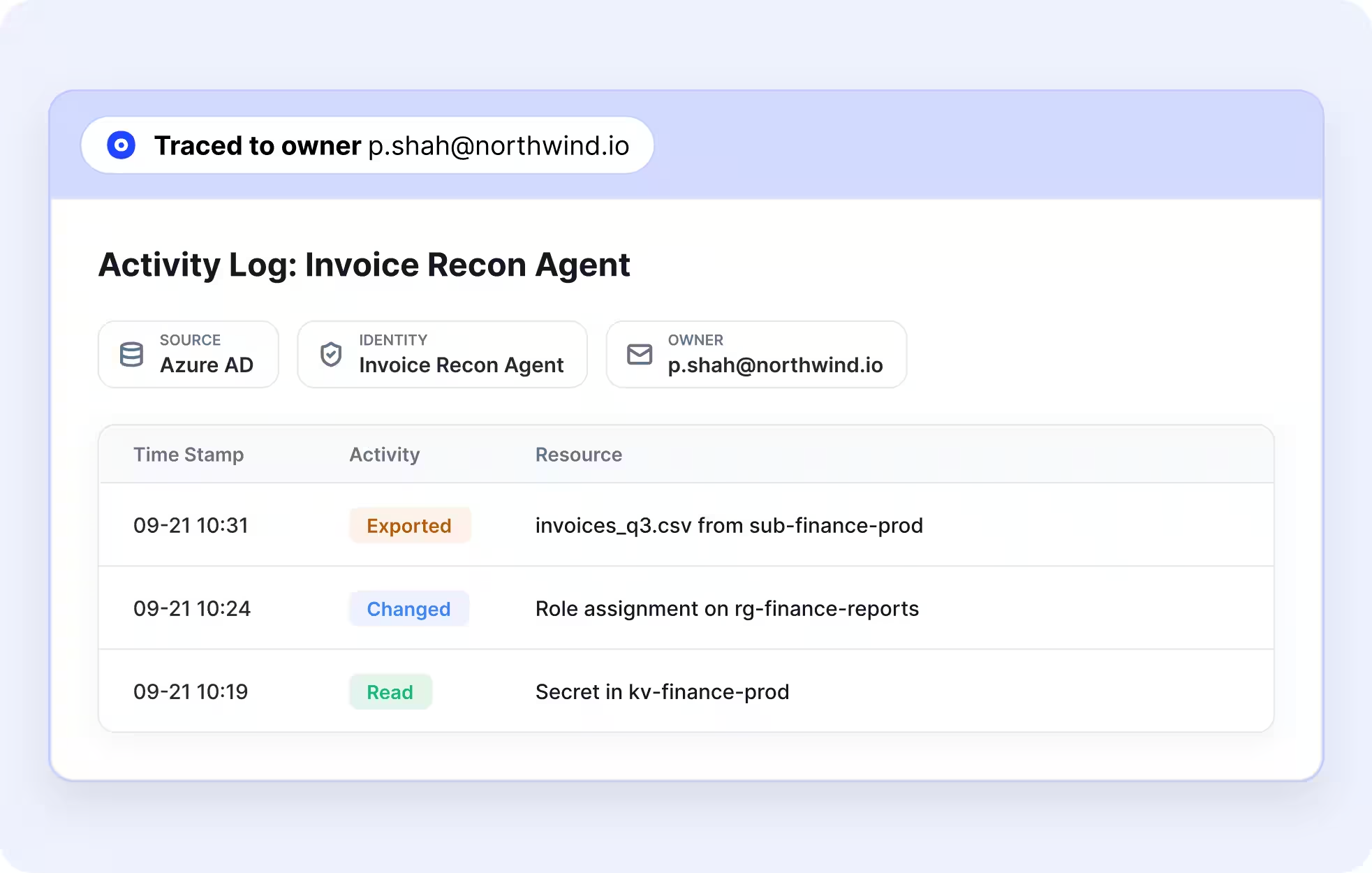
Activity logs show what an agent did, changed and touched, and traced back to its owner. That separates a busy agent from a risky one before you act.
Shut Down Risky Agents with a Kill Switch
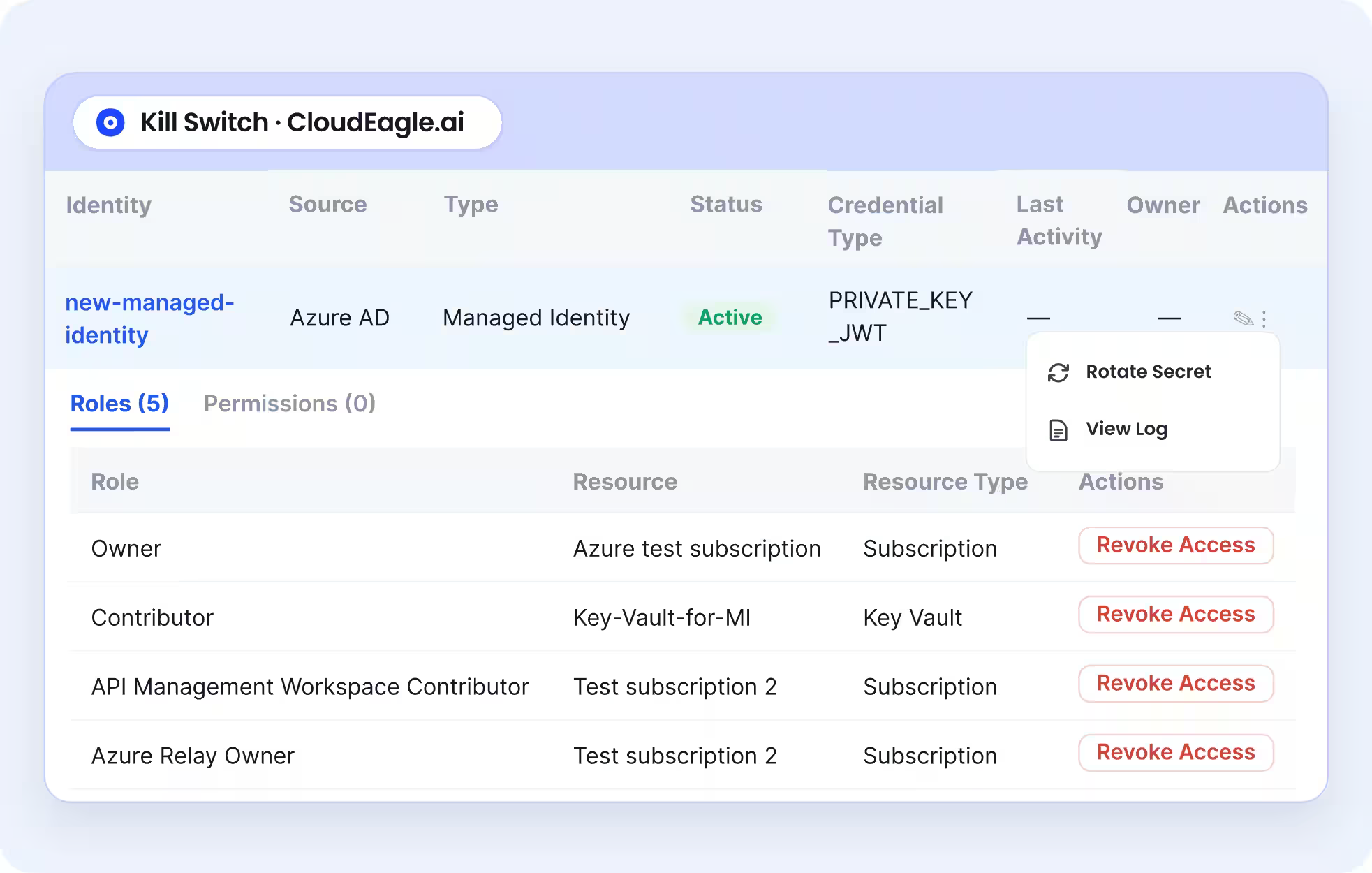
The kill switch revokes an agent’s roles, rotates its secret where the platform supports it, or deactivates its identity, and logs every action for auditors. Nothing happens automatically; admins decide. At Ditto, the team used it to shut down 28 risky agents within the first month, each on the day it was found.
What Does Controlling AI Agent Sprawl Look Like Over Time?
Sprawl is not solved by one cleanup. Agents will keep appearing as long as teams find them useful, and that is a good sign.
The goal is a count you can trust at any point. Three habits keep it current:
- Set rules for who can publish agents and which connectors they may use, as Gartner recommends, and require registration before an agent gets production credentials
- Link agent owners to your HR system, so a departure flags their agents the same week
- Rerun the cross-source count monthly and review what changed, rather than the whole list
Tools can find the agents; people still decide which ones should exist.
Find out how many agents are running in your environment with CloudEagle.ai's AI agent security platform. Book a demo to run your first scan.
Frequently Asked Questions
What Causes AI Agent Sprawl?
Sprawl comes from easy-to-use agent builders, AI features added to existing SaaS tools, and teams building agents without a shared registry. It usually grows out of successful adoption, not careless use.
Is AI Agent Sprawl a Security Risk?
Yes, mainly through access. Agents often hold standing credentials to business systems, and orphaned or over-permissioned agents can keep that access with nobody reviewing it.
How Do I Know if My Company Has AI Agent Sprawl?
Common signs include no single list of agents, agents whose builders have left, several agents doing the same task, and agent counts that differ by who you ask.
What Is a Good First Step to Reduce AI Agent Sprawl?
Run one cross-source count, then deal first with orphaned agents that have write or admin access. That group is often small and carries the most immediate risk.
Can CloudEagle.ai Find Agents Built on Different Platforms?
Yes. CloudEagle.ai reads agent identities from Entra ID, Okta, and connected apps, so agents from several platforms appear in one inventory with their owners and permissions.
Does CloudEagle.ai Replace Native Agent Consoles?
No. Native consoles still manage the agents built on them. CloudEagle.ai adds a cross-platform count, ownership, and a kill switch on top.
Find Out How Many Agents Are Actually Running