HIPAA Compliance Checklist for 2025

As employees adopt AI tools and agents across business functions, organizations need clear controls over which tools are used, what data they can access, and how AI-related risks are managed.
While Airia offers AI discovery, security, and governance capabilities, businesses may explore alternatives for better shadow AI visibility, more specialized security controls, or integration with their existing systems.
The need for better oversight is evident. According to OneTrust's 2026 AI-Ready Governance Report, 33% of surveyed organizations reported employees using unapproved AI tools because approved options or processes were not available quickly enough. The report surveyed 1,200 senior business decision-makers across eight markets.
This guide compares 10 Airia alternatives and Airia competitors, covering their key capabilities, use cases, and pricing to help organizations choose the right platform to govern AI adoption.
1. Why Consider Airia Alternatives in 2026?
Airia brings AI discovery, agent security, governance, and runtime enforcement into one platform. However, organizations may prefer alternatives that fit their existing security stack, address a specific governance gap, or offer a more focused approach to employee AI usage.
When evaluating Airia alternatives, focus on the challenges your team needs to address:
- Discover shadow AI: Identify unapproved AI applications and agents employees introduce outside established IT processes.
- Control AI access: Check whether the platform can restrict risky permissions, protect sensitive data, and enforce policies when employees or agents use AI tools.
- Simplify compliance: Assess whether risk assessments, approval workflows, and audit evidence align with your organization's regulatory requirements.
- Fit existing security systems: Review integrations with identity providers, SaaS applications, and security tools to avoid creating separate governance workflows.
- Match cost to actual needs: Compare licensing, implementation effort, and ongoing administration against the capabilities your organization will use.
The right choice depends on whether you need broad AI orchestration and runtime protection or more focused controls for employee AI adoption. Comparing Airia competitors against these requirements helps narrow the shortlist without paying for capabilities your team doesn't need.

2. How to Choose the Right Airia Alternative
The right Airia alternative should match your organization's AI environment, security requirements, and governance processes. Evaluate how each platform handles these practical requirements:
- Verify AI discovery coverage: Check whether the platform identifies employee-used AI applications, internally developed models, AI agents, and connected tools, including assets that aren't registered with IT.
- Test policy enforcement: Determine whether administrators can block unauthorized access, restrict agent permissions, or prevent sensitive data exposure. Distinguish controls that act in real time from tools that only flag risks for manual review.
- Assess risk and compliance workflows: Look for risk classification, approval records, assigned ownership, and audit evidence that support your organization's regulatory obligations.
- Check integrations: Confirm compatibility with identity providers, SaaS applications, security systems, and existing governance tools to avoid visibility gaps and duplicate workflows.
- Compare total cost of ownership: Consider licensing, implementation, integration effort, ongoing administration, and support, not just the subscription price.
During vendor demos, test a real scenario: discover an unapproved AI tool, assess its risk, identify who owns the review, and apply the appropriate policy. Comparing Airia competitors against the same scenario will reveal whether their controls work in practice, beyond what their feature lists promise.
3. Quick Comparison of the 10 Best Airia Alternatives in 2026
The best Airia alternative depends on whether your priority is shadow AI discovery, security, compliance, or enterprise-wide governance. Here’s how the leading platforms compare.
Airia combines AI discovery, governance, and security capabilities. These alternatives vary in scope, so compare their specific features against your requirements before choosing a replacement.
4. 10 Best Airia Alternatives to Govern AI Adoption in 2026
Airia alternatives offer different ways to manage AI adoption, from shadow AI discovery and policy enforcement to AI security and compliance. Here are 10 platforms to consider based on your organization’s governance needs.
A. CloudEagle.ai
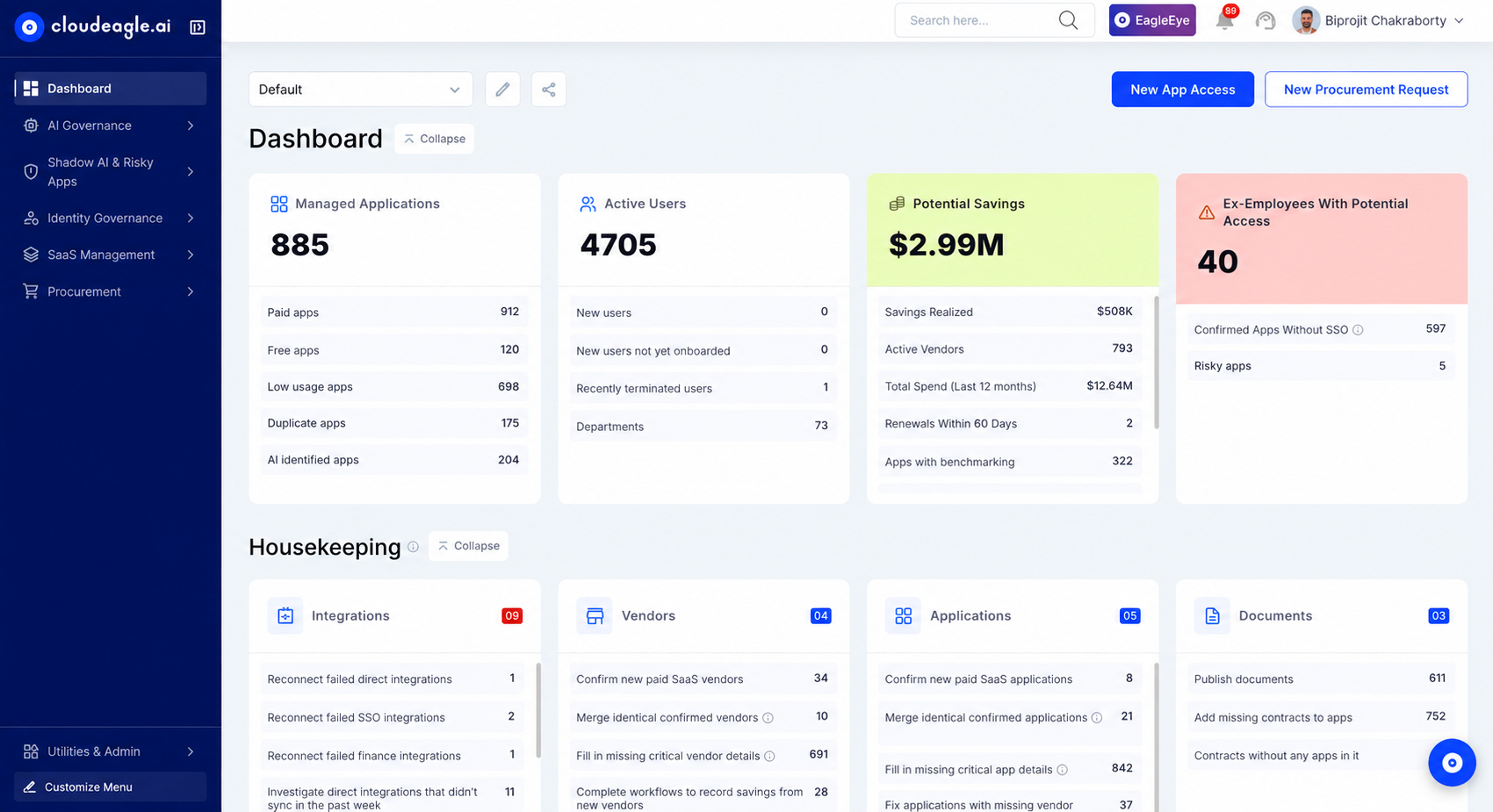
CloudEagle.ai helps enterprises govern employee AI adoption through AI governance, shadow AI discovery, usage control, policy enforcement, and spend visibility. IT, security, and finance teams can understand which AI tools employees use, monitor consumption, manage access risks, and make informed decisions about AI spending.
Key Features
Discover shadow AI and assess risks
Employees can adopt AI applications outside formal IT approval processes, creating visibility and security gaps. CloudEagle.ai helps organizations discover AI tools across their environment and identify applications that may need further review.
- Identify approved and unapproved AI applications used across the organization.
- Improve visibility into employee AI adoption and potential governance gaps.
- Review discovered tools to determine whether they meet internal security and usage requirements.
- Help teams bring AI applications under established governance policies.
Control AI usage, token consumption, and spending
AI costs can accumulate across subscriptions, API calls, tokens, and credits. CloudEagle.ai’s AI usage control capabilities help organizations track consumption and spending across supported tools, giving teams better visibility into usage by user, team, and model.
- Track token consumption and AI costs across supported models and tools.
- Compare model-level usage and costs to help teams make informed decisions about model selection.
- Set spending limits and review usage against budgets to help manage unexpected costs.
- Attribute AI expenses to relevant teams and cost centres to support internal chargeback reporting.
- Identify inactive licenses and overlapping subscriptions to uncover potential savings.
Organizations can also use CloudEagle.ai’s SaaS spend management guidance to understand broader approaches to controlling software costs.
Customer results: Domo used CloudEagle.ai to bring $2.4 million in annual AI spending across Claude, Cursor, and Gemini under direct visibility. It identified 34% of AI licenses as inactive over 90 days and reported $1.2 million in first-quarter savings by removing unused access and consolidating overlapping subscriptions.
Enforce AI policies and protect company data
Organizations need more than visibility into employee AI usage. They also need policies that guide employees toward approved tools and help reduce the risk of sensitive information being shared with unapproved applications. CloudEagle.ai’s AI policy enforcement capabilities help organizations apply controls to employee AI usage.
- Establish rules for approved and restricted AI tools.
- Guide employees toward approved alternatives in supported scenarios.
- Apply available controls to help reduce unauthorized AI usage and sensitive-data exposure.
- Review policy actions to support ongoing AI governance.
Govern AI agents and non-human identities
AI agents can interact with business applications and data using assigned permissions and credentials. CloudEagle.ai’s AI agent security platform helps organizations improve visibility into AI agents and manage associated access risks.
- Discover supported AI agents and review their ownership and access.
- Understand which applications, data sources, and permissions agents can access.
- Identify agents or permissions that may require security review.
- Improve oversight of agent activity and access-related risks.
Its non-human identity management capabilities extend oversight to service accounts, API keys, and other machine identities, helping teams review ownership, permissions, and access.
Pricing
Contact CloudEagle.ai for customized pricing based on your organization’s requirements. For additional context on AI-related expenses, explore its AI pricing guide.
Let Teams Adopt AI. Keep IT in Control


B. Nudge Security
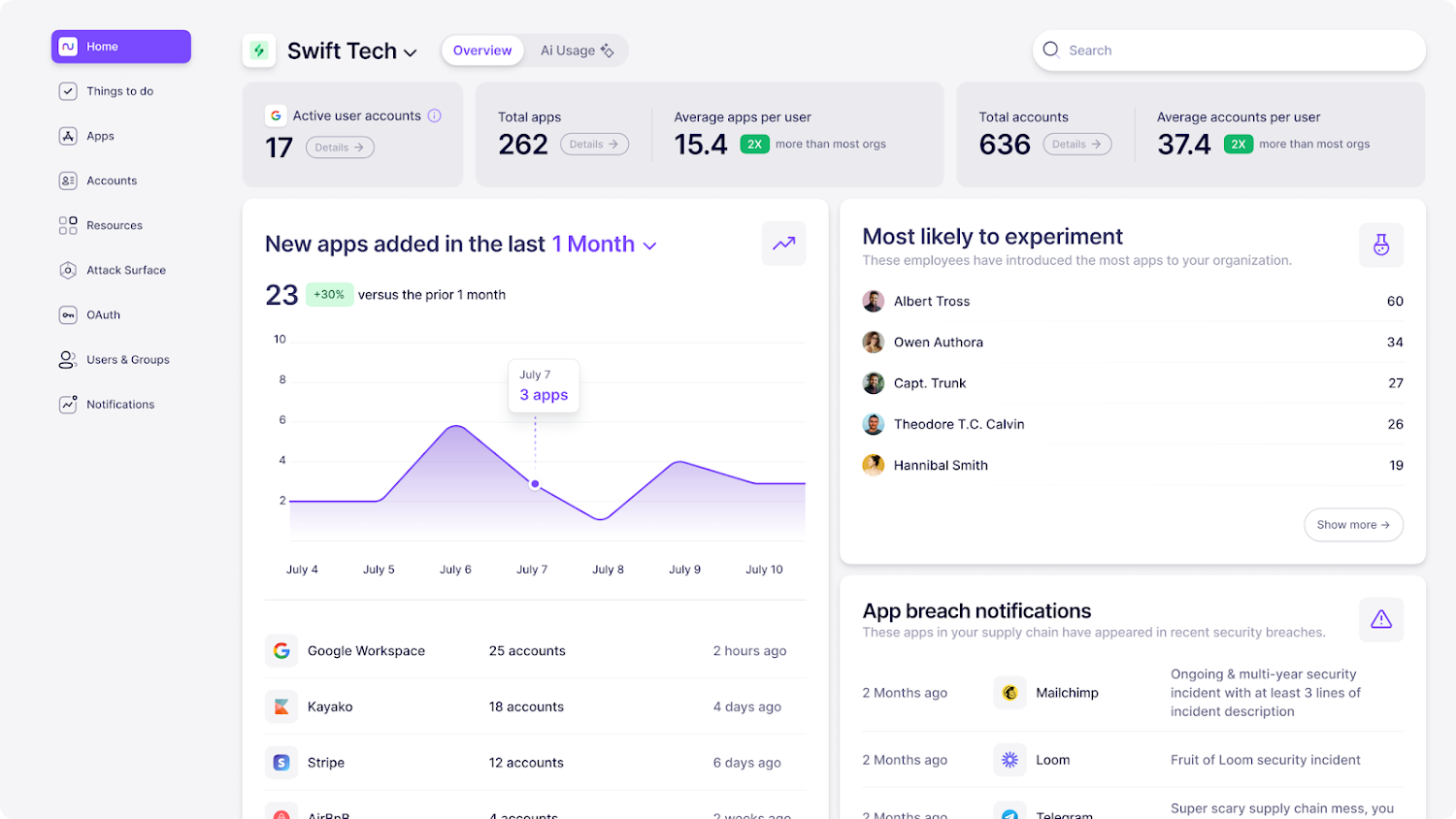
Best for: Shadow AI discovery and AI agent security
Nudge Security helps security teams discover AI tools and agents that employees introduce into the workplace, including those that may not appear in approved software inventories. It is particularly useful for organizations that want to understand their actual AI footprint before applying security policies.
Key features include:
- Shadow AI discovery: Identify AI applications used across the organization, including tools adopted outside formal IT processes.
- AI agent discovery: Discover agents across supported platforms, including browser-based discovery for certain agents that lack suitable APIs.
- Identity and access visibility: Understand how AI applications connect to employee identities and organizational accounts.
- Risk identification: Surface potential security concerns associated with unmanaged applications and agent access.
- Security remediation: Help teams investigate discovered risks and take appropriate action.
Nudge Security announced expanded browser-based AI agent discovery in May 2026, extending visibility beyond API-dependent discovery methods.
Pricing: Contact Nudge Security for current pricing.
C. Cranium AI
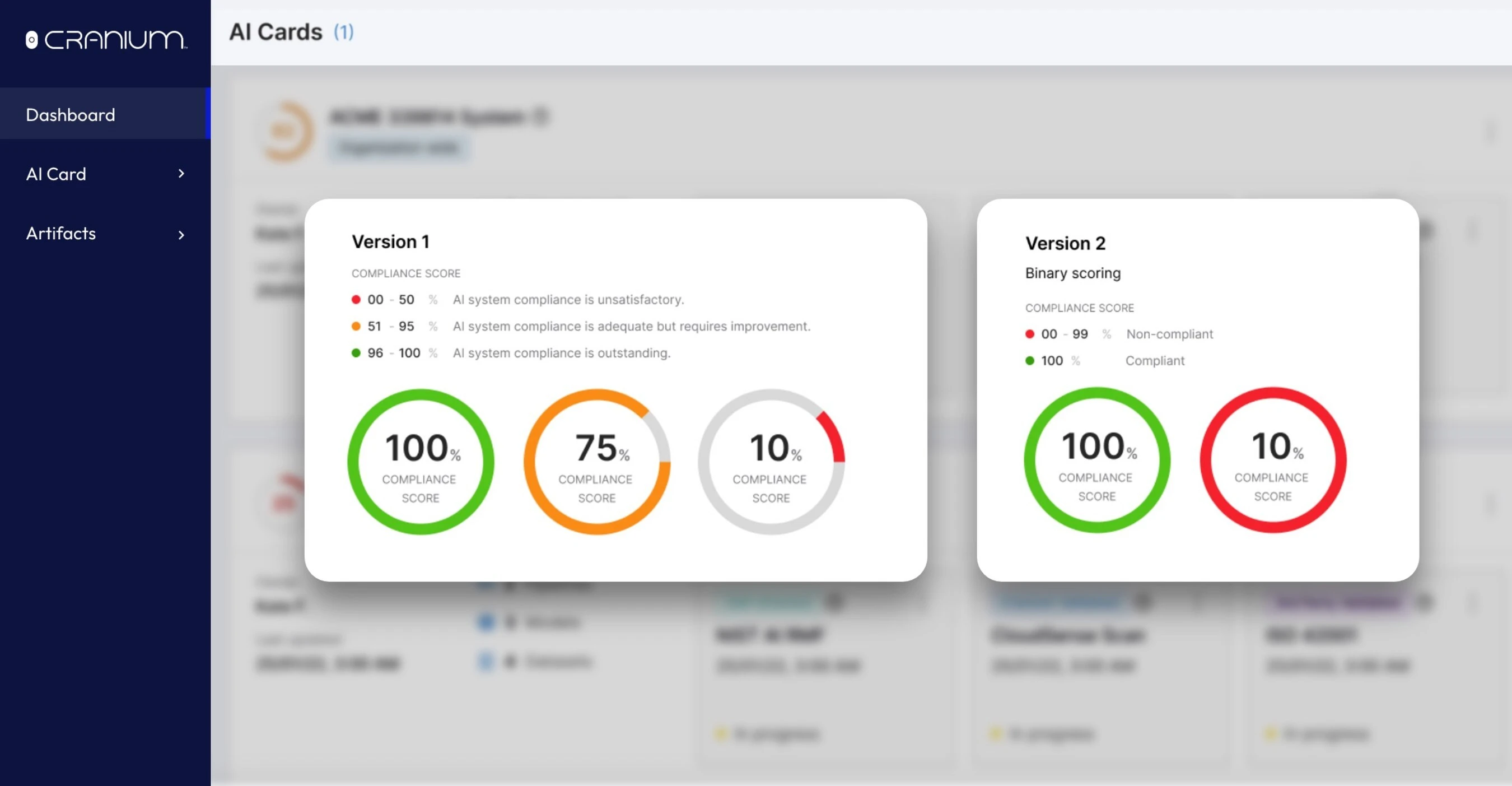
Best for: AI security, testing, and runtime protection
Cranium AI combines AI discovery with security testing, governance, and protection across models, agents, datasets, and third-party AI systems. It is a relevant Airia alternative for organizations that need to assess technical AI risks alongside governance requirements.
Key features include:
- AI asset discovery: Identify AI systems across supported code, cloud, and agent environments.
- Security testing: Test AI systems for vulnerabilities and potential attack paths before deployment.
- Runtime monitoring: Observe model and agent behavior in production to identify security concerns.
- Policy governance: Map organizational AI policies to relevant standards, including the NIST AI Risk Management Framework and EU AI Act.
- Compliance evidence: Maintain security findings and governance information to support reviews and audits.
Cranium is particularly relevant when teams need security testing and runtime protection as part of their AI governance approach.
Pricing: Contact Cranium for a customized quote.
D. Credo AI
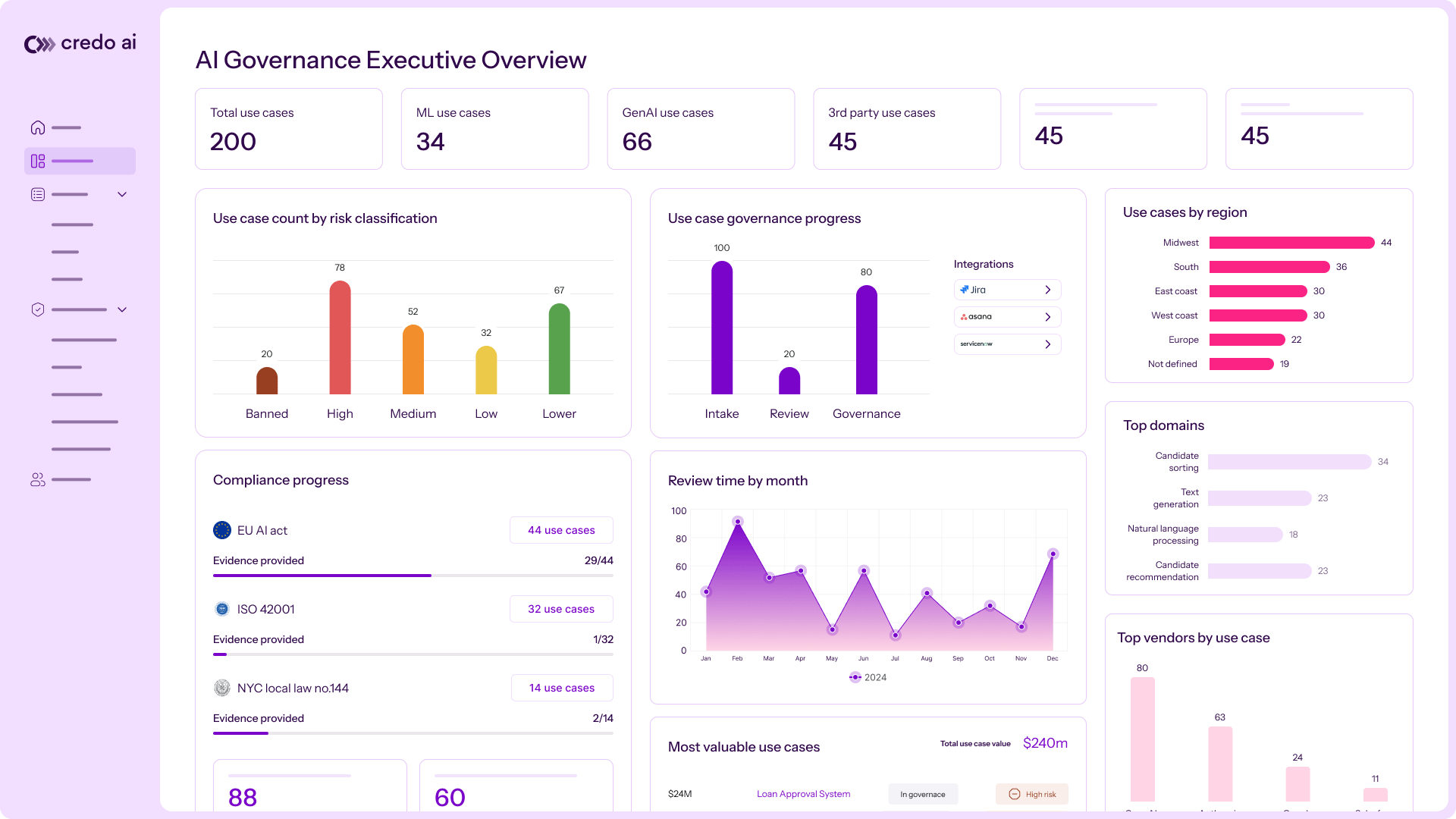
Best for: Responsible AI governance and compliance
Credo AI helps organizations establish structured governance processes for AI applications, models, and agents. It focuses on maintaining an AI inventory, assessing risks, applying policies, and documenting compliance throughout the AI lifecycle.
Key features include:
- AI inventory and discovery: Maintain visibility into AI systems, including shadow AI and agent-based applications.
- Risk assessments: Evaluate AI systems against relevant business, technical, and regulatory risks.
- Policy management: Establish governance requirements and map them to applicable frameworks.
- Approval workflows: Standardise reviews and approvals before AI systems are deployed or used.
- Monitoring and evidence: Track governance requirements and maintain documentation for audits and compliance reviews.
Credo AI supports governance workflows mapped to frameworks such as the EU AI Act, NIST AI RMF, and ISO/IEC 42001.
Pricing: Contact Credo AI for enterprise pricing.
E. Holistic AI
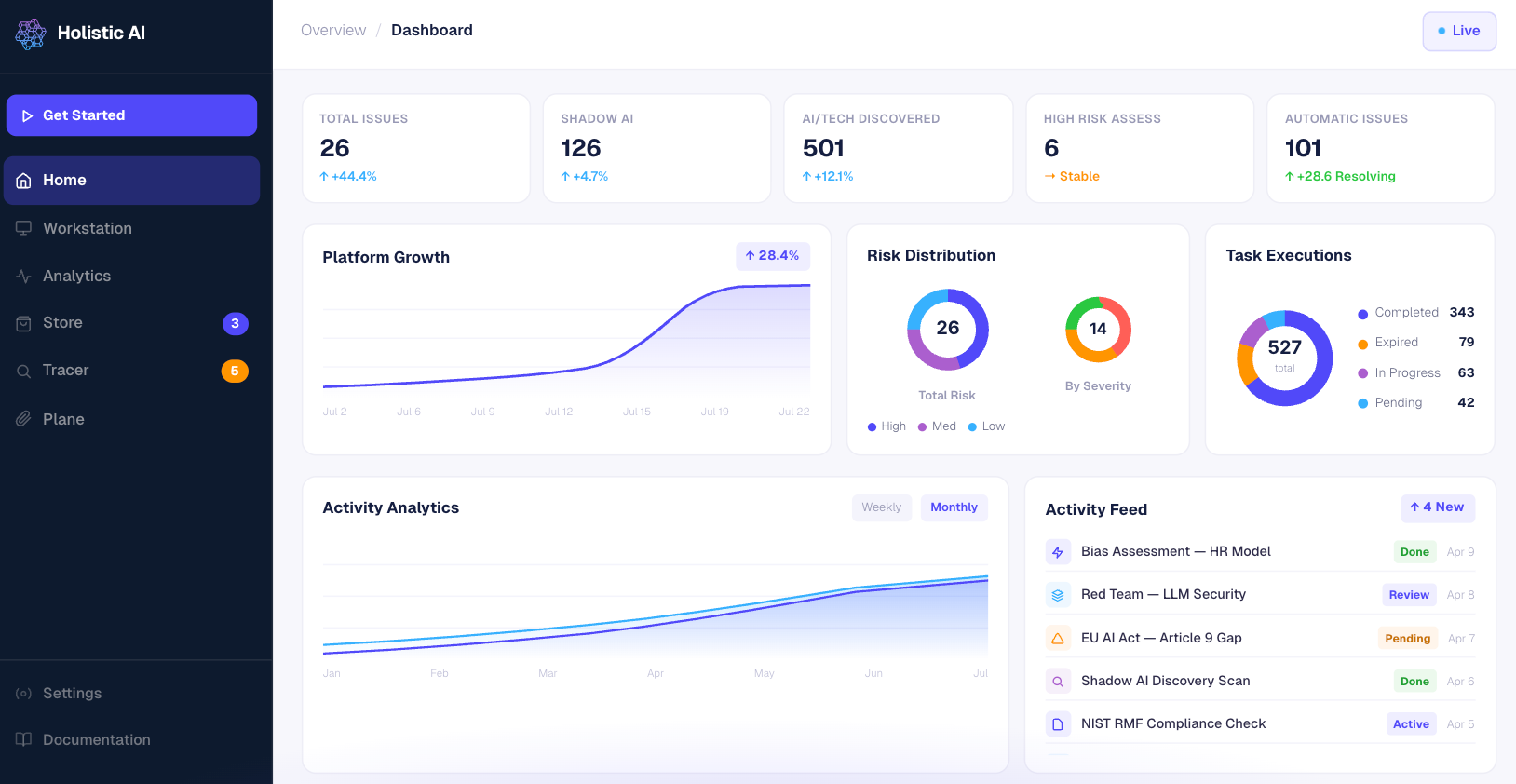
Best for: AI risk assessment, testing, and continuous governance
Holistic AI helps enterprises discover AI systems, assess their risks, test model behavior, and apply governance controls. It is worth evaluating when an organization needs both an inventory of AI assets and a structured way to assess their safety, fairness, and compliance.
Key features include:
- AI discovery and inventory: Identify AI models, applications, and agents across supported cloud, code, and SaaS environments.
- Risk assessment: Evaluate AI systems for risks related to privacy, security, bias, and reliability.
- AI testing: Test models and agents for issues such as prompt injection, jailbreaks, and unsafe behavior.
- Policy enforcement: Apply governance controls, approval processes, and human oversight.
- Continuous monitoring: Track model behavior and performance to help identify emerging risks.
Holistic AI combines discovery, testing, and policy enforcement, with governance controls mapped to frameworks including the EU AI Act, NIST AI RMF, and ISO/IEC 42001.
Pricing: Contact Holistic AI for a customized quote.
F. OneTrust AI Governance
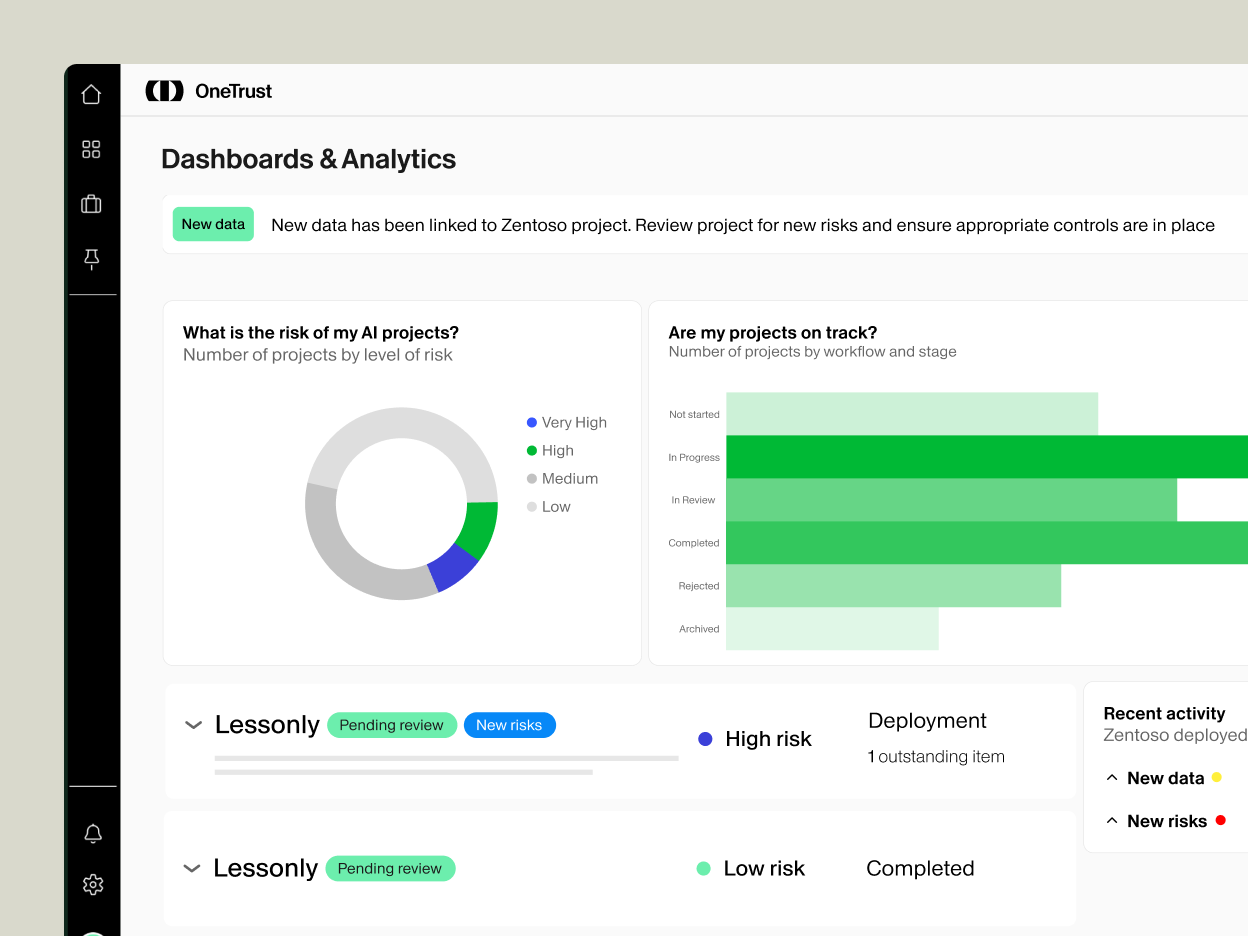
Best for: AI risk management, privacy, and regulatory compliance
OneTrust AI Governance is suited to organizations that want to connect AI oversight with existing privacy, risk, and compliance programmes. It helps teams manage AI use cases through structured assessments, governance workflows, and ongoing oversight.
Key features include:
- AI inventory: Maintain a central view of AI systems and use cases across the organization.
- Risk classification: Assess AI use cases based on their potential impact and associated risks.
- Governance workflows: Coordinate reviews, approvals, and ownership across business and compliance teams.
- Policy and compliance management: Map governance requirements to relevant regulations and internal policies.
- Monitoring and reporting: Support ongoing oversight and maintain records for governance reviews.
OneTrust is particularly relevant when AI governance needs to fit into established privacy and enterprise risk management processes. Its available controls and integrations should be checked against the organization's specific AI environment.
Pricing: Contact OneTrust for current pricing.
G. IBM watsonx.governance

Best for: Enterprise AI lifecycle governance and model risk management
IBM watsonx.governance helps organizations manage AI risks across the development, deployment, and monitoring stages. It is especially relevant for enterprises that need consistent oversight of AI models and applications across complex technology environments.
Key features include:
- AI asset oversight: Track AI models and related assets to improve governance visibility.
- Risk and compliance management: Evaluate AI systems against organizational policies and applicable requirements.
- Model evaluation: Assess supported AI systems for quality, fairness, and other governance-related risks.
- Lifecycle monitoring: Monitor model performance and risk indicators across supported workflows.
- Governance documentation: Maintain records and evidence to support reviews and accountability.
IBM watsonx.governance is a strong candidate for organizations with established model risk management practices and complex AI portfolios. Verify support for your specific models, deployment environments, and integrations before selecting it.
Pricing: Review IBM's current pricing options or contact its sales team for enterprise requirements.
H. ModelOp
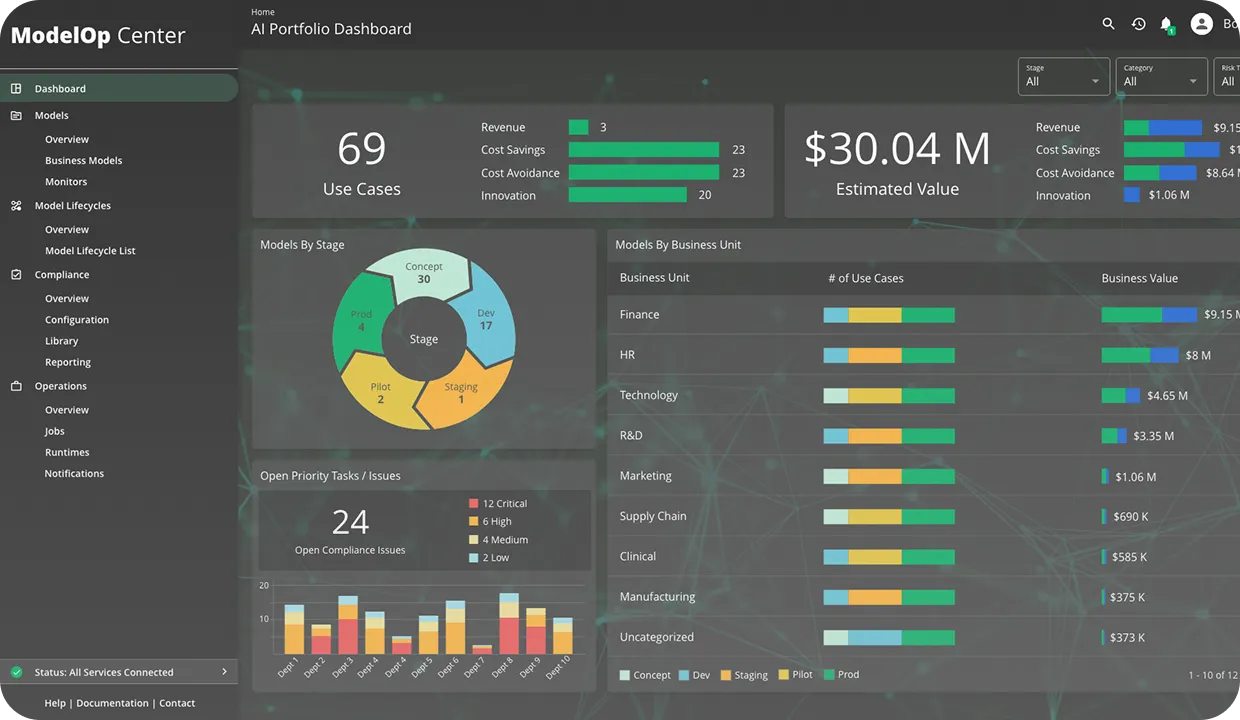
Best for: Centralized AI inventory and lifecycle management
ModelOp focuses on helping enterprises manage AI systems through a centralized governance and operational framework. It is particularly relevant to organizations overseeing numerous models and AI applications across different teams, platforms, and business functions.
Key features include:
- Centralized AI inventory: Maintain a consistent record of AI assets and their associated information.
- Lifecycle workflows: Coordinate governance activities across AI development, approval, deployment, and ongoing management.
- Risk and policy management: Standardise risk reviews and governance requirements across AI projects.
- Documentation and audit trails: Track governance decisions, ownership, and supporting evidence.
- Enterprise integration: Connect AI oversight with relevant data, development, and risk management systems.
ModelOp is a suitable option for organizations that need consistent governance processes across a diverse AI portfolio rather than separate reviews for every project.
Pricing: Contact ModelOp for a quote based on deployment and organizational requirements.
I. ServiceNow AI Control Tower
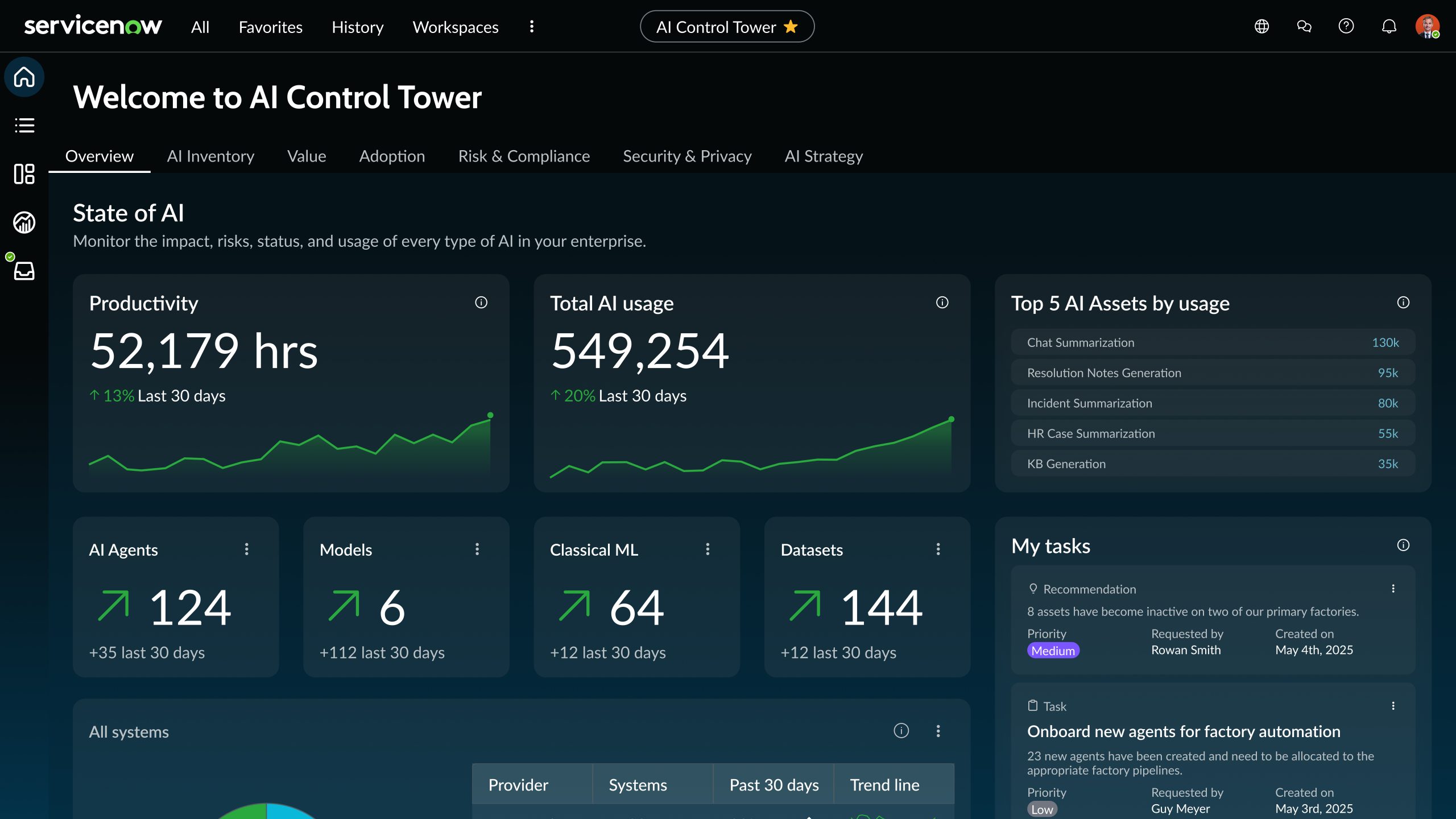
Best for: Enterprise-wide AI discovery, governance, and workflow integration
ServiceNow AI Control Tower gives organizations a central way to discover, govern, secure, and monitor AI systems across their technology environments. Its integration with ServiceNow workflows makes it particularly relevant for enterprises already using the platform for IT and operational processes.
Key features include:
- AI discovery and inventory: Identify AI assets across supported enterprise systems and maintain visibility into ownership and relationships.
- Risk management: Assess AI-related risks and coordinate governance activities.
- Compliance workflows: Manage governance requirements and maintain evidence for audits.
- Runtime oversight: Support monitoring and controls for AI agents and systems, depending on the deployed capabilities.
- Business value tracking: Connect AI investments with adoption, performance, and business outcomes.
ServiceNow has expanded AI Control Tower to include broader discovery, security, governance, observability, and value measurement capabilities.
Pricing: Contact ServiceNow for current pricing.
J. Microsoft Purview
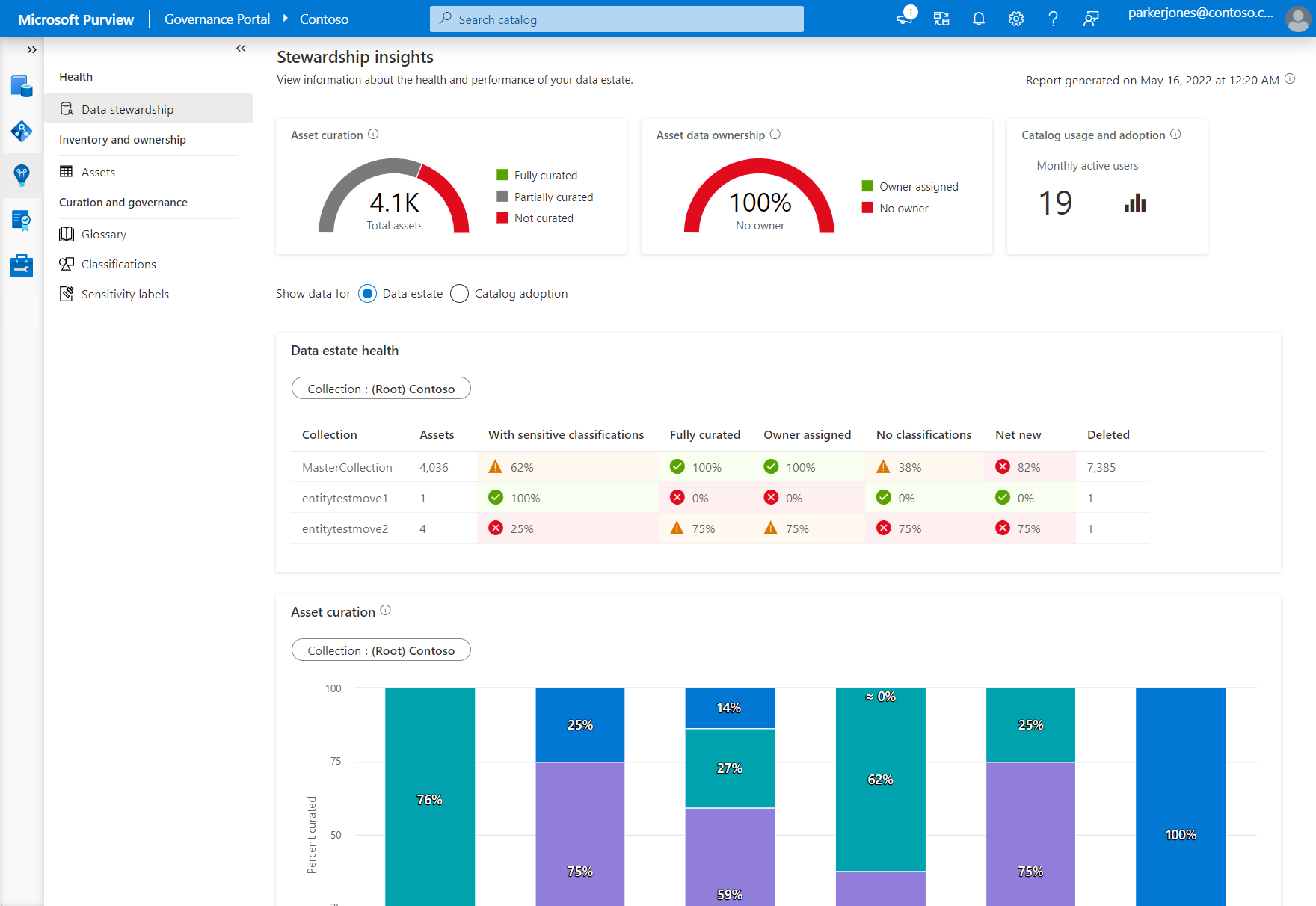
Best for: AI data security and compliance in Microsoft environments
Microsoft Purview helps organizations apply data security and compliance controls to supported AI applications and experiences. It is particularly relevant when sensitive information, data loss prevention, and existing Microsoft security policies are central to AI governance.
Key features include:
- AI activity visibility: Discover and monitor supported AI application activity through applicable Microsoft capabilities.
- Data loss prevention: Apply supported controls to help prevent sensitive information from being exposed through AI interactions.
- Information protection: Use data classification and protection policies to manage how sensitive information is handled.
- Compliance oversight: Support investigations, reviews, and compliance processes for covered AI environments.
- Microsoft ecosystem integration: Extend existing Microsoft security and compliance workflows to supported AI applications.
Coverage varies by application, license, and capability, so organizations should check Microsoft's current support documentation before relying on a particular control.
Pricing: Costs depend on the relevant Microsoft licenses and capabilities. Check current licensing requirements with Microsoft.
5. Airia vs. CloudEagle.ai: What’s the Difference?
Airia and CloudEagle.ai support AI governance from different angles. Airia combines AI discovery, security, governance, and orchestration, while CloudEagle.ai focuses on employee AI usage, shadow AI visibility, access controls, and spend governance.
Which platform should you choose?
Choose Airia if you need a broader platform for AI governance, security, and orchestration. Consider CloudEagle.ai if your priority is discovering shadow AI, monitoring employee usage, controlling access, and improving AI spend visibility.
Before deciding, compare the specific integrations, enforcement capabilities, and pricing available for your requirements.
6. Which Airia Alternative Should You Choose?
The best Airia alternative depends on whether your organization prioritizes employee AI usage, security, compliance, or enterprise-wide governance.
- CloudEagle.ai: Best for shadow AI discovery, employee usage visibility, access governance, and AI spend management.
- Nudge Security: Best for discovering unmanaged AI applications and agents.
- Cranium AI: Best for AI security testing and runtime protection.
- Credo AI or OneTrust: Best for AI risk management, governance policies, and compliance workflows.
- Holistic AI: Best for AI risk assessment and testing.
- IBM watsonx.governance or ModelOp: Best for AI lifecycle and model governance.
- ServiceNow AI Control Tower: Best for connecting AI governance with enterprise workflows.
- Microsoft Purview: Best for extending data security and compliance controls to supported AI applications.
Before making a decision, compare each platform’s integrations, policy enforcement capabilities, compliance support, and total cost of ownership. Choose a platform that addresses your organization’s biggest AI governance gaps without introducing unnecessary complexity.
7. Find the Right AI Governance Platform for Your Business
Choosing an Airia alternative comes down to how your organization discovers, secures, and governs AI usage. Evaluate each platform against your security requirements, compliance needs, existing technology stack, and long-term adoption goals.
For organizations looking to identify shadow AI, improve employee usage visibility, enforce AI access policies, and manage AI spending, CloudEagle.ai offers a focused approach to AI adoption governance.
It can help IT, security, and procurement teams make informed decisions about which AI tools employees use and how those tools are managed.
8. Frequently Asked Questions
1. What should businesses look for in an AI governance platform?
Businesses should evaluate AI discovery, access controls, risk assessment, policy enforcement, compliance reporting, and integration with existing systems. The right platform should address their specific governance gaps and support their AI adoption strategy.
2. Can Airia alternatives help manage shadow AI?
Yes. Platforms such as CloudEagle.ai and Nudge Security help organizations identify AI tools used outside approved IT processes. Their discovery methods and governance capabilities differ, so businesses should verify coverage across their applications and AI agents.
3. What is the difference between AI governance and AI security?
AI governance establishes policies, accountability, risk management, and compliance requirements for AI systems. AI security focuses on protecting AI applications, models, data, and agents from threats and unauthorized access. Some platforms cover both areas, while others specialise in one.
4. Do Airia alternatives support regulatory compliance?
Several alternatives offer features that support AI risk assessments, policy management, and audit documentation. However, platform capabilities vary, and using AI governance software does not automatically ensure compliance with regulations such as the EU AI Act.
5. How much does AI governance software cost?
AI governance software pricing varies by platform, deployment requirements, features, and organizational size. Some providers offer customized enterprise pricing, so businesses should request quotes and compare licensing, implementation, integration, and ongoing administration costs.
Stop Choosing Between AI Innovation and Control