HIPAA Compliance Checklist for 2025

As AI adoption grows, organizations need better ways to discover AI tools, assess risks, and enforce usage policies. OneTrust’s 2026 AI-Ready Governance Survey found that 47% of organizations describe their AI governance programs as reactive, fragmented, slow, or manual.
Businesses exploring OneTrust alternatives may need stronger risk management or more practical controls over employee AI usage. CloudEagle.ai focuses on AI application discovery, shadow AI visibility, access governance, and policy enforcement.
This guide compares ten alternatives based on their AI governance capabilities, overlap with CloudEagle.ai, and best-fit use cases.
1. Why Look for OneTrust Alternatives in 2026?
Organizations may explore OneTrust alternatives when they need different approaches to AI risk management, employee usage controls, or governance workflows. The right choice depends on whether they need to assess AI systems, discover unapproved applications, manage access, or enforce usage policies.
Key capabilities to compare include:
- AI discovery: Identify AI applications and systems, including unapproved tools.
- Risk management: Assess AI-related security, operational, and compliance risks.
- Policy enforcement: Apply controls that support responsible AI usage.
- Access governance: Manage permissions for AI applications and agents.
- Continuous monitoring: Track AI activity and identify emerging risks.
These criteria also help distinguish CloudEagle.ai's focus on AI application discovery, shadow AI visibility, access governance, and usage enforcement from platforms centred on model governance or regulatory compliance.

2. How We Evaluated the Best OneTrust Alternatives
We evaluated these platforms based on their AI governance capabilities and how they compare with CloudEagle.ai across five areas:
- AI discovery: Identifying AI applications, models, and agents across an organization.
- Risk management: Assessing AI-related security, operational, and compliance risks.
- Policy management: Defining AI governance policies and applying relevant controls.
- Monitoring and access: Tracking AI activity and managing access where supported.
- CloudEagle.ai comparison: Examining overlapping capabilities, key differences, and the use cases each platform supports.
Not every platform covers all five areas. Some focus on employee AI usage and application access, while others specialize in model governance, technical risk assessments, or regulatory compliance.
The comparisons highlight these differences to help organizations identify the platform that best fits their AI governance requirements.
3. Quick Comparison: 10 Best OneTrust Alternatives in 2026
Choosing the right OneTrust alternative depends on whether your organization prioritizes employee AI usage, risk management, compliance, data protection, or AI lifecycle governance.
This table compares the ten platforms featured in the article and highlights their primary differentiators.
CloudEagle.ai is particularly relevant for organizations seeking to discover employee-used AI applications, identify shadow AI, monitor usage, and enforce AI usage policies.
The other platforms address different needs, including AI lifecycle management, technical security, data protection, and formal risk and compliance workflows.
While some platforms focus more on AI lifecycle management, risk assessments, or data protection, CloudEagle.ai helps organizations understand how employees use AI applications and apply controls to manage that usage.
4. 10 Best OneTrust Alternatives in 2026
Choosing a OneTrust alternative depends on how your organization manages AI risks, compliance, and day-to-day AI usage.
While some platforms focus on risk assessments and regulatory requirements, others help teams discover AI applications, identify shadow AI, control access, and govern AI models and agents.
This list features CloudEagle.ai alongside nine alternatives, highlighting each platform’s key features, ideal use cases, and pricing to help you compare options and find the right fit for your AI governance needs.
A. CloudEagle.ai
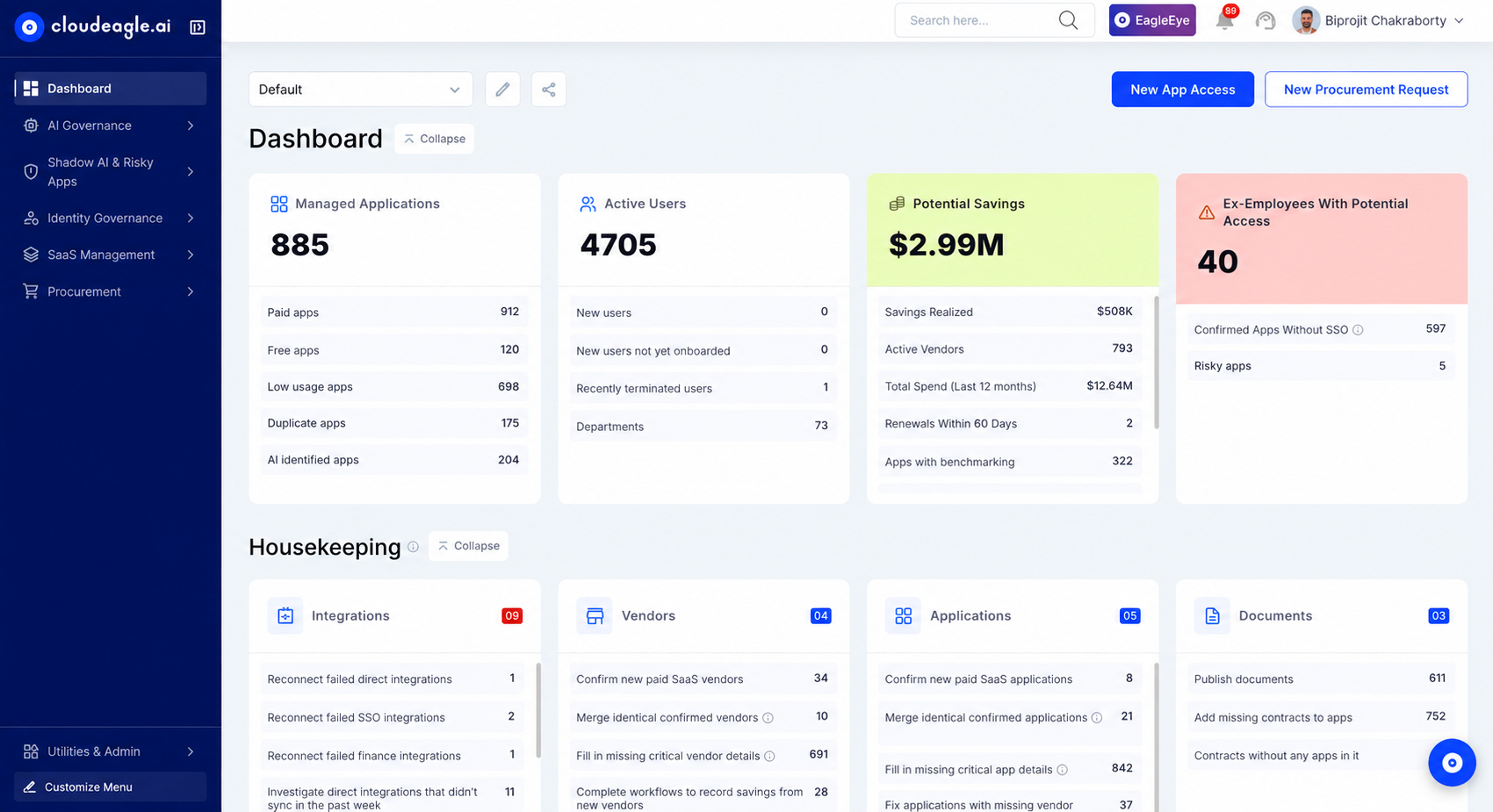
CloudEagle.ai is an AI governance platform that helps enterprises discover AI applications, control employee usage, enforce policies, manage AI agents, and track token consumption.
It connects AI discovery with access controls, browser-level enforcement, and spending visibility, helping organizations identify unapproved tools, protect sensitive data, and govern how employees and AI agents use AI across the enterprise.
CloudEagle.ai also helps organizations connect AI governance with cost accountability. For example, Domo found that 34% of its AI licenses had no activity in 90 days, highlighting how visibility into actual usage can help enterprises identify unused licenses and make better spending decisions.
Key features:
- Shadow AI Discovery: Discovers approved and unapproved AI applications across the organization by correlating browser, SSO, finance, and security signals. Its centralized AI inventory helps teams identify tools operating outside approved IT processes and assess potential security risks through shadow AI discovery.
- AI Usage Control and Token Tracking: Tracks AI consumption across supported tools, including ChatGPT, Claude, Cursor, and Gemini. Through AI usage control, teams can review token consumption and costs by user, team, model, API key, and cost center. This helps organizations understand usage patterns, identify underused licenses, and improve accountability for AI consumption.
- AI Policy Enforcement: Helps organizations enforce AI usage policies where employees access AI tools. Browser-based controls can display warnings when employees open unapproved applications and redirect them to approved alternatives. Configured policies can also block sensitive information from being submitted to unmanaged AI tools through AI policy enforcement.
- AI Spend Limits and Budgeting: Provides visibility into AI consumption and costs across teams, models, and departments. Organizations can set spending thresholds, monitor usage against budgets, and receive alerts before potential overages occur. These controls help finance and IT teams manage token consumption and plan AI spending more effectively through AI token cost management.
- AI Chargeback Reporting: Allocates AI costs to the teams, departments, and cost centers generating them. By connecting token consumption with usage data, CloudEagle.ai helps finance teams understand which business units drive AI spending, establish budget accountability, and make more informed decisions about AI investments.
- AI Agent Management: Extends governance to AI agents, MCP servers, service accounts, and API keys. CloudEagle.ai’s AI agent security platform helps organizations manage agent access and security risks. Its non-human identity management capabilities support identity discovery, permission reviews, credential management, and access revocation.
Pros:
- Combines shadow AI discovery, usage controls, and policy enforcement in one platform.
- Provides token-level visibility into AI consumption and spending across teams and models.
- Helps protect company data through browser-level AI governance controls.
- Extends identity and access governance to AI agents, service accounts, and API keys.
- Supports AI budgeting and cost accountability by connecting consumption with the teams responsible.
Pricing: CloudEagle.ai offers five modules to address different enterprise requirements. Book a demo and the experts will help you choose the right plan.
OneTrust Isn’t the Only Way to Govern Risk


B. Credo AI
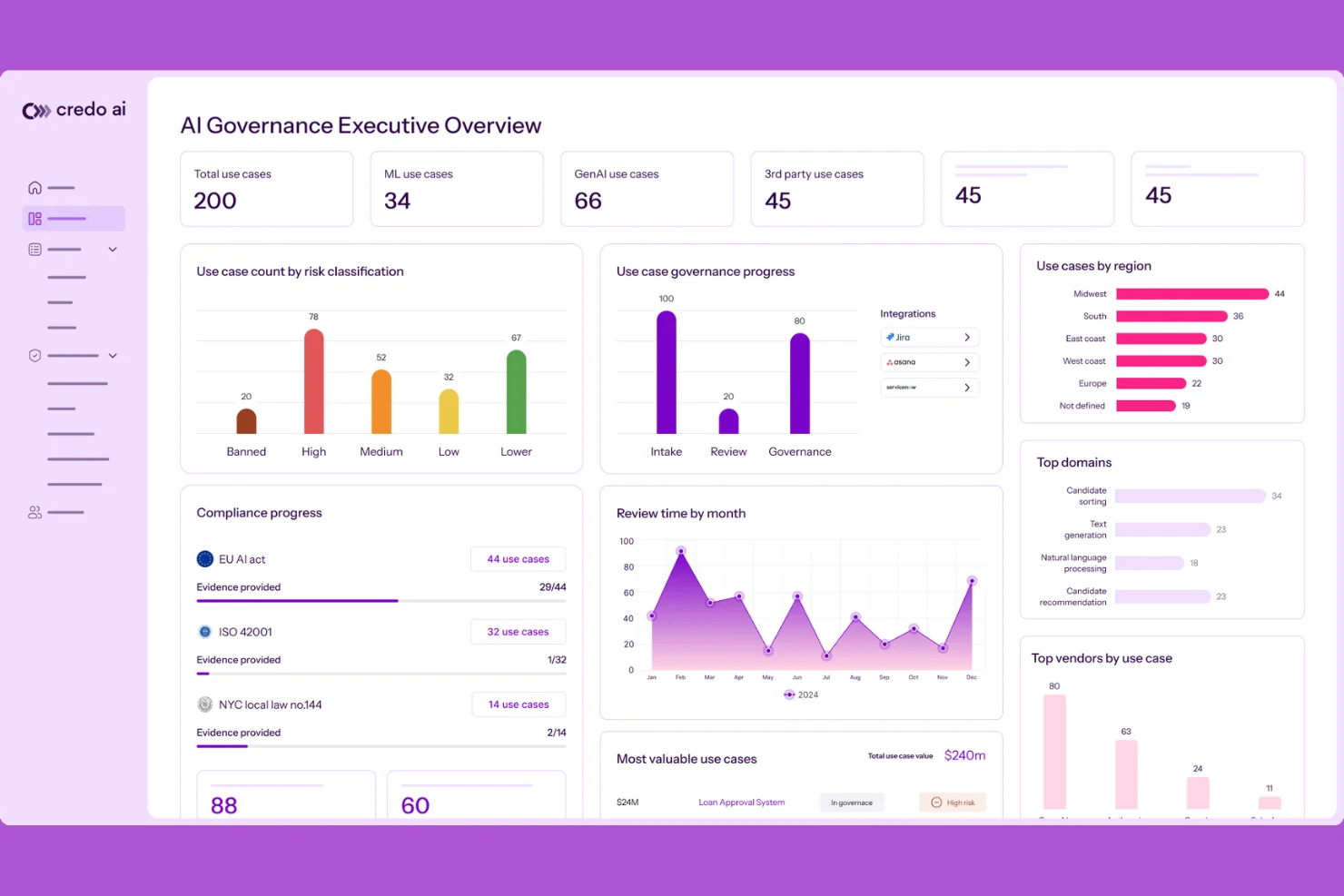
Credo AI helps organizations discover, assess, and govern AI systems, including models, applications, vendors, and agents. It is designed for businesses that need structured responsible AI practices, risk assessments, and compliance workflows.
Key features:
- AI Registry: Maintains a centralized inventory of AI systems and use cases.
- AI Discovery: Helps organizations identify AI assets and improve visibility into AI adoption.
- AI Risk Assessments: Supports the evaluation and management of risks associated with AI systems.
- Governance Policies: Helps teams define and apply responsible AI requirements.
- Compliance Workflows: Supports governance documentation, risk tracking, and regulatory alignment.
Pricing: Contact its sales team for a quote based on your governance requirements.
C. Cranium
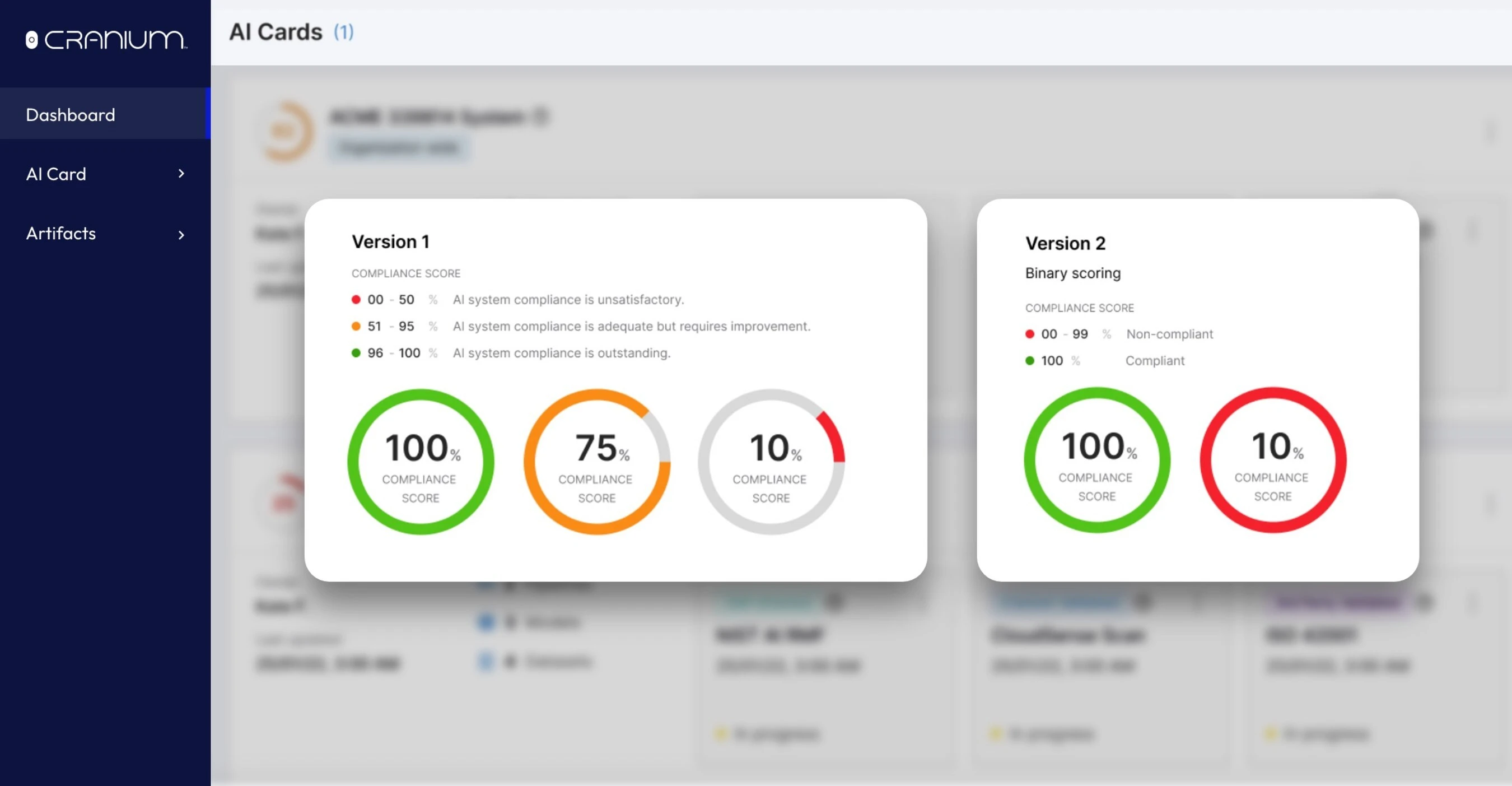
Cranium focuses on AI security and risk management across enterprise AI environments. Its platform helps organizations identify AI assets, assess security risks, and improve visibility into potential AI-related threats.
Key features:
- AI Asset Discovery: Identifies AI assets across supported environments.
- AI Security Monitoring: Helps teams monitor AI-related security risks.
- Risk Identification: Supports the detection and assessment of vulnerabilities in AI environments.
- AI Security Testing: Provides capabilities for evaluating AI system security.
- Security Governance: Helps organizations understand AI assets and their associated security exposure.
Pricing: Contact the vendor for a quote based on your AI security and governance needs
D. Enzai
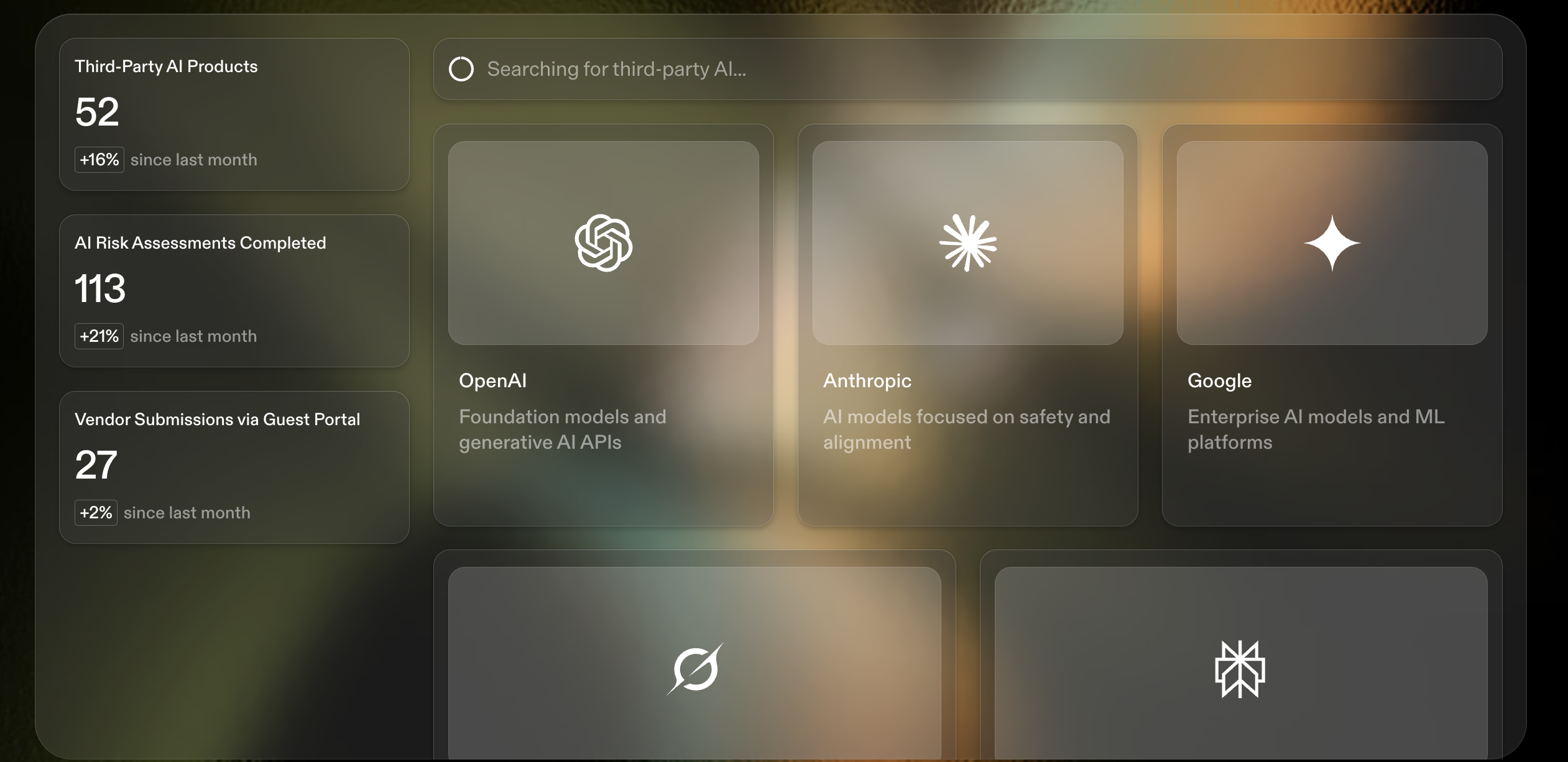
Enzai helps organizations build AI inventories, classify risks, manage governance requirements, and document compliance. Its platform is relevant to teams that need structured oversight of AI systems and evidence of how those systems are governed.
Key features:
- AI Inventory: Maintains records of AI systems and use cases.
- AI Discovery: Supports visibility into sanctioned and unsanctioned AI usage.
- Risk Classification: Helps classify AI systems according to their risk levels.
- Regulatory Mapping: Supports mapping governance requirements to relevant AI regulations and frameworks.
- Evidence Management: Helps teams maintain documentation for governance and compliance reviews.
Pricing: Contact its team for pricing based on your AI inventory and governance requirements.
E. Holistic AI
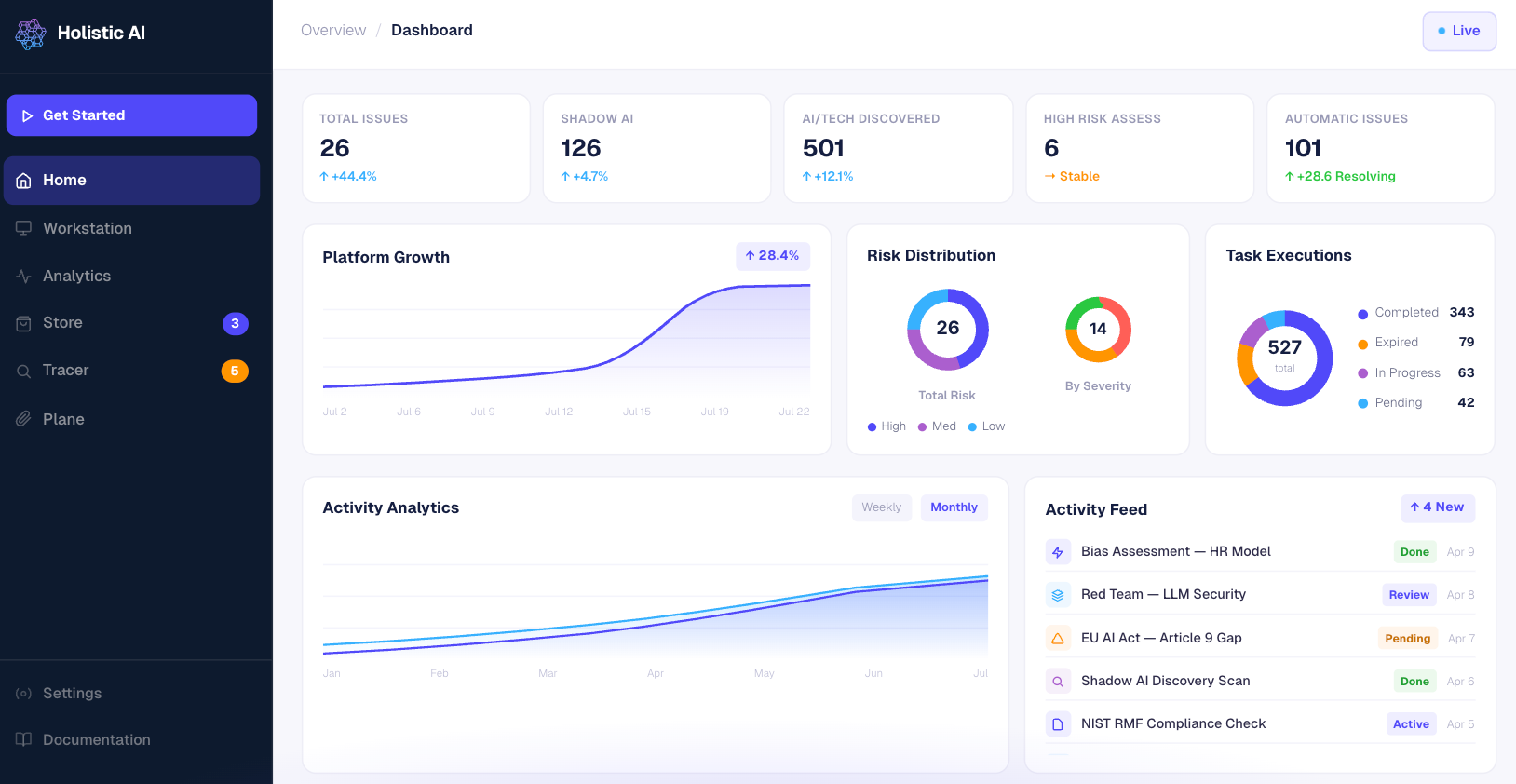
Holistic AI focuses on AI risk assessment, auditing, and technical assurance. It helps organizations evaluate AI systems against defined requirements for performance, fairness, security, and regulatory compliance.
Key features:
- AI Risk Assessments: Evaluates potential risks associated with AI systems.
- AI Auditing: Supports reviews of AI systems against governance requirements.
- Technical Evaluations: Helps assess AI system performance and reliability.
- Fairness Assessments: Supports the evaluation of potential bias in AI systems.
- Compliance Support: Helps organizations assess AI systems against relevant governance and regulatory requirements.
Pricing: Holistic AI does not publicly list standard platform pricing. Request a quote based on the services and assessments your organization needs.
F. ModelOp
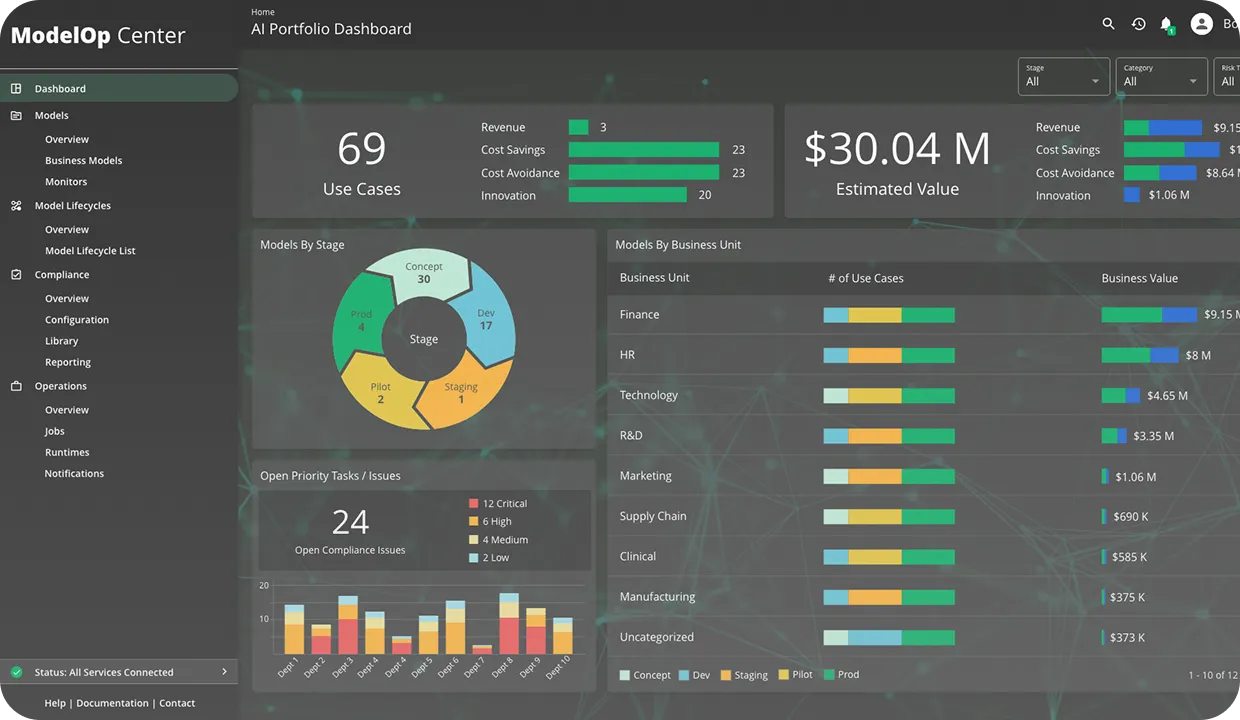
ModelOp provides enterprise AI lifecycle governance. It helps organizations register AI use cases, coordinate risk reviews, manage approvals, and track AI systems throughout their lifecycle.
Key features:
- AI Inventory: Maintains a centralized record of AI systems and use cases.
- Use-Case Intake: Standardizes how AI initiatives enter the governance process.
- Risk Assessments: Supports risk evaluation and governance decisions.
- Approval Workflows: Coordinates reviews across business, technical, and compliance teams.
- Lifecycle Tracking: Tracks AI systems and governance activities over time.
Pricing: ModelOp's AWS Marketplace listing shows $25,000 per month for a non-production instance. Production pricing requires a separate quote, and additional AWS infrastructure costs may apply.
G. Relyance AI
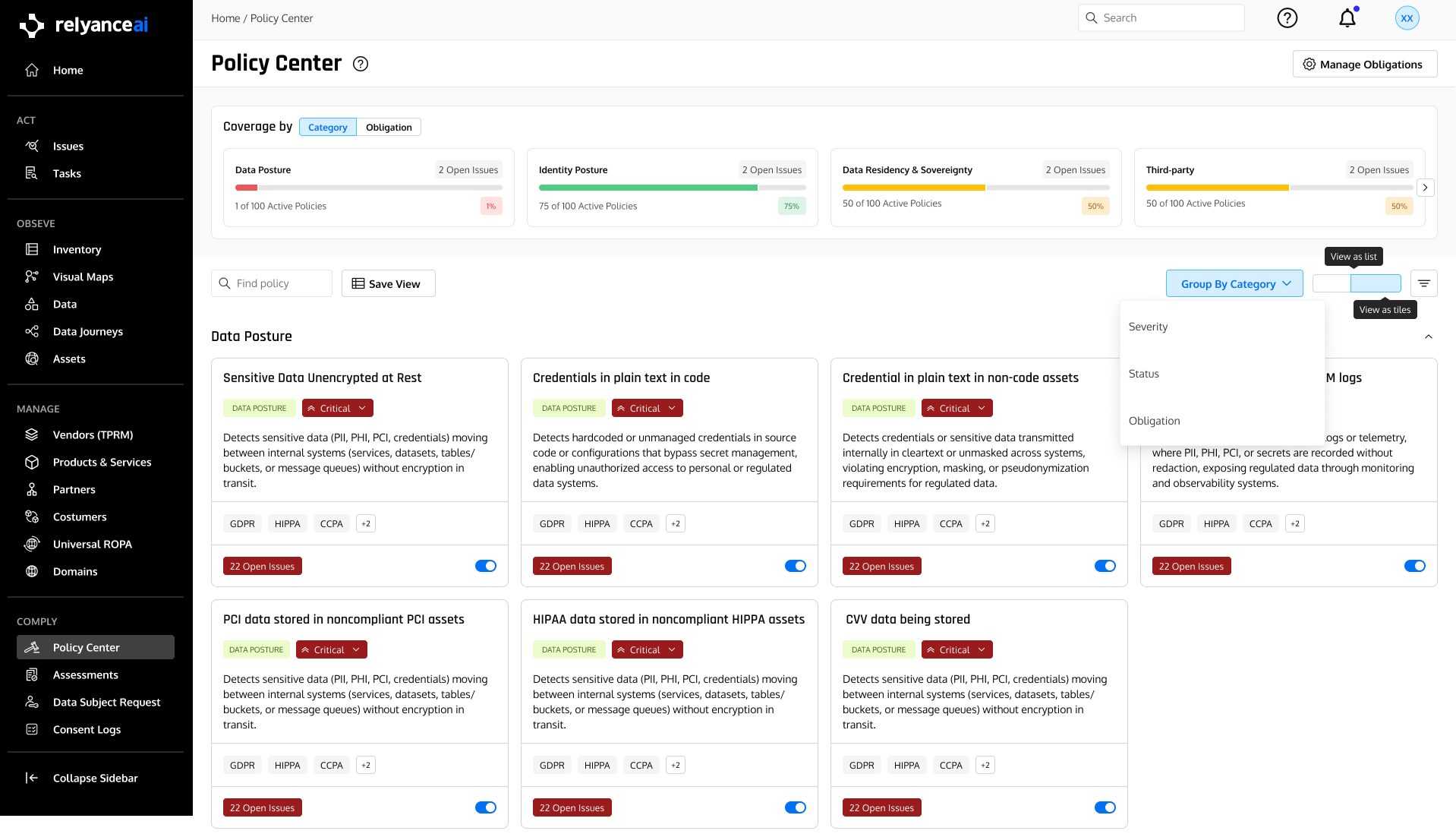
Relyance AI focuses on data security, privacy, and AI governance. Its platform helps organizations understand how AI systems interact with data, identify privacy risks, and apply controls to reduce the likelihood of unauthorized data access or exposure.
Key features:
- AI Asset Visibility: Helps identify AI-related components and their connections to organizational data.
- Data Discovery: Supports the identification and classification of sensitive information.
- Data Lineage: Helps teams understand how data moves across connected systems.
- Privacy Risk Management: Supports the assessment of privacy and data security risks.
- Runtime Controls: Provides controls in supported environments to help manage AI-related data risks.
Pricing: Contact its team for a quote based on your data security, privacy, and AI governance requirements.
H. Saidot
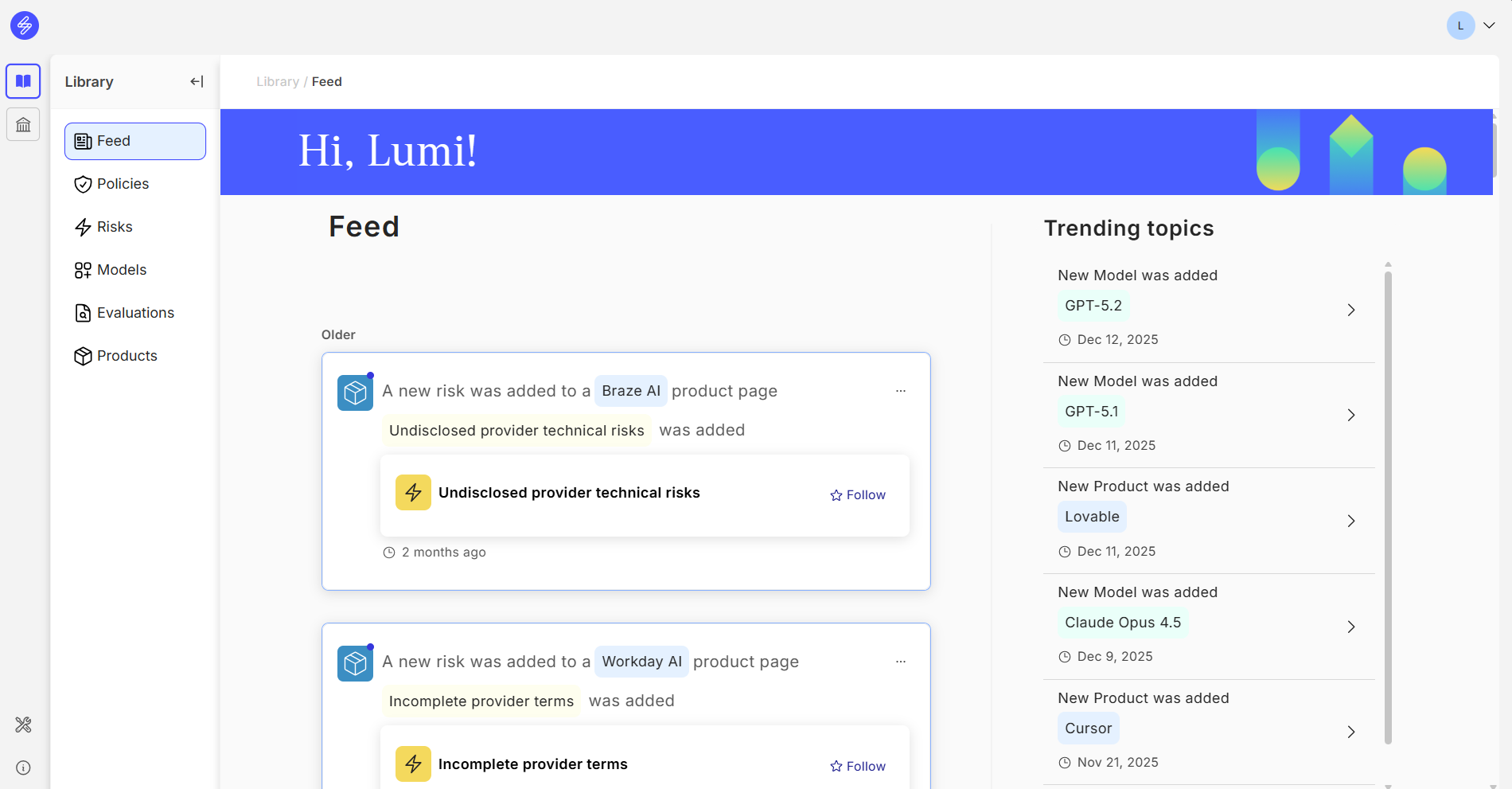
Saidot provides AI governance capabilities for managing AI inventories, risks, policies, and controls. Its platform helps organizations connect AI assets with relevant governance requirements and maintain oversight across AI systems and use cases.
Key features:
- AI Inventory: Maintains records of AI systems and related assets.
- Risk Assessments: Helps identify and assess risks associated with AI systems.
- Policy Management: Connects governance policies with relevant AI assets and risks.
- Control Mapping: Links AI risks with controls and applicable governance frameworks.
- Governance Integrations: Supports connections with AI development environments and other enterprise systems.
Pricing: Saidot's subscription fees are agreed with customers and documented in an order form or other written agreement. Contact its team for current pricing
I. Trustible
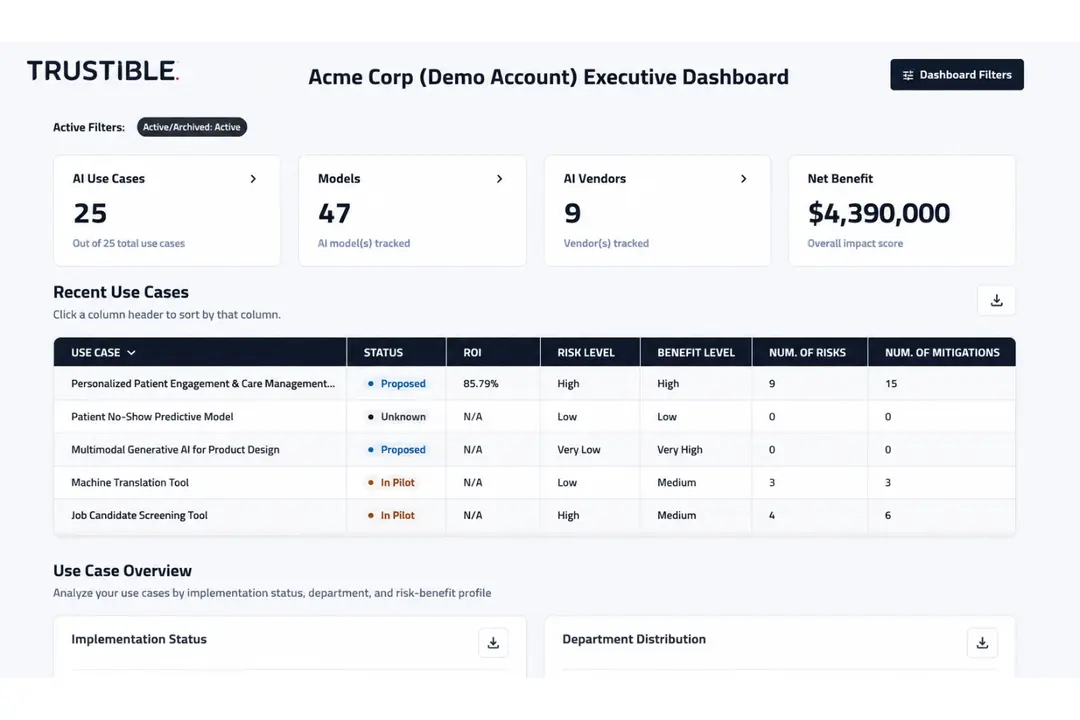
Trustible helps enterprises manage AI governance from use-case intake and risk assessment to monitoring and compliance documentation. It is relevant to organizations that need structured review workflows and audit-ready governance records.
Key features:
- AI Use-Case Intake: Standardizes how new AI initiatives enter the governance process.
- Risk and Impact Assessments: Helps teams evaluate AI use cases according to their potential risks.
- Risk-Based Workflows: Supports review processes based on the risk associated with AI use cases.
- Regulatory Framework Mapping: Helps map governance controls to frameworks such as the EU AI Act, NIST AI RMF, and ISO 42001.
- Audit Documentation: Centralizes governance records and evidence for compliance reviews.
Pricing: Trustible does not publicly list standard subscription prices. Contact its sales team for pricing based on your organization's AI governance needs.
J. Airia
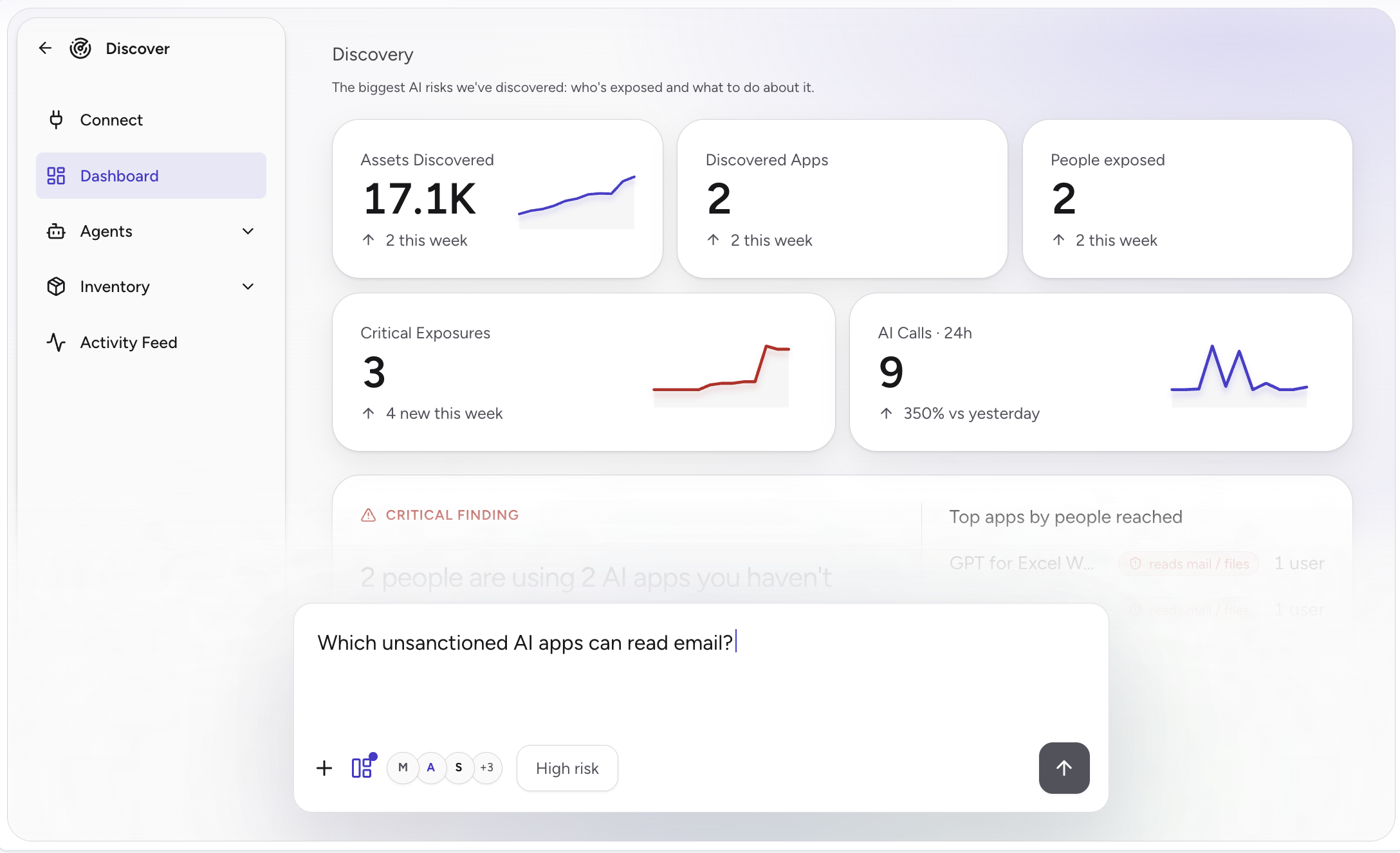
Airia helps organizations build, deploy, secure, and govern enterprise AI applications and agents. Its platform focuses on managing AI workflows, applying guardrails, and monitoring AI activity across supported environments.
Key features:
- AI Application and Agent Management: Supports the deployment and oversight of enterprise AI applications and agents.
- Access Controls: Helps define boundaries for AI applications and agent interactions.
- AI Guardrails: Supports controls for managing AI behavior and sensitive data risks.
- Workflow Monitoring: Provides visibility into supported AI workflows and activity.
- Governance and Audit Capabilities: Supports oversight and records of AI-related operations.
Pricing: Airia's public AI platform page lists Professional at $49 per month, Team at $499 per month, and custom pricing for Enterprise. Confirm current plan availability and terms with Airia before purchasing.
5. How to Choose the Right OneTrust Alternative
The right OneTrust alternative depends on the governance gaps an organization needs to address. Comparing platforms by their primary capabilities helps businesses avoid choosing a tool that solves only one part of the problem.
- AI application discovery and employee usage controls: Evaluate CloudEagle.ai and compare alternatives based on shadow AI discovery, application visibility, access management, and usage enforcement.
- AI inventory and governance workflows: Consider Credo AI, Enzai, ModelOp, Trustible, and Saidot based on their inventory, assessment, and governance capabilities.
- AI risk assessment and technical assurance: Evaluate Holistic AI when system evaluation, testing, and risk assessment are central requirements.
- AI security and data protection: Compare Cranium, Relyance AI, and Microsoft Purview based on the AI assets, data flows, and environments that need protection.
- AI application and agent governance: Evaluate Airia when the main requirement is governing enterprise AI applications, agents, and workflows.
CloudEagle.ai is particularly relevant to organizations that need to discover employee-facing AI applications, identify shadow AI, manage access, and enforce acceptable-use policies. Other platforms may be better suited to formal risk assessments, lifecycle governance, regulatory documentation, technical assurance, or runtime controls over AI data access.
6. Which OneTrust Alternative Is Right for Your Business?
The right OneTrust alternative depends on an organization's AI governance requirements. Businesses should identify whether they need to control employee AI usage, manage AI risks, document compliance, or govern AI applications and agents before selecting a platform.
- AI application discovery and usage controls: Consider CloudEagle.ai for discovering employee-facing AI applications, identifying shadow AI, managing access, and enforcing usage policies.
- AI inventory and responsible AI governance: Evaluate Credo AI, Enzai, Trustible, and Saidot for AI inventories, risk assessments, governance policies, and compliance workflows.
- Enterprise AI lifecycle governance: Consider ModelOp for structured oversight of AI use cases, risk reviews, and lifecycle workflows.
- AI risk assessment and security: Evaluate Holistic AI for AI system assessments and Cranium for AI security and risk visibility.
- Data protection and privacy: Consider Relyance AI and Microsoft Purview for data security and privacy controls in supported environments.
- AI applications and agents: Evaluate Airia for governing enterprise AI applications, agents, and workflows.
Before making a decision, compare each platform's discovery methods, integrations, enforcement capabilities, compliance coverage, and pricing. Not every platform provides the same breadth of AI governance as OneTrust.
Some may replace it for a specific requirement, while others are better suited to complementing an existing governance program.
7. Choosing the Right OneTrust Alternative in 2026
Choosing the right OneTrust alternative depends on an organization's AI governance priorities. Some businesses need structured risk assessments and compliance workflows, while others need better visibility into employee AI usage, shadow AI discovery, access management, and policy enforcement.
CloudEagle.ai is worth evaluating for organizations that want to discover the AI applications employees use, identify unapproved tools, and apply controls to AI usage.
Before making a decision, compare each platform's capabilities, integrations, enforcement mechanisms, and compliance support against your organization's needs.
8. FAQs
1. What are the best OneTrust alternatives in 2026?
Some OneTrust alternatives to evaluate in 2026 include Credo AI, Enzai, ModelOp, Trustible, Holistic AI, Saidot, Cranium, Relyance AI, Microsoft Purview, and Airia. The right choice depends on whether an organization prioritizes AI risk management, compliance, application discovery, data security, or AI agent governance.
2. Is CloudEagle.ai an alternative to OneTrust?
CloudEagle.ai is worth considering for organizations focused on AI application discovery, shadow AI visibility, access governance, and employee usage policy enforcement. However, its primary focus differs from OneTrust's broader AI governance capabilities, so businesses should compare specific requirements before choosing a platform.
3. What features should an AI governance platform include?
An AI governance platform may include AI discovery and inventory, risk assessments, policy management, access controls, monitoring, compliance reporting, and audit documentation. The required features depend on an organization's AI systems, security needs, and regulatory obligations.
4. How do AI governance platforms help manage shadow AI?
AI governance platforms can help organizations identify AI applications used without formal approval, assess associated risks, and establish controls around their use. Depending on the platform, these controls may include access restrictions, usage policies, monitoring, or reporting.
5. How should businesses choose the right OneTrust alternative?
Businesses should identify their main governance requirements and compare vendors based on features, integrations, discovery methods, enforcement capabilities, compliance support, and pricing. They should also determine whether a platform can replace OneTrust for their specific use case or would work better alongside existing tools.
Don't Just Track Risk. Take Control of It.