AI Governance

NIST AI RMF Implementation Checklist: Govern, Map, Measure, Manage

Share via:
Written by:
CloudEagle.ai Team
Reviewed by
Nidhi Jain
Last Updated:
September 3, 2026
blog-cms-banner-bg
Little-Known Negotiation Hacks to Get the Best Deal on Slack
cta-bg-blogDownload Your Copy

HIPAA Compliance Checklist for 2025

Download PDF

TL;DR

  • NIST AI RMF has 4 functions, 19 categories, and 72 subcategories. NIST's own Playbook says this is not a rigid checklist, but most teams still need one to actually execute against
  • Govern comes first and stays cross-cutting. It is the only function defined once organization-wide rather than per AI system
  • Map, Measure, and Manage repeat for every AI system in scope, and get revisited whenever that system or its context changes
  • Most implementations stall trying to Measure a system before Map has actually established its context and risk category
  • The output that matters is not a completed checklist. It is a documented AI RMF Profile showing current state versus target state
  • CloudEagle's AI governance module produces the live inventory, risk scoring, and policy enforcement evidence this checklist calls for at each phase

NIST itself says the AI RMF is not a checklist. True on paper. Not much help to a team that has to actually build the program.

This NIST AI RMF implementation checklist covers the execution sequence: four functions, the categories that matter most in practice, and the AI RMF Profile you will have at the end of it.

If you want to understand how the four functions map to the AI tools your team is already using, that is covered here: 👉 How the NIST AI RMF Applies to the AI Tools Your Team Uses

This checklist picks up where that one stops

1. What This Checklist Covers (and What It Deliberately Doesn't)

NIST's own AI RMF Playbook states plainly that its suggested actions do not constitute a checklist or a mandatory sequence. Organizations are meant to select what applies to their context and resources.

This NIST AI RMF implementation checklist takes the structure NIST provides and turns it into the practical sequence most teams actually follow:

  • Govern first, as the organizational foundation that every AI system inherits from
  • Map, Measure, and Manage per AI system, in that order, repeated as the system or its context changes

Two things this checklist deliberately does not do. It does not reproduce all 72 subcategories verbatim, because most teams do not implement all 72 and the Profile process is how you document which ones you are prioritizing. 

And it does not claim to substitute for NIST's own Playbook, which remains the authoritative source for subcategory-level guidance.

What it does: give you the execution sequence that gets a team from no program to a documented Profile.

Is Your AI Governance Program NIST-Ready?

Use this checklist to assess your current AI governance gaps before your next review.
Download Checklist

2. Phase 1 Implementation Steps: Govern

Govern is the only function in the NIST AI RMF defined once for the entire organization rather than per AI system. Everything in Map, Measure, and Manage inherits from the Govern layer. Getting this phase right determines whether the rest of the program is coherent or fragmented.
Policies and processes:

  • Document AI risk management policies, processes, and procedures organization-wide
  • Define how AI risk decisions are made, escalated, and documented
  • Establish a policy for managing risk from third-party and vendor AI systems, not just internally built ones

Accountability structures:

  • Assign named owners for AI risk decisions at the organizational level
  • Define accountability for AI governance across IT, Security, Legal, Finance, and business leadership
  • Create a cross-functional AI governance body or assign the function to an existing governance structure

Culture and workforce:

  • Build workforce awareness and training on AI risk responsibilities appropriate to each role
  • Establish organizational commitment to a risk-aware AI culture, not just a policy document
  • Create mechanisms for internal and external stakeholder input on AI risk, including employees, regulators, and customers

Completion signal: Named owners exist. AI risk policies are documented and communicated. A mechanism exists for ongoing stakeholder input. Vendor AI risk is explicitly in scope.

📖 Worth a Read AI Governance Auditing: A 2026 Playbook for Internal Audit Teams

3. Phase 2 Implementation Steps: Map

Map is where the NIST AI RMF moves from organization-wide to per-system. It runs for every AI system in scope and has to happen before Measure can produce anything meaningful. 

The most common implementation failure: starting Measure before Map is complete, then discovering mid-assessment that the system's context and risk category are not actually established.

Map also surfaces the AI systems most teams did not know were in scope. Embedded AI features in approved SaaS tools, personal accounts, and cloud platform deployments often appear here for the first time.
Business context and purpose:

  • Document the intended purpose and business context for each AI system
  • Confirm who the intended users are and who else the system's outputs may affect
  • Compare each system's capabilities, costs, and benefits against viable alternatives

Risk categorization:

  • Categorize each AI system by risk tier and use case: high, medium, or low risk based on decision impact, data sensitivity, and autonomy level
  • Map risks across the system's components: data, model, infrastructure, and integration points
  • Map potential impacts to individuals, groups, and communities the system affects

Inventory completeness check:

  • Confirm the AI inventory used for Map reflects every provisioning channel: enterprise seats, personal accounts, embedded SaaS AI, and cloud platform deployments
  • Flag AI systems with no assigned owner for immediate remediation before Measure begins
  • Confirm that vendor AI systems are included in the Map scope alongside internally built ones

Completion signal: Every in-scope AI system has a documented purpose, risk category, and assigned owner. The inventory is confirmed complete. Impact mapping is documented per system.

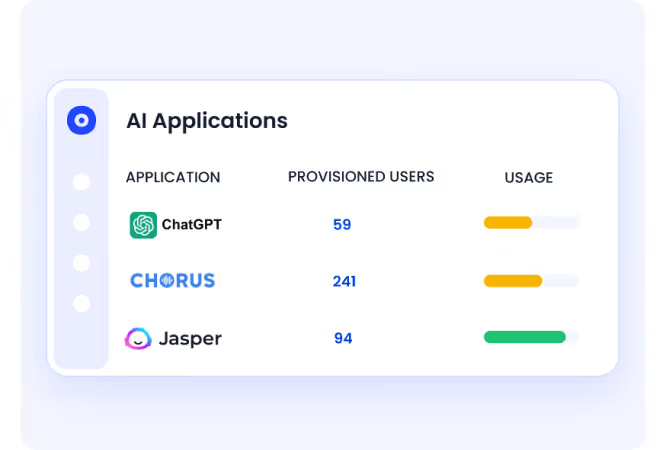
CloudEagle's shadow AI discovery layer closes the inventory gap Map consistently surfaces: correlating SSO, browser, finance, and network signals to surface AI systems that a manual inventory misses.

👉 Shadow AI and Shadow IT Discovery

4. Phase 3 Implementation Steps: Measure

Measure is where the NIST AI RMF implementation moves from establishing context to assessing and tracking risk. It applies per AI system, using the context Map established, and it repeats when that context changes.

Most teams underestimate how much of the Measure phase depends on continuous monitoring rather than point-in-time assessment. A risk assessment conducted once and filed is not Measure. Measure is an ongoing function.
Metrics and evaluation criteria:

  • Identify appropriate metrics for each risk mapped in the Map phase
  • Evaluate each AI system against the trustworthy AI characteristics NIST defines: valid and reliable, safe, secure and resilient, explainable and interpretable, privacy-enhanced, and fair with managed bias
  • Define thresholds that trigger escalation when a metric moves outside acceptable bounds

Continuous risk tracking:

  • Build a mechanism to track identified risks over time, not a point-in-time assessment
  • Implement AI vendor risk scoring covering data residency, training data policies, security certifications, and compliance posture
  • Monitor for changes in vendor AI posture between review cycles, not only at annual assessment
  • Track policy enforcement metrics: how often are employees redirected from unapproved AI tools, and is that number changing?

Feedback loops:

  • Gather feedback on whether the measurement approach itself is working
  • Identify risks that existing metrics are not capturing and update the measurement framework accordingly
  • Document measurement gaps as inputs to the next Govern cycle

Completion signal: Each mapped risk has a metric. Metrics are tracked continuously. Vendor risk scores exist for every AI system. The measurement framework has a feedback mechanism.

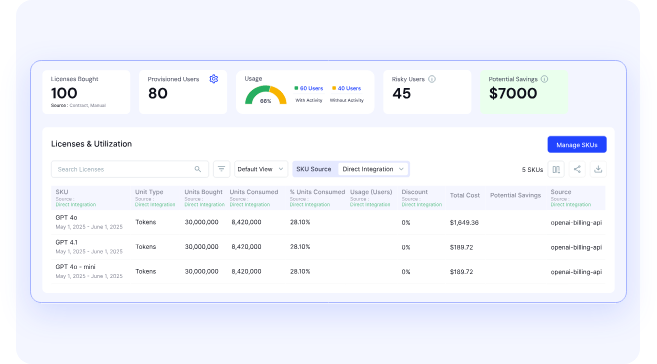
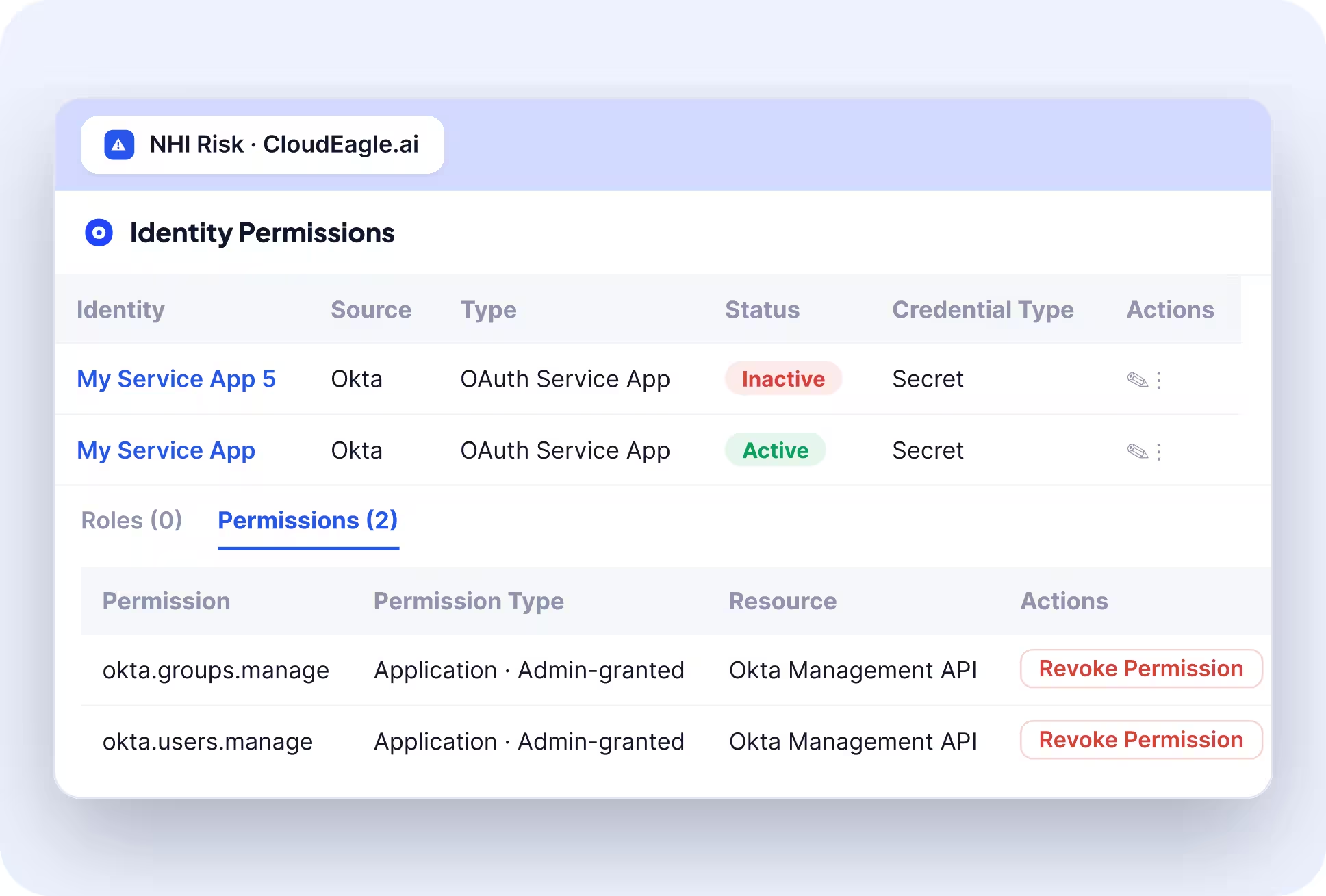
CloudEagle's AI governance module maps directly to this phase: continuous AI vendor risk scoring powered by Netskope integration, policy enforcement logs that produce measurable evidence of control operation, and access governance records that track provisioning and deprovisioning against role.

👉 AI Usage Control and Policy Enforcement

5. Phase 4 Implementation Steps: Manage

Manage is where risk identified in Measure gets treated, monitored, and fed back into the organization. Like Measure, it runs per AI system and repeats. Unlike Measure, it is explicitly about decisions and actions, not just assessment.

Risk prioritization and treatment:

  • Prioritize identified risks based on likelihood, impact, and available treatment resources
  • Select treatment strategies: mitigate, transfer, accept, or avoid for each prioritized risk
  • Implement strategies that maximize benefit while minimizing risk, not strategies that maximize control at the expense of utility
  • Document the rationale for accepted risks explicitly, not just for treated ones

Third-party AI risk:

  • Manage risk introduced by third-party AI components specifically, vendor model updates, data handling term changes, and embedded AI feature activations each require a treatment decision
  • Confirm vendor contracts include AI transparency provisions: training data opt-outs, audit rights, and notification requirements for material changes
  • Track third-party AI risk treatment as a distinct category, not merged with internal system risk

Monitoring and documentation:

  • Monitor treatment outcomes, not just the initial treatment decision
  • Document evidence that treatments are operating as intended, not just that they were implemented
  • Track incidents involving AI systems and document lessons learned per incident

Closing the loop:

  • Feed Manage outcomes back into Govern: policy updates, accountability changes, and training needs that emerge from treatment and monitoring
  • Confirm that the Govern layer reflects what was learned in Measure and Manage, not just what was decided at implementation kickoff

Completion signal: Every prioritized risk has a documented treatment decision and a named owner. Third-party AI risk is tracked as a distinct category. Lessons from monitoring feed back into Govern.

Is Your AI Governance Program NIST-Ready?

Use this checklist to assess your current AI governance gaps before your next review.
Download Checklist

6. How to Document an AI RMF Profile

The deliverable that actually matters at the end of this sequence is not a completed checklist.

It is a Profile: a structured document that shows where each category stands today and where the organization needs to be, with the gap between the two treated as the roadmap rather than a compliance failure.

Building the Current Profile:

  • Document the current state of each category across all four functions
  • Use evidence from Measure and Manage to substantiate the current state, not self-assessment alone
  • Be honest about gaps: a category with no current evidence is documented as no current evidence, not as partial

Building the Target Profile:

  • Define the target state for each category based on business priorities, regulatory exposure, and available resources
  • Confirm the target is achievable within a defined timeline, not aspirational without a plan
  • Prioritize targets that close the highest-risk gaps identified in Map and Measure

Using the Profile:

  • Treat the gap between Current and Target as the implementation roadmap
  • Assign ownership for closing each gap, the same ownership model used in Govern
  • Set a Profile revisit cadence: a Profile is a snapshot that goes stale when AI systems, organizational context, or regulatory requirements change

Completion signal: A Current Profile and Target Profile exist. The gap between them is documented as a prioritized roadmap with named owners. A revisit cadence is defined.

Get Started

The NIST AI RMF implementation steps above give a team the execution sequence from no program to a documented Profile. The phase that determines whether everything else runs on schedule is Map: building an AI inventory that is actually complete before risk assessment begins.

CloudEagle's AI governance module produces the live AI inventory, continuous risk scoring, policy enforcement evidence, and access governance records that the Measure and Manage phases call for, automatically and continuously rather than assembled before each review cycle.

Book a demo with CloudEagle.ai to see how much of the Map phase your AI inventory already supports before the implementation project officially starts.

Frequently Asked Questions

1. Do we need to implement all 72 NIST AI RMF subcategories?

No. NIST designed the framework to be selective based on organizational context and resources. The Profile process documents which subcategories you prioritize and why, providing evidence of a risk-based approach.

2. How does the Generative AI Profile fit into this checklist?

NIST AI 600-1 adds GenAI-specific risks such as confabulation, prompt injection, and data poisoning to the existing four-function structure. It extends the checklist rather than creating a separate implementation and is typically addressed during the Measure phase.

3. How is this different from implementing ISO 42001?

NIST AI RMF is voluntary guidance with no certification, while ISO 42001 is a certifiable management system standard. Both involve overlapping work around AI inventory, risk assessment, controls, and evidence, so implementing one can support the other.

4. Where should organizations start with NIST AI RMF implementation?

Start by establishing the Govern function and defining the organization's AI risk context. Then build the AI inventory through Map before moving into Measure and Manage. This creates the foundation for prioritizing and treating AI risks.

5. How often should an AI RMF assessment be updated?

Update the assessment as AI systems, risks, controls, or organizational requirements change. A recurring review cadence helps ensure the inventory, risk priorities, and mitigation measures remain aligned with the organization's current AI environment.

Advertisement for a SaaS Subscription Tracking Template with a call-to-action button to download and a partial graphic of a tablet showing charts.Banner promoting a SaaS Agreement Checklist to streamline SaaS management and avoid budget waste with a call-to-action button labeled Download checklist.Blue banner with text 'The Ultimate Employee Offboarding Checklist!' and a black button labeled 'Download checklist' alongside partial views of checklist documents from cloudeagle.ai.Digital ad for download checklist titled 'The Ultimate Checklist for IT Leaders to Optimize SaaS Operations' by cloudeagle.ai, showing checklist pages.Slack Buyer's Guide offer with text 'Unlock insider insights to get the best deal on Slack!' and a button labeled 'Get Your Copy', accompanied by a preview of the guide featuring Slack's logo.Monday Pricing Guide by cloudeagle.ai offering exclusive pricing secrets to maximize investment with a call-to-action button labeled Get Your Copy and an image of the guide's cover.Blue banner for Canva Pricing Guide by cloudeagle.ai offering a guide to Canva costs, features, and alternatives with a call-to-action button saying Get Your Copy.Blue banner with white text reading 'Little-Known Negotiation Hacks to Get the Best Deal on Slack' and a white button labeled 'Get Your Copy'.Blue banner with text 'Little-Known Negotiation Hacks to Get the Best Deal on Monday.com' and a white button labeled 'Get Your Copy'.Blue banner with text 'Little-Known Negotiation Hacks to Get the Best Deal on Canva' and a white button labeled 'Get Your Copy'.Banner with text 'Slack Buyer's Guide' and a 'Download Now' button next to images of a guide titled 'Slack Buyer’s Guide: Features, Pricing & Best Practices'.Digital cover of Monday Pricing Guide with a button labeled Get Your Copy on a blue background.Canva Pricing Guide cover with a button labeled Get Your Copy on a blue gradient background.

Enter your email to
unlock the report

Oops! Something went wrong while submitting the form.
License Count
Benchmark
Per User/Per Year

Enter your email to
unlock the report

Oops! Something went wrong while submitting the form.
License Count
Benchmark
Per User/Per Year

Enter your email to
unlock the report

Oops! Something went wrong while submitting the form.
Notion Plus
License Count
Benchmark
Per User/Per Year
100-500
$67.20 - $78.72
500-1000
$59.52 - $72.00
1000+
$51.84 - $57.60
Canva Pro
License Count
Benchmark
Per User/Per Year
100-500
$74.33-$88.71
500-1000
$64.74-$80.32
1000+
$55.14-$62.34

Enter your email to
unlock the report

Oops! Something went wrong while submitting the form.

Enter your email to
unlock the report

Oops! Something went wrong while submitting the form.
Zoom Business
License Count
Benchmark
Per User/Per Year
100-500
$216.00 - $264.00
500-1000
$180.00 - $216.00
1000+
$156.00 - $180.00

Enter your email to
unlock the report

Oops! Something went wrong while submitting the form.

Get the Right Security Platform To Secure Your Cloud Infrastructure

Please enter a business email
Thank you!
The 2023 SaaS report has been sent to your email. Check your promotional or spam folder.
Oops! Something went wrong while submitting the form.

Access full report

Please enter a business email
Thank you!
The 2023 SaaS report has been sent to your email. Check your promotional or spam folder.
Oops! Something went wrong while submitting the form.

TL;DR

  • NIST AI RMF has 4 functions, 19 categories, and 72 subcategories. NIST's own Playbook says this is not a rigid checklist, but most teams still need one to actually execute against
  • Govern comes first and stays cross-cutting. It is the only function defined once organization-wide rather than per AI system
  • Map, Measure, and Manage repeat for every AI system in scope, and get revisited whenever that system or its context changes
  • Most implementations stall trying to Measure a system before Map has actually established its context and risk category
  • The output that matters is not a completed checklist. It is a documented AI RMF Profile showing current state versus target state
  • CloudEagle's AI governance module produces the live inventory, risk scoring, and policy enforcement evidence this checklist calls for at each phase

NIST itself says the AI RMF is not a checklist. True on paper. Not much help to a team that has to actually build the program.

This NIST AI RMF implementation checklist covers the execution sequence: four functions, the categories that matter most in practice, and the AI RMF Profile you will have at the end of it.

If you want to understand how the four functions map to the AI tools your team is already using, that is covered here: 👉 How the NIST AI RMF Applies to the AI Tools Your Team Uses

This checklist picks up where that one stops

1. What This Checklist Covers (and What It Deliberately Doesn't)

NIST's own AI RMF Playbook states plainly that its suggested actions do not constitute a checklist or a mandatory sequence. Organizations are meant to select what applies to their context and resources.

This NIST AI RMF implementation checklist takes the structure NIST provides and turns it into the practical sequence most teams actually follow:

  • Govern first, as the organizational foundation that every AI system inherits from
  • Map, Measure, and Manage per AI system, in that order, repeated as the system or its context changes

Two things this checklist deliberately does not do. It does not reproduce all 72 subcategories verbatim, because most teams do not implement all 72 and the Profile process is how you document which ones you are prioritizing. 

And it does not claim to substitute for NIST's own Playbook, which remains the authoritative source for subcategory-level guidance.

What it does: give you the execution sequence that gets a team from no program to a documented Profile.

Is Your AI Governance Program NIST-Ready?

Use this checklist to assess your current AI governance gaps before your next review.
Download Checklist

2. Phase 1 Implementation Steps: Govern

Govern is the only function in the NIST AI RMF defined once for the entire organization rather than per AI system. Everything in Map, Measure, and Manage inherits from the Govern layer. Getting this phase right determines whether the rest of the program is coherent or fragmented.

Policies and processes:

  • Document AI risk management policies, processes, and procedures organization-wide
  • Define how AI risk decisions are made, escalated, and documented
  • Establish a policy for managing risk from third-party and vendor AI systems, not just internally built ones

Accountability structures:

  • Assign named owners for AI risk decisions at the organizational level
  • Define accountability for AI governance across IT, Security, Legal, Finance, and business leadership
  • Create a cross-functional AI governance body or assign the function to an existing governance structure

Culture and workforce:

  • Build workforce awareness and training on AI risk responsibilities appropriate to each role
  • Establish organizational commitment to a risk-aware AI culture, not just a policy document
  • Create mechanisms for internal and external stakeholder input on AI risk, including employees, regulators, and customers

Completion signal: Named owners exist. AI risk policies are documented and communicated. A mechanism exists for ongoing stakeholder input. Vendor AI risk is explicitly in scope.

📖 Worth a Read AI Governance Auditing: A 2026 Playbook for Internal Audit Teams

3. Phase 2 Implementation Steps: Map

Map is where the NIST AI RMF moves from organization-wide to per-system. It runs for every AI system in scope and has to happen before Measure can produce anything meaningful. 

The most common implementation failure: starting Measure before Map is complete, then discovering mid-assessment that the system's context and risk category are not actually established.

Map also surfaces the AI systems most teams did not know were in scope. Embedded AI features in approved SaaS tools, personal accounts, and cloud platform deployments often appear here for the first time.

Business context and purpose:

  • Document the intended purpose and business context for each AI system
  • Confirm who the intended users are and who else the system's outputs may affect
  • Compare each system's capabilities, costs, and benefits against viable alternatives

Risk categorization:

  • Categorize each AI system by risk tier and use case: high, medium, or low risk based on decision impact, data sensitivity, and autonomy level
  • Map risks across the system's components: data, model, infrastructure, and integration points
  • Map potential impacts to individuals, groups, and communities the system affects

Inventory completeness check:

  • Confirm the AI inventory used for Map reflects every provisioning channel: enterprise seats, personal accounts, embedded SaaS AI, and cloud platform deployments
  • Flag AI systems with no assigned owner for immediate remediation before Measure begins
  • Confirm that vendor AI systems are included in the Map scope alongside internally built ones

Completion signal: Every in-scope AI system has a documented purpose, risk category, and assigned owner. The inventory is confirmed complete. Impact mapping is documented per system.

CloudEagle's shadow AI discovery layer closes the inventory gap Map consistently surfaces: correlating SSO, browser, finance, and network signals to surface AI systems that a manual inventory misses.

👉 Shadow AI and Shadow IT Discovery

4. Phase 3 Implementation Steps: Measure

Measure is where the NIST AI RMF implementation moves from establishing context to assessing and tracking risk. It applies per AI system, using the context Map established, and it repeats when that context changes.

Most teams underestimate how much of the Measure phase depends on continuous monitoring rather than point-in-time assessment. A risk assessment conducted once and filed is not Measure. Measure is an ongoing function.

Metrics and evaluation criteria:

  • Identify appropriate metrics for each risk mapped in the Map phase
  • Evaluate each AI system against the trustworthy AI characteristics NIST defines: valid and reliable, safe, secure and resilient, explainable and interpretable, privacy-enhanced, and fair with managed bias
  • Define thresholds that trigger escalation when a metric moves outside acceptable bounds

Continuous risk tracking:

  • Build a mechanism to track identified risks over time, not a point-in-time assessment
  • Implement AI vendor risk scoring covering data residency, training data policies, security certifications, and compliance posture
  • Monitor for changes in vendor AI posture between review cycles, not only at annual assessment
  • Track policy enforcement metrics: how often are employees redirected from unapproved AI tools, and is that number changing?

Feedback loops:

  • Gather feedback on whether the measurement approach itself is working
  • Identify risks that existing metrics are not capturing and update the measurement framework accordingly
  • Document measurement gaps as inputs to the next Govern cycle

Completion signal: Each mapped risk has a metric. Metrics are tracked continuously. Vendor risk scores exist for every AI system. The measurement framework has a feedback mechanism.

CloudEagle's AI governance module maps directly to this phase: continuous AI vendor risk scoring powered by Netskope integration, policy enforcement logs that produce measurable evidence of control operation, and access governance records that track provisioning and deprovisioning against role.

👉 AI Usage Control and Policy Enforcement

5. Phase 4 Implementation Steps: Manage

Manage is where risk identified in Measure gets treated, monitored, and fed back into the organization. Like Measure, it runs per AI system and repeats. Unlike Measure, it is explicitly about decisions and actions, not just assessment.

Risk prioritization and treatment:

  • Prioritize identified risks based on likelihood, impact, and available treatment resources
  • Select treatment strategies: mitigate, transfer, accept, or avoid for each prioritized risk
  • Implement strategies that maximize benefit while minimizing risk, not strategies that maximize control at the expense of utility
  • Document the rationale for accepted risks explicitly, not just for treated ones

Third-party AI risk:

  • Manage risk introduced by third-party AI components specifically, vendor model updates, data handling term changes, and embedded AI feature activations each require a treatment decision
  • Confirm vendor contracts include AI transparency provisions: training data opt-outs, audit rights, and notification requirements for material changes
  • Track third-party AI risk treatment as a distinct category, not merged with internal system risk

Monitoring and documentation:

  • Monitor treatment outcomes, not just the initial treatment decision
  • Document evidence that treatments are operating as intended, not just that they were implemented
  • Track incidents involving AI systems and document lessons learned per incident

Closing the loop:

  • Feed Manage outcomes back into Govern: policy updates, accountability changes, and training needs that emerge from treatment and monitoring
  • Confirm that the Govern layer reflects what was learned in Measure and Manage, not just what was decided at implementation kickoff

Completion signal: Every prioritized risk has a documented treatment decision and a named owner. Third-party AI risk is tracked as a distinct category. Lessons from monitoring feed back into Govern.

Is Your AI Governance Program NIST-Ready?

Use this checklist to assess your current AI governance gaps before your next review.
Download Checklist

6. How to Document an AI RMF Profile

The deliverable that actually matters at the end of this sequence is not a completed checklist.

It is a Profile: a structured document that shows where each category stands today and where the organization needs to be, with the gap between the two treated as the roadmap rather than a compliance failure.

Building the Current Profile:

  • Document the current state of each category across all four functions
  • Use evidence from Measure and Manage to substantiate the current state, not self-assessment alone
  • Be honest about gaps: a category with no current evidence is documented as no current evidence, not as partial

Building the Target Profile:

  • Define the target state for each category based on business priorities, regulatory exposure, and available resources
  • Confirm the target is achievable within a defined timeline, not aspirational without a plan
  • Prioritize targets that close the highest-risk gaps identified in Map and Measure

Using the Profile:

  • Treat the gap between Current and Target as the implementation roadmap
  • Assign ownership for closing each gap, the same ownership model used in Govern
  • Set a Profile revisit cadence: a Profile is a snapshot that goes stale when AI systems, organizational context, or regulatory requirements change

Completion signal: A Current Profile and Target Profile exist. The gap between them is documented as a prioritized roadmap with named owners. A revisit cadence is defined.

Get Started

The NIST AI RMF implementation steps above give a team the execution sequence from no program to a documented Profile. The phase that determines whether everything else runs on schedule is Map: building an AI inventory that is actually complete before risk assessment begins.

CloudEagle's AI governance module produces the live AI inventory, continuous risk scoring, policy enforcement evidence, and access governance records that the Measure and Manage phases call for, automatically and continuously rather than assembled before each review cycle.

Book a demo with CloudEagle.ai to see how much of the Map phase your AI inventory already supports before the implementation project officially starts.

Frequently Asked Questions

1. Do we need to implement all 72 NIST AI RMF subcategories?

No. NIST designed the framework to be selective based on organizational context and resources. The Profile process documents which subcategories you prioritize and why, providing evidence of a risk-based approach.

2. How does the Generative AI Profile fit into this checklist?

NIST AI 600-1 adds GenAI-specific risks such as confabulation, prompt injection, and data poisoning to the existing four-function structure. It extends the checklist rather than creating a separate implementation and is typically addressed during the Measure phase.

3. How is this different from implementing ISO 42001?

NIST AI RMF is voluntary guidance with no certification, while ISO 42001 is a certifiable management system standard. Both involve overlapping work around AI inventory, risk assessment, controls, and evidence, so implementing one can support the other.

4. Where should organizations start with NIST AI RMF implementation?

Start by establishing the Govern function and defining the organization's AI risk context. Then build the AI inventory through Map before moving into Measure and Manage. This creates the foundation for prioritizing and treating AI risks.

5. How often should an AI RMF assessment be updated?

Update the assessment as AI systems, risks, controls, or organizational requirements change. A recurring review cadence helps ensure the inventory, risk priorities, and mitigation measures remain aligned with the organization's current AI environment.

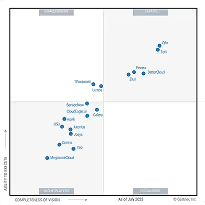
CloudEagle.ai recognized in the 2025 Gartner® Magic Quadrant™ for SaaS Management Platforms
Download now
gartner chart
5x
Faster employee
onboarding
80%
Reduction in time for
user access reviews
30k
Workflows
automated
$15Bn
Analyzed in
contract spend
$2Bn
Saved in
SaaS spend

Streamline SaaS governance and save 10-30%

Book a Demo with Expert
CTA image