You need to enable JavaScript in order to use the AI chatbot tool powered by ChatBot

Multi-Vendor AI Contracts, Different Billing Cycles: Stop the Quarter-End Reconciliation Nightmare

Share via:
blog-cms-banner-bg
Little-Known Negotiation Hacks to Get the Best Deal on Slack
cta-bg-blogDownload Your Copy

HIPAA Compliance Checklist for 2025

Download PDF

It's the last week of the quarter. A Claude Enterprise invoice lands in your inbox. Then ChatGPT Teams. Each contract was signed at a different time, under a different budget owner. Finance wants an allocation report by Friday.

So you open four vendor portals, pull four exports, and spend the next two days reconciling them in a spreadsheet that was never designed for this.

Multi-vendor AI spend doesn't behave like traditional SaaS. It's consumption-based, it fluctuates without warning, and every vendor runs on a billing cycle that made sense when you signed, not when your quarter closes.

CloudEagle.ai consolidates AI contract data, consumption, and billing cycles into one place so reconciliation takes hours. In this guide, we'll show you why AI reconciliation breaks at scale and what it takes to fix it.

TL;DR

  • Multi-vendor AI contracts create reconciliation challenges because billing cycles, SKUs, and usage data are fragmented.
  • Finance teams struggle to map AI consumption to departments, users, and cost centers using vendor portals alone.
  • CloudEagle.ai centralizes AI contract metadata, multi-vendor spend, consumption, and renewal data in one platform.
  • Automated forecasting, renewal workflows, and price benchmarking help prevent billing surprises before quarter-end.
  • CloudEagle.ai transforms AI reconciliation from a manual spreadsheet exercise into a proactive financial governance process

1. Why AI Spend Never Matches the Spreadsheet

Most reconciliation problems don't start when the invoice arrives. They start months earlier when contracts are signed, billing cycles are set, and usage begins accumulating. 

The following three gaps are where most of that friction comes from.

A. The SKU Gap: What You Contracted vs. What's in the Portal

One of the most frustrating parts of AI reconciliation is that the contract and the portal often speak different languages.

Procurement negotiates SKUs, commitments, and pricing terms. The vendor portal shows tokens consumed, API requests, credits used, or usage metrics. Connecting those two views isn't always straightforward.

As noted during a recent enterprise AI evaluation, there are cases where "you might be contractually buying a different SKU and what is available in the portal is slightly different." That's where reconciliation starts breaking down.

  • Contracts describe what you purchased
  • Portals describe what you consumed
  • Finance teams are expected to connect the two

AI invoices rarely receive the same scrutiny as traditional SaaS renewals, which means billing errors accumulate undetected until someone decides to look.

B. The Attribution Gap: Total Spend vs. Per-User Cost

Most AI dashboards can tell you how much the organization spent. That's where reconciliation starts getting messy. A finance team can't allocate costs to departments, projects, or cost centers using a universal token number.

  • Vendor dashboards focus on total consumption: Org-level spend is visible but department-level and per-user breakdown requires manual extraction and matching.
  • Finance needs user-level and department-level allocation: Cost center reporting requires HR data and usage data to be connected, which no vendor portal does automatically.
  • Allocation models live in spreadsheets: The workaround works once. It doesn't scale across four AI vendors, monthly billing cycles, and a growing user base.

As one IT leader described the requirement, they need visibility into "per user, per model, cost and token usage". The level of detail required to make AI spend is actionable, not just visible.
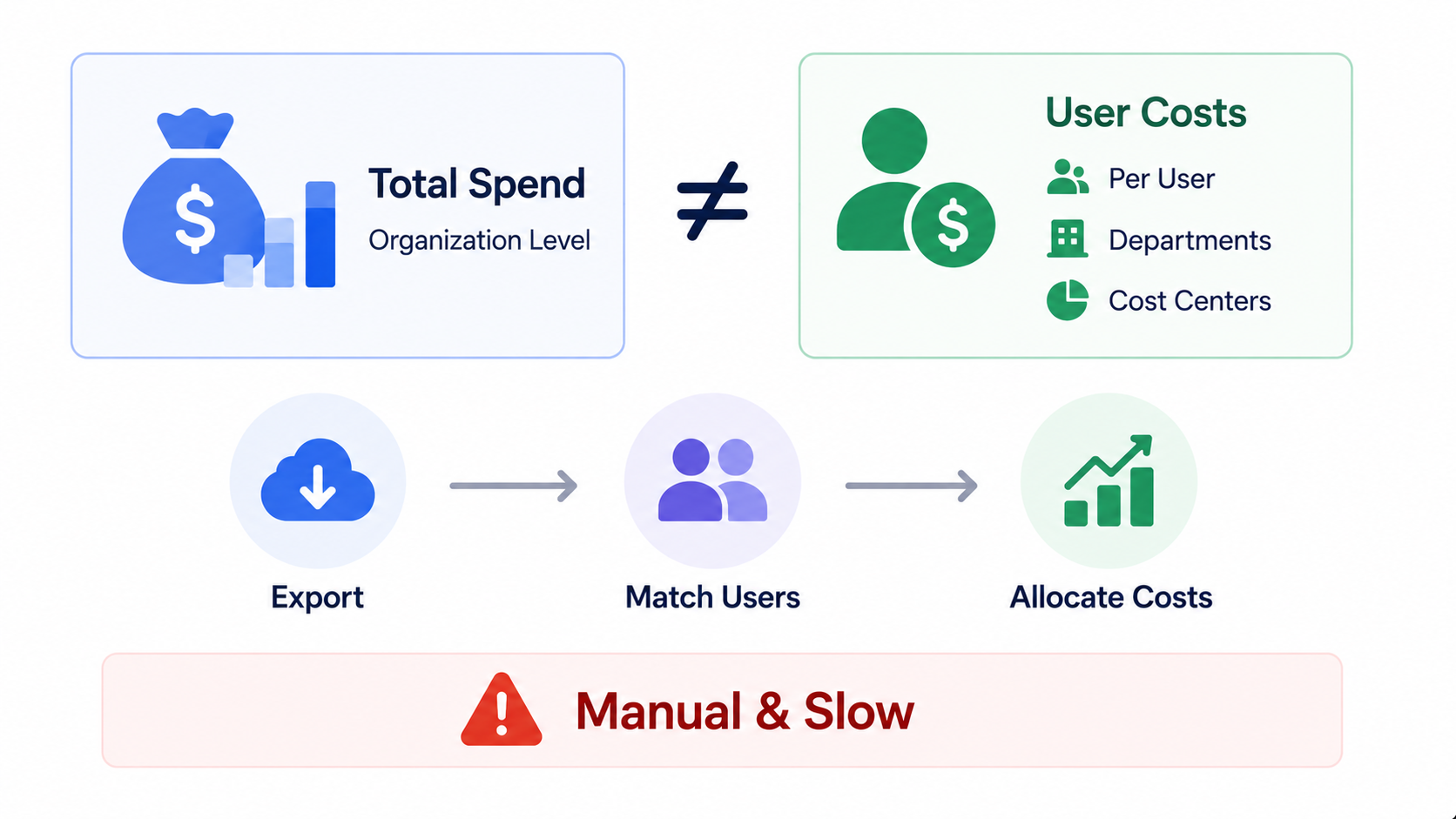
The usual process is exporting usage logs, matching them to employee records, and building allocation models manually. The process takes days, and by the time the report is finished, the underlying usage data has already changed.

C. The Timing Gap: Billing Cycles That Don't Match Your Fiscal Calendar

Even if you solve the SKU and attribution problems, there's still a timing problem. AI vendors bill on the schedule defined in their contracts, not on your quarter-end reporting calendar.

  • Claude renews on one cycle and that date was set when procurement signed, not when your Q2 close happens
  • ChatGPT bills monthly so mid-quarter invoices land before you have the full consumption picture
  • Cursor follows a different schedule while adding a third billing cadence that rarely aligns with the other two
  • Microsoft Copilot is tied to your Microsoft EA anniversary where a date that made sense for your Microsoft relationship, not your AI spend calendar

None of those dates were designed around your finance team's reporting deadlines.

The result is a constant reconciliation exercise. You're always looking backward. By the time the numbers are reconciled, the quarter is already over.

Your AI Budget Has A Memory Leak

You keep paying for yesterday.
Find It

2. How CloudEagle.ai Consolidates AI Contract and Billing Data in One Place

The three gaps (SKU, attribution, and timing) require a different fix. CloudEagle.ai addresses all three through a connected workflow that starts the moment a contract is uploaded and continues through every billing cycle.

A. AI Contract Metadata Extraction: Close the SKU Gap at the Source

CloudEagle.ai's AI automatically extracts all critical contract metadata such as renewal dates, notice periods, opt-out terms, license counts, and SKUs. 

The contract language procurement negotiated and the consumption data in the vendor portal finally map to each other automatically. Here's how AI contract metadata extraction works in CloudEagle.ai:
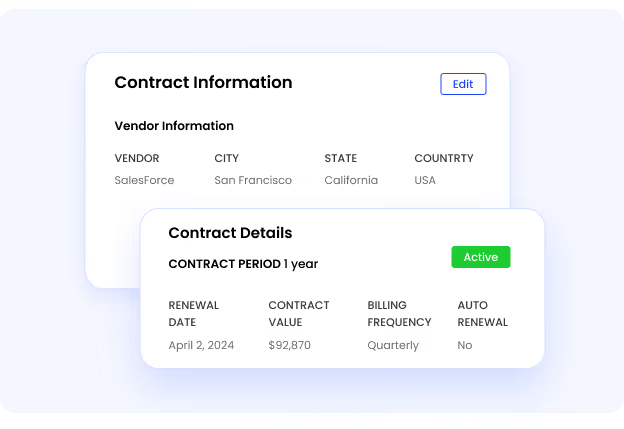
In CloudEagle.ai's contract extraction view, every AI vendor contract like SKU, contracted volume, pricing tier, renewal date, and notice period stay on a single record without anyone opening the underlying document:
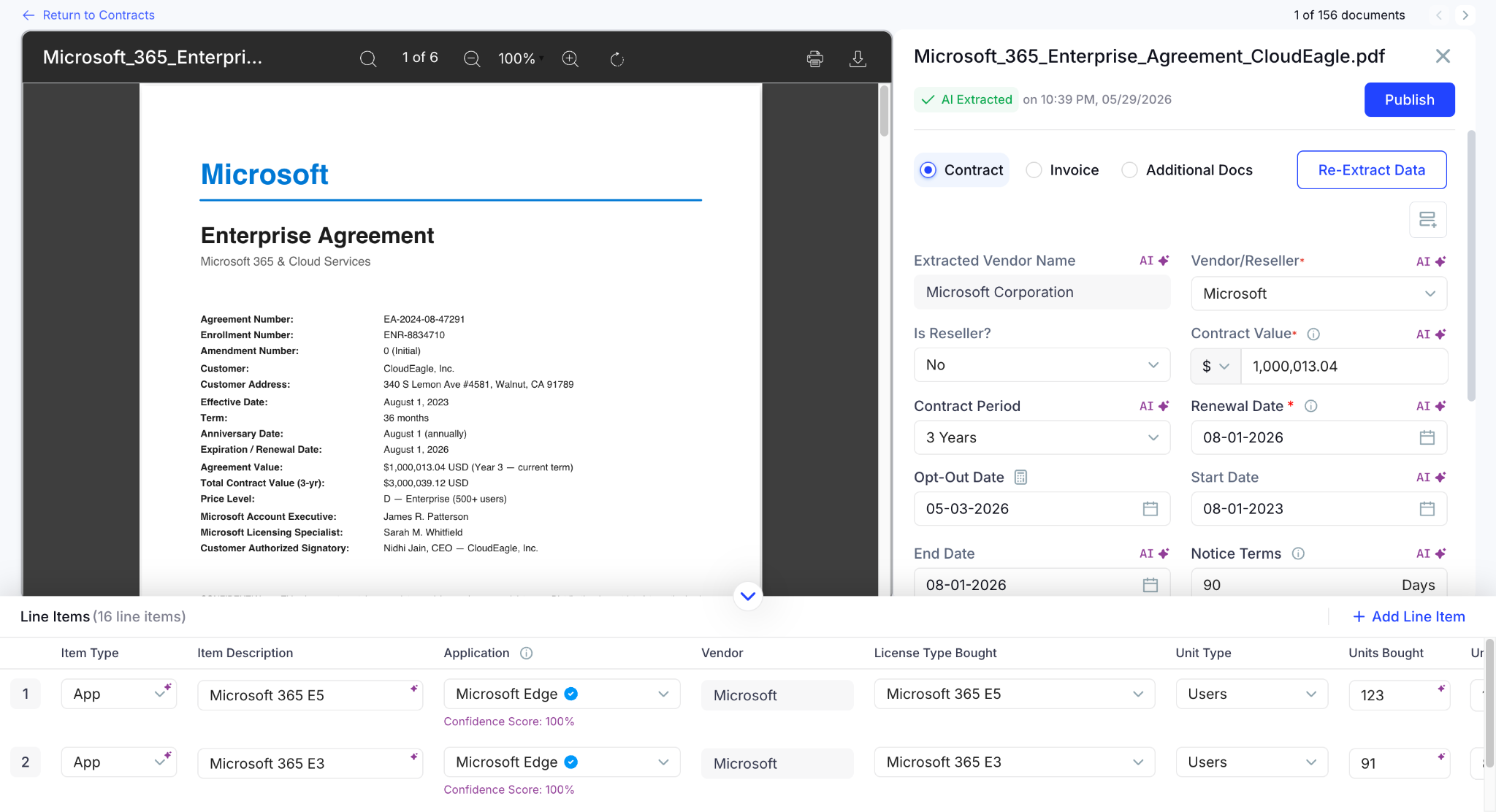
AI pulls renewal dates, contract values, notice periods, opt-out clauses, and SKU details directly from uploaded documents. You can save 1,440 hours per year on manual document review. 

B. Multi-Vendor AI Spend Dashboard: Close the Attribution Gap

CloudEagle.ai maps extracted contract data against actual consumption across every AI vendor (Claude, ChatGPT, Cursor, Copilot, Gemini) in a single dashboard with per-user, per-department, and per-cost attribution.

Here's how multi-vendor AI spend consolidation looks in CloudEagle.ai:
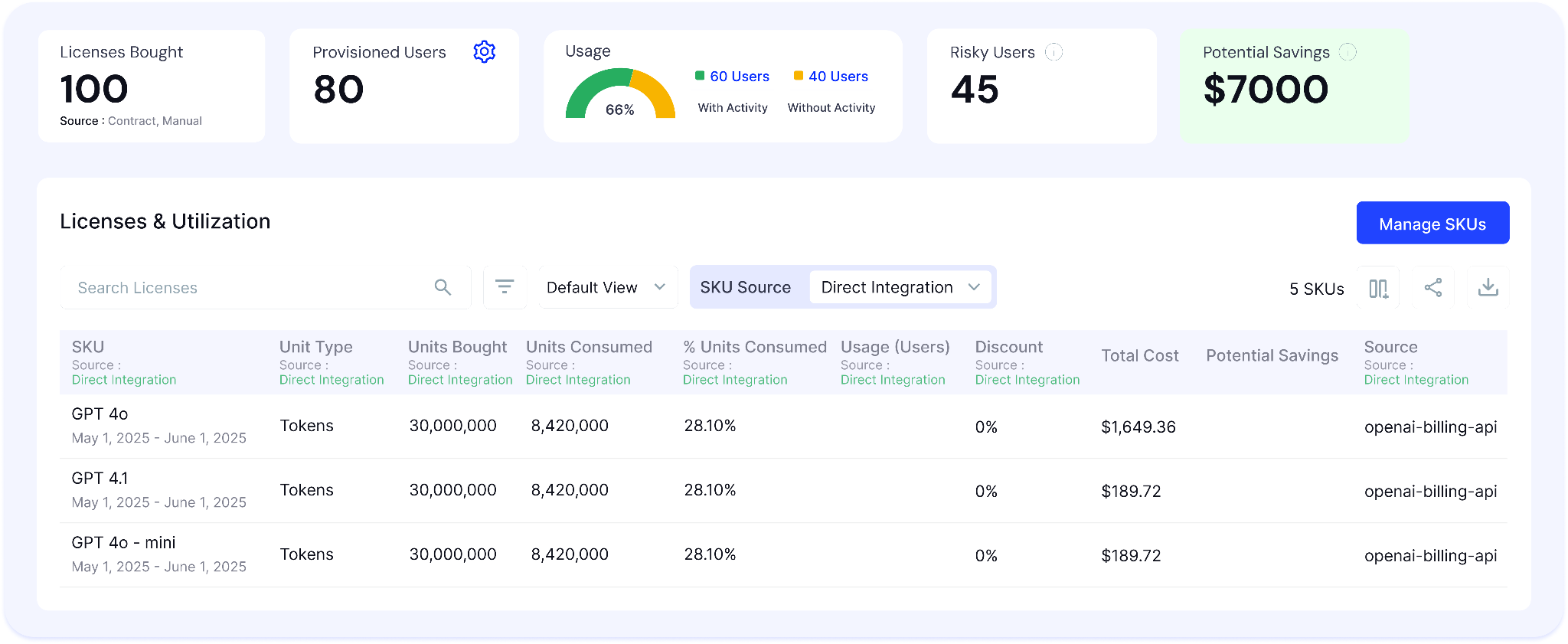
In CloudEagle.ai's consumption dashboard, every user's activity is visible alongside the model they used such as Sonnet, Opus, or Haiku with input vs. output token split and associated cost per period.
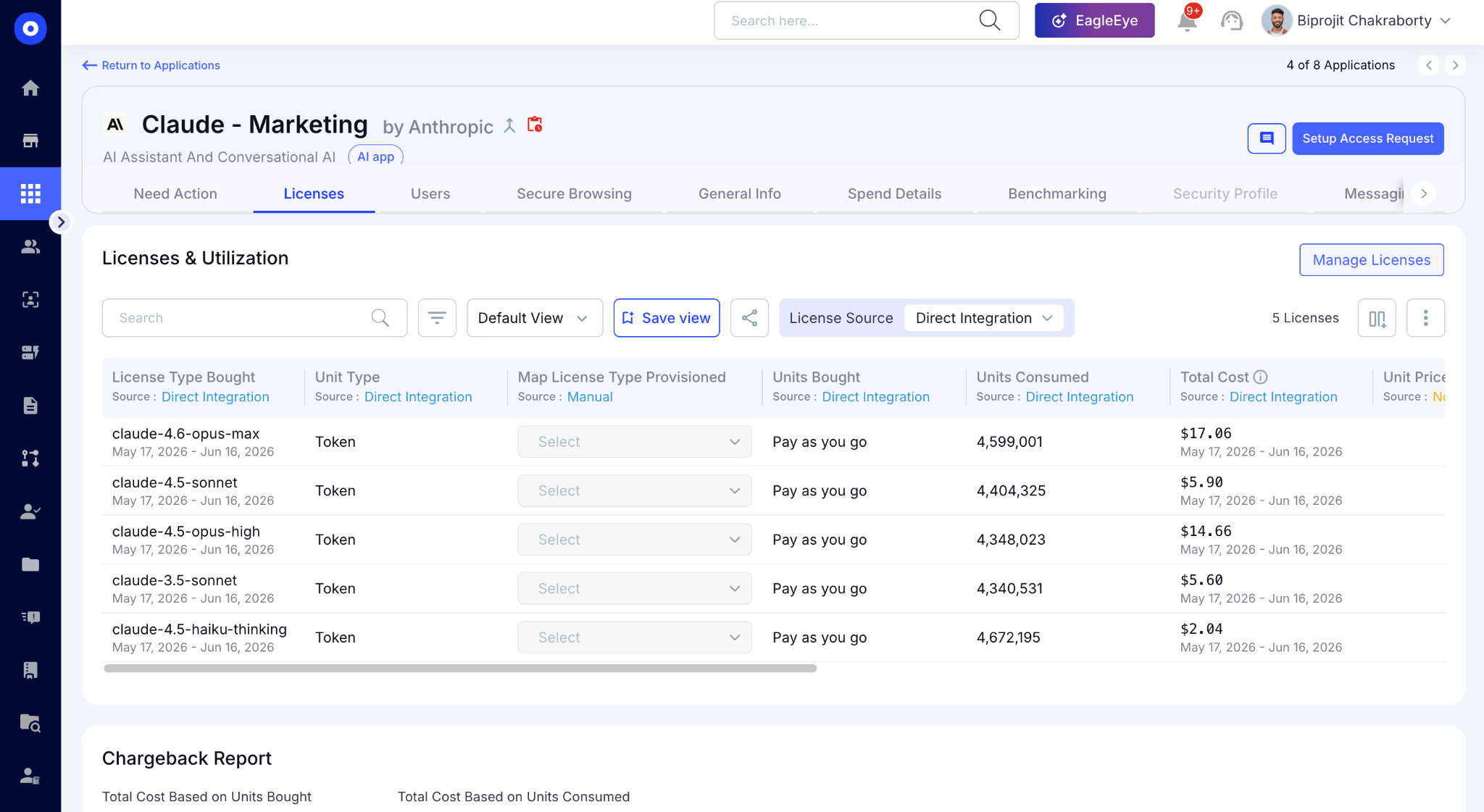
This answers the attribution question finance has been asking. Not just total AI spend, but which team, which user, and which model drove it without an Excel reconciliation model.

C. Run Rate Forecasting: Close the Timing Gap Before Quarter-End

CloudEagle.ai projects current consumption trends forward across every AI vendor, showing whether you're on track to exceed contracted volume. 

In CloudEagle.ai's forecast view, projected spend is mapped against contracted volume across Claude, ChatGPT, Cursor, and Copilot with overage risk visible by vendor before quarter-end. 

Finance stops explaining variance after the quarter closes. They start forecasting before it does.

D. Renewal Calendar: Normalize AI Billing Cycles Against Your Fiscal Calendar

CloudEagle.ai auto-creates renewal calendars from AI-extracted contract metadata and triggers renewal workflows 90 days in advance using usage data and price benchmarks. 
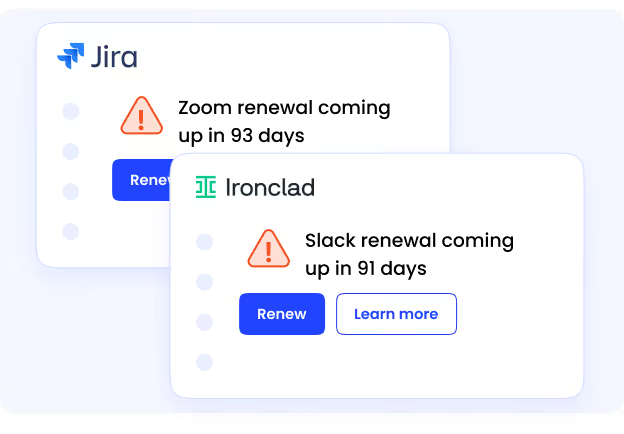
Every AI vendor's billing cycle is visible on one calendar alongside your traditional SaaS renewals, normalized against your fiscal calendar, not the vendor's. 
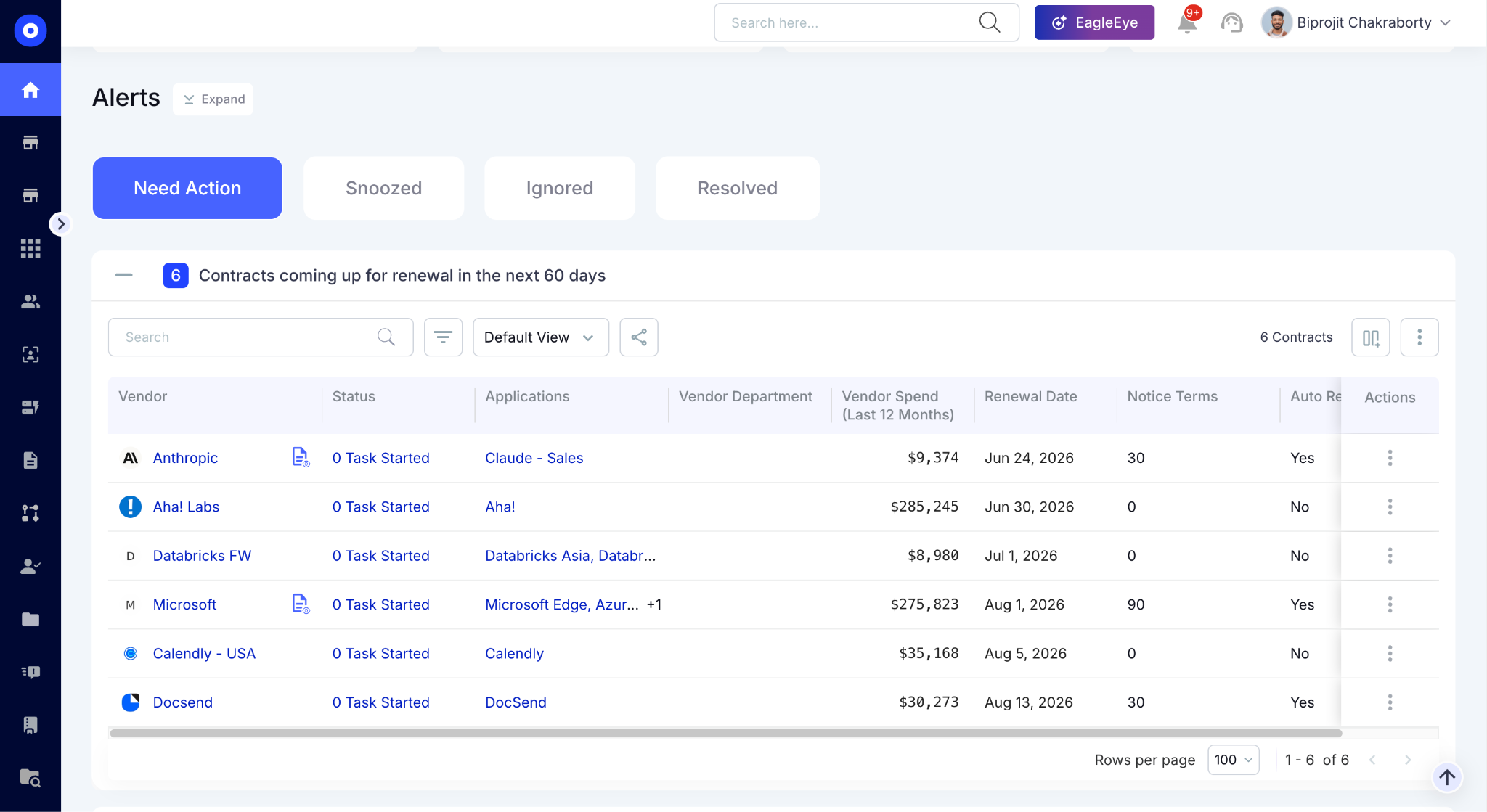
In CloudEagle.ai's renewal calendar, Claude, ChatGPT, Cursor, and Copilot renewal dates appear alongside every other SaaS vendor. There are alerts firing at 90, 60, and 30 days so finance is never reconciling in arrears. 

E. Automated Renewal Workflows: Turn Visibility Into Action

CloudEagle.ai automatically builds renewal workflows with deadlines, ownership assignment, and escalation paths. 

When an AI contract renewal alert fires, CloudEagle.ai routes the approval workflow to the designated owner in Slack, Teams, or email with usage data, consumption forecasts, and contract terms already attached.
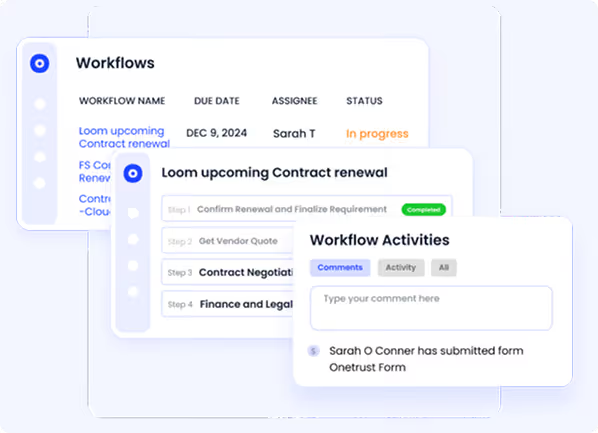
No chasing inboxes. No last-minute spreadsheet pulls. Renewal alerts start 90 days early and stakeholders are notified automatically so teams are always prepared, never reactive.
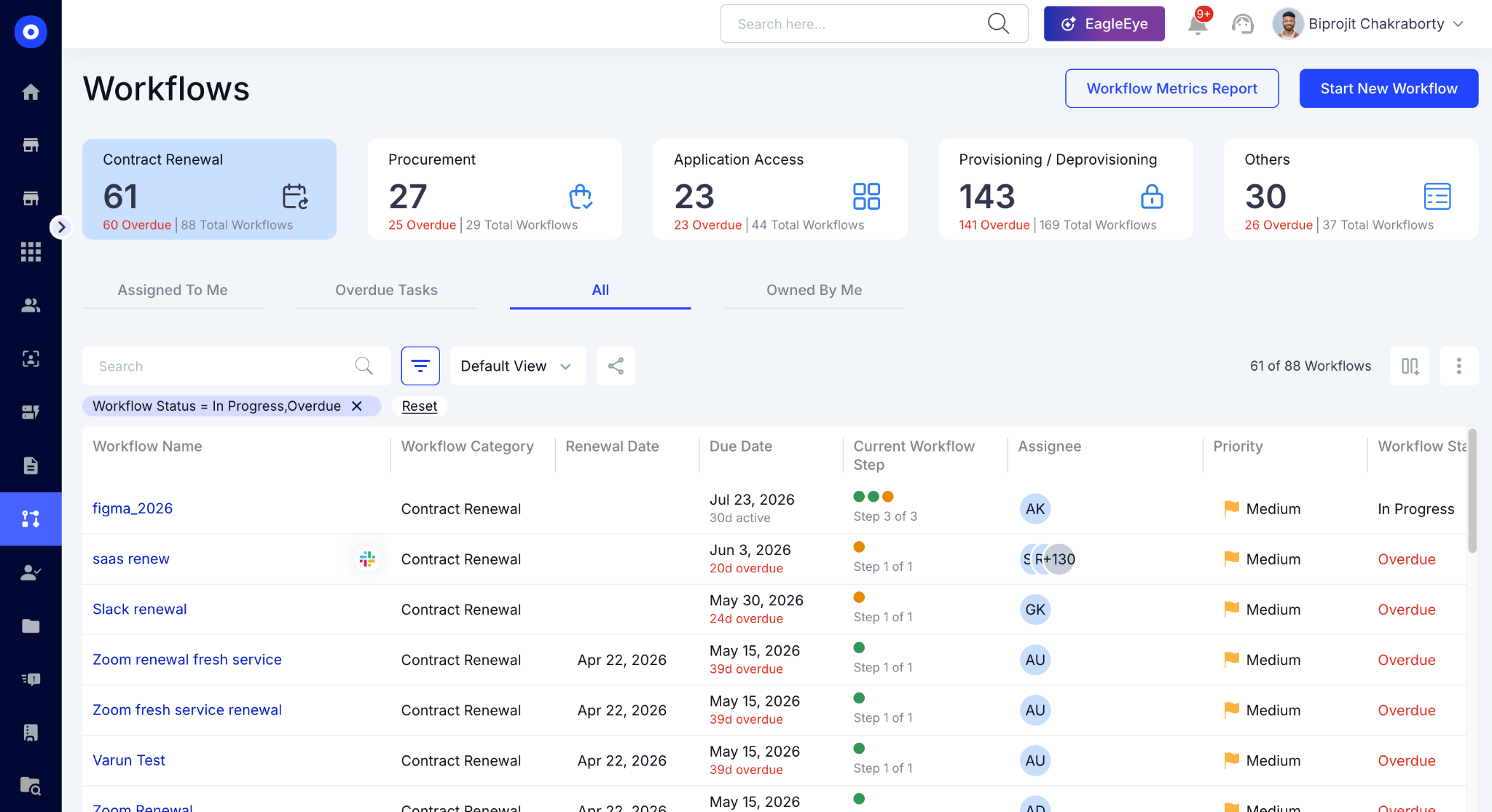
CloudEagle.ai also flags contracts set to auto-renew or carrying minimum spend commitments. The AI billing traps that fire before anyone had a chance to review whether the tool is still earning its place.

F. Price Benchmarking and Buying Guides: Make Sure You're Paying the Right Price

Once the renewal workflow is running, one question remains: are you paying what your peers pay for the same AI tools? 

CloudEagle.ai's Price Benchmarking compares prices based on license counts, tiers, and company size. 
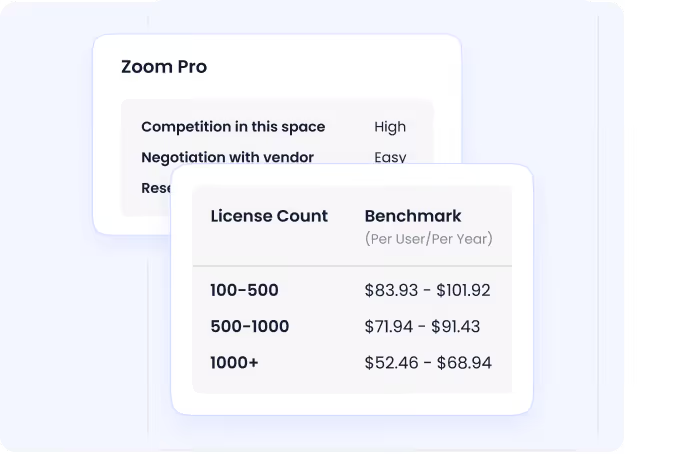
Vendor-specific buying guides surface the negotiation levers, discount patterns, and renewal behaviors that have delivered savings on that specific vendor before. 
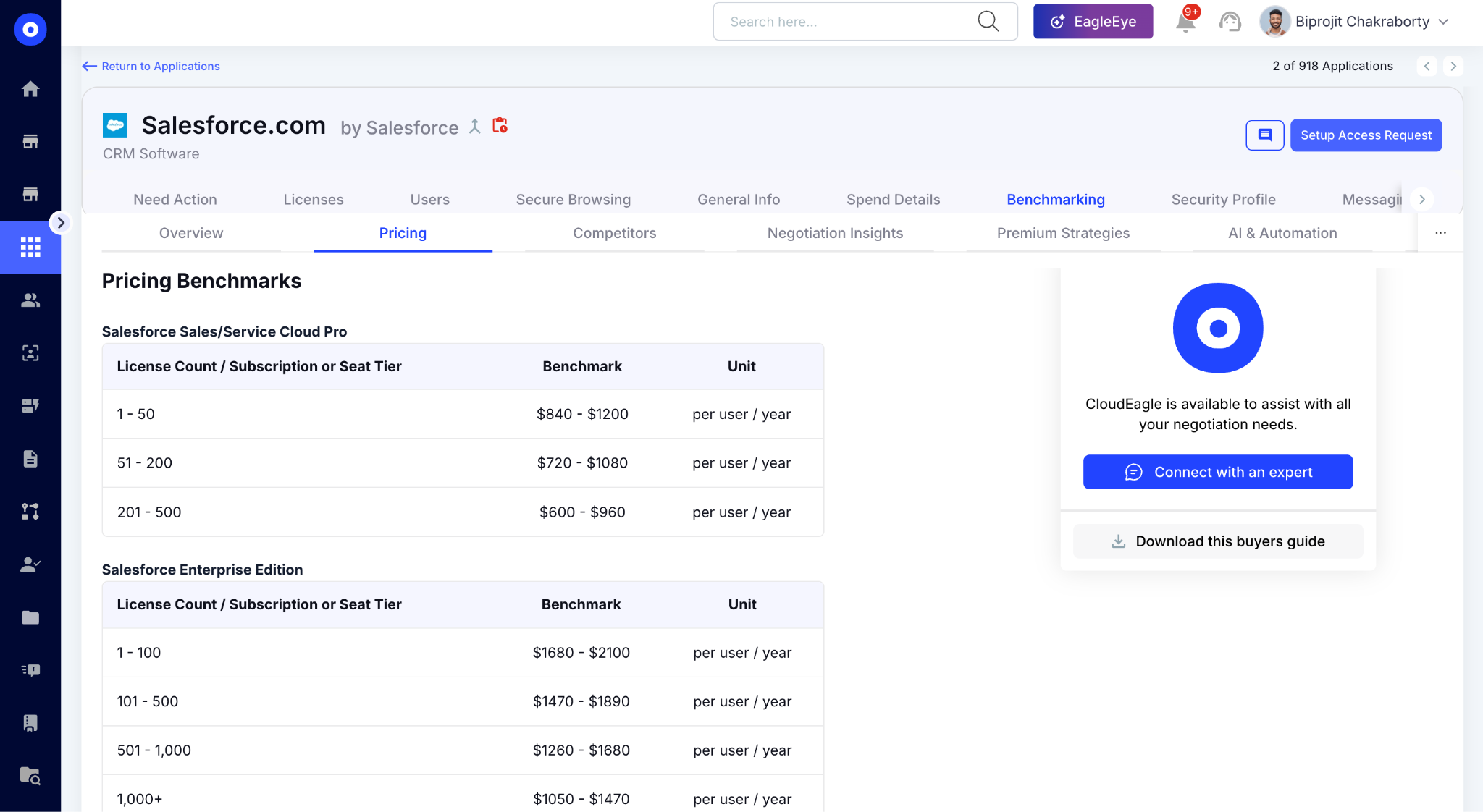
When the Claude or Copilot renewal fires on the calendar, usage data, consumption forecast, contract terms, and peer pricing benchmark are already in the same platform.

3. What a Clean AI Spend Reconciliation Workflow Looks Like

The goal isn't to spend less time in spreadsheets at quarter-end. The goal is to eliminate the reconciliation scramble altogether.

In a well-governed environment, contract data, consumption data, billing information, and ownership details live in one place. A clean workflow typically looks like this:

  • AI contracts are centralized with renewal dates, contract values, and negotiated SKUs.
  • Consumption data is continuously ingested from vendors, not pulled manually at quarter-end.
  • Per-user and department-level attribution is mapped automatically to cost centers without HR data stitching.
  • Run-rate forecasts surface overspend risks before invoices arrive, not after.
  • Finance, procurement, and IT work from the same dataset instead of maintaining separate spreadsheets.

Instead of asking "what did we spend last quarter," the better question becomes "what will we spend next quarter if current usage trends continue." That's the point where reconciliation becomes forecasting.

Every New App Changes Your Risk

Not your awareness.
Stay Secure

4. Conclusion

Quarter-end AI reconciliation is painful because the data is fragmented across vendor portals, billing cycles don't align with fiscal calendars, and nobody owns the full picture until finance needs it by Friday.

That problem doesn't get better as the AI stack grows. It compounds with more vendors, more billing cycles, more SKUs nobody mapped to contract terms.

CloudEagle.ai is an AI-powered SaaS Management, Security and Identity Governance platform that consolidates AI contract metadata, consumption data, cost attribution, and renewal workflows into one place.

So, the quarter-end scramble becomes a 30-minute review, not a two-day firefight.

5. FAQs

1. Does CloudEagle.ai work alongside an existing CLM platform like Ironclad or Coupa?

CloudEagle.ai integrates with multiple CLM platforms including Ironclad, Coupa, and Zip, with companies keeping their existing CLM systems as everything syncs bidirectionally into one solution. Contract metadata flows between platforms without replacing the CLM already in place. 

2. Can CloudEagle.ai import AI contracts stored in Google Drive, Dropbox, or email inboxes?

CloudEagle.ai has native integrations with DocuSign, Workday, Ironclad, Google Drive, Dropbox, and Box, with contracts imported from any repository and metadata extracted automatically. Contracts sitting in shared folders or former employee inboxes are surfaced and centralized without manual migration. 

3. How does CloudEagle.ai handle AI contracts with minimum spend commitments or consumption-based overages?

CloudEagle.ai flags contracts on auto-renewal or carrying minimum spend commitments automatically, before the contract fires rather than after the invoice arrives. Consumption trends are mapped against contracted volume so procurement knows whether usage is tracking toward an overage or falling short of a committed minimum.

4. Can CloudEagle.ai allocate AI spend to specific cost centers for financial reporting?

CloudEagle.ai connects to HRIS and finance systems to map per-user consumption data against department and cost center records automatically, so finance receives allocation reports built from live consumption data rather than manual log exports.

5. How does CloudEagle.ai handle AI vendor contracts negotiated by different teams across the organization?

Every app, identity, contract, and compliance signal is centralized in a single dashboard regardless of which team originally signed. Ownership is assigned per contract record and renewal workflows route to the correct stakeholder automatically.

Advertisement for a SaaS Subscription Tracking Template with a call-to-action button to download and a partial graphic of a tablet showing charts.Banner promoting a SaaS Agreement Checklist to streamline SaaS management and avoid budget waste with a call-to-action button labeled Download checklist.Blue banner with text 'The Ultimate Employee Offboarding Checklist!' and a black button labeled 'Download checklist' alongside partial views of checklist documents from cloudeagle.ai.Digital ad for download checklist titled 'The Ultimate Checklist for IT Leaders to Optimize SaaS Operations' by cloudeagle.ai, showing checklist pages.Slack Buyer's Guide offer with text 'Unlock insider insights to get the best deal on Slack!' and a button labeled 'Get Your Copy', accompanied by a preview of the guide featuring Slack's logo.Monday Pricing Guide by cloudeagle.ai offering exclusive pricing secrets to maximize investment with a call-to-action button labeled Get Your Copy and an image of the guide's cover.Blue banner for Canva Pricing Guide by cloudeagle.ai offering a guide to Canva costs, features, and alternatives with a call-to-action button saying Get Your Copy.Blue banner with white text reading 'Little-Known Negotiation Hacks to Get the Best Deal on Slack' and a white button labeled 'Get Your Copy'.Blue banner with text 'Little-Known Negotiation Hacks to Get the Best Deal on Monday.com' and a white button labeled 'Get Your Copy'.Blue banner with text 'Little-Known Negotiation Hacks to Get the Best Deal on Canva' and a white button labeled 'Get Your Copy'.Banner with text 'Slack Buyer's Guide' and a 'Download Now' button next to images of a guide titled 'Slack Buyer’s Guide: Features, Pricing & Best Practices'.Digital cover of Monday Pricing Guide with a button labeled Get Your Copy on a blue background.Canva Pricing Guide cover with a button labeled Get Your Copy on a blue gradient background.

Enter your email to
unlock the report

Oops! Something went wrong while submitting the form.
License Count
Benchmark
Per User/Per Year

Enter your email to
unlock the report

Oops! Something went wrong while submitting the form.
License Count
Benchmark
Per User/Per Year

Enter your email to
unlock the report

Oops! Something went wrong while submitting the form.
Notion Plus
License Count
Benchmark
Per User/Per Year
100-500
$67.20 - $78.72
500-1000
$59.52 - $72.00
1000+
$51.84 - $57.60
Canva Pro
License Count
Benchmark
Per User/Per Year
100-500
$74.33-$88.71
500-1000
$64.74-$80.32
1000+
$55.14-$62.34

Enter your email to
unlock the report

Oops! Something went wrong while submitting the form.

Enter your email to
unlock the report

Oops! Something went wrong while submitting the form.
Zoom Business
License Count
Benchmark
Per User/Per Year
100-500
$216.00 - $264.00
500-1000
$180.00 - $216.00
1000+
$156.00 - $180.00

Enter your email to
unlock the report

Oops! Something went wrong while submitting the form.

Get the Right Security Platform To Secure Your Cloud Infrastructure

Please enter a business email
Thank you!
The 2023 SaaS report has been sent to your email. Check your promotional or spam folder.
Oops! Something went wrong while submitting the form.

Access full report

Please enter a business email
Thank you!
The 2023 SaaS report has been sent to your email. Check your promotional or spam folder.
Oops! Something went wrong while submitting the form.

It's the last week of the quarter. A Claude Enterprise invoice lands in your inbox. Then ChatGPT Teams. Each contract was signed at a different time, under a different budget owner. Finance wants an allocation report by Friday.

So you open four vendor portals, pull four exports, and spend the next two days reconciling them in a spreadsheet that was never designed for this.

Multi-vendor AI spend doesn't behave like traditional SaaS. It's consumption-based, it fluctuates without warning, and every vendor runs on a billing cycle that made sense when you signed, not when your quarter closes.

CloudEagle.ai consolidates AI contract data, consumption, and billing cycles into one place so reconciliation takes hours. In this guide, we'll show you why AI reconciliation breaks at scale and what it takes to fix it.

TL;DR

  • Multi-vendor AI contracts create reconciliation challenges because billing cycles, SKUs, and usage data are fragmented.
  • Finance teams struggle to map AI consumption to departments, users, and cost centers using vendor portals alone.
  • CloudEagle.ai centralizes AI contract metadata, multi-vendor spend, consumption, and renewal data in one platform.
  • Automated forecasting, renewal workflows, and price benchmarking help prevent billing surprises before quarter-end.
  • CloudEagle.ai transforms AI reconciliation from a manual spreadsheet exercise into a proactive financial governance process

1. Why AI Spend Never Matches the Spreadsheet

Most reconciliation problems don't start when the invoice arrives. They start months earlier when contracts are signed, billing cycles are set, and usage begins accumulating. 

The following three gaps are where most of that friction comes from.

A. The SKU Gap: What You Contracted vs. What's in the Portal

One of the most frustrating parts of AI reconciliation is that the contract and the portal often speak different languages.

Procurement negotiates SKUs, commitments, and pricing terms. The vendor portal shows tokens consumed, API requests, credits used, or usage metrics. Connecting those two views isn't always straightforward.

As noted during a recent enterprise AI evaluation, there are cases where "you might be contractually buying a different SKU and what is available in the portal is slightly different." That's where reconciliation starts breaking down.

  • Contracts describe what you purchased
  • Portals describe what you consumed
  • Finance teams are expected to connect the two

AI invoices rarely receive the same scrutiny as traditional SaaS renewals, which means billing errors accumulate undetected until someone decides to look.

B. The Attribution Gap: Total Spend vs. Per-User Cost

Most AI dashboards can tell you how much the organization spent. That's where reconciliation starts getting messy. A finance team can't allocate costs to departments, projects, or cost centers using a universal token number.

  • Vendor dashboards focus on total consumption: Org-level spend is visible but department-level and per-user breakdown requires manual extraction and matching.
  • Finance needs user-level and department-level allocation: Cost center reporting requires HR data and usage data to be connected, which no vendor portal does automatically.
  • Allocation models live in spreadsheets: The workaround works once. It doesn't scale across four AI vendors, monthly billing cycles, and a growing user base.

As one IT leader described the requirement, they need visibility into "per user, per model, cost and token usage". The level of detail required to make AI spend is actionable, not just visible.

The usual process is exporting usage logs, matching them to employee records, and building allocation models manually. The process takes days, and by the time the report is finished, the underlying usage data has already changed.

C. The Timing Gap: Billing Cycles That Don't Match Your Fiscal Calendar

Even if you solve the SKU and attribution problems, there's still a timing problem. AI vendors bill on the schedule defined in their contracts, not on your quarter-end reporting calendar.

  • Claude renews on one cycle and that date was set when procurement signed, not when your Q2 close happens
  • ChatGPT bills monthly so mid-quarter invoices land before you have the full consumption picture
  • Cursor follows a different schedule while adding a third billing cadence that rarely aligns with the other two
  • Microsoft Copilot is tied to your Microsoft EA anniversary where a date that made sense for your Microsoft relationship, not your AI spend calendar

None of those dates were designed around your finance team's reporting deadlines.

The result is a constant reconciliation exercise. You're always looking backward. By the time the numbers are reconciled, the quarter is already over.

Your AI Budget Has A Memory Leak

You keep paying for yesterday.
Find It

2. How CloudEagle.ai Consolidates AI Contract and Billing Data in One Place

The three gaps (SKU, attribution, and timing) require a different fix. CloudEagle.ai addresses all three through a connected workflow that starts the moment a contract is uploaded and continues through every billing cycle.

A. AI Contract Metadata Extraction: Close the SKU Gap at the Source

CloudEagle.ai's AI automatically extracts all critical contract metadata such as renewal dates, notice periods, opt-out terms, license counts, and SKUs. 

The contract language procurement negotiated and the consumption data in the vendor portal finally map to each other automatically. Here's how AI contract metadata extraction works in CloudEagle.ai:

In CloudEagle.ai's contract extraction view, every AI vendor contract like SKU, contracted volume, pricing tier, renewal date, and notice period stay on a single record without anyone opening the underlying document:

AI pulls renewal dates, contract values, notice periods, opt-out clauses, and SKU details directly from uploaded documents. You can save 1,440 hours per year on manual document review. 

B. Multi-Vendor AI Spend Dashboard: Close the Attribution Gap

CloudEagle.ai maps extracted contract data against actual consumption across every AI vendor (Claude, ChatGPT, Cursor, Copilot, Gemini) in a single dashboard with per-user, per-department, and per-cost attribution.

Here's how multi-vendor AI spend consolidation looks in CloudEagle.ai:

In CloudEagle.ai's consumption dashboard, every user's activity is visible alongside the model they used such as Sonnet, Opus, or Haiku with input vs. output token split and associated cost per period.

This answers the attribution question finance has been asking. Not just total AI spend, but which team, which user, and which model drove it without an Excel reconciliation model.

C. Run Rate Forecasting: Close the Timing Gap Before Quarter-End

CloudEagle.ai projects current consumption trends forward across every AI vendor, showing whether you're on track to exceed contracted volume. 

In CloudEagle.ai's forecast view, projected spend is mapped against contracted volume across Claude, ChatGPT, Cursor, and Copilot with overage risk visible by vendor before quarter-end. 

Finance stops explaining variance after the quarter closes. They start forecasting before it does.

D. Renewal Calendar: Normalize AI Billing Cycles Against Your Fiscal Calendar

CloudEagle.ai auto-creates renewal calendars from AI-extracted contract metadata and triggers renewal workflows 90 days in advance using usage data and price benchmarks. 

Every AI vendor's billing cycle is visible on one calendar alongside your traditional SaaS renewals, normalized against your fiscal calendar, not the vendor's. 

In CloudEagle.ai's renewal calendar, Claude, ChatGPT, Cursor, and Copilot renewal dates appear alongside every other SaaS vendor. There are alerts firing at 90, 60, and 30 days so finance is never reconciling in arrears. 

E. Automated Renewal Workflows: Turn Visibility Into Action

CloudEagle.ai automatically builds renewal workflows with deadlines, ownership assignment, and escalation paths. 

When an AI contract renewal alert fires, CloudEagle.ai routes the approval workflow to the designated owner in Slack, Teams, or email with usage data, consumption forecasts, and contract terms already attached.

No chasing inboxes. No last-minute spreadsheet pulls. Renewal alerts start 90 days early and stakeholders are notified automatically so teams are always prepared, never reactive.

CloudEagle.ai also flags contracts set to auto-renew or carrying minimum spend commitments. The AI billing traps that fire before anyone had a chance to review whether the tool is still earning its place.

F. Price Benchmarking and Buying Guides: Make Sure You're Paying the Right Price

Once the renewal workflow is running, one question remains: are you paying what your peers pay for the same AI tools? 

CloudEagle.ai's Price Benchmarking compares prices based on license counts, tiers, and company size. 

Vendor-specific buying guides surface the negotiation levers, discount patterns, and renewal behaviors that have delivered savings on that specific vendor before. 

When the Claude or Copilot renewal fires on the calendar, usage data, consumption forecast, contract terms, and peer pricing benchmark are already in the same platform.

3. What a Clean AI Spend Reconciliation Workflow Looks Like

The goal isn't to spend less time in spreadsheets at quarter-end. The goal is to eliminate the reconciliation scramble altogether.

In a well-governed environment, contract data, consumption data, billing information, and ownership details live in one place. A clean workflow typically looks like this:

  • AI contracts are centralized with renewal dates, contract values, and negotiated SKUs.
  • Consumption data is continuously ingested from vendors, not pulled manually at quarter-end.
  • Per-user and department-level attribution is mapped automatically to cost centers without HR data stitching.
  • Run-rate forecasts surface overspend risks before invoices arrive, not after.
  • Finance, procurement, and IT work from the same dataset instead of maintaining separate spreadsheets.

Instead of asking "what did we spend last quarter," the better question becomes "what will we spend next quarter if current usage trends continue." That's the point where reconciliation becomes forecasting.

Every New App Changes Your Risk

Not your awareness.
Stay Secure

4. Conclusion

Quarter-end AI reconciliation is painful because the data is fragmented across vendor portals, billing cycles don't align with fiscal calendars, and nobody owns the full picture until finance needs it by Friday.

That problem doesn't get better as the AI stack grows. It compounds with more vendors, more billing cycles, more SKUs nobody mapped to contract terms.

CloudEagle.ai is an AI-powered SaaS Management, Security and Identity Governance platform that consolidates AI contract metadata, consumption data, cost attribution, and renewal workflows into one place.

So, the quarter-end scramble becomes a 30-minute review, not a two-day firefight.

5. FAQs

1. Does CloudEagle.ai work alongside an existing CLM platform like Ironclad or Coupa?

CloudEagle.ai integrates with multiple CLM platforms including Ironclad, Coupa, and Zip, with companies keeping their existing CLM systems as everything syncs bidirectionally into one solution. Contract metadata flows between platforms without replacing the CLM already in place. 

2. Can CloudEagle.ai import AI contracts stored in Google Drive, Dropbox, or email inboxes?

CloudEagle.ai has native integrations with DocuSign, Workday, Ironclad, Google Drive, Dropbox, and Box, with contracts imported from any repository and metadata extracted automatically. Contracts sitting in shared folders or former employee inboxes are surfaced and centralized without manual migration. 

3. How does CloudEagle.ai handle AI contracts with minimum spend commitments or consumption-based overages?

CloudEagle.ai flags contracts on auto-renewal or carrying minimum spend commitments automatically, before the contract fires rather than after the invoice arrives. Consumption trends are mapped against contracted volume so procurement knows whether usage is tracking toward an overage or falling short of a committed minimum.

4. Can CloudEagle.ai allocate AI spend to specific cost centers for financial reporting?

CloudEagle.ai connects to HRIS and finance systems to map per-user consumption data against department and cost center records automatically, so finance receives allocation reports built from live consumption data rather than manual log exports.

5. How does CloudEagle.ai handle AI vendor contracts negotiated by different teams across the organization?

Every app, identity, contract, and compliance signal is centralized in a single dashboard regardless of which team originally signed. Ownership is assigned per contract record and renewal workflows route to the correct stakeholder automatically.

CloudEagle.ai recognized in the 2025 Gartner® Magic Quadrant™ for SaaS Management Platforms
Download now
gartner chart
5x
Faster employee
onboarding
80%
Reduction in time for
user access reviews
30k
Workflows
automated
$15Bn
Analyzed in
contract spend
$2Bn
Saved in
SaaS spend

Streamline SaaS governance and save 10-30%

Book a Demo with Expert
CTA image