You need to enable JavaScript in order to use the AI chatbot tool powered by ChatBot

SaaS Contract Negotiation Checklist: Key Clauses to Protect Cost and Risk

Share via:
blog-cms-banner-bg
Little-Known Negotiation Hacks to Get the Best Deal on Slack
cta-bg-blogDownload Your Copy

HIPAA Compliance Checklist for 2025

Download PDF

SaaS Agreement Checklist

Use this checklist to review pricing terms, renewal clauses, SLAs, data protection, and exit conditions before signing.

Get Checklist
CTA Thumbnail

SaaS contracts often look simple on the surface. A few pages, a pricing table, and standard terms that feel “non-negotiable.” But hidden inside those clauses are long-term cost escalations, renewal traps, and risk exposures that compound quietly over time.

For enterprise teams, SaaS contract negotiation isn’t just a procurement exercise. It’s a strategic control point that directly impacts spend efficiency, vendor lock-in, security posture, and operational flexibility. Miss the details early, and you’ll pay for them every renewal cycle.

In this blog, you’ll learn what SaaS contract negotiation really involves, why it matters to the business, what to include in a SaaS negotiation checklist, and how platforms like CloudEagle.ai help teams negotiate from a position of data and leverage.

TL;DR 

  • SaaS contract negotiation directly impacts long-term cost, flexibility, and vendor risk.
  • Auto-renewals, uncapped price increases, and hidden fees are common contract pitfalls.
  • A structured SaaS negotiation checklist helps teams negotiate consistently and confidently.
  • Usage data and price benchmarking significantly strengthen negotiation leverage.
  • CloudEagle.ai connects contracts, usage, and renewals to improve SaaS negotiation outcomes.

1. What Is SaaS Contract Negotiation?

SaaS contract negotiation is the process of reviewing, adjusting, and agreeing on the commercial, legal, and operational terms of a SaaS agreement before signing or renewing. It goes far beyond pricing alone.
At the enterprise level, SaaS contract negotiation typically involves evaluating:

  • Renewal terms and notice periods
  • Usage alignment versus licensed seats
  • Service level agreements (SLAs)
  • Exit and termination rights
  • Data ownership and portability
  • Future pricing protections and caps

The goal is to ensure what you pay aligns with how the product is actually used—both today and as needs evolve.

Effective SaaS contract negotiation balances cost control with flexibility, helping organizations avoid vendor lock-in and unfavorable terms that become expensive or difficult to unwind later.

Top SaaS Negotiation Strategies

Learn proven negotiation strategies to reduce SaaS costs, avoid vendor lock-in, and protect long-term contract value.

Download Strategies
CTA Thumbnail

2. Why SaaS Contract Negotiation Directly Impacts Your Business?

SaaS contracts shape far more than subscription pricing. Poorly negotiated terms quietly drive higher costs, limit flexibility, and introduce long-term operational risk that compounds over time.

A. Eliminate Surprise Renewals and Auto-Extensions

Many SaaS contracts include auto-renewal clauses with short notice windows. Missing them often triggers renewals with built-in price hikes.

  • Auto-renewals without active approval
  • Short or unclear notice periods
  • Price increases hidden in renewal terms
  • Limited time to reassess usage or value

Strong SaaS contract negotiation ensures renewals are visible, notice periods are reasonable, and contracts don’t renew without intent.

B. Control the Total Cost of Ownership Over Time

The true cost of SaaS extends beyond base license fees.

  • Over-provisioned or unused seats
  • Premium tiers with low adoption
  • One-time implementation or onboarding fees
  • Annual uplifts and pricing escalators

Negotiating with real usage data helps teams pay for actual value, not projected assumptions.

C. Reduce Long-Term Vendor Dependency

Without flexible terms, vendor leverage increases over time.

  • Limited exit or termination rights
  • High migration or switching costs
  • Reduced negotiation power at renewal
  • Vendor-driven product and pricing decisions

Effective SaaS contract negotiation preserves optionality, ensuring vendors don’t dictate your long-term roadmap.

SaaS Procurement Guide

Understand how procurement teams evaluate vendors, negotiate contracts, and manage renewals using structured frameworks.

Read Procurement Guide
CTA Thumbnail

3. What to Evaluate in a SaaS Contract Negotiation Checklist?

A strong SaaS negotiation checklist focuses on visibility, flexibility, and future protection, not just upfront discounts. These are the clauses enterprise teams should evaluate carefully.

A. Track renewal dates and real usage together

Renewals should never be negotiated blindly. Contracts must align renewal timelines with real usage insights.

Key points to validate:

  • Clear renewal dates and notice periods
  • Alignment between licensed seats and active users
  • Flexibility to reduce quantities at renewal

Negotiation leverage comes from usage clarity.

B. Enforce measurable SLA protections

SLAs often sound strong but lack enforcement. Contracts should define measurable performance standards.

Look for:

  • Uptime commitments with clear thresholds
  • Service credits tied to real impact
  • Response and resolution time guarantees

SLAs without consequences offer little protection.

C. Preserve flexibility with exit rights

Exit clauses are critical, even if you never plan to use them. They protect against poor performance, strategy shifts, or budget changes.

Validate:

  • Termination for convenience
  • Data portability rights
  • Assistance during offboarding

Exit rights strengthen every negotiation.

D. Limit future price increases

Uncapped uplifts are one of the most expensive SaaS mistakes. Vendors often include annual increases by default.

Negotiate:

  • Price increase caps
  • Fixed pricing periods
  • Protections for additional modules or users

Future pricing matters more than initial discounts.

E. Uncover hidden onboarding and implementation fees

Implementation, training, and support fees often appear late in negotiations or after signing.

Confirm:

  • One-time vs recurring fees
  • Scope of included services
  • Charges for integrations or migrations

Hidden fees inflate the total cost silently.

F. Define clear termination conditions

Termination terms should clearly state when and how contracts can end.

Ensure:

  • Conditions for early termination
  • Refund or credit handling
  • Obligations after termination

Clear termination reduces legal and financial risk.

4. SaaS Contract Negotiation Checklist for Enterprise Teams

Here’s a practical SaaS contract negotiation checklist enterprise teams can use before signing or renewing:

Evaluation Area What to Check Why It Matters Status
Renewal Terms Renewal date, notice period, auto-renewal clause Prevents surprise renewals and forced extensions
License & Usage Active users vs licensed seats Avoids overpaying for unused licenses
Pricing & Increases Annual uplift caps, future pricing protections Controls long-term cost growth
SLAs & Support Uptime guarantees, support response times, and penalties Ensures service reliability and accountability
Exit & Termination Termination rights, notice terms, and data portability Reduces vendor lock-in and migration risk
Implementation Fees Onboarding, training, and integration costs Prevents hidden or unexpected charges
Data Ownership Data access, export rights, retention terms Protects business and customer data
Security & Compliance Security obligations, audit rights, certifications Aligns contract with compliance requirements
Benchmarking Market pricing comparison Strengthens negotiation leverage
Approval & Ownership Internal owner and approval workflow Ensures accountability and consistency

5. What Common Mistakes Weaken SaaS Negotiation Outcomes

Even experienced teams lose leverage by repeating a few avoidable mistakes that quietly weaken negotiation outcomes.

A. Negotiating Without Usage Data

When teams lack real usage insights, negotiations rely on vendor narratives instead of facts.

  • Over-licensed or unused seats go unnoticed
  • Renewal discussions become subjective
  • Discounts are harder to justify
  • Spend grows without clear value alignment

Usage data shifts negotiations from opinion-based to evidence-based.

B. Skipping Vendor Price Benchmarking

Without market benchmarks, teams don’t know whether pricing is fair.

  • No reference for market-standard rates
  • Vendors control the pricing conversation
  • Missed opportunities for discounts or caps
  • Weak positioning during renewals

Benchmarking rebalances power and strengthens negotiation leverage.

C. Missing the Renewal Negotiation Window

Timing directly impacts leverage. Most negotiating power exists well before renewal.

  • Limited flexibility after notice windows close
  • Auto-renewals lock in unfavorable terms
  • Fewer alternatives considered
  • Reduced ability to restructure contracts

Effective SaaS negotiation starts 60–120 days before renewal, when leverage is highest.

6. How Does CloudEagle.ai Improve SaaS Contract Negotiation?

CloudEagle.ai improves SaaS contract negotiation by empowering teams with data-driven insights, workflow automation, and standardized best practices, leading to faster deals, fewer risks, and stronger outcomes. Here’s how it adds real value:

A. Centralized Contract Intelligence

SaaS negotiations often fail because teams don’t have a complete contract context. 
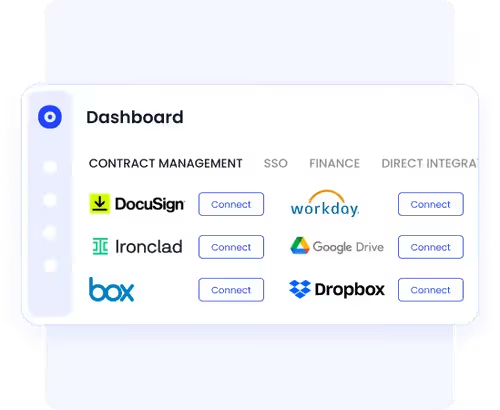
CloudEagle.ai eliminates this gap by creating a single, intelligent system of record for all SaaS contracts.

  • Centralizes contracts from inboxes, drives, and CLMs
  • Automatically extracts renewal dates, pricing, SKUs, SLAs, and termination rights
  • Surfaces past risks and unfavorable clauses

Negotiation impact: Teams enter negotiations informed, prepared, and in control.

B. Data-Driven Benchmarks & Buying Insights

Vendors negotiate assuming buyers lack market context. 
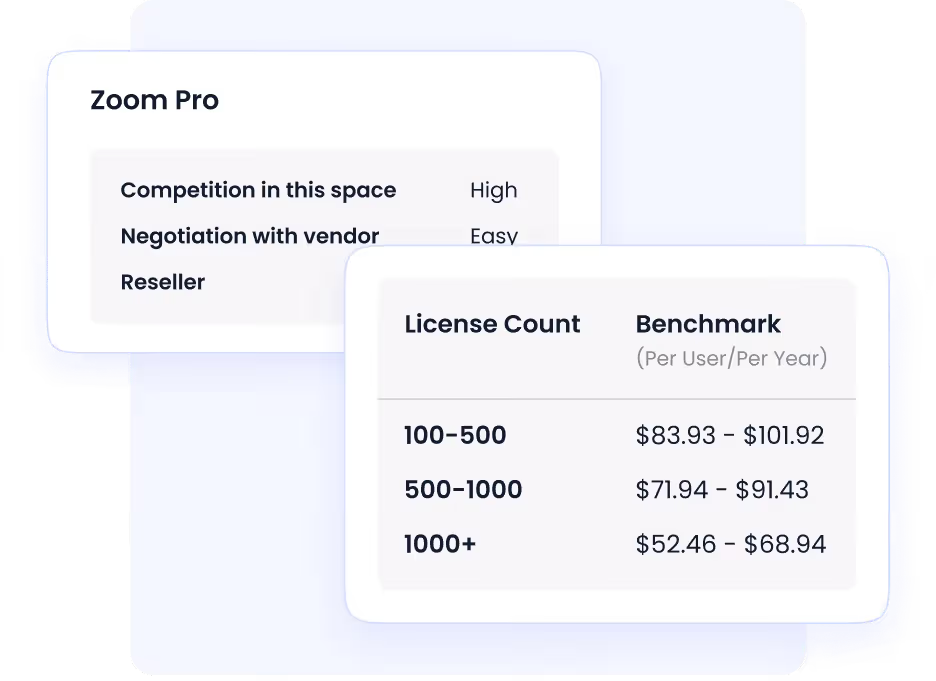
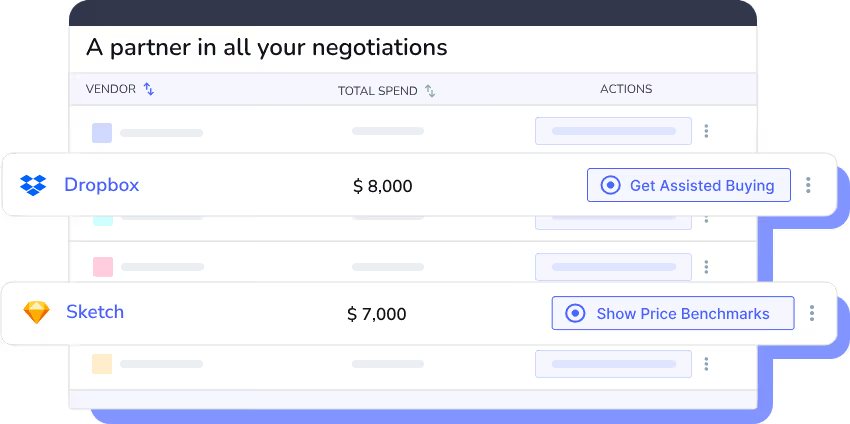
CloudEagle.ai changes this by grounding negotiations in real usage, spend, and benchmark data.

  • Price benchmarking across vendors and SKUs
  • Cost per active user visibility
  • Identification of over-licensed or underused plans
  • Historical pricing trends across renewals

Negotiation impact: Discounts, downsizing, and pricing caps are justified with evidence.

C. AI-Assisted Clause Optimization

Legal risk often surfaces too late in negotiations. 
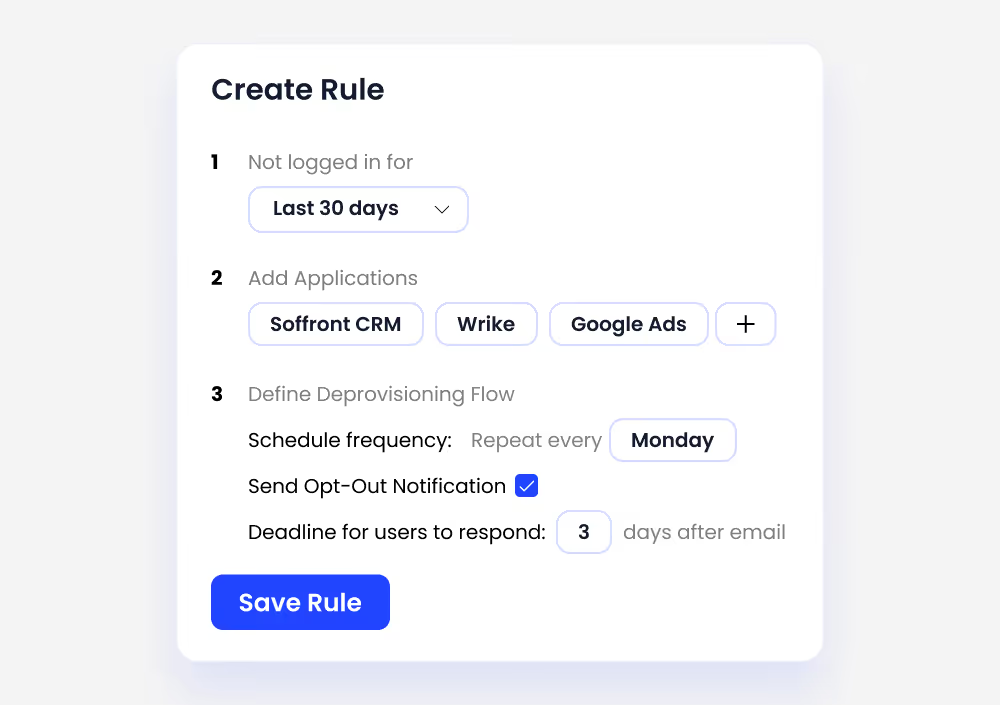
CloudEagle.ai proactively analyzes contract language to identify risk and guide better outcomes.

  • Flags risky or non-standard clauses automatically
  • Compares terms against internal standards and market norms
  • Recommends safer alternatives and fallback language

Negotiation impact: Faster redlines, fewer escalations, and consistent protections.

D. Renewal & Approval Workflow Automation

Negotiation leverage is lost when renewals are missed or approvals stall. CloudEagle.ai ensures negotiations start early and move smoothly.
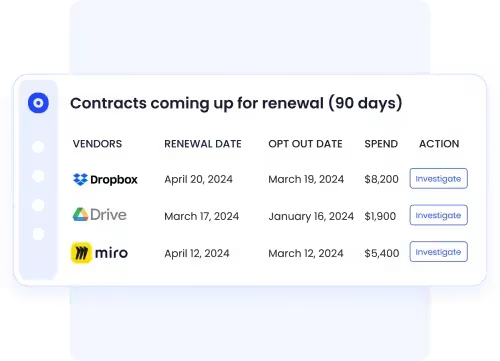
  • Tracks renewal timelines and notice periods
  • Triggers workflows well before deadlines
  • Routes reviews to IT, Finance, and Legal
  • Streamlines approvals through automated workflows

Negotiation impact: More leverage, fewer missed windows, faster deal cycles.

E. Risk & Compliance Guardrails

Unfavorable contract terms can introduce legal, security, and compliance exposure. 

CloudEagle.ai embeds risk awareness directly into the negotiation process.

  • Flags weak data protection and compliance language
  • Identifies vendor-favorable liability and indemnity terms
  • Highlights non-negotiable risk clauses

Negotiation impact: Strong protection without slowing negotiations.

F. Post-Contract Performance & Renewal Intelligence

Negotiations don’t end at signature. CloudEagle.ai tracks whether contracts deliver value throughout their lifecycle.
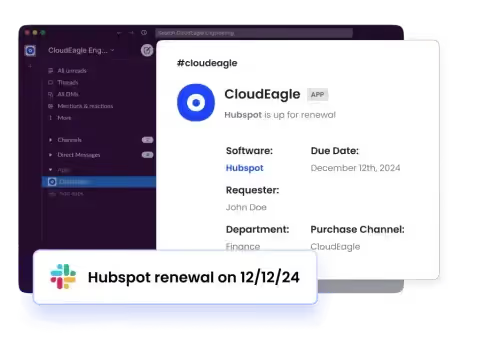
.

  • Usage vs. licensed seats monitoring
  • Feature adoption visibility
  • Billing anomalies and spend creep detection
  • SLA adherence tracking (where applicable)

Negotiation impact: Renewals are driven by performance, not assumptions.

G. Built-In Playbooks & Negotiation Enablement

Inconsistent negotiation approaches lead to inconsistent outcomes. CloudEagle.ai standardizes best practices across teams and regions.
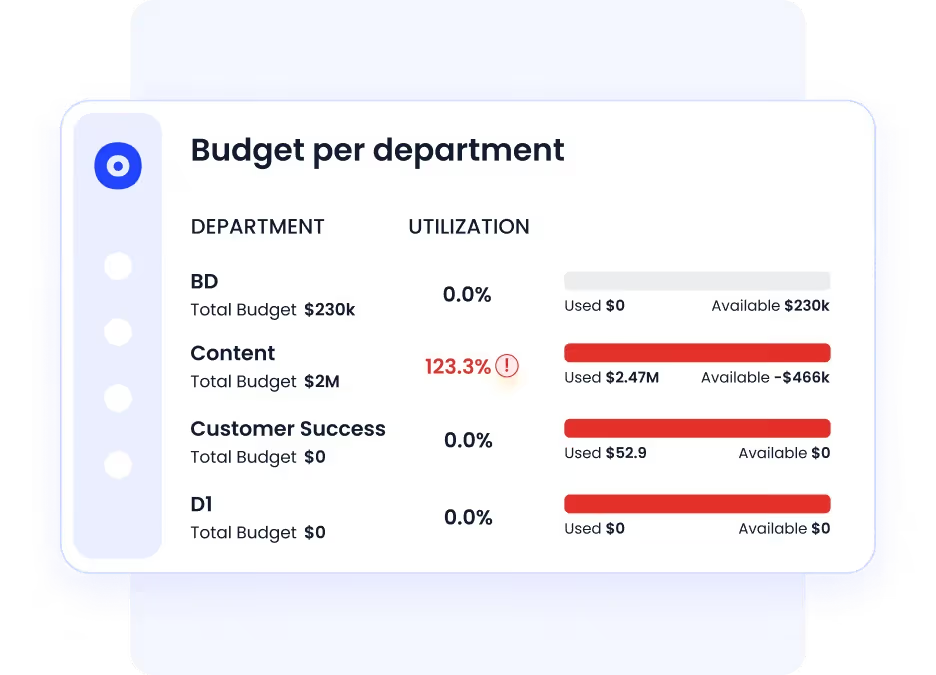
  • Proven negotiation playbooks built in
  • Faster onboarding for new team members
  • Alignment across Procurement, IT, Finance, and Legal

Negotiation impact: Predictable, repeatable, and stronger negotiation outcomes.

7. Conclusion

SaaS contract negotiation is no longer a one-time event. It’s an ongoing discipline that protects cost, flexibility, and risk as your SaaS stack grows. Contracts that aren’t negotiated carefully today become tomorrow’s budget and compliance problems.

A structured SaaS negotiation checklist ensures teams consistently evaluate renewal terms, pricing protections, exit rights, and hidden costs. When negotiations are data-driven instead of reactive, outcomes improve dramatically.

CloudEagle.ai helps enterprises negotiate SaaS contracts with confidence by combining usage visibility, contract intelligence, and renewal automation in one platform.

Book a free demo to see how CloudEagle.ai improves SaaS contract negotiation.

Frequently Asked Questions 

1. What is the 70/30 rule in negotiation?

The 70/30 rule suggests you should listen 70% of the time and speak 30%. It helps you understand the other party’s priorities, uncover leverage points, and negotiate based on insight, not assumptions.

2. What should be checked before contract renewals?

Usage data, renewal terms, price increases, SLA performance, exit rights, and benchmarking against market pricing.

3. Who negotiates SaaS contracts in enterprises?

Typically, procurement leads negotiations, with input from IT, finance, security, and legal teams to balance cost, risk, and operational impact.

4. What are the 5 C’s of negotiation?
The 5 C’s are Clarity, Context, Concessions, Collaboration, and Closure. Together, they guide structured negotiations that balance business goals, risk, flexibility, and long-term relationships.

5. What is negotiable in a contract?
Pricing, renewal terms, payment schedules, SLAs, termination clauses, liability caps, data protection terms, and scope of services are commonly negotiable, especially during renewals or high-value enterprise contracts.

Advertisement for a SaaS Subscription Tracking Template with a call-to-action button to download and a partial graphic of a tablet showing charts.Banner promoting a SaaS Agreement Checklist to streamline SaaS management and avoid budget waste with a call-to-action button labeled Download checklist.Blue banner with text 'The Ultimate Employee Offboarding Checklist!' and a black button labeled 'Download checklist' alongside partial views of checklist documents from cloudeagle.ai.Digital ad for download checklist titled 'The Ultimate Checklist for IT Leaders to Optimize SaaS Operations' by cloudeagle.ai, showing checklist pages.Slack Buyer's Guide offer with text 'Unlock insider insights to get the best deal on Slack!' and a button labeled 'Get Your Copy', accompanied by a preview of the guide featuring Slack's logo.Monday Pricing Guide by cloudeagle.ai offering exclusive pricing secrets to maximize investment with a call-to-action button labeled Get Your Copy and an image of the guide's cover.Blue banner for Canva Pricing Guide by cloudeagle.ai offering a guide to Canva costs, features, and alternatives with a call-to-action button saying Get Your Copy.Blue banner with white text reading 'Little-Known Negotiation Hacks to Get the Best Deal on Slack' and a white button labeled 'Get Your Copy'.Blue banner with text 'Little-Known Negotiation Hacks to Get the Best Deal on Monday.com' and a white button labeled 'Get Your Copy'.Blue banner with text 'Little-Known Negotiation Hacks to Get the Best Deal on Canva' and a white button labeled 'Get Your Copy'.Banner with text 'Slack Buyer's Guide' and a 'Download Now' button next to images of a guide titled 'Slack Buyer’s Guide: Features, Pricing & Best Practices'.Digital cover of Monday Pricing Guide with a button labeled Get Your Copy on a blue background.Canva Pricing Guide cover with a button labeled Get Your Copy on a blue gradient background.

Enter your email to
unlock the report

Oops! Something went wrong while submitting the form.
License Count
Benchmark
Per User/Per Year

Enter your email to
unlock the report

Oops! Something went wrong while submitting the form.
License Count
Benchmark
Per User/Per Year

Enter your email to
unlock the report

Oops! Something went wrong while submitting the form.
Notion Plus
License Count
Benchmark
Per User/Per Year
100-500
$67.20 - $78.72
500-1000
$59.52 - $72.00
1000+
$51.84 - $57.60
Canva Pro
License Count
Benchmark
Per User/Per Year
100-500
$74.33-$88.71
500-1000
$64.74-$80.32
1000+
$55.14-$62.34

Enter your email to
unlock the report

Oops! Something went wrong while submitting the form.

Enter your email to
unlock the report

Oops! Something went wrong while submitting the form.
Zoom Business
License Count
Benchmark
Per User/Per Year
100-500
$216.00 - $264.00
500-1000
$180.00 - $216.00
1000+
$156.00 - $180.00

Enter your email to
unlock the report

Oops! Something went wrong while submitting the form.

Get the Right Security Platform To Secure Your Cloud Infrastructure

Please enter a business email
Thank you!
The 2023 SaaS report has been sent to your email. Check your promotional or spam folder.
Oops! Something went wrong while submitting the form.

Access full report

Please enter a business email
Thank you!
The 2023 SaaS report has been sent to your email. Check your promotional or spam folder.
Oops! Something went wrong while submitting the form.

SaaS Agreement Checklist

Use this checklist to review pricing terms, renewal clauses, SLAs, data protection, and exit conditions before signing.

Get Checklist
CTA Thumbnail

SaaS contracts often look simple on the surface. A few pages, a pricing table, and standard terms that feel “non-negotiable.” But hidden inside those clauses are long-term cost escalations, renewal traps, and risk exposures that compound quietly over time.

For enterprise teams, SaaS contract negotiation isn’t just a procurement exercise. It’s a strategic control point that directly impacts spend efficiency, vendor lock-in, security posture, and operational flexibility. Miss the details early, and you’ll pay for them every renewal cycle.

In this blog, you’ll learn what SaaS contract negotiation really involves, why it matters to the business, what to include in a SaaS negotiation checklist, and how platforms like CloudEagle.ai help teams negotiate from a position of data and leverage.

TL;DR 

  • SaaS contract negotiation directly impacts long-term cost, flexibility, and vendor risk.
  • Auto-renewals, uncapped price increases, and hidden fees are common contract pitfalls.
  • A structured SaaS negotiation checklist helps teams negotiate consistently and confidently.
  • Usage data and price benchmarking significantly strengthen negotiation leverage.
  • CloudEagle.ai connects contracts, usage, and renewals to improve SaaS negotiation outcomes.

1. What Is SaaS Contract Negotiation?

SaaS contract negotiation is the process of reviewing, adjusting, and agreeing on the commercial, legal, and operational terms of a SaaS agreement before signing or renewing. It goes far beyond pricing alone.

At the enterprise level, SaaS contract negotiation typically involves evaluating:

  • Renewal terms and notice periods
  • Usage alignment versus licensed seats
  • Service level agreements (SLAs)
  • Exit and termination rights
  • Data ownership and portability
  • Future pricing protections and caps

The goal is to ensure what you pay aligns with how the product is actually used—both today and as needs evolve.

Effective SaaS contract negotiation balances cost control with flexibility, helping organizations avoid vendor lock-in and unfavorable terms that become expensive or difficult to unwind later.

Top SaaS Negotiation Strategies

Learn proven negotiation strategies to reduce SaaS costs, avoid vendor lock-in, and protect long-term contract value.

Download Strategies
CTA Thumbnail

2. Why SaaS Contract Negotiation Directly Impacts Your Business?

SaaS contracts shape far more than subscription pricing. Poorly negotiated terms quietly drive higher costs, limit flexibility, and introduce long-term operational risk that compounds over time.

A. Eliminate Surprise Renewals and Auto-Extensions

Many SaaS contracts include auto-renewal clauses with short notice windows. Missing them often triggers renewals with built-in price hikes.

  • Auto-renewals without active approval
  • Short or unclear notice periods
  • Price increases hidden in renewal terms
  • Limited time to reassess usage or value

Strong SaaS contract negotiation ensures renewals are visible, notice periods are reasonable, and contracts don’t renew without intent.

B. Control the Total Cost of Ownership Over Time

The true cost of SaaS extends beyond base license fees.

  • Over-provisioned or unused seats
  • Premium tiers with low adoption
  • One-time implementation or onboarding fees
  • Annual uplifts and pricing escalators

Negotiating with real usage data helps teams pay for actual value, not projected assumptions.

C. Reduce Long-Term Vendor Dependency

Without flexible terms, vendor leverage increases over time.

  • Limited exit or termination rights
  • High migration or switching costs
  • Reduced negotiation power at renewal
  • Vendor-driven product and pricing decisions

Effective SaaS contract negotiation preserves optionality, ensuring vendors don’t dictate your long-term roadmap.

SaaS Procurement Guide

Understand how procurement teams evaluate vendors, negotiate contracts, and manage renewals using structured frameworks.

Read Procurement Guide
CTA Thumbnail

3. What to Evaluate in a SaaS Contract Negotiation Checklist?

A strong SaaS negotiation checklist focuses on visibility, flexibility, and future protection, not just upfront discounts. These are the clauses enterprise teams should evaluate carefully.

A. Track renewal dates and real usage together

Renewals should never be negotiated blindly. Contracts must align renewal timelines with real usage insights.

Key points to validate:

  • Clear renewal dates and notice periods
  • Alignment between licensed seats and active users
  • Flexibility to reduce quantities at renewal

Negotiation leverage comes from usage clarity.

B. Enforce measurable SLA protections

SLAs often sound strong but lack enforcement. Contracts should define measurable performance standards.

Look for:

  • Uptime commitments with clear thresholds
  • Service credits tied to real impact
  • Response and resolution time guarantees

SLAs without consequences offer little protection.

C. Preserve flexibility with exit rights

Exit clauses are critical, even if you never plan to use them. They protect against poor performance, strategy shifts, or budget changes.

Validate:

  • Termination for convenience
  • Data portability rights
  • Assistance during offboarding

Exit rights strengthen every negotiation.

D. Limit future price increases

Uncapped uplifts are one of the most expensive SaaS mistakes. Vendors often include annual increases by default.

Negotiate:

  • Price increase caps
  • Fixed pricing periods
  • Protections for additional modules or users

Future pricing matters more than initial discounts.

E. Uncover hidden onboarding and implementation fees

Implementation, training, and support fees often appear late in negotiations or after signing.

Confirm:

  • One-time vs recurring fees
  • Scope of included services
  • Charges for integrations or migrations

Hidden fees inflate the total cost silently.

F. Define clear termination conditions

Termination terms should clearly state when and how contracts can end.

Ensure:

  • Conditions for early termination
  • Refund or credit handling
  • Obligations after termination

Clear termination reduces legal and financial risk.

4. SaaS Contract Negotiation Checklist for Enterprise Teams

Here’s a practical SaaS contract negotiation checklist enterprise teams can use before signing or renewing:

Evaluation Area What to Check Why It Matters Status
Renewal Terms Renewal date, notice period, auto-renewal clause Prevents surprise renewals and forced extensions
License & Usage Active users vs licensed seats Avoids overpaying for unused licenses
Pricing & Increases Annual uplift caps, future pricing protections Controls long-term cost growth
SLAs & Support Uptime guarantees, support response times, and penalties Ensures service reliability and accountability
Exit & Termination Termination rights, notice terms, and data portability Reduces vendor lock-in and migration risk
Implementation Fees Onboarding, training, and integration costs Prevents hidden or unexpected charges
Data Ownership Data access, export rights, retention terms Protects business and customer data
Security & Compliance Security obligations, audit rights, certifications Aligns contract with compliance requirements
Benchmarking Market pricing comparison Strengthens negotiation leverage
Approval & Ownership Internal owner and approval workflow Ensures accountability and consistency

5. What Common Mistakes Weaken SaaS Negotiation Outcomes

Even experienced teams lose leverage by repeating a few avoidable mistakes that quietly weaken negotiation outcomes.

A. Negotiating Without Usage Data

When teams lack real usage insights, negotiations rely on vendor narratives instead of facts.

  • Over-licensed or unused seats go unnoticed
  • Renewal discussions become subjective
  • Discounts are harder to justify
  • Spend grows without clear value alignment

Usage data shifts negotiations from opinion-based to evidence-based.

B. Skipping Vendor Price Benchmarking

Without market benchmarks, teams don’t know whether pricing is fair.

  • No reference for market-standard rates
  • Vendors control the pricing conversation
  • Missed opportunities for discounts or caps
  • Weak positioning during renewals

Benchmarking rebalances power and strengthens negotiation leverage.

C. Missing the Renewal Negotiation Window

Timing directly impacts leverage. Most negotiating power exists well before renewal.

  • Limited flexibility after notice windows close
  • Auto-renewals lock in unfavorable terms
  • Fewer alternatives considered
  • Reduced ability to restructure contracts

Effective SaaS negotiation starts 60–120 days before renewal, when leverage is highest.

6. How Does CloudEagle.ai Improve SaaS Contract Negotiation?

CloudEagle.ai improves SaaS contract negotiation by empowering teams with data-driven insights, workflow automation, and standardized best practices, leading to faster deals, fewer risks, and stronger outcomes. Here’s how it adds real value:

A. Centralized Contract Intelligence

SaaS negotiations often fail because teams don’t have a complete contract context. 

CloudEagle.ai eliminates this gap by creating a single, intelligent system of record for all SaaS contracts.

  • Centralizes contracts from inboxes, drives, and CLMs
  • Automatically extracts renewal dates, pricing, SKUs, SLAs, and termination rights
  • Surfaces past risks and unfavorable clauses

Negotiation impact: Teams enter negotiations informed, prepared, and in control.

B. Data-Driven Benchmarks & Buying Insights

Vendors negotiate assuming buyers lack market context. 

CloudEagle.ai changes this by grounding negotiations in real usage, spend, and benchmark data.

  • Price benchmarking across vendors and SKUs
  • Cost per active user visibility
  • Identification of over-licensed or underused plans
  • Historical pricing trends across renewals

Negotiation impact: Discounts, downsizing, and pricing caps are justified with evidence.

C. AI-Assisted Clause Optimization

Legal risk often surfaces too late in negotiations. 

CloudEagle.ai proactively analyzes contract language to identify risk and guide better outcomes.

  • Flags risky or non-standard clauses automatically
  • Compares terms against internal standards and market norms
  • Recommends safer alternatives and fallback language

Negotiation impact: Faster redlines, fewer escalations, and consistent protections.

D. Renewal & Approval Workflow Automation

Negotiation leverage is lost when renewals are missed or approvals stall. CloudEagle.ai ensures negotiations start early and move smoothly.

  • Tracks renewal timelines and notice periods
  • Triggers workflows well before deadlines
  • Routes reviews to IT, Finance, and Legal
  • Streamlines approvals through automated workflows

Negotiation impact: More leverage, fewer missed windows, faster deal cycles.

E. Risk & Compliance Guardrails

Unfavorable contract terms can introduce legal, security, and compliance exposure. 

CloudEagle.ai embeds risk awareness directly into the negotiation process.

  • Flags weak data protection and compliance language
  • Identifies vendor-favorable liability and indemnity terms
  • Highlights non-negotiable risk clauses

Negotiation impact: Strong protection without slowing negotiations.

F. Post-Contract Performance & Renewal Intelligence

Negotiations don’t end at signature. CloudEagle.ai tracks whether contracts deliver value throughout their lifecycle.

.

  • Usage vs. licensed seats monitoring
  • Feature adoption visibility
  • Billing anomalies and spend creep detection
  • SLA adherence tracking (where applicable)

Negotiation impact: Renewals are driven by performance, not assumptions.

G. Built-In Playbooks & Negotiation Enablement

Inconsistent negotiation approaches lead to inconsistent outcomes. CloudEagle.ai standardizes best practices across teams and regions.

  • Proven negotiation playbooks built in
  • Faster onboarding for new team members
  • Alignment across Procurement, IT, Finance, and Legal

Negotiation impact: Predictable, repeatable, and stronger negotiation outcomes.

7. Conclusion

SaaS contract negotiation is no longer a one-time event. It’s an ongoing discipline that protects cost, flexibility, and risk as your SaaS stack grows. Contracts that aren’t negotiated carefully today become tomorrow’s budget and compliance problems.

A structured SaaS negotiation checklist ensures teams consistently evaluate renewal terms, pricing protections, exit rights, and hidden costs. When negotiations are data-driven instead of reactive, outcomes improve dramatically.

CloudEagle.ai helps enterprises negotiate SaaS contracts with confidence by combining usage visibility, contract intelligence, and renewal automation in one platform.

Book a free demo to see how CloudEagle.ai improves SaaS contract negotiation.

Frequently Asked Questions 

1. What is the 70/30 rule in negotiation?

The 70/30 rule suggests you should listen 70% of the time and speak 30%. It helps you understand the other party’s priorities, uncover leverage points, and negotiate based on insight, not assumptions.

2. What should be checked before contract renewals?

Usage data, renewal terms, price increases, SLA performance, exit rights, and benchmarking against market pricing.

3. Who negotiates SaaS contracts in enterprises?

Typically, procurement leads negotiations, with input from IT, finance, security, and legal teams to balance cost, risk, and operational impact.

4. What are the 5 C’s of negotiation?
The 5 C’s are Clarity, Context, Concessions, Collaboration, and Closure. Together, they guide structured negotiations that balance business goals, risk, flexibility, and long-term relationships.

5. What is negotiable in a contract?
Pricing, renewal terms, payment schedules, SLAs, termination clauses, liability caps, data protection terms, and scope of services are commonly negotiable, especially during renewals or high-value enterprise contracts.

CloudEagle.ai recognized in the 2025 Gartner® Magic Quadrant™ for SaaS Management Platforms
Download now
gartner chart
5x
Faster employee
onboarding
80%
Reduction in time for
user access reviews
30k
Workflows
automated
$15Bn
Analyzed in
contract spend
$2Bn
Saved in
SaaS spend

Recognized as an Industry leader for our AI

CloudEagle.ai is Recognized in the 2024 Gartner® Magic Quadrant™ for SaaS Management Platforms

Recognition highlights CloudEagle’s innovation and leadership in the rapidly evolving SaaS management and procurement space.
Read More
Gartner Magic Quadrant for SaaS Management Platforms showing a chart divided into Challengers and Leaders quadrants with various companies plotted as dots.

CloudEagle.ai Recognized in the GigaOm Radar for SaaS Management Platforms

CloudEagle named a Leader and Outperformer in GigaOm Radar Report, validating its impact in the SaaS management platform landscape.
Read More
gigaom

Everest Group Positions CloudEagle.ai as a Trailblazer in SaaS Management Platforms

CloudEagle recognized as a Trailblazer by Everest Group, showcasing its rapid growth and innovation in SaaS spend and operations management.
Read More
qks

CloudEagle.ai is Recognized in the 2024 Gartner® Magic Quadrant™ for SaaS Management Platforms

Recognition highlights CloudEagle’s innovation and leadership in the rapidly evolving SaaS management and procurement space.
Read More
gartner

Streamline SaaS governance and save 10-30%

Book a Demo with Expert
CTA image
One platform to Manage
all SaaS Products
Learn More