AI Governance

10 Best AI Usage Control Tools in 2026 (Ranked & Tested)

Share via:
Written by:
CloudEagle.ai Team
Review by:
Nidhi Jain
Last Updated:
August 26, 2026
blog-cms-banner-bg
Little-Known Negotiation Hacks to Get the Best Deal on Slack
cta-bg-blogDownload Your Copy

HIPAA Compliance Checklist for 2025

Download PDF

39.7% of all AI interactions now involve sensitive data. The average employee pastes proprietary information into an AI tool once every three days. And most of it is invisible to you, because one in three employees uses AI through personal accounts that never cross your SSO or firewall.

It isn't a handful of apps, either: the typical company runs 67 GenAI tools, 90% of them unapproved.

Banning doesn't fix it, it pushes usage onto phones you can't see. The job is to control it: see every tool, tie every token to an owner, and keep sensitive data out of apps you haven't vetted.

Here are the ten worth your shortlist:

TL;DR 

  • AI usage control tools discover shadow AI, attribute token spend, and enforce policies to keep sensitive data out of unapproved applications.
  • The best platforms combine AI discovery, cost visibility, prompt-layer enforcement, and low-friction deployment for enterprise governance.
  • Solutions like LayerX, Lasso Security, Singulr AI, and WitnessAI each specialize in browser security, LLM protection, risk intelligence, or compliance.
  • CloudEagle.ai stands out by unifying token-level cost attribution, shadow AI discovery, policy enforcement, and AI governance in a single platform.
  • CloudEagle.ai helps finance and security teams manage AI usage from one source of truth, combining visibility, spend optimization, and governance.

1. What Is An AI Usage Control Tool?

An AI usage control tool discovers every AI application in use across your organization, attributes usage and cost to the teams behind it, and enforces policy on what data can enter which tools.

Think of it as the control plane for your AI stack, the layer between "employees are using AI somewhere" and "we know what's running, what it costs, and whether it's safe."

It sits where three older categories overlap: shadow AI discovery, AI governance,  and DLP because no single legacy tool covers the whole problem. 

  • Your LLM gateway sees API traffic but misses the browser.
  • Your CASB works at the network layer and can't read a prompt.
  • Your DLP was built for files, not a chat window.

The category is now established enough that Gartner tracks it as its own market.

It’s The AI You Can't See

Start discovering it.
See How

2. How We Compared These Tools

Full transparency: this is a CloudEagle blog, and CloudEagle sits at number one. For a reason we covered below.

We picked data from review sites like G2 and Gartner reviews, help centres and docs, and independent reporting and then scored each on five things:

  • Usage & cost visibility — can it tell you tokens, credits, and spend by user, team, and model? (Most can't.)
  • Shadow AI discovery — does it find tools outside SSO, including personal accounts and free tiers?
  • Prompt-layer enforcement — can it stop sensitive data before it lands in an unapproved tool?
  • Deployment friction — agent, extension, managed browser, or agentless?
  • Best-fit buyer — because the honest answer isn't the same for everyone.

Nearly every tool does discovery, policy, and reporting, so we've written only about what separates them. Where public reviews are thin, we say so.

3. Top 10 Best AI Usage Control Tools in 2026

Here's our list of top 10 best AI usage control tools in 2026:

A. CloudEagle.ai
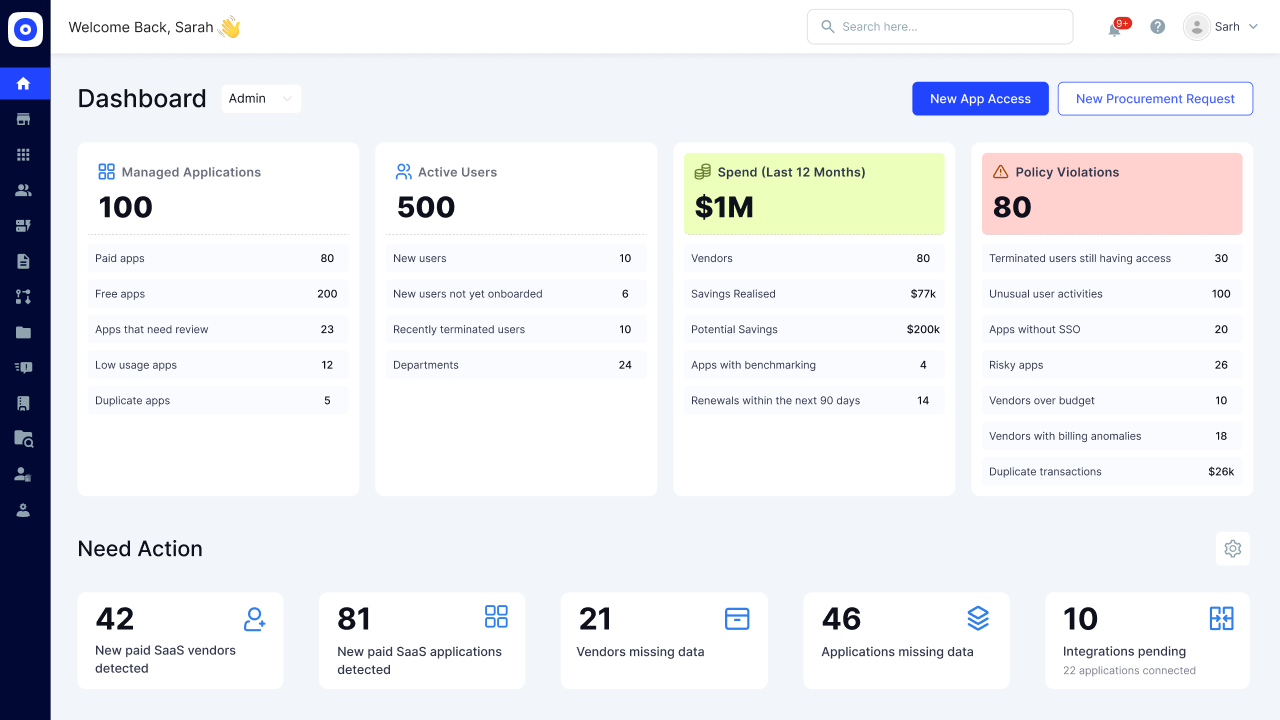
The differentiator: it's the only tool here that ties token-level spend to a person and team in the same place; it does shadow AI discovery and enforcement, so Finance and Security work off one number.

Most tools do one job. CloudEagle.ai puts discovery, usage control, cost attribution, and enforcement in one platform and holds a 4.7/5 across 101 G2 reviews, where the recurring praise isn't a feature; it's that it collapses spreadsheet-and-console chaos into one view teams trust for renewals and cost calls.

AI tools like Claude, Gemini, and Cursor bill by token, not by seat, so the bill lands as one number nobody can decompose. AI Usage Control breaks it open by model (Opus vs Sonnet, GPT-5 vs. GPT-4o), tied to the user, team, and API key.

A detail from their docs, not the hero page: token tracking runs via direct API, no browser plugin is required with the extension as a separate, optional deploy for discovery and enforcement.
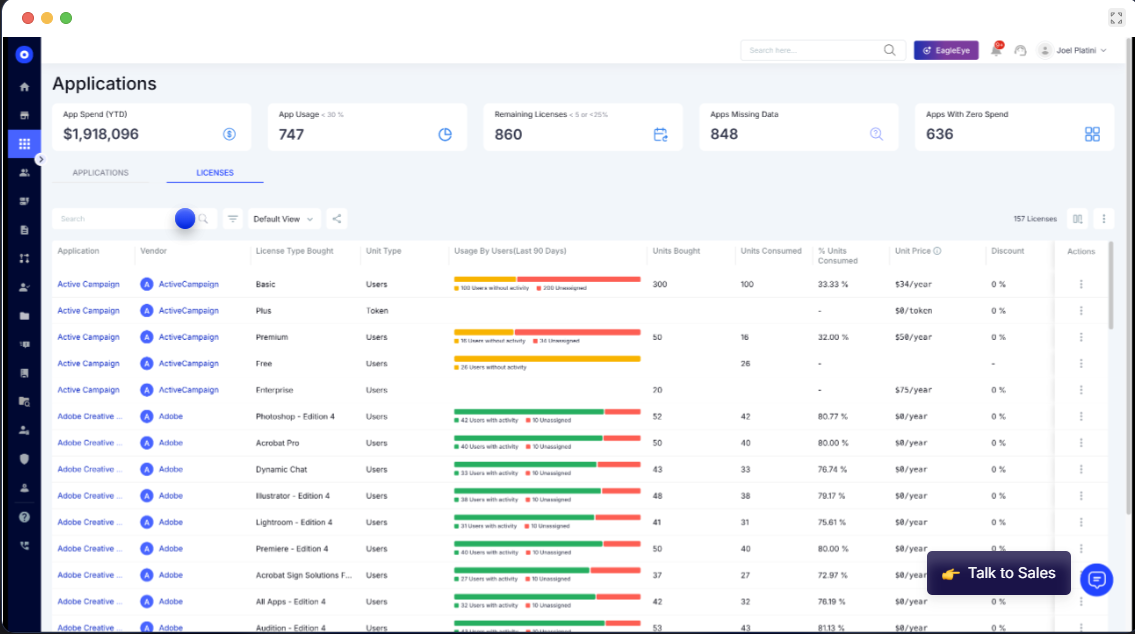
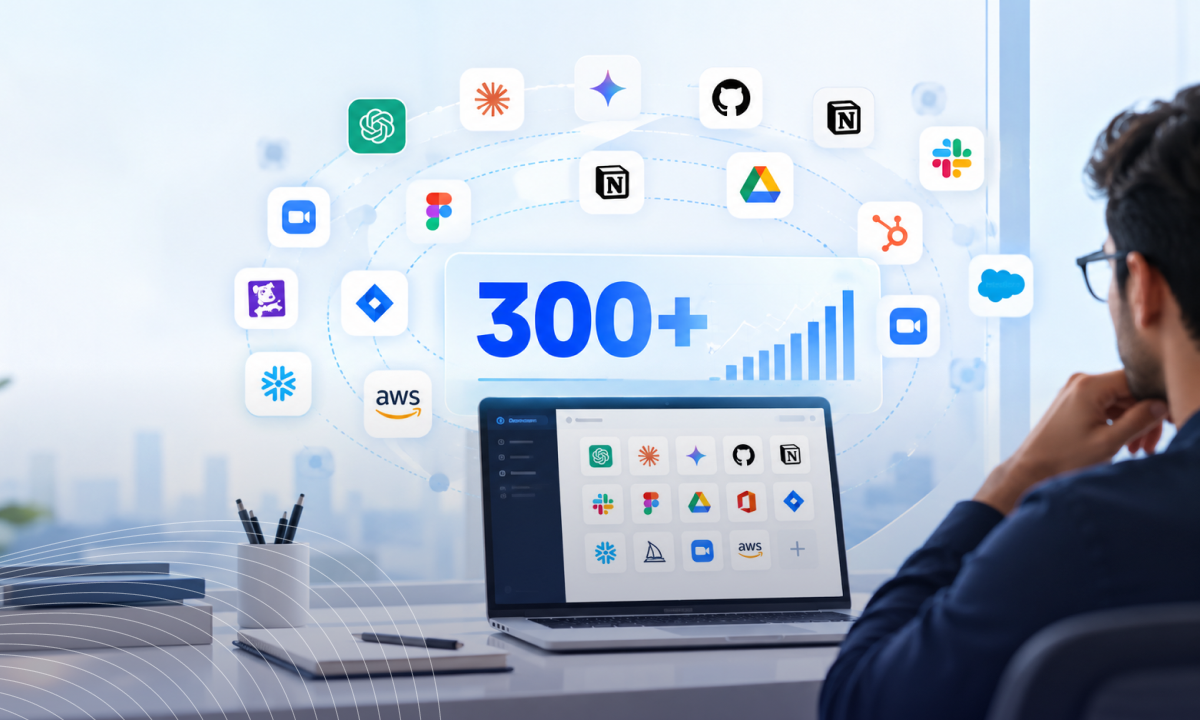
On discovery, its SaaSMap catalogue correlates SSO, browser, Zscaler, CrowdStrike, and finance signals surface every shadow AI and shadow IT tool outside SSO within hours.

When someone reaches for an unapproved tool, AI Policy Enforcement drops a browser flash page redirecting them before any data is entered, a soft redirect by default, because their FAQ notes hard blocks create workarounds within 48 hours.

The proof: Domo found 34% of its AI licenses idle for 90 days and saved $1.2M in a quarter.

"For the first time, we could see exactly which teams were using Claude, Cursor, and had Gemini access they had never touched." — Daren Thayne, CTO & EVP of Product, Domo

The honest catch: it's not a deep-packet network tool. If you need to decrypt and scan all egress at the packet level, that's Zscaler's job. CloudEagle's lane is visibility, cost, discovery, and prompt-layer redirection.

Choose it if: you want one system for AI usage, spending, shadow AI, and enforcement, plus non-human identity governance for every key, bot, and agent. Book a demo or start a free trial.

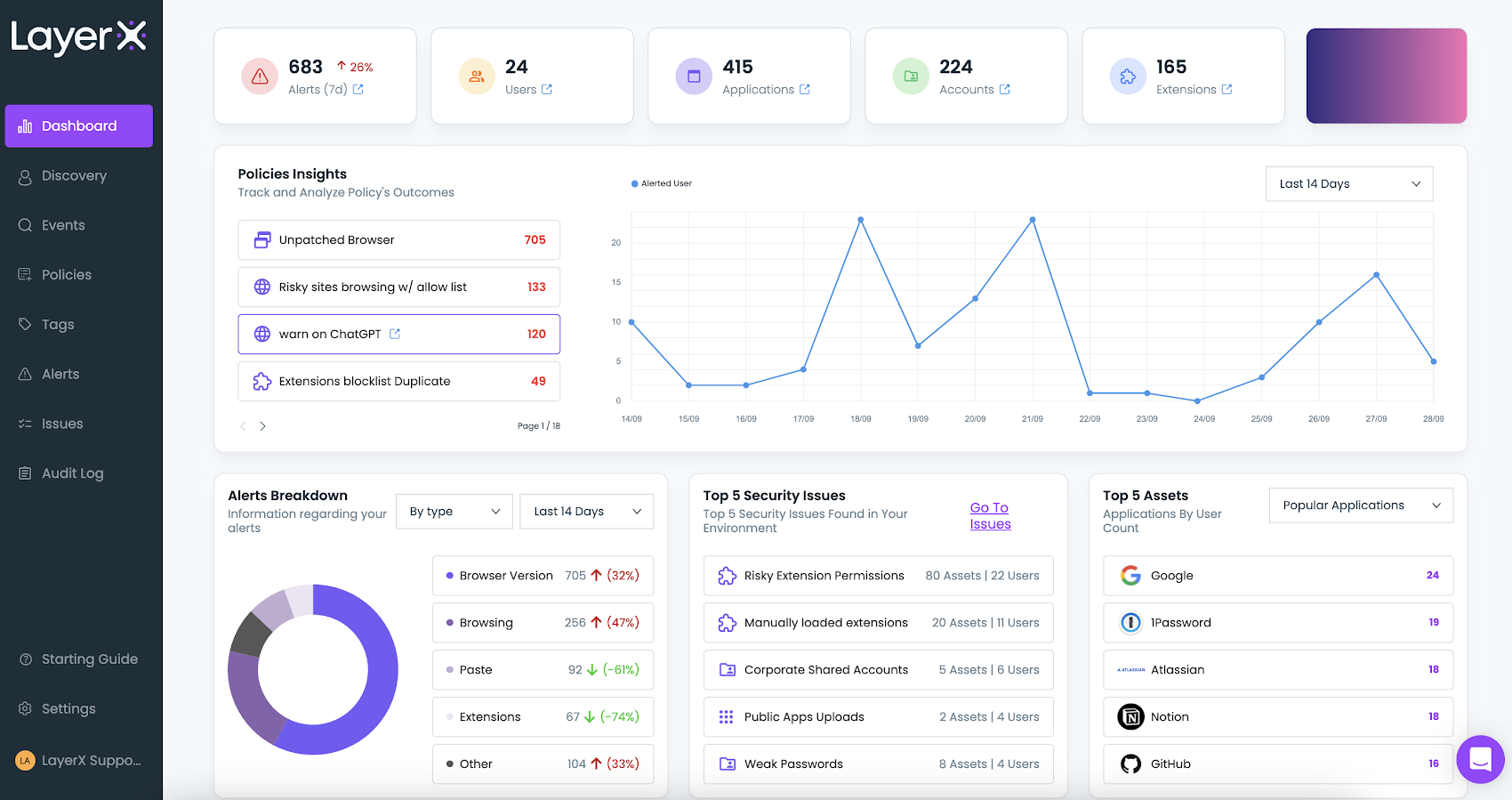
B. LayerX

The differentiator: an agentless browser extension that enforces on personal accounts too, last-mile control without an endpoint agent or a new browser.

LayerX (now part of Akamai) watches every browser event so it can tell a harmless query from a risky paste. It's the highest-rated tool here, 4.9/5 on G2, with 23 reviews, and a Gartner reviewer singles it out as among the best at blocking copy-paste into GenAI.

Its edge: policy travels with the user, not the login, which matters when 82% of sensitive pastes come from personal accounts.

The honest catch: it's a data-protection play, not a cost tool; it won't reconcile your token bill, and reviewers ask for UI polish.

Choose it if: your main risk is browser data leakage and you want enforcement without an agent.

C. Airia
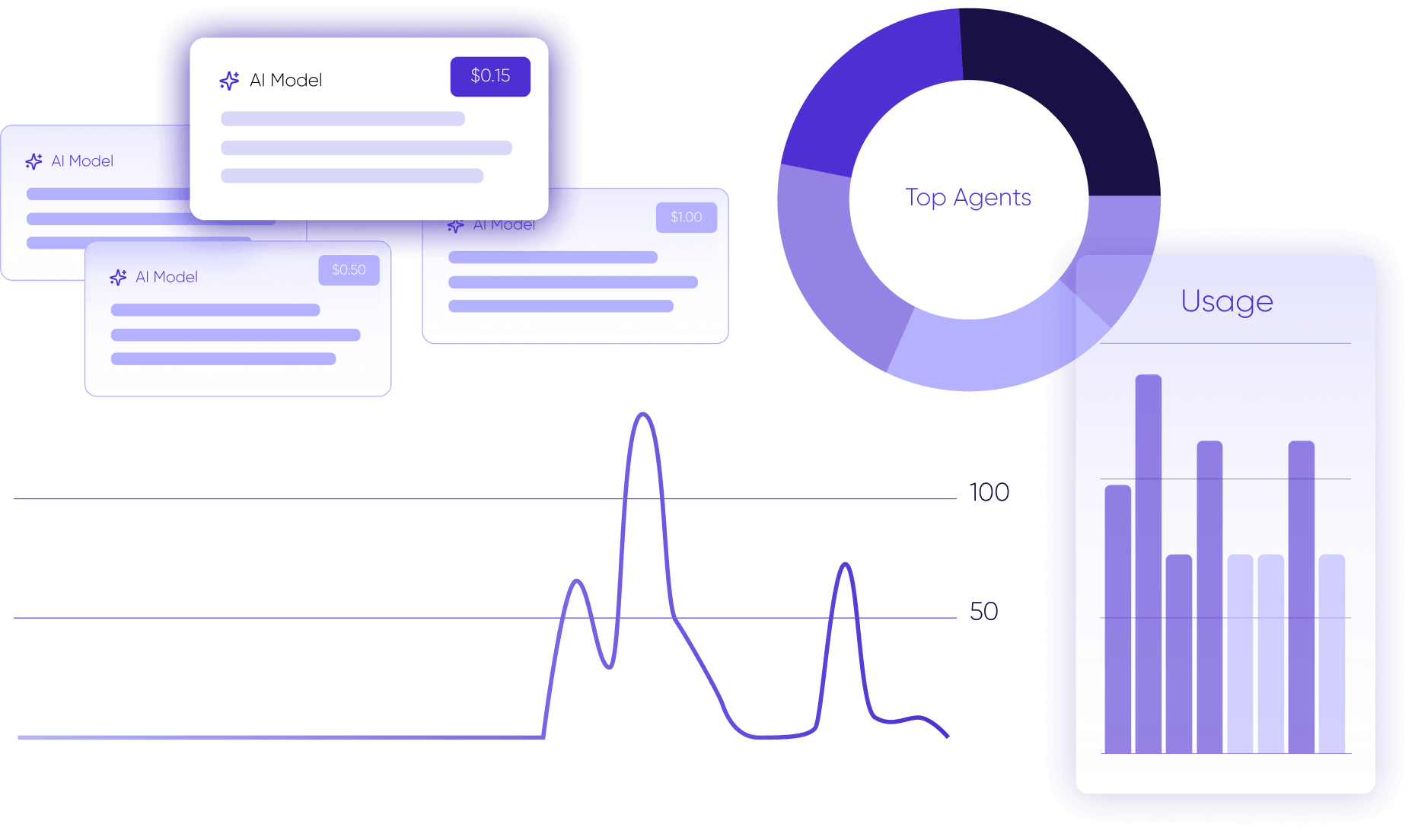
The differentiator: it doesn't just watch AI usage; it governs the agents you build too.

Security, governance, and agent orchestration sit in one platform instead of three.

Airia connects to identity, network, SaaS, and browser signals to separate approved from unapproved AI, then maps each agent to its owners, permissions, and data exposure.

Governance is its newest pillar (launched January 2026), sitting alongside its established AI security and agent-building layers, with reporting aligned to the EU AI Act, NIST AI RMF, and ISO 42001, the frameworks a regulated CIO gets asked about.

The honest catch: it's a broad platform from a young vendor (founded 2024) with a thin public-review footprint. If all you want is usage visibility, the agent-building and orchestration surface is more than you'll use and worth pricing accordingly.

Choose it if: you're both governing shadow AI and building your own agents, and want one governed control layer rather than a discovery tool plus a separate build platform.

D. Singulr AI
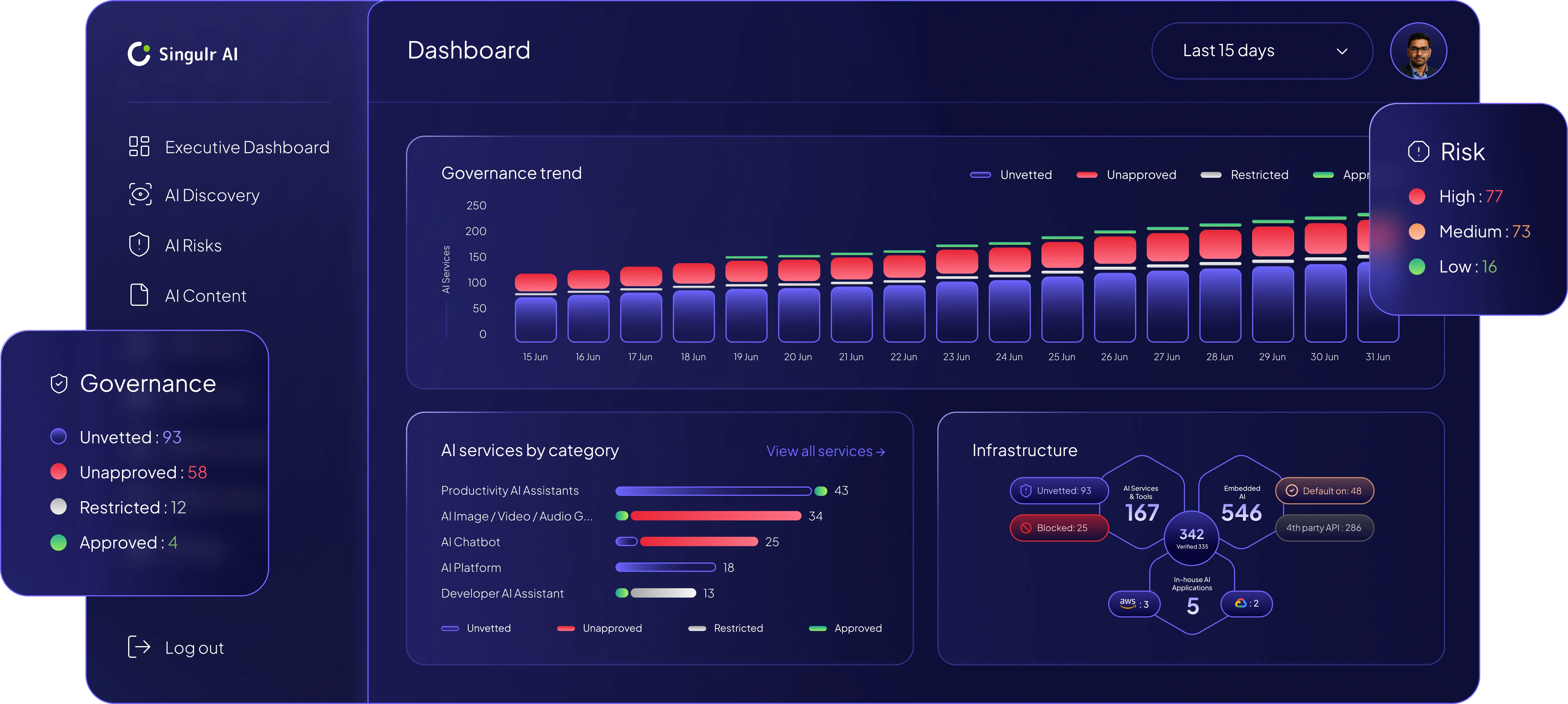
The differentiator: a risk-intelligence database that scores an AI service before you onboard it, and it deploys with no agents, plugins, or proxies.

Singulr built its platform around Pulse/Trust Feed, a continuously updated catalog that profiles and risk-scores millions of models, agents, and services, so vetting a new tool becomes a lookup rather than a project.

It discovers sanctioned and shadow AI across homegrown LLM apps, public services, and embedded SaaS AI (the Notion and Slack features quietly defaulting to "on") and connects to existing enterprise data sources rather than installing anything on endpoints. It's SOC 2 and ISO 27001 certified, and its stated philosophy is "enable, don't block".

The honest catch: its centre of gravity is discovery, risk-scoring, and vetting, not prompt-layer DLP or token-level cost attribution. It's also newer (launched in 2025) with limited public reviews, so budget an evaluation.

Choose it if: your first problem is safely onboarding the flood of AI tools employees want, and you need agentless discovery plus defensible vendor risk scoring.

E. Lasso Security
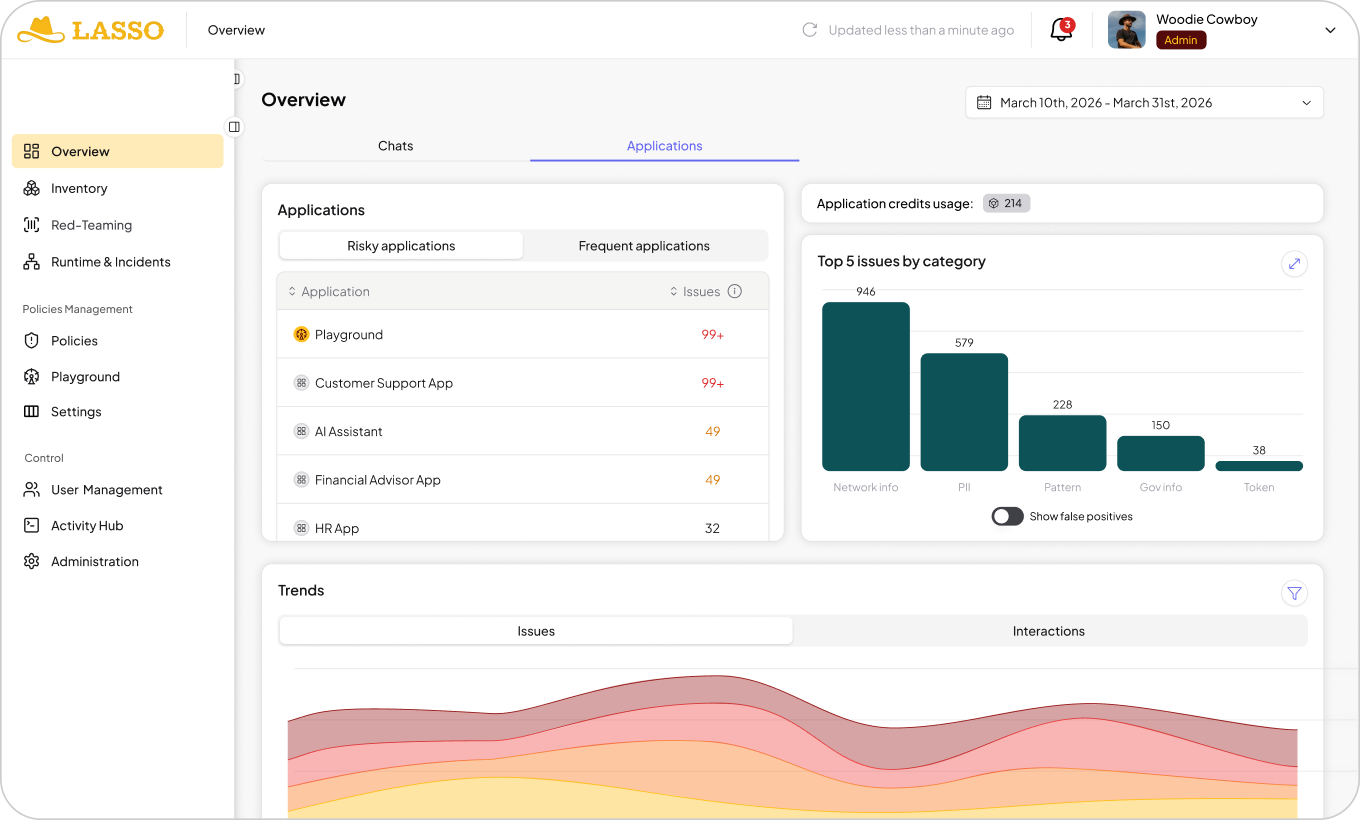
The differentiator: it secures the whole GenAI data flow, prompts and responses against LLM-specific threats like prompt injection and jailbreaks, with classification fast enough (sub-50 ms) to sit inline.

Lasso sits between employees and GenAI tools, inspecting traffic in real time to block prompt injection, jailbreak attempts, sensitive data exposure, and policy violations, while its always-on "ShadowLLM" discovery surfaces which tools and models are actually in use.

It deploys via Gateway, API, or SDK with one-line integration across cloud and on-prem and was named a Gartner Cool Vendor for AI Security in 2024.

The honest catch: it's an LLM-security play, not a cost or license tool; it protects the interaction; it won't hand Finance a token bill. Pricing is quote-based enterprise procurement.

Choose it if: you're deploying your own LLM apps or want deep threat protection on employee chatbot use, and prompt injection and data-exposure risk outrank spend tracking.

F. Nightfall AI
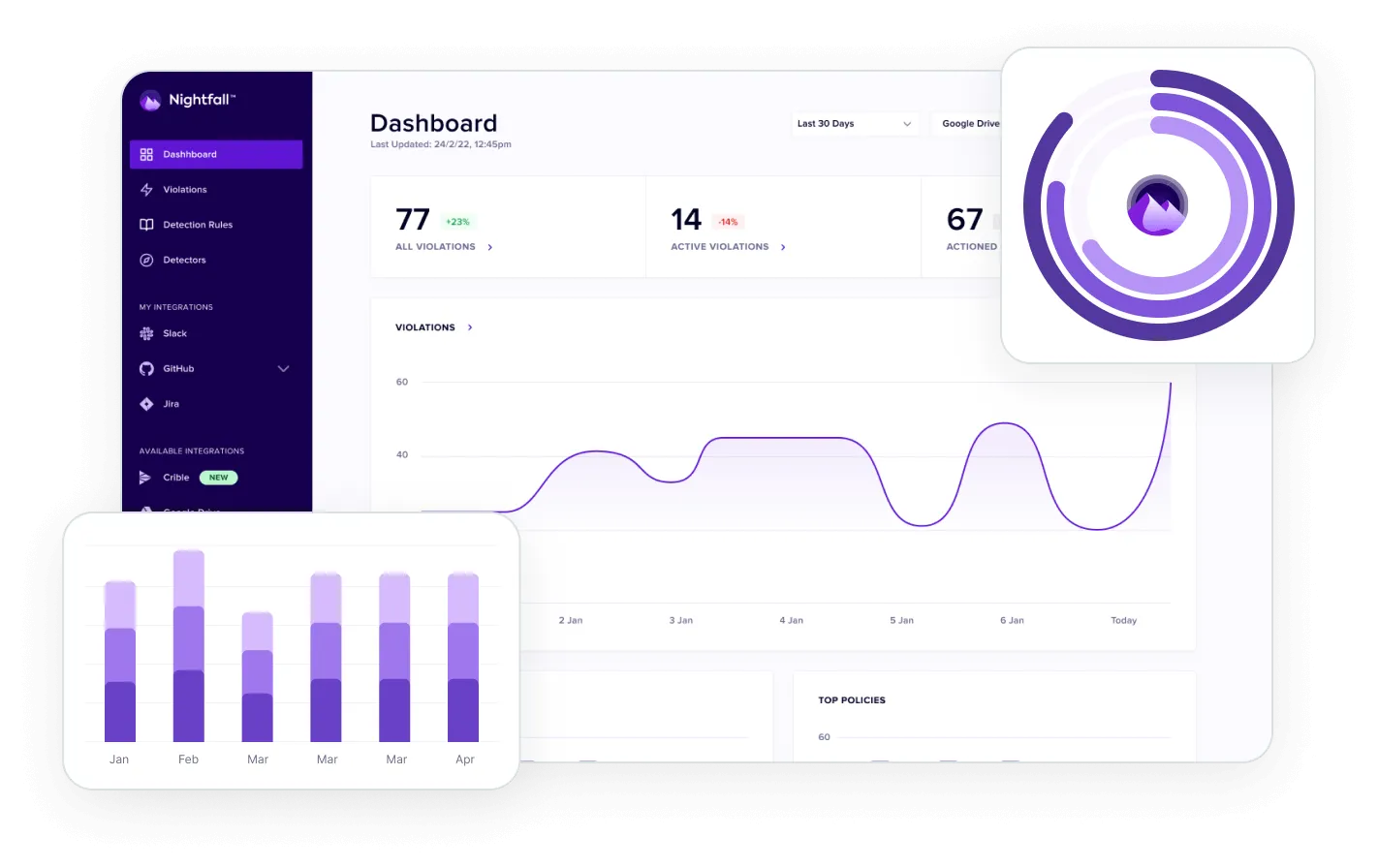
The differentiator: an AI-native DLP engine designed for the reality that agents now move data on their own, it treats a Claude Code action like a human paste.

Nightfall (4.6/5 on G2, 98 reviews, the deepest base of any AI-native tool here) catches sensitive data the moment it's pasted into ChatGPT, Copilot, Claude, Gemini, or Perplexity. Reviews are consistent on two hard-to-fake points: a genuinely low false-positive rate and light integrations across Slack, Drive, GitHub, and Gmail.

The honest catch: DLP-first, great at catching data flows, not built to hand finance a token bill.

Choose it if: your biggest worry is paste-and-upload leakage across chatbots and agents.

G. WitnessAI
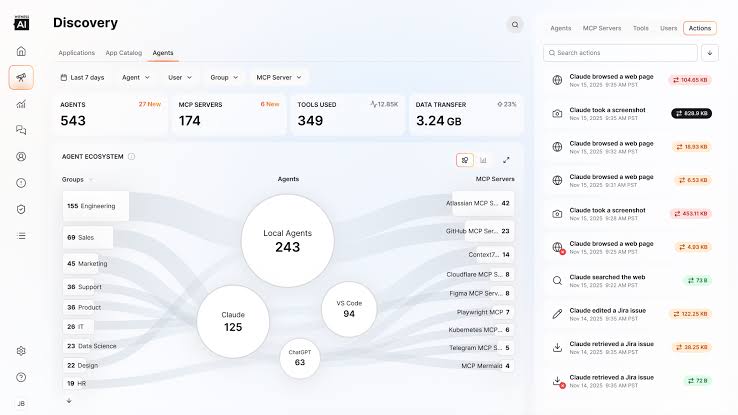
The differentiator: it's built around the audit trail first, logging and policy designed to produce evidence a regulator will accept, not just alerts.

Per its Gartner listing, WitnessAI leans into activity logging, audit trails, and compliance policy. If your sharpest risk is an audit rather than a leaked file, the usage history is already documented.

The honest catch: a focused governance layer with a thin public-review footprint; it lives alongside your other tooling, not in place of it.

Choose it if: you're regulated and your #1 driver is a defensible audit trail.

H. Reco
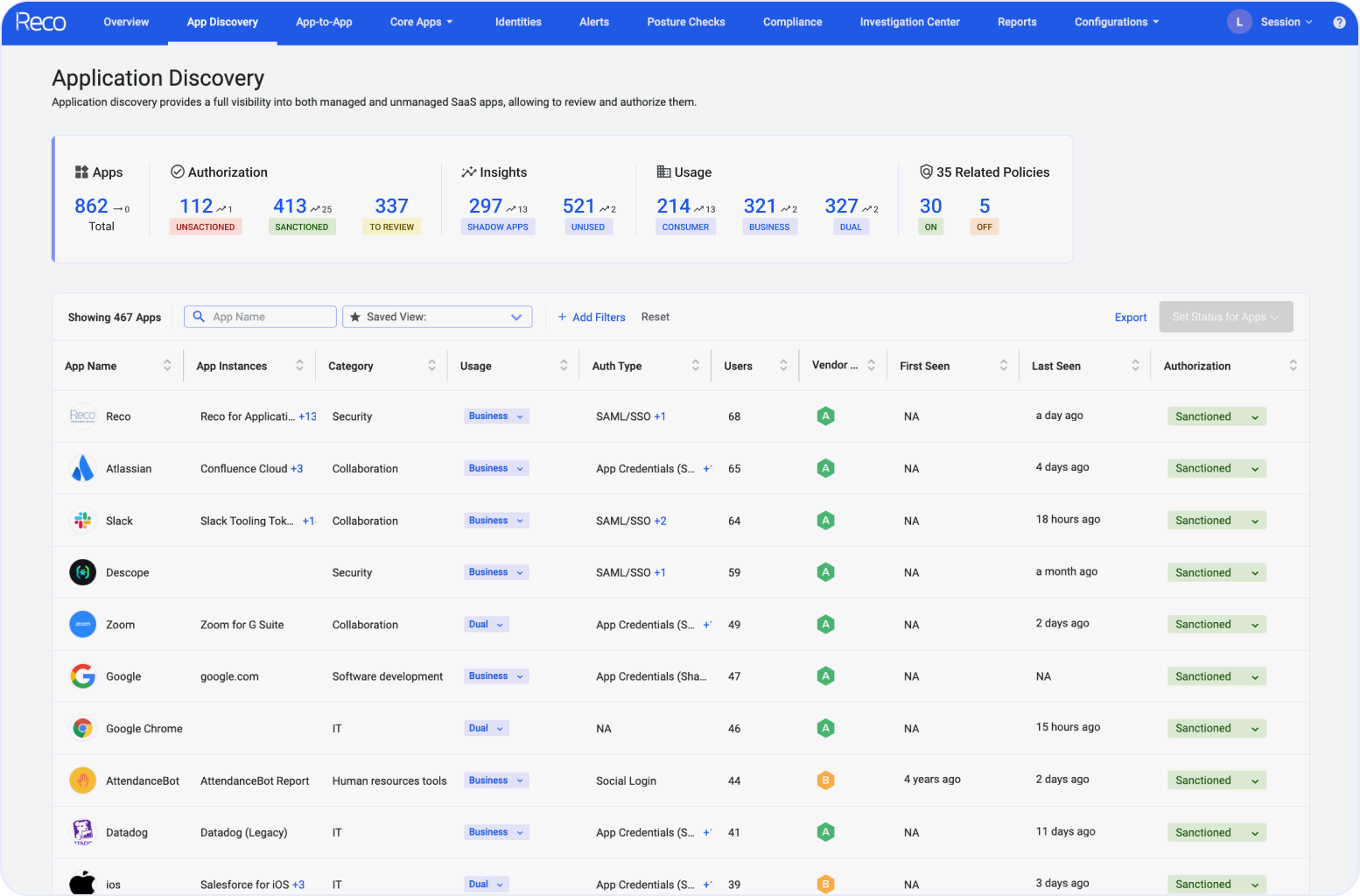
The differentiator: it anchors AI activity to identity behavior across your SaaS estate, flagging when a user's AI actions deviate from their pattern, agentlessly.

Reco maps user and LLM activity to catch anomalies rather than scanning browser content, via API integrations with no agent per device.

The honest catch: behaviour monitoring, not prompt-layer enforcement or cost tracking, it spots the abnormal but won't stop a paste. (CloudEagle publishes a head-to-head.)

Choose it if: you want identity-linked AI anomaly monitoring on existing SaaS security without agents.

I. Island

The differentiator: it doesn't add controls to a browser, it is the browser.

AI access, page context, and approved-source connections live natively, not in a bolted-on extension.

Island (4.6/5 on G2, 18 reviews) lets employees use ChatGPT, Copilot, Gemini, or Claude from a sidebar while admins set access by identity, role, and location.

The honest catch: the biggest commitment here. A managed browser is a real rollout, and G2 reviewers flag slow loading and feature issues as top dislikes. LayerX built its pitch on not making you switch browsers.

Choose it if: you're ready to standardize on a managed browser as your primary work surface.

10. dope.security
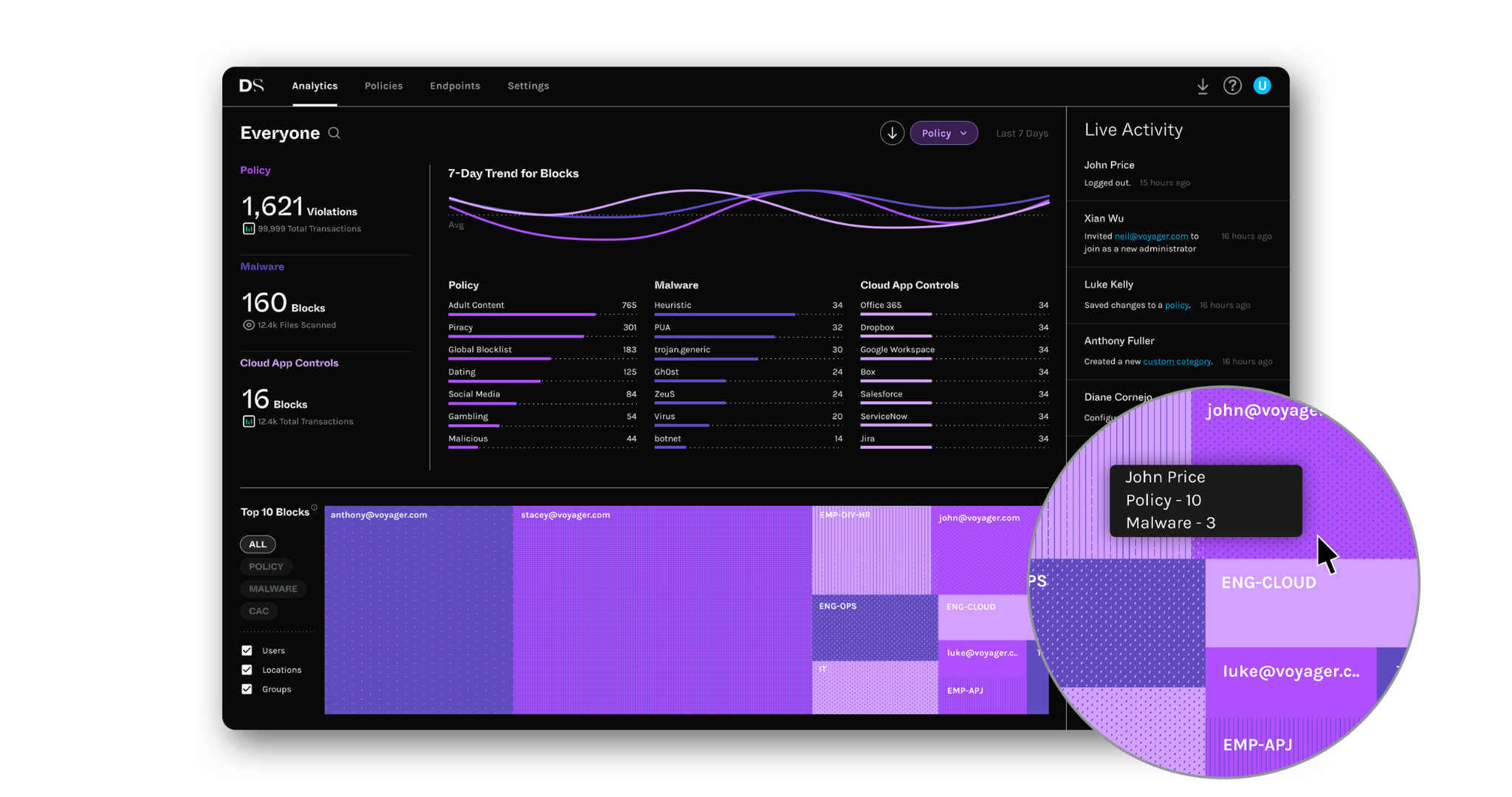
The differentiator: it ships an opinionated 4-week rollout method, not just a console, the guidance on how to phase governance is the product as much as the tech.

dope.security runs weekly: discover, sort into allowed/warn/blocked, monitor in week three, enforce in week four. Its own writeup names the two ways these programs fail, blocking everything on day one, and buying discovery you never enforce.

The honest catch: security-gateway product with a thin review footprint, cost attribution and lifecycle governance sit outside its scope.

Choose it if: you want a phased rollout over a big-bang deployment.

Shadow AI Apps Multiply Quietly

Until they become a problem.
Find Them

4. Conclusion

We promised a take, not an "it depends," so here it is.

For most CIOs, start with CloudEagle.ai. It's the only tool here that answers all three board questions:

1. what are we running,
2. what's it costing,
3. is it safe
, from one platform,

and the only one that ties token spend to a team so finance and security team stop arguing from different numbers.

But it's not the answer for everyone:

  • Onboarding lots of new AI tools? Singulr

  • Building your own agents? Airia

  • Only need browser data protection? LayerX is sharper and cheaper than a full platform, and agentless.

  • Already on Zscaler? Turn on its AI controls first; add a prompt-layer tool only if you hit the network-layer ceiling.

  • Audit-driven and regulated? WitnessAI's evidence trail is built for it.

Whatever you pick, roll out in phases, discover, sort, monitor, enforce. Blocking everything on day one is the one move that reliably backfires.

And the stakes are real: 1 in 5 organizations has already had a breach tied to shadow AI, adding ~$670,000 to the average breach cost. Pick a tool this quarter, not after the incident.

5. FAQs

1. What's the difference between AI usage control and AI governance?

AI governance is the broader discipline, policies, risk scoring, and accountability. AI usage control is the enforcement and visibility layer that makes governance real: discovering tools, attributing cost, and blocking sensitive data from unapproved apps.

2. Can't I just block AI tools at the firewall?

Generally no. Firewall blocks miss personal devices, mobile, and VPN tunnels and create workarounds within 48 hours. A soft redirect to an approved alternative holds up better; it channels usage instead of hiding it.

3. How do these tools track token spend, not just licenses?

The better ones connect to each AI vendor, pull token and credit usage with its cost, and tie it to the user, team, and model. CloudEagle does this via direct API for Claude, ChatGPT, Cursor, Copilot, and Gemini; no browser plugin required.

4. Do these tools catch AI used through personal accounts?

The strong ones do. Because roughly a third of AI usage runs through personal accounts outside SSO, browser- and endpoint-native discovery is essential.

Advertisement for a SaaS Subscription Tracking Template with a call-to-action button to download and a partial graphic of a tablet showing charts.Banner promoting a SaaS Agreement Checklist to streamline SaaS management and avoid budget waste with a call-to-action button labeled Download checklist.Blue banner with text 'The Ultimate Employee Offboarding Checklist!' and a black button labeled 'Download checklist' alongside partial views of checklist documents from cloudeagle.ai.Digital ad for download checklist titled 'The Ultimate Checklist for IT Leaders to Optimize SaaS Operations' by cloudeagle.ai, showing checklist pages.Slack Buyer's Guide offer with text 'Unlock insider insights to get the best deal on Slack!' and a button labeled 'Get Your Copy', accompanied by a preview of the guide featuring Slack's logo.Monday Pricing Guide by cloudeagle.ai offering exclusive pricing secrets to maximize investment with a call-to-action button labeled Get Your Copy and an image of the guide's cover.Blue banner for Canva Pricing Guide by cloudeagle.ai offering a guide to Canva costs, features, and alternatives with a call-to-action button saying Get Your Copy.Blue banner with white text reading 'Little-Known Negotiation Hacks to Get the Best Deal on Slack' and a white button labeled 'Get Your Copy'.Blue banner with text 'Little-Known Negotiation Hacks to Get the Best Deal on Monday.com' and a white button labeled 'Get Your Copy'.Blue banner with text 'Little-Known Negotiation Hacks to Get the Best Deal on Canva' and a white button labeled 'Get Your Copy'.Banner with text 'Slack Buyer's Guide' and a 'Download Now' button next to images of a guide titled 'Slack Buyer’s Guide: Features, Pricing & Best Practices'.Digital cover of Monday Pricing Guide with a button labeled Get Your Copy on a blue background.Canva Pricing Guide cover with a button labeled Get Your Copy on a blue gradient background.

Enter your email to
unlock the report

Oops! Something went wrong while submitting the form.
License Count
Benchmark
Per User/Per Year

Enter your email to
unlock the report

Oops! Something went wrong while submitting the form.
License Count
Benchmark
Per User/Per Year

Enter your email to
unlock the report

Oops! Something went wrong while submitting the form.
Notion Plus
License Count
Benchmark
Per User/Per Year
100-500
$67.20 - $78.72
500-1000
$59.52 - $72.00
1000+
$51.84 - $57.60
Canva Pro
License Count
Benchmark
Per User/Per Year
100-500
$74.33-$88.71
500-1000
$64.74-$80.32
1000+
$55.14-$62.34

Enter your email to
unlock the report

Oops! Something went wrong while submitting the form.

Enter your email to
unlock the report

Oops! Something went wrong while submitting the form.
Zoom Business
License Count
Benchmark
Per User/Per Year
100-500
$216.00 - $264.00
500-1000
$180.00 - $216.00
1000+
$156.00 - $180.00

Enter your email to
unlock the report

Oops! Something went wrong while submitting the form.

Get the Right Security Platform To Secure Your Cloud Infrastructure

Please enter a business email
Thank you!
The 2023 SaaS report has been sent to your email. Check your promotional or spam folder.
Oops! Something went wrong while submitting the form.

Access full report

Please enter a business email
Thank you!
The 2023 SaaS report has been sent to your email. Check your promotional or spam folder.
Oops! Something went wrong while submitting the form.

39.7% of all AI interactions now involve sensitive data. The average employee pastes proprietary information into an AI tool once every three days. And most of it is invisible to you, because one in three employees uses AI through personal accounts that never cross your SSO or firewall.

It isn't a handful of apps, either: the typical company runs 67 GenAI tools, 90% of them unapproved.

Banning doesn't fix it, it pushes usage onto phones you can't see. The job is to control it: see every tool, tie every token to an owner, and keep sensitive data out of apps you haven't vetted.

Here are the ten worth your shortlist:

TL;DR 

  • AI usage control tools discover shadow AI, attribute token spend, and enforce policies to keep sensitive data out of unapproved applications.
  • The best platforms combine AI discovery, cost visibility, prompt-layer enforcement, and low-friction deployment for enterprise governance.
  • Solutions like LayerX, Lasso Security, Singulr AI, and WitnessAI each specialize in browser security, LLM protection, risk intelligence, or compliance.
  • CloudEagle.ai stands out by unifying token-level cost attribution, shadow AI discovery, policy enforcement, and AI governance in a single platform.
  • CloudEagle.ai helps finance and security teams manage AI usage from one source of truth, combining visibility, spend optimization, and governance.

1. What Is An AI Usage Control Tool?

An AI usage control tool discovers every AI application in use across your organization, attributes usage and cost to the teams behind it, and enforces policy on what data can enter which tools.

Think of it as the control plane for your AI stack, the layer between "employees are using AI somewhere" and "we know what's running, what it costs, and whether it's safe."

It sits where three older categories overlap: shadow AI discovery, AI governance,  and DLP because no single legacy tool covers the whole problem. 

  • Your LLM gateway sees API traffic but misses the browser.
  • Your CASB works at the network layer and can't read a prompt.
  • Your DLP was built for files, not a chat window.

The category is now established enough that Gartner tracks it as its own market.

It’s The AI You Can't See

Start discovering it.
See How

2. How We Compared These Tools

Full transparency: this is a CloudEagle blog, and CloudEagle sits at number one. For a reason we covered below.

We picked data from review sites like G2 and Gartner reviews, help centres and docs, and independent reporting and then scored each on five things:

  • Usage & cost visibility — can it tell you tokens, credits, and spend by user, team, and model? (Most can't.)
  • Shadow AI discovery — does it find tools outside SSO, including personal accounts and free tiers?
  • Prompt-layer enforcement — can it stop sensitive data before it lands in an unapproved tool?
  • Deployment friction — agent, extension, managed browser, or agentless?
  • Best-fit buyer — because the honest answer isn't the same for everyone.

Nearly every tool does discovery, policy, and reporting, so we've written only about what separates them. Where public reviews are thin, we say so.

3. Top 10 Best AI Usage Control Tools in 2026

Here's our list of top 10 best AI usage control tools in 2026:

A. CloudEagle.ai

The differentiator: it's the only tool here that ties token-level spend to a person and team in the same place; it does shadow AI discovery and enforcement, so Finance and Security work off one number.

Most tools do one job. CloudEagle.ai puts discovery, usage control, cost attribution, and enforcement in one platform and holds a 4.7/5 across 101 G2 reviews, where the recurring praise isn't a feature; it's that it collapses spreadsheet-and-console chaos into one view teams trust for renewals and cost calls.

AI tools like Claude, Gemini, and Cursor bill by token, not by seat, so the bill lands as one number nobody can decompose. AI Usage Control breaks it open by model (Opus vs Sonnet, GPT-5 vs. GPT-4o), tied to the user, team, and API key.

A detail from their docs, not the hero page: token tracking runs via direct API, no browser plugin is required with the extension as a separate, optional deploy for discovery and enforcement.

On discovery, its SaaSMap catalogue correlates SSO, browser, Zscaler, CrowdStrike, and finance signals surface every shadow AI and shadow IT tool outside SSO within hours.

When someone reaches for an unapproved tool, AI Policy Enforcement drops a browser flash page redirecting them before any data is entered, a soft redirect by default, because their FAQ notes hard blocks create workarounds within 48 hours.

The proof: Domo found 34% of its AI licenses idle for 90 days and saved $1.2M in a quarter.

"For the first time, we could see exactly which teams were using Claude, Cursor, and had Gemini access they had never touched." — Daren Thayne, CTO & EVP of Product, Domo

The honest catch: it's not a deep-packet network tool. If you need to decrypt and scan all egress at the packet level, that's Zscaler's job. CloudEagle's lane is visibility, cost, discovery, and prompt-layer redirection.

Choose it if: you want one system for AI usage, spending, shadow AI, and enforcement, plus non-human identity governance for every key, bot, and agent. Book a demo or start a free trial.

B. LayerX

The differentiator: an agentless browser extension that enforces on personal accounts too, last-mile control without an endpoint agent or a new browser.

LayerX (now part of Akamai) watches every browser event so it can tell a harmless query from a risky paste. It's the highest-rated tool here, 4.9/5 on G2, with 23 reviews, and a Gartner reviewer singles it out as among the best at blocking copy-paste into GenAI.

Its edge: policy travels with the user, not the login, which matters when 82% of sensitive pastes come from personal accounts.

The honest catch: it's a data-protection play, not a cost tool; it won't reconcile your token bill, and reviewers ask for UI polish.

Choose it if: your main risk is browser data leakage and you want enforcement without an agent.

C. Airia

The differentiator: it doesn't just watch AI usage; it governs the agents you build too.

Security, governance, and agent orchestration sit in one platform instead of three.

Airia connects to identity, network, SaaS, and browser signals to separate approved from unapproved AI, then maps each agent to its owners, permissions, and data exposure.

Governance is its newest pillar (launched January 2026), sitting alongside its established AI security and agent-building layers, with reporting aligned to the EU AI Act, NIST AI RMF, and ISO 42001, the frameworks a regulated CIO gets asked about.

The honest catch: it's a broad platform from a young vendor (founded 2024) with a thin public-review footprint. If all you want is usage visibility, the agent-building and orchestration surface is more than you'll use and worth pricing accordingly.

Choose it if: you're both governing shadow AI and building your own agents, and want one governed control layer rather than a discovery tool plus a separate build platform.

D. Singulr AI

The differentiator: a risk-intelligence database that scores an AI service before you onboard it, and it deploys with no agents, plugins, or proxies.

Singulr built its platform around Pulse/Trust Feed, a continuously updated catalog that profiles and risk-scores millions of models, agents, and services, so vetting a new tool becomes a lookup rather than a project.

It discovers sanctioned and shadow AI across homegrown LLM apps, public services, and embedded SaaS AI (the Notion and Slack features quietly defaulting to "on") and connects to existing enterprise data sources rather than installing anything on endpoints. It's SOC 2 and ISO 27001 certified, and its stated philosophy is "enable, don't block".

The honest catch: its centre of gravity is discovery, risk-scoring, and vetting, not prompt-layer DLP or token-level cost attribution. It's also newer (launched in 2025) with limited public reviews, so budget an evaluation.

Choose it if: your first problem is safely onboarding the flood of AI tools employees want, and you need agentless discovery plus defensible vendor risk scoring.

E. Lasso Security

The differentiator: it secures the whole GenAI data flow, prompts and responses against LLM-specific threats like prompt injection and jailbreaks, with classification fast enough (sub-50 ms) to sit inline.

Lasso sits between employees and GenAI tools, inspecting traffic in real time to block prompt injection, jailbreak attempts, sensitive data exposure, and policy violations, while its always-on "ShadowLLM" discovery surfaces which tools and models are actually in use.

It deploys via Gateway, API, or SDK with one-line integration across cloud and on-prem and was named a Gartner Cool Vendor for AI Security in 2024.

The honest catch: it's an LLM-security play, not a cost or license tool; it protects the interaction; it won't hand Finance a token bill. Pricing is quote-based enterprise procurement.

Choose it if: you're deploying your own LLM apps or want deep threat protection on employee chatbot use, and prompt injection and data-exposure risk outrank spend tracking.

F. Nightfall AI

The differentiator: an AI-native DLP engine designed for the reality that agents now move data on their own, it treats a Claude Code action like a human paste.

Nightfall (4.6/5 on G2, 98 reviews, the deepest base of any AI-native tool here) catches sensitive data the moment it's pasted into ChatGPT, Copilot, Claude, Gemini, or Perplexity. Reviews are consistent on two hard-to-fake points: a genuinely low false-positive rate and light integrations across Slack, Drive, GitHub, and Gmail.

The honest catch: DLP-first, great at catching data flows, not built to hand finance a token bill.

Choose it if: your biggest worry is paste-and-upload leakage across chatbots and agents.

G. WitnessAI

The differentiator: it's built around the audit trail first, logging and policy designed to produce evidence a regulator will accept, not just alerts.

Per its Gartner listing, WitnessAI leans into activity logging, audit trails, and compliance policy. If your sharpest risk is an audit rather than a leaked file, the usage history is already documented.

The honest catch: a focused governance layer with a thin public-review footprint; it lives alongside your other tooling, not in place of it.

Choose it if: you're regulated and your #1 driver is a defensible audit trail.

H. Reco

The differentiator: it anchors AI activity to identity behavior across your SaaS estate, flagging when a user's AI actions deviate from their pattern, agentlessly.

Reco maps user and LLM activity to catch anomalies rather than scanning browser content, via API integrations with no agent per device.

The honest catch: behaviour monitoring, not prompt-layer enforcement or cost tracking, it spots the abnormal but won't stop a paste. (CloudEagle publishes a head-to-head.)

Choose it if: you want identity-linked AI anomaly monitoring on existing SaaS security without agents.

I. Island

The differentiator: it doesn't add controls to a browser, it is the browser.

AI access, page context, and approved-source connections live natively, not in a bolted-on extension.

Island (4.6/5 on G2, 18 reviews) lets employees use ChatGPT, Copilot, Gemini, or Claude from a sidebar while admins set access by identity, role, and location.

The honest catch: the biggest commitment here. A managed browser is a real rollout, and G2 reviewers flag slow loading and feature issues as top dislikes. LayerX built its pitch on not making you switch browsers.

Choose it if: you're ready to standardize on a managed browser as your primary work surface.

10. dope.security

The differentiator: it ships an opinionated 4-week rollout method, not just a console, the guidance on how to phase governance is the product as much as the tech.

dope.security runs weekly: discover, sort into allowed/warn/blocked, monitor in week three, enforce in week four. Its own writeup names the two ways these programs fail, blocking everything on day one, and buying discovery you never enforce.

The honest catch: security-gateway product with a thin review footprint, cost attribution and lifecycle governance sit outside its scope.

Choose it if: you want a phased rollout over a big-bang deployment.

Shadow AI Apps Multiply Quietly

Until they become a problem.
Find Them

4. Conclusion

We promised a take, not an "it depends," so here it is.

For most CIOs, start with CloudEagle.ai. It's the only tool here that answers all three board questions:

1. what are we running,
2. what's it costing,
3. is it safe
, from one platform,

and the only one that ties token spend to a team so finance and security team stop arguing from different numbers.

But it's not the answer for everyone:

  • Onboarding lots of new AI tools? Singulr

  • Building your own agents? Airia

  • Only need browser data protection? LayerX is sharper and cheaper than a full platform, and agentless.

  • Already on Zscaler? Turn on its AI controls first; add a prompt-layer tool only if you hit the network-layer ceiling.

  • Audit-driven and regulated? WitnessAI's evidence trail is built for it.

Whatever you pick, roll out in phases, discover, sort, monitor, enforce. Blocking everything on day one is the one move that reliably backfires.

And the stakes are real: 1 in 5 organizations has already had a breach tied to shadow AI, adding ~$670,000 to the average breach cost. Pick a tool this quarter, not after the incident.

5. FAQs

1. What's the difference between AI usage control and AI governance?

AI governance is the broader discipline, policies, risk scoring, and accountability. AI usage control is the enforcement and visibility layer that makes governance real: discovering tools, attributing cost, and blocking sensitive data from unapproved apps.

2. Can't I just block AI tools at the firewall?

Generally no. Firewall blocks miss personal devices, mobile, and VPN tunnels and create workarounds within 48 hours. A soft redirect to an approved alternative holds up better; it channels usage instead of hiding it.

3. How do these tools track token spend, not just licenses?

The better ones connect to each AI vendor, pull token and credit usage with its cost, and tie it to the user, team, and model. CloudEagle does this via direct API for Claude, ChatGPT, Cursor, Copilot, and Gemini; no browser plugin required.

4. Do these tools catch AI used through personal accounts?

The strong ones do. Because roughly a third of AI usage runs through personal accounts outside SSO, browser- and endpoint-native discovery is essential.

CloudEagle.ai recognized in the 2025 Gartner® Magic Quadrant™ for SaaS Management Platforms
Download now
gartner chart
5x
Faster employee
onboarding
80%
Reduction in time for
user access reviews
30k
Workflows
automated
$15Bn
Analyzed in
contract spend
$2Bn
Saved in
SaaS spend

Streamline SaaS governance and save 10-30%

Book a Demo with Expert
CTA image