.avif)
%201.svg)


HIPAA Compliance Checklist for 2025

Nearly two-thirds of organizations spend at least three months preparing for a single audit, according to A-LIGN's 2025 Compliance Benchmark Report. That's not how audit preparation should work. When controls drift undetected, and evidence lives in scattered folders, audit prep becomes a recovery project.
Compliance monitoring software changes the model. Controls are watched continuously, evidence is pulled automatically, and gaps show up before they become findings. When the auditor arrives, documentation is ready.
This guide covers 7 of the best compliance monitoring software tools in 2026, which one fits best, and the buying criteria that matter before you commit.
TL;DR
- Nearly two-thirds of organizations spend 3+ months on audit prep. Compliance monitoring software makes audit-readiness continuous.
- CloudEagle.ai is the top pick for SaaS-heavy organizations that need AI governance, shadow IT detection, and security certifications from one platform.
- Vanta and Drata are the fastest routes to SOC 2 or ISO 27001 for cloud-native teams.
- MetricStream and AuditBoard serve large enterprises in regulated industries with complex, multi-jurisdictional GRC needs.
- Map your framework stack, integration requirements, and team size before evaluating tools. These categories are genuinely different.
1. Compliance Monitoring vs. Compliance Management: Know the Difference
Compliance monitoring software continuously tracks whether your controls, configurations, and policies meet regulatory requirements. It connects to your systems, collects evidence automatically, and alerts you when something drifts.
It is one layer of a broader compliance program. Here is how the two relate:
Most platforms on this list do both. Knowing the difference tells you which gap you are actually trying to close before you start evaluating tools.

2. 7 Best Compliance Monitoring Software Tools in 2026
Here are the 7 best compliance monitoring software you can use in 2026:
1. CloudEagle.ai
CloudEagle.ai is a SaaS governance and identity platform that extends compliance monitoring across your entire SaaS stack, covering AI governance, shadow IT, vendor risk, and security certifications from a single system.
Key Features:
a) SaaS and shadow IT compliance visibility: Most compliance monitoring tools assume you already know what is in your environment.
CloudEagle.ai discovers every SaaS app in use, including unapproved tools, and maps them against your compliance posture.
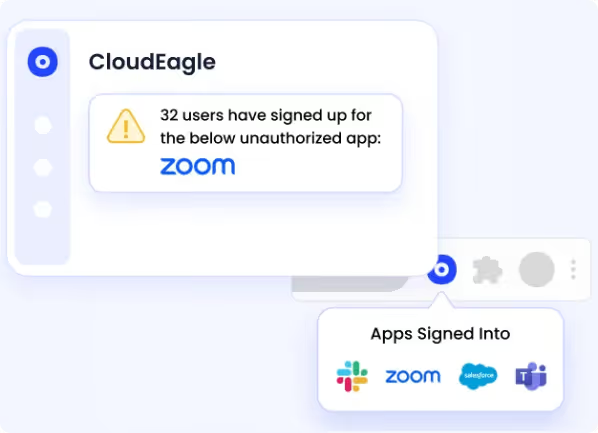
For teams where shadow IT is a live audit risk, this closes a gap that standard GRC platforms miss entirely.
b) AI governance and AI Act readiness: As AI tool adoption accelerates, compliance obligations are expanding to include AI usage tracking and EU AI Act requirements.
CloudEagle.ai monitors AI application usage across your SaaS stack, surfaces risk by tool category, and builds the audit trail regulators are beginning to require.
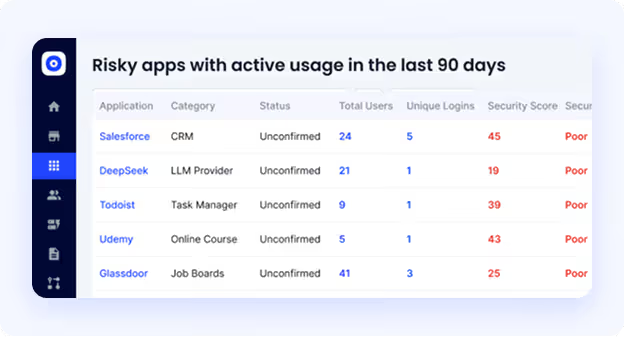
c) Vendor and third-party compliance monitoring: Vendor SLAs and third-party data handling commitments are among the hardest obligations to track manually.
CloudEagle.ai monitors vendor compliance posture continuously, flags policy violations, and surfaces contract and renewal risk before it becomes an audit finding.
d) Automated audit-ready documentation: Evidence is collected and organized automatically. No screenshots or manual compilation.

CloudEagle.ai delivers an 80% reduction in access review effort, eliminates lingering access for former employees, and keeps documentation aligned to your active frameworks at all times.
Best For: Enterprises managing SaaS governance, AI governance, and security certifications in a single compliance management system
Frameworks: SOC 2, ISO 27001, GDPR, AI Act, HIPAA
Pricing: Custom pricing, demo required
Audit Prep Shouldn't Take Three Months.


2. Vanta
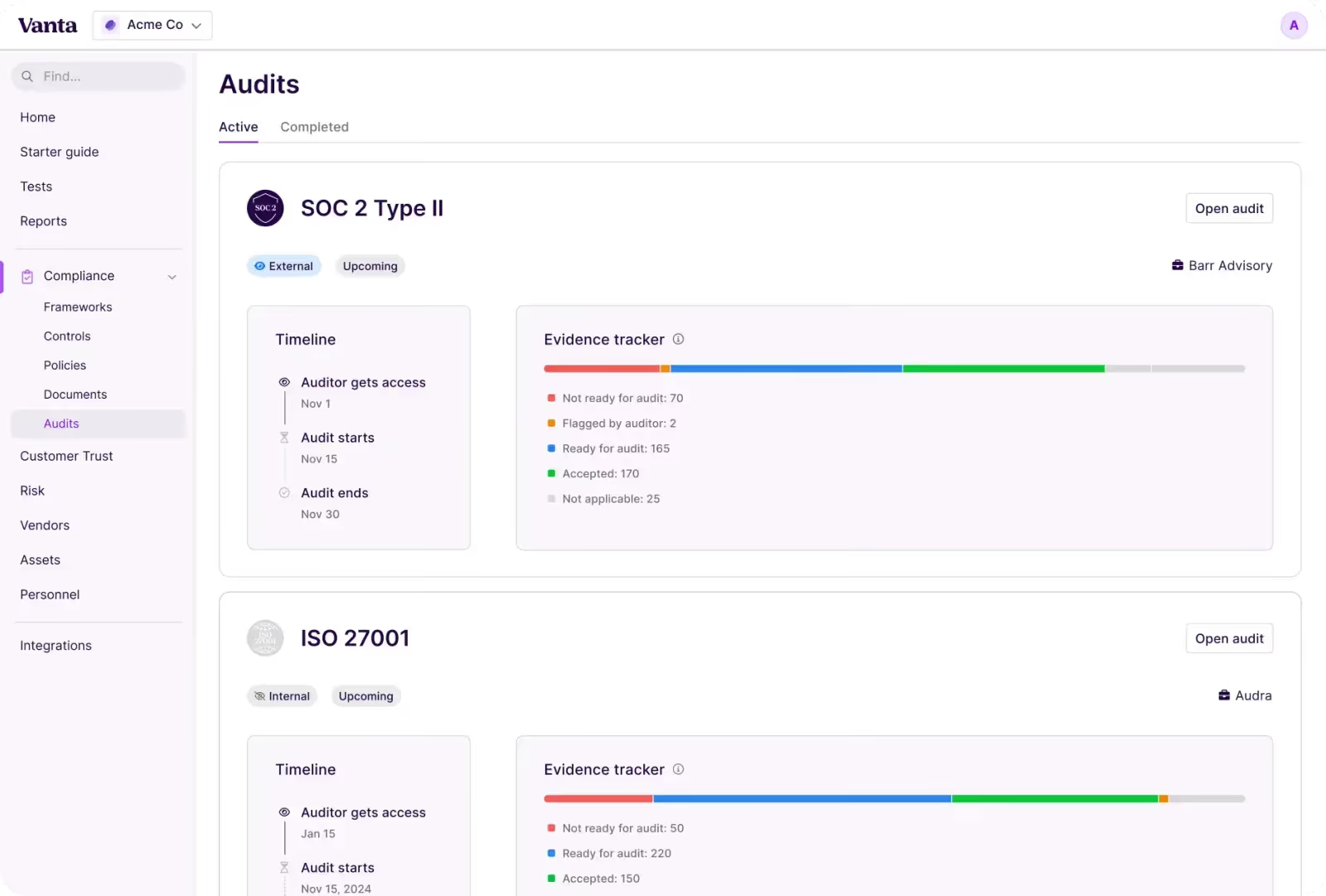
Vanta automates security compliance by connecting to your tech stack and continuously monitoring controls for SOC 2, ISO 27001, HIPAA, and PCI DSS. With 400+ integrations and pre-built policies, most companies complete their first SOC 2 audit in weeks rather than months.
Key Features
- 400+ integrations for automated evidence collection from cloud, HR, and security tools
- Continuous control monitoring with real-time alerts on drift, instead of scheduled scans
- Built-in auditor coordination portal with siloed evidence access
- Automated security questionnaire responses to accelerate customer sales cycles
Best For: Cloud-native startups and SaaS companies pursuing their first SOC 2 or ISO 27001, prioritizing speed to audit-ready
Frameworks: SOC 2, ISO 27001, HIPAA, PCI DSS, GDPR, CCPA
Pricing: Custom pricing, demo required
Limitation: Less suited for multi-jurisdictional compliance programs or organizations with significant on-premise infrastructure
Also read: Top SOC 2 Type 2 Compliance Platforms in 2026: a deeper comparison of platforms built specifically for SOC 2 readiness.
3. Drata
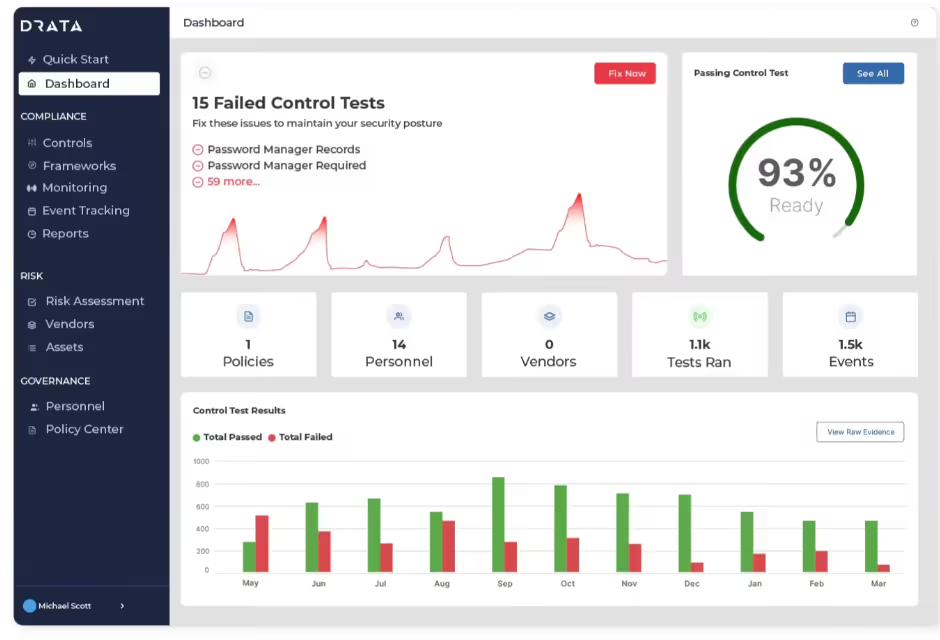
Drata provides continuous monitoring and automated evidence collection for companies managing multiple security frameworks simultaneously.
Its multi-framework dashboard is a standout feature: SOC 2, ISO 27001, HIPAA, and PCI DSS tracked from one view without separate evidence programs for each.
Key Features
- Automated evidence collection from 250+ integrations with real-time control mapping
- Multi-framework dashboard showing coverage and gaps across all certifications at once
- Customizable monitoring alerts and escalation workflows per control
- Pre-built policy templates and risk assessment tools aligned to framework controls
Best For: Growth-stage companies managing two or more compliance frameworks who need a single source of truth across certifications
Frameworks: SOC 2, ISO 27001, HIPAA, PCI DSS, GDPR
Pricing: Custom pricing, demo required
Limitation: Limited customization for non-standard control requirements or complex compliance interpretations
4. Sprinto
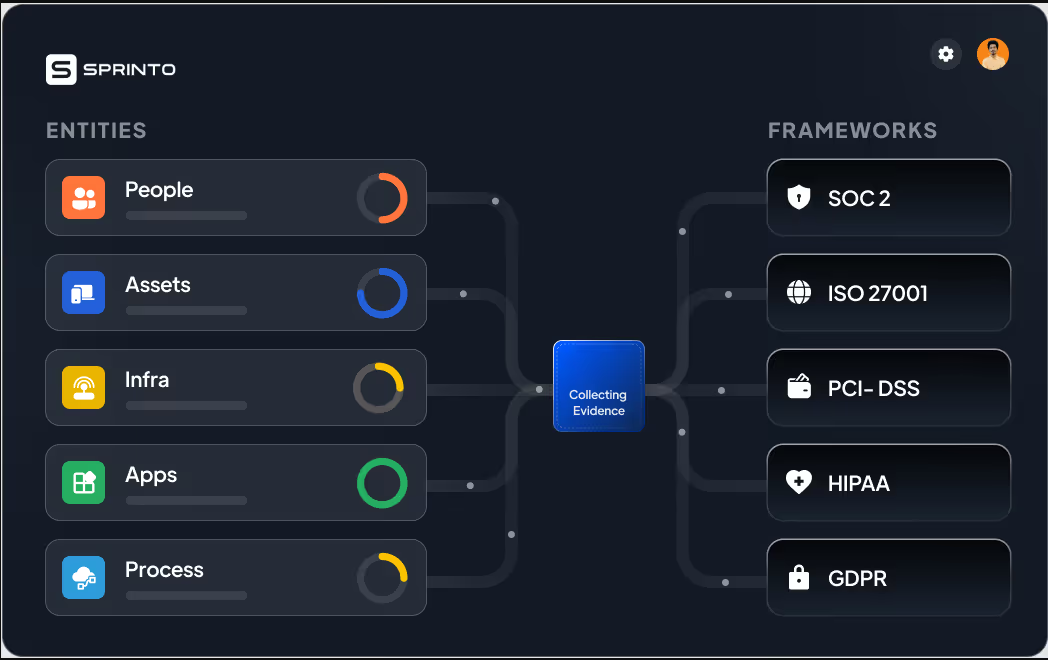
Sprinto automates the full compliance lifecycle across 40+ frameworks: evidence collection, risk assessments, and policy enforcement.
It links system configurations directly to regulatory requirements, replacing manual tracking end-to-end.
Key Features
- 200+ integrations with evidence collection triggered by system events, not manual uploads
- Real-time control monitoring with instant gap alerts across 40+ frameworks
- Built-in AI module for automated security questionnaire responses
- End-to-end policy management, including acknowledgment tracking and enforcement workflows
Best For: Cloud-native SMBs that want full compliance lifecycle automation, beyond just evidence collection
Frameworks: SOC 2, ISO 27001, GDPR, HIPAA, PCI DSS, and 35+ more
Pricing: Custom pricing, demo required
Limitation: Customization for complex or organization-specific control requirements is limited compared to enterprise GRC platforms
Also read: SaaS Compliance Best Practices for Security Teams: seven operational practices for maintaining continuous compliance across your SaaS stack.
5. AuditBoard
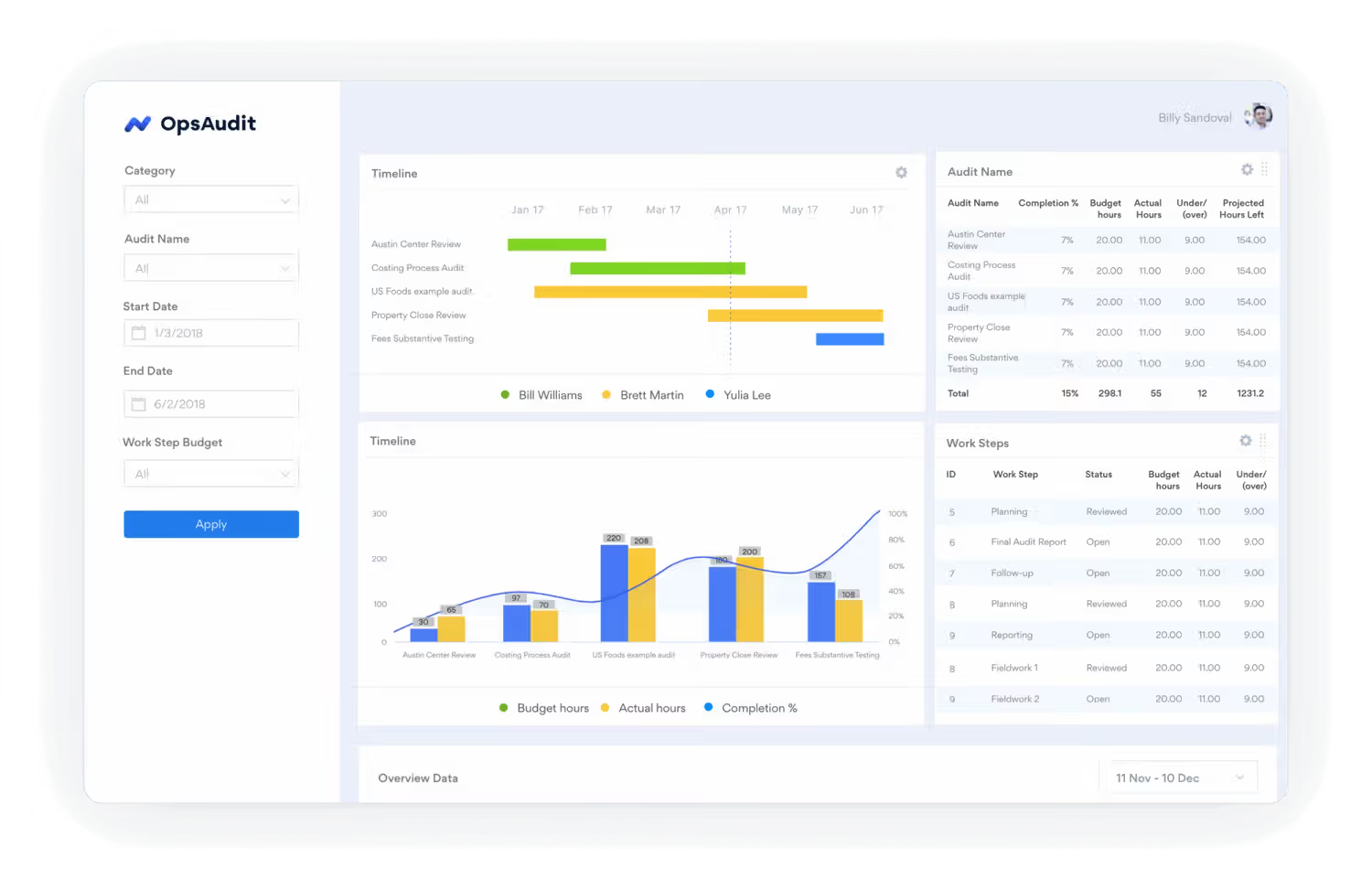
AuditBoard centralizes audit planning, control testing, and evidence management in a single system of record.
Built for organizations with dedicated internal audit functions, it covers SOX, InfoSec, and ESG with AI-assisted automation and automatic cross-module data sync.
Key Features
- Centralized workflows for internal audit planning, fieldwork, and SOX 404 control testing
- AI tools that draft scoping memos and executive reports from existing audit data
- Policy and remediation management with automated reminders and task tracking
- Executive and board-level dashboards with real-time compliance visibility
Best For: Mid-market to enterprise organizations with dedicated internal audit teams and SOX or financial reporting obligations
Frameworks: SOX, SOC 2, ISO 27001, ESG frameworks
Pricing: Custom pricing, demo required
Limitation: Implementation and data migration can take several months, a poor fit for teams needing fast audit-readiness
6. MetricStream
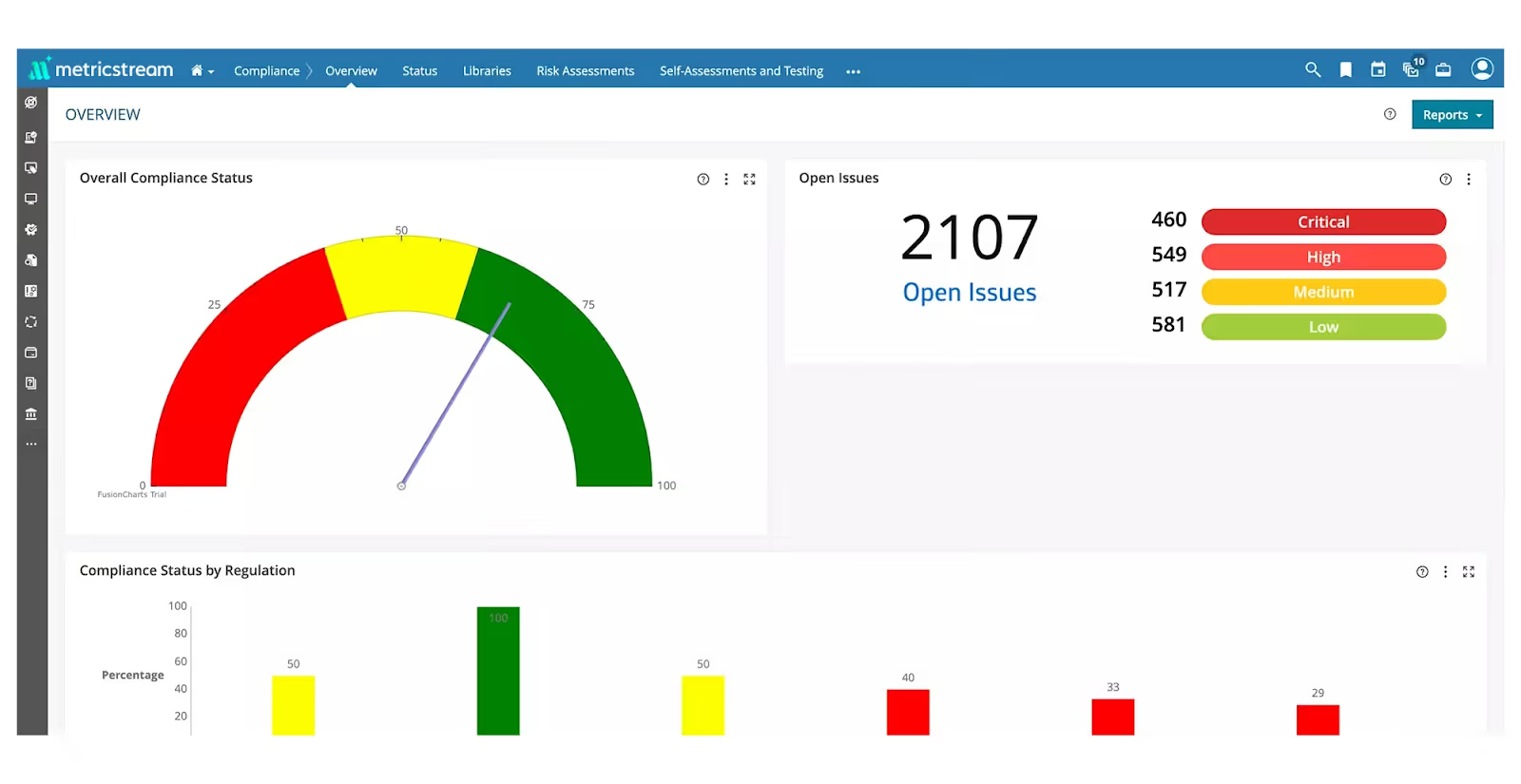
MetricStream is an enterprise GRC platform built for large organizations in banking, healthcare, energy, and pharma.
Its AI-first Connected GRC architecture centralizes risk data across departments and jurisdictions, and the company reports up to 90% reduction in compliance effort through automation.
Key Features
- AI-driven compliance monitoring with automated tracking of global regulatory changes across jurisdictions
- Centralized real-time risk register linking controls directly to business risk posture
- Automated vendor risk and third-party management across complex supply chains
- Full internal audit lifecycle management with streamlined evidence and reporting workflows
Best For: Large enterprises in highly regulated industries managing multi-jurisdictional regulatory compliance monitoring at scale
Frameworks: Multi-jurisdictional GRC across financial services, healthcare, energy, and pharma
Pricing: Custom enterprise pricing, demo required
Limitation: Long deployment timelines make MetricStream a poor fit for lean teams or organizations without dedicated compliance staff
7. Hyperproof
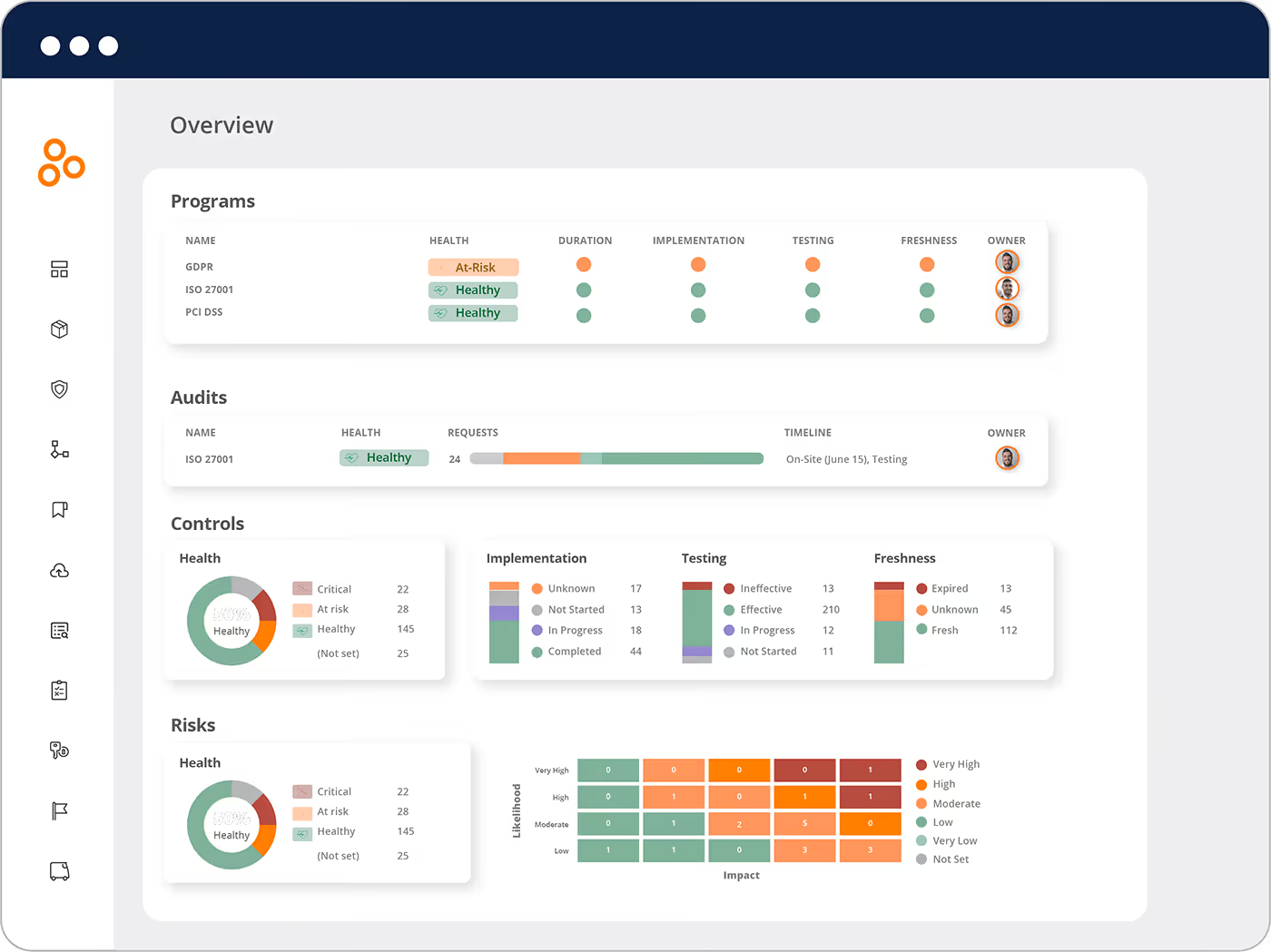
Hyperproof is built around cross-framework evidence reuse: one piece of evidence satisfies multiple frameworks simultaneously. This eliminates redundant evidence collection across SOC 2, ISO 27001, HIPAA, NIST, and FedRAMP.
Its live Risk Register ties compliance tasks directly to business risk rather than treating them as separate programs.
Key Features
- 200+ integrations and 100+ Hypersyncs for automated evidence collection
- Cross-framework evidence mapping: one artifact satisfies multiple certifications
- Secure auditor portal giving external reviewers access to evidence without exposing internal data
- Live Risk Register connecting compliance control status to the organization's real-time risk posture
Best For: Enterprises with mature compliance programs managing multiple overlapping frameworks who need to eliminate redundant evidence collection
Frameworks: SOC 2, ISO 27001, HIPAA, NIST CSF, FedRAMP, PCI DSS
Pricing: Custom pricing, demo required
Limitation: Steeper learning curve than entry-level tools. Requires dedicated compliance staff to extract full value
3. Quick Comparison: 7 Best Compliance Monitoring Software
Also read: ISO 27001 Requirements Checklist for Enterprise Compliance: a control-by-control guide to staying audit-ready for ISO 27001 year-round.
4. How to Pick the Right Compliance Monitoring Software
Before you shortlist platforms, map three things internally: the frameworks you must support right now, your existing tech stack integrations, and whether you need monitoring automation, full GRC management, or both.
a) Framework coverage: Verify native support for your specific stack. A high framework count in a vendor's marketing does not mean deep, audit-ready support for the regulations you are actually assessed against.
b) Integration depth: Regulatory compliance monitoring software only automates what it can access. If the platform can not connect to your cloud infrastructure, identity provider, and HR system in real time, evidence collection stays manual. Test key integrations in a demo, not a features page.
c) Continuous vs. scheduled monitoring: Real-time monitoring surfaces drift immediately. Scheduled scans miss changes between cycles. For audit-readiness, real-time matters. Ask vendors specifically how quickly the platform detects and alerts on a control change.
d) Team size and compliance maturity: A startup pursuing its first SOC 2 needs speed and simplicity. An enterprise managing 8+ frameworks across jurisdictions needs depth and customization. The best compliance monitoring software for highly regulated sectors is not the same tool that works for a 50-person SaaS company.
e) AI capabilities: AI compliance monitoring software with audit integrations should do something specific: automate control mapping, analyze evidence quality, auto-fill questionnaires, or flag regulatory changes. Ask for a live demo of those specific workflows before buying.
5. Why Compliance Monitoring Software Pays for Itself
The business case is straightforward. IBM's Cost of a Data Breach Report 2024 found the global average cost of a breach reached $4.88 million, a 10% jump and the largest year-over-year increase since the pandemic.
Beyond breach costs, the compliance burden itself is growing:
- 97% of organizations now conduct at least two audits annually, with 74% of large enterprises managing four or more (A-LIGN 2026 Compliance Benchmark Report)
- 72% of executives say increasing compliance complexity has negatively impacted company profitability (PwC Global Compliance Survey 2025)
- 33% of organizations have no AI compliance strategy in place, despite AI being the top privacy challenge cited by compliance teams (A-LIGN 2026)
Continuous monitoring addresses the root cause of these costs: controls that drift undetected between audit cycles. Evidence collected automatically removes the weeks of scramble before assessments. And customers now routinely require proof of compliance before signing contracts, so having documentation ready accelerates deals.
Also read: SaaS Compliance Guide for Buyers: what SaaS compliance actually requires across financial, security, and privacy frameworks.
6. What Does Compliance Monitoring Software Cost?
Every major platform here uses custom pricing. That said, the pricing model matters before you start evaluating.
Three common pricing structures:
- Per-user: Common for SMB-focused tools like Vanta and Drata. Scales with headcount, which can get expensive as the team grows.
- Per-framework or per-module: Common for enterprise GRC platforms. You pay for the coverage scope.
- Flat enterprise licensing: Common for MetricStream and AuditBoard. Negotiated annually based on org size and scope.
What drives cost up:
- Number of compliance frameworks in scope
- Integration tier and connector depth
- Auditor access seats (often billable separately)
- AI and automation features (typically gated to premium tiers)
- Implementation and onboarding support (frequently charged separately from the platform fee)
Free compliance monitoring software options exist in open-source GRC frameworks but require significant manual configuration and are not suitable for formal audit-readiness at scale.
7. Common Mistakes When Choosing Compliance Monitoring Software
1. Buying for frameworks you might need rather than frameworks you need now Start with your current audit obligations. Paying for future readiness before confirming the platform scales to it wastes budget and adds implementation complexity.
2. Skipping integration verification Compliance automation only works when the platform connects to your actual stack. Verify each critical integration in a demo, with your real systems, not a feature checklist.
3. Conflating monitoring with management Buying a full GRC suite when you need continuous monitoring is expensive and slow to stand up. Buying a monitoring tool when you need policy and workflow management leaves operational gaps.
4. Underestimating implementation time Entry-level tools like Vanta can be operational in weeks. Enterprise platforms like MetricStream and AuditBoard often take several months to fully deploy. Sync this to your audit calendar before committing.
5. Missing the full cost picture Base pricing rarely includes implementation fees, integration work, and additional seats for auditors or business unit stakeholders. Get the total number before signing.
8. Which Tool Should You Choose?
The right compliance monitoring software comes down to what you are actually trying to fix.
- Need SaaS governance, AI compliance, and security certifications from one system? CloudEagle.
- Pursuing your first SOC 2 or ISO 27001 and need to move fast? Vanta or Drata.
- Want full compliance lifecycle automation across 40+ frameworks? Sprinto.
- Running a dedicated internal audit team with SOX obligations? AuditBoard.
- Large enterprise in banking, healthcare, or pharma? MetricStream.
- Managing multiple overlapping frameworks with redundant evidence collection? Hyperproof.
CloudEagle.ai is the only platform on this list that addresses SaaS governance, AI governance, and vendor risk alongside traditional security certifications. For organizations where compliance risk lives across the SaaS stack, it covers layers the other tools were not built for.
Book a demo with CloudEagle and get a walkthrough tailored to your specific compliance stack and framework obligations.
9. Frequently Asked Questions
What is compliance monitoring software?
A platform that connects to your systems, continuously tracks whether controls meet regulatory requirements, collects evidence automatically, and alerts you when something drifts out of range.
What is the difference between compliance monitoring and compliance management?
Monitoring is the continuous surveillance layer: controls, evidence, real-time alerts. Management is the broader program covering policies, workflows, and audit coordination. Most modern platforms do both.
What is a compliance monitoring program?
The structured set of processes that define who monitors which controls, how evidence is retained, and how gaps are escalated. Compliance monitoring software automates the most labor-intensive parts of this program.
Who needs compliance monitoring software?
Any organization subject to SOC 2, ISO 27001, GDPR, HIPAA, PCI DSS, or industry-specific frameworks. Especially relevant for financial services, healthcare, SaaS companies, and enterprises managing AI governance obligations.
What are the 7 pillars of compliance?
Policies and procedures, risk assessment, controls and safeguards, training and awareness, monitoring and auditing, response and remediation, and reporting and communication.


.avif)


.avif)
.avif)




.png)




.png)
.avif)
.avif)
.avif)


