.avif)
%201.svg)


HIPAA Compliance Checklist for 2025

Most teams track SaaS spend through finance systems, but those systems rarely show the full picture. Invoices arrive on time; context doesn’t. A renewal increases without warning, a department adds a new tool without looping anyone in, or usage shifts mid-quarter while budgets remain unchanged.
These gaps compound because spend, usage, and approvals sit in different systems that don’t speak to each other.
CloudEagle connects those systems end-to-end, giving teams real-time visibility into what they own, what they use, and what it costs. This article explains how those integrations work and how they help automate budget control with accuracy and consistency.
How Finance Teams Track SaaS Spend Today?
Finance teams rarely get a single source of truth for SaaS spend. Instead, they pull information from multiple systems and hope it aligns.
Corporate card statements show where money went, ERP data shows what was booked, SSO tools show logins, and spreadsheets attempt to tie contracts and renewals together. This creates a picture that’s functional, but always incomplete.
Most workflows begin with ERP/AP feeds (Workday, SAP, NetSuite, Coupa).
Teams pull transactions, label vendors manually, and compare invoices with the last known contract. When something looks off, the issue is discovered only during reconciliation, after spend has already occurred.
To understand usage, finance depends heavily on IT. They request SSO data from Okta or Azure AD, activity logs from tools like Zscaler, or direct updates from department heads. This leads to periodic “license clean-ups” based more on estimates than accurate usage data.
Contract details live everywhere such as shared folders, email threads, PDFs, Slack messages.
Finance teams rely on manual review or AI extraction tools to confirm terms, notice periods, and seat counts. Even then, the information isn’t consistently updated.
In reality, most teams blend signals from multiple sources:
- ERP/AP systems for purchases and invoices
- Corporate cards for decentralized subscriptions
- Budgeting tools to estimate spend based on headcount
- SSO/security logs for usage inference
- Email/Slack to confirm application owners
- Excel/Sheets for renewal dates, vendors, and cost allocations
- Contract repositories for pricing and terms
- Manual reconciliation with IT and department leaders
This approach works in predictable environments. But SaaS environments shift weekly: new tools added, owners changed, usage patterns fluctuating, making it difficult to maintain accuracy.
As a result, teams often identify waste or budget deviations only after numbers have already closed.

How CloudEagle.ai Syncs With Finance Systems to Track SaaS Spend and Control Budgets
CloudEagle.ai connects to your ERP, AP, card, procurement, expense, and SSO systems, ties every SaaS charge to its app, users, and contract, then uses that record to enforce budgets, route renewals, and forecast spend. Setup takes about 30 minutes.
Connect Every System Where SaaS Spend Starts
First, CloudEagle.ai plugs into the systems that already hold your spend data, using 500+ prebuilt integrations:
- ERP/AP: Workday, NetSuite, SAP, Coupa, Oracle
- Procurement: Zip, Ironclad, Coupa, Ariba
- Corporate cards: Ramp, Brex, Visa/MC feeds
- Expense: Concur, Expensify
- SSO: Okta, Azure AD, Google Workspace
- SaaS vendor APIs for direct usage signals
Every transaction, login, and contract update flows in as it happens.
Tie Each Charge to an App, an Owner, and Real Usage
Once the data lands, CloudEagle.ai matches each invoice and card charge to the app it paid for, then layers SSO login and provisioning data on top. A card statement line becomes an app with an owner, a seat count, and the people actually using it.
Tools bought on a card outside procurement get flagged as shadow IT the moment they post. AI tools like Claude, Cursor, and Gemini are tracked by token and credit through AI usage control, so cloud SaaS and AI spend sit in one view.
Pull Contract Terms Into the Same Record
Next, CloudEagle.ai reads contracts from your CLM, shared drives, procurement tools, and email uploads, and AI extraction pulls out renewal dates, notice periods, seat counts, tiers, pricing, discounts, and approval history.
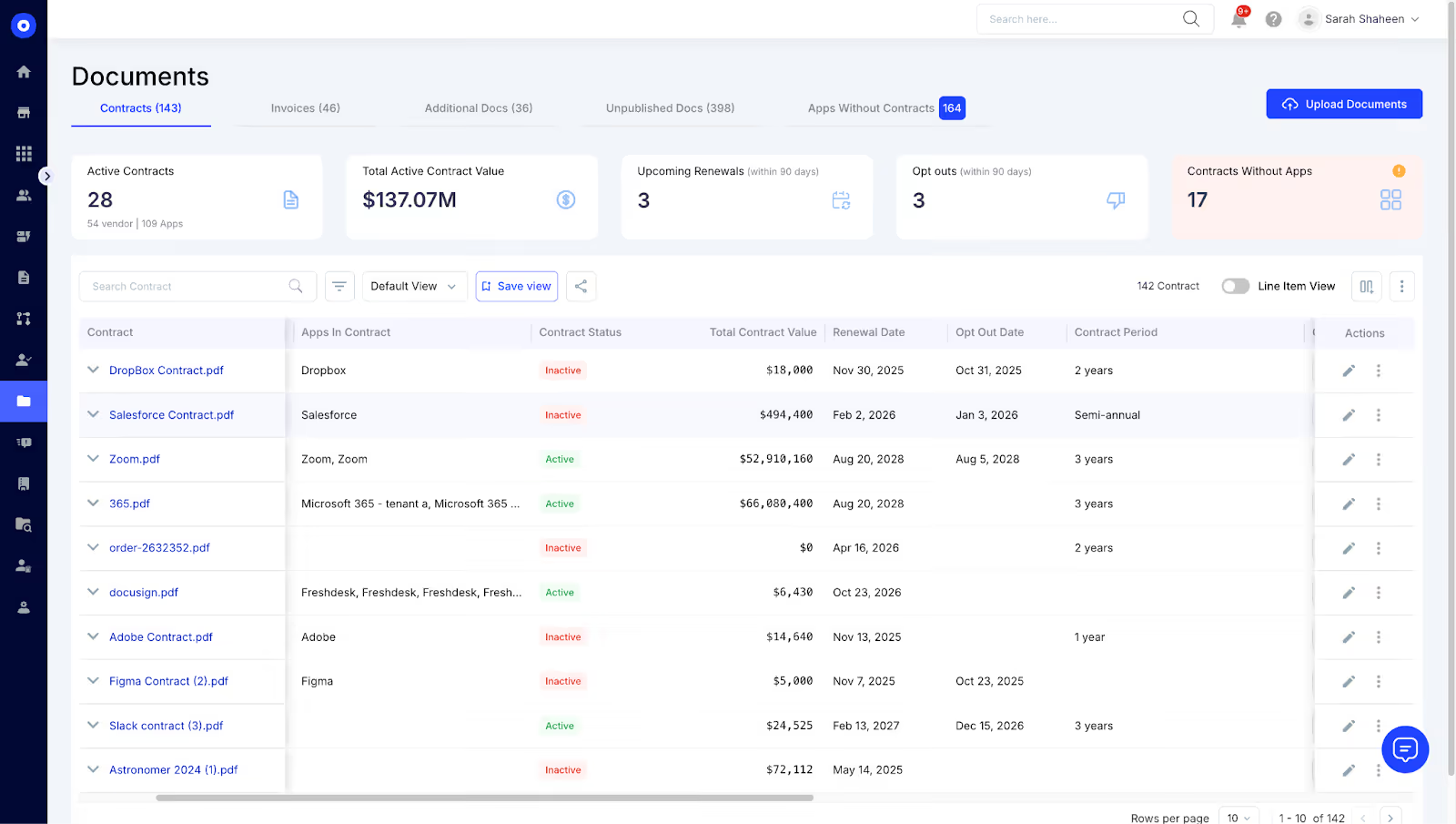
Those terms attach to the app record in contract management, so purchased, billed, and used can be compared side by side. A bill that drifts from contracted terms gets flagged before reconciliation.
Match Licenses to Usage and Reclaim the Rest
With spend, usage, and contracts connected, CloudEagle.ai finds unused, underused, and duplicate licenses and triggers downgrades or reclamation through license management. Changes sync back to ERP cost centers and GL coding, to IT provisioning workflows, and to identity systems, so the books match who actually has access.
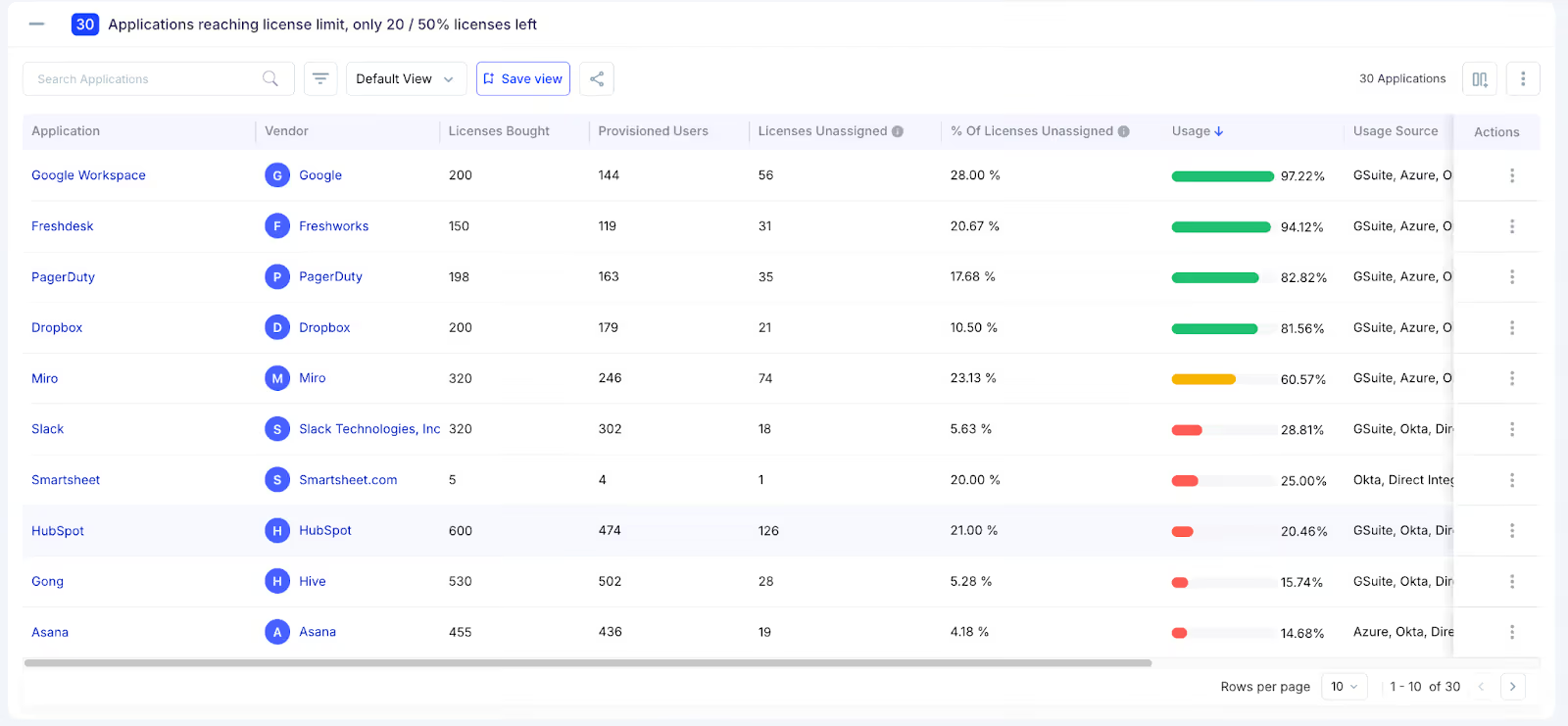
Rec Room had unused licenses, scattered renewal data, and no live view of app usage. After CloudEagle.ai automated reclamation of inactive licenses, they cut SaaS costs by 20% and saved more than 1,830 hours a year in manual SaaS management plus 1,180 hours in renewals.
"Managing software licenses was a complex and time-consuming task with no clear view of costs. Due to a lack of real-time usage insights, we were unaware that many licenses went unused. CloudEagle.ai has changed that by simplifying the process, providing complete transparency, and helping us better manage and optimize our licenses, resulting in increased SaaS savings."
- Devin Murphy, Senior Accounting Manager, Rec Room.
Set Budgets and Route Overspend Into Approvals
Then budgets get set at department, app, or user level. When a new purchase, card charge, or renewal would push a cost center past its limit, CloudEagle.ai sends it into an approval workflow with the budget owner through procurement workflows, before it posts.
Decentralized purchasing stays inside policy the same way: each department's card and invoice spend rolls up against its own budget, so finance sees who is trending over while there's time to act.
Route Renewals With Usage Data Attached
Ahead of each renewal, CloudEagle.ai sends it to the owner on the renewal calendar with usage and contract terms attached. Unused seats, duplicate apps, and wrong tiers get cut first, and the decision syncs back to ERP and procurement.
Forecast Spend and Catch Anomalies Mid-Cycle
Finally, the normalized data feeds dashboards and forecasts for actual vs. planned spend, upcoming renewals and seat needs, billing anomalies, cost spikes, unused entitlements, and department rollups. Reports export to BI tools or sync into ERP budgeting modules.
Overruns get corrected mid-cycle instead of explained after the quarter closes, and companies using CloudEagle.ai typically reduce SaaS spend by 10 to 30 percent.
Stop Discovering Waste After the Quarter Closes


Where SaaS Spend Visibility Breaks Down?
Even when teams try to track SaaS spend carefully, visibility collapses the moment data is scattered across budgeting tools, ERP systems, SSO logs, security platforms, and spreadsheets.
Each system captures only one part of the truth, so no one sees a complete picture of what the company owns, what it uses, and what it actually pays for.
The gaps show up in places that matter:
- Shadow IT and unapproved purchases slip through via corporate cards, self-serve signups, and free trials.
- Usage data, contract data, and spend data live in different systems that don’t talk to each other.
- Renewals and notice periods get missed because contract metadata is scattered across drives and inboxes.
- License counts and seat assignments don’t match real usage, making decisions based on assumptions instead of facts.
- Periodic reviews (quarterly or annual) leave long stretches where waste goes unnoticed.
- No central dashboard means simple questions: who owns this app, who uses it, why did this cost increase, require hours of digging.
- Forecasting breaks down because no system correlates usage patterns with upcoming contract or seat changes.
And the consequences compound quickly:
Budgets drift, renewals renew at higher numbers than needed, unused licenses stay active, and overlapping apps remain in circulation.
Finance, IT, and procurement teams spend time reconciling data manually instead of making decisions with clarity. Most overspend is discovered only after the money is already gone.
Why CloudEagle.ai Gives Finance Teams Real Budget Control
Most tools stop at visibility. CloudEagle goes further by turning SaaS spend tracking into a continuous, automated, and accountable budgeting system.
Instead of reacting to invoices after they post, finance teams get a real-time view into spend, usage, and contract changes and the ability to act before budgets drift.
As SaaS environments expand and costs shift weekly, CloudEagle becomes the control layer that ties financial data, usage data, and contract intelligence together.
This elevates SaaS spend governance from an administrative check to an active, strategic function.
Here’s how CloudEagle enables real budget control:
• Continuous visibility into every dollar
CloudEagle unifies financial transactions, usage depth, contract metadata, and license allocations into a single view.
Finance teams always know what they bought, what it costs, and whether it aligns with actual needs. This clarity eliminates the blind spots caused by disconnected tools.
• Proactive spend governance, not after-the-fact reporting
Instead of discovering waste in QBRs or during reconciliation, CloudEagle surfaces unused licenses, duplicate apps, overlapping tools, and incorrect seat tiers before they renew.
Teams intervene ahead of spend, not after budgets are already consumed.
• Automated budget enforcement and approval control
Spend, renewals, and new purchases route through automated workflows that enforce policy, cost center alignment, and budget limits.
This removes manual chasing and ensures every decision reflects up-to-date financial and usage data.
• A closed-loop system that keeps data aligned
CloudEagle connects spend discovery → contract insights → usage data → procurement actions.
This alignment removes errors that normally occur when data sits across ERP, IT, and spreadsheets. Finance teams get decisions made with complete context, not partial information.
• Stronger forecasting and fewer surprises
With contract terms, renewal schedules, seat requirements, and usage trends continuously updated, forecasts become more accurate.
Cost spikes are detected early. Budget overruns can be corrected mid-cycle. Renewals no longer catch teams off guard.
• Real, measurable impact
Companies using CloudEagle report significant results including 10-30% SaaS spend reduction, cleaner budgets, improved forecast accuracy, and fewer administrative hours spent reconciling systems.
The platform pays for itself through better decisions, reduced waste, and tighter control.
In short, CloudEagle shifts SaaS budgeting from a reactive, spreadsheet-driven exercise to an ongoing, intelligence-led financial practice. It gives finance teams the clarity, control, and confidence to manage SaaS spend strategically.
A major part of that clarity comes from knowing which licenses you actually need versus the ones silently draining spend.
Smarter Budget Control Starts Here
SaaS spend becomes manageable the moment finance, usage, and contract signals move in sync.
When teams can see what they own, what they use, and what it actually costs, decisions get sharper and budgets stay on track.
CloudEagle.ai makes that level of control practical. Its end-to-end integrations, real-time insights, and automated workflows give finance teams the visibility and confidence they’ve been missing.
If you’re ready to strengthen budget ownership and stay ahead of SaaS costs, CloudEagle brings everything together in one place.


.avif)


.avif)
.avif)




.png)




.avif)
.avif)
.avif)


