HIPAA Compliance Checklist for 2025

SaaS integrations, automated workflows, and AI agents rely on machine identities to access systems and exchange data. But as these identities grow, tracking their ownership, permissions, and credentials becomes harder, leaving room for excessive access and forgotten secrets.
According to the 2026 SANS State of Identity Threats & Defenses Survey, 92% of organizations fail to rotate the majority of their non-human identity (NHI) credentials on a 90-day cycle. This highlights a critical gap in machine identity security.
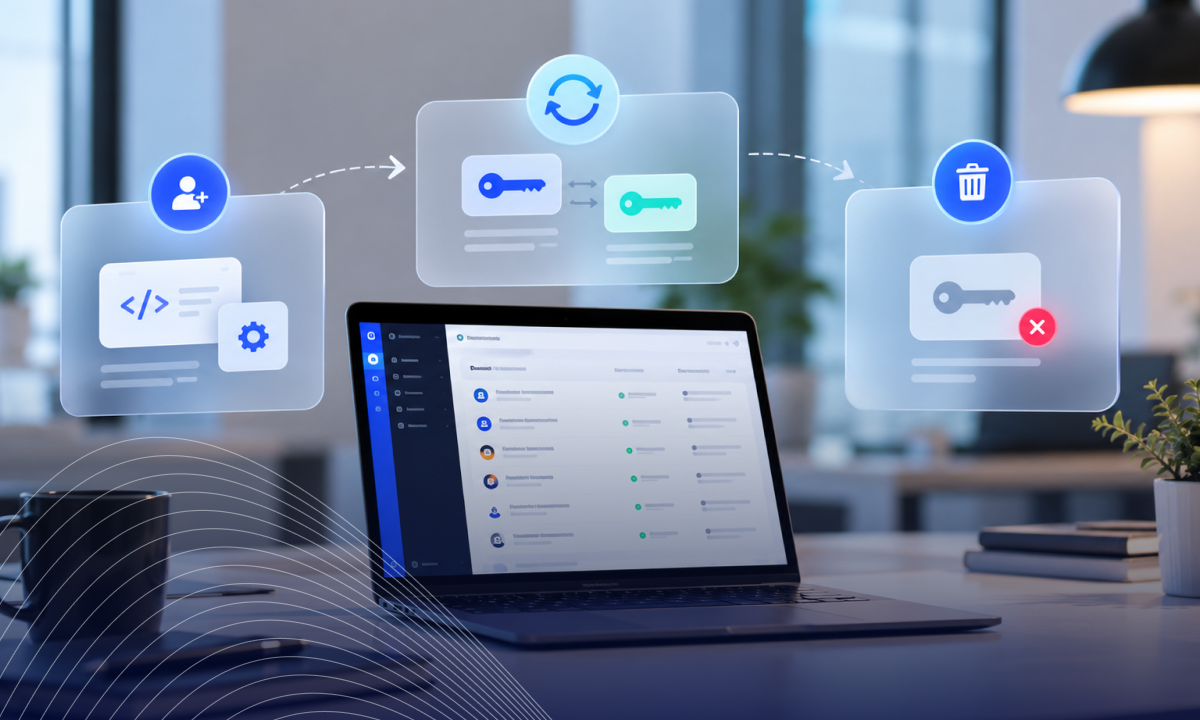
Effective NHI lifecycle management helps close that gap by securing identities from provisioning to credential rotation and retirement, while maintaining visibility and control over their access throughout their lifecycle.
1. What is NHI Lifecycle Management?
NHI lifecycle management is the process of managing non-human identities (NHIs), such as service accounts, API keys, OAuth integrations, bots, and AI agents, from creation to retirement.
It covers identity discovery, secure provisioning, access monitoring, credential rotation, and decommissioning to ensure every identity has a clear purpose, accountable ownership, and only the permissions it needs.
Unlike human identity management, NHI lifecycle management must also account for machine-to-machine access, automated workloads, credential dependencies, and applications that continue running without direct human involvement.
A structured lifecycle helps organizations reduce excessive permissions, prevent orphaned identities, and maintain visibility into machine access across their SaaS environments.

2. What are the Key Stages of the NHI Lifecycle?
Effective NHI lifecycle management goes beyond creating machine identities and storing their credentials. It ensures every identity remains visible, properly secured, and tied to a legitimate business purpose until its access is no longer needed. The process typically involves five key stages.
A. Discovery: Identify Every Machine Identity
Organizations need a clear inventory of NHIs across SaaS applications, cloud environments, APIs, and automated workflows. Track each identity's owner, permissions, associated application, and usage to uncover forgotten credentials, unmanaged service accounts, and unnecessary access.
B. Provisioning: Grant Only the Access Required
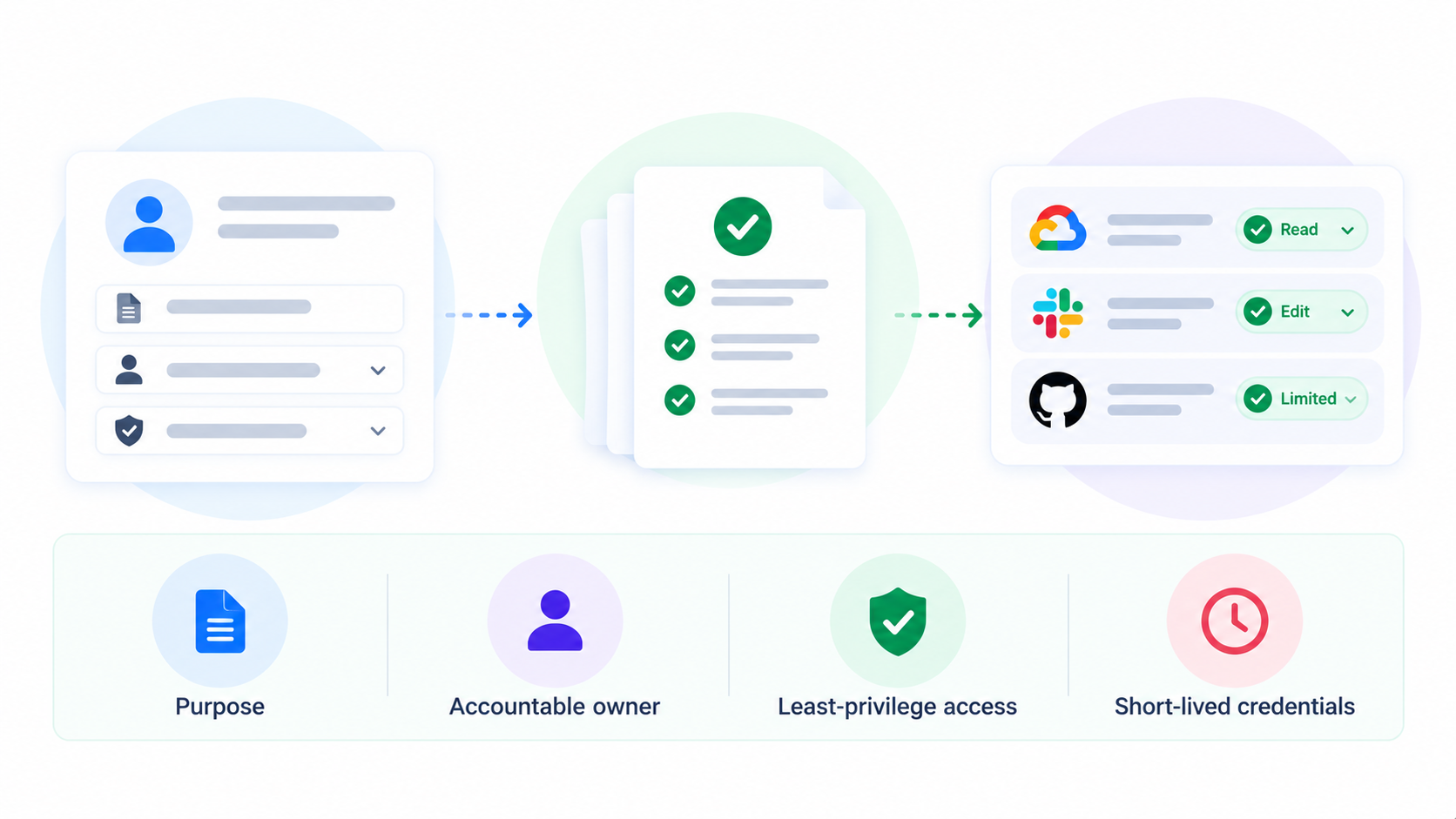
Every new identity should have a documented purpose, an accountable owner, and approved permissions. Apply least-privilege access and use short-lived credentials or workload identity federation where supported. This reduces unnecessary exposure and simplifies future access reviews.
C. Monitoring: Track Activity and Permissions
An identity's risk can change as its usage, ownership, or permissions evolve. Monitor unusual activity, excessive privileges, and inactive identities. Regular reviews help confirm that each identity still serves a valid purpose and has only the access it needs.
D. Credential Rotation: Replace Credentials Securely
Credentials should be renewed or replaced based on their type, risk, exposure, and applicable policies. Before revoking an old credential, validate that dependent applications can use the replacement successfully. If a credential is compromised, immediate revocation or rotation may be necessary.
E. Retirement: Remove Unnecessary Access
When an application, integration, or workload is discontinued, review its associated identities before decommissioning them. Check dependencies, remove permissions, revoke credentials, and verify that access has been terminated. Record the outcome to support audits and prevent lingering access.
Takeaway: These stages work together as a continuous process. Centralized visibility, clear ownership, and consistent governance help organizations identify unmanaged NHIs, respond to changing risks, and prevent machine identities from retaining access longer than necessary.
3. How to Provision Non-Human Identities Securely
Secure NHI provisioning starts before an API key or service account is created. Teams need to establish why the identity is required, what it can access, and who will be responsible for it. Without these details, credentials can remain active long after their original purpose has changed.
A. Define the Identity's Purpose and Owner
Document the application or workload that needs the identity, the tasks it must perform, and the person responsible for reviewing its access.
For example, an integration that syncs customer records should not automatically receive administrator access to the entire SaaS platform. Clear ownership also makes it easier to approve credential changes and retire the identity when the integration is discontinued.
B. Apply Least-Privilege Access
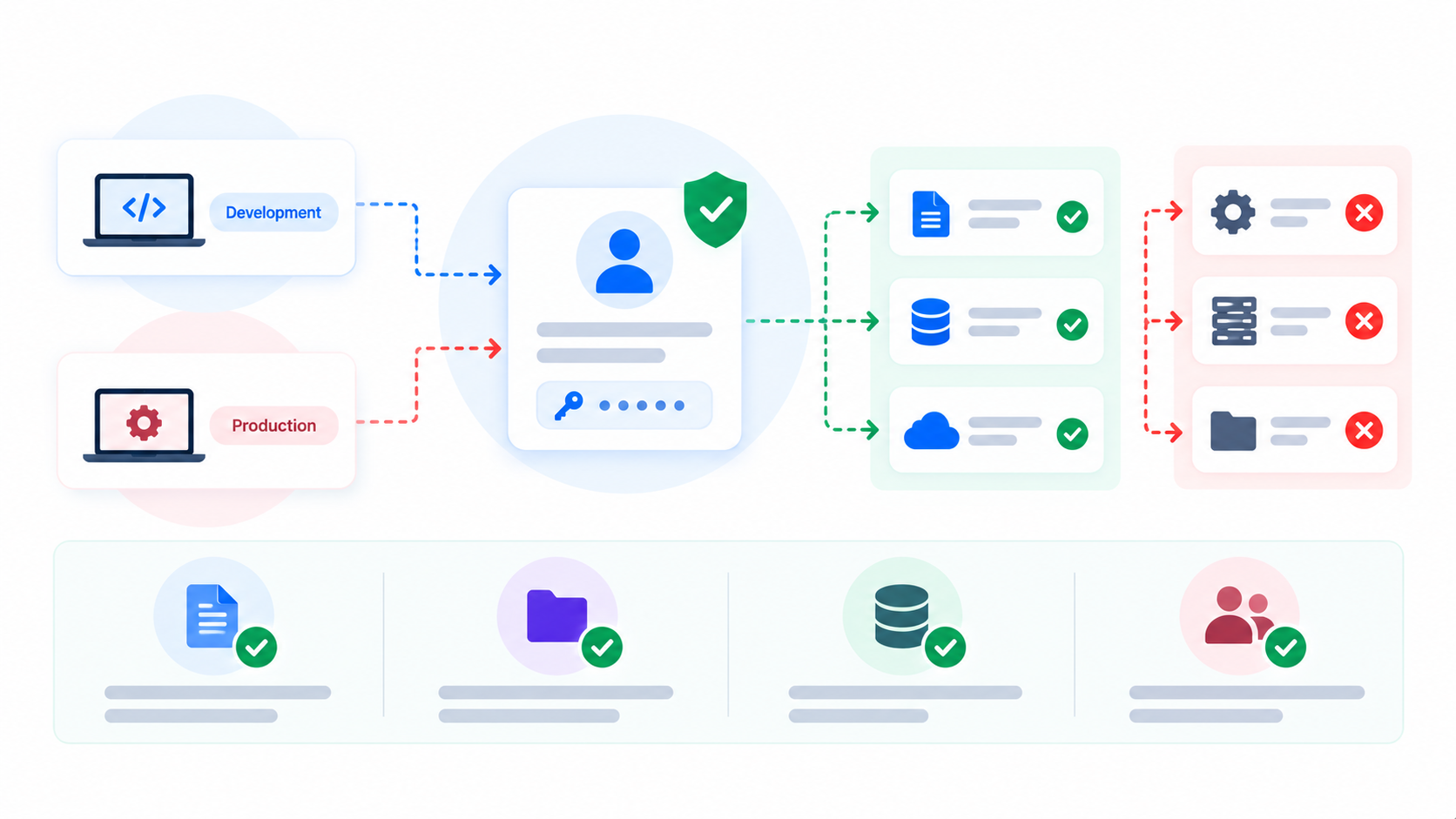
Grant only the permissions required for the identity's intended task. Restrict access to relevant resources, separate development and production identities where practical, and review inherited roles that may provide unnecessary privileges.
C. Choose Secure Authentication Methods
Use short-lived credentials or workload identity federation where supported. When static API keys or client secrets are necessary, store them in an approved secrets manager and establish appropriate rotation and expiry requirements. Avoid embedding credentials in source code or shared documents.
D. Record and Validate Each Identity
Maintain a record of the identity's owner, purpose, application, permissions, and authentication method. Before deployment, verify that it can perform its intended task without excess access. These details provide a baseline for future access reviews, credential rotation, and retirement decisions.
CloudEagle.ai can help teams improve NHI visibility, understand ownership and access across SaaS applications, and identify governance gaps that need attention.
4. How to Rotate Machine Identity Credentials Safely
Credential rotation reduces the time a compromised or outdated secret can remain useful. However, replacing a credential without identifying its dependencies can break integrations or leave the old credential active. A reliable process must account for both security and application availability.
A. Set Rotation Policies Based on Risk
Rotation frequency should depend on the credential's privileges, exposure, lifespan, and the sensitivity of the resources it protects. Rotate credentials when they are exposed, ownership changes create risk, or access requirements change.
Suspected compromise requires prompt revocation or replacement rather than waiting for the next scheduled rotation.
B. Use the Right Method for Each Credential
- API keys and client secrets: Issue a replacement, update dependent applications, validate authentication, and revoke the previous credential.
- Certificates: Renew before expiry and verify that dependent systems trust the replacement.
- OAuth tokens: Follow the provider's renewal and revocation mechanisms. Refreshing a token does not necessarily rotate the underlying client secret.
- Workload credentials: Prefer short-lived credentials and automatic renewal where supported.
C. Verify Rotation and Handle Failures
Follow these steps to rotate credentials safely and minimize application disruptions:
- Identify dependencies: List the applications, integrations, and workflows that rely on the credential before starting rotation.
- Allow a transition period: Where supported, keep the old credential active briefly while dependent systems switch to the replacement.
- Validate the new credential: Confirm that the replacement authenticates successfully and dependent applications continue to work.
- Revoke the old credential: Once the replacement is verified, revoke the previous credential and confirm it can no longer authenticate.
- Handle failures promptly: Alert the responsible team, investigate affected services, and follow a documented recovery procedure if rotation fails.
How CloudEagle.ai Helps: CloudEagle.ai's NHI governance capabilities help teams identify NHIs, track ownership, and surface access risks that need attention. Credential replacement, deployment, and validation are handled through the relevant application, secrets manager, or supported integration.
5. How to Retire Non-Human Identities Securely
Retiring non-human identities (NHIs) should be quick and controlled, especially when an identity poses a security risk. CloudEagle.ai simplifies AI agent retirement with a kill switch that lets teams shut down unwanted or risky agents from a centralized interface.
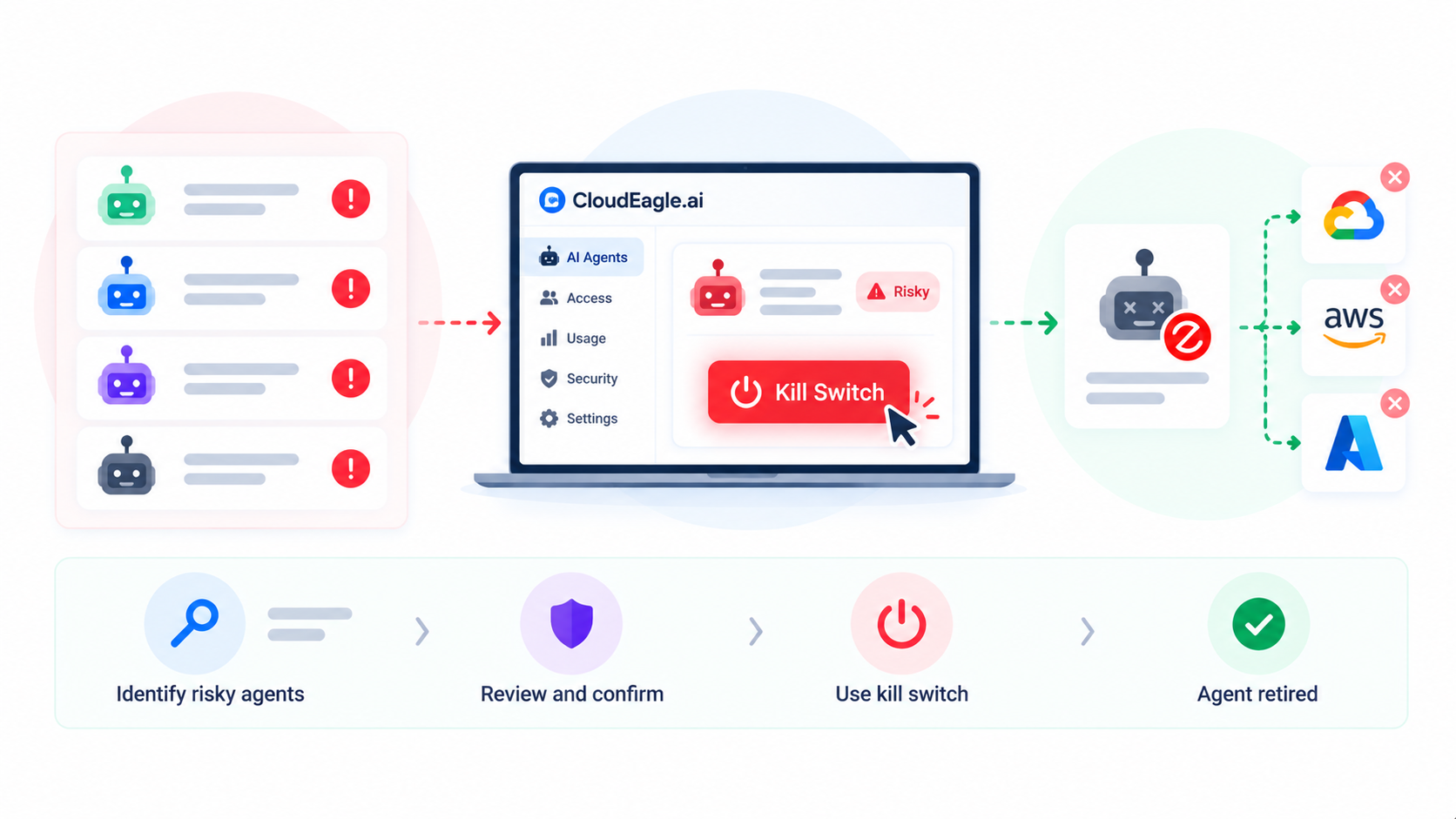
With this capability, teams can:
- Shut down unwanted agents: Quickly deactivate rogue or unnecessary AI agents without manually navigating multiple consoles.
- Manage access risks: Address agent access and permissions as part of the retirement process, where supported.
- Support security oversight: Maintain greater control over AI agents that are no longer needed or pose potential risks.
CloudEagle.ai’s kill switch helps teams respond faster to problematic AI agents. Learn more about CloudEagle.ai’s AI Agent Management capabilities..
6. What Are the Best Practices for NHI Lifecycle Management?
Effective NHI lifecycle management requires consistent controls across identity creation, access reviews, credential rotation, and retirement. The following practices help security and IT teams reduce risk without disrupting business operations.
A. Maintain a Centralized NHI Inventory
Track each identity's owner, purpose, associated application, permissions, and last-used activity. Reconcile inventory data with application and identity-provider records to uncover unknown identities, missing owners, and access that no longer serves a business need.
B. Assign Ownership and Review Access Regularly
Every NHI should have an accountable owner who can approve access changes and confirm that the identity is still required. Reassess permissions when workloads change, integrations are modified, or ownership shifts. If an owner leaves, assign a replacement before the identity becomes unmanaged.
C. Apply Risk-Based Credential Policies
Set rotation and expiry requirements based on credential type, privileges, exposure, and the sensitivity of the resources accessed. Prefer short-lived credentials where supported, and define how static secrets will be stored, rotated, and revoked. Include recovery procedures for failed rotations.
D. Automate Routine Lifecycle Tasks
Automate discovery, expiry alerts, access reviews, and approved provisioning or retirement workflows where integrations support them. Add failure alerts and verification checks so teams can confirm that actions succeeded rather than assuming a submitted request completed the task.
E. Monitor Access and Investigate Anomalies
Watch for unexpected usage, excessive permissions, and changes in identity activity. Investigate unusual behavior and respond appropriately by restricting access, rotating exposed credentials, or retiring identities that are no longer needed.
F. Connect Governance Across SaaS and Security Tools
Machine identities often span SaaS applications, cloud platforms, and secrets managers. Correlating available data helps teams connect ownership, permissions, and security findings.
CloudEagle.ai can support this governance effort through NHI visibility, ownership context, and remediation workflows across SaaS environments, complementing the credential operations handled by underlying systems.
7. What Are the Risks of Rogue NHIs and AI Agents?
Rogue non-human identities (NHIs) and AI agents can become security risks when organizations lack visibility into their ownership, permissions, and access to sensitive data. These identities may continue operating without oversight, retain unnecessary privileges, or access systems beyond their intended purpose.
The biggest concern is understanding what an identity can do if it is misused or compromised. For example:
- Access sensitive business data: NHIs with broad permissions may access customer records, financial information, employee data, or confidential documents.
- Perform unauthorized actions: Identities with excessive permissions may modify records, change application configurations, or access resources they do not need.
- Create significant risks with admin-level access: A compromised NHI or AI agent with administrator privileges could make widespread changes or access sensitive resources across connected systems, depending on its permissions.
- Remain active without oversight: Ownerless or forgotten identities may retain access even after an employee leaves or an integration is no longer needed.
How to Reduce Rogue NHI and AI Agent Risks
Organizations need visibility into every identity's owner, permissions, and access to sensitive resources. Regular access reviews help identify excessive privileges, while least-privilege controls limit each identity to the access required for its intended tasks.
CloudEagle.ai helps teams discover NHIs across supported SaaS environments, track ownership, review permissions, and identify unmanaged or overprivileged identities that require remediation..
8. How CloudEagle.ai Supports NHI Lifecycle Management
CloudEagle.ai helps security and IT teams manage non-human identities (NHIs) and AI agents through a centralized platform. Teams can discover identities, understand their access and permissions, identify risks, and take action without navigating multiple application consoles.
Key capabilities include:
- NHI Discovery and Inventory: Identify service accounts, API tokens, service principals, and AI agents across connected environments, including identities that may have been overlooked.
- Ownership and Access Visibility: See who owns each identity, which applications and data sources it can access, and which roles and permissions it holds, including inherited permissions for AI agents.
- Risk Identification and Remediation: Flag ownerless, inactive, and overprivileged identities. Revoke access, remove unnecessary permissions, or rotate API keys for supported NHIs directly from the platform.
- AI Agent Activity Logs: Review what an agent did, changed, or accessed, and trace its actions back to the relevant owner.
- One-Click AI Agent Kill Switch: Shut down a risky AI agent from the same interface by revoking its roles, rotating its secret where supported, or deactivating its identity. Every action is logged for audit purposes.
By bringing NHI governance and AI agent security together, CloudEagle.ai helps organizations identify excessive access, address unmanaged identities, and respond quickly when an agent poses a security risk. .
Case Study: How Armorcode Improved NHI Governance
According to CloudEagle.ai's Armorcode case study, Armorcode achieved the following results:
- Increased NHI visibility from 40% to 95%.
- Remediated 480 unmanaged NHIs.
- Optimized access for 220+ over-privileged identities.
These results demonstrate the value of centralized visibility and access governance. Credential issuance, rotation, and revocation may still require the relevant application or secrets management system, depending on the integration.
Your Bots Have Access. Who's Watching?


9. Conclusion
Effective NHI lifecycle management helps organizations control machine identities from creation to retirement. Clear ownership, least-privilege access, risk-based credential rotation, and verified decommissioning reduce unnecessary access and prevent unmanaged identities from becoming security risks.
CloudEagle.ai supports this process with NHI visibility, ownership tracking, access reviews, and remediation across supported SaaS environments, helping teams bring machine identities into their broader governance strategy.
10. FAQs
1. How Can Organizations Identify Orphaned Non-Human Identities?
Organizations can compare NHI inventories with application activity, ownership records, and workload dependencies to find identities with no active owner or clear business purpose. Before removing them, teams should confirm that the identities do not support scheduled jobs or infrequent processes.
2. Can Existing IAM and IGA Tools Manage Non-Human Identities?
Existing IAM and identity governance and administration (IGA) tools can manage some NHIs through ownership assignments, access reviews, and lifecycle workflows. However, coverage depends on the platform and its integrations. API keys, application-specific tokens, and workload credentials may require additional discovery and secrets management capabilities.
3. How Can Teams Rotate Credentials Without Disrupting Applications?
Teams should identify all applications that depend on a credential before replacing it. Where supported, use an overlap period to deploy and test the new credential before revoking the old one. Monitor dependent services during the transition and define a recovery procedure for failed rotations.
4. What Is the Difference Between NHI Governance and Secrets Management?
NHI governance focuses on identity discovery, ownership, permissions, access reviews, and accountability. Secrets management focuses on securely storing, distributing, rotating, and revoking credentials. Both are complementary: governance determines which identities and access require attention, while secrets management protects the credentials used to authenticate.
5. How Should Organizations Manage Machine Identities When Their Owners Leave?
Before an employee leaves or changes roles, teams should identify the NHIs they created or manage and assign new owners where needed. Review each identity's purpose and permissions, then transfer responsibility or retire it if it is no longer required. This prevents credentials from remaining active without anyone accountable for their use
Stop Managing Machine Identities in the Dark