AI Governance

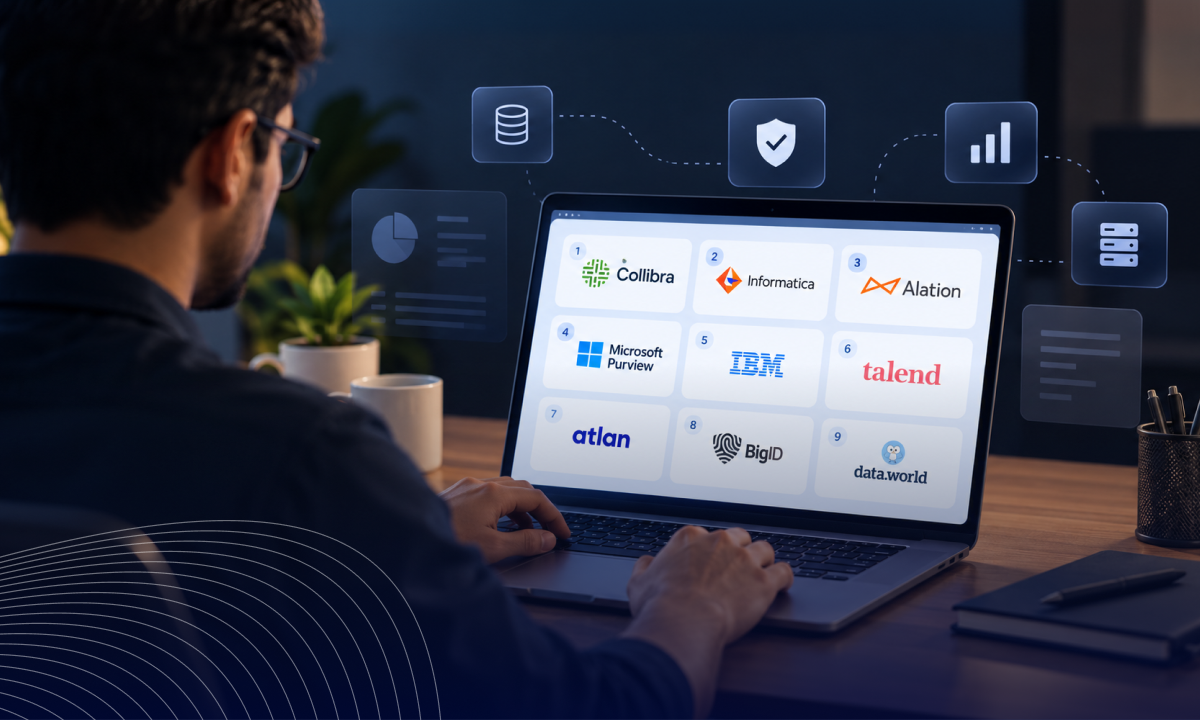
9 Best AI Agent Management Platforms in 2026

Share via:
Written by:
CloudEagle.ai Team
Reviewed by
Nidhi Jain
Last Updated:
October 16, 2026
blog-cms-banner-bg
Little-Known Negotiation Hacks to Get the Best Deal on Slack
cta-bg-blogDownload Your Copy

HIPAA Compliance Checklist for 2025

Download PDF

‍

TL;DR

We ranked these platforms on three things, in order: finding agents, controlling what they can access, and monitoring what they do.

If you need Our pick
Agent discovery and access governance across platforms CloudEagle.ai
Agent governance inside an existing ServiceNow setup ServiceNow
Agent identity tied to your Okta stack Okta
Runtime security over IT access workflows Zenity

‍

AI agent  management platforms find the agents running across your systems, control what they can access, monitor their actions and shut them down when something goes wrong. Many tools in this category build or track agents instead; this list focuses on the ones that govern them.

The need is already here. SailPoint found that 80% of organizations had seen AI agents take unintended actions, yet only 44% had a governance policy for them. The agents were running; what was missing was a way to find them, limit them and stop them.

Here’s how the nine platforms compare, what each does well, where it falls short, and which one fits your organization.

‍

What Does an AI Agent Management Platform Do?

The category covers three different jobs. Before comparing vendors, decide which one you need.

What you need What the platform does Typical buyer
Build and orchestrate agents Creates agents, connects tools, and coordinates tasks Engineering and automation teams
Observe and operate agents Tracks execution traces, errors, latency, and cost per run AI platform and operations teams
Govern agent access Discovers agents, maps identities and permissions, reviews access, and revokes credentials CIO, CISO, IAM and IT teams

‍

These capabilities can overlap, but they aren't interchangeable.

An observability platform might tell you that an agent deleted a production record. An access-governance platform should help you establish whether that agent needed permission to delete the record in the first place.

If your main concern is what an agent can access, start with discovery and access governance. You can add observability or runtime protection where your risk requires it.

‍

How We Evaluated the Best AI Agent Management Platforms

We assessed each platform against six criteria, prioritizing access governance over agent-building capabilities.

Criterion What we looked for
Agent discovery Can it find agents across vendors, including agents nobody registered?
Identity and access Can it assign ownership, scope permissions, and support access reviews?
MCP and tool control Can it identify and restrict the tools and MCP servers agents connect to?
Kill switch and offboarding Can administrators revoke access quickly, including when an agent's owner leaves?
Observability How deeply can it monitor agent actions and execution?
Time to value Can organizations use it without first adopting the vendor's wider platform?

‍

‍

Which AI Agent Management Platforms Are Worth Shortlisting in 2026?

Here's the quick comparison before we get into each platform.

Platform Best for Discovery and governance Main limitation
CloudEagle.ai Cross-platform agent identity and access governance Agent inventory, ownership, permission reviews, kill switch, plus its own AI agents that run renewals and approvals through Slack, Jira or ServiceNow Doesn't stop individual agent actions at runtime; pair it with a runtime tool like Zenity if you need that
ServiceNow AI Control Tower Enterprises using ServiceNow for ITSM and GRC Agent discovery, CMDB records, AI Gateway and governance workflows Value depends on the existing ServiceNow setup
Okta for AI Agents Organizations using Okta as their identity backbone Agent identities, app access, token revocation and Agent Gateway Discovery depends on connections visible to Okta
Microsoft Agent 365 Microsoft 365-centric organizations Agent registry, Entra Agent ID and lifecycle controls Non-Microsoft agents may require additional setup
Zenity Security teams that need runtime enforcement Cross-platform discovery and action-level security controls Less focused on traditional access reviews and offboarding
Credo AI AI risk, compliance and governance programs Agent registry, risk policies and dependency mapping Runtime enforcement is less mature
Salesforce MuleSoft Agent Fabric Organizations routing agent traffic through MuleSoft Agent registry and MCP/A2A traffic controls Doesn't discover agents outside its registered or routed scope
AWS Bedrock AgentCore and Agent Registry Teams building agents on AWS Agent registry and tool-call policy enforcement Automatic discovery is limited to AWS-hosted agents
Google Gemini Enterprise Agent Platform Teams building agents within Google's ecosystem Agent identities, registry and gateway Cross-platform coverage and kill-switch capabilities need validation

‍

The best choice depends on where your agents run and which controls you need. CloudEagle.ai leads this list for cross-platform identity and access governance; the other platforms have stronger cases in specific ecosystems or runtime-security scenarios.

‍

1. CloudEagle.ai

Best for: Organizations that need one view of AI agent identities, ownership, permissions and revocation across SaaS applications.

CloudEagle.ai is an AI governance platform that helps enterprises discover, secure and govern their AI, SaaS and identities, human and non-human, from one command center.

It is named a Leader in the 2026 Gartner® Magic Quadrant™ for SaaS Management Platforms. It is also recognized in KuppingerCole’s 2026 Leadership Compass for SaaS Security and AI Governance.

For agents, CloudEagle.ai treats each one as a non-human identity that needs the same ownership and access discipline as an employee account. Its AI agent management capability, announced on October 1, 2026, brings agent identities, owners, permissions and a kill switch into one view.

What Makes It Different
  • Pulls agent identities from Microsoft Entra ID, Okta and connected applications into one consolidated inventory
  • Shows the roles an agent holds and the resources those roles can reach, including access it hasn’t used
  • Flags inactive, ownerless and over-privileged agents, plus orphaned agents whose owners have left
  • Lets administrators revoke roles, rotate secrets or deactivate an agent from one place, with every action logged for audit
  • Extends the same approach to service accounts, API keys and OAuth applications

Organizations don’t have to treat every new agent as a separate governance project. They can run agents through the identity and access workflows they already use for other non-human identities.

How Ditto Found and Secured 340 AI Agents

At Ditto, teams built AI agents in whatever tool they used, with no approval step and no shared inventory. Agents inherited credentials nobody had recorded. Investigating one meant searching console by console.

“Agents were spreading across tools faster than any one console could show us,” said Yaniv Erel, Ditto’s CTO.

‍

What CloudEagle.ai found What Ditto did
340 agents across every console in the first scan Assigned an owner to each one
19 agents built by former employees, still holding admin access to critical data Closed them out immediately
28 risky agents in the first month Shut them down the same day with one click

‍

“Now if one’s a problem, the kill switch shuts it down from that same screen,” Erel said.

‍

ArmorCode reports the same shift. “As our identity environment expanded, governing non-human identities became just as important as managing human access,” said Karthik Swarnam, its Chief Security and Trust Officer.

Rating and Pricing
Our verdict: The right choice if your main problem is knowing which agents exist, who owns them and what access they keep across different SaaS applications.

‍

‍

2. ServiceNow AI Control Tower

Best for: Enterprises that already use ServiceNow for IT service management, configuration management, and governance.

ServiceNow's strongest claim is discovery across first- and third-party agents, including shadow AI. Its AI Control Tower can bring discovered agents, models, and MCP servers into a common inventory, with agents represented as configuration items in the CMDB.

What Makes It Different

  • Links discovered agents to owners, dependencies, and existing ITSM and GRC workflows.
  • Adds 30 discovery integrations, an AI Gateway for MCP transactions, and a kill switch for agents that go off script, per its May 2026 expansion.
  • Covers identity access governance through a Veza integration.
  • Was named a Leader in Gartner's first Magic Quadrant for AI Governance Platforms, dated June 16, 2026.

The advantage is operational continuity. If ServiceNow already manages your assets, configuration items, and governance processes, agent management can fit into workflows your teams already use.

Where It Falls Short

ServiceNow's May announcement put general availability for the expanded capabilities in August 2026. Confirm their current availability and exact scope before buying.

Value also depends on your existing ServiceNow investment. Pricing is available on request.

Our verdict: Shortlist ServiceNow if you want agent governance integrated with established ITSM and GRC processes rather than another standalone console.

3. Okta for AI Agents

Best for: Organizations that want to govern AI agents through their existing identity infrastructure.

Okta approaches agent management from the identity layer. That makes it particularly relevant when the main concern is which applications agents can access and how quickly those permissions can be revoked.

Okta for AI Agents reached general availability on April 30, 2026.

What Makes It Different

  • Detects when employees connect AI agents to enterprise applications.
  • Registers agents as identities with human owners and baseline policies.
  • Shows granted scopes and the potential blast radius of an agent's access.
  • Provides a kill switch that revokes an agent's tokens across connected applications.
  • Aggregates MCP tools through Agent Gateway, a virtual MCP server that logs agent-resource interactions.

Token revocation across connected applications is a useful distinction. Removing an agent from a registry doesn't necessarily invalidate credentials it already holds.

Where It Falls Short

Discovery depends on agents connecting through applications and integrations visible to Okta. The regulated Core edition also covers known agents only.

Okta doesn't publish pricing.

Our verdict: Okta is a strong choice when identity is your primary control plane and you want agent access governed alongside employee and application identities.

4. Microsoft Agent 365

Best for: Organizations standardized on Microsoft 365 and Microsoft Entra.

Agent 365 is a natural starting point for companies that already use Microsoft's identity, security, and productivity stack.

What Makes It Different

  • Provides a registry for Microsoft, partner, and self-registered agents, anchored on Entra Agent ID.
  • Offers lifecycle controls that can block risky agents and limit which MCP servers agents use.
  • Fits into Microsoft's existing identity and device-management ecosystem.
  • Costs $15 per user per month, or comes included in Microsoft 365 E7 at $99 per user per month.
  • Has been generally available since May 1, 2026.

For organizations already using Entra, the appeal is reduced fragmentation. Agent identities and lifecycle controls can sit closer to the identity infrastructure already in place.

Where It Falls Short

Microsoft's own FAQ says agents built outside its channels need additional steps to appear. Shadow AI detection also relies on network and device controls, so coverage outside the Microsoft ecosystem depends on implementation.

Our verdict: Start with Agent 365 if Microsoft is your primary enterprise platform. Validate how much setup is required to discover and govern agents built elsewhere.

Related read: Before you go further down the shortlist, see why AI agent identities need owners, scoped permissions, and offboarding just like employees do.

5. Zenity

Best for: Security teams that need to inspect and control agent actions while they happen.

Zenity takes a different approach from identity-first platforms. Rather than focusing mainly on ownership and access reviews, it emphasizes runtime security.

The distinction matters when you need to decide whether a particular agent action should be allowed before it executes.

What Makes It Different

  • Covers agents across Copilot Studio, Agentforce, ServiceNow, ChatGPT Enterprise, Claude Enterprise, Vertex AI, and Bedrock, according to Zenity.
  • Supports action-level enforcement, allowing, modifying, or blocking actions before execution.
  • Offers a dedicated MCP security module.
  • Raised a $125 million Series C in August 2026.

Runtime enforcement is useful when an agent has a legitimate purpose but can still take a harmful action if its instructions or context go wrong.

Where It Falls Short

Zenity is primarily a security operations tool, rather than a platform centered on IT ownership workflows such as routine access reviews and employee offboarding.

Zenity doesn't publish pricing.

Our verdict: Choose Zenity when runtime inspection and action-level controls are central requirements. Pair it with identity governance if you also need structured ownership, access reviews, and lifecycle management.

6. Credo AI

Best for: Organizations building formal AI risk and compliance programs.

Credo AI approaches agent governance through policy, risk, and compliance. It is a stronger fit for organizations that need to demonstrate how AI systems are assessed against internal policies and external frameworks.

What Makes It Different

  • Provides an agent registry with Agent Cards and a dependency graph linking agents, models, tools, and data.
  • Offers policy packs mapped to frameworks including the EU AI Act, NIST AI RMF, and ISO 42001.
  • Was named a Leader in The Forrester Wave: AI Governance Solutions, Q3 2025, according to Credo AI.

These capabilities help teams document what an agent does, which components it depends on, and how its use aligns with governance requirements.

Where It Falls Short

Runtime control is less mature than the governance and policy capabilities. Credo AI lists Agent Governor as a research preview, with enforcement integrations marked as planned.

Our verdict: Consider Credo AI when risk assessments, policy management, and compliance evidence are the primary buying requirements. Validate runtime enforcement separately.

7. Salesforce MuleSoft Agent Fabric

Best for: Organizations that manage agent integrations through MuleSoft.

MuleSoft Agent Fabric governs agents at the integration layer. It makes the most sense when your organization already routes agent interactions through MuleSoft's infrastructure.

What Makes It Different

  • Maintains an Agent Registry for agents and tools, including MCP and Agent-to-Agent (A2A) servers.
  • Applies Flex Gateway policies to MCP and A2A traffic for agents built on Agentforce and other platforms.
  • Helps standardize how registered agents and tools communicate.

Its strength is control over integration traffic. That is useful when agent interactions already pass through a common gateway.

Where It Falls Short

MuleSoft governs agents that are registered or routed through it. It doesn't automatically solve discovery of agents operating outside that scope.

Salesforce doesn't publish standalone pricing for Agent Fabric.

Our verdict: Shortlist Agent Fabric if MuleSoft is already central to your integration architecture. If your biggest problem is discovering unknown agents, confirm how the platform covers agents outside its registry.

8. AWS Bedrock AgentCore and Agent Registry

Best for: Engineering teams building and running agents on AWS.

AWS combines agent execution controls with a registry designed to identify agents and MCP servers within its ecosystem.

Its distinguishing feature is deterministic policy enforcement at the tool-call gateway, outside the agent's own code.

What Makes It Different

  1. Policy in AgentCore, generally available since March 2026, translates natural-language rules into Cedar policies and checks each tool call.
  2. Agent Registry, generally available since August 31, 2026, automatically detects agents and MCP servers hosted on AgentCore across an AWS Organization.
  3. Uses published consumption-based pricing, with a free tier of 5,000 registry records.

Keeping policy enforcement outside the agent's code can help reduce reliance on an agent following its own instructions correctly.

Where It Falls Short

Automatic discovery covers AWS-hosted agents. Federation beyond AWS is still a roadmap item.

Our verdict: AWS is a sensible choice for organizations building primarily on Bedrock and AgentCore. Enterprises running agents across several clouds will need to assess cross-platform coverage separately.

9. Google Gemini Enterprise Agent Platform

Best for: Organizations building and governing agents within Google's ecosystem.

Google's platform brings agent identity, registration, and gateway controls into the same ecosystem used to build and operate agents.

Google announced Agent Identity, an Agent Registry, and an Agent Gateway in April 2026.

What Makes It Different

  • Gives each agent a cryptographic identity mapped to authorization policies.
  • Provides a curated marketplace of partner agents from Adobe, Oracle, Salesforce, ServiceNow, and Workday, behind an approval gateway.
  • Connects agent identity and authorization to Google's agent platform.

The benefit is a more consistent governance model for agents built and deployed through Google's services.

Where It Falls Short

Google describes a registry for internal agents but doesn't document a comparable kill-switch capability. Release stages and pricing also aren't published.

Our verdict: Consider Google's platform if your agent development is centered on its ecosystem. Before committing, verify availability, cross-platform discovery, and the exact mechanism for revoking an agent's access.

‍

Which AI Agent Management Platform Should You Choose?

The right platform depends on the problem you need to solve first. You don't necessarily need one product to handle discovery, access governance, compliance, and runtime protection equally well.

If your organization... Start with Consider adding
Runs agents across multiple SaaS vendors and needs ownership, access reviews, and a kill switch CloudEagle.ai Zenity for runtime enforcement
Already runs ServiceNow for ITSM and GRC ServiceNow AI Control Tower CloudEagle.ai for access reviews and offboarding
Uses Okta as its identity backbone Okta for AI Agents CloudEagle.ai for broader SaaS and AI usage visibility
Is standardized on Microsoft 365 Microsoft Agent 365 CloudEagle.ai for agents outside Microsoft's ecosystem
Builds agents mainly on AWS AgentCore and Agent Registry A cross-platform governance layer for agents outside AWS
Builds agents mainly on Google's platform Gemini Enterprise Agent Platform A cross-platform governance layer, if needed
Needs runtime blocking of risky agent actions Zenity An identity-governance platform for ownership and lifecycle workflows
Answers primarily to regulators, risk teams, and the board Credo AI An identity and access layer for enforcement evidence
Routes agent traffic through MuleSoft MuleSoft Agent Fabric Discovery and governance for agents outside its routing scope

‍

CloudEagle.ai is our first choice for organizations prioritizing cross-platform agent identity and access governance. Its strength is managing agents as identities, with ownership, permission visibility, access reviews, and revocation.

That doesn't make it the best choice for every buyer.

ServiceNow, Okta, and Microsoft may be more natural starting points if those platforms already underpin your IT operations or identity infrastructure. Zenity is a stronger candidate when action-level runtime security is the priority.

The practical approach is to start with your existing control plane, identify what it can't see or enforce, and add a complementary platform only where the gap warrants it.

‍

Which AI Agent Management Platform Should You Choose?

Start with the problem you actually have, not the longest feature list.

If you can’t say how many agents are running, who owns them or what they can still reach, begin with discovery and access governance. Monitoring an agent you haven’t found yet doesn’t help. If your inventory is already under control, runtime security or deeper observability may be the better next step.

Whichever platform you pick, test it against the same three questions we used: can it find every agent, can it limit what each one reaches, and can it shut one down fast when something goes wrong?

If the first two questions are where you’re stuck, book a CloudEagle.ai demo to see which agents already hold access in your environment.

‍

Frequently Asked Questions About AI Agent Management Platforms

1. What is an AI Agent Management Platform?

An AI agent management platform helps organizations discover, govern and monitor the AI agents running in their systems. Some focus on building or observing agents. Governance-focused platforms add inventory, ownership, access reviews and revocation.

2. How Do You Find AI Agents Employees Created Without IT?

Check identity providers, OAuth grants, connected apps and endpoint signals, not just the agent-building tools IT already knows about. Unregistered agents are the newest form of shadow AI. Once you find one, assign an owner and review its access.

3. What Is an AI Agent Kill Switch?

A kill switch stops an agent from acting further by revoking its tokens, removing its roles, rotating its secrets or deactivating its identity. It prevents new actions but doesn’t undo damage already done.

4. Does an AI Agent Management Platform Build Agents?

Some do; many govern agents built in other tools such as Microsoft Copilot Studio, Salesforce Agentforce or AWS AgentCore. CloudEagle.ai governs agents wherever they were built, and also runs its own AI agents for workflows such as renewals and approvals.

5. Where Does CloudEagle.ai Discover AI Agents?

It pulls agent identities from Microsoft Entra ID, Okta and connected applications, according to its product page. Its EagleIQ telemetry can also surface agents built outside approved tools.

6. What Is the Difference Between AI Agent Governance and AI Agent Observability?

Governance controls who owns an agent, what it can access and how to revoke that access. Observability records what the agent did, including traces, errors, latency and cost. Governance limits damage before an incident; observability helps you investigate after one.

7. How Should You Evaluate AI Agent Management Software?

Start with your main need: discovery, access governance, runtime enforcement or observability. Then ask each vendor to demo two real scenarios, an agent IT never registered and an agent whose owner has left.

‍

Advertisement for a SaaS Subscription Tracking Template with a call-to-action button to download and a partial graphic of a tablet showing charts.Banner promoting a SaaS Agreement Checklist to streamline SaaS management and avoid budget waste with a call-to-action button labeled Download checklist.Blue banner with text 'The Ultimate Employee Offboarding Checklist!' and a black button labeled 'Download checklist' alongside partial views of checklist documents from cloudeagle.ai.Digital ad for download checklist titled 'The Ultimate Checklist for IT Leaders to Optimize SaaS Operations' by cloudeagle.ai, showing checklist pages.Slack Buyer's Guide offer with text 'Unlock insider insights to get the best deal on Slack!' and a button labeled 'Get Your Copy', accompanied by a preview of the guide featuring Slack's logo.Monday Pricing Guide by cloudeagle.ai offering exclusive pricing secrets to maximize investment with a call-to-action button labeled Get Your Copy and an image of the guide's cover.Blue banner for Canva Pricing Guide by cloudeagle.ai offering a guide to Canva costs, features, and alternatives with a call-to-action button saying Get Your Copy.Blue banner with white text reading 'Little-Known Negotiation Hacks to Get the Best Deal on Slack' and a white button labeled 'Get Your Copy'.Blue banner with text 'Little-Known Negotiation Hacks to Get the Best Deal on Monday.com' and a white button labeled 'Get Your Copy'.Blue banner with text 'Little-Known Negotiation Hacks to Get the Best Deal on Canva' and a white button labeled 'Get Your Copy'.Banner with text 'Slack Buyer's Guide' and a 'Download Now' button next to images of a guide titled 'Slack Buyer’s Guide: Features, Pricing & Best Practices'.Digital cover of Monday Pricing Guide with a button labeled Get Your Copy on a blue background.Canva Pricing Guide cover with a button labeled Get Your Copy on a blue gradient background.

Enter your email to
unlock the report

Oops! Something went wrong while submitting the form.
License Count
Benchmark
Per User/Per Year

Enter your email to
unlock the report

Oops! Something went wrong while submitting the form.
License Count
Benchmark
Per User/Per Year

Enter your email to
unlock the report

Oops! Something went wrong while submitting the form.
Notion Plus
License Count
Benchmark
Per User/Per Year
100-500
$67.20 - $78.72
500-1000
$59.52 - $72.00
1000+
$51.84 - $57.60
Canva Pro
License Count
Benchmark
Per User/Per Year
100-500
$74.33-$88.71
500-1000
$64.74-$80.32
1000+
$55.14-$62.34

Enter your email to
unlock the report

Oops! Something went wrong while submitting the form.

Enter your email to
unlock the report

Oops! Something went wrong while submitting the form.
Zoom Business
License Count
Benchmark
Per User/Per Year
100-500
$216.00 - $264.00
500-1000
$180.00 - $216.00
1000+
$156.00 - $180.00

Enter your email to
unlock the report

Oops! Something went wrong while submitting the form.

Get the Right Security Platform To Secure Your Cloud Infrastructure

Please enter a business email
Thank you!
The 2023 SaaS report has been sent to your email. Check your promotional or spam folder.
Oops! Something went wrong while submitting the form.

Access full report

Please enter a business email
Thank you!
The 2023 SaaS report has been sent to your email. Check your promotional or spam folder.
Oops! Something went wrong while submitting the form.

‍

TL;DR

We ranked these platforms on three things, in order: finding agents, controlling what they can access, and monitoring what they do.

If you need Our pick
Agent discovery and access governance across platforms CloudEagle.ai
Agent governance inside an existing ServiceNow setup ServiceNow
Agent identity tied to your Okta stack Okta
Runtime security over IT access workflows Zenity

‍

AI agent  management platforms find the agents running across your systems, control what they can access, monitor their actions and shut them down when something goes wrong. Many tools in this category build or track agents instead; this list focuses on the ones that govern them.

The need is already here. SailPoint found that 80% of organizations had seen AI agents take unintended actions, yet only 44% had a governance policy for them. The agents were running; what was missing was a way to find them, limit them and stop them.

Here’s how the nine platforms compare, what each does well, where it falls short, and which one fits your organization.

‍

What Does an AI Agent Management Platform Do?

The category covers three different jobs. Before comparing vendors, decide which one you need.

What you need What the platform does Typical buyer
Build and orchestrate agents Creates agents, connects tools, and coordinates tasks Engineering and automation teams
Observe and operate agents Tracks execution traces, errors, latency, and cost per run AI platform and operations teams
Govern agent access Discovers agents, maps identities and permissions, reviews access, and revokes credentials CIO, CISO, IAM and IT teams

‍

These capabilities can overlap, but they aren't interchangeable.

An observability platform might tell you that an agent deleted a production record. An access-governance platform should help you establish whether that agent needed permission to delete the record in the first place.

If your main concern is what an agent can access, start with discovery and access governance. You can add observability or runtime protection where your risk requires it.

‍

How We Evaluated the Best AI Agent Management Platforms

We assessed each platform against six criteria, prioritizing access governance over agent-building capabilities.

Criterion What we looked for
Agent discovery Can it find agents across vendors, including agents nobody registered?
Identity and access Can it assign ownership, scope permissions, and support access reviews?
MCP and tool control Can it identify and restrict the tools and MCP servers agents connect to?
Kill switch and offboarding Can administrators revoke access quickly, including when an agent's owner leaves?
Observability How deeply can it monitor agent actions and execution?
Time to value Can organizations use it without first adopting the vendor's wider platform?

‍

‍

Which AI Agent Management Platforms Are Worth Shortlisting in 2026?

Here's the quick comparison before we get into each platform.

Platform Best for Discovery and governance Main limitation
CloudEagle.ai Cross-platform agent identity and access governance Agent inventory, ownership, permission reviews, kill switch, plus its own AI agents that run renewals and approvals through Slack, Jira or ServiceNow Doesn't stop individual agent actions at runtime; pair it with a runtime tool like Zenity if you need that
ServiceNow AI Control Tower Enterprises using ServiceNow for ITSM and GRC Agent discovery, CMDB records, AI Gateway and governance workflows Value depends on the existing ServiceNow setup
Okta for AI Agents Organizations using Okta as their identity backbone Agent identities, app access, token revocation and Agent Gateway Discovery depends on connections visible to Okta
Microsoft Agent 365 Microsoft 365-centric organizations Agent registry, Entra Agent ID and lifecycle controls Non-Microsoft agents may require additional setup
Zenity Security teams that need runtime enforcement Cross-platform discovery and action-level security controls Less focused on traditional access reviews and offboarding
Credo AI AI risk, compliance and governance programs Agent registry, risk policies and dependency mapping Runtime enforcement is less mature
Salesforce MuleSoft Agent Fabric Organizations routing agent traffic through MuleSoft Agent registry and MCP/A2A traffic controls Doesn't discover agents outside its registered or routed scope
AWS Bedrock AgentCore and Agent Registry Teams building agents on AWS Agent registry and tool-call policy enforcement Automatic discovery is limited to AWS-hosted agents
Google Gemini Enterprise Agent Platform Teams building agents within Google's ecosystem Agent identities, registry and gateway Cross-platform coverage and kill-switch capabilities need validation

‍

The best choice depends on where your agents run and which controls you need. CloudEagle.ai leads this list for cross-platform identity and access governance; the other platforms have stronger cases in specific ecosystems or runtime-security scenarios.

‍

1. CloudEagle.ai

Best for: Organizations that need one view of AI agent identities, ownership, permissions and revocation across SaaS applications.

CloudEagle.ai is an AI governance platform that helps enterprises discover, secure and govern their AI, SaaS and identities, human and non-human, from one command center.

It is named a Leader in the 2026 Gartner® Magic Quadrant™ for SaaS Management Platforms. It is also recognized in KuppingerCole’s 2026 Leadership Compass for SaaS Security and AI Governance.

For agents, CloudEagle.ai treats each one as a non-human identity that needs the same ownership and access discipline as an employee account. Its AI agent management capability, announced on October 1, 2026, brings agent identities, owners, permissions and a kill switch into one view.

What Makes It Different
  • Pulls agent identities from Microsoft Entra ID, Okta and connected applications into one consolidated inventory
  • Shows the roles an agent holds and the resources those roles can reach, including access it hasn’t used
  • Flags inactive, ownerless and over-privileged agents, plus orphaned agents whose owners have left
  • Lets administrators revoke roles, rotate secrets or deactivate an agent from one place, with every action logged for audit
  • Extends the same approach to service accounts, API keys and OAuth applications

Organizations don’t have to treat every new agent as a separate governance project. They can run agents through the identity and access workflows they already use for other non-human identities.

How Ditto Found and Secured 340 AI Agents

At Ditto, teams built AI agents in whatever tool they used, with no approval step and no shared inventory. Agents inherited credentials nobody had recorded. Investigating one meant searching console by console.

“Agents were spreading across tools faster than any one console could show us,” said Yaniv Erel, Ditto’s CTO.

‍

What CloudEagle.ai found What Ditto did
340 agents across every console in the first scan Assigned an owner to each one
19 agents built by former employees, still holding admin access to critical data Closed them out immediately
28 risky agents in the first month Shut them down the same day with one click

‍

“Now if one’s a problem, the kill switch shuts it down from that same screen,” Erel said.

‍

ArmorCode reports the same shift. “As our identity environment expanded, governing non-human identities became just as important as managing human access,” said Karthik Swarnam, its Chief Security and Trust Officer.

Rating and Pricing
Our verdict: The right choice if your main problem is knowing which agents exist, who owns them and what access they keep across different SaaS applications.

‍

‍

2. ServiceNow AI Control Tower

Best for: Enterprises that already use ServiceNow for IT service management, configuration management, and governance.

ServiceNow's strongest claim is discovery across first- and third-party agents, including shadow AI. Its AI Control Tower can bring discovered agents, models, and MCP servers into a common inventory, with agents represented as configuration items in the CMDB.

What Makes It Different

  • Links discovered agents to owners, dependencies, and existing ITSM and GRC workflows.
  • Adds 30 discovery integrations, an AI Gateway for MCP transactions, and a kill switch for agents that go off script, per its May 2026 expansion.
  • Covers identity access governance through a Veza integration.
  • Was named a Leader in Gartner's first Magic Quadrant for AI Governance Platforms, dated June 16, 2026.

The advantage is operational continuity. If ServiceNow already manages your assets, configuration items, and governance processes, agent management can fit into workflows your teams already use.

Where It Falls Short

ServiceNow's May announcement put general availability for the expanded capabilities in August 2026. Confirm their current availability and exact scope before buying.

Value also depends on your existing ServiceNow investment. Pricing is available on request.

Our verdict: Shortlist ServiceNow if you want agent governance integrated with established ITSM and GRC processes rather than another standalone console.

3. Okta for AI Agents

Best for: Organizations that want to govern AI agents through their existing identity infrastructure.

Okta approaches agent management from the identity layer. That makes it particularly relevant when the main concern is which applications agents can access and how quickly those permissions can be revoked.

Okta for AI Agents reached general availability on April 30, 2026.

What Makes It Different

  • Detects when employees connect AI agents to enterprise applications.
  • Registers agents as identities with human owners and baseline policies.
  • Shows granted scopes and the potential blast radius of an agent's access.
  • Provides a kill switch that revokes an agent's tokens across connected applications.
  • Aggregates MCP tools through Agent Gateway, a virtual MCP server that logs agent-resource interactions.

Token revocation across connected applications is a useful distinction. Removing an agent from a registry doesn't necessarily invalidate credentials it already holds.

Where It Falls Short

Discovery depends on agents connecting through applications and integrations visible to Okta. The regulated Core edition also covers known agents only.

Okta doesn't publish pricing.

Our verdict: Okta is a strong choice when identity is your primary control plane and you want agent access governed alongside employee and application identities.

4. Microsoft Agent 365

Best for: Organizations standardized on Microsoft 365 and Microsoft Entra.

Agent 365 is a natural starting point for companies that already use Microsoft's identity, security, and productivity stack.

What Makes It Different

  • Provides a registry for Microsoft, partner, and self-registered agents, anchored on Entra Agent ID.
  • Offers lifecycle controls that can block risky agents and limit which MCP servers agents use.
  • Fits into Microsoft's existing identity and device-management ecosystem.
  • Costs $15 per user per month, or comes included in Microsoft 365 E7 at $99 per user per month.
  • Has been generally available since May 1, 2026.

For organizations already using Entra, the appeal is reduced fragmentation. Agent identities and lifecycle controls can sit closer to the identity infrastructure already in place.

Where It Falls Short

Microsoft's own FAQ says agents built outside its channels need additional steps to appear. Shadow AI detection also relies on network and device controls, so coverage outside the Microsoft ecosystem depends on implementation.

Our verdict: Start with Agent 365 if Microsoft is your primary enterprise platform. Validate how much setup is required to discover and govern agents built elsewhere.

Related read: Before you go further down the shortlist, see why AI agent identities need owners, scoped permissions, and offboarding just like employees do.

5. Zenity

Best for: Security teams that need to inspect and control agent actions while they happen.

Zenity takes a different approach from identity-first platforms. Rather than focusing mainly on ownership and access reviews, it emphasizes runtime security.

The distinction matters when you need to decide whether a particular agent action should be allowed before it executes.

What Makes It Different

  • Covers agents across Copilot Studio, Agentforce, ServiceNow, ChatGPT Enterprise, Claude Enterprise, Vertex AI, and Bedrock, according to Zenity.
  • Supports action-level enforcement, allowing, modifying, or blocking actions before execution.
  • Offers a dedicated MCP security module.
  • Raised a $125 million Series C in August 2026.

Runtime enforcement is useful when an agent has a legitimate purpose but can still take a harmful action if its instructions or context go wrong.

Where It Falls Short

Zenity is primarily a security operations tool, rather than a platform centered on IT ownership workflows such as routine access reviews and employee offboarding.

Zenity doesn't publish pricing.

Our verdict: Choose Zenity when runtime inspection and action-level controls are central requirements. Pair it with identity governance if you also need structured ownership, access reviews, and lifecycle management.

6. Credo AI

Best for: Organizations building formal AI risk and compliance programs.

Credo AI approaches agent governance through policy, risk, and compliance. It is a stronger fit for organizations that need to demonstrate how AI systems are assessed against internal policies and external frameworks.

What Makes It Different

  • Provides an agent registry with Agent Cards and a dependency graph linking agents, models, tools, and data.
  • Offers policy packs mapped to frameworks including the EU AI Act, NIST AI RMF, and ISO 42001.
  • Was named a Leader in The Forrester Wave: AI Governance Solutions, Q3 2025, according to Credo AI.

These capabilities help teams document what an agent does, which components it depends on, and how its use aligns with governance requirements.

Where It Falls Short

Runtime control is less mature than the governance and policy capabilities. Credo AI lists Agent Governor as a research preview, with enforcement integrations marked as planned.

Our verdict: Consider Credo AI when risk assessments, policy management, and compliance evidence are the primary buying requirements. Validate runtime enforcement separately.

7. Salesforce MuleSoft Agent Fabric

Best for: Organizations that manage agent integrations through MuleSoft.

MuleSoft Agent Fabric governs agents at the integration layer. It makes the most sense when your organization already routes agent interactions through MuleSoft's infrastructure.

What Makes It Different

  • Maintains an Agent Registry for agents and tools, including MCP and Agent-to-Agent (A2A) servers.
  • Applies Flex Gateway policies to MCP and A2A traffic for agents built on Agentforce and other platforms.
  • Helps standardize how registered agents and tools communicate.

Its strength is control over integration traffic. That is useful when agent interactions already pass through a common gateway.

Where It Falls Short

MuleSoft governs agents that are registered or routed through it. It doesn't automatically solve discovery of agents operating outside that scope.

Salesforce doesn't publish standalone pricing for Agent Fabric.

Our verdict: Shortlist Agent Fabric if MuleSoft is already central to your integration architecture. If your biggest problem is discovering unknown agents, confirm how the platform covers agents outside its registry.

8. AWS Bedrock AgentCore and Agent Registry

Best for: Engineering teams building and running agents on AWS.

AWS combines agent execution controls with a registry designed to identify agents and MCP servers within its ecosystem.

Its distinguishing feature is deterministic policy enforcement at the tool-call gateway, outside the agent's own code.

What Makes It Different

  1. Policy in AgentCore, generally available since March 2026, translates natural-language rules into Cedar policies and checks each tool call.
  2. Agent Registry, generally available since August 31, 2026, automatically detects agents and MCP servers hosted on AgentCore across an AWS Organization.
  3. Uses published consumption-based pricing, with a free tier of 5,000 registry records.

Keeping policy enforcement outside the agent's code can help reduce reliance on an agent following its own instructions correctly.

Where It Falls Short

Automatic discovery covers AWS-hosted agents. Federation beyond AWS is still a roadmap item.

Our verdict: AWS is a sensible choice for organizations building primarily on Bedrock and AgentCore. Enterprises running agents across several clouds will need to assess cross-platform coverage separately.

9. Google Gemini Enterprise Agent Platform

Best for: Organizations building and governing agents within Google's ecosystem.

Google's platform brings agent identity, registration, and gateway controls into the same ecosystem used to build and operate agents.

Google announced Agent Identity, an Agent Registry, and an Agent Gateway in April 2026.

What Makes It Different

  • Gives each agent a cryptographic identity mapped to authorization policies.
  • Provides a curated marketplace of partner agents from Adobe, Oracle, Salesforce, ServiceNow, and Workday, behind an approval gateway.
  • Connects agent identity and authorization to Google's agent platform.

The benefit is a more consistent governance model for agents built and deployed through Google's services.

Where It Falls Short

Google describes a registry for internal agents but doesn't document a comparable kill-switch capability. Release stages and pricing also aren't published.

Our verdict: Consider Google's platform if your agent development is centered on its ecosystem. Before committing, verify availability, cross-platform discovery, and the exact mechanism for revoking an agent's access.

‍

Which AI Agent Management Platform Should You Choose?

The right platform depends on the problem you need to solve first. You don't necessarily need one product to handle discovery, access governance, compliance, and runtime protection equally well.

If your organization... Start with Consider adding
Runs agents across multiple SaaS vendors and needs ownership, access reviews, and a kill switch CloudEagle.ai Zenity for runtime enforcement
Already runs ServiceNow for ITSM and GRC ServiceNow AI Control Tower CloudEagle.ai for access reviews and offboarding
Uses Okta as its identity backbone Okta for AI Agents CloudEagle.ai for broader SaaS and AI usage visibility
Is standardized on Microsoft 365 Microsoft Agent 365 CloudEagle.ai for agents outside Microsoft's ecosystem
Builds agents mainly on AWS AgentCore and Agent Registry A cross-platform governance layer for agents outside AWS
Builds agents mainly on Google's platform Gemini Enterprise Agent Platform A cross-platform governance layer, if needed
Needs runtime blocking of risky agent actions Zenity An identity-governance platform for ownership and lifecycle workflows
Answers primarily to regulators, risk teams, and the board Credo AI An identity and access layer for enforcement evidence
Routes agent traffic through MuleSoft MuleSoft Agent Fabric Discovery and governance for agents outside its routing scope

‍

CloudEagle.ai is our first choice for organizations prioritizing cross-platform agent identity and access governance. Its strength is managing agents as identities, with ownership, permission visibility, access reviews, and revocation.

That doesn't make it the best choice for every buyer.

ServiceNow, Okta, and Microsoft may be more natural starting points if those platforms already underpin your IT operations or identity infrastructure. Zenity is a stronger candidate when action-level runtime security is the priority.

The practical approach is to start with your existing control plane, identify what it can't see or enforce, and add a complementary platform only where the gap warrants it.

‍

Which AI Agent Management Platform Should You Choose?

Start with the problem you actually have, not the longest feature list.

If you can’t say how many agents are running, who owns them or what they can still reach, begin with discovery and access governance. Monitoring an agent you haven’t found yet doesn’t help. If your inventory is already under control, runtime security or deeper observability may be the better next step.

Whichever platform you pick, test it against the same three questions we used: can it find every agent, can it limit what each one reaches, and can it shut one down fast when something goes wrong?

If the first two questions are where you’re stuck, book a CloudEagle.ai demo to see which agents already hold access in your environment.

‍

Frequently Asked Questions About AI Agent Management Platforms

1. What is an AI Agent Management Platform?

An AI agent management platform helps organizations discover, govern and monitor the AI agents running in their systems. Some focus on building or observing agents. Governance-focused platforms add inventory, ownership, access reviews and revocation.

2. How Do You Find AI Agents Employees Created Without IT?

Check identity providers, OAuth grants, connected apps and endpoint signals, not just the agent-building tools IT already knows about. Unregistered agents are the newest form of shadow AI. Once you find one, assign an owner and review its access.

3. What Is an AI Agent Kill Switch?

A kill switch stops an agent from acting further by revoking its tokens, removing its roles, rotating its secrets or deactivating its identity. It prevents new actions but doesn’t undo damage already done.

4. Does an AI Agent Management Platform Build Agents?

Some do; many govern agents built in other tools such as Microsoft Copilot Studio, Salesforce Agentforce or AWS AgentCore. CloudEagle.ai governs agents wherever they were built, and also runs its own AI agents for workflows such as renewals and approvals.

5. Where Does CloudEagle.ai Discover AI Agents?

It pulls agent identities from Microsoft Entra ID, Okta and connected applications, according to its product page. Its EagleIQ telemetry can also surface agents built outside approved tools.

6. What Is the Difference Between AI Agent Governance and AI Agent Observability?

Governance controls who owns an agent, what it can access and how to revoke that access. Observability records what the agent did, including traces, errors, latency and cost. Governance limits damage before an incident; observability helps you investigate after one.

7. How Should You Evaluate AI Agent Management Software?

Start with your main need: discovery, access governance, runtime enforcement or observability. Then ask each vendor to demo two real scenarios, an agent IT never registered and an agent whose owner has left.

‍

CloudEagle.ai recognized in the 2025 Gartner® Magic Quadrant™ for SaaS Management Platforms
Download now
gartner chart
5x
Faster employee
onboarding
80%
Reduction in time for
user access reviews
30k
Workflows
automated
$15Bn
Analyzed in
contract spend
$2Bn
Saved in
SaaS spend

Streamline SaaS governance and save 10-30%

Book a Demo with Expert
CTA image