Why Vendr's Pricing Intelligence Alone Doesn't Win Renewals

Share via:
blog-cms-banner-bg
Little-Known Negotiation Hacks to Get the Best Deal on Slack
cta-bg-blogDownload Your Copy

HIPAA Compliance Checklist for 2025

Download PDF

Vendr built its reputation on one thing: telling you what companies your size typically pay for a piece of software. That's genuinely useful. But it answers exactly one question.

It doesn't tell you that 40% of your licensed seats haven't been touched in 90 days. It doesn't alert you that your auto-renewal clause fires in nine days. It doesn't give you a negotiation plan beyond a number to anchor against.

A procurement team we spoke with recently found that going into a vendor call with a market rate and nothing else left them negotiating the wrong contract from the first sentence.

Pricing intelligence is one input. The full renewal context such as usage data, renewal timing, negotiation leverage, and expert support is what turns that input into a better outcome.

CloudEagle.ai gives procurement teams exactly that: the same benchmarking data Vendr provides, plus the usage visibility, automated renewal tracking, and negotiation support that pricing intelligence alone was never built to deliver. 

In this article, we'll show you what's missing, and what changes when you have the full picture.

TL;DR

  • Pricing benchmarks alone don't optimize SaaS renewals because they lack usage insights, renewal timing, and negotiation context.
  • CloudEagle.ai combines real-time license usage, automated renewal tracking, and AI-powered contract intelligence in one platform.
  • License harvesting, benchmarking, and buying guides help teams negotiate the right contract. not just the right price.
  • Procurement workflows and AI spend visibility streamline approvals and extend governance to modern AI tools.
  • CloudEagle.ai delivers complete renewal intelligence by combining pricing, usage, automation, and negotiation support in a single workflow.

1. The Three Things Vendr Pricing Intelligence Doesn't Tell You

Vendr's benchmark data is accurate. The problem isn't the number but everything the number doesn't come with.

To negotiate effectively, you need to know how your software is actually being used, when your renewal window closes, and what leverage you're walking in with.

A. Vendr Doesn't Know What You're Actually Using

Vendr's report tells you the market rate for 200 seats. It has no visibility into whether your organization is actively using 200 seats or 80 because usage tracking isn't what Vendr was built to do.

That distinction matters more than the benchmark itself. If 40% of your seats have been dormant for 90 days, your biggest opportunity isn't negotiating a better price on 200 seats. It's renewing 120 seats instead. 

A Vendr benchmark starts from whatever seat count your current contract says, not from what your team actually consumes. You walk into the vendor call with the right price for the wrong contract.

B. Vendr Doesn't Track When Your Renewal Window Closes

Vendr is a report you pull when you remember to pull it. It doesn't watch your contract calendar or alert you when leverage is about to disappear. Here's what that looks like in practice:

  • Notice Periods Expire Unnoticed: Most enterprise SaaS contracts require 30 to 90 days notice to cancel or downsize. Vendr doesn't track these dates or alert you when the window is closing,
  • Auto-Renewal Clauses Fire Silently: Without a system watching your contract calendar, the auto-renewal locks in before the benchmark conversation even starts.
  • The Negotiation Happens in Arrears: By the time many teams pull a Vendr report, they're negotiating a contract that's already renewed, which means they're actually preparing for next year, not this one

Pricing intelligence without renewal timing is a strategy you can't execute.

C. Vendr Doesn't Give You a Plan to Execute the Negotiation

Vendr tells you what the market pays. It doesn't tell you what to say on the call, in what order, backed by what leverage from your own usage history and contract terms.

A benchmark is one data point. The negotiation plan requires knowing which licenses are underused, what you've spent historically, which modules aren't delivering value, and what are realistic contract terms. 

Vendr provides the anchor number, the context that makes the number actionable has to come from somewhere else.

Your Vendor Has A Strategy

Do you?
Get Prepared

2. How CloudEagle.ai Gives You the Full Renewal Context, Not Just a Price

CloudEagle.ai gives procurement and finance teams everything Vendr provides including pricing benchmarks pulled from $50B+ in SaaS transactions.

Moreover, the usage data, automated renewal tracking, and negotiation support that a benchmark report alone was never built to deliver. Here's what that looks like across the full renewal lifecycle:

A. License Management: See Every License Across Your Entire Stack 

CloudEagle.ai connects to 500+ applications and pulls real-time license data such as purchased licenses, assigned licenses, and actively used licenses across every vendor in your stack.

Here's how license management is designed to give you a complete picture of what you own:
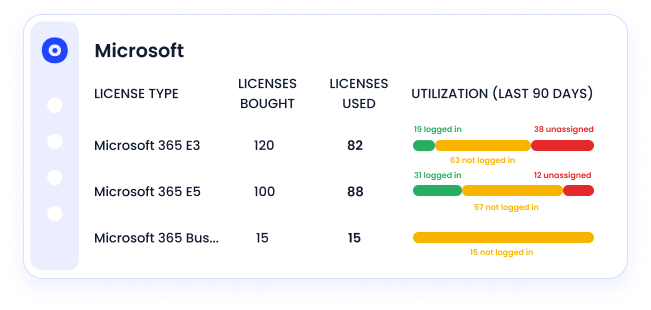
In CloudEagle.ai's license management view, every application shows purchased count, assigned count, and actively used count side by side:
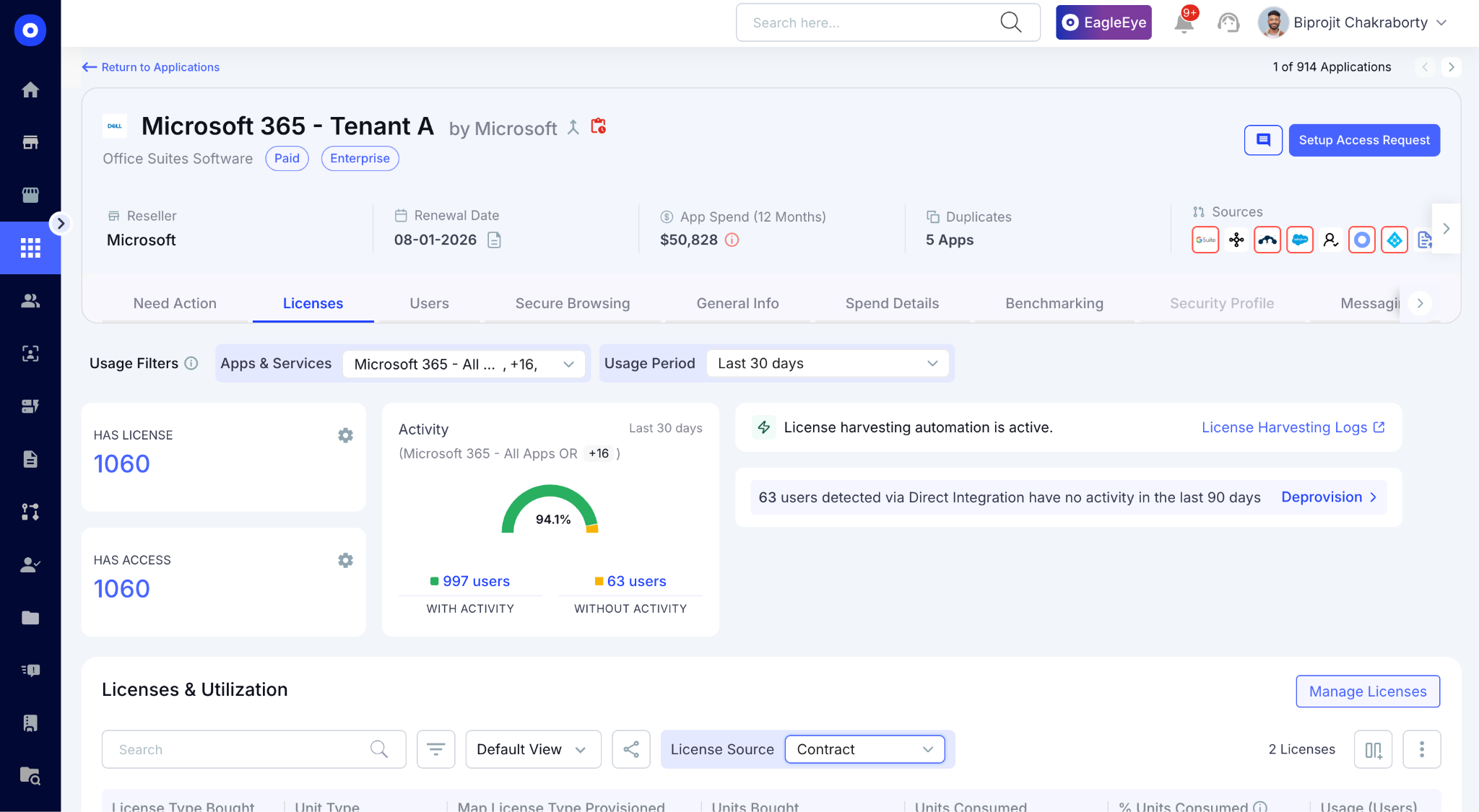
This is the starting point Vendr's benchmark skips. Before you negotiate the price, you need to know whether the seat count in your current contract reflects what your team actually uses.

B. License Harvesting: Turn Dormant Seats Into Renewal Leverage

License management shows you what exists. License harvesting automatically identifies seats that have been inactive for 30, 60, or 90 days and triggers a reclaim workflow.

Here's how license harvesting surfaces dormant seats and reclaims them before the vendor call:

In CloudEagle.ai's license harvesting view, every dormant seat is flagged with the last activity date, the license cost, and a reclaim action  so the right-sized contract number is confirmed before the vendor call:
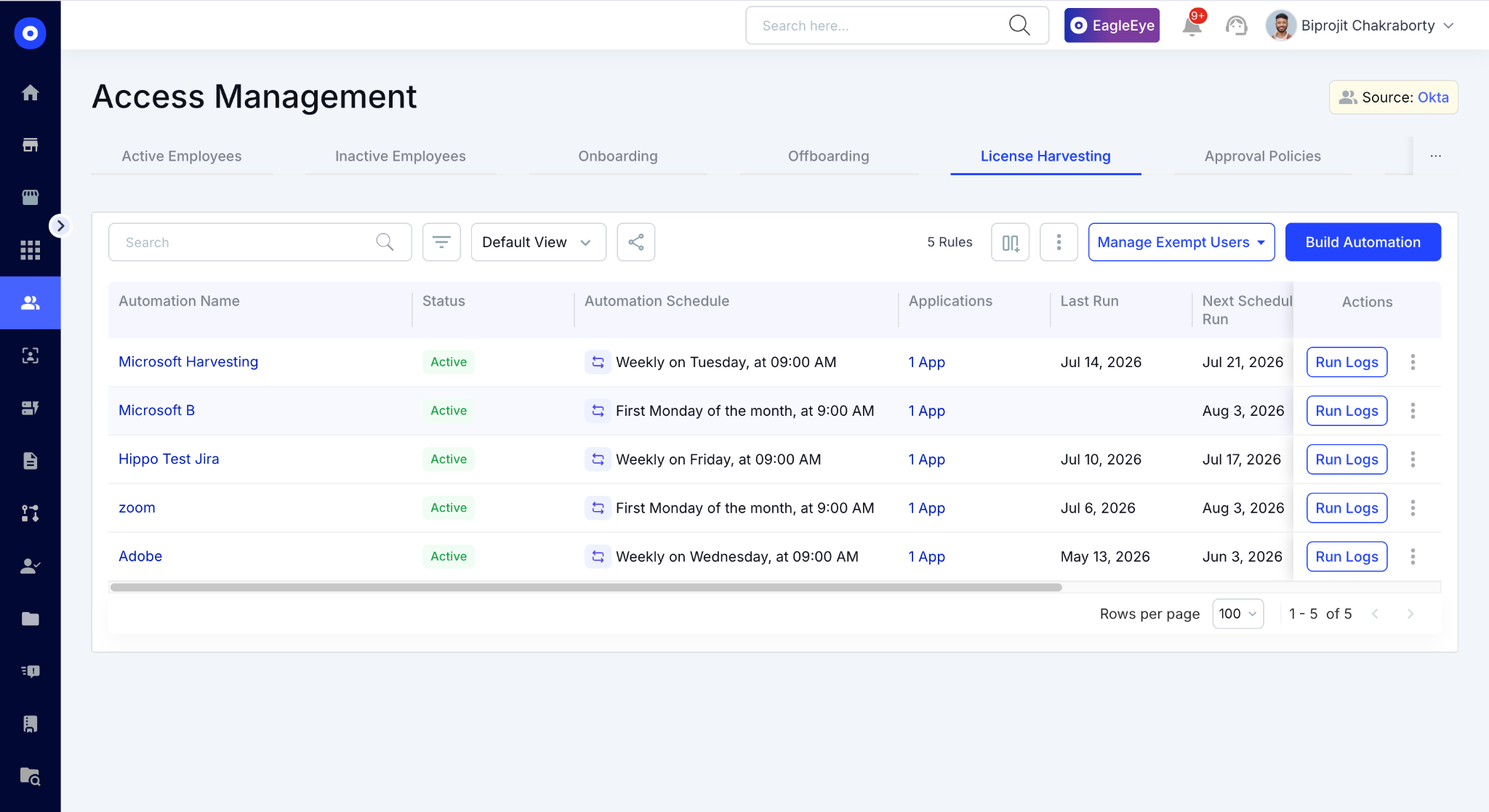
Customers typically recover 10 to 30% of annual SaaS spend within the first 90 days, not from better pricing, from walking into renewals with the right seat count instead of last year's.

C. AI Contract Metadata Extraction: Surface What's Buried in Your Contracts

CloudEagle.ai uses AI to extract renewal dates, notice periods, opt-out clauses, auto-renewal terms, and SKUs directly from uploaded contracts.

Here's how AI contract metadata extraction is designed to surface what matters before it costs you:
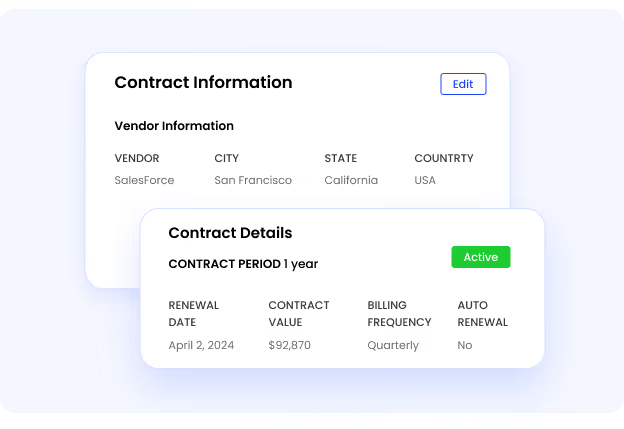
In CloudEagle.ai's contract view, every vendor appears with extracted contract fields such as renewal date, notice period, opt-out clause, contract value, alongside current usage data.

Knowing the market rate for a tool you've already auto-renewed on unfavorable terms is too late. Knowing the opt-out deadline 90 days in advance is when pricing intelligence actually becomes leverage.

D. Renewal Tracking and Workflows: Never Miss the Window

CloudEagle.ai builds a live renewal calendar from extracted contract data automatically  and triggers renewal workflows 90 days in advance without anyone having to remember to start them. 

Stakeholders are notified via Slack, Teams, and email. Approvals route through Jira, Coupa, or Ironclad. Here's how the renewal workflow keeps every contract on track:

In CloudEagle.ai's renewal calendar, every vendor appears with renewal date, days remaining, notice period deadline, and current usage data and benchmark pricing already attached:


The leverage window doesn't close quietly. When a notice period is nine days from expiring, the right person already knows, with usage data and benchmark already in front of them.

E. Price Benchmarking and Buying Guides: The Same Data Vendr Provides, With Usage Attached

CloudEagle.ai's SaaSMap benchmarking database is compiled from over 2 billion transactions, field experts, and an extensive network of SaaS buyers, covering the same pricing intelligence Vendr provides.
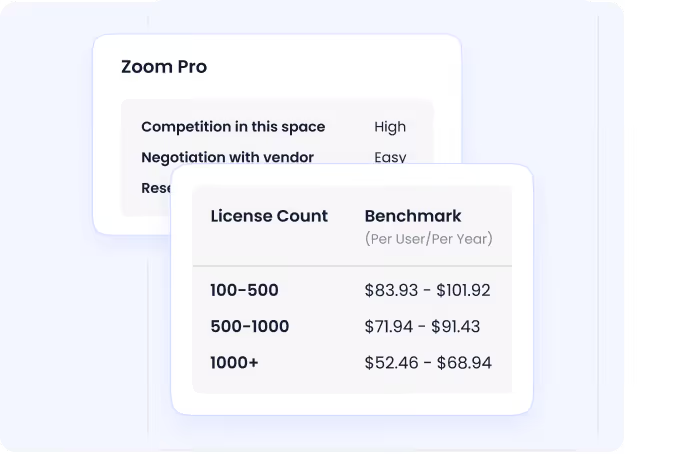
The difference: CloudEagle.ai surfaces that benchmark number in the same view as your actual usage data. You see what the market pays for 200 seats and what your team is consuming in the same dashboard.
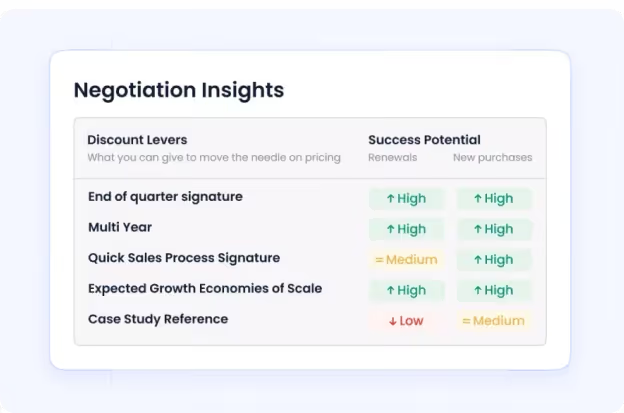
Vendor-specific buying guides cover the negotiation levers, discount patterns, and renewal behaviors that have delivered savings on that specific vendor, not a generic rate card, but a playbook built from real deals.
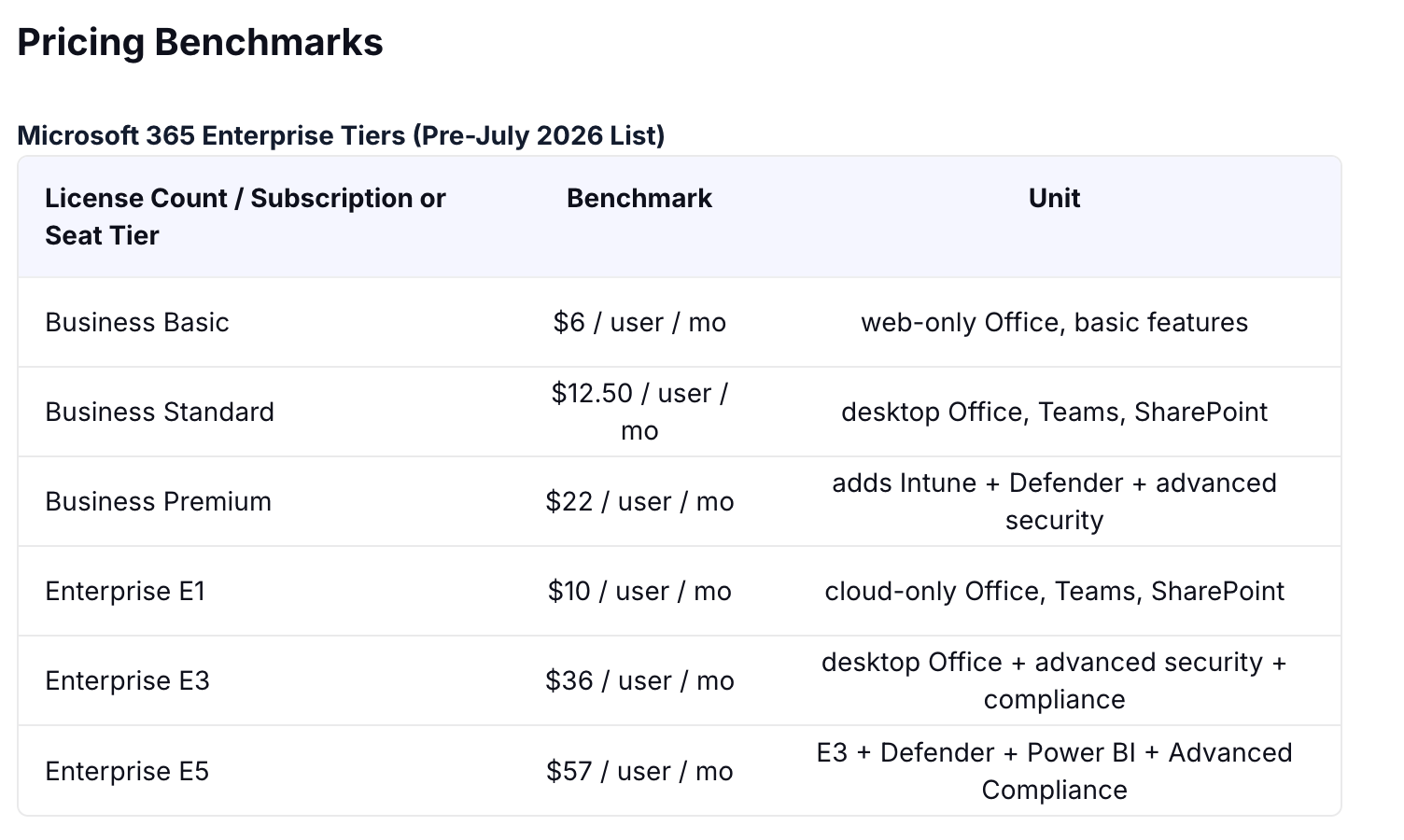
In CloudEagle.ai's benchmarking view, your current contract price is mapped against peer pricing, with the vendor-specific buying guide available in the same workflow.

F. Negotiation Support and Expert Help: The Plan, Not Just the Number

For high-stakes renewals where the contract value justifies expert involvement, CloudEagle.ai provides on-demand negotiation advisory, a thorough analysis of your vendor quote and a strategy to get a better deal.
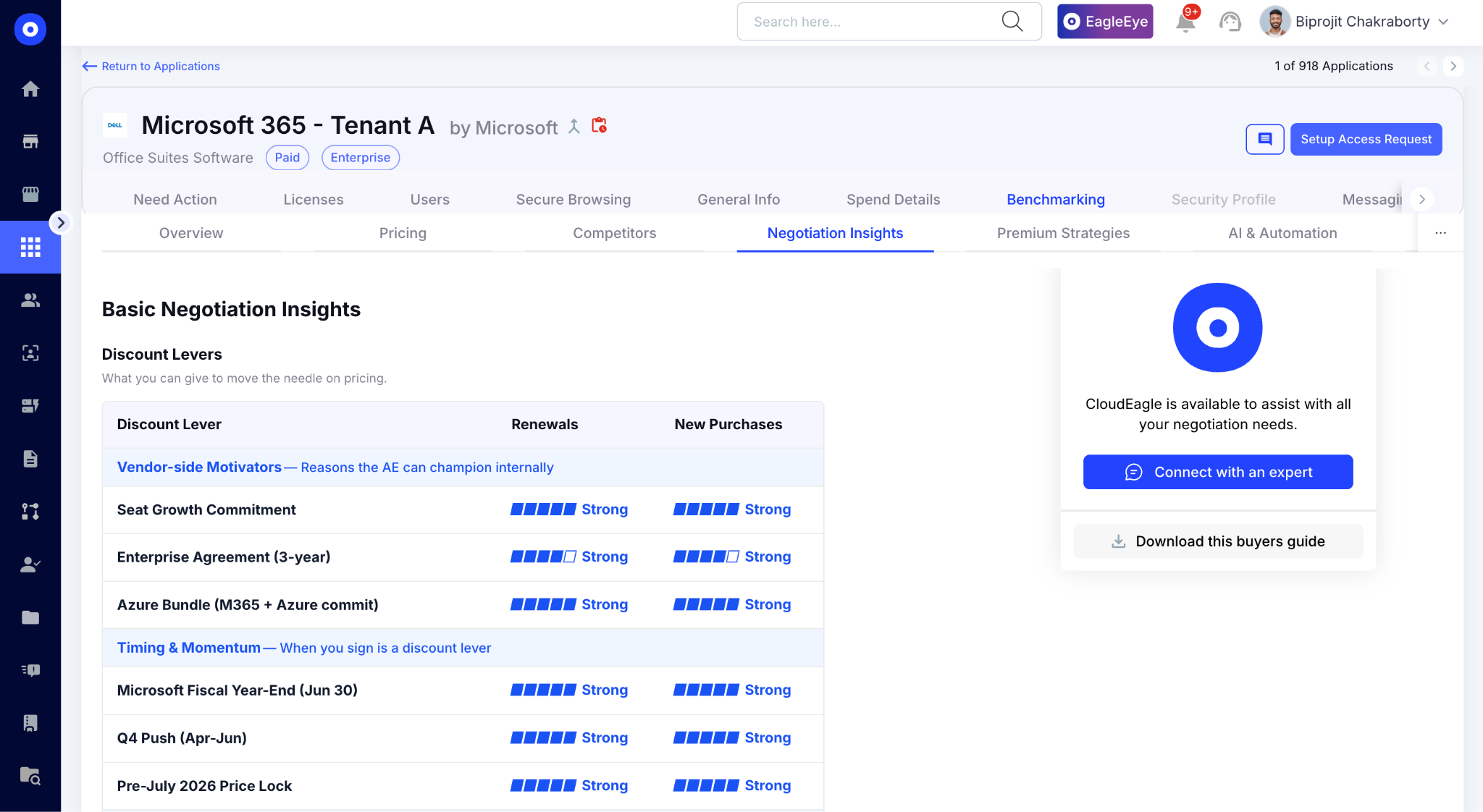
The advisory uses your actual usage data, your contract history, and CloudEagle.ai's benchmarking database together, so the strategy reflects your specific situation, not a generic playbook.

G. Procurement Workflows: The Execution Layer

Knowing the right seat count, the right price, and the right timing only matters if the approval process doesn't slow everything down. 

CloudEagle.ai's no-code, Slack-enabled procurement workflows route renewal decisions to the right stakeholders automatically.
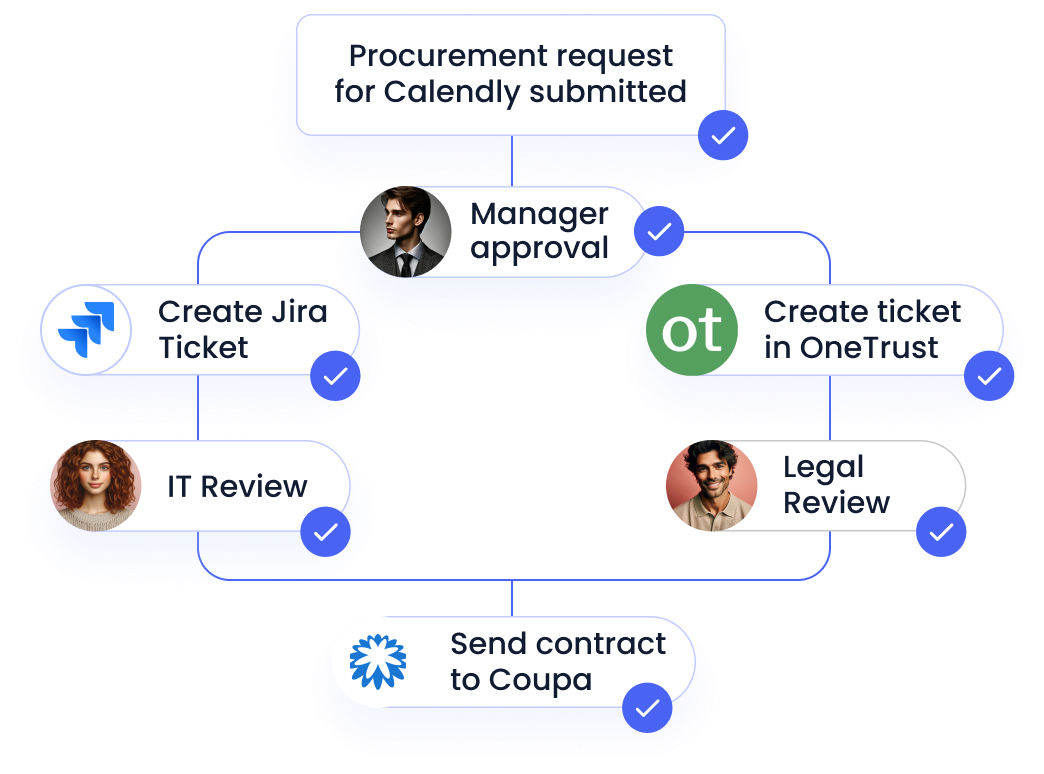
No chasing approvals over email. No renewal that stalls because someone missed a notification. By the time the vendor call happens, every stakeholder has already seen the right-sized contract and the market rate.

H. AI Spend Visibility: Renewals Now Include AI Tools

SaaS renewals increasingly include AI tools such as ChatGPT Enterprise, Microsoft Copilot, Cursor, Gemini, with usage-based billing that scales in ways a seat count never did. 

CloudEagle.ai tracks AI tool adoption and monitors token consumption per user, per team, and per tool against budget thresholds, surfacing AI spend alongside traditional SaaS in the same renewal workflow.

Here's how AI spend visibility is designed to bring AI tools into the same renewal context as the rest of your stack:
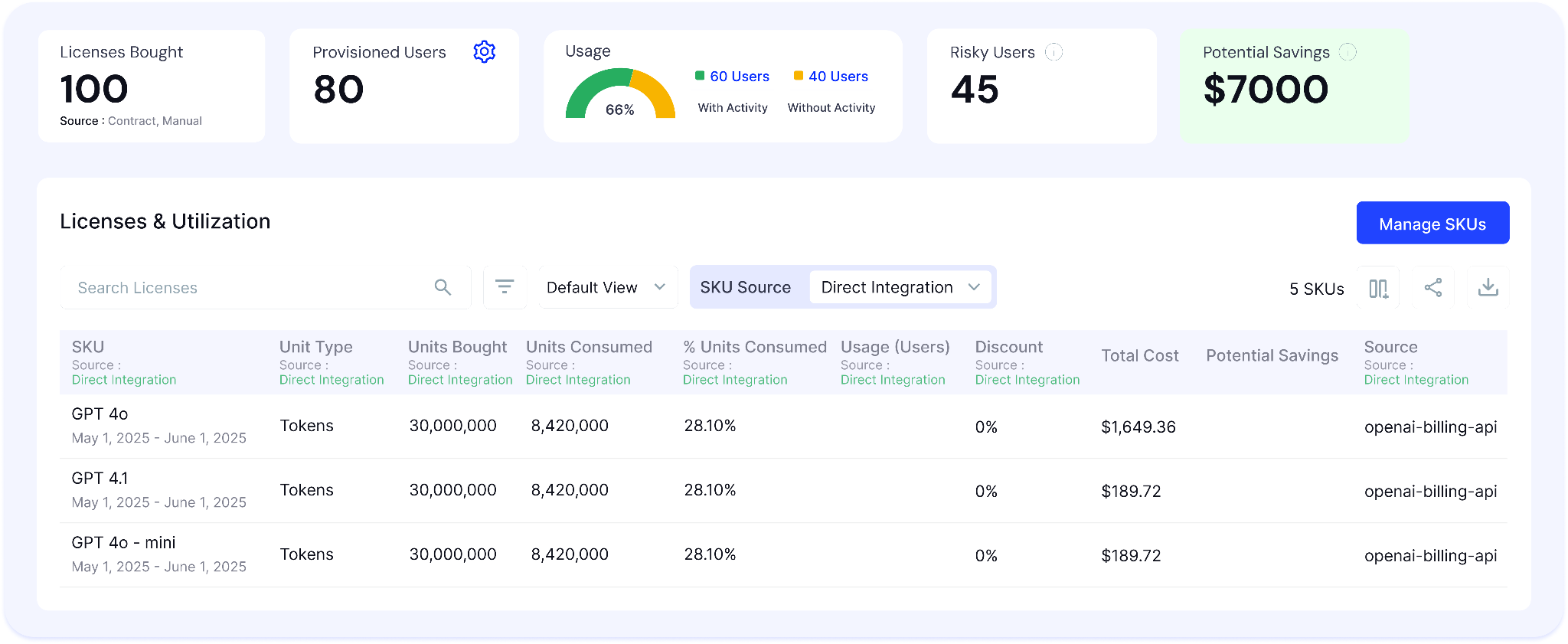
In CloudEagle.ai's AI spend view, every AI tool in the stack appears with usage by team, token consumption trends, and cost per user:

When the AI renewal arrives, usage data, benchmark pricing, and right-sized seat count are already in CloudEagle.ai, handled the same way as every other SaaS renewal.

3. What Switching to CloudEagle.ai Actually Looks Like

The biggest switching fear is usually the same: "I'll have to rebuild everything from scratch." Here's why that's not how it works.

A. Your Contracts and Renewal Dates Come With You

Existing contracts, notice periods, and renewal calendars import directly into CloudEagle.ai. The moment a contract is uploaded, CloudEagle.ai's AI extracts the renewal date, notice period, opt-out clause, and auto-renewal terms automatically.

You're not trading a working system for an empty one. You're adding the usage data and enforcement layer that the system you already have was missing.

B. Modular Pricing: You Don't Have to Replace Everything on Day One

CloudEagle.ai's subscription model is modular. A team can start with usage tracking and renewal management alone and add negotiation support, procurement workflows, or broader spend management modules later.

Nobody has to rip out Vendr and rebuild their entire procurement stack in one move. The practical path for most teams is replacing the one thing that's failing them first and expanding from there once the first module is delivering value.

C. No Trade-Off: You Get Everything Vendr Gave You, Plus What It Didn't

CloudEagle.ai covers the same pricing benchmark data Vendr provides, compiled from over 2 billion transactions across the same vendor network. 

Switching isn't a choice between the benchmark report you're used to and the usage data and renewal tracking you're missing.

It's not a trade-off at all. The benchmarking stays. The usage visibility, automated renewal tracking, procurement workflows, and negotiation support are added on top of it.

Software Costs Rarely Stay Still

Neither should you.
Optimize Now

4. Conclusion

A pricing benchmark is a useful data point. It's still just one input and businesses that walk into a vendor call with a market rate and nothing else are negotiating a contract they haven't right-sized.

The full renewal context looks different: usage data sitting next to the benchmark, renewal timing tracked automatically, and a negotiation plan built from your own contract history.

With consolidation reshaping the pricing-intelligence category right now, this is a natural moment for a procurement team to ask whether their current tool covers the full picture or just the price. 

CloudEagle.ai covers both: usage data, automated renewal timelines, pricing benchmarks, and negotiation support together in the same workflow, not four separate tools stitched together after the fact.

5. FAQs

1. How quickly does CloudEagle.ai surface usable renewal and usage data after connecting?

Most teams see their first usage insights and populated renewal calendar within hours of connecting CloudEagle.ai to their SSO and finance systems. Contracts uploaded on day one are processed by AI immediately such as renewal dates, notice periods, and opt-out clauses extracted automatically without a manual setup phase.

2. Does CloudEagle.ai cover long-tail and mid-market SaaS vendors, not just enterprise tools like Salesforce or Workday?

CloudEagle.ai's SaaSMap benchmarking database covers 150,000+ vendors across enterprise and mid-market tools, including the long-tail vendors that most pricing intelligence platforms don't cover. Buying guides and negotiation playbooks are available for tools like Gong, Calendly, Notion, and Figma, not just the largest enterprise contracts.

3. Can CloudEagle.ai identify duplicate SaaS tools across departments that are doing the same job?

CloudEagle.ai maps applications by functional category and flags tools with overlapping capabilities across departments. For example, two project management platforms or three video conferencing tools purchased independently by different teams. The overlap surfaces with usage and spend data per tool, so the consolidation decision is backed by numbers rather than opinion.

4. Can CloudEagle.ai produce department-level spend reports for finance and chargeback purposes?

CloudEagle.ai connects to HRIS and finance systems to map license usage and SaaS spend against department and cost center records automatically. Finance receives allocation reports built from live consumption data rather than manually assembled exports — giving procurement and finance a shared view of what each department is actually spending before the next budget cycle.

5. How does CloudEagle.ai handle SaaS purchases made through resellers or distributors rather than directly with vendors?

CloudEagle.ai ingests spend data from finance and expense systems regardless of how the purchase was routed, direct vendor invoices, reseller charges, and marketplace purchases all surface in the same spend view. Contract metadata is extracted from the actual agreement regardless of which entity issued it, so renewal dates and notice periods are tracked accurately even when the vendor relationship runs through a third party.

Advertisement for a SaaS Subscription Tracking Template with a call-to-action button to download and a partial graphic of a tablet showing charts.Banner promoting a SaaS Agreement Checklist to streamline SaaS management and avoid budget waste with a call-to-action button labeled Download checklist.Blue banner with text 'The Ultimate Employee Offboarding Checklist!' and a black button labeled 'Download checklist' alongside partial views of checklist documents from cloudeagle.ai.Digital ad for download checklist titled 'The Ultimate Checklist for IT Leaders to Optimize SaaS Operations' by cloudeagle.ai, showing checklist pages.Slack Buyer's Guide offer with text 'Unlock insider insights to get the best deal on Slack!' and a button labeled 'Get Your Copy', accompanied by a preview of the guide featuring Slack's logo.Monday Pricing Guide by cloudeagle.ai offering exclusive pricing secrets to maximize investment with a call-to-action button labeled Get Your Copy and an image of the guide's cover.Blue banner for Canva Pricing Guide by cloudeagle.ai offering a guide to Canva costs, features, and alternatives with a call-to-action button saying Get Your Copy.Blue banner with white text reading 'Little-Known Negotiation Hacks to Get the Best Deal on Slack' and a white button labeled 'Get Your Copy'.Blue banner with text 'Little-Known Negotiation Hacks to Get the Best Deal on Monday.com' and a white button labeled 'Get Your Copy'.Blue banner with text 'Little-Known Negotiation Hacks to Get the Best Deal on Canva' and a white button labeled 'Get Your Copy'.Banner with text 'Slack Buyer's Guide' and a 'Download Now' button next to images of a guide titled 'Slack Buyer’s Guide: Features, Pricing & Best Practices'.Digital cover of Monday Pricing Guide with a button labeled Get Your Copy on a blue background.Canva Pricing Guide cover with a button labeled Get Your Copy on a blue gradient background.

Enter your email to
unlock the report

Oops! Something went wrong while submitting the form.
License Count
Benchmark
Per User/Per Year

Enter your email to
unlock the report

Oops! Something went wrong while submitting the form.
License Count
Benchmark
Per User/Per Year

Enter your email to
unlock the report

Oops! Something went wrong while submitting the form.
Notion Plus
License Count
Benchmark
Per User/Per Year
100-500
$67.20 - $78.72
500-1000
$59.52 - $72.00
1000+
$51.84 - $57.60
Canva Pro
License Count
Benchmark
Per User/Per Year
100-500
$74.33-$88.71
500-1000
$64.74-$80.32
1000+
$55.14-$62.34

Enter your email to
unlock the report

Oops! Something went wrong while submitting the form.

Enter your email to
unlock the report

Oops! Something went wrong while submitting the form.
Zoom Business
License Count
Benchmark
Per User/Per Year
100-500
$216.00 - $264.00
500-1000
$180.00 - $216.00
1000+
$156.00 - $180.00

Enter your email to
unlock the report

Oops! Something went wrong while submitting the form.

Get the Right Security Platform To Secure Your Cloud Infrastructure

Please enter a business email
Thank you!
The 2023 SaaS report has been sent to your email. Check your promotional or spam folder.
Oops! Something went wrong while submitting the form.

Access full report

Please enter a business email
Thank you!
The 2023 SaaS report has been sent to your email. Check your promotional or spam folder.
Oops! Something went wrong while submitting the form.

Vendr built its reputation on one thing: telling you what companies your size typically pay for a piece of software. That's genuinely useful. But it answers exactly one question.

It doesn't tell you that 40% of your licensed seats haven't been touched in 90 days. It doesn't alert you that your auto-renewal clause fires in nine days. It doesn't give you a negotiation plan beyond a number to anchor against.

A procurement team we spoke with recently found that going into a vendor call with a market rate and nothing else left them negotiating the wrong contract from the first sentence.

Pricing intelligence is one input. The full renewal context such as usage data, renewal timing, negotiation leverage, and expert support is what turns that input into a better outcome.

CloudEagle.ai gives procurement teams exactly that: the same benchmarking data Vendr provides, plus the usage visibility, automated renewal tracking, and negotiation support that pricing intelligence alone was never built to deliver. 

In this article, we'll show you what's missing, and what changes when you have the full picture.

TL;DR

  • Pricing benchmarks alone don't optimize SaaS renewals because they lack usage insights, renewal timing, and negotiation context.
  • CloudEagle.ai combines real-time license usage, automated renewal tracking, and AI-powered contract intelligence in one platform.
  • License harvesting, benchmarking, and buying guides help teams negotiate the right contract. not just the right price.
  • Procurement workflows and AI spend visibility streamline approvals and extend governance to modern AI tools.
  • CloudEagle.ai delivers complete renewal intelligence by combining pricing, usage, automation, and negotiation support in a single workflow.

1. The Three Things Vendr Pricing Intelligence Doesn't Tell You

Vendr's benchmark data is accurate. The problem isn't the number but everything the number doesn't come with.

To negotiate effectively, you need to know how your software is actually being used, when your renewal window closes, and what leverage you're walking in with.

A. Vendr Doesn't Know What You're Actually Using

Vendr's report tells you the market rate for 200 seats. It has no visibility into whether your organization is actively using 200 seats or 80 because usage tracking isn't what Vendr was built to do.

That distinction matters more than the benchmark itself. If 40% of your seats have been dormant for 90 days, your biggest opportunity isn't negotiating a better price on 200 seats. It's renewing 120 seats instead. 

A Vendr benchmark starts from whatever seat count your current contract says, not from what your team actually consumes. You walk into the vendor call with the right price for the wrong contract.

B. Vendr Doesn't Track When Your Renewal Window Closes

Vendr is a report you pull when you remember to pull it. It doesn't watch your contract calendar or alert you when leverage is about to disappear. Here's what that looks like in practice:

  • Notice Periods Expire Unnoticed: Most enterprise SaaS contracts require 30 to 90 days notice to cancel or downsize. Vendr doesn't track these dates or alert you when the window is closing,
  • Auto-Renewal Clauses Fire Silently: Without a system watching your contract calendar, the auto-renewal locks in before the benchmark conversation even starts.
  • The Negotiation Happens in Arrears: By the time many teams pull a Vendr report, they're negotiating a contract that's already renewed, which means they're actually preparing for next year, not this one

Pricing intelligence without renewal timing is a strategy you can't execute.

C. Vendr Doesn't Give You a Plan to Execute the Negotiation

Vendr tells you what the market pays. It doesn't tell you what to say on the call, in what order, backed by what leverage from your own usage history and contract terms.

A benchmark is one data point. The negotiation plan requires knowing which licenses are underused, what you've spent historically, which modules aren't delivering value, and what are realistic contract terms. 

Vendr provides the anchor number, the context that makes the number actionable has to come from somewhere else.

Your Vendor Has A Strategy

Do you?
Get Prepared

2. How CloudEagle.ai Gives You the Full Renewal Context, Not Just a Price

CloudEagle.ai gives procurement and finance teams everything Vendr provides including pricing benchmarks pulled from $50B+ in SaaS transactions.

Moreover, the usage data, automated renewal tracking, and negotiation support that a benchmark report alone was never built to deliver. Here's what that looks like across the full renewal lifecycle:

A. License Management: See Every License Across Your Entire Stack 

CloudEagle.ai connects to 500+ applications and pulls real-time license data such as purchased licenses, assigned licenses, and actively used licenses across every vendor in your stack.

Here's how license management is designed to give you a complete picture of what you own:

In CloudEagle.ai's license management view, every application shows purchased count, assigned count, and actively used count side by side:

This is the starting point Vendr's benchmark skips. Before you negotiate the price, you need to know whether the seat count in your current contract reflects what your team actually uses.

B. License Harvesting: Turn Dormant Seats Into Renewal Leverage

License management shows you what exists. License harvesting automatically identifies seats that have been inactive for 30, 60, or 90 days and triggers a reclaim workflow.

Here's how license harvesting surfaces dormant seats and reclaims them before the vendor call:

In CloudEagle.ai's license harvesting view, every dormant seat is flagged with the last activity date, the license cost, and a reclaim action  so the right-sized contract number is confirmed before the vendor call:

Customers typically recover 10 to 30% of annual SaaS spend within the first 90 days, not from better pricing, from walking into renewals with the right seat count instead of last year's.

C. AI Contract Metadata Extraction: Surface What's Buried in Your Contracts

CloudEagle.ai uses AI to extract renewal dates, notice periods, opt-out clauses, auto-renewal terms, and SKUs directly from uploaded contracts.

Here's how AI contract metadata extraction is designed to surface what matters before it costs you:

In CloudEagle.ai's contract view, every vendor appears with extracted contract fields such as renewal date, notice period, opt-out clause, contract value, alongside current usage data.

Knowing the market rate for a tool you've already auto-renewed on unfavorable terms is too late. Knowing the opt-out deadline 90 days in advance is when pricing intelligence actually becomes leverage.

D. Renewal Tracking and Workflows: Never Miss the Window

CloudEagle.ai builds a live renewal calendar from extracted contract data automatically  and triggers renewal workflows 90 days in advance without anyone having to remember to start them. 

Stakeholders are notified via Slack, Teams, and email. Approvals route through Jira, Coupa, or Ironclad. Here's how the renewal workflow keeps every contract on track:

In CloudEagle.ai's renewal calendar, every vendor appears with renewal date, days remaining, notice period deadline, and current usage data and benchmark pricing already attached:


The leverage window doesn't close quietly. When a notice period is nine days from expiring, the right person already knows, with usage data and benchmark already in front of them.

E. Price Benchmarking and Buying Guides: The Same Data Vendr Provides, With Usage Attached

CloudEagle.ai's SaaSMap benchmarking database is compiled from over 2 billion transactions, field experts, and an extensive network of SaaS buyers, covering the same pricing intelligence Vendr provides.

The difference: CloudEagle.ai surfaces that benchmark number in the same view as your actual usage data. You see what the market pays for 200 seats and what your team is consuming in the same dashboard.

Vendor-specific buying guides cover the negotiation levers, discount patterns, and renewal behaviors that have delivered savings on that specific vendor, not a generic rate card, but a playbook built from real deals.

In CloudEagle.ai's benchmarking view, your current contract price is mapped against peer pricing, with the vendor-specific buying guide available in the same workflow.

F. Negotiation Support and Expert Help: The Plan, Not Just the Number

For high-stakes renewals where the contract value justifies expert involvement, CloudEagle.ai provides on-demand negotiation advisory, a thorough analysis of your vendor quote and a strategy to get a better deal.

The advisory uses your actual usage data, your contract history, and CloudEagle.ai's benchmarking database together, so the strategy reflects your specific situation, not a generic playbook.

G. Procurement Workflows: The Execution Layer

Knowing the right seat count, the right price, and the right timing only matters if the approval process doesn't slow everything down. 

CloudEagle.ai's no-code, Slack-enabled procurement workflows route renewal decisions to the right stakeholders automatically.

No chasing approvals over email. No renewal that stalls because someone missed a notification. By the time the vendor call happens, every stakeholder has already seen the right-sized contract and the market rate.

H. AI Spend Visibility: Renewals Now Include AI Tools

SaaS renewals increasingly include AI tools such as ChatGPT Enterprise, Microsoft Copilot, Cursor, Gemini, with usage-based billing that scales in ways a seat count never did. 

CloudEagle.ai tracks AI tool adoption and monitors token consumption per user, per team, and per tool against budget thresholds, surfacing AI spend alongside traditional SaaS in the same renewal workflow.

Here's how AI spend visibility is designed to bring AI tools into the same renewal context as the rest of your stack:

In CloudEagle.ai's AI spend view, every AI tool in the stack appears with usage by team, token consumption trends, and cost per user:

When the AI renewal arrives, usage data, benchmark pricing, and right-sized seat count are already in CloudEagle.ai, handled the same way as every other SaaS renewal.

3. What Switching to CloudEagle.ai Actually Looks Like

The biggest switching fear is usually the same: "I'll have to rebuild everything from scratch." Here's why that's not how it works.

A. Your Contracts and Renewal Dates Come With You

Existing contracts, notice periods, and renewal calendars import directly into CloudEagle.ai. The moment a contract is uploaded, CloudEagle.ai's AI extracts the renewal date, notice period, opt-out clause, and auto-renewal terms automatically.

You're not trading a working system for an empty one. You're adding the usage data and enforcement layer that the system you already have was missing.

B. Modular Pricing: You Don't Have to Replace Everything on Day One

CloudEagle.ai's subscription model is modular. A team can start with usage tracking and renewal management alone and add negotiation support, procurement workflows, or broader spend management modules later.

Nobody has to rip out Vendr and rebuild their entire procurement stack in one move. The practical path for most teams is replacing the one thing that's failing them first and expanding from there once the first module is delivering value.

C. No Trade-Off: You Get Everything Vendr Gave You, Plus What It Didn't

CloudEagle.ai covers the same pricing benchmark data Vendr provides, compiled from over 2 billion transactions across the same vendor network. 

Switching isn't a choice between the benchmark report you're used to and the usage data and renewal tracking you're missing.

It's not a trade-off at all. The benchmarking stays. The usage visibility, automated renewal tracking, procurement workflows, and negotiation support are added on top of it.

Software Costs Rarely Stay Still

Neither should you.
Optimize Now

4. Conclusion

A pricing benchmark is a useful data point. It's still just one input and businesses that walk into a vendor call with a market rate and nothing else are negotiating a contract they haven't right-sized.

The full renewal context looks different: usage data sitting next to the benchmark, renewal timing tracked automatically, and a negotiation plan built from your own contract history.

With consolidation reshaping the pricing-intelligence category right now, this is a natural moment for a procurement team to ask whether their current tool covers the full picture or just the price. 

CloudEagle.ai covers both: usage data, automated renewal timelines, pricing benchmarks, and negotiation support together in the same workflow, not four separate tools stitched together after the fact.

5. FAQs

1. How quickly does CloudEagle.ai surface usable renewal and usage data after connecting?

Most teams see their first usage insights and populated renewal calendar within hours of connecting CloudEagle.ai to their SSO and finance systems. Contracts uploaded on day one are processed by AI immediately such as renewal dates, notice periods, and opt-out clauses extracted automatically without a manual setup phase.

2. Does CloudEagle.ai cover long-tail and mid-market SaaS vendors, not just enterprise tools like Salesforce or Workday?

CloudEagle.ai's SaaSMap benchmarking database covers 150,000+ vendors across enterprise and mid-market tools, including the long-tail vendors that most pricing intelligence platforms don't cover. Buying guides and negotiation playbooks are available for tools like Gong, Calendly, Notion, and Figma, not just the largest enterprise contracts.

3. Can CloudEagle.ai identify duplicate SaaS tools across departments that are doing the same job?

CloudEagle.ai maps applications by functional category and flags tools with overlapping capabilities across departments. For example, two project management platforms or three video conferencing tools purchased independently by different teams. The overlap surfaces with usage and spend data per tool, so the consolidation decision is backed by numbers rather than opinion.

4. Can CloudEagle.ai produce department-level spend reports for finance and chargeback purposes?

CloudEagle.ai connects to HRIS and finance systems to map license usage and SaaS spend against department and cost center records automatically. Finance receives allocation reports built from live consumption data rather than manually assembled exports — giving procurement and finance a shared view of what each department is actually spending before the next budget cycle.

5. How does CloudEagle.ai handle SaaS purchases made through resellers or distributors rather than directly with vendors?

CloudEagle.ai ingests spend data from finance and expense systems regardless of how the purchase was routed, direct vendor invoices, reseller charges, and marketplace purchases all surface in the same spend view. Contract metadata is extracted from the actual agreement regardless of which entity issued it, so renewal dates and notice periods are tracked accurately even when the vendor relationship runs through a third party.

CloudEagle.ai recognized in the 2025 Gartner® Magic Quadrant™ for SaaS Management Platforms
Download now
gartner chart
5x
Faster employee
onboarding
80%
Reduction in time for
user access reviews
30k
Workflows
automated
$15Bn
Analyzed in
contract spend
$2Bn
Saved in
SaaS spend

Streamline SaaS governance and save 10-30%

Book a Demo with Expert
CTA image