
%201.svg)


HIPAA Compliance Checklist for 2025

SaaS contracts rarely get the same attention as cloud infrastructure or software security, yet they quietly control millions in annual spend, risk exposure, and compliance obligations.
A survey found that 50% of enterprises waste more than 10% of their annual technology budget on unmanaged or unused software and SaaS contracts, underscoring why contract lifecycle discipline is critical.
In most organizations, SaaS contracts live in email threads, shared drives, procurement systems, and vendor portals. Ownership is fragmented across IT, finance, procurement, and business teams. By the time renewals come up, assumptions replace data.
That’s why SaaS Contract Lifecycle Management (CLM) is becoming a critical discipline for modern FinOps, IT procurement, and vendor management teams.
If your organization struggles with surprise renewals, unused licenses, or compliance blind spots, this framework is designed for you.
TL;DR
- SaaS contracts are harder to manage due to auto-renewals, usage-based pricing, and decentralized ownership.
- Traditional CLM tools fail because they don’t connect contracts with usage, spend, and renewals.
- A strong SaaS CLM framework centralizes contracts, links them to data, and tracks renewals proactively.
- The biggest risks are missed renewals, compliance gaps, and paying for unused or duplicate tools.
- Moving from contract storage to contract intelligence unlocks cost savings, control, and forecasting accuracy.
1. What Is SaaS Contract Lifecycle Management (CLM)?
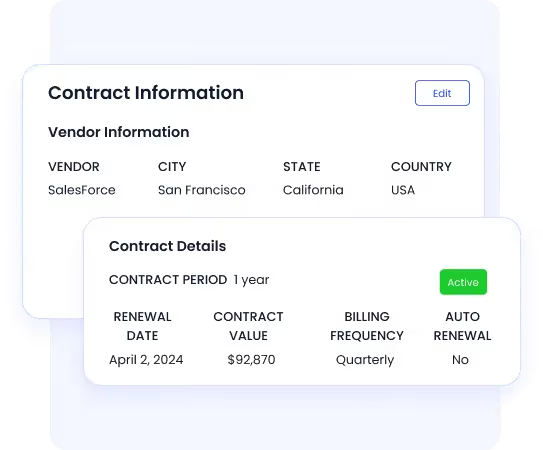
SaaS contract lifecycle management refers to the end‑to‑end process of managing software contracts from discovery and procurement through renewals, optimization, and termination.
Unlike traditional contract management, SaaS CLM goes beyond storing documents. It connects contracts to:
- Usage data
- Spend and billing information
- Contract owners and business stakeholders
- Compliance and security requirements
The goal is simple: maintain full visibility and control over every SaaS agreement throughout its lifecycle.
Why traditional CLM tools fall short for SaaS
Traditional CLM platforms were built for legal teams managing sales and procurement contracts. They excel at drafting, versioning, and approvals, but they stop working once the contract is signed.
SaaS introduces new challenges:
- Continuous billing and usage after signature
- Auto‑renewals that trigger without manual review
- Pricing models tied to seats, consumption, or tiers
- Frequent contract amendments and add‑ons
Without usage, spend, and renewal intelligence, contract storage alone does not prevent overspending or risk.
2. Why SaaS Contracts Are Harder to Manage Than You Think
a. Auto‑renewals and evergreen clauses
Most SaaS contracts include automatic renewal clauses. Miss the notice window by a few days, and you’re locked into another year, often with built-in price escalations.
In decentralized environments, renewal deadlines are easy to miss.
b. Usage‑based and tiered pricing models
Modern SaaS pricing is no longer flat.
You may be paying based on:
- Active users
- Feature tiers
- API calls or transactions
- Storage or data volumes
Without continuous monitoring, contracted value drifts far away from actual usage.
c. Decentralized contract ownership
SaaS contracts are often owned by business units, not central IT or procurement.
Marketing buys tools. HR signs platforms. Engineering provisions developer SaaS.
The result:
- No single system of record
- Duplicate vendors across teams
- No consolidated view of obligations and renewals
3. The SaaS Contract Lifecycle: Key Stages Explained
Managing SaaS contracts effectively requires visibility across every stage.
a. Discovery and intake of SaaS contracts
The first challenge is simply knowing what contracts exist.
Key activities:
- Discover contracts across finance systems, inboxes, and vendor portals
- Capture contract metadata (terms, renewal dates, pricing, clauses)
- Assign business and technical owners
Without strong discovery, everything downstream breaks.
b. Procurement and vendor onboarding
This stage includes:
- Vendor evaluation and approval
- Pricing negotiations
- Security and compliance reviews
- Contract execution and provisioning
Strong SaaS procurement contracts reduce long‑term risk and lock in favorable terms early.
c. Active contract management and compliance
Once live, contracts require continuous oversight:
- Tracking usage vs. entitlements
- Monitoring compliance obligations
- Managing amendments and add‑ons
- Ensuring data protection and regulatory alignment
This is where most organizations lose visibility.
d. Renewal planning and renegotiation
Renewals are where most value or waste is created.
Best‑in‑class teams:
- Start renewal planning 90–120 days early
- Analyze utilization before renegotiation
- Benchmark pricing and contract terms
Reactive renewals almost always increase costs.
e. Contract termination and offboarding
When contracts end, organizations must:
- De‑provision licenses and users
- Revoke access and credentials
- Archive data securely
- Confirm billing stops
Poor offboarding leads to zombie spend and security risk.
4. Common Risks Across the SaaS Contract Lifecycle
Common risks across the Software-as-a-Service (SaaS) contract lifecycle span from initial negotiation to termination, largely centering on data security, financial surprises, and vendor lock-in.
a. Missed renewals and surprise cost increases
Auto‑renewals combined with price uplifts are the top driver of SaaS budget overruns.
b. Compliance and data security blind spots
Contracts define:
- Data residency requirements
- Audit rights
- Breach notification timelines
Missing these details creates regulatory and security exposure.
c. Paying for unused or duplicate tools
Without contract tracking and usage alignment, organizations routinely pay for:
- Shelfware licenses
- Overlapping vendors
- Legacy contracts no one remembers owning
5. A Practical Framework for SaaS Contract Lifecycle Management
Here’s a simple, scalable framework you can implement regardless of company size.
a. Centralize all SaaS contracts in one system
Start by creating a single source of truth for all SaaS agreements.
This includes:
- Master service agreements
- Order forms and amendments
- Renewal terms and notice windows
Centralization alone dramatically reduces renewal risk.
b. Link contracts to usage, spend, and owners
Contracts should never live in isolation.
Best practice is to connect each contract to:
- Real usage and license data
- Actual billing and spend
- Named technical and business owners
This enables contract intelligence, not just storage.
c. Track renewals proactively, not reactively
SaaS contracts often include auto-renew clauses and long notice periods that quietly lock teams into another year of spend if they’re missed. Setting automated renewal alerts 60–120 days before renewal dates gives FinOps and procurement teams time to review actual usage, identify shelfware, model downsizing scenarios, and prepare negotiation strategies.
Build workflows that trigger:
- Usage analysis
- Stakeholder reviews
- Vendor benchmarking
Renewal planning becomes a strategic exercise, not a fire drill.
d. Continuously optimize contracts post‑signature
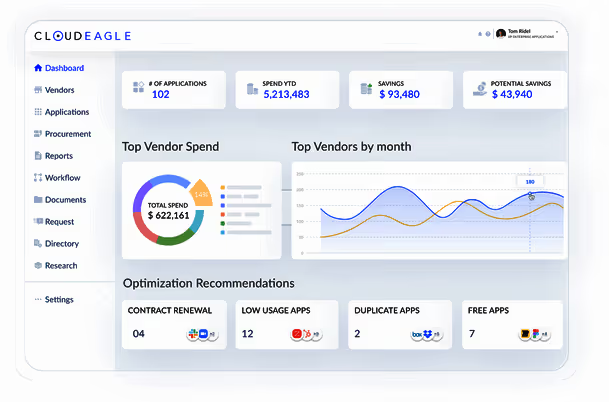
Optimization does not end at negotiation.
Leading teams continuously:
- Right‑size license counts
- Downgrade unused tiers
- Consolidate overlapping tools
- Enforce termination rights
This is where long‑term savings are created.
6. Metrics That Matter for SaaS Contract Lifecycle Management
To run SaaS CLM like an operating model, track the right metrics.
a. Contract coverage and visibility rate
Percentage of active SaaS vendors with a stored, searchable contract.
b. Renewal risk score
A composite score based on:
- Time to renewal
- Spend size
- Utilization gaps
- Vendor criticality
c. Utilization vs. contracted value
The single most powerful optimization metric:
How much of what you’re paying for is actually being used?
7. How CloudEagle.ai Simplifies SaaS Contract Lifecycle Management
CloudEagle.ai simplifies SaaS contract lifecycle management through a centralized, AI-powered platform that automates and streamlines every stage of the SaaS contract process, from discovery to renewal. Here's how:
1. Contract Discovery & Centralization
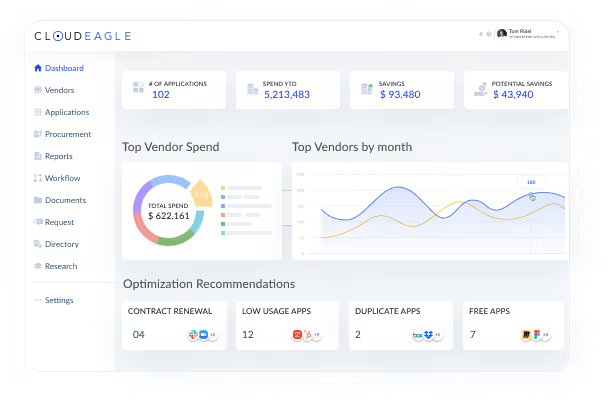
CloudEagle.ai replaces scattered spreadsheets and manual tracking with a centralized AI repository that ingests and organizes all SaaS contracts. Its proprietary AI extracts metadata like renewal dates, license counts, notice periods, and SKUs, ensuring no renewal is missed and no contract is mismanaged.
2. Renewal Management
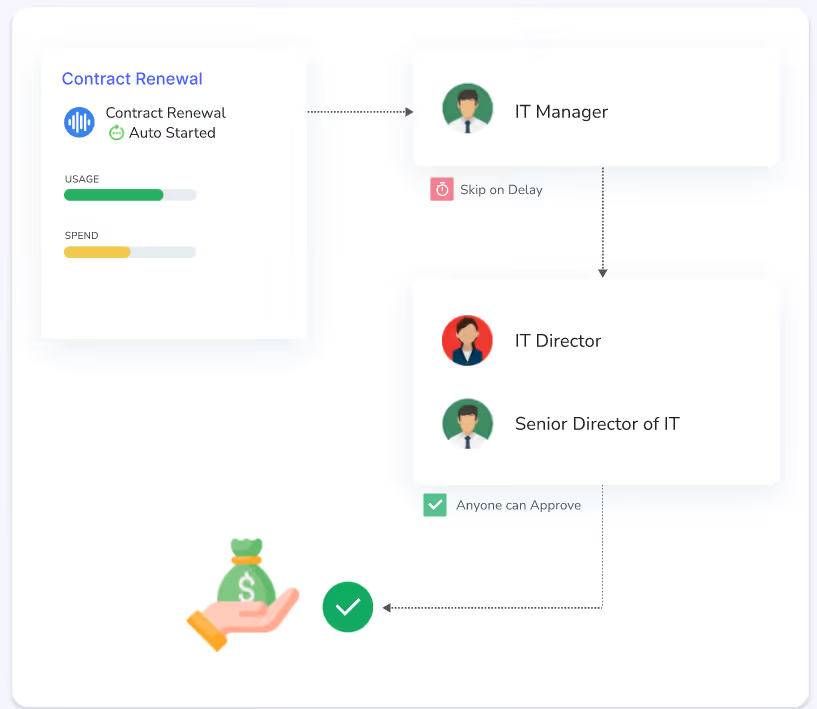
Rather than relying on calendar reminders or spreadsheets, CloudEagle.ai builds a renewal calendar powered by automated workflows and integrated data from contracts, usage insights, and procurement history. It enables:
- Auto-reminders
- Centralized status tracking
- Workflow-based approval routing
- Integration with tools like Ironclad, Coupa, and Slack.
3. Negotiation & Price Benchmarking
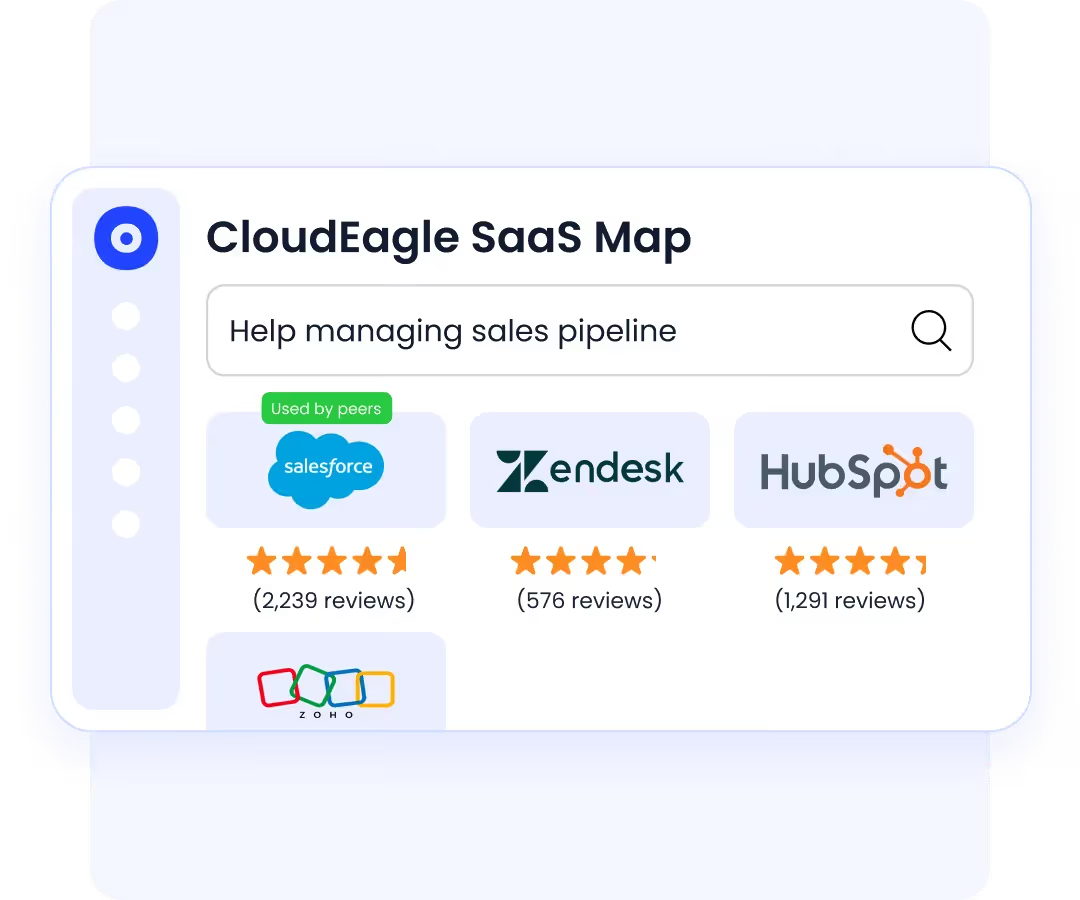
CloudEagle.ai empowers procurement teams with:
- Benchmarking data to ensure favorable pricing
- Usage analytics to identify unused licenses and right-size renewals
- Negotiation guides based on historical vendor data and feature usage analysis
This enables customers to renew smarter and save 10–30% on software spend.
4. Automated Renewal Orchestration
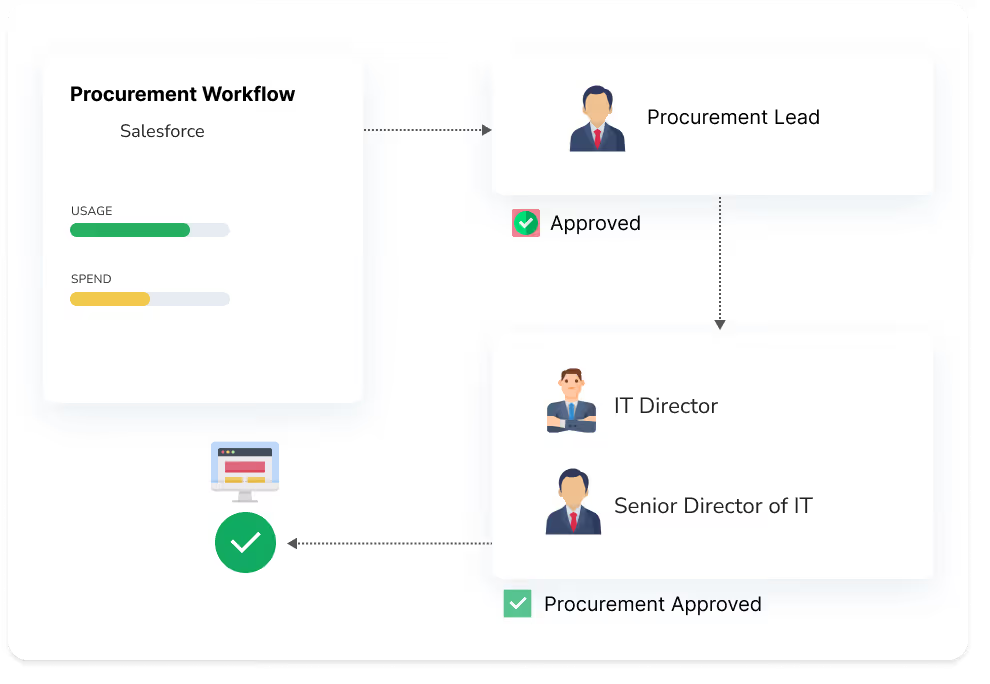
The platform automates repetitive tasks and approval workflows, making procurement more efficient and faster:
- Identify upcoming renewals
- Recommend whether to renew, renegotiate, or eliminate
- Trigger auto-approvals based on spend thresholds or app importance.
5. Insights & Reporting
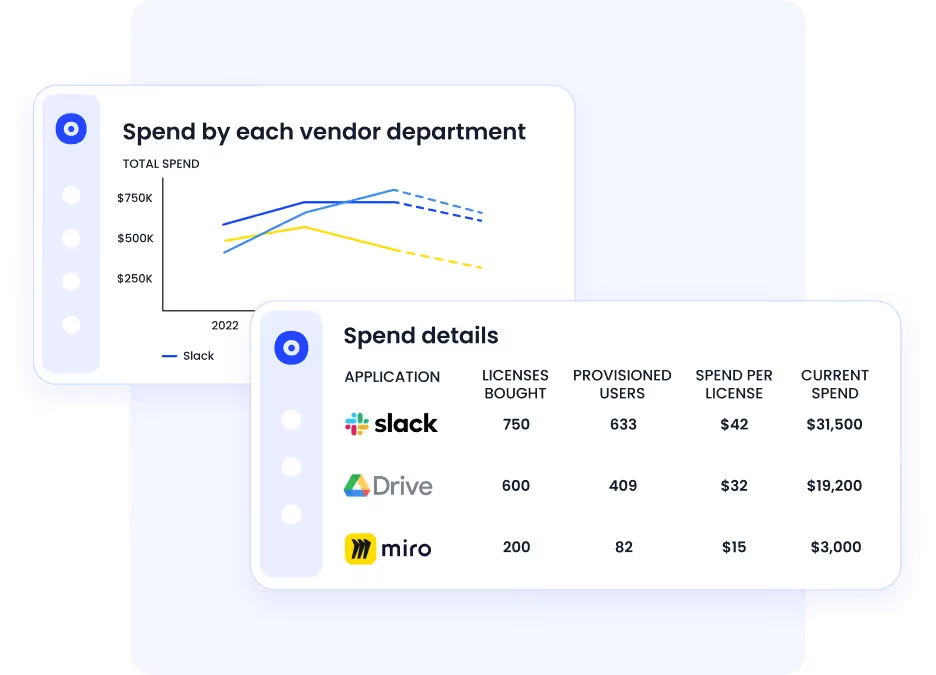
CloudEagle.ai delivers actionable reporting and dashboards, showing:
- Contract terms
- Renewal deadlines
- License utilization
- Department-wise SaaS spend
- ROI visibility per app
This ensures procurement, finance, and IT teams are aligned and always audit-ready.
In summary, CloudEagle.ai transforms contract lifecycle management from a manual, error-prone process into a proactive, automated, and data-driven operation, ensuring renewals are never missed, contracts are fully optimized, and savings are maximized.
8. Building a Scalable SaaS CLM Operating Model
a. Assign clear ownership for contracts
Every contract should have:
- A business owner
- A technical owner
- A procurement or finance reviewer
Clear ownership prevents blind spots.
b. Integrate CLM with procurement and FinOps workflows
SaaS CLM works best when integrated with:
- Vendor onboarding processes
- Budget forecasting
- Renewal planning
- Security reviews
This turns contracts into a living system, not static files.
c. Move from contract storage to contract intelligence
The future of SaaS CLM is intelligence:
- Predict renewal risk
- Identify savings opportunities
- Flag compliance issues early
Contracts become a strategic asset, not an administrative burden.
FinOps is no longer just about cloud cost control. As SaaS becomes one of the largest and least visible categories of enterprise spend, extending FinOps into SaaS procurement and renewals is now a practical necessity.
Decentralized buying, fragmented ownership, and limited usage visibility have made traditional procurement models insufficient on their own. FinOps brings the missing layer: continuous visibility, financial accountability, and data-driven decision-making across the SaaS lifecycle.
Organizations that apply FinOps principles to SaaS procurement can move from reactive purchasing to strategic investment, and from rushed renewals to planned negotiations. With unified visibility and renewal intelligence from platforms like CloudEagle.ai, teams are better positioned to scale efficiently without letting SaaS complexity quietly erode their budgets.
Frequently Asked Questions
1. How do SaaS renewals affect FinOps forecasting accuracy?
Unplanned auto‑renewals and price escalations introduce volatility into SaaS spend, making forecasts unreliable unless renewal data is integrated into FinOps models.
2. Why is SaaS harder to forecast than cloud spend in FinOps?
SaaS pricing depends on users, tiers, and contract terms, not just consumption. Decentralized ownership and hidden renewals further reduce predictability.
3. What causes budget overruns during SaaS renewals?
The biggest drivers are missed notice periods, over‑licensed contracts, bundled upgrades, and lack of pre‑renewal utilization analysis.
4. How can companies avoid surprise SaaS renewal costs?
Centralize contracts, track renewals proactively, analyze usage before negotiations, and assign clear contract ownership across teams.
5. What data does FinOps need to forecast SaaS spend accurately?
Accurate forecasting requires contract terms, renewal dates, pricing models, historical usage, license counts, and vendor‑level spend trends.


.avif)


.avif)
.avif)




.png)







.avif)
.avif)
.avif)


