
%201.svg)


HIPAA Compliance Checklist for 2025

Contract lifecycle management has become more complex than ever for modern enterprises.
Contract volumes have grown, renewal terms change frequently, and obligations are increasingly tied to performance, SLAs, and compliance standards.
And CloudEagle’s 2025 IGA Report highlights that 48% of ex-employees retain access to business systems after offboarding, often because contract terms for access and vendor relationships are not tied to lifecycle governance, which leads to significant risk.
This is why understanding the stages of contract lifecycle management (CLM) is critical. Without structured CLM workflow steps, organizations struggle to control spend, track renewals, maintain accountability, or ensure compliance.
TL;DR
- CLM includes request, drafting, negotiation, approval, storage, and renewal
- Poor lifecycle visibility causes financial leakage & missed obligations
- AI automates lifecycle steps, risk insights & renewal alerts
- CloudEagle.ai ties contract decisions to spend & usage intelligence
- Enterprises gain efficiency and 10–30% cost savings
1. What Is Contract Lifecycle Management?
Contract lifecycle management (CLM) is the structured process of managing a contract from initial request through drafting, negotiation, execution, performance tracking, renewal, or termination.
Strong CLM processes help organizations improve compliance, accelerate business decisions, and control financial and legal risk.
Why CLM Matters
- Ensures visibility and ownership across each contract stage
- Reduces financial leakage and missed deadlines
- Improves compliance and regulatory readiness
- Speeds up business decisions and vendor relationships
- Eliminates manual work and spreadsheet dependency
Where traditional contract systems focus on basic storage and routing, modern CLM platforms leverage AI, automation, and workflow intelligence to transform contracts into strategic business assets rather than static legal documents.
2. What are the Stages of Contract Lifecycle Management
Most organizations struggle because contract lifecycle stages are disconnected, owned by different teams, and stored in different systems. CloudEagle unifies these stages into a single structured workflow.
a. Contract request and intake
The lifecycle begins when a contract request is generated by legal, procurement, finance, sales, or IT.
Common challenges
- Missing documentation and unclear requirements
- No visibility into requester or ownership
- Delays in intake prioritization
According to Deloitte’s Legal Ops Benchmark Report, 56% of contracting delays originate during intake and initial information gathering, largely due to incomplete data and unclear ownership.
How CloudEagle helps
CloudEagle centralizes contract intake with ownership assignment and request routing so nothing falls through the cracks.
b. Drafting/authoring
Contracts are created using templates, existing SaaS agreements, or external vendor documents.
Challenges
- Manual document creation
- Inconsistent terms across departments
- Slow template access
Best practices
Use standardized templates and AI clause recommendations to accelerate setup.
c. Negotiation and redlining
Legal teams exchange versions with internal and external stakeholders to finalize language.
Challenges
- Version confusion and email back-and-forth
- Long approval cycles and unclear accountability
How CloudEagle supports
Centralized collaboration with version history ensures clarity and alignment across teams.
d. Approval and signature
Contracts move through stakeholder approvals before signatures are completed electronically.
Challenges
- Delays due to unclear ownership
- Manual signature routing and lost timelines
CloudEagle outcome
Automated routing ensures approvals move faster and no signatures stall deal closure.
e. Storage and obligation tracking
Once signed, contracts must be stored and monitored for performance, spend, usage, and compliance.
Challenges
- Documents are scattered across systems
- Obligations are tracked manually in sheets
- Lack of real-time compliance visibility
WorldCC found that 92% of organizations struggle to locate signed contracts quickly when requested, proving the need for centralized, searchable storage.
CloudEagle advantage
Centralized searchable repository with obligation alerts and usage insights.
f. Renewal or termination
Renewals can extend vendor relationships or drive renegotiation if tracked properly.
Challenges
- Missed cancellation windows
- Auto-renewals without review
- No spend benchmarking for negotiation
In a study, Gartner notes that missed renewals increase contract costs by up to 15–20% annually
CloudEagle.ai automates renewal alerts and provides usage & cost analytics, enabling smarter renew/downgrade/cancel decisions.
3. Why Understanding the Stages of CLM Matters
Most teams don’t struggle because contracts are complicated.
They struggle because the journey from the renewal request is broken across different systems and departments. And when the lifecycle isn’t structured, contracts slow down deals, drain time, and quietly leak money.
Here’s what happens without structured CLM:
- Ownership becomes unclear
- Deadlines slip through inbox cracks
- Obligations hide inside PDFs
- Renewals sneak up without time to renegotiate
McKinsey found that when companies transition to structured CLM processes, they see 20–25% faster contract cycles, largely because negotiation, review, and routing stop living inside email threads.
And the financial impact is real:
WorldCC research shows organizations lose up to 30% of total contract value due to poor post-signature management and missed obligations.
A structured CLM workflow eliminates chaos, turns reactive firefighting into proactive planning, and creates a lifecycle that runs itself, not on spreadsheets, not by memory.
4. How AI Enhances Contract Lifecycle Management
AI doesn’t replace legal expertise.
It replaces the thousands of tiny manual tasks that steal hours and stall momentum.
Imagine a system that:
- Alerts your team about renewals before the vendor does
- Summarizes 50 pages of legal language into a 1-minute brief
- Highlights risky clauses before someone signs them
- Pulls up any clause across every contract in seconds
That’s what AI brings to CLM: real-time intelligence instead of reactive effort.
a. What AI Actually Changes
1. Renewal alerts & automated notifications
No more surprises, no more quiet auto-renewals rolling over at midnight.
- Proactive alerts triggered weeks or months before notice cutoff
- Auto-escalation to owners when decisions stall
Gartner reports missed renewals can inflate vendor costs by 15–20% every year.
AI makes sure that never happens.
2. Predictive risk insights
AI compares contract language against standard terms and flags anything unusual, indemnity risk, unlimited liability, cancellation limitations, penalties, or missing clauses.
- See risks before they become disputes
- Make decisions with clarity, not panic
- Reduce escalation time dramatically
3. NLP Search & Instant Summaries
Stop scrolling through PDFs.
Type: “termination clause” or “SLA credits” and boom, AI highlights every occurrence across every agreement.
- Faster audit prep
- Faster negotiation leverage
- Faster knowledge sharing
Deloitte reports legal teams spend 40% of their time searching and reviewing documents manually, a workload AI cuts dramatically.
5. How CloudEagle.ai Supports the Entire CLM Lifecycle
Most CLM systems focus on drafting and storage, but ignore cost, usage, ownership, and renewal intelligence, which is where real business value is created.
CloudEagle.ai addresses these pain points end-to-end.
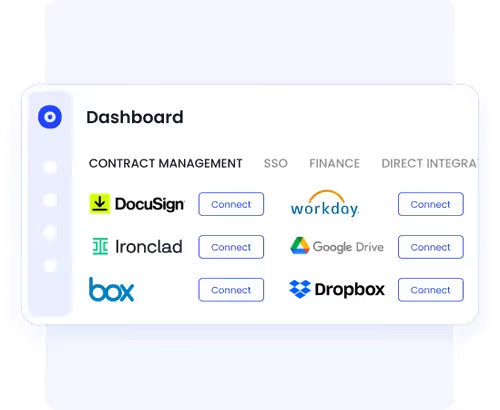
Step 1: AI-Powered Contract Repository
A centralized, intelligent foundation for all SaaS contracts.
How CloudEagle Helps
- Centralizes every contract in one unified repository
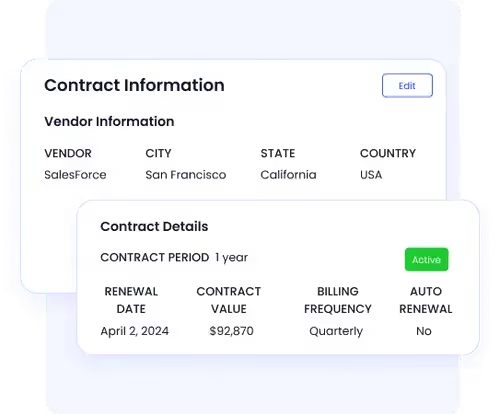
- Auto-extracts renewal dates, notice periods, pricing terms, SKUs, license counts
- Syncs with CLMs (Ironclad, Coupa, Zip) to keep records continuously up to date
- Makes contract terms instantly searchable and structured
- Eliminates manual data entry or PDF hunting
Value Delivered
Instant contract clarity and a single source of truth across Procurement, IT, and Finance.
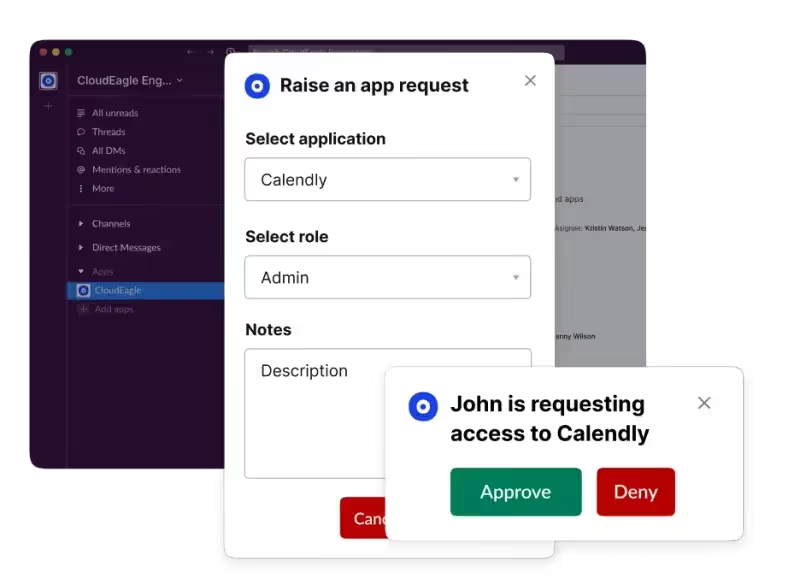
Step 2: Workflow Automation for Approvals
Automate contract approvals with structure, accountability, and speed.
How CloudEagle Helps
- No-code workflows with defined owners, due dates, and automated escalations
- Bi-directional approvals using Slack and email notifications
- Centralized approval records for full visibility
- Unifies procurement, IT, finance, and legal communication
- Ensures nothing stalls or depends on manual follow-ups
Value Delivered
Predictable, streamlined approvals with complete transparency.
See how Oyster HR moved from spreadsheets to full contract automation with CloudEagle.ai. Read the case study to learn how they achieved complete visibility and zero missed renewals.
Step 3: Unified Usage, Spend & Contract Intelligence
Connect contract terms to real, measurable utilization.
How CloudEagle Helps
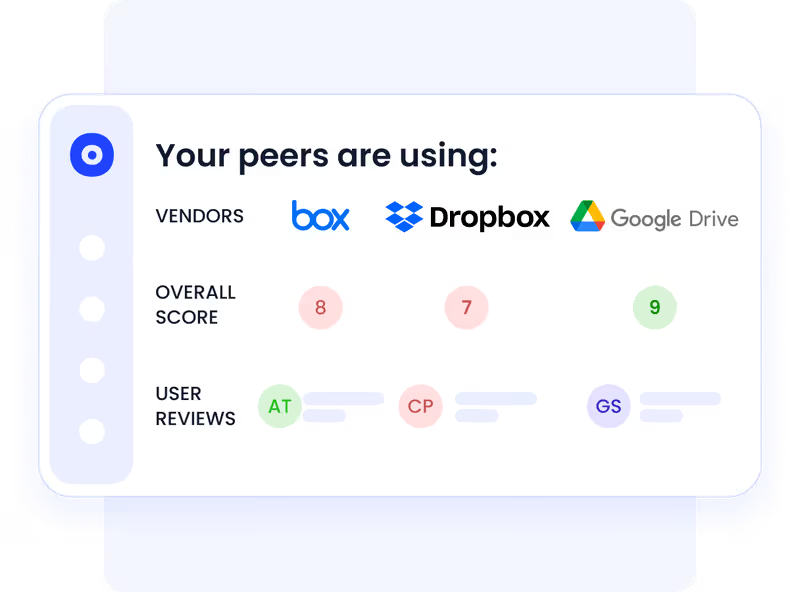
- Correlates contract SKUs with actual usage data across 500+ integrations
- Monitors feature-level usage, not just login counts
- Identifies unused or low usage licenses
- Flags duplicate apps or overlapping tools
- Highlights teams or departments with low engagement
Value Delivered
Accurate, data-driven decisions about renewals, downgrades, and the elimination of waste.
Step 4: Pricing Intelligence & Negotiation Insights
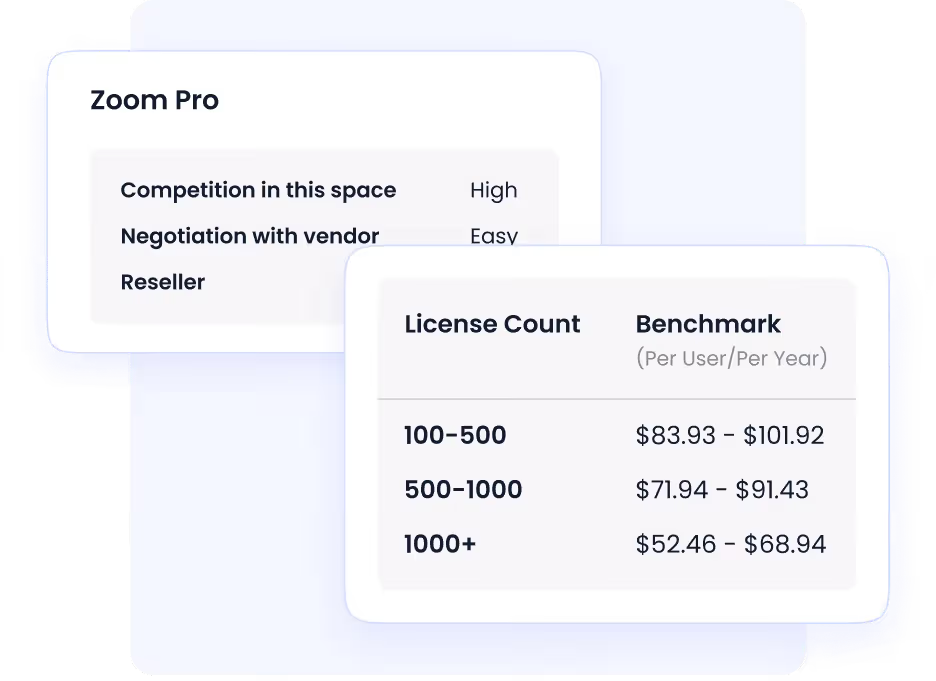
Empower renewal negotiations with real market data and usage insights.
How CloudEagle Helps
- Provides pricing benchmarks based on peer data and market trends
- Surfaces negotiation levers, such as tier options, contract terms, and volume thresholds
- Highlights opportunities to downgrade or consolidate licenses
- Generates vendor-specific negotiation insights and buying guides
- Combines spend + usage + contract data for a 360° view
Value Delivered
Stronger, data-backed negotiations that routinely deliver 10–30% SaaS savings.
Step 5: Renewal Calendar & Proactive Alerts
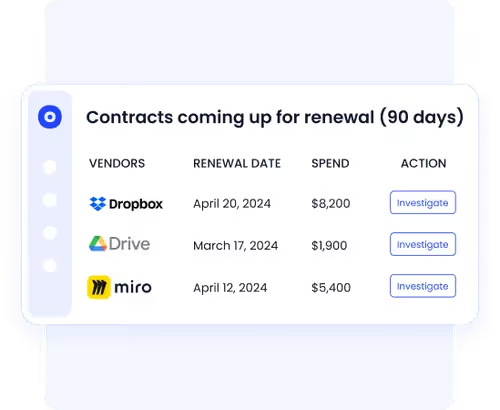
Never miss an opt-out or renewal opportunity again.
How CloudEagle.ai Helps
- Auto-builds renewal calendars using AI-extracted metadata
- Sends reminders and alerts 90+ days before renewal dates
- Auto-triggers pre-renewal workflows to align stakeholders
- Tracks status, blockers, and ownership in one view
- Removes dependency on spreadsheets or manual reminders
Value Delivered
No surprise auto-renewals and more time to plan strategic negotiations.
Step 6: Compliance & Audit-Ready Governance
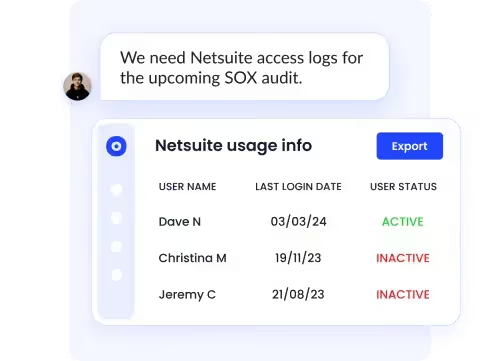
Strengthen compliance and reduce risk across the contract lifecycle.
How CloudEagle Helps
- Generates audit-ready logs covering approvals, changes, access, and provisioning
- Tracks role changes and app access against contract terms
- Flags risk areas such as missed opt-outs or unapproved tools
- Offers downloadable audit trails for SOC2, ISO, and internal assessments
- Ensures alignment between contracted entitlements and actual usage
Value Delivered
Faster audit prep, airtight compliance, and reduced contractual risk.
6. Conclusion
Contract lifecycle management is essential for organizations that want to control risk, improve decision-making, and maximize contract value.
Understanding each stage enables teams to replace reactive processes with proactive governance. AI further enhances CLM by automating workflows, identifying risk, and creating visibility where manual processes fail.
CloudEagle.ai enables enterprises to manage the entire CLM lifecycle intelligently by connecting contract data with spend, usage, and renewal automation, turning contract management into a strategic business advantage.
Book a free demo and modernize CLM with CloudEagle.ai
7. Frequently Asked Questions
1. What happens during contract negotiation?
Internal and external teams collaborate to edit terms, review redlines, reconcile language, and align risk and pricing before approval and signature. Clear version control prevents confusion and delays.
2. Why do enterprises need structured CLM workflows?
Without structured workflows, contracts get delayed, obligations are missed, and ownership is unclear. CLM improves visibility, speeds decision cycles, and protects financial and compliance outcomes.
3. How do companies track contract obligations?
Using automated alerts, dashboards, and structured obligation fields tied to renewal dates, SLAs, and cost commitments. Modern platforms replace spreadsheets with centralized tracking and real-time notifications.
4. How does AI improve contract lifecycle management?
AI extracts metadata, flags risk, automates reviews and approvals, predicts renewal outcomes, and triggers alerts so organizations avoid manual work, missed obligations, and uncontrolled spend.


.avif)


.avif)
.avif)




.png)







.avif)
.avif)
.avif)


