You need to enable JavaScript in order to use the AI chatbot tool powered by ChatBot

Why IT Teams Should Prioritize SaaS Management

Share via:
blog-cms-banner-bg
Little-Known Negotiation Hacks to Get the Best Deal on Slack
cta-bg-blogDownload Your Copy

HIPAA Compliance Checklist for 2025

Download PDF

The explosive growth of SaaS applications has transformed how businesses operate. Companies now use an average of 500+ SaaS tools, says CloudEagle.ai’s SaaS spend report.

However, this rapid adoption comes with challenges—from unauthorized software purchases draining budgets to poor ROI due to unused licenses and security risks from unmonitored applications.

To mitigate these risks, you must prioritize SaaS management, as it has become crucial to maintain control over your SaaS stack and protect your company's valuable resources.

Read on to find out why you should make SaaS management a priority.

TL;DR

  • Track all SaaS tools to control costs and prevent security risks caused by shadow IT and unchecked app usage.
  • Identify unused licenses and redundant apps to cut waste, boost ROI, and optimize spending.
  • Automate user onboarding and offboarding to enhance productivity and prevent unauthorized access.
  • Use role-based access, PAM, and automated reviews to strengthen security and simplify compliance audits.
  • Provide easy access to approved apps through Slack/MS Teams, reducing IT workload and preventing shadow IT.

What Is SaaS Management for IT and Security Teams?

SaaS management empowers IT and security teams to gain visibility, automate governance, and reduce risk from unauthorized usage. Unlike basic IT asset management or standalone SSO tools, true SaaS management delivers five critical capabilities: automated application discovery, intelligent license and spend management, robust access governance, proactive contract renewals, and continuous cost optimization.

This integrated approach shows exactly how IT teams manage SaaS applications from one platform, transforming reactive firefighting into strategic, data-driven decision making.

With organizations now using 500+ SaaS tools, IT and security teams face mounting challenges: shadow IT sprawl, compliance pressures, and software costs consuming massive IT budgets. Traditional spreadsheets and manual processes can't scale. SaaS management platforms deliver deep usage insights, automated governance workflows, and integrated spend optimization, capabilities that directly address IT leaders' core objectives: gaining visibility, automating governance, improving employee experience, and cutting both security risk and operational spend while preventing costly SaaS sprawl.

What Is SaaS Access Management and Why It Matters for IT Teams

SaaS access management extends beyond traditional IAM and SSO solutions by centralizing control over who can access which SaaS applications and at what permission levels across hundreds of tools in modern tech stacks.

Unlike basic identity management, SaaS access management provides granular oversight of user permissions, application-specific roles, and time-bound access across your entire SaaS portfolio. IT and security teams should prioritize this approach to reduce unauthorized access, enforce least privilege principles, simplify compliance audits, and maintain continuous security posture.

Modern platforms operationalize SaaS access management through role-based access controls, time-based access for temporary needs, automated provisioning and deprovisioning workflows, and continuous access reviews. This demonstrates how IT teams manage SaaS applications from one platform, transforming scattered access management into unified governance that scales with organizational growth while reducing manual oversight and strengthening security across the entire SaaS landscape.

Key Benefits of SaaS Management for Modern IT Teams

IT teams managing SaaS applications from one platform gain complete visibility and control. With 500+ direct connectors, teams discover all apps, licenses, and spending, eliminating shadow IT and duplicate tools. No-code Slack workflows automate employee onboarding, offboarding, access reviews, and license harvesting, reducing manual overhead while strengthening security governance.

Organizations achieve 10-30% SaaS spend reduction through intelligent license optimization and automated governance.

Industry-leading 30-minute onboarding delivers immediate savings from day one. Self-service app catalogs with automated approval workflows improve employee productivity while maintaining IT oversight and compliance across the entire SaaS stack.

SaaS Management: An In-Depth Guide for IT & Security Teams

Effective SaaS management follows a structured four-phase approach that transforms IT operations from reactive firefighting into strategic governance.

How IT teams manage saas applications from one platform begins with Discover (gaining complete visibility into your SaaS portfolio and shadow IT), followed by Govern (implementing automated access controls and compliance workflows), Renew (optimizing contract negotiations and procurement processes), and Optimize (continuously improving license utilization and cost efficiency). This systematic approach enables teams for saas management to shift from manually tracking hundreds of applications across spreadsheets to leveraging integrated platforms that provide real-time insights and automated workflows.

The following sections will guide you through each phase, showing how modern SaaS management platforms deliver immediate governance and savings from day one through industry-leading onboarding and 500+ direct integrations. You'll learn practical strategies for detecting shadow IT, streamlining user lifecycle management, negotiating better vendor terms, and implementing continuous optimization processes that reduce costs while enhancing security posture and operational efficiency across your entire technology stack.

7 Reasons Why IT Teams Should Pay Attention to SaaS Management

1. Complete Visibility Into SaaS Portfolio and Shadow IT Prevention

SaaS sprawl creates significant blind spots in your tech stack. Through advanced SaaS management, you gain complete visibility into every application within your organization and manage every IT assets under one roof.

More importantly, you can track departmental spending and detect unauthorized purchases that often lead to shadow IT.

Automated alerts notify you about risky or duplicate applications before they impact your security or budget. This approach helps you maintain control over your SaaS portfolio while preventing potential data breaches and unnecessary expenses.

2. Accurate Usage Insights on Licenses

License management often becomes a costly challenge without proper oversight. With comprehensive SaaS management, you gain real-time visibility into purchased, provisioned, and actively used licenses through a centralized dashboard.

This visibility extends beyond basic login data to include feature-level usage insights, such as the number of Zoom meetings conducted or opportunities created in Salesforce.

Additionally, AI-driven contract metadata extraction helps you track licenses at both vendor and application levels.

Image of CloudEagle's dashboard

This detailed insight enables you to make informed decisions about license upgrades, downgrades, or terminations based on actual usage patterns rather than assumptions.

3. Efficient Provisioning and Deprovisioning With Workflows

Manual user management wastes valuable time and comes with some security risks. Automated workflows streamline the entire process, ensuring new employees receive immediate access to necessary tools while departing staff lose access promptly.

These workflows integrate with your HR systems to automatically trigger based on employee status changes.

You can also establish role-based access controls that automatically assign appropriate permissions based on department and position. This automation eliminates manual errors, reduces IT workload, and ensures consistent security practices across your organization.

4. Rationalizing Redundant Applications To Optimize SaaS Stack

Duplicate and redundant applications significantly inflate your SaaS spending. Through effective SaaS management, you can automatically identify and categorize applications, making it easier to spot overlapping functionalities.

Direct API integrations provide deep insights into feature-level usage, enabling you to make data-driven decisions about application consolidation.

You can track department-level usage patterns to identify opportunities for standardization and cost reduction. This systematic approach helps eliminate waste while ensuring teams retain access to the tools they truly need.

5. Ensuring Right Users Have to Access to Applications

Uncontrolled access privileges pose serious security risks to your organization. Through comprehensive identity and access management (IAM), SaaS management platforms help you implement and maintain appropriate access levels across your application portfolio.

This approach ensures each user receives precisely defined permissions based on their role and responsibilities.

Your privileged access management (PAM) strategy becomes crucial when handling critical systems. You can easily monitor and control privileged access to high-risk applications like AWS or NetSuite while automating regular access reviews for compliance purposes.

This oversight extends to both standard and administrative accounts, ensuring tight control over your most sensitive systems.

Image of CloudEagle's access requests module

Additionally, time-based access controls allow you to grant temporary permissions for contractors or specific projects, automatically revoking access when no longer needed.

This automated approach to IAM eliminates the risk of forgotten accounts or lingering permissions. For instance, when contractors complete their projects, the system automatically revokes their access, maintaining your security posture.

Most importantly, these controls enhance your overall security while simplifying compliance documentation for audits.

The system maintains detailed logs of all access changes, providing clear evidence of your PAM practices during security assessments.

Regular automated access reviews further strengthen your security stance by ensuring that privileges remain appropriate and up-to-date across your entire SaaS stack.

6. Self-Service Catalog

Employee productivity often suffers from delayed access to necessary tools. A self-service app catalog empowers employees to request access to approved applications through familiar channels like Slack or MS Teams.

This approach reduces IT ticket volume while maintaining proper oversight through automated approval workflows.

The catalog also helps prevent shadow IT by suggesting existing approved alternatives when employees request new applications. This guidance ensures standardization while still meeting employee needs efficiently.

SaaS management transforms from a technical necessity into a strategic advantage for your organization through these seven key aspects.

It combines cost optimization, security enhancement, and operational efficiency into a single, manageable framework that supports your business growth while reducing risks and complexity.

SaaS Management Challenges IT Teams Need to Solve

IT teams managing SaaS applications face four critical challenges requiring a unified platform solution. Poor SaaS visibility creates blind spots where redundant apps, unused licenses, and shadow IT flourish. Security and compliance risks stem from unauthorized access and data breaches, while manual deprovisioning processes drain IT resources.

Wasted SaaS spend multiplies through auto-renewals, duplicate apps, and weak vendor negotiations, while lengthy approval workflows and siloed procurement create bottlenecks.

These challenges reduce IT productivity through manual work, weaken security posture, and drain budgets through uncontrolled spending.

A comprehensive SaaS management platform solves these challenges by delivering complete visibility, automating access governance, optimizing licenses, and streamlining procurement workflows, enabling IT teams to manage all SaaS applications from one platform with proactive, strategic governance.

How IT Teams Can Get Started with SaaS Management

Launch a successful SaaS management program by forming a cross-functional steering group with IT, security, finance, and procurement representatives. Begin with initial discovery to inventory all applications, spending, and user access patterns.

Prioritize quick wins: identify high-risk applications, consolidate vendor spend, and eliminate redundant tools for immediate cost savings and security improvements.

Establish clear policies for application requests, access provisioning, and renewals to prevent future sprawl. CloudEagle.ai delivers 100% visibility into applications, licenses, spend, and vendors through 500+ direct connectors, with 30-minute onboarding for immediate governance and savings.

No-code slack-enabled workflows streamline employee onboarding/offboarding, access reviews, license harvesting, and renewals. Leverage detailed usage insights and benchmarking data to negotiate better with vendors and optimize your tech stack, transitioning from reactive firefighting to proactive optimization for sustained cost control and enhanced security.

How to Implement a SaaS Management Platform Step by Step

Successful SaaS management platform implementation follows a structured four-phase approach that delivers immediate value through industry-leading 30-minute onboarding and 500+ direct connectors.

Begin by aligning cross-functional stakeholders from IT, security, procurement, and finance to define clear objectives and KPIs focused on visibility, cost savings, and risk reduction. Phase two involves connecting core systems including SSO, HRIS, finance, and contract repositories using 500+ direct integrations, followed by automated discovery to gain complete visibility into applications and spend.

Phase three focuses on configuring governance policies through no-code workflows that automate RBAC, time-based access controls, and access reviews, while phase four establishes renewal orchestration and self-service app catalogs.

CloudEagle.ai's automated workflows enable teams to move from pilot to full production quickly, demonstrating early wins through 10-30% software savings and enhanced security posture from day one, transforming reactive SaaS management into proactive, strategic governance at scale.

Reducing SaaS Costs with Data-Driven SaaS Management

IT and procurement teams can reduce SaaS spend by 20-30% through data-driven strategies that address unused licenses, redundant apps, over-provisioned tiers, and poor vendor negotiations.

A SaaS management platform with 500+ integrations delivers centralized visibility into all applications, licenses, spend, and vendors enabling teams to leverage usage analytics and benchmarking data for optimal negotiations.

Within 90 days, IT teams should implement automated license harvesting workflows to identify and deprovision unused licenses, reassign licenses based on usage patterns, and eliminate duplicate apps.

Price benchmarking data and automated renewal workflows with pre-defined assignees prevent last-minute renewals and secure optimal pricing.

This approach demonstrates how IT teams manage SaaS applications from one platform, transforming reactive spending into proactive optimization. Organizations typically achieve 10-30% software savings while improving user experience through streamlined access governance and automated workflows.

Step 2: Defining Effective SaaS Management for Your Organization

After completing initial discovery and stakeholder alignment, IT and security teams must formally establish what "effective SaaS management" means for their organization. This involves documenting ownership models, creating policies for application requests and approval workflows, defining access governance standards, and establishing renewal and procurement processes.

Teams for SaaS management should also set cost-optimization rules and success metrics to track how IT teams manage SaaS applications from one platform, ensuring alignment between IT, security, finance, and procurement departments around these documented standards for sustained governance and control.

Measuring SaaS Sprawl Reduction and SaaS Management ROI

Key Performance Indicators for SaaS Management:

  • Core Metrics: Apps per employee ratio, shadow IT discovery/elimination rates, duplicate tool reduction, license utilization, provision/deprovision cycles, renewal cost savings, automated workflow hours
  • Strategic Alignment: Track both leading indicators (discovery rates, workflow automation) and lagging indicators (cost savings, compliance improvements)
  • Goal Alignment: Reduce security risks, optimize costs, improve operational efficiency

Measuring Impact with Unified Platforms:

  • Consolidated Dashboards: Platforms like CloudEagle.ai use 500+ integrations for real-time visibility into SaaS sprawl and ROI tracking
  • Proven Results: Organizations typically achieve 10-30% software spend reduction while strengthening security through automated governance and continuous monitoring
  • Ongoing Optimization: Detailed usage insights and benchmarking data enable strategic vendor negotiations, eliminate duplicate applications, and reduce manual overhead aligned with IT transformation goals

Here’s Why IT Teams Are Choosing CloudEagle.ai

In today's complex SaaS sector, IT teams need robust solutions to effectively manage their growing application portfolios. CloudEagle.ai is a leading choice, offering comprehensive features that address critical SaaS management challenges.

1. Complete Application Visibility Within Minutes

CloudEagle.ai stands out with its extensive library of 500+ direct integrations, connecting seamlessly with your SSO, finance, HRIS, and contract management systems.

This comprehensive integration network provides immediate insights into your entire SaaS portfolio, including:

  • Total application count across free, paid, and risky categories
  • Detailed usage patterns for each application
  • Vendor-wise spending analysis
  • User access patterns and distribution
  • Contract details and license allocation

2. Advanced Shadow IT Prevention

Shadow IT poses significant security risks and often leads to unnecessary spending. CloudEagle.ai tackles this challenge through:

Image of CloudEagle's shadow IT module

  • 100% visibility and control
  • Automated alerts that detect unauthorized application purchases
  • Real-time monitoring of credit card transactions for unapproved software
  • Department-level spending analysis to identify hidden costs
  • User engagement tools to understand unauthorized application usage
  • Proactive risk assessment of new applications

3. Sophisticated License Management

Image of CloudEagle's license management dashboard

It's advanced license management capabilities help you optimize costs and improve efficiency through:

  • Real-time tracking of purchased, provisioned, and utilized licenses
  • AI-driven contract metadata extraction
  • Feature-level usage insights for each license
  • Automated license harvesting based on usage patterns
  • Custom alerts for license optimization opportunities

CloudEagle.ai also has license harvesting workflows that enable you to deprovise users from licenses for low usage. You can then harvest those reclaimed licenses and reassign them to new users, ensuring your teams use what you paid for.

Image of CloudEagle's license harvesting module

4. Enhanced Identity and Access Management

CloudEagle.ai's features include robust identity and access management capabilities:

Image of CloudEagle'a app request module

Privileged access management (PAM) for critical systems, Time-based access controls for temporary users, Automated access reviews for compliance, Role-based access provisioning and detailed audit trails for all access changes

5. Streamlined User Lifecycle Management

Image of CloudEagle's auto-provisioning rule

It automates the entire user lifecycle, from onboarding to offboarding:

  • Automated provisioning based on user roles and departments
  • One-click deprovisioning for departing employees
  • Data backup before user removal
  • Integration with HR systems for automated triggers
  • Customizable workflow templates

6. Self-Service Application Catalog

CloudEagle.ai's self-service catalog empowers employees while maintaining IT control:

Image of CloudEagle's app catalog

  • Direct access requests through Slack or MS Teams
  • Automated approval workflows
  • Suggested alternatives for duplicate applications
  • Time-based access management
  • Integration with existing helpdesk systems

7. Centralized Operations and Governance

This platform serves as a single source of truth for all SaaS-related activities through:

  • Unified dashboard for all SaaS operations
  • Automated contract renewal workflows
  • Integrated compliance monitoring
  • Cross-departmental collaboration tools
  • Comprehensive reporting and analytics

8. Cost Optimization and ROI Tracking

CloudEagle.ai helps maximize your SaaS investment through:

  • Real-time spend analysis
  • Duplicate application identification
  • Usage-based license optimization
  • Renewal negotiation insights
  • Department-wise cost allocation

With this solution, you gain a partner that understands the complexities of SaaS management and delivers tools that scale with your organization.

It empowers IT teams to transform SaaS management from a challenging task into a strategic advantage.

The platform’s continuous evolution ensures you stay ahead in the rapidly changing SaaS landscape while maintaining control over your digital ecosystem.

Powering Your SaaS Management Practice with AI-Driven Technology

Modern AI-driven SaaS management platforms transform how IT teams manage saas applications from one platform by automating previously manual processes at scale.

With 500+ direct integrations connecting SSO, finance, HRIS, and contract systems, platforms like CloudEagle provide immediate visibility across your entire SaaS portfolio. AI metadata extraction automatically pulls key contract details, while no-code workflows streamline employee onboarding, offboarding, access reviews, and approval processes.

Automated access governance reduces security risks through intelligent access management, and comprehensive benchmarking data enables optimal vendor negotiations.

These capabilities deliver measurable outcomes: 10-30% software savings, continuous visibility into usage and spend, proactive risk mitigation through automated compliance monitoring, and faster time-to-value with 30-minute platform onboarding.

The right AI-powered platform doesn't just organize SaaS management, it transforms it into a strategic advantage that scales with your organization's growth while reducing manual overhead and operational complexity.

Conclusion

As your SaaS portfolio expands, effective management becomes crucial for business success. Through dedicated SaaS management, you gain complete visibility into your application stack, optimize license usage, and strengthen security measures.

Most importantly, you maintain control over costs while ensuring employees have access to the tools they need.

CloudEagle.ai offers the comprehensive solution you need to transform your SaaS management strategy.

Ready to take control of your SaaS portfolio? Book a demo with CloudEagle.ai today!

Frequently Asked Questions

1. How long does it take to implement a SaaS management platform?

Implementation typically takes 2-4 weeks, depending on your organization's size and complexity. The process includes system integration, data migration, and team training. However, you can start seeing initial insights within the first 30 minutes of setup.

2. What ROI can I expect from investing in SaaS management?

Organizations typically achieve 20-30% cost savings in the first year through license optimization, elimination of redundant applications, and improved vendor negotiations.

Additionally, you save approximately 15-20 hours per week in manual IT tasks through automation.

3. How does SaaS management help with software compliance audits?

SaaS management platforms maintain detailed records of all software licenses, usage patterns, and access controls.

This documentation streamlines audit processes by providing instant access to compliance-related data. Regular automated reviews also help you maintain continuous compliance.

4. Can SaaS management integrate with my existing IT service management (ITSM) tools?

Yes, modern SaaS management platforms like CloudEagle.ai offer native integration with popular ITSM tools like ServiceNow, Jira, and BMC Remedy.

With these integrations, you get seamless workflow management while maintaining your existing IT processes and procedures.

Advertisement for a SaaS Subscription Tracking Template with a call-to-action button to download and a partial graphic of a tablet showing charts.Banner promoting a SaaS Agreement Checklist to streamline SaaS management and avoid budget waste with a call-to-action button labeled Download checklist.Blue banner with text 'The Ultimate Employee Offboarding Checklist!' and a black button labeled 'Download checklist' alongside partial views of checklist documents from cloudeagle.ai.Digital ad for download checklist titled 'The Ultimate Checklist for IT Leaders to Optimize SaaS Operations' by cloudeagle.ai, showing checklist pages.Slack Buyer's Guide offer with text 'Unlock insider insights to get the best deal on Slack!' and a button labeled 'Get Your Copy', accompanied by a preview of the guide featuring Slack's logo.Monday Pricing Guide by cloudeagle.ai offering exclusive pricing secrets to maximize investment with a call-to-action button labeled Get Your Copy and an image of the guide's cover.Blue banner for Canva Pricing Guide by cloudeagle.ai offering a guide to Canva costs, features, and alternatives with a call-to-action button saying Get Your Copy.Blue banner with white text reading 'Little-Known Negotiation Hacks to Get the Best Deal on Slack' and a white button labeled 'Get Your Copy'.Blue banner with text 'Little-Known Negotiation Hacks to Get the Best Deal on Monday.com' and a white button labeled 'Get Your Copy'.Blue banner with text 'Little-Known Negotiation Hacks to Get the Best Deal on Canva' and a white button labeled 'Get Your Copy'.Banner with text 'Slack Buyer's Guide' and a 'Download Now' button next to images of a guide titled 'Slack Buyer’s Guide: Features, Pricing & Best Practices'.Digital cover of Monday Pricing Guide with a button labeled Get Your Copy on a blue background.Canva Pricing Guide cover with a button labeled Get Your Copy on a blue gradient background.

Enter your email to
unlock the report

Oops! Something went wrong while submitting the form.
License Count
Benchmark
Per User/Per Year

Enter your email to
unlock the report

Oops! Something went wrong while submitting the form.
License Count
Benchmark
Per User/Per Year

Enter your email to
unlock the report

Oops! Something went wrong while submitting the form.
Notion Plus
License Count
Benchmark
Per User/Per Year
100-500
$67.20 - $78.72
500-1000
$59.52 - $72.00
1000+
$51.84 - $57.60
Canva Pro
License Count
Benchmark
Per User/Per Year
100-500
$74.33-$88.71
500-1000
$64.74-$80.32
1000+
$55.14-$62.34

Enter your email to
unlock the report

Oops! Something went wrong while submitting the form.

Enter your email to
unlock the report

Oops! Something went wrong while submitting the form.
Zoom Business
License Count
Benchmark
Per User/Per Year
100-500
$216.00 - $264.00
500-1000
$180.00 - $216.00
1000+
$156.00 - $180.00

Enter your email to
unlock the report

Oops! Something went wrong while submitting the form.

Get the Right Security Platform To Secure Your Cloud Infrastructure

Please enter a business email
Thank you!
The 2023 SaaS report has been sent to your email. Check your promotional or spam folder.
Oops! Something went wrong while submitting the form.

Access full report

Please enter a business email
Thank you!
The 2023 SaaS report has been sent to your email. Check your promotional or spam folder.
Oops! Something went wrong while submitting the form.

The explosive growth of SaaS applications has transformed how businesses operate. Companies now use an average of 500+ SaaS tools, says CloudEagle.ai’s SaaS spend report.

However, this rapid adoption comes with challenges—from unauthorized software purchases draining budgets to poor ROI due to unused licenses and security risks from unmonitored applications.

To mitigate these risks, you must prioritize SaaS management, as it has become crucial to maintain control over your SaaS stack and protect your company's valuable resources.

Read on to find out why you should make SaaS management a priority.

TL;DR

  • Track all SaaS tools to control costs and prevent security risks caused by shadow IT and unchecked app usage.
  • Identify unused licenses and redundant apps to cut waste, boost ROI, and optimize spending.
  • Automate user onboarding and offboarding to enhance productivity and prevent unauthorized access.
  • Use role-based access, PAM, and automated reviews to strengthen security and simplify compliance audits.
  • Provide easy access to approved apps through Slack/MS Teams, reducing IT workload and preventing shadow IT.

What Is SaaS Management for IT and Security Teams?

SaaS management empowers IT and security teams to gain visibility, automate governance, and reduce risk from unauthorized usage. Unlike basic IT asset management or standalone SSO tools, true SaaS management delivers five critical capabilities: automated application discovery, intelligent license and spend management, robust access governance, proactive contract renewals, and continuous cost optimization.

This integrated approach shows exactly how IT teams manage SaaS applications from one platform, transforming reactive firefighting into strategic, data-driven decision making.

With organizations now using 500+ SaaS tools, IT and security teams face mounting challenges: shadow IT sprawl, compliance pressures, and software costs consuming massive IT budgets. Traditional spreadsheets and manual processes can't scale. SaaS management platforms deliver deep usage insights, automated governance workflows, and integrated spend optimization, capabilities that directly address IT leaders' core objectives: gaining visibility, automating governance, improving employee experience, and cutting both security risk and operational spend while preventing costly SaaS sprawl.

What Is SaaS Access Management and Why It Matters for IT Teams

SaaS access management extends beyond traditional IAM and SSO solutions by centralizing control over who can access which SaaS applications and at what permission levels across hundreds of tools in modern tech stacks.

Unlike basic identity management, SaaS access management provides granular oversight of user permissions, application-specific roles, and time-bound access across your entire SaaS portfolio. IT and security teams should prioritize this approach to reduce unauthorized access, enforce least privilege principles, simplify compliance audits, and maintain continuous security posture.

Modern platforms operationalize SaaS access management through role-based access controls, time-based access for temporary needs, automated provisioning and deprovisioning workflows, and continuous access reviews. This demonstrates how IT teams manage SaaS applications from one platform, transforming scattered access management into unified governance that scales with organizational growth while reducing manual oversight and strengthening security across the entire SaaS landscape.

Key Benefits of SaaS Management for Modern IT Teams

IT teams managing SaaS applications from one platform gain complete visibility and control. With 500+ direct connectors, teams discover all apps, licenses, and spending, eliminating shadow IT and duplicate tools. No-code Slack workflows automate employee onboarding, offboarding, access reviews, and license harvesting, reducing manual overhead while strengthening security governance.

Organizations achieve 10-30% SaaS spend reduction through intelligent license optimization and automated governance.

Industry-leading 30-minute onboarding delivers immediate savings from day one. Self-service app catalogs with automated approval workflows improve employee productivity while maintaining IT oversight and compliance across the entire SaaS stack.

SaaS Management: An In-Depth Guide for IT & Security Teams

Effective SaaS management follows a structured four-phase approach that transforms IT operations from reactive firefighting into strategic governance.

How IT teams manage saas applications from one platform begins with Discover (gaining complete visibility into your SaaS portfolio and shadow IT), followed by Govern (implementing automated access controls and compliance workflows), Renew (optimizing contract negotiations and procurement processes), and Optimize (continuously improving license utilization and cost efficiency). This systematic approach enables teams for saas management to shift from manually tracking hundreds of applications across spreadsheets to leveraging integrated platforms that provide real-time insights and automated workflows.

The following sections will guide you through each phase, showing how modern SaaS management platforms deliver immediate governance and savings from day one through industry-leading onboarding and 500+ direct integrations. You'll learn practical strategies for detecting shadow IT, streamlining user lifecycle management, negotiating better vendor terms, and implementing continuous optimization processes that reduce costs while enhancing security posture and operational efficiency across your entire technology stack.

7 Reasons Why IT Teams Should Pay Attention to SaaS Management

1. Complete Visibility Into SaaS Portfolio and Shadow IT Prevention

SaaS sprawl creates significant blind spots in your tech stack. Through advanced SaaS management, you gain complete visibility into every application within your organization and manage every IT assets under one roof.

More importantly, you can track departmental spending and detect unauthorized purchases that often lead to shadow IT.

Automated alerts notify you about risky or duplicate applications before they impact your security or budget. This approach helps you maintain control over your SaaS portfolio while preventing potential data breaches and unnecessary expenses.

2. Accurate Usage Insights on Licenses

License management often becomes a costly challenge without proper oversight. With comprehensive SaaS management, you gain real-time visibility into purchased, provisioned, and actively used licenses through a centralized dashboard.

This visibility extends beyond basic login data to include feature-level usage insights, such as the number of Zoom meetings conducted or opportunities created in Salesforce.

Additionally, AI-driven contract metadata extraction helps you track licenses at both vendor and application levels.

Image of CloudEagle's dashboard

This detailed insight enables you to make informed decisions about license upgrades, downgrades, or terminations based on actual usage patterns rather than assumptions.

3. Efficient Provisioning and Deprovisioning With Workflows

Manual user management wastes valuable time and comes with some security risks. Automated workflows streamline the entire process, ensuring new employees receive immediate access to necessary tools while departing staff lose access promptly.

These workflows integrate with your HR systems to automatically trigger based on employee status changes.

You can also establish role-based access controls that automatically assign appropriate permissions based on department and position. This automation eliminates manual errors, reduces IT workload, and ensures consistent security practices across your organization.

4. Rationalizing Redundant Applications To Optimize SaaS Stack

Duplicate and redundant applications significantly inflate your SaaS spending. Through effective SaaS management, you can automatically identify and categorize applications, making it easier to spot overlapping functionalities.

Direct API integrations provide deep insights into feature-level usage, enabling you to make data-driven decisions about application consolidation.

You can track department-level usage patterns to identify opportunities for standardization and cost reduction. This systematic approach helps eliminate waste while ensuring teams retain access to the tools they truly need.

5. Ensuring Right Users Have to Access to Applications

Uncontrolled access privileges pose serious security risks to your organization. Through comprehensive identity and access management (IAM), SaaS management platforms help you implement and maintain appropriate access levels across your application portfolio.

This approach ensures each user receives precisely defined permissions based on their role and responsibilities.

Your privileged access management (PAM) strategy becomes crucial when handling critical systems. You can easily monitor and control privileged access to high-risk applications like AWS or NetSuite while automating regular access reviews for compliance purposes.

This oversight extends to both standard and administrative accounts, ensuring tight control over your most sensitive systems.

Image of CloudEagle's access requests module

Additionally, time-based access controls allow you to grant temporary permissions for contractors or specific projects, automatically revoking access when no longer needed.

This automated approach to IAM eliminates the risk of forgotten accounts or lingering permissions. For instance, when contractors complete their projects, the system automatically revokes their access, maintaining your security posture.

Most importantly, these controls enhance your overall security while simplifying compliance documentation for audits.

The system maintains detailed logs of all access changes, providing clear evidence of your PAM practices during security assessments.

Regular automated access reviews further strengthen your security stance by ensuring that privileges remain appropriate and up-to-date across your entire SaaS stack.

6. Self-Service Catalog

Employee productivity often suffers from delayed access to necessary tools. A self-service app catalog empowers employees to request access to approved applications through familiar channels like Slack or MS Teams.

This approach reduces IT ticket volume while maintaining proper oversight through automated approval workflows.

The catalog also helps prevent shadow IT by suggesting existing approved alternatives when employees request new applications. This guidance ensures standardization while still meeting employee needs efficiently.

SaaS management transforms from a technical necessity into a strategic advantage for your organization through these seven key aspects.

It combines cost optimization, security enhancement, and operational efficiency into a single, manageable framework that supports your business growth while reducing risks and complexity.

SaaS Management Challenges IT Teams Need to Solve

IT teams managing SaaS applications face four critical challenges requiring a unified platform solution. Poor SaaS visibility creates blind spots where redundant apps, unused licenses, and shadow IT flourish. Security and compliance risks stem from unauthorized access and data breaches, while manual deprovisioning processes drain IT resources.

Wasted SaaS spend multiplies through auto-renewals, duplicate apps, and weak vendor negotiations, while lengthy approval workflows and siloed procurement create bottlenecks.

These challenges reduce IT productivity through manual work, weaken security posture, and drain budgets through uncontrolled spending.

A comprehensive SaaS management platform solves these challenges by delivering complete visibility, automating access governance, optimizing licenses, and streamlining procurement workflows, enabling IT teams to manage all SaaS applications from one platform with proactive, strategic governance.

How IT Teams Can Get Started with SaaS Management

Launch a successful SaaS management program by forming a cross-functional steering group with IT, security, finance, and procurement representatives. Begin with initial discovery to inventory all applications, spending, and user access patterns.

Prioritize quick wins: identify high-risk applications, consolidate vendor spend, and eliminate redundant tools for immediate cost savings and security improvements.

Establish clear policies for application requests, access provisioning, and renewals to prevent future sprawl. CloudEagle.ai delivers 100% visibility into applications, licenses, spend, and vendors through 500+ direct connectors, with 30-minute onboarding for immediate governance and savings.

No-code slack-enabled workflows streamline employee onboarding/offboarding, access reviews, license harvesting, and renewals. Leverage detailed usage insights and benchmarking data to negotiate better with vendors and optimize your tech stack, transitioning from reactive firefighting to proactive optimization for sustained cost control and enhanced security.

How to Implement a SaaS Management Platform Step by Step

Successful SaaS management platform implementation follows a structured four-phase approach that delivers immediate value through industry-leading 30-minute onboarding and 500+ direct connectors.

Begin by aligning cross-functional stakeholders from IT, security, procurement, and finance to define clear objectives and KPIs focused on visibility, cost savings, and risk reduction. Phase two involves connecting core systems including SSO, HRIS, finance, and contract repositories using 500+ direct integrations, followed by automated discovery to gain complete visibility into applications and spend.

Phase three focuses on configuring governance policies through no-code workflows that automate RBAC, time-based access controls, and access reviews, while phase four establishes renewal orchestration and self-service app catalogs.

CloudEagle.ai's automated workflows enable teams to move from pilot to full production quickly, demonstrating early wins through 10-30% software savings and enhanced security posture from day one, transforming reactive SaaS management into proactive, strategic governance at scale.

Reducing SaaS Costs with Data-Driven SaaS Management

IT and procurement teams can reduce SaaS spend by 20-30% through data-driven strategies that address unused licenses, redundant apps, over-provisioned tiers, and poor vendor negotiations.

A SaaS management platform with 500+ integrations delivers centralized visibility into all applications, licenses, spend, and vendors enabling teams to leverage usage analytics and benchmarking data for optimal negotiations.

Within 90 days, IT teams should implement automated license harvesting workflows to identify and deprovision unused licenses, reassign licenses based on usage patterns, and eliminate duplicate apps.

Price benchmarking data and automated renewal workflows with pre-defined assignees prevent last-minute renewals and secure optimal pricing.

This approach demonstrates how IT teams manage SaaS applications from one platform, transforming reactive spending into proactive optimization. Organizations typically achieve 10-30% software savings while improving user experience through streamlined access governance and automated workflows.

Step 2: Defining Effective SaaS Management for Your Organization

After completing initial discovery and stakeholder alignment, IT and security teams must formally establish what "effective SaaS management" means for their organization. This involves documenting ownership models, creating policies for application requests and approval workflows, defining access governance standards, and establishing renewal and procurement processes.

Teams for SaaS management should also set cost-optimization rules and success metrics to track how IT teams manage SaaS applications from one platform, ensuring alignment between IT, security, finance, and procurement departments around these documented standards for sustained governance and control.

Measuring SaaS Sprawl Reduction and SaaS Management ROI

Key Performance Indicators for SaaS Management:

  • Core Metrics: Apps per employee ratio, shadow IT discovery/elimination rates, duplicate tool reduction, license utilization, provision/deprovision cycles, renewal cost savings, automated workflow hours
  • Strategic Alignment: Track both leading indicators (discovery rates, workflow automation) and lagging indicators (cost savings, compliance improvements)
  • Goal Alignment: Reduce security risks, optimize costs, improve operational efficiency

Measuring Impact with Unified Platforms:

  • Consolidated Dashboards: Platforms like CloudEagle.ai use 500+ integrations for real-time visibility into SaaS sprawl and ROI tracking
  • Proven Results: Organizations typically achieve 10-30% software spend reduction while strengthening security through automated governance and continuous monitoring
  • Ongoing Optimization: Detailed usage insights and benchmarking data enable strategic vendor negotiations, eliminate duplicate applications, and reduce manual overhead aligned with IT transformation goals

Here’s Why IT Teams Are Choosing CloudEagle.ai

In today's complex SaaS sector, IT teams need robust solutions to effectively manage their growing application portfolios. CloudEagle.ai is a leading choice, offering comprehensive features that address critical SaaS management challenges.

1. Complete Application Visibility Within Minutes

CloudEagle.ai stands out with its extensive library of 500+ direct integrations, connecting seamlessly with your SSO, finance, HRIS, and contract management systems.

This comprehensive integration network provides immediate insights into your entire SaaS portfolio, including:

  • Total application count across free, paid, and risky categories
  • Detailed usage patterns for each application
  • Vendor-wise spending analysis
  • User access patterns and distribution
  • Contract details and license allocation

2. Advanced Shadow IT Prevention

Shadow IT poses significant security risks and often leads to unnecessary spending. CloudEagle.ai tackles this challenge through:

Image of CloudEagle's shadow IT module

  • 100% visibility and control
  • Automated alerts that detect unauthorized application purchases
  • Real-time monitoring of credit card transactions for unapproved software
  • Department-level spending analysis to identify hidden costs
  • User engagement tools to understand unauthorized application usage
  • Proactive risk assessment of new applications

3. Sophisticated License Management

Image of CloudEagle's license management dashboard

It's advanced license management capabilities help you optimize costs and improve efficiency through:

  • Real-time tracking of purchased, provisioned, and utilized licenses
  • AI-driven contract metadata extraction
  • Feature-level usage insights for each license
  • Automated license harvesting based on usage patterns
  • Custom alerts for license optimization opportunities

CloudEagle.ai also has license harvesting workflows that enable you to deprovise users from licenses for low usage. You can then harvest those reclaimed licenses and reassign them to new users, ensuring your teams use what you paid for.

Image of CloudEagle's license harvesting module

4. Enhanced Identity and Access Management

CloudEagle.ai's features include robust identity and access management capabilities:

Image of CloudEagle'a app request module

Privileged access management (PAM) for critical systems, Time-based access controls for temporary users, Automated access reviews for compliance, Role-based access provisioning and detailed audit trails for all access changes

5. Streamlined User Lifecycle Management

Image of CloudEagle's auto-provisioning rule

It automates the entire user lifecycle, from onboarding to offboarding:

  • Automated provisioning based on user roles and departments
  • One-click deprovisioning for departing employees
  • Data backup before user removal
  • Integration with HR systems for automated triggers
  • Customizable workflow templates

6. Self-Service Application Catalog

CloudEagle.ai's self-service catalog empowers employees while maintaining IT control:

Image of CloudEagle's app catalog

  • Direct access requests through Slack or MS Teams
  • Automated approval workflows
  • Suggested alternatives for duplicate applications
  • Time-based access management
  • Integration with existing helpdesk systems

7. Centralized Operations and Governance

This platform serves as a single source of truth for all SaaS-related activities through:

  • Unified dashboard for all SaaS operations
  • Automated contract renewal workflows
  • Integrated compliance monitoring
  • Cross-departmental collaboration tools
  • Comprehensive reporting and analytics

8. Cost Optimization and ROI Tracking

CloudEagle.ai helps maximize your SaaS investment through:

  • Real-time spend analysis
  • Duplicate application identification
  • Usage-based license optimization
  • Renewal negotiation insights
  • Department-wise cost allocation

With this solution, you gain a partner that understands the complexities of SaaS management and delivers tools that scale with your organization.

It empowers IT teams to transform SaaS management from a challenging task into a strategic advantage.

The platform’s continuous evolution ensures you stay ahead in the rapidly changing SaaS landscape while maintaining control over your digital ecosystem.

Powering Your SaaS Management Practice with AI-Driven Technology

Modern AI-driven SaaS management platforms transform how IT teams manage saas applications from one platform by automating previously manual processes at scale.

With 500+ direct integrations connecting SSO, finance, HRIS, and contract systems, platforms like CloudEagle provide immediate visibility across your entire SaaS portfolio. AI metadata extraction automatically pulls key contract details, while no-code workflows streamline employee onboarding, offboarding, access reviews, and approval processes.

Automated access governance reduces security risks through intelligent access management, and comprehensive benchmarking data enables optimal vendor negotiations.

These capabilities deliver measurable outcomes: 10-30% software savings, continuous visibility into usage and spend, proactive risk mitigation through automated compliance monitoring, and faster time-to-value with 30-minute platform onboarding.

The right AI-powered platform doesn't just organize SaaS management, it transforms it into a strategic advantage that scales with your organization's growth while reducing manual overhead and operational complexity.

Conclusion

As your SaaS portfolio expands, effective management becomes crucial for business success. Through dedicated SaaS management, you gain complete visibility into your application stack, optimize license usage, and strengthen security measures.

Most importantly, you maintain control over costs while ensuring employees have access to the tools they need.

CloudEagle.ai offers the comprehensive solution you need to transform your SaaS management strategy.

Ready to take control of your SaaS portfolio? Book a demo with CloudEagle.ai today!

Frequently Asked Questions

1. How long does it take to implement a SaaS management platform?

Implementation typically takes 2-4 weeks, depending on your organization's size and complexity. The process includes system integration, data migration, and team training. However, you can start seeing initial insights within the first 30 minutes of setup.

2. What ROI can I expect from investing in SaaS management?

Organizations typically achieve 20-30% cost savings in the first year through license optimization, elimination of redundant applications, and improved vendor negotiations.

Additionally, you save approximately 15-20 hours per week in manual IT tasks through automation.

3. How does SaaS management help with software compliance audits?

SaaS management platforms maintain detailed records of all software licenses, usage patterns, and access controls.

This documentation streamlines audit processes by providing instant access to compliance-related data. Regular automated reviews also help you maintain continuous compliance.

4. Can SaaS management integrate with my existing IT service management (ITSM) tools?

Yes, modern SaaS management platforms like CloudEagle.ai offer native integration with popular ITSM tools like ServiceNow, Jira, and BMC Remedy.

With these integrations, you get seamless workflow management while maintaining your existing IT processes and procedures.

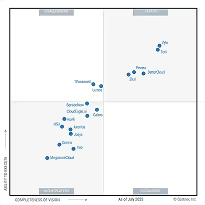
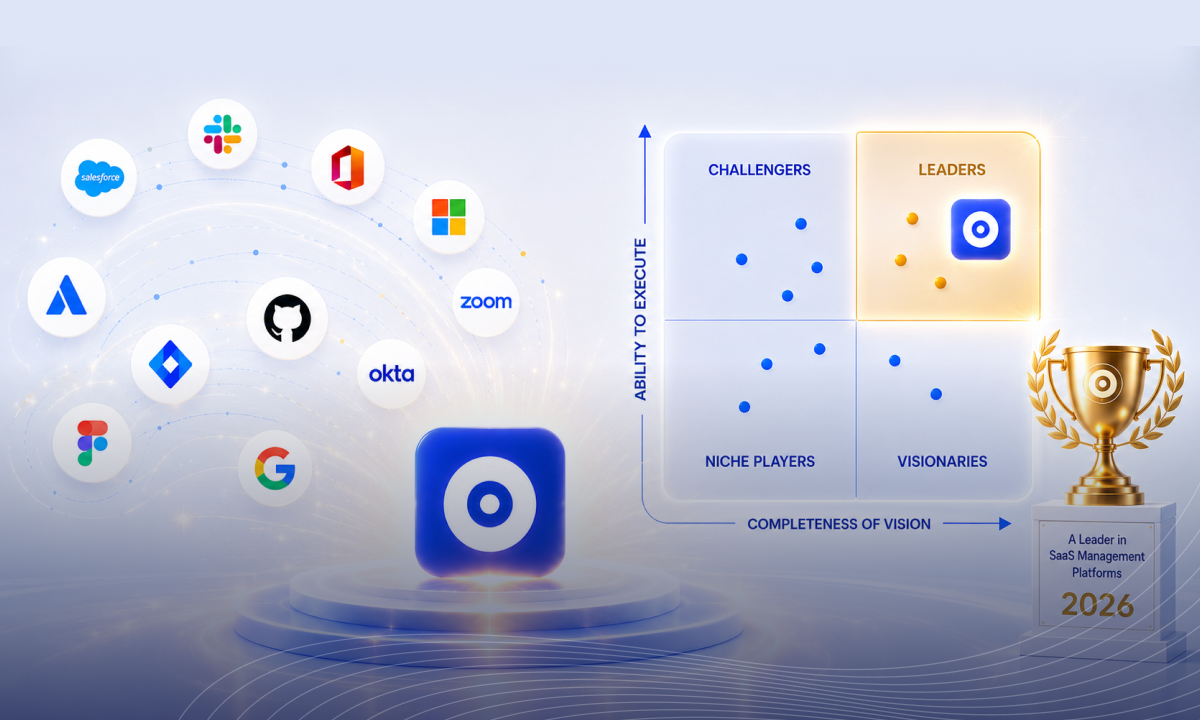
CloudEagle.ai recognized in the 2025 Gartner® Magic Quadrant™ for SaaS Management Platforms
Download now
gartner chart
5x
Faster employee
onboarding
80%
Reduction in time for
user access reviews
30k
Workflows
automated
$15Bn
Analyzed in
contract spend
$2Bn
Saved in
SaaS spend

Recognized as an Industry leader for our AI

CloudEagle.ai is Recognized in the 2024 Gartner® Magic Quadrant™ for SaaS Management Platforms

Recognition highlights CloudEagle’s innovation and leadership in the rapidly evolving SaaS management and procurement space.
Read More
Gartner Magic Quadrant for SaaS Management Platforms showing a chart divided into Challengers and Leaders quadrants with various companies plotted as dots.

CloudEagle.ai Recognized in the GigaOm Radar for SaaS Management Platforms

CloudEagle named a Leader and Outperformer in GigaOm Radar Report, validating its impact in the SaaS management platform landscape.
Read More
gigaom

Everest Group Positions CloudEagle.ai as a Trailblazer in SaaS Management Platforms

CloudEagle recognized as a Trailblazer by Everest Group, showcasing its rapid growth and innovation in SaaS spend and operations management.
Read More
qks

CloudEagle.ai is Recognized in the 2024 Gartner® Magic Quadrant™ for SaaS Management Platforms

Recognition highlights CloudEagle’s innovation and leadership in the rapidly evolving SaaS management and procurement space.
Read More
gartner

Streamline SaaS governance and save 10-30%

Book a Demo with Expert
CTA image
One platform to Manage
all SaaS Products
Learn More