
%201.svg)


HIPAA Compliance Checklist for 2025

SaaS stacks grow quietly. One team adds a design tool, another upgrades licenses, and a third renews a contract without checking usage. Before anyone notices, software spending balloons while visibility shrinks.
For enterprises, SaaS optimization is no longer a cost-cutting exercise. It’s a governance requirement.
Gartner estimates that organizations waste up to 25–30% of their SaaS spend due to unused or underutilized licenses, and that waste compounds as stacks scale without ownership or controls.
In this blog, you’ll learn what SaaS optimization really means, why it’s critical for growing SaaS environments, how to use a SaaS optimization checklist to stay in control, and how automation changes the game for enterprise teams.
TL;DR
- SaaS optimization is a continuous process, not a one-time cost-cutting exercise.
- Renewal waste, unused licenses, and Shadow IT drive most SaaS overspend.
- A structured SaaS optimization checklist helps maintain visibility and control.
- Automation is essential to scale optimization across large SaaS stacks.
- CloudEagle.ai unifies spend, usage, renewals, and governance in one platform.
1. What Is SaaS Optimization?
SaaS optimization is the ongoing process of controlling software spend, usage, access, and risk across an organization’s SaaS stack. It ensures companies pay only for what they use, renew intentionally, and maintain visibility into every application.
At an enterprise level, SaaS optimization goes beyond trimming licenses. It combines inventory management, usage analysis, contract visibility, access governance, and renewal planning into a continuous operating model.
A strong software optimization checklist helps teams move from reactive cleanup to proactive control.
2. Why SaaS Optimization Is Critical for Growing SaaS Stacks?
As SaaS adoption accelerates, complexity increases faster than teams expect. What starts as flexibility quickly turns into sprawl.
A. Hidden renewal waste is inflating spending
Auto-renewals are one of the most expensive and least visible drivers of SaaS waste. Contracts often renew with built-in price hikes, even when usage has declined or teams have already moved to alternative tools.
Without a structured SaaS renewal checklist, enterprises lose leverage and continue paying for tools that no longer deliver value.
Common causes of renewal waste include:
- Missed renewal dates due to decentralized ownership
- Price escalations buried in multi-year contracts
- Renewals approved without validating active usage
- Duplicate tools were renewed across different teams
B. Licenses paid for but never used
Licenses are frequently assigned “just in case” to avoid delays in onboarding or access requests. Over time, employees change roles, leave the company, or stop using certain tools, yet licenses remain active.
Studies consistently show that 25–35% of SaaS licenses go unused, representing immediate, recurring savings opportunities through optimization.
Why license waste persists:
- No regular usage or entitlement reviews
- Manual joiner-mover-leaver processes that don’t scale
- Lack of visibility into feature-level usage
- No ownership for reclaiming or right-sizing licenses
C. Unapproved apps increase security risk
Shadow IT grows alongside SaaS adoption. Teams often adopt tools outside procurement and IT workflows to move faster, bypassing security, legal, and compliance reviews.
Without a SaaS governance checklist, unapproved apps create access sprawl, data exposure, and audit gaps that surface only during incidents or audits.
Key risks introduced by unapproved SaaS apps:
- Users accessing sensitive data without proper controls
- Apps operating outside SSO and identity governance
- Missing audit trails for access and activity
- Increased risk of non-compliance with SOC 2, ISO, or GDPR
3. SaaS Optimization Checklist for Ongoing Control
An effective SaaS optimization checklist focuses on visibility, accountability, and automation. These steps help enterprises maintain control continuously, not just during budget reviews.
A. Gain a complete inventory of SaaS applications
You can’t optimize what you can’t see. Enterprises need a single, accurate inventory of all SaaS tools in use.
Checklist focus areas:
- Apps discovered via SSO, finance, and usage signals
- Paid, free, and trial tools included
- Department and owner are mapped for each app
Inventory is the foundation of SaaS optimization.
B. Analyze license usage and entitlement gaps
Optimization requires aligning licenses with real usage, not assumptions.
Checklist focus areas:
- Active vs inactive users
- Feature usage by license tier
- Over-provisioned and under-used seats
Usage data turns optimization into a data-driven process.
C. Compare costs, contracts, and renewal timelines
Spend visibility alone isn’t enough. Teams need context around contracts and renewal timing.
Checklist focus areas:
- Contract terms and notice periods
- Upcoming renewals across vendors
- Pricing tiers and uplift clauses
This is where a SaaS renewal checklist prevents last-minute decisions.
D. Establish clear ownership for every app
Apps without owners create blindspots. Auditors and finance teams expect accountability.
Checklist focus areas:
- Business and technical owners defined
- Approval workflows documented
- Ownership reviewed periodically
Ownership keeps optimization from breaking down.
E. Automate license recovery and right-sizing
Manual cleanup doesn’t scale. Automation ensures unused licenses are reclaimed consistently.
Checklist focus areas:
- Inactivity thresholds defined
- Automated alerts and reclamation
- Downgrades to lower tiers where possible
Automation converts insights into savings.
F. Monitor compliance and access continuously
Optimization isn’t just financial, it’s also about access and risk.
Checklist focus areas:
- User access reviews
- Privileged access detection
- Offboarding and role-change controls
A SaaS governance checklist ties optimization to security and compliance.
4. SaaS Optimization Checklist Template
A standardized SaaS optimization checklist template helps enterprises apply the same controls across all applications. It centralizes inventory, usage, contracts, ownership, and reviews in one place.
Teams using templates reduce optimization effort while improving consistency across departments.
5. Why SaaS Optimization Initiatives Break Down?
Most SaaS optimization efforts fail not because teams don’t care, but because the approach doesn’t scale.
A. Fragmented visibility across tools
SaaS usage data, contracts, renewal dates, and access information typically live in different systems. Without consolidation, teams only see part of the picture, making optimization reactive and incomplete.
Fragmentation leads to missed savings, renewal surprises, and governance blind spots.
Common visibility gaps include:
- Usage data is isolated within individual SaaS admin consoles
- Contracts and renewals tracked in spreadsheets or inboxes
- Access data split between SSO and non-SSO applications
- No single source of truth for application ownership
B. Unclear accountability for applications
When no one clearly owns an application, optimization never becomes a priority. Renewals happen by default, licenses remain over-provisioned, and decisions are made without business context.
Clear accountability is essential to sustain optimization efforts over time.
How ownership gaps create waste:
- Renewals approved without usage or ROI validation
- No stakeholder is responsible for license right-sizing
- Security and compliance reviews skipped or delayed
- Conflicting decisions across IT, finance, and business teams
C. Manual processes that don’t scale
Spreadsheets, email follow-ups, and quarterly reviews may work for a small SaaS stack, but they break down quickly at enterprise scale. Hundreds of apps and thousands of users require continuous, automated oversight.
SaaS optimization needs automation to remain accurate, timely, and effective.
Why manual optimization fails at scale:
- Reviews happen too late to influence renewals
- Data becomes outdated almost immediately
- Teams spend time chasing inputs instead of acting on insights
- Optimization depends on individuals rather than systems
6. How CloudEagle.ai Automates SaaS Optimization?
CloudEagle.ai is an AI-powered SaaS management and procurement platform that automates SaaS optimization across discovery, usage analysis, renewals, and governance.
Instead of stopping at insights, CloudEagle continuously identifies waste and takes action, ensuring savings are realized and sustained over time.
A. Automatically Discover Every SaaS App, Including Shadow IT
SaaS optimization breaks down immediately when organizations don’t know what applications exist in their environment.
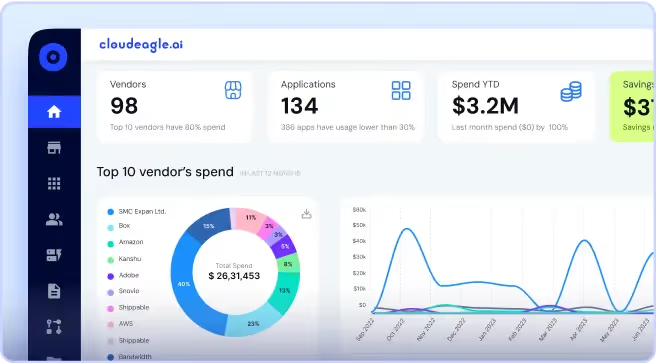
CloudEagle solves this foundational problem by automating SaaS discovery across the entire organization, ensuring no application goes unseen.
- Connects to finance systems, SSO providers, HR tools, browser data, and direct SaaS APIs
- Discovers paid, free, and employee-purchased applications
- Identifies shadow IT apps outside formal procurement flows
- Maintains a continuously updated SaaS inventory without manual effort
B. Centralize SaaS Spend, Usage, and Contracts in One Platform
Even when teams know which apps exist, optimization fails if data is scattered across spreadsheets, ERP systems, CLMs, and admin consoles.
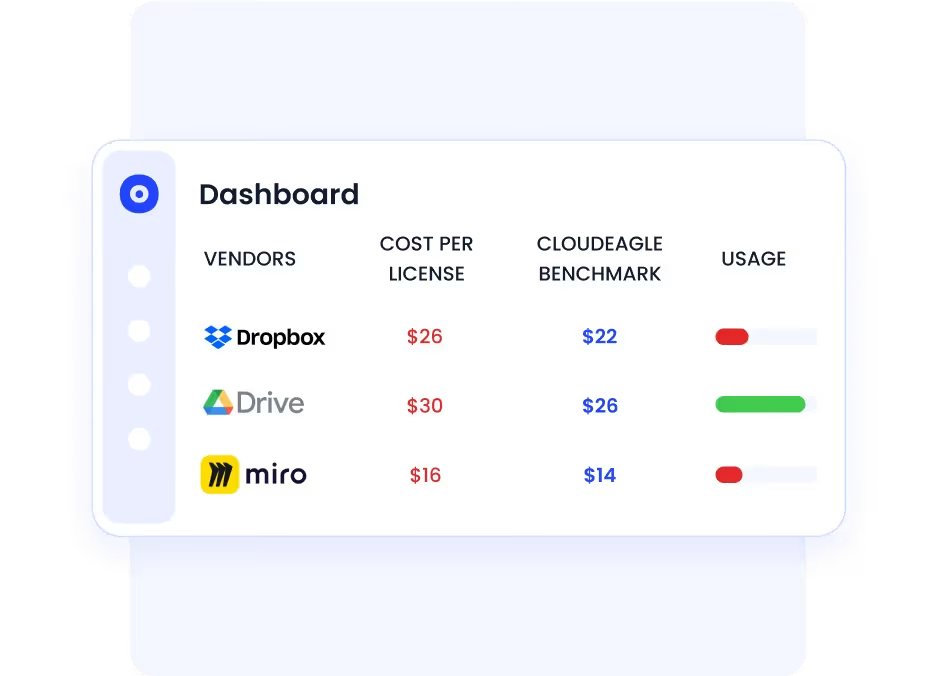
CloudEagle creates a single, reliable system of record by unifying all SaaS-related data into one platform that updates automatically.
- Consolidates spend, license counts, users, and contracts
- Extracts renewal dates, notice periods, and SKUs using AI
- Continuously syncs data to prevent stale reporting
- Aligns IT, finance, and procurement on the same source of truth
C. Identify Unused and Underutilized Licenses Using AI
Most organizations know they are overpaying for licenses but lack precise, defensible data to take action.

CloudEagle uses AI-driven usage analysis to surface real optimization opportunities based on how licenses are actually used.
- Analyzes login activity and feature-level usage
- Identifies inactive users and low-value licenses
- Flags over-provisioned premium tiers
- Produces clear, actionable right-sizing recommendations
D. Automate License Harvesting and Reclamation
In most organizations, license reclamation stalls because IT teams lack the time to chase users, send follow-ups, and manually deprovision access across dozens of tools.

CloudEagle closes this gap by automating license harvesting through workflows that run continuously in the background.
- Automatically notifies inactive or low-usage users
- Deprovisions or downgrades licenses based on defined rules
- Reclaims licenses so they can be reassigned immediately
- Executes workflows weekly or daily without IT involvement
E. Eliminate Redundant and Overlapping Applications
As companies scale, different teams often adopt tools with similar functionality, resulting in overlapping apps, fragmented usage, and unnecessary spend.
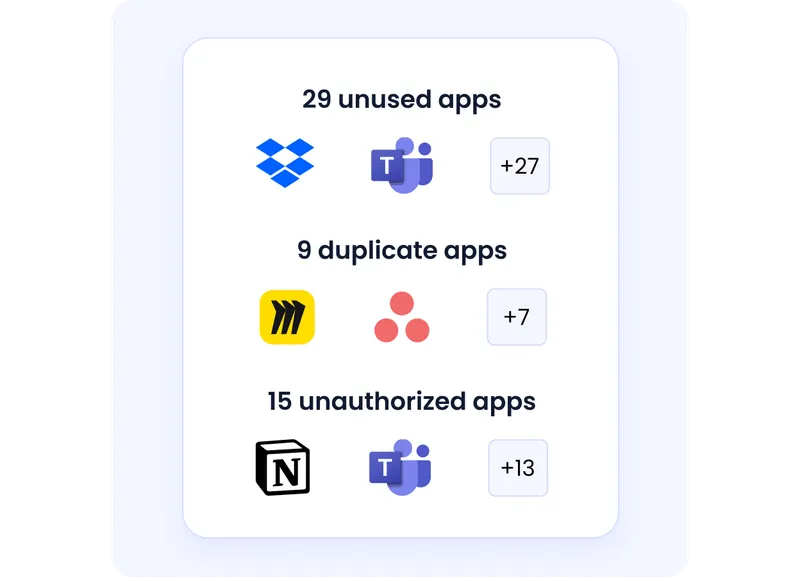
CloudEagle applies AI-based categorization to reveal where duplication exists and who is impacted.
- Detects overlapping applications by category and functionality
- Highlights duplicate tools across departments
- Identifies users with access to multiple competing apps
- Enables rationalization actions directly within the platform
F. Optimize Renewals Using Real Usage Data
Renewals are one of the biggest sources of SaaS waste. Without accurate usage insights, teams either auto-renew by default or scramble at the last minute with limited leverage

.
CloudEagle transforms renewals into a proactive, data-driven process by tying renewal decisions directly to usage and license needs.
- Tracks renewal dates and notice periods automatically
- Connects renewal decisions to actual utilization trends
- Enables right-sizing before contracts renew
- Prevents unnecessary auto-renewals and rushed decisions
G. Strengthen Vendor Negotiations With Price Benchmarking
Negotiating SaaS contracts without a pricing context puts procurement teams at a disadvantage.
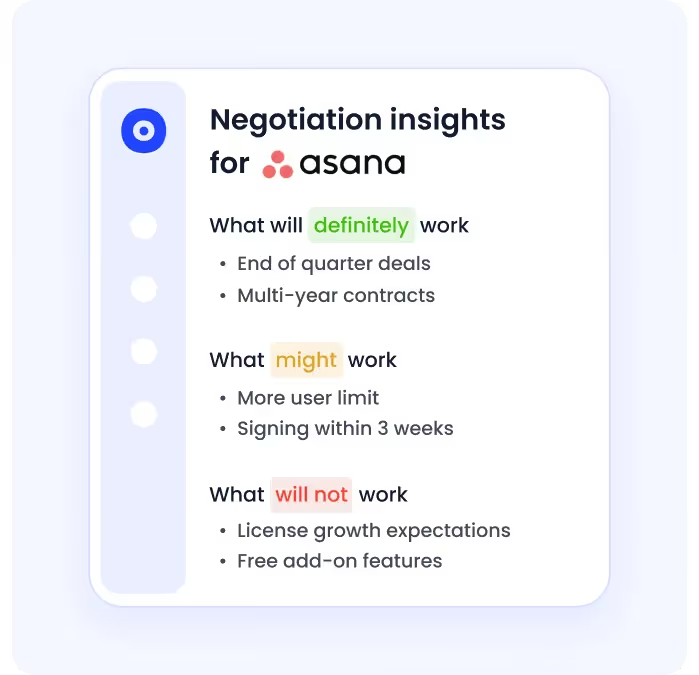
CloudEagle restores balance by providing benchmark intelligence that strengthens negotiation outcomes.
- Provides benchmark pricing across vendors and SKUs
- Flags contracts that are above market rates
- Supports internal negotiations or CloudEagle-led renewals
- Helps customers retain a higher percentage of savings
7. Conclusion
SaaS optimization is no longer optional for enterprises with growing software stacks. Without structure, renewal waste, unused licenses, and security gaps multiply quietly over time.
A consistent SaaS optimization checklist gives teams visibility, control, and accountability across applications. When optimization is continuous instead of reactive, organizations reduce spending while improving governance.
CloudEagle.ai brings SaaS optimization, renewal management, and governance together in one system, helping enterprises stay efficient, compliant, and in control.
Book a free demo to see how CloudEagle.ai automates SaaS optimization.
Frequently Asked Questions
1. How often should SaaS optimization be done?
SaaS optimization should be continuous, with monthly usage reviews and quarterly renewal and contract evaluations.
2. How can companies reduce renewal waste?
By tracking renewal dates alongside usage data, enforcing notice periods, and negotiating based on actual consumption.
3. What tools automate SaaS optimization?
Platforms that combine SaaS discovery, usage analysis, renewal tracking, and access governance automate optimization effectively.
4. What are the key metrics for SaaS companies?
Common metrics include license utilization, cost per user, renewal rate, churn, and total SaaS spend growth.
5. What is the 3-3-2-2-2 rule of SaaS?
It’s a budgeting heuristic suggesting limits on tools per category to reduce redundancy and manage sprawl as stacks grow.


.avif)


.avif)
.avif)




.png)







.avif)
.avif)
.avif)


