
%201.svg)


HIPAA Compliance Checklist for 2025


Searching for CloudEagle.ai alternatives?
If yes, you’re not just comparing SaaS management tools.
You’re looking for a single platform that brings SaaS management, identity governance, SaaS security, and AI governance together without creating new silos.
That’s a much harder problem than swapping vendors.
Most “alternatives” specialize in one layer. Spend. IGA. SSPM. Rarely all of it in a continuous control framework.
CloudEagle.ai was built as that unified layer. So the real question is simple: can any alternative actually replace that breadth, or will you end up stitching tools together again?
Let’s break that down.
TL;DR
- Most searches for CloudEagle.ai alternatives are really about regaining SaaS visibility and control across teams.
- Point solutions for spend, access, or contracts create operational gaps at enterprise scale.
- A true SaaS management platform must unify governance, lifecycle automation, and financial intelligence.
- Fragmented SaaS governance tools increase complexity instead of reducing it.
- Enterprises consolidate SaaS management into one platform to align IT, Finance, Procurement, and Security without tradeoffs.
1. Let’s Be Clear About the Problem You’re Solving
Before exploring CloudEagle alternatives, it's important to pause and define the real objective. Because most organizations are not trying to switch dashboards. They are trying to fix fragmentation.
A. You are not just evaluating another SaaS tool
A SaaS management platform is not a productivity tool. It sits at the intersection of governance, finance, and identity.
When enterprises evaluate CloudEagle alternatives, they are assessing:
- Whether they can see every SaaS application across the organization
- Whether access can be governed without manual effort
- Whether license waste can be systematically eliminated
- Whether renewals and contracts can be controlled centrally
- Whether audit readiness becomes easier, not harder
This is not about surface-level SaaS visibility and control. It is about operational ownership of the SaaS lifecycle.
If a solution only provides reporting but cannot trigger action, it is not solving the enterprise problem.
B. You are trying to solve multiple SaaS problems at once
In mature SaaS environments, the issues are interconnected.
You may begin with spend optimization. Soon, you discover:
- Licenses are unused because access provisioning is misaligned
- Duplicate tools exist because departments purchase independently
- Vendors auto-renew because contract data is not centralized
- Security flags access risks because offboarding is manual
These are not separate issues. They are symptoms of broken SaaS governance tools that operate in silos.
This is why CloudEagle alternatives often fail when they specialize too narrowly. Enterprises need a system that unifies SaaS license management, contract intelligence, and lifecycle automation in one operating layer.
According to CloudEagle's 2025 IGA Report, 60% of enterprise SaaS and AI applications now operate outside IT's visibility, and 48% of former employees still have app access months after leaving, highlighting the scale of governance gaps that point solutions cannot address.
C. IT, Finance, Procurement, and Security need one shared system
SaaS is no longer owned by IT alone.
- IT manages access and integrations
- Finance monitors spending and forecasting
- Procurement negotiates contracts and renewals
- Security evaluates access risk and compliance posture
When these teams use different tools, decisions slow down, and accountability weakens.
A true SaaS management platform must serve all four stakeholders simultaneously. Otherwise, the organization remains fragmented.
This is the lens through which CloudEagle alternatives should be evaluated.
2. What Kind of Alternative Are You Actually Looking For?
When enterprises search for CloudEagle alternatives, the intent usually fits into one of these categories:
- Identity governance and lifecycle automation:
Provisioning, deprovisioning, access reviews, and entitlement management. - SaaS security and AI governance:
Shadow IT discovery, risk monitoring, and oversight of emerging AI tools. - SaaS management and spend optimization:
License visibility, renewal forecasting, usage analytics, and cost control.
If your priority is only one of these areas, a category-specific tool may be enough.
But if your evaluation spans two or more of them, the decision becomes less about feature depth and more about how those capabilities connect.
That is where comparisons tend to get more complex.
3. Why Does CloudEagle.ai Work as Multiple Capabilities in One Platform?
If your evaluation spans identity governance, SaaS management, and AI oversight together, the comparison shifts from individual features to how those capabilities connect.
CloudEagle.ai is designed as a unified operating layer. The differentiation is not isolated functionality, but how discovery, access, spend, and contracts continuously inform each other.
A. Unified Discovery Across SaaS and AI
Discovery is the starting point of SaaS visibility and control. But discovery must go beyond SSO.
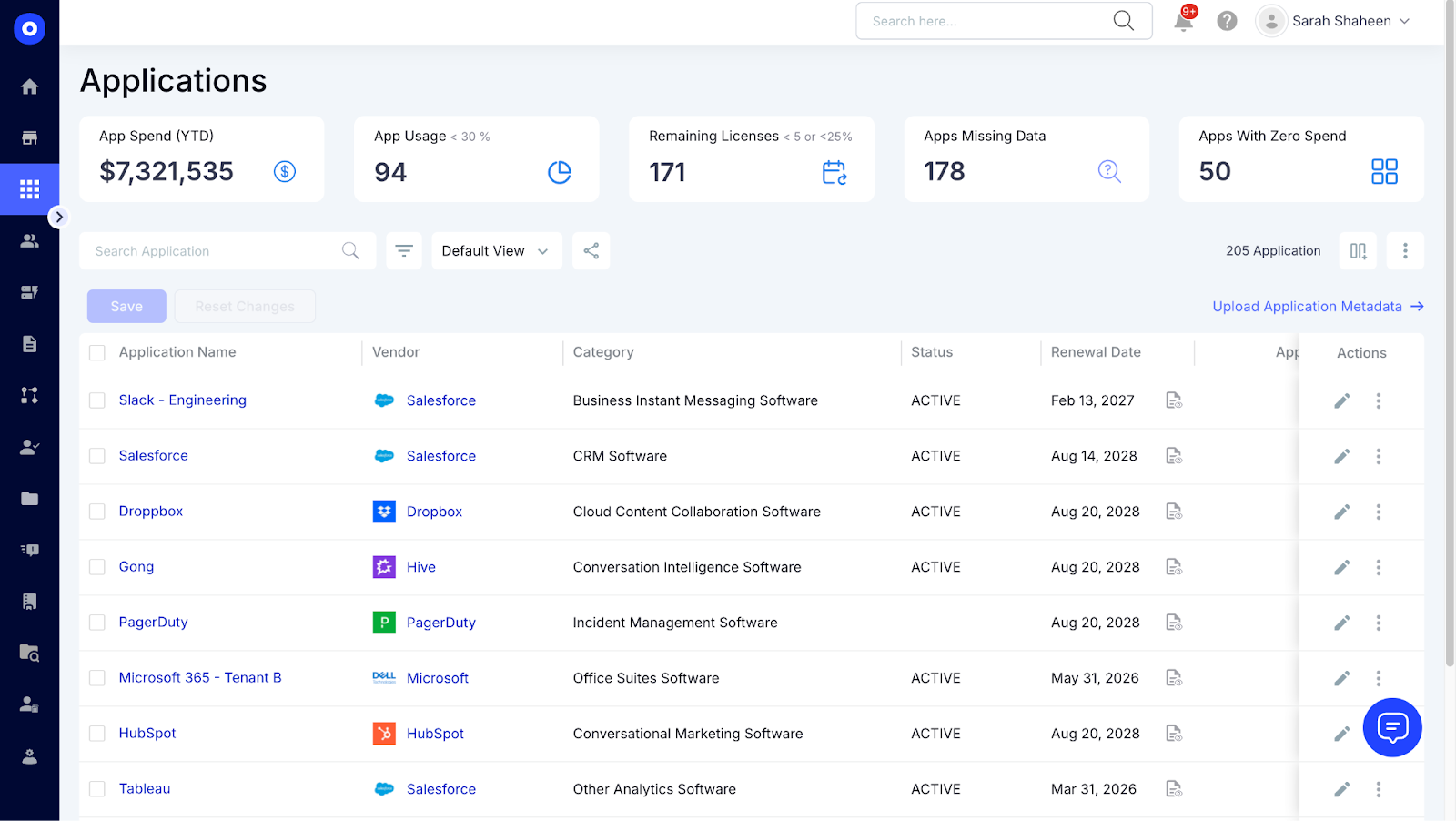
Enterprise SaaS environments typically include:
- Identity-connected applications
- Card-based purchases
- Department-level tools
- Browser-based AI subscriptions
- Trial accounts converted to paid subscriptions
CloudEagle aggregates data from identity systems, finance systems, expense tools, and browser telemetry to uncover the full SaaS footprint.
CloudEagle's research shows that 70% of CIOs cite unapproved AI usage as a top data security concern, reinforcing why comprehensive shadow IT discovery is mission-critical.
Without cross-verification, SaaS visibility and control remain partial.
B. Integrated Access Governance and Lifecycle Control
Visibility alone does not reduce risk or waste.
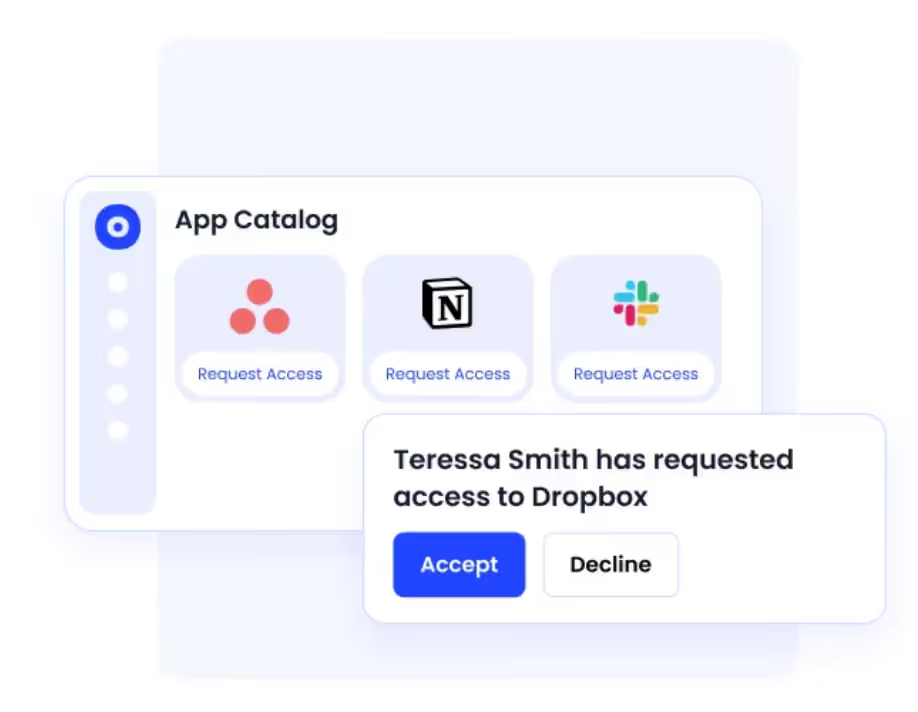
CloudEagle extends into:
- Automated provisioning workflows
- Zero-touch onboarding and offboarding
- Time-bound access for contractors
- Continuous access reviews
- Role-based entitlement alignment
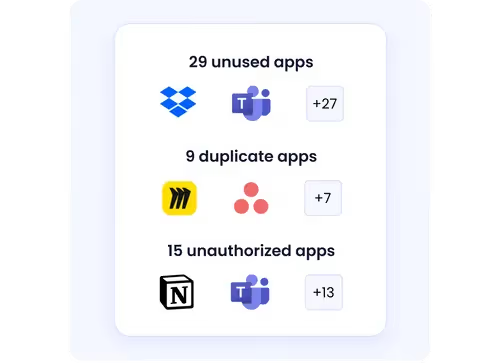
This embeds enforcement directly into the SaaS lifecycle.
When access aligns with role and usage in real time, license management becomes proactive. Enterprises that struggle with lifecycle control often experience access sprawl, audit gaps, and unnecessary license costs.
C. Connected Spend and License Optimization
SaaS spend management software should not stop at invoice tracking.
True optimization includes:
- Identifying underutilized or inactive licenses
- Detecting overlapping tools serving similar functions
- Benchmarking pricing across vendors
- Forecasting renewal exposure months in advance
CloudEagle integrates license usage intelligence with financial data, enabling enterprises to reduce waste systematically.
This allows license management to operate as an ongoing discipline rather than a periodic cleanup exercise.
D. Centralized Contracts and Renewal Intelligence
Contract sprawl is one of the least visible risks in SaaS environments.
Enterprises often struggle with:
- Auto-renewals triggered without oversight
- Fragmented contract metadata
- Missed renegotiation windows
- Vendor risk data is stored in separate systems
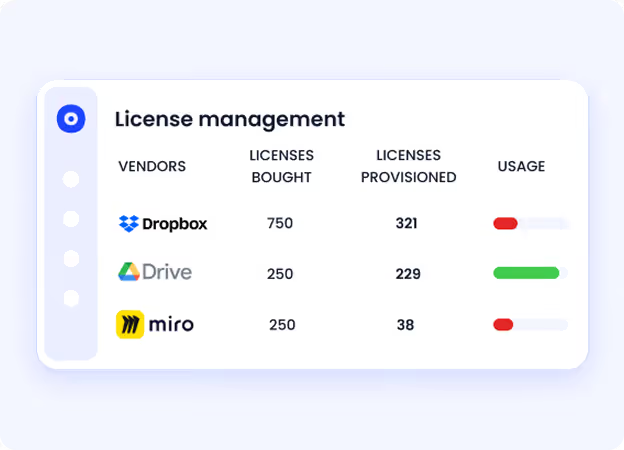
CloudEagle centralizes contract records, renewal timelines, benchmarking data, and vendor risk indicators within the same platform.
By connecting contract data with usage and governance signals, renewal decisions are based on operational insight rather than isolated reports.
Choose Governance Built for Enterprise Scale


4. Why Most So-Called CloudEagle.ai Alternatives Fall Short?
Not all CloudEagle.ai alternatives are weak. Many are strong within a specific domain. The issue is scope.
A. They solve one problem but create gaps elsewhere
Some SaaS governance tools focus heavily on discovery.
Others emphasize SaaS spend management software.
Others prioritize license analytics.
But enterprises need:
- Discovery + enforcement
- Spend + lifecycle automation
- Contracts + access controls
When multiple vendors are stitched together, integration overhead increases and ownership blurs.
CloudEagle alternatives that only solve one dimension force enterprises to manage the rest manually.
B. They stop at visibility instead of control
Dashboards are useful. But dashboards do not:
- Revoke access
- Trigger workflows
- Prevent renewals
- Enforce least privilege
SaaS visibility and control must include automated action layers.
Without provisioning and deprovisioning integration, a SaaS management platform remains passive.
Enterprises evaluating CloudEagle alternatives should ask a simple question: Can the platform execute decisions, or only display them?
C. They serve one team but not the entire enterprise
Many CloudEagle alternatives are built for a single persona. Some prioritize Finance with spend dashboards. Others focus on IT access. A few lean toward Procurement.
But enterprise SaaS governance spans:
- IT for provisioning and lifecycle control
- Finance for budgeting and forecasting
- Procurement for renewals and benchmarking
- Security for access reviews and compliance
When a SaaS management platform serves only one function, gaps emerge elsewhere. True CloudEagle alternatives must support all stakeholders without tradeoffs.
5. Why Do Enterprises Struggle to Replace CloudEagle.ai?
When enterprises compare CloudEagle alternatives, they often underestimate integration depth and cross-functional design.
A. 500+ native integrations across SaaS, finance, and identity
CloudEagle integrates across:
- Identity providers
- HR systems
- Expense platforms
- Procurement systems
- Security monitoring tools
Breadth matters because SaaS visibility and control rely on correlating identity, financial, and usage data simultaneously.
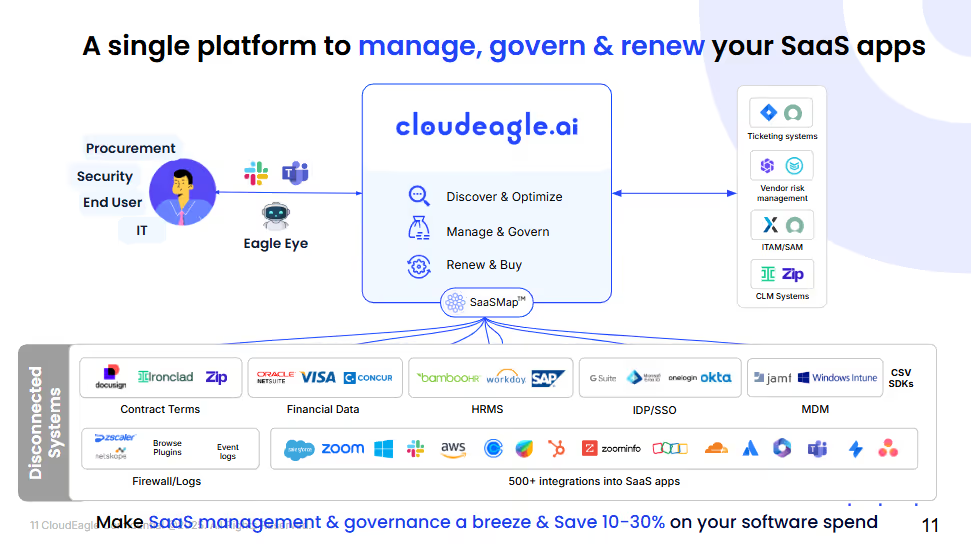
Without broad integrations, SaaS license management becomes incomplete.
B. AI-driven license and usage intelligence
Manual audits cannot keep pace with enterprise SaaS growth.
CloudEagle uses AI-driven analytics to:
- Identify dormant licenses
- Predict renewal risk
- Detect duplicate functionality
- Surface optimization opportunities
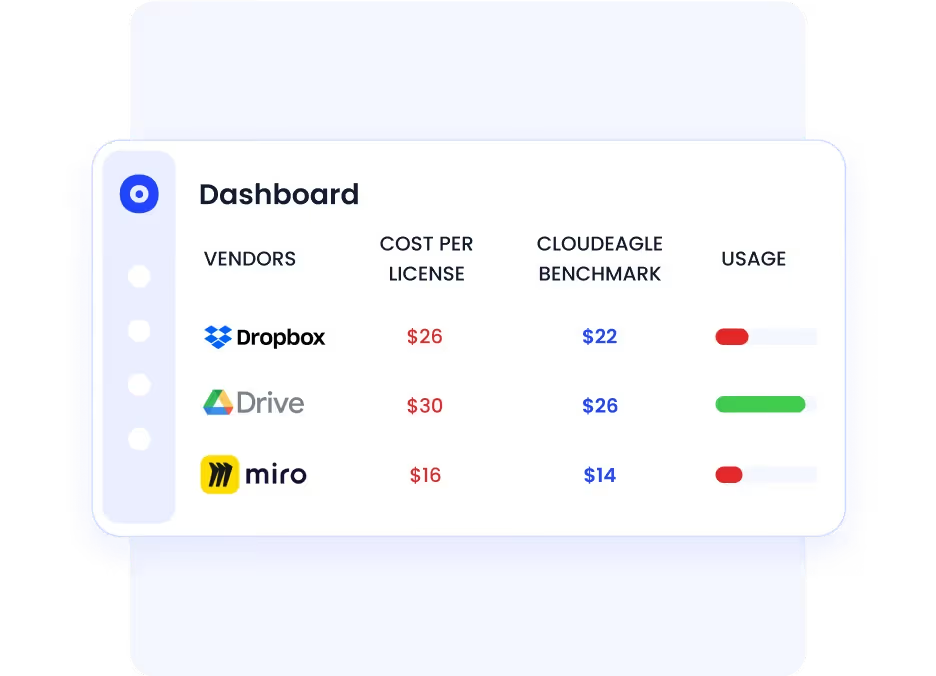
This moves SaaS spend management software from static reporting to continuous optimization.
C. One unified view of apps, users, spend, and contracts
Instead of toggling between tools, enterprises gain:
- A consolidated application inventory
- A real-time user access matrix
- A financial exposure dashboard
- A renewal calendar with risk scoring
This unified system reduces context switching and decision lag.

CloudEagle alternatives that lack unification often require manual reconciliation.
D. Zero-touch onboarding, offboarding, and access reviews
Automation is not optional at enterprise scale.
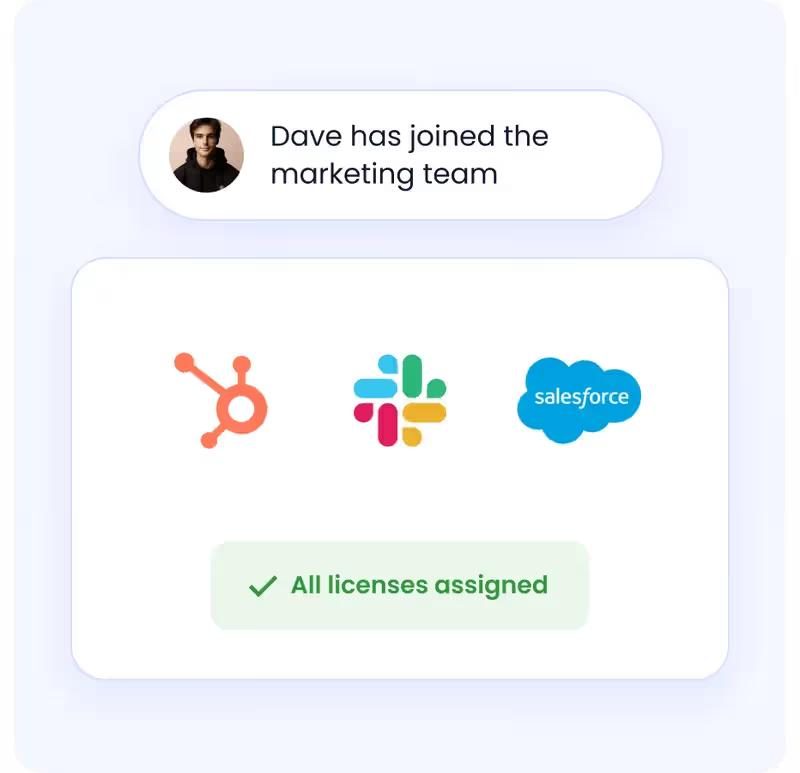
CloudEagle enables:
- HR-triggered provisioning
- Immediate deprovisioning upon exit
- Automated access certifications
- Time-bound approvals for temporary roles
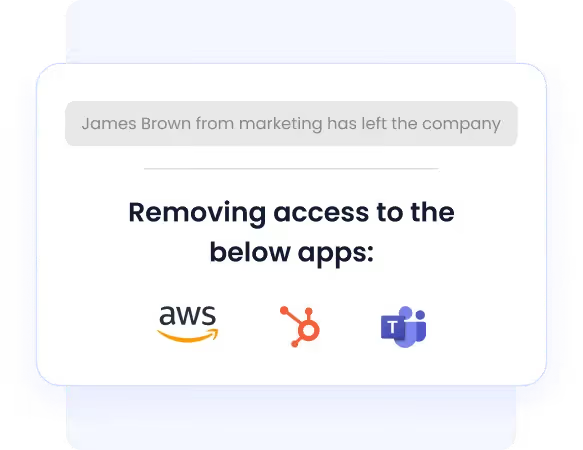
This strengthens SaaS governance tools by embedding lifecycle management into daily operations.
E. Designed to support thousands of apps, not just a curated subset
Enterprise SaaS stacks are messy by default. They include global tools, niche regional apps, department purchases, and shadow AI subscriptions.
CloudEagle is built for that reality:
- Ingests data across identity, finance, HR, and browser signals
- Normalizes apps across business units and geographies
- Supports long-tail and low-frequency SaaS tools
- Scales workflows across thousands of users and apps
Many CloudEagle alternatives depend on curated integrations. That works until your SaaS footprint doubles.
F. Built to work across IT, Finance, Procurement, and Security without tradeoffs
SaaS decisions affect multiple teams. Governance breaks when tools serve only one.
CloudEagle aligns stakeholders:
- IT: automated provisioning, offboarding, access reviews
- Finance: real-time spend visibility and forecasting
- Procurement: contract tracking and renewal intelligence
- Security: continuous access oversight and audit logs
CloudEagle alternatives often optimize for one persona. Enterprises need cross-functional SaaS governance tools.
G. Handles SaaS, AI tools, and shadow usage in the same system
AI adoption is accelerating, and it rarely follows procurement workflows.
CloudEagle governs:
- SSO-connected SaaS apps
- Card-purchased tools
- Browser-detected shadow usage
- Trial-to-paid conversions
SaaS license management must now include AI subscriptions and shadow tools. CloudEagle treats them as first-class citizens, not edge cases.
CloudEagle.ai has processed over $15B in SaaS spend and saved customers over $2B in software costs by identifying waste, consolidating duplicate tools, and optimizing renewals across enterprise SaaS portfolios.
Final Words
Enterprises evaluating CloudEagle alternatives are rarely looking for marginal improvements. They are trying to regain control over SaaS complexity that has grown beyond manual management. The challenge is not finding a SaaS management platform.
The challenge is finding one that unifies SaaS visibility and control, SaaS license management, contract governance, and lifecycle automation without fragmenting ownership.
CloudEagle.ai remains difficult to replace because it operates as an enterprise SaaS operating system rather than a point solution.
Book a free demo to see how CloudEagle consolidates SaaS governance, spend intelligence, and access control into one system built for scale.
FAQ
1. Are there real CloudEagle alternatives for enterprises?
There are tools that cover parts of the problem, but few unify SaaS visibility and control, license optimization, contract management, and lifecycle automation in one enterprise-ready platform.
2. What should enterprises look for in a SaaS governance platform?
Enterprises should look for unified discovery, automated provisioning and deprovisioning, contract and renewal management, license optimization, and cross-functional support across IT, Finance, Procurement, and Security.
3. Why do enterprises consolidate SaaS management into one platform?
Because fragmented SaaS governance tools create silos. Consolidation improves visibility, reduces manual workflows, and strengthens control across spend, access, and compliance.
4. How do enterprises control SaaS spend at scale?
By combining SaaS spend management software with license utilization data, renewal forecasting, benchmarking, and automated offboarding to eliminate waste and prevent surprise renewals.
5. How is SaaS license management different from SaaS governance?
SaaS license management focuses on optimizing user-level access and utilization, while SaaS governance includes contracts, renewals, compliance, risk, and lifecycle automation.
Choose Governance Built for Enterprise Scale


.avif)


.avif)
.avif)




.png)





.png)

.avif)
.avif)
.avif)


