You need to enable JavaScript in order to use the AI chatbot tool powered by ChatBot

How to Manage and Optimize SaaS Spend Across IT, Finance, and Procurement?

Share via:
blog-cms-banner-bg
Little-Known Negotiation Hacks to Get the Best Deal on Slack
cta-bg-blogDownload Your Copy

HIPAA Compliance Checklist for 2025

Download PDF

Optimize SaaS Spend Across AI Tools

Learn how enterprises optimize AI pricing by aligning usage, tiers, and costs with real business needs.

Read the Guide
CTA Thumbnail

In most enterprises, SaaS spend doesn’t spiral because teams overspend deliberately.
It spirals because ownership is fragmented, visibility is partial, and decisions are made in isolation.

IT sees access and tools. Finance sees invoices and forecasts. Procurement sees vendors and contracts.

But no single team sees the entire picture, which is why SaaS spend management becomes reactive instead of strategic.

As organizations scale, this disconnect turns routine subscriptions into long-term cost leakage. Without strong SaaS spend visibility and shared accountability, even disciplined teams struggle with SaaS cost governance.

TL;DR 

  • SaaS spend becomes hard to control when IT, finance, and procurement operate in silos
  • Limited SaaS spend visibility leads to unused licenses and redundant tools
  • Renewals often repeat last year’s spend instead of reflecting real usage
  • Cross-functional ownership is essential for effective SaaS cost governance
  • CloudEagle.ai enables shared visibility and automated SaaS spend optimization across teams

1. Why SaaS Spend Becomes Difficult to Control in Large Enterprises?

SaaS is designed to be easy to buy, fast to deploy, and simple to expand.
Those strengths are exactly what make SaaS spend optimization difficult at scale.

Industry benchmarks show that 30–40% of SaaS spend in large enterprises is wasted due to unused licenses, redundant tools, and misaligned renewals. The issue isn’t price. It’s coordination.

As companies grow:

  • Teams adopt tools independently
  • Budgets are fragmented across departments
  • Governance fails to scale with usage

Without a cross-functional operating model, IT, finance, and procurement SaaS decisions remain disconnected, and spending becomes hard to control.

FinOps Best Practices for Enterprise AI

Discover how FinOps teams manage AI consumption, forecast costs, and prevent budget overruns at scale.

Get FinOps Guide
CTA Thumbnail

2. How SaaS Spend Is Split Across IT, Finance, and Procurement?

Each function plays a critical role in SaaS decisions. The problem starts when those roles operate in silos.

A. IT manages access and onboarding

IT is typically responsible for:

What IT often lacks is cost context. Teams may onboard users quickly to avoid friction, unintentionally inflating license counts. 

Without visibility into budgets or renewal exposure, IT decisions can unintentionally increase SaaS spend management complexity.

B. Finance manages budgets and forecasting

Finance owns:

  • SaaS budgets and forecasts
  • Spend categorization and reporting
  • Variance explanations

However, finance typically sees invoices, not usage. Without SaaS spend visibility at the license and user level, forecasts rely on historical spend rather than actual need. 

This is where SaaS cost governance weakens.

C. Procurement manages vendors and contracts

Procurement handles:

  • Vendor negotiations
  • Contract terms and renewals
  • Compliance and approvals

The challenge is timing. Procurement is often pulled in late, when renewal dates are close, and usage data is incomplete. 

Without real usage signals, renewal decisions repeat last year’s assumptions instead of reflecting current reality.

SaaS Procurement Best Practices

Learn how procurement teams standardize buying, negotiate better terms, and control renewals across SaaS vendors.

Read Best Practices
CTA Thumbnail

3. What Actually Happens Across the SaaS Lifecycle?

When SaaS ownership is fragmented across IT, finance, and procurement, inefficiencies don’t appear suddenly. They compound quietly across every stage of the SaaS lifecycle, from purchase to renewal.

What makes this especially hard to fix is that no single team feels fully responsible. Each function is doing its job in isolation, but the gaps between them are where SaaS spend management breaks down.

A. New tools are added faster than old ones are removed

SaaS adoption is inherently additive. New tools are easy to buy, easy to deploy, and rarely controversial at the point of purchase.

In practice, enterprises accumulate tools because:

  • Teams buy niche applications to solve short-term problems
  • Multiple departments purchase tools with overlapping functionality
  • Legacy tools are kept running “just in case” they’re needed later

What rarely happens is deliberate removal. 

Once a tool is live, turning it off feels risky, even if usage has declined. Without coordinated SaaS spend optimization, application portfolios grow year after year, but almost never shrink.

B. Licenses remain assigned long after roles change

Role changes are constant in growing organizations, but license assignments are not.

Employees move teams, responsibilities shift, and projects end, yet their SaaS access often stays exactly the same. This creates a slow but persistent form of waste.

Common outcomes include:

  • Users retaining access to tools they no longer use
  • Premium licenses remaining assigned despite reduced need
  • Inconsistent cleanup during offboarding or internal transfers

C. Renewals repeat last year’s spend decisions

Renewal cycles are where inefficiencies become permanent.

In many enterprises, renewals are treated as administrative tasks rather than strategic decisions. The priority is avoiding disruption, not reassessing value.

What typically happens:

  • License counts roll over from the previous year
  • Usage data is incomplete or reviewed too late
  • Stakeholders renew based on familiarity, not necessity

Once renewed, inefficiencies are locked in for another year. 

This is why renewal cycles are the single most important leverage point for SaaS spend management, yet often the least examined.

4. What Effective Cross-Functional SaaS Spend Management Looks Like?

High-performing enterprises don’t try to centralize all SaaS decisions under one team. Instead, they align IT, finance, and procurement around shared data, clear ownership, and agreed decision points.

Effective IT finance procurement SaaS alignment doesn’t eliminate friction. It replaces confusion with structure.

A. Shared visibility into apps, licenses, and usage

The foundation of effective SaaS spend visibility is a shared source of truth.

In mature organizations, this means:

  • A complete inventory of all SaaS applications in use
  • Licenses mapped to users, teams, and cost centers
  • Usage data accessible to IT, finance, and procurement

When all three functions see the same data, conversations change. 

Decisions are no longer driven by assumptions or partial views, and SaaS spend optimization becomes a collaborative effort instead of a reactive cleanup.

B. Clear ownership at each stage of the SaaS lifecycle

Visibility alone doesn’t fix spend. Ownership does.

Best-in-class organizations explicitly define responsibility at each stage:

  • Who approves new SaaS tools and expansions
  • Who monitors license usage and optimization
  • Who owns renewal decisions and vendor negotiations

This clarity prevents diffusion of responsibility, where everyone assumes someone else is managing spend. Clear ownership ensures SaaS cost governance is continuous, not episodic.

C. Renewal decisions based on real usage data

The most effective cost control happens before contracts are renewed.

When renewals are driven by:

  • Actual user activity
  • License utilization trends
  • Current business relevance

Enterprises avoid carrying forward outdated assumptions. Usage-driven renewals allow teams to right-size contracts confidently, reduce waste, and still support growth.

This is where SaaS spend management shifts from defensive cost-cutting to disciplined financial stewardship.

5. How CloudEagle.ai Supports Cross-Functional SaaS Spend Optimization?

CloudEagle.ai is designed to solve the exact problem enterprises face with SaaS spend: fragmented ownership across IT, finance, and procurement. Instead of forcing each function to operate in isolation. 

It provides a shared system of record that enables consistent SaaS spend management, stronger SaaS cost governance, and measurable SaaS spend optimization across the entire lifecycle.

A. Centralized SaaS spend visibility and governance

CloudEagle gives enterprises full visibility into their SaaS environment by consolidating applications, licenses, users, and costs into a single platform.

This enables:

  • IT to see which apps are active, who has access, and where risk exists
  • Finance to understand true SaaS spend drivers beyond invoices
  • Procurement to identify overlapping tools and consolidation opportunities

By eliminating blind spots, CloudEagle establishes a foundation for shared SaaS spend visibility, ensuring no application or license operates outside governance.

B. Continuous license optimization across teams

License waste is one of the largest drivers of SaaS overspend, especially when licenses are provisioned once and never revisited.
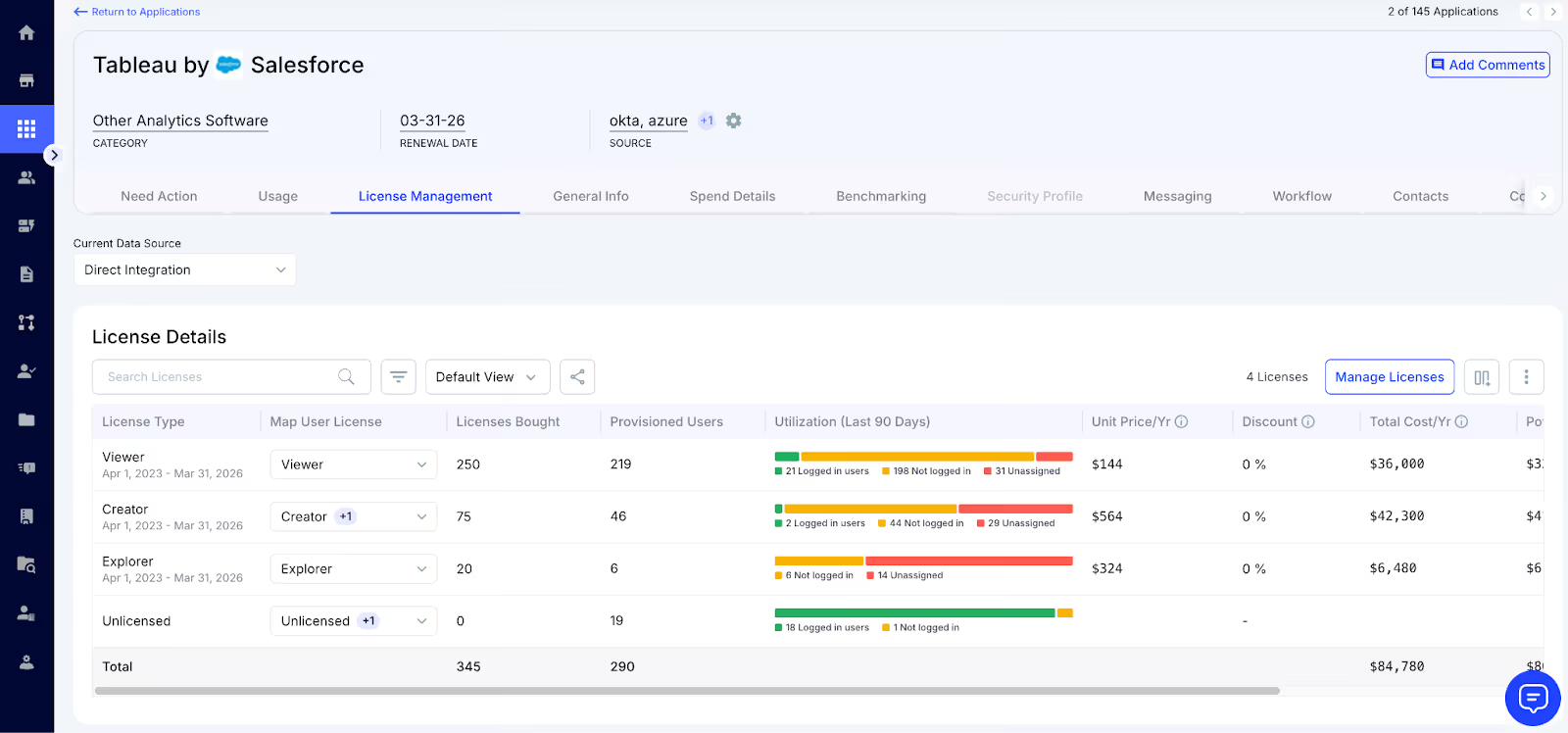
CloudEagle automates license optimization by:

  • Detecting unused and underutilized licenses across apps
  • Reallocating licenses to teams that actually need them
  • Preventing unnecessary new purchases

This continuous approach allows organizations to reduce waste without disrupting productivity, strengthening long-term SaaS spend optimization.

C. Shadow IT detection and control

Shadow IT often emerges when teams bypass formal processes to move faster. While convenient, it introduces security, compliance, and cost risks.
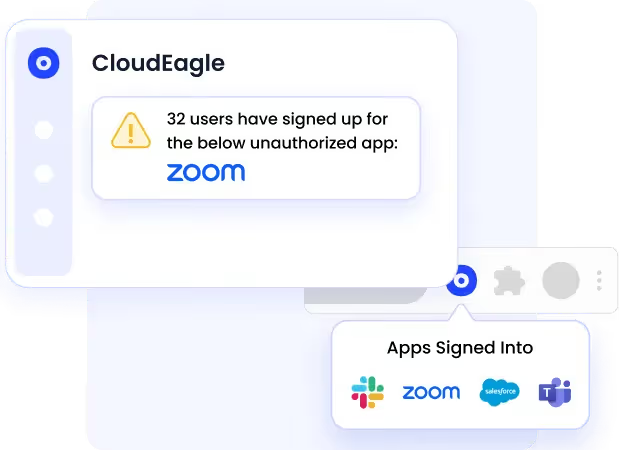
CloudEagle uses AI-driven discovery to:

  • Identify unauthorized or unapproved SaaS applications
  • Surface redundant tools across departments
  • Bring Shadow IT into a governed procurement and access model

This protects enterprises from hidden spend and reinforces SaaS cost governance without slowing innovation.

D. Smarter procurement and renewal decisions

Procurement teams are often forced to negotiate renewals without clear usage data or benchmarks.
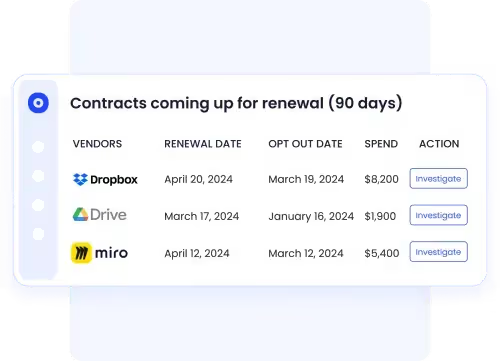
CloudEagle strengthens procurement by:

  • Tracking contracts, renewal dates, and vendor commitments
  • Mapping real usage data to license counts and SKUs
  • Providing pricing benchmarks to support negotiations

This ensures renewal decisions are data-driven, not based on last year’s assumptions, and aligns procurement actions with broader IT finance procurement SaaS goals.

E. Automated onboarding, offboarding, and access management

Access misalignment is a silent contributor to SaaS waste.

CloudEagle automates:
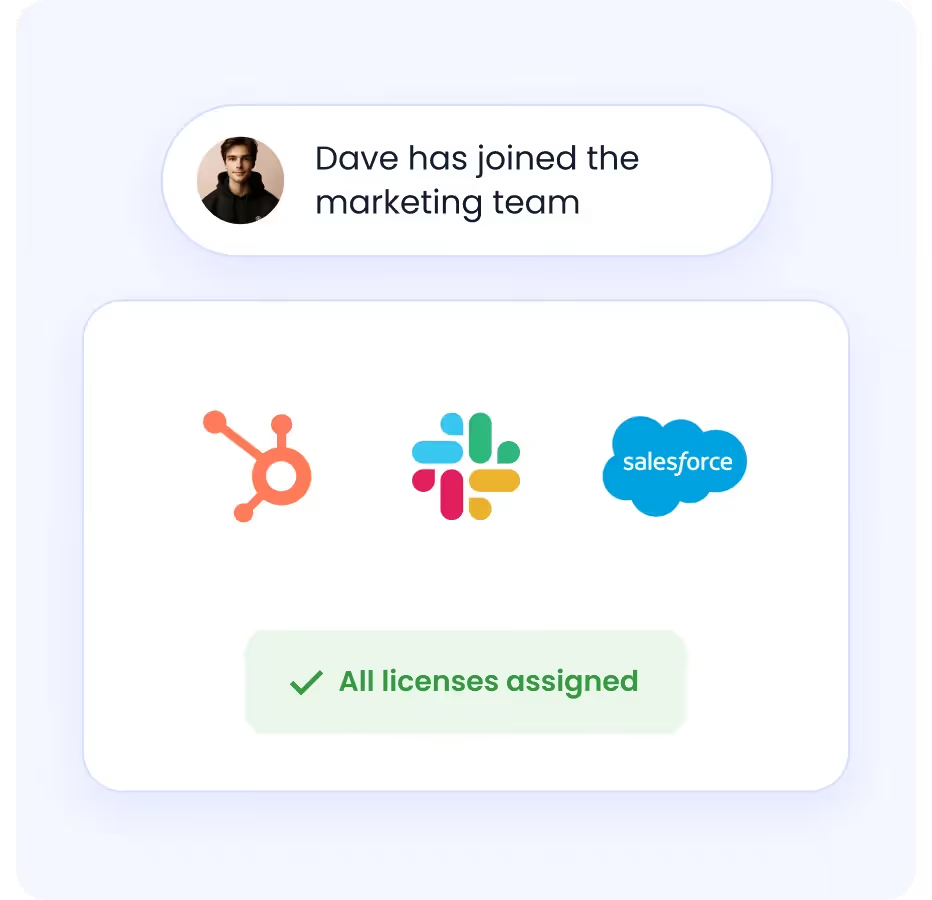
  • Provisioning and deprovisioning based on role and usage
  • Cleanup of access when employees change roles or exit
  • Enforcement of least-privilege access across SaaS tools
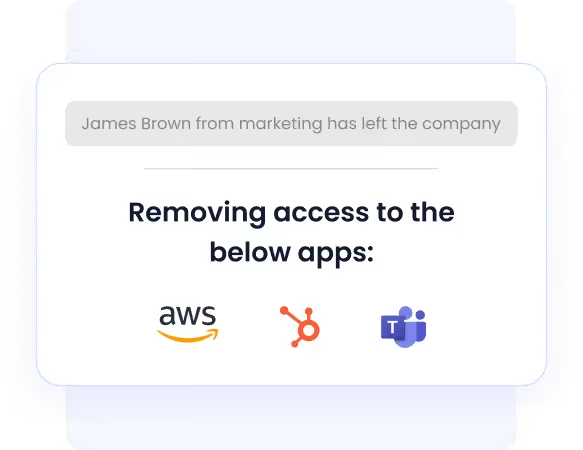
This reduces unnecessary licenses, improves security posture, and supports consistent SaaS spend management.

F. AI-driven insights across the SaaS lifecycle

CloudEagle leverages AI to connect contract data, usage patterns, and license insights into actionable intelligence.
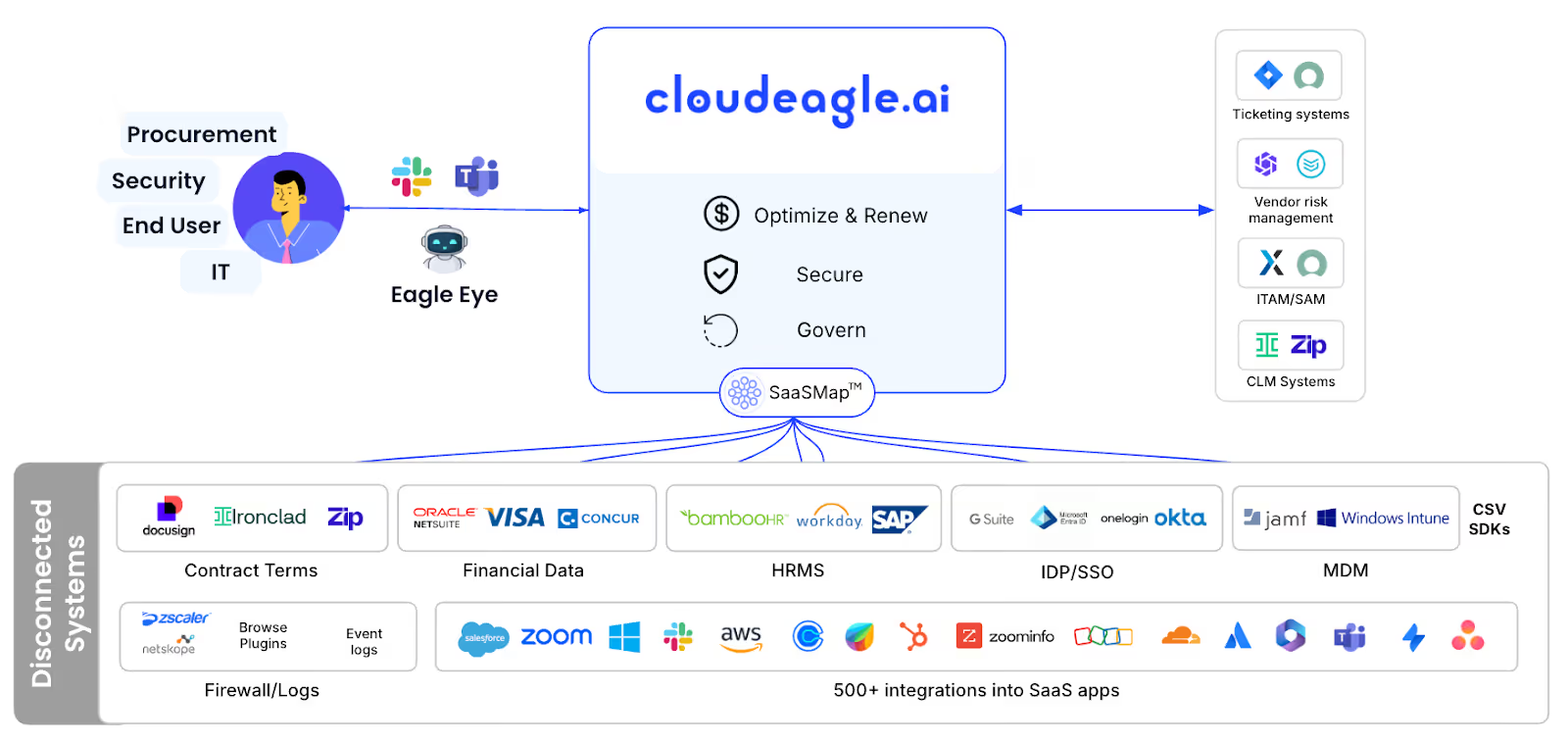
This allows teams to:

  • Forecast SaaS spend more accurately
  • Identify optimization opportunities earlier
  • Avoid unnecessary renewals or over-purchasing

By embedding intelligence into daily operations, CloudEagle enables cross-functional teams to govern SaaS spend continuously, not just at audit or renewal time.

In a Nutshell 

SaaS spend becomes difficult to manage when IT, finance, and procurement operate with partial visibility and disconnected responsibilities. Each team does its job well, but without alignment, SaaS spend optimization breaks down across the lifecycle.

When licenses aren’t reviewed continuously, and renewals rely on past assumptions, SaaS cost governance turns reactive. This is how unused licenses, redundant tools, and inefficient renewals quietly compound into long-term overspend.

CloudEagle.ai helps enterprises unify SaaS spend management across IT, finance, and procurement by delivering shared visibility, automated optimization, and AI-driven insights that keep SaaS spend predictable and controlled at scale.

Book a free demo to see how CloudEagle.ai helps you align IT, finance, and procurement around smarter SaaS spend decisions.

Frequently Asked Questions 

  1. Is SaaS OpEx or CapEx?
    SaaS is typically treated as OpEx because it is subscription-based and does not result in asset ownership.
  2. What is SaaS management?
    SaaS management involves tracking applications, licenses, usage, costs, and renewals to ensure software spend is optimized and governed effectively.
  3. What are SaaS expenses?
    SaaS expenses include subscription fees, add-ons, usage-based charges, renewals, and costs associated with managing access and compliance.
  4. What are the 4 pillars of cost optimization?
    Visibility, accountability, usage optimization, and renewal governance are the four core pillars of effective SaaS cost optimization.
  5. What is the rule of 40 in SaaS?
    The rule of 40 states that a SaaS company’s growth rate plus profit margin should equal or exceed 40%, balancing growth with efficiency.

Advertisement for a SaaS Subscription Tracking Template with a call-to-action button to download and a partial graphic of a tablet showing charts.Banner promoting a SaaS Agreement Checklist to streamline SaaS management and avoid budget waste with a call-to-action button labeled Download checklist.Blue banner with text 'The Ultimate Employee Offboarding Checklist!' and a black button labeled 'Download checklist' alongside partial views of checklist documents from cloudeagle.ai.Digital ad for download checklist titled 'The Ultimate Checklist for IT Leaders to Optimize SaaS Operations' by cloudeagle.ai, showing checklist pages.Slack Buyer's Guide offer with text 'Unlock insider insights to get the best deal on Slack!' and a button labeled 'Get Your Copy', accompanied by a preview of the guide featuring Slack's logo.Monday Pricing Guide by cloudeagle.ai offering exclusive pricing secrets to maximize investment with a call-to-action button labeled Get Your Copy and an image of the guide's cover.Blue banner for Canva Pricing Guide by cloudeagle.ai offering a guide to Canva costs, features, and alternatives with a call-to-action button saying Get Your Copy.Blue banner with white text reading 'Little-Known Negotiation Hacks to Get the Best Deal on Slack' and a white button labeled 'Get Your Copy'.Blue banner with text 'Little-Known Negotiation Hacks to Get the Best Deal on Monday.com' and a white button labeled 'Get Your Copy'.Blue banner with text 'Little-Known Negotiation Hacks to Get the Best Deal on Canva' and a white button labeled 'Get Your Copy'.Banner with text 'Slack Buyer's Guide' and a 'Download Now' button next to images of a guide titled 'Slack Buyer’s Guide: Features, Pricing & Best Practices'.Digital cover of Monday Pricing Guide with a button labeled Get Your Copy on a blue background.Canva Pricing Guide cover with a button labeled Get Your Copy on a blue gradient background.

Enter your email to
unlock the report

Oops! Something went wrong while submitting the form.
License Count
Benchmark
Per User/Per Year

Enter your email to
unlock the report

Oops! Something went wrong while submitting the form.
License Count
Benchmark
Per User/Per Year

Enter your email to
unlock the report

Oops! Something went wrong while submitting the form.
Notion Plus
License Count
Benchmark
Per User/Per Year
100-500
$67.20 - $78.72
500-1000
$59.52 - $72.00
1000+
$51.84 - $57.60
Canva Pro
License Count
Benchmark
Per User/Per Year
100-500
$74.33-$88.71
500-1000
$64.74-$80.32
1000+
$55.14-$62.34

Enter your email to
unlock the report

Oops! Something went wrong while submitting the form.

Enter your email to
unlock the report

Oops! Something went wrong while submitting the form.
Zoom Business
License Count
Benchmark
Per User/Per Year
100-500
$216.00 - $264.00
500-1000
$180.00 - $216.00
1000+
$156.00 - $180.00

Enter your email to
unlock the report

Oops! Something went wrong while submitting the form.

Get the Right Security Platform To Secure Your Cloud Infrastructure

Please enter a business email
Thank you!
The 2023 SaaS report has been sent to your email. Check your promotional or spam folder.
Oops! Something went wrong while submitting the form.

Access full report

Please enter a business email
Thank you!
The 2023 SaaS report has been sent to your email. Check your promotional or spam folder.
Oops! Something went wrong while submitting the form.

Optimize SaaS Spend Across AI Tools

Learn how enterprises optimize AI pricing by aligning usage, tiers, and costs with real business needs.

Read the Guide
CTA Thumbnail

In most enterprises, SaaS spend doesn’t spiral because teams overspend deliberately.
It spirals because ownership is fragmented, visibility is partial, and decisions are made in isolation.

IT sees access and tools. Finance sees invoices and forecasts. Procurement sees vendors and contracts.

But no single team sees the entire picture, which is why SaaS spend management becomes reactive instead of strategic.

As organizations scale, this disconnect turns routine subscriptions into long-term cost leakage. Without strong SaaS spend visibility and shared accountability, even disciplined teams struggle with SaaS cost governance.

TL;DR 

  • SaaS spend becomes hard to control when IT, finance, and procurement operate in silos
  • Limited SaaS spend visibility leads to unused licenses and redundant tools
  • Renewals often repeat last year’s spend instead of reflecting real usage
  • Cross-functional ownership is essential for effective SaaS cost governance
  • CloudEagle.ai enables shared visibility and automated SaaS spend optimization across teams

1. Why SaaS Spend Becomes Difficult to Control in Large Enterprises?

SaaS is designed to be easy to buy, fast to deploy, and simple to expand.
Those strengths are exactly what make SaaS spend optimization difficult at scale.

Industry benchmarks show that 30–40% of SaaS spend in large enterprises is wasted due to unused licenses, redundant tools, and misaligned renewals. The issue isn’t price. It’s coordination.

As companies grow:

  • Teams adopt tools independently
  • Budgets are fragmented across departments
  • Governance fails to scale with usage

Without a cross-functional operating model, IT, finance, and procurement SaaS decisions remain disconnected, and spending becomes hard to control.

FinOps Best Practices for Enterprise AI

Discover how FinOps teams manage AI consumption, forecast costs, and prevent budget overruns at scale.

Get FinOps Guide
CTA Thumbnail

2. How SaaS Spend Is Split Across IT, Finance, and Procurement?

Each function plays a critical role in SaaS decisions. The problem starts when those roles operate in silos.

A. IT manages access and onboarding

IT is typically responsible for:

What IT often lacks is cost context. Teams may onboard users quickly to avoid friction, unintentionally inflating license counts. 

Without visibility into budgets or renewal exposure, IT decisions can unintentionally increase SaaS spend management complexity.

B. Finance manages budgets and forecasting

Finance owns:

  • SaaS budgets and forecasts
  • Spend categorization and reporting
  • Variance explanations

However, finance typically sees invoices, not usage. Without SaaS spend visibility at the license and user level, forecasts rely on historical spend rather than actual need. 

This is where SaaS cost governance weakens.

C. Procurement manages vendors and contracts

Procurement handles:

  • Vendor negotiations
  • Contract terms and renewals
  • Compliance and approvals

The challenge is timing. Procurement is often pulled in late, when renewal dates are close, and usage data is incomplete. 

Without real usage signals, renewal decisions repeat last year’s assumptions instead of reflecting current reality.

SaaS Procurement Best Practices

Learn how procurement teams standardize buying, negotiate better terms, and control renewals across SaaS vendors.

Read Best Practices
CTA Thumbnail

3. What Actually Happens Across the SaaS Lifecycle?

When SaaS ownership is fragmented across IT, finance, and procurement, inefficiencies don’t appear suddenly. They compound quietly across every stage of the SaaS lifecycle, from purchase to renewal.

What makes this especially hard to fix is that no single team feels fully responsible. Each function is doing its job in isolation, but the gaps between them are where SaaS spend management breaks down.

A. New tools are added faster than old ones are removed

SaaS adoption is inherently additive. New tools are easy to buy, easy to deploy, and rarely controversial at the point of purchase.

In practice, enterprises accumulate tools because:

  • Teams buy niche applications to solve short-term problems
  • Multiple departments purchase tools with overlapping functionality
  • Legacy tools are kept running “just in case” they’re needed later

What rarely happens is deliberate removal. 

Once a tool is live, turning it off feels risky, even if usage has declined. Without coordinated SaaS spend optimization, application portfolios grow year after year, but almost never shrink.

B. Licenses remain assigned long after roles change

Role changes are constant in growing organizations, but license assignments are not.

Employees move teams, responsibilities shift, and projects end, yet their SaaS access often stays exactly the same. This creates a slow but persistent form of waste.

Common outcomes include:

  • Users retaining access to tools they no longer use
  • Premium licenses remaining assigned despite reduced need
  • Inconsistent cleanup during offboarding or internal transfers

C. Renewals repeat last year’s spend decisions

Renewal cycles are where inefficiencies become permanent.

In many enterprises, renewals are treated as administrative tasks rather than strategic decisions. The priority is avoiding disruption, not reassessing value.

What typically happens:

  • License counts roll over from the previous year
  • Usage data is incomplete or reviewed too late
  • Stakeholders renew based on familiarity, not necessity

Once renewed, inefficiencies are locked in for another year. 

This is why renewal cycles are the single most important leverage point for SaaS spend management, yet often the least examined.

4. What Effective Cross-Functional SaaS Spend Management Looks Like?

High-performing enterprises don’t try to centralize all SaaS decisions under one team. Instead, they align IT, finance, and procurement around shared data, clear ownership, and agreed decision points.

Effective IT finance procurement SaaS alignment doesn’t eliminate friction. It replaces confusion with structure.

A. Shared visibility into apps, licenses, and usage

The foundation of effective SaaS spend visibility is a shared source of truth.

In mature organizations, this means:

  • A complete inventory of all SaaS applications in use
  • Licenses mapped to users, teams, and cost centers
  • Usage data accessible to IT, finance, and procurement

When all three functions see the same data, conversations change. 

Decisions are no longer driven by assumptions or partial views, and SaaS spend optimization becomes a collaborative effort instead of a reactive cleanup.

B. Clear ownership at each stage of the SaaS lifecycle

Visibility alone doesn’t fix spend. Ownership does.

Best-in-class organizations explicitly define responsibility at each stage:

  • Who approves new SaaS tools and expansions
  • Who monitors license usage and optimization
  • Who owns renewal decisions and vendor negotiations

This clarity prevents diffusion of responsibility, where everyone assumes someone else is managing spend. Clear ownership ensures SaaS cost governance is continuous, not episodic.

C. Renewal decisions based on real usage data

The most effective cost control happens before contracts are renewed.

When renewals are driven by:

  • Actual user activity
  • License utilization trends
  • Current business relevance

Enterprises avoid carrying forward outdated assumptions. Usage-driven renewals allow teams to right-size contracts confidently, reduce waste, and still support growth.

This is where SaaS spend management shifts from defensive cost-cutting to disciplined financial stewardship.

5. How CloudEagle.ai Supports Cross-Functional SaaS Spend Optimization?

CloudEagle.ai is designed to solve the exact problem enterprises face with SaaS spend: fragmented ownership across IT, finance, and procurement. Instead of forcing each function to operate in isolation. 

It provides a shared system of record that enables consistent SaaS spend management, stronger SaaS cost governance, and measurable SaaS spend optimization across the entire lifecycle.

A. Centralized SaaS spend visibility and governance

CloudEagle gives enterprises full visibility into their SaaS environment by consolidating applications, licenses, users, and costs into a single platform.

This enables:

  • IT to see which apps are active, who has access, and where risk exists
  • Finance to understand true SaaS spend drivers beyond invoices
  • Procurement to identify overlapping tools and consolidation opportunities

By eliminating blind spots, CloudEagle establishes a foundation for shared SaaS spend visibility, ensuring no application or license operates outside governance.

B. Continuous license optimization across teams

License waste is one of the largest drivers of SaaS overspend, especially when licenses are provisioned once and never revisited.

CloudEagle automates license optimization by:

  • Detecting unused and underutilized licenses across apps
  • Reallocating licenses to teams that actually need them
  • Preventing unnecessary new purchases

This continuous approach allows organizations to reduce waste without disrupting productivity, strengthening long-term SaaS spend optimization.

C. Shadow IT detection and control

Shadow IT often emerges when teams bypass formal processes to move faster. While convenient, it introduces security, compliance, and cost risks.

CloudEagle uses AI-driven discovery to:

  • Identify unauthorized or unapproved SaaS applications
  • Surface redundant tools across departments
  • Bring Shadow IT into a governed procurement and access model

This protects enterprises from hidden spend and reinforces SaaS cost governance without slowing innovation.

D. Smarter procurement and renewal decisions

Procurement teams are often forced to negotiate renewals without clear usage data or benchmarks.

CloudEagle strengthens procurement by:

  • Tracking contracts, renewal dates, and vendor commitments
  • Mapping real usage data to license counts and SKUs
  • Providing pricing benchmarks to support negotiations

This ensures renewal decisions are data-driven, not based on last year’s assumptions, and aligns procurement actions with broader IT finance procurement SaaS goals.

E. Automated onboarding, offboarding, and access management

Access misalignment is a silent contributor to SaaS waste.

CloudEagle automates:

  • Provisioning and deprovisioning based on role and usage
  • Cleanup of access when employees change roles or exit
  • Enforcement of least-privilege access across SaaS tools

This reduces unnecessary licenses, improves security posture, and supports consistent SaaS spend management.

F. AI-driven insights across the SaaS lifecycle

CloudEagle leverages AI to connect contract data, usage patterns, and license insights into actionable intelligence.

This allows teams to:

  • Forecast SaaS spend more accurately
  • Identify optimization opportunities earlier
  • Avoid unnecessary renewals or over-purchasing

By embedding intelligence into daily operations, CloudEagle enables cross-functional teams to govern SaaS spend continuously, not just at audit or renewal time.

In a Nutshell 

SaaS spend becomes difficult to manage when IT, finance, and procurement operate with partial visibility and disconnected responsibilities. Each team does its job well, but without alignment, SaaS spend optimization breaks down across the lifecycle.

When licenses aren’t reviewed continuously, and renewals rely on past assumptions, SaaS cost governance turns reactive. This is how unused licenses, redundant tools, and inefficient renewals quietly compound into long-term overspend.

CloudEagle.ai helps enterprises unify SaaS spend management across IT, finance, and procurement by delivering shared visibility, automated optimization, and AI-driven insights that keep SaaS spend predictable and controlled at scale.

Book a free demo to see how CloudEagle.ai helps you align IT, finance, and procurement around smarter SaaS spend decisions.

Frequently Asked Questions 

  1. Is SaaS OpEx or CapEx?
    SaaS is typically treated as OpEx because it is subscription-based and does not result in asset ownership.
  2. What is SaaS management?
    SaaS management involves tracking applications, licenses, usage, costs, and renewals to ensure software spend is optimized and governed effectively.
  3. What are SaaS expenses?
    SaaS expenses include subscription fees, add-ons, usage-based charges, renewals, and costs associated with managing access and compliance.
  4. What are the 4 pillars of cost optimization?
    Visibility, accountability, usage optimization, and renewal governance are the four core pillars of effective SaaS cost optimization.
  5. What is the rule of 40 in SaaS?
    The rule of 40 states that a SaaS company’s growth rate plus profit margin should equal or exceed 40%, balancing growth with efficiency.

CloudEagle.ai recognized in the 2025 Gartner® Magic Quadrant™ for SaaS Management Platforms
Download now
gartner chart
5x
Faster employee
onboarding
80%
Reduction in time for
user access reviews
30k
Workflows
automated
$15Bn
Analyzed in
contract spend
$2Bn
Saved in
SaaS spend

Recognized as an Industry leader for our AI

CloudEagle.ai is Recognized in the 2024 Gartner® Magic Quadrant™ for SaaS Management Platforms

Recognition highlights CloudEagle’s innovation and leadership in the rapidly evolving SaaS management and procurement space.
Read More
Gartner Magic Quadrant for SaaS Management Platforms showing a chart divided into Challengers and Leaders quadrants with various companies plotted as dots.

CloudEagle.ai Recognized in the GigaOm Radar for SaaS Management Platforms

CloudEagle named a Leader and Outperformer in GigaOm Radar Report, validating its impact in the SaaS management platform landscape.
Read More
gigaom

Everest Group Positions CloudEagle.ai as a Trailblazer in SaaS Management Platforms

CloudEagle recognized as a Trailblazer by Everest Group, showcasing its rapid growth and innovation in SaaS spend and operations management.
Read More
qks

CloudEagle.ai is Recognized in the 2024 Gartner® Magic Quadrant™ for SaaS Management Platforms

Recognition highlights CloudEagle’s innovation and leadership in the rapidly evolving SaaS management and procurement space.
Read More
gartner

Streamline SaaS governance and save 10-30%

Book a Demo with Expert
CTA image
One platform to Manage
all SaaS Products
Learn More