.avif)
%201.svg)


HIPAA Compliance Checklist for 2025

Vendr is now part of Vertice. The deal closed in June 2026, folding Vendr's pricing data into Vertice's broader procurement platform, a natural moment for existing customers to check whether their current setup still fits.
Vendr built a real business on pricing transparency, and benchmarks are genuinely useful for knowing what other companies paid. But not every organization has the same requirements, and teams that need more than pricing data alone are increasingly looking at alternatives. That's one input into a renewal, rather than the whole decision.
The other half, whether your team actually needs the licenses you're paying for, is where CloudEagle.ai comes in. This CloudEagle.ai vs Vendr breakdown looks at what each platform covers and what that means for your next renewal.
TL;DR
- Vendr's core strength is software pricing intelligence: benchmarks pulled from past negotiated deals.
- Vendr does not track how your licenses are actually used, which means benchmark-only negotiations still start from a guess.
- CloudEagle.ai combines usage data, automated renewal workflows, pricing benchmarks, and negotiation support with expert help on one platform.
- In the CloudEagle.ai vs Vendr comparison, the real difference isn't who has better pricing data. It's who gives you the full context to act on it.
- Anyone evaluating CloudEagle.ai vs Vendr after the Vertice deal should weigh usage visibility as heavily as pricing benchmarks.
1. Vendr vs CloudEagle.ai: What Vendr Actually Does (and Where It Stops)
Vendr's platform centers on two things: pricing intelligence pulled from real transaction data, and an AI negotiation agent that runs outreach to vendors on your behalf.
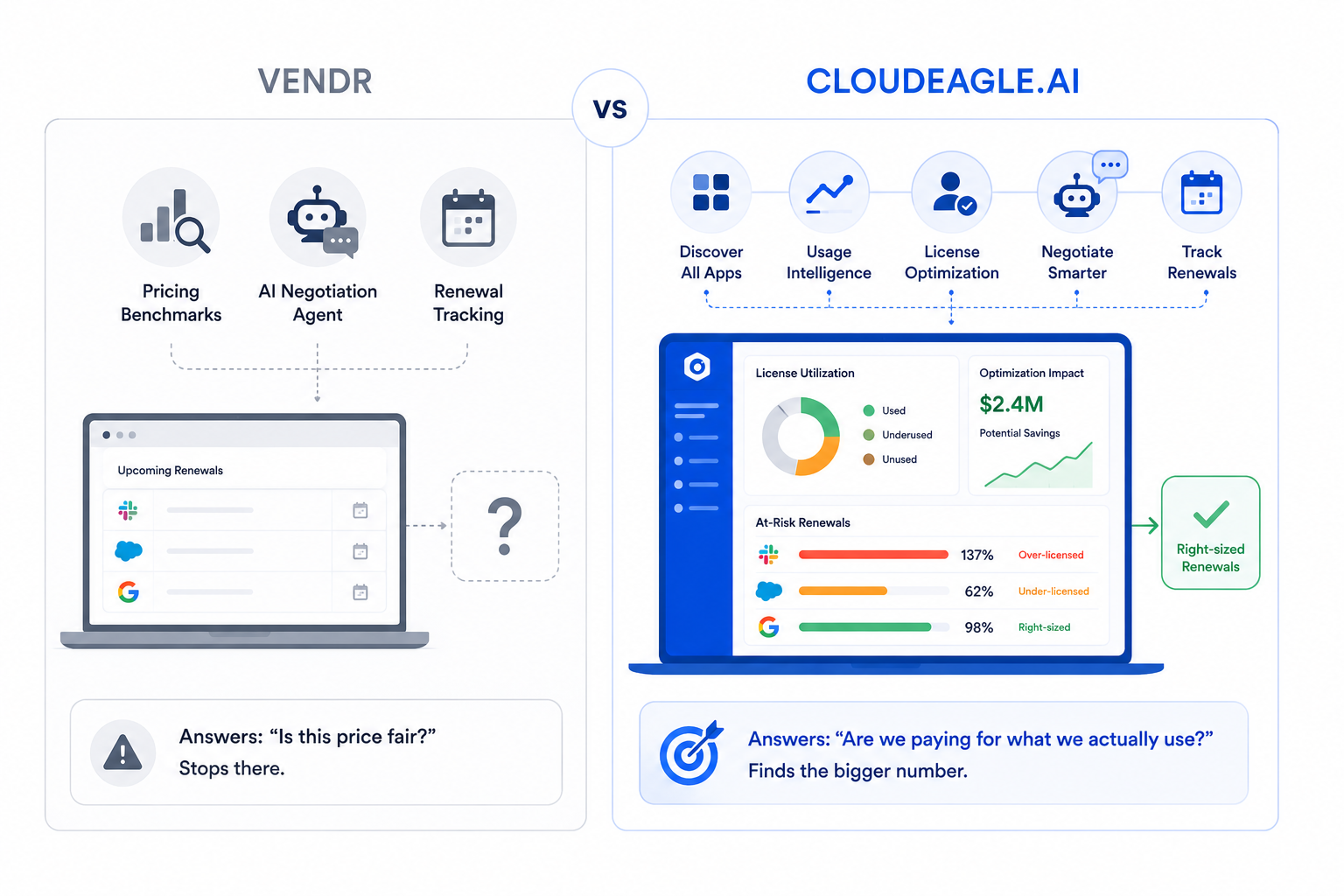
Both are useful, but they don’t answer the question that actually determines your renewal outcome: are you even paying for licenses your team uses?
- Pricing benchmarks: Vendr shows what comparable companies paid for a given tool. Helpful context, but a benchmark alone can't tell you your own seat count is wrong.
- Negotiation agent: Vendr's agent drafts outreach and runs back-and-forth with vendors based on the target pricing you set. It executes a strategy. It doesn't build one from your usage.
- Renewal tracking: Vendr surfaces upcoming renewals so you don't miss a deadline. It doesn't tell you which of those renewals are oversized.
None of this is a knock on pricing intelligence as a category. It's a real need. But pricing data answers "is this price fair" and stops there. It never answers "do we need this many seats," and that second question is usually where the bigger number lives.

2. Why Pricing Data Alone Still Leads to Overpaying
Here's the problem with a benchmark-only approach:
- You can know the exact market rate for Salesforce or Datadog and still overpay, because the benchmark says nothing about your seat count.
- A vendor will happily quote you a "fair" price on 200 seats when your team is only using 140.
- Without usage data, you have no way to catch that gap before the renewal is signed.
About 51% of enterprise SaaS licenses go unused, according to Ramp. Vendor dashboards rarely surface that number on their own because vendor dashboards are built to show what the vendor wants you to see, not where your license count is inflated.
A benchmark tells you the market price for 200 seats. It never asks whether you need 200 seats in the first place.
That's the gap CloudEagle.ai was built to close, and it's the real answer to who wins the CloudEagle.ai vs Vendr comparison on outcomes. It's also why SaaS spend optimization has to start with usage, rather than a market average.
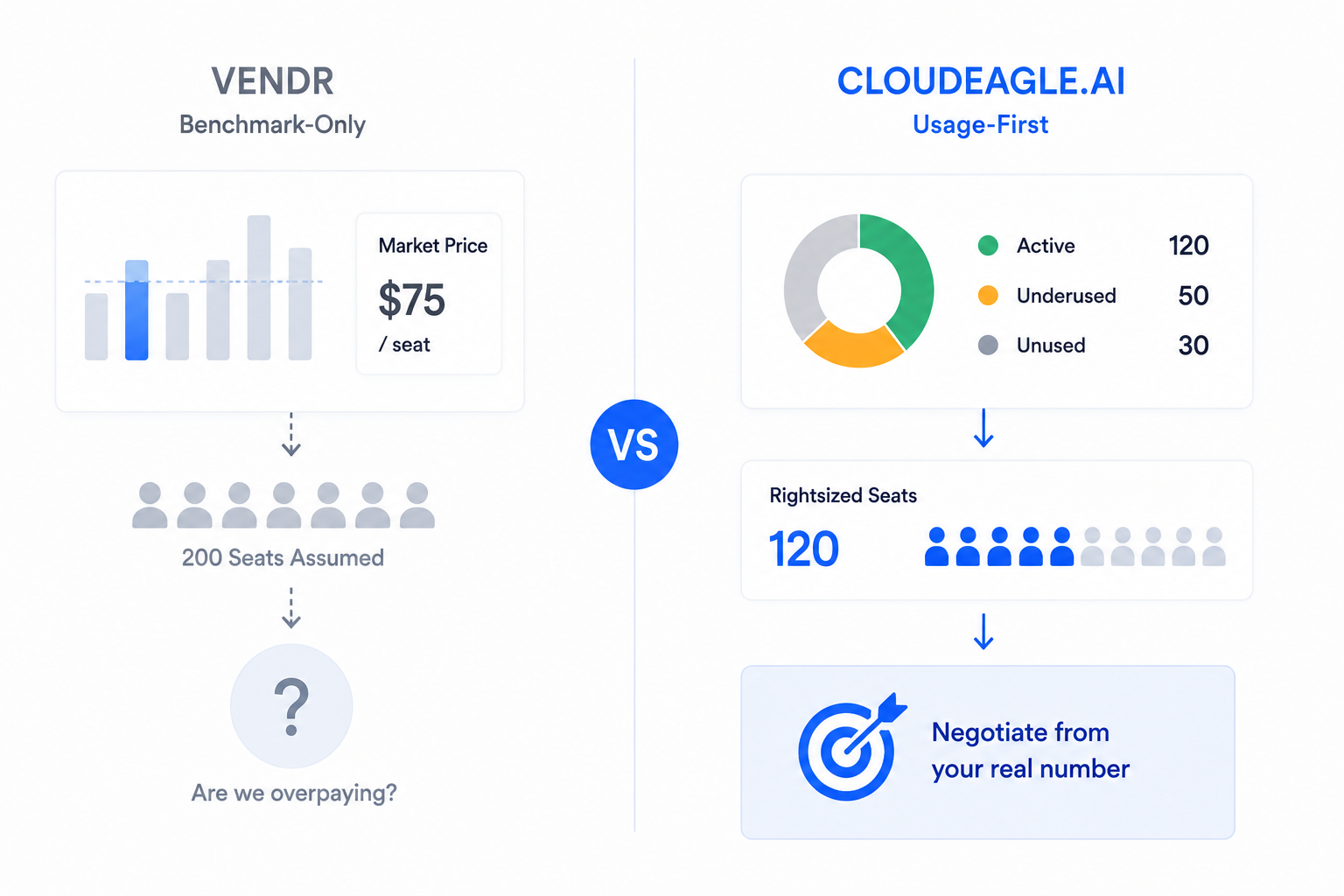
Three things a pure pricing tool structurally can't give you:
- Feature-level usage, not just login data: A user showing up in SSO logs looks active. Whether they touched the feature your contract is priced around is a different question entirely, and it's the one that actually determines if a seat is worth renewing.
- A rightsized number before you negotiate: Walking into a renewal with a clean, usage-verified seat count changes the entire conversation. You're negotiating from your real number, not the vendor's opening one.
- Renewal timing tied to actual risk: Knowing a contract is expiring is table stakes. Knowing which expiring contracts carry unused spend is what makes a renewal calendar actually useful.
3. CloudEagle.ai: The Full Context Behind Every Renewal and License Decision
CloudEagle.ai was built around a simple idea: pricing data only helps if you know what you're pricing. That means usage, spend, contract terms, and negotiation leverage need to live in one place.
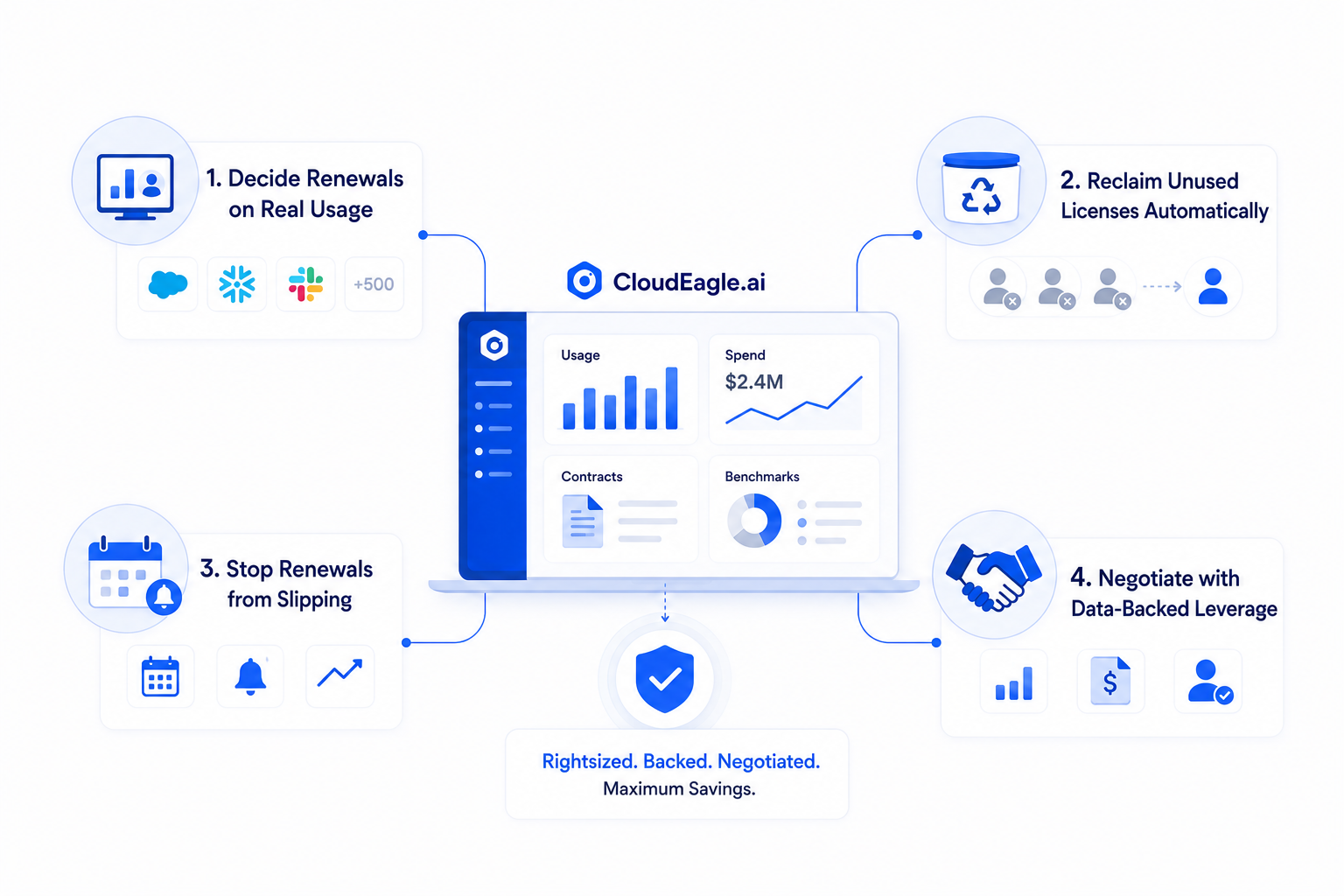
This is the section of the CloudEagle.ai vs Vendr comparison where the gap actually plays out in practice:
a) Renewals get decided on real usage:
Most teams walk into a renewal with a spreadsheet built the week before and a vendor-supplied usage report that overstates adoption.
How CloudEagle.ai solves it:
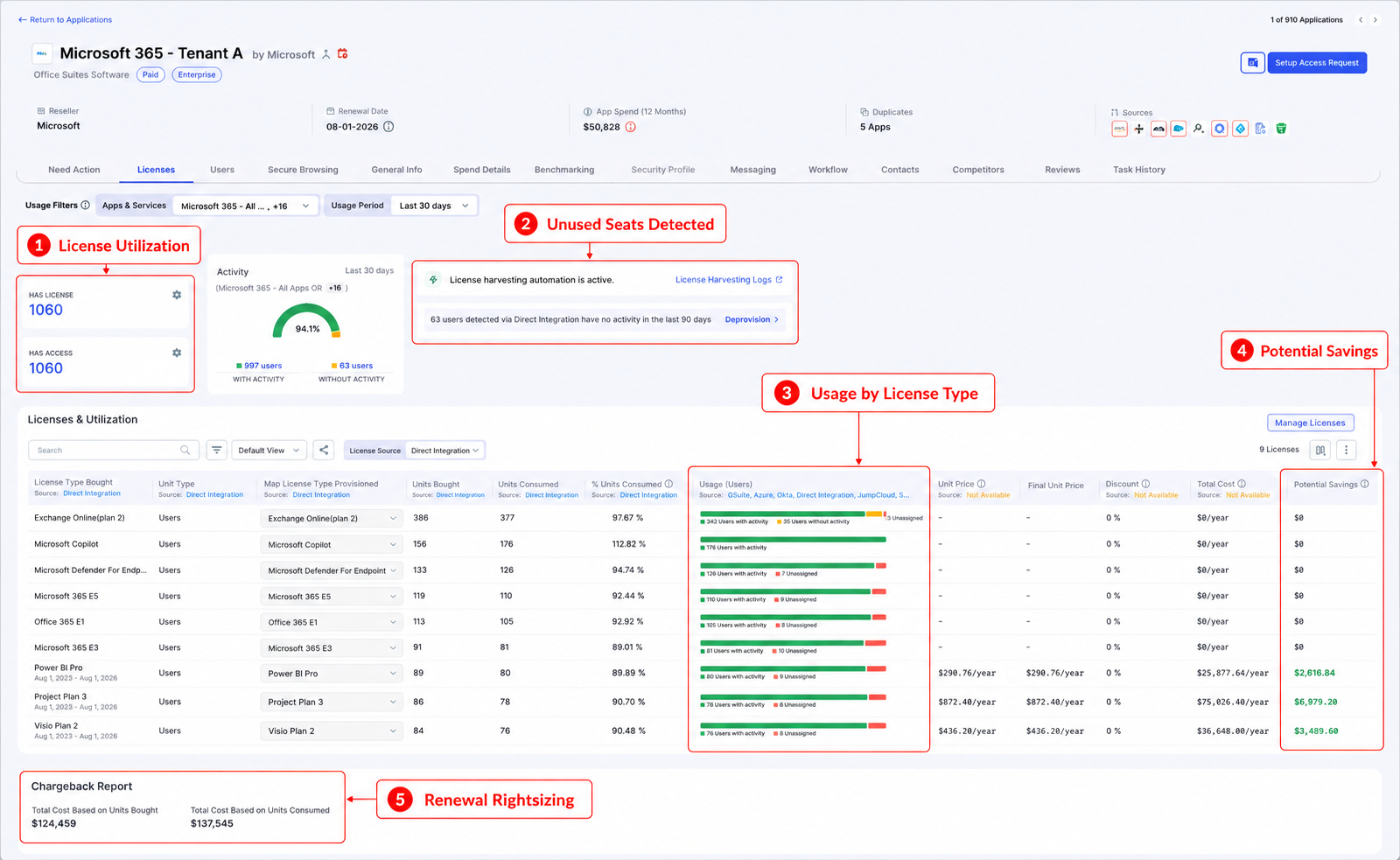
- Tracks usage at the feature and role level across 500+ integrations, not just session logins
- Flags provisioned but unused seats continuously instead of waiting for an annual audit
- Builds a renewal brief automatically with current utilization, benchmark pricing, and a rightsized seat count
Sapphire Ventures used this exact combination to cut Salesforce costs by 15% and save 30% on total renewal spend, pairing usage visibility with $15B+ in benchmark data instead of negotiating from the vendor's opening number.
"During a company-wide cost-cutting phase, reducing vendor spend without impacting critical tools became a priority. CloudEagle.ai gave us license usage visibility, market pricing benchmarks, and stronger renewal preparation, helping reduce Salesforce costs by 15% and contract renewal costs by 30%.”
~ Will Suttle, VP of Finance, Sapphire Venture
b) Unused licenses got reclaimed automatically:
Idle seats sit on the books for months because nobody's job is to notice them until renewal season forces the question. How CloudEagle.ai solves it:
- Continuously flags provisioned-but-unused licenses across every connected app
- Automates license harvesting so idle seats get reclaimed before they renew, not after
- Surfaces overlapping tools doing the same job, so duplicate spend gets caught early
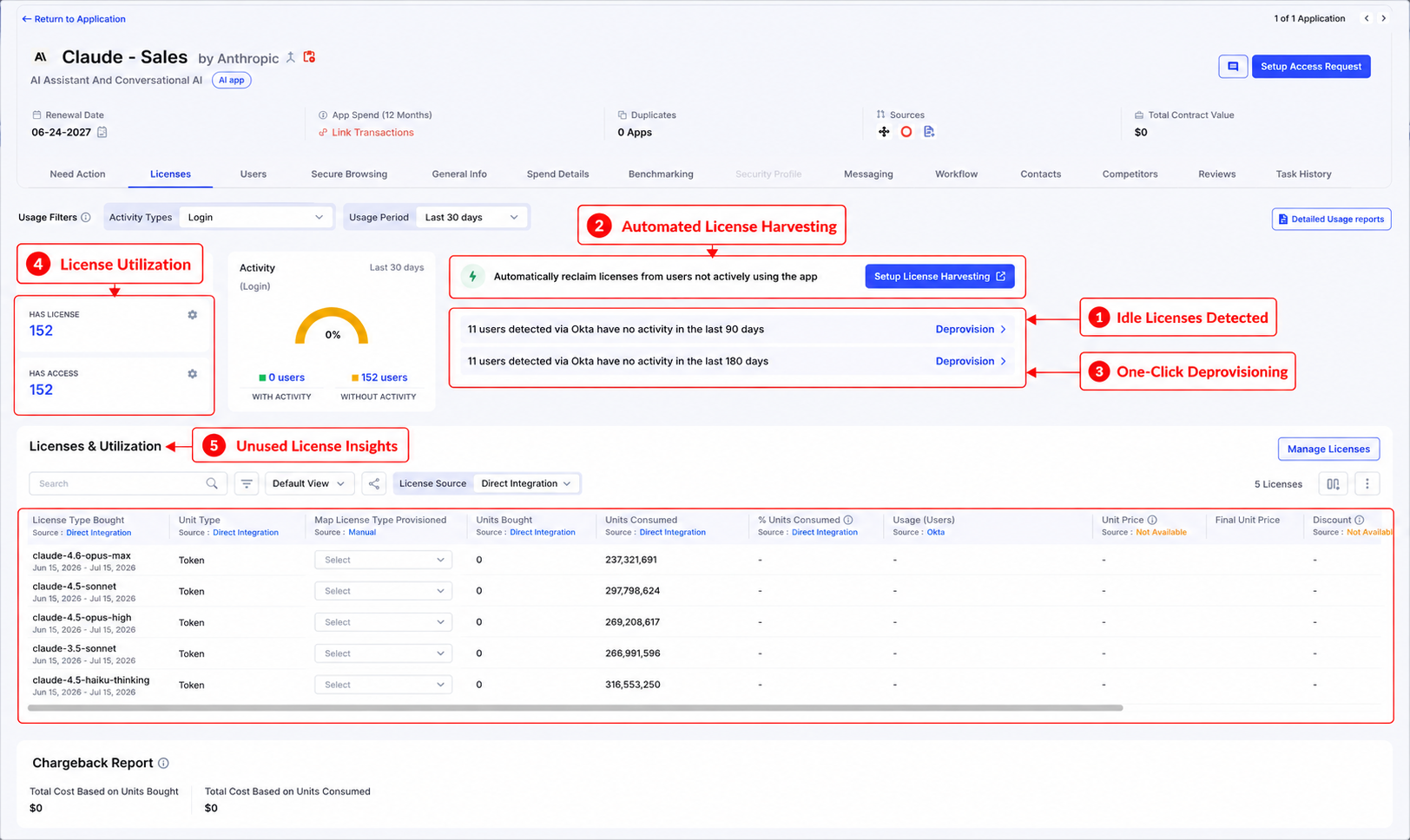
This is the piece a pricing benchmark can never touch. A benchmark tells you the going rate for a license. It says nothing about whether you should be paying for that license at all.
c) Renewals stop slipping through unnoticed:
A $120K contract can auto-renew at last year's rate simply because nobody reviewed usage or pulled a benchmark before the deadline hit.
How CloudEagle.ai solves it:
- Centralizes every contract with AI-extracted renewal dates, ownership, and spend data
- Fires automated alerts starting 90 days before each renewal, with escalating reminders
- Pulls fresh benchmark pricing from CloudEagle.ai's own transaction data at the same time, so the renewal brief is ready before anyone has to ask for it
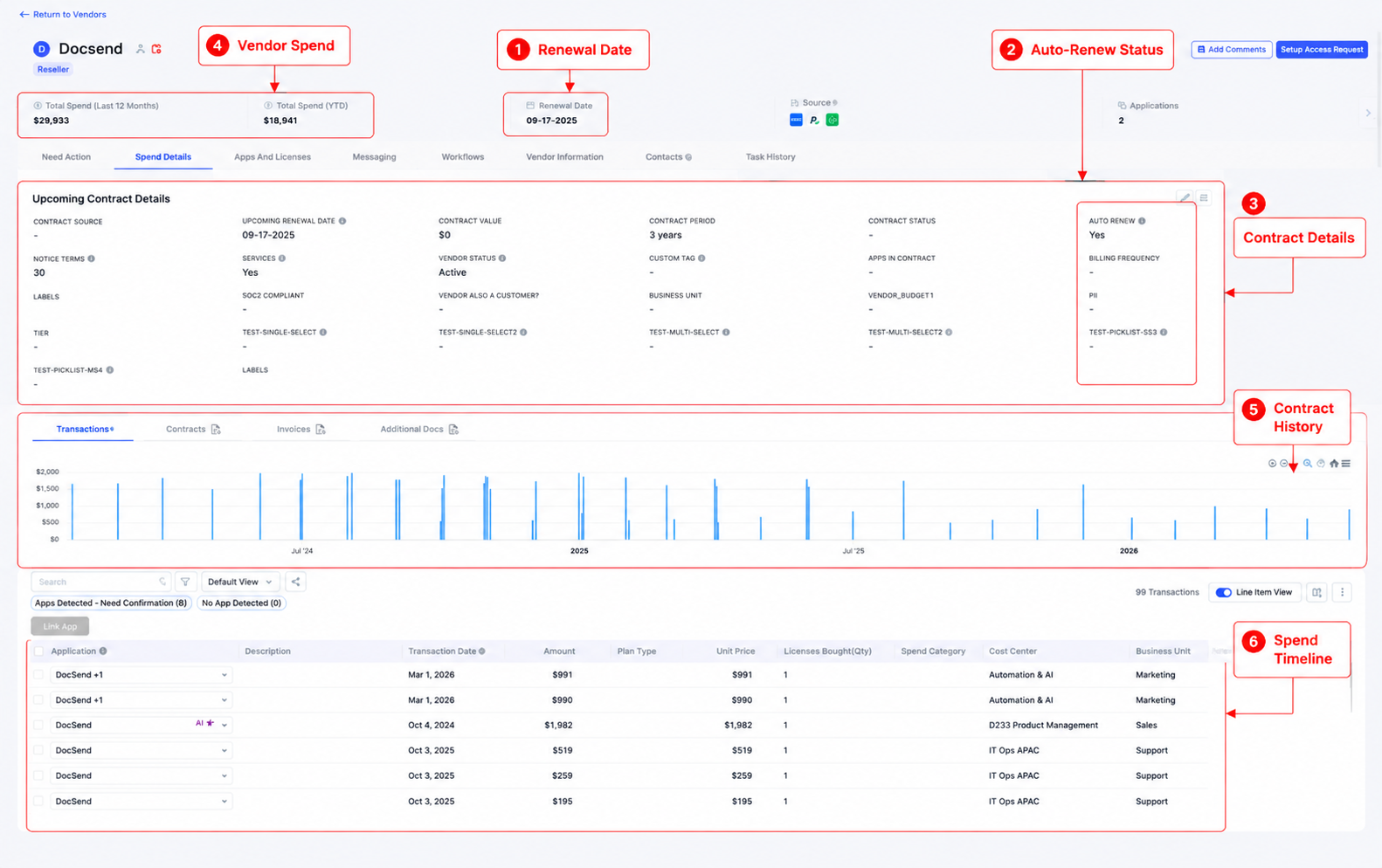
Horizon Media used automated alerts and real-time usage insights to uncover $107K in savings on a single Monday.com renewal and remove 45 unused Zoom licenses in the same cycle.
"We had limited visibility into SaaS usage and spending across departments, which made it hard to control costs or manage renewals effectively. There was no centralized process, and unused licenses often went unnoticed. CloudEagle.ai changed that by giving us the tools and insights to track usage, benchmark pricing, and make informed decisions. Now we have full control over our software spend."
— Abhishek Khare, SVP, Chief Acceleration Officer, Horizon Media
d) Negotiations start with leverage instead of a wish list:
Setting a target price is easy. Getting a vendor to actually move on it takes evidence, not just intent.
How CloudEagle.ai solves it:
- Combines usage data and pricing benchmarks into a single negotiation brief before any outreach happens
- Offers Assisted Buying, where CloudEagle.ai's procurement specialists run the negotiation directly using that evidence
- Anchors every counteroffer on a rightsized seat count, so vendors can't quote you for licenses that no longer exist
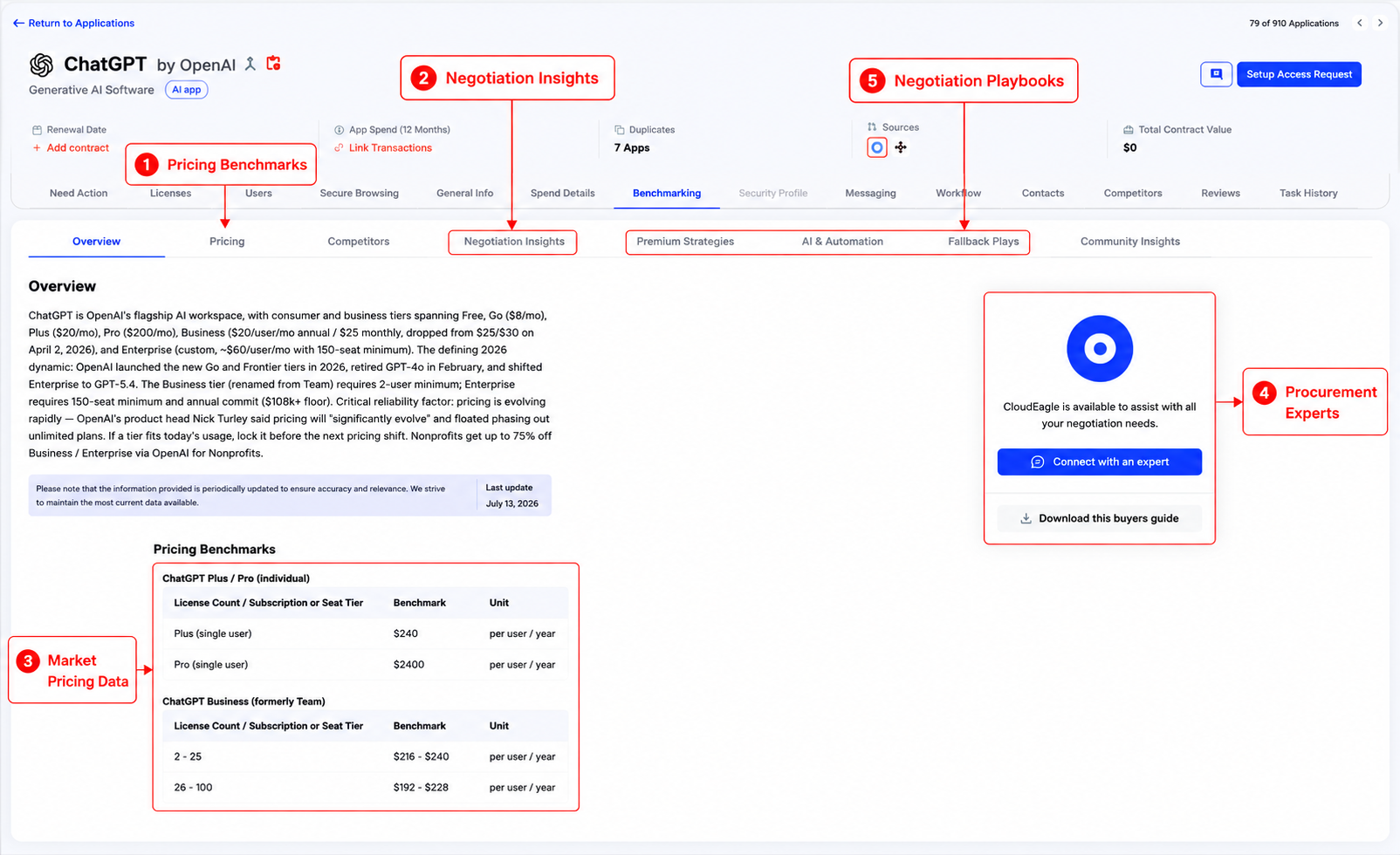
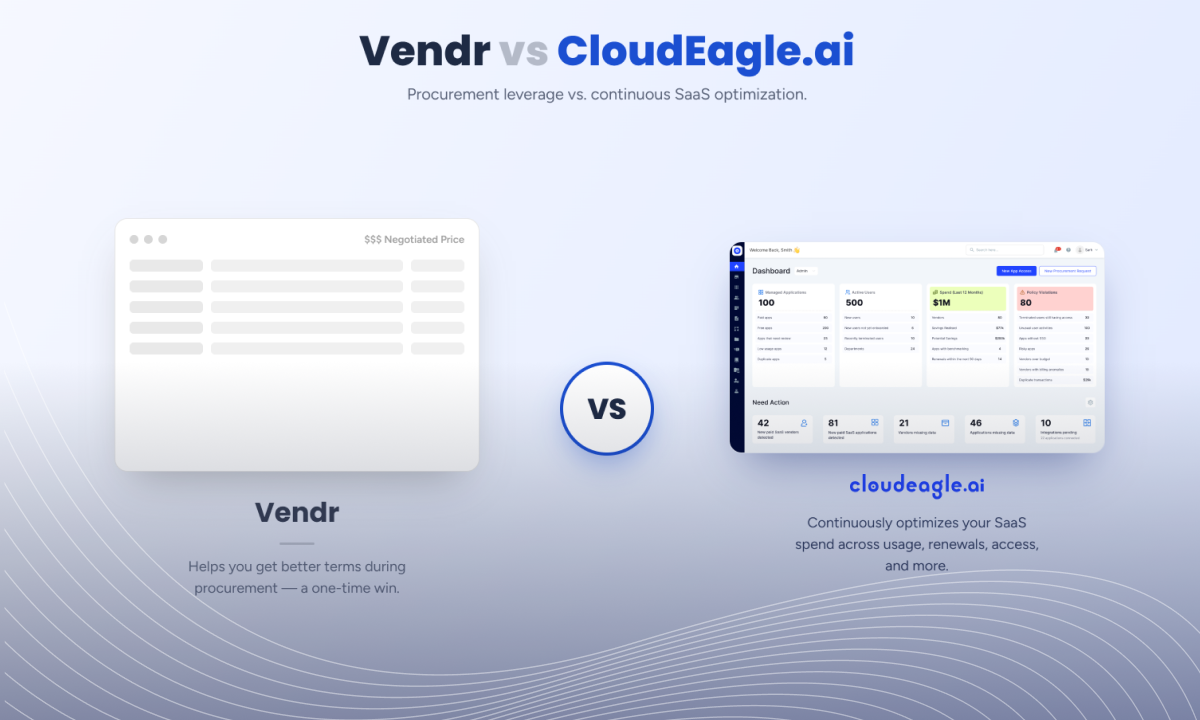
This is the part that a benchmark-only tool structurally can't replicate. Vendr can tell you what others paid.
CloudEagle.ai tells you what you actually need, backs it with what others paid, and then puts procurement expertise behind the ask. It's the clearest evidence in the CloudEagle.ai vs Vendr comparison that pricing data alone was never the finish line.
Vendr Tells You What Others Paid. We Tell You What You Actually Need.


4. CloudEagle.ai vs Vendr: Side-by-Side Comparison
The pattern is consistent across every row of this CloudEagle.ai vs Vendr breakdown. Vendr covers one input for a good renewal decision. CloudEagle.ai covers the inputs and the decision itself.
5. One Command Center for SaaS, AI, and Identity Governance
CloudEagle.ai is built as five connected modules, so the usage data behind a renewal is never siloed from the rest of your stack. It's a useful reference point for anyone still weighing CloudEagle.ai vs Vendr on scope alone.
- SaaS Management: Centralizes every app, license, and owner, and automatically reclaims unused seats before they renew.
- Procurement: Runs price benchmarking, renewal calendars, and buying workflows so purchases and renewals move faster.
- Identity Governance: Automates onboarding, offboarding, and access requests through a self-service catalog.
- Security & Compliance: Flags risky or unsanctioned apps and keeps access reviews audit-ready.
- AI Governance: Tracks which AI tools and agents are in use and what they're costing you.
See how the modules are packaged on the CloudEagle.ai pricing page.
6. FAQs
1. Is CloudEagle.ai a good Vendr alternative after the Vertice acquisition?
Yes. As a Vendr alternative, CloudEagle.ai covers pricing benchmarks plus usage data, renewal automation, and negotiation support in one platform.
2. Does Vendr track SaaS license usage?
No. Vendr focuses on pricing benchmarks and negotiation, not feature or role-level usage tracking.
3. What makes CloudEagle.ai different in the CloudEagle.ai vs Vendr comparison?
CloudEagle.ai pairs usage data with pricing benchmarks, so renewal decisions start from actual need, not just market price.
4. In the CloudEagle.ai vs Vendr comparison, which platform covers renewal automation?
CloudEagle.ai does. It centralizes contracts, fires 90-day alerts, and automates license reclamation, none of which Vendr covers.
5. Can CloudEagle.ai help negotiate SaaS renewals, not just track them?
Yes. CloudEagle.ai offers Assisted Buying, where procurement experts negotiate directly using usage and benchmark data.
6. How much can companies save by combining usage data with pricing benchmarks?
Customers typically recover 10 to 30% of annual SaaS spend within the first 90 days of usage-backed renewal reviews.
Still weighing CloudEagle.ai vs Vendr for your next renewal? See what a usage-backed negotiation actually looks like. Book a CloudEagle.ai demo.
Stop Negotiating From the Vendor's Number. Use Yours.


.avif)


.avif)
.avif)




.png)




.avif)
.avif)
.avif)


