.avif)
%201.svg)


HIPAA Compliance Checklist for 2025

Your last access review probably covered every application IT formally manages.
It did not cover the AI agent credential someone's workflow spun up in March, the service account nobody remembers creating, or the token spend quietly compounding on a tool that bills by usage instead of seats.
That gap closes today.
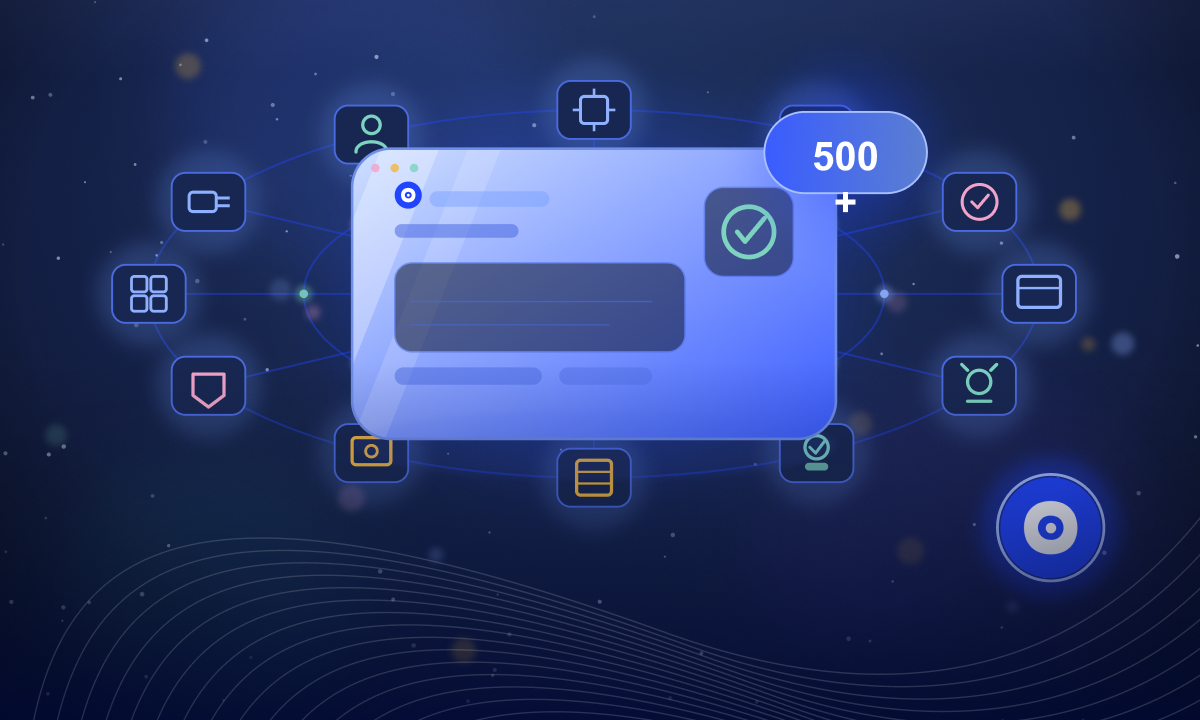
CloudEagle.ai has surpassed 500 direct integrations across the enterprise technology stack, spanning identity, security, finance, HR, DevOps, and AI platforms.
Customers can now connect every layer of their environment and govern all of it, including every non-human identity and every AI token, from a single place.
Read more: CloudEagle.ai Hits Milestone of 500+ integrations
TL;DR
- CloudEagle.ai now offers 500+ direct integrations spanning identity, security, finance, HR, DevOps, and AI platforms
- Machine identities outnumber human identities by more than 100 to 1 in the modern enterprise, and most of those credentials are created automatically and rarely revoked
- AI tools bill on usage, not seats, so a shift to agentic workflows can multiply token cost 5 to 30 times for the same task
- With 500+ integrations, every non-human identity gets an owner and expiration date, and token consumption is tracked at the point of use by tool, team, and model
The Coverage Gap Behind Every Governance Failure
Every governance program has the same blind spot. The applications and identities IT formally tracks are a fraction of what actually exists in the environment, and that fraction shrinks every quarter.
Every integration adds new API keys, service accounts, and AI agent credentials behind it, and most of those get created automatically and never get revoked. Machine identities, including AI agents, now outnumber human identities 109 to 1 in the modern enterprise, according to Palo Alto Networks' Identity Security Landscape report.
Security inherits exposure from identities nobody is tracking. That gap shows up differently depending on which team hits it first:
- Finance overpays at renewals because contract terms get negotiated against incomplete usage data
- Security carries exposure in credentials that were never formally onboarded or reviewed
- IT manages onboarding and offboarding workflows that miss identities sitting outside their visibility entirely
- Procurement walks into vendor conversations without knowing what the organization is actually running
"Knowing an app exists is one thing, but knowing features are actively being used, who has admin rights, and what's sitting behind SSO that nobody's audited in months is another," said Matthew Ferere, Senior IT Operations Engineer at CaptivateIQ.
"Once we connected CloudEagle.ai across our stack, we finally had that level of detail in one place instead of piecing it together app by app."

Why This Matters More Now Than It Did a Year Ago
AI changed the math on governance, and not just because adoption is faster.
- A contract review
- A security assessment
- A budget line behind them
According to Gartner, many AI vendors lack transparency into token building, leaving enterprises unable to forecast or control AI spend. That's a different problem than shadow SaaS. A tool you can't see is a visibility gap.
A cost you can't forecast is a budget problem that compounds every billing cycle.
Claude, ChatGPT, and similar tools do not bill like SaaS. They bill on usage, so spend scales with how a tool gets used, not with how many seats were purchased.
As AI agents move from experimental to production, token cost scales with task complexity rather than seat count. A single shift to an agentic workflow can multiply token cost by 5 to 30 times for the same task.
You cannot govern an identity, human or otherwise, that you cannot see. You cannot forecast a cost that scales on usage you cannot measure. Most enterprises are currently trying to do both at once.
What 500+ Integrations Actually Changes
With 500+ integrations, every team that touches the stack works from the same complete picture for the first time.
Non-human identities are visible and governable instead of accumulating unmonitored.
A new identity gets an owner and an expiration date the moment it's created, instead of surfacing six months later in an audit finding.
Token consumption is tracked at the point of use, broken down by tool, team, and model, so the bill at month's end is never a surprise.
CloudEagle's integrations go beyond SSO to catch what SSO alone misses, correlating finance systems, firewall logs, endpoint telemetry, and browser plugin data to surface identity apps sitting behind SSO and AI tools being accessed through personal accounts.
The 500+ integrations span:
- Identity providers like Okta and Azure AD
- Financial systems like NetSuite and Workday
- Security tools like CrowdStrike and Netskope
- Collaboration platforms like Slack and Microsoft 365
- Developer tools like GitHub and Jira
- AI platforms including Claude, Cursor, and Gemini
And hundreds more across every category enterprises run on.
"Enterprises have been trying to govern their SaaS with coverage gaps that make it impossible," said Nidhi Jain, CEO of CloudEagle.ai.
"Every unconnected tool is an unknown cost, an unreviewed access point, and a missed negotiation. 500 integrations mean our customers can finally see the whole picture, and act on it."
CloudEagle.ai's 500+ integrations are available to all customers today, at no additional cost, with flexibility to build custom integrations where needed.
500 Integrations. One View. Zero Coverage Gaps.


FAQs
1. How many integrations does CloudEagle.ai support?
CloudEagle.ai supports 500+ direct integrations across identity, security, finance, HR, DevOps, and AI platforms.
2. Is there an added cost for the 500+ integrations?
No. All 500+ integrations are available to every CloudEagle customer today at no additional cost.
3. Can CloudEagle.ai build custom integrations?
Yes. CloudEagle offers flexibility to build custom integrations where a tool isn't already covered.
4. How does CloudEagle.ai track AI token spend?
Token consumption is tracked at the point of use and broken down by tool, team, and model.
Book a demo to see what full stack coverage looks like for your organization
You Can't Govern What You Can't See. Now You Can See Everything.


.avif)


.avif)
.avif)




.png)




.avif)
.avif)
.avif)


