You need to enable JavaScript in order to use the AI chatbot tool powered by ChatBot

What Should You Use To Audit Vendor Licenses Before Renewal?

Share via:
blog-cms-banner-bg
Little-Known Negotiation Hacks to Get the Best Deal on Slack
cta-bg-blogDownload Your Copy

HIPAA Compliance Checklist for 2025

Download PDF

License renewals have a funny way of sneaking up on teams. One day it’s “we’ll review usage later,” and the next day the invoice is approved because no one wants to delay procurement.

Most enterprises don’t overspend because they’re careless. They overspend because license data lives in too many places. When renewal time arrives, decisions are made with partial visibility and a lot of assumptions.

A proper license audit before renewal isn’t about checking boxes. It’s about knowing exactly what you’re paying for, who’s using it, and whether the contract still matches reality. This article breaks down what tools, data, and signals you should rely on to audit vendor licenses with confidence.

TL;DR

  • Start audits 90–120 days early to avoid rushed renewals driven by incomplete data.
  • Vendor dashboards show activity, but miss contract alignment and real license value.
  • Spreadsheets break at scale, creating errors, version drift, and limited visibility across teams.
  • Effective audits require unified visibility across usage, spend, user roles, and contracts.
  • CloudEagle helps turn audit insights into action with early signals, ownership, and renewal readiness.

Unused licenses drain budget silently

Identify waste before renewals hit.
Download License Management Best Practices

1. Can You Rely On Vendor Dashboards Alone?

Vendor dashboards look reassuring during renewal prep. Clean charts, active user counts, neat trend lines. They suggest clarity, but that clarity is framed entirely by how the vendor defines value and usage.

  • Vendor-Defined Metrics: Dashboards show what vendors choose to measure, not what your contract actually enforces.
  • Access vs. Usage Confusion: Logged-in users are counted even when features tied to cost remain untouched.
  • Aggregation Bias: Usage is rolled up across teams, hiding dormant licenses and role-based inefficiencies.

This gap isn’t theoretical. Forbes estimates that organizations overspend 20–30% on SaaS licenses due to unused or misaligned entitlements. Most of that waste survives renewals because vendor dashboards don’t surface it clearly.

  • Contract Mismatch: Entitlements, bundles, and tiers rarely map cleanly to dashboard categories.
  • No Business Context: Dashboards can’t explain whether usage is still justified by team size or priorities.

Relying on vendor dashboards alone turns audits into confirmation exercises. You see activity, not accuracy, and renewals quietly lock in last year’s assumptions.

2. Are Spreadsheets Still A Real Option For License Audits?

Spreadsheets fail because they still show up in license audits because they feel familiar and controllable. When tools don’t connect cleanly, teams default to rows, columns, and manual reconciliation.

  • Initial Control: Data feels transparent when every cell can be inspected and adjusted manually.
  • Short-Term Speed: For small audits, spreadsheets seem faster than onboarding a new system.
  • Custom Logic: Teams can model assumptions without waiting on tool limitations.

That control fades as complexity grows. Multiple vendors, contract versions, user roles, and timelines quickly stretch spreadsheets beyond their design intent.

  • Version Drift: Different teams update different copies, and no one trusts the final file.
  • Manual Fragility: One broken formula can quietly distort renewal decisions.

This isn’t a new realization. As Filippo Passerini once put it,

“Spreadsheets are fantastic for analysis, but they are terrible systems of record.”

Spreadsheets don’t fail because teams misuse them. They fail because license audits require continuity, traceability, and shared ownership. Those needs don’t scale inside files built for individual control rather than organizational truth.

Renewals are where overspending happens

Negotiate smarter before signing.
Download SaaS Procurement Best Practices

3. What Should A Modern Vendor License Audit Tool Actually Combine?

Modern license audits break down when data exists, but context doesn’t. Teams may see usage, contracts, or spend in isolation, yet still struggle to explain what should change before renewal. A real audit tool brings these signals together early.

A. Usage, Spend, And User Context In One View

License audits fall apart when usage data lives in one place, spend in another, and users somewhere else entirely. Teams end up debating numbers instead of decisions, especially when renewal pressure shortens every conversation.

Disconnected Signals

SaaS Usage & monitoring shows activity, spend shows cost, but neither explains business relevance alone.

Role Blindness

Without user context, high-cost licenses look justified even when assigned to low-need roles.

Ownership Gaps

Finance, IT, and business teams each see partial truth, not a shared picture.

The scale of this problem is real: about 51% of SaaS licenses purchased by enterprises go unused, said Ramp, leading to millions of wasted dollars annually as organizations pay for seats that aren’t actively used.

When usage, spend, and user context appear together, waste stops hiding behind averages and assumptions, and audits become actionable instead of aspirational.

B. Historical Trends, Not Just Current Counts

License snapshots are comforting because they feel definitive. A dashboard shows today’s active users, today’s seats, today’s cost, and the number looks settled. But renewals are not decided in a moment; they’re shaped by patterns over time.

  • Usage rising slowly, then flattening
  • Seasonal spikes tied to projects or headcount changes

Trends explain intent in a way current counts never can. A license used heavily six months ago but untouched recently tells a different story than one steadily declining across quarters. Without that context, teams treat temporary usage as a permanent need.

  • Short-term growth mistaken for long-term demand
  • Declines explained away as temporary noise

Strong audits look backward before they negotiate forward. When historical patterns are visible, renewals become about alignment, not guesswork, and decisions feel defensible instead of rushed.

C. Clear Signals On Downgrades, Reclaims, And Consolidation

Most license audits surface data, but stop short of direction. Teams can see usage and spend, yet still struggle to answer the simplest renewal question: what should we actually change.

  • Downgrade Blindness: Bundled or premium tiers stay untouched because downgrade paths aren’t obvious.
  • Reclaim Uncertainty: Inactive users are identified, but ownership gaps delay real action.
  • Tool Overlap: Similar products continue side by side because consolidation impact isn’t quantified.

This is where clarity matters more than completeness. As Peter Drucker once said,

“The most serious mistakes are not being made as a result of wrong answers. The truly dangerous thing is asking the wrong questions.”

Action Ambiguity

Data without clear signals leads to safe renewals, not smart ones.

Decision Paralysis

When outcomes aren’t explicit, teams default to maintaining the status quo.

An effective audit doesn’t just reveal inefficiencies. It points clearly toward reclaims, downgrades, and consolidation opportunities, so renewal decisions feel deliberate rather than defensive.

4. How Does CloudEagle Bring Everything Together Before Renewal?

Renewals usually fail because information, ownership, and timing are fragmented. Usage data sits in one place, contracts in another, and approvals move slowly across email threads and chat tools. 

CloudEagle.ai brings structure to this chaos by orchestrating every procurement step early, visibly, and with clear accountability.

Instead of reacting weeks before expiry, teams align usage, spend, stakeholders, and approvals well in advance, so negotiations start prepared, not pressured.

A: A Single Renewal Calendar With Clear Ownership

CloudEagle.ai ensures renewals are planned, visible, and owned long before deadlines approach.

Current Process

Renewals are tracked in spreadsheets or personal renewal calendars. Procurement often lacks visibility into opt-out dates or renewal timelines.

Pain Points

Deadlines are missed. Teams auto-renew or rush negotiations without leverage.

How We Do It

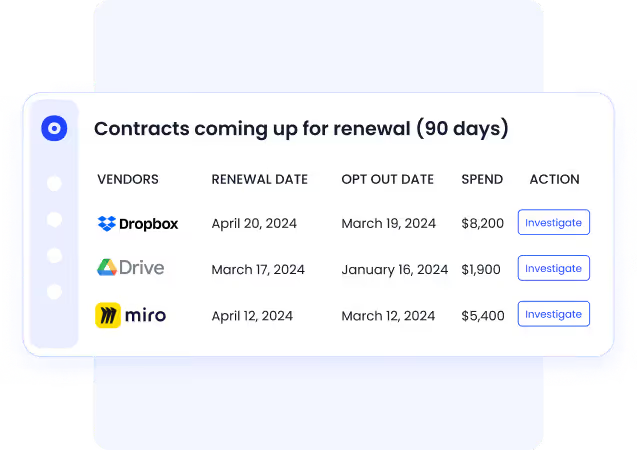
CloudEagle.ai maintains a centralized renewal calendar with ownership mapped to app owners and budget holders.
Why We Are Better

Every renewal has a clear owner and timeline. Nothing depends on memory or scattered reminders.

B: Automated Renewal Workflows Instead of Manual Follow-Ups

CloudEagle.ai replaces chasing stakeholders with structured renewal workflows that move renewals forward automatically.

Current Process

Approvals happen over email or Slack. Procurement follows up repeatedly to keep requests moving.

Pain Points

Approvals stall. Procurement spends time coordinating instead of negotiating.

How We Do It

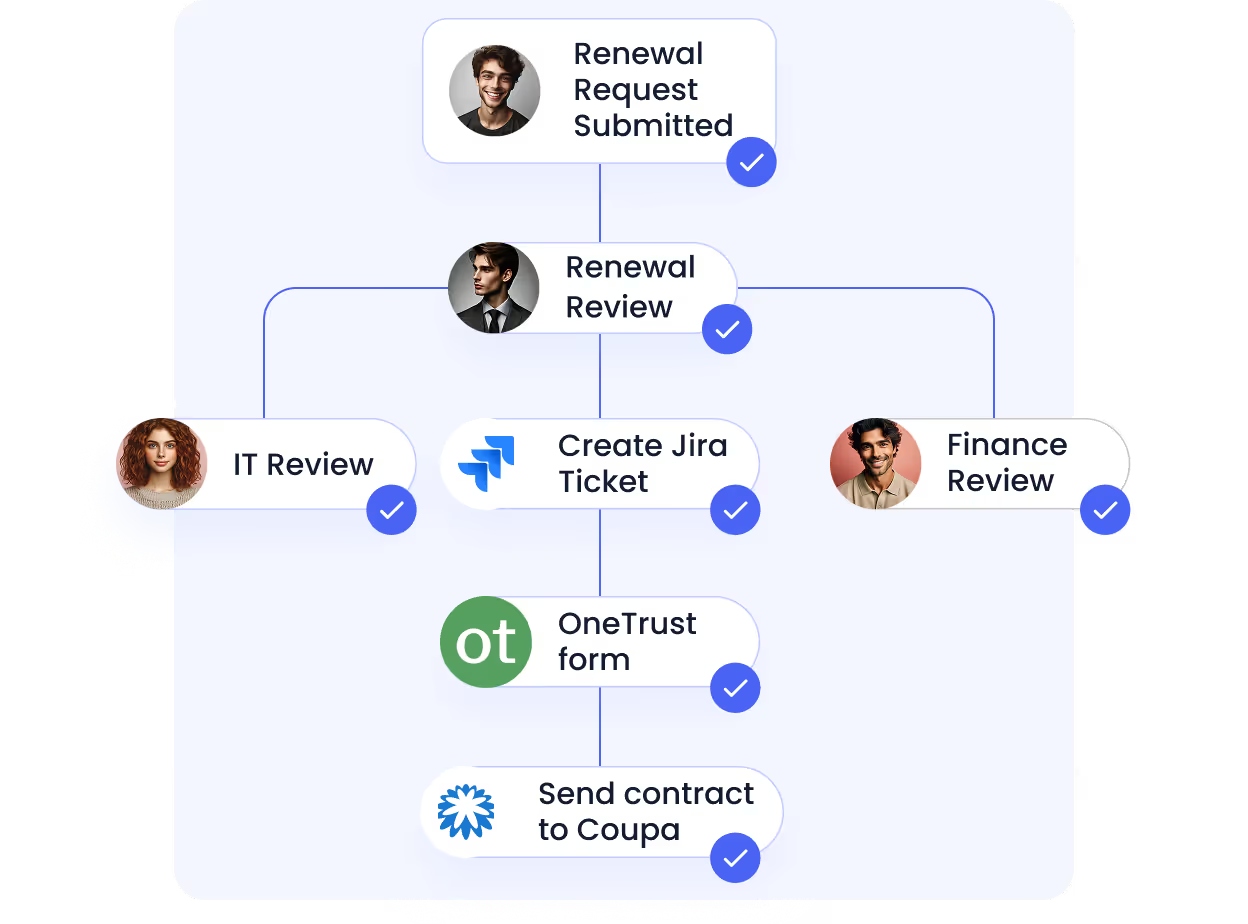
CloudEagle.ai assigns tasks with deadlines and escalates automatically if actions are delayed.
Why We Are Better

Progress continues without follow-ups. Escalations happen systematically, not manually.

C: Early Renewal Signals With Negotiation-Ready Context

CloudEagle.ai ensures teams enter renewals informed, not scrambling for data.

Current Process

Renewal discussions begin without full usage, pricing benchmarks, or alternatives.

Pain Points

Negotiation leverage is weak. Decisions are driven by urgency.
How We Do It

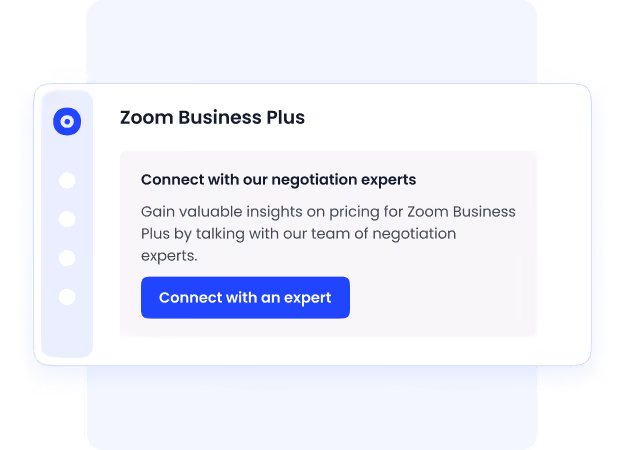
CloudEagle.ai triggers workflows up to 90 days in advance with usage data, benchmarks, alternatives, and AI recommendations.

Why We Are Better

Every renewal starts with context. Procurement negotiates confidently and earlier.

D: Connected Systems Without Changing Existing Procurement Tools

CloudEagle.ai fits into existing procurement and risk workflows instead of replacing them.

Current Process

Teams manually copy details into Jira, Coupa, Ironclad, or risk tools. Systems stay disconnected.

Pain Points

Manual handoffs slow progress. Errors and duplication increase.

How We Do It

CloudEagle.ai creates tickets and syncs data across ITSM, contract, and risk systems automatically.

Why We Are Better

Teams keep using Coupa or Zip. CloudEagle.ai handles orchestration before purchase execution.

5. Conclusion

Auditing vendor licenses before renewal isn’t about finding perfect numbers. It’s about removing uncertainty before time pressure sets the tone. When audits happen late or rely on partial views, renewals quietly preserve yesterday’s decisions.

A modern audit connects usage, spend, people, and patterns early. It shows not just what exists, but what should change. That clarity turns renewals into intentional choices, not rushed approvals, and leaves teams feeling prepared rather than relieved when the invoice lands.

6. FAQs

1. When should you start auditing vendor licenses before renewal?

Start at least 90–120 days before renewal. This gives enough time to spot trends, reclaim licenses, and influence negotiations without pressure.

2. Are vendor dashboards enough for license audits?

No. Vendor dashboards reflect vendor-defined metrics, not contract entitlements or business relevance. They’re useful inputs, not audit tools.

3. Can spreadsheets work for license audits at scale?

Spreadsheets help with small reviews, but they break under complexity. Version drift, manual errors, and missing context limit their reliability.

4. What data matters most in a license audit?

Usage, spend, user role, and contract terms matter equally. An audit fails when any one of these is reviewed in isolation.

5. How does a proper audit improve renewal outcomes?

It replaces assumptions with evidence. Teams enter renewals knowing what to downgrade, reclaim, or consolidate, strengthening their position.

Advertisement for a SaaS Subscription Tracking Template with a call-to-action button to download and a partial graphic of a tablet showing charts.Banner promoting a SaaS Agreement Checklist to streamline SaaS management and avoid budget waste with a call-to-action button labeled Download checklist.Blue banner with text 'The Ultimate Employee Offboarding Checklist!' and a black button labeled 'Download checklist' alongside partial views of checklist documents from cloudeagle.ai.Digital ad for download checklist titled 'The Ultimate Checklist for IT Leaders to Optimize SaaS Operations' by cloudeagle.ai, showing checklist pages.Slack Buyer's Guide offer with text 'Unlock insider insights to get the best deal on Slack!' and a button labeled 'Get Your Copy', accompanied by a preview of the guide featuring Slack's logo.Monday Pricing Guide by cloudeagle.ai offering exclusive pricing secrets to maximize investment with a call-to-action button labeled Get Your Copy and an image of the guide's cover.Blue banner for Canva Pricing Guide by cloudeagle.ai offering a guide to Canva costs, features, and alternatives with a call-to-action button saying Get Your Copy.Blue banner with white text reading 'Little-Known Negotiation Hacks to Get the Best Deal on Slack' and a white button labeled 'Get Your Copy'.Blue banner with text 'Little-Known Negotiation Hacks to Get the Best Deal on Monday.com' and a white button labeled 'Get Your Copy'.Blue banner with text 'Little-Known Negotiation Hacks to Get the Best Deal on Canva' and a white button labeled 'Get Your Copy'.Banner with text 'Slack Buyer's Guide' and a 'Download Now' button next to images of a guide titled 'Slack Buyer’s Guide: Features, Pricing & Best Practices'.Digital cover of Monday Pricing Guide with a button labeled Get Your Copy on a blue background.Canva Pricing Guide cover with a button labeled Get Your Copy on a blue gradient background.

Enter your email to
unlock the report

Oops! Something went wrong while submitting the form.
License Count
Benchmark
Per User/Per Year

Enter your email to
unlock the report

Oops! Something went wrong while submitting the form.
License Count
Benchmark
Per User/Per Year

Enter your email to
unlock the report

Oops! Something went wrong while submitting the form.
Notion Plus
License Count
Benchmark
Per User/Per Year
100-500
$67.20 - $78.72
500-1000
$59.52 - $72.00
1000+
$51.84 - $57.60
Canva Pro
License Count
Benchmark
Per User/Per Year
100-500
$74.33-$88.71
500-1000
$64.74-$80.32
1000+
$55.14-$62.34

Enter your email to
unlock the report

Oops! Something went wrong while submitting the form.

Enter your email to
unlock the report

Oops! Something went wrong while submitting the form.
Zoom Business
License Count
Benchmark
Per User/Per Year
100-500
$216.00 - $264.00
500-1000
$180.00 - $216.00
1000+
$156.00 - $180.00

Enter your email to
unlock the report

Oops! Something went wrong while submitting the form.

Get the Right Security Platform To Secure Your Cloud Infrastructure

Please enter a business email
Thank you!
The 2023 SaaS report has been sent to your email. Check your promotional or spam folder.
Oops! Something went wrong while submitting the form.

Access full report

Please enter a business email
Thank you!
The 2023 SaaS report has been sent to your email. Check your promotional or spam folder.
Oops! Something went wrong while submitting the form.

License renewals have a funny way of sneaking up on teams. One day it’s “we’ll review usage later,” and the next day the invoice is approved because no one wants to delay procurement.

Most enterprises don’t overspend because they’re careless. They overspend because license data lives in too many places. When renewal time arrives, decisions are made with partial visibility and a lot of assumptions.

A proper license audit before renewal isn’t about checking boxes. It’s about knowing exactly what you’re paying for, who’s using it, and whether the contract still matches reality. This article breaks down what tools, data, and signals you should rely on to audit vendor licenses with confidence.

TL;DR

  • Start audits 90–120 days early to avoid rushed renewals driven by incomplete data.
  • Vendor dashboards show activity, but miss contract alignment and real license value.
  • Spreadsheets break at scale, creating errors, version drift, and limited visibility across teams.
  • Effective audits require unified visibility across usage, spend, user roles, and contracts.
  • CloudEagle helps turn audit insights into action with early signals, ownership, and renewal readiness.

Unused licenses drain budget silently

Identify waste before renewals hit.
Download License Management Best Practices

1. Can You Rely On Vendor Dashboards Alone?

Vendor dashboards look reassuring during renewal prep. Clean charts, active user counts, neat trend lines. They suggest clarity, but that clarity is framed entirely by how the vendor defines value and usage.

  • Vendor-Defined Metrics: Dashboards show what vendors choose to measure, not what your contract actually enforces.
  • Access vs. Usage Confusion: Logged-in users are counted even when features tied to cost remain untouched.
  • Aggregation Bias: Usage is rolled up across teams, hiding dormant licenses and role-based inefficiencies.

This gap isn’t theoretical. Forbes estimates that organizations overspend 20–30% on SaaS licenses due to unused or misaligned entitlements. Most of that waste survives renewals because vendor dashboards don’t surface it clearly.

  • Contract Mismatch: Entitlements, bundles, and tiers rarely map cleanly to dashboard categories.
  • No Business Context: Dashboards can’t explain whether usage is still justified by team size or priorities.

Relying on vendor dashboards alone turns audits into confirmation exercises. You see activity, not accuracy, and renewals quietly lock in last year’s assumptions.

2. Are Spreadsheets Still A Real Option For License Audits?

Spreadsheets fail because they still show up in license audits because they feel familiar and controllable. When tools don’t connect cleanly, teams default to rows, columns, and manual reconciliation.

  • Initial Control: Data feels transparent when every cell can be inspected and adjusted manually.
  • Short-Term Speed: For small audits, spreadsheets seem faster than onboarding a new system.
  • Custom Logic: Teams can model assumptions without waiting on tool limitations.

That control fades as complexity grows. Multiple vendors, contract versions, user roles, and timelines quickly stretch spreadsheets beyond their design intent.

  • Version Drift: Different teams update different copies, and no one trusts the final file.
  • Manual Fragility: One broken formula can quietly distort renewal decisions.

This isn’t a new realization. As Filippo Passerini once put it,

“Spreadsheets are fantastic for analysis, but they are terrible systems of record.”

Spreadsheets don’t fail because teams misuse them. They fail because license audits require continuity, traceability, and shared ownership. Those needs don’t scale inside files built for individual control rather than organizational truth.

Renewals are where overspending happens

Negotiate smarter before signing.
Download SaaS Procurement Best Practices

3. What Should A Modern Vendor License Audit Tool Actually Combine?

Modern license audits break down when data exists, but context doesn’t. Teams may see usage, contracts, or spend in isolation, yet still struggle to explain what should change before renewal. A real audit tool brings these signals together early.

A. Usage, Spend, And User Context In One View

License audits fall apart when usage data lives in one place, spend in another, and users somewhere else entirely. Teams end up debating numbers instead of decisions, especially when renewal pressure shortens every conversation.

Disconnected Signals

SaaS Usage & monitoring shows activity, spend shows cost, but neither explains business relevance alone.

Role Blindness

Without user context, high-cost licenses look justified even when assigned to low-need roles.

Ownership Gaps

Finance, IT, and business teams each see partial truth, not a shared picture.

The scale of this problem is real: about 51% of SaaS licenses purchased by enterprises go unused, said Ramp, leading to millions of wasted dollars annually as organizations pay for seats that aren’t actively used.

When usage, spend, and user context appear together, waste stops hiding behind averages and assumptions, and audits become actionable instead of aspirational.

B. Historical Trends, Not Just Current Counts

License snapshots are comforting because they feel definitive. A dashboard shows today’s active users, today’s seats, today’s cost, and the number looks settled. But renewals are not decided in a moment; they’re shaped by patterns over time.

  • Usage rising slowly, then flattening
  • Seasonal spikes tied to projects or headcount changes

Trends explain intent in a way current counts never can. A license used heavily six months ago but untouched recently tells a different story than one steadily declining across quarters. Without that context, teams treat temporary usage as a permanent need.

  • Short-term growth mistaken for long-term demand
  • Declines explained away as temporary noise

Strong audits look backward before they negotiate forward. When historical patterns are visible, renewals become about alignment, not guesswork, and decisions feel defensible instead of rushed.

C. Clear Signals On Downgrades, Reclaims, And Consolidation

Most license audits surface data, but stop short of direction. Teams can see usage and spend, yet still struggle to answer the simplest renewal question: what should we actually change.

  • Downgrade Blindness: Bundled or premium tiers stay untouched because downgrade paths aren’t obvious.
  • Reclaim Uncertainty: Inactive users are identified, but ownership gaps delay real action.
  • Tool Overlap: Similar products continue side by side because consolidation impact isn’t quantified.

This is where clarity matters more than completeness. As Peter Drucker once said,

“The most serious mistakes are not being made as a result of wrong answers. The truly dangerous thing is asking the wrong questions.”

Action Ambiguity

Data without clear signals leads to safe renewals, not smart ones.

Decision Paralysis

When outcomes aren’t explicit, teams default to maintaining the status quo.

An effective audit doesn’t just reveal inefficiencies. It points clearly toward reclaims, downgrades, and consolidation opportunities, so renewal decisions feel deliberate rather than defensive.

4. How Does CloudEagle Bring Everything Together Before Renewal?

Renewals usually fail because information, ownership, and timing are fragmented. Usage data sits in one place, contracts in another, and approvals move slowly across email threads and chat tools. 

CloudEagle.ai brings structure to this chaos by orchestrating every procurement step early, visibly, and with clear accountability.

Instead of reacting weeks before expiry, teams align usage, spend, stakeholders, and approvals well in advance, so negotiations start prepared, not pressured.

A: A Single Renewal Calendar With Clear Ownership

CloudEagle.ai ensures renewals are planned, visible, and owned long before deadlines approach.

Current Process

Renewals are tracked in spreadsheets or personal renewal calendars. Procurement often lacks visibility into opt-out dates or renewal timelines.

Pain Points

Deadlines are missed. Teams auto-renew or rush negotiations without leverage.

How We Do It

CloudEagle.ai maintains a centralized renewal calendar with ownership mapped to app owners and budget holders.

Why We Are Better

Every renewal has a clear owner and timeline. Nothing depends on memory or scattered reminders.

B: Automated Renewal Workflows Instead of Manual Follow-Ups

CloudEagle.ai replaces chasing stakeholders with structured renewal workflows that move renewals forward automatically.

Current Process

Approvals happen over email or Slack. Procurement follows up repeatedly to keep requests moving.

Pain Points

Approvals stall. Procurement spends time coordinating instead of negotiating.

How We Do It

CloudEagle.ai assigns tasks with deadlines and escalates automatically if actions are delayed.

Why We Are Better

Progress continues without follow-ups. Escalations happen systematically, not manually.

C: Early Renewal Signals With Negotiation-Ready Context

CloudEagle.ai ensures teams enter renewals informed, not scrambling for data.

Current Process

Renewal discussions begin without full usage, pricing benchmarks, or alternatives.

Pain Points

Negotiation leverage is weak. Decisions are driven by urgency.

How We Do It

CloudEagle.ai triggers workflows up to 90 days in advance with usage data, benchmarks, alternatives, and AI recommendations.

Why We Are Better

Every renewal starts with context. Procurement negotiates confidently and earlier.

D: Connected Systems Without Changing Existing Procurement Tools

CloudEagle.ai fits into existing procurement and risk workflows instead of replacing them.

Current Process

Teams manually copy details into Jira, Coupa, Ironclad, or risk tools. Systems stay disconnected.

Pain Points

Manual handoffs slow progress. Errors and duplication increase.

How We Do It

CloudEagle.ai creates tickets and syncs data across ITSM, contract, and risk systems automatically.

Why We Are Better

Teams keep using Coupa or Zip. CloudEagle.ai handles orchestration before purchase execution.

5. Conclusion

Auditing vendor licenses before renewal isn’t about finding perfect numbers. It’s about removing uncertainty before time pressure sets the tone. When audits happen late or rely on partial views, renewals quietly preserve yesterday’s decisions.

A modern audit connects usage, spend, people, and patterns early. It shows not just what exists, but what should change. That clarity turns renewals into intentional choices, not rushed approvals, and leaves teams feeling prepared rather than relieved when the invoice lands.

6. FAQs

1. When should you start auditing vendor licenses before renewal?

Start at least 90–120 days before renewal. This gives enough time to spot trends, reclaim licenses, and influence negotiations without pressure.

2. Are vendor dashboards enough for license audits?

No. Vendor dashboards reflect vendor-defined metrics, not contract entitlements or business relevance. They’re useful inputs, not audit tools.

3. Can spreadsheets work for license audits at scale?

Spreadsheets help with small reviews, but they break under complexity. Version drift, manual errors, and missing context limit their reliability.

4. What data matters most in a license audit?

Usage, spend, user role, and contract terms matter equally. An audit fails when any one of these is reviewed in isolation.

5. How does a proper audit improve renewal outcomes?

It replaces assumptions with evidence. Teams enter renewals knowing what to downgrade, reclaim, or consolidate, strengthening their position.

CloudEagle.ai recognized in the 2025 Gartner® Magic Quadrant™ for SaaS Management Platforms
Download now
gartner chart
5x
Faster employee
onboarding
80%
Reduction in time for
user access reviews
30k
Workflows
automated
$15Bn
Analyzed in
contract spend
$2Bn
Saved in
SaaS spend

Recognized as an Industry leader for our AI

CloudEagle.ai is Recognized in the 2024 Gartner® Magic Quadrant™ for SaaS Management Platforms

Recognition highlights CloudEagle’s innovation and leadership in the rapidly evolving SaaS management and procurement space.
Read More
Gartner Magic Quadrant for SaaS Management Platforms showing a chart divided into Challengers and Leaders quadrants with various companies plotted as dots.

CloudEagle.ai Recognized in the GigaOm Radar for SaaS Management Platforms

CloudEagle named a Leader and Outperformer in GigaOm Radar Report, validating its impact in the SaaS management platform landscape.
Read More
gigaom

Everest Group Positions CloudEagle.ai as a Trailblazer in SaaS Management Platforms

CloudEagle recognized as a Trailblazer by Everest Group, showcasing its rapid growth and innovation in SaaS spend and operations management.
Read More
qks

CloudEagle.ai is Recognized in the 2024 Gartner® Magic Quadrant™ for SaaS Management Platforms

Recognition highlights CloudEagle’s innovation and leadership in the rapidly evolving SaaS management and procurement space.
Read More
gartner

Streamline SaaS governance and save 10-30%

Book a Demo with Expert
CTA image
One platform to Manage
all SaaS Products
Learn More