You need to enable JavaScript in order to use the AI chatbot tool powered by ChatBot

How to Centralize SaaS Contracts and Renewals (Without Spreadsheets)

Share via:
blog-cms-banner-bg
Little-Known Negotiation Hacks to Get the Best Deal on Slack
cta-bg-blogDownload Your Copy

HIPAA Compliance Checklist for 2025

Download PDF

Still Managing SaaS Renewals Without Procurement?

Follow these procurement best practices to centralize renewals and reduce risk.

Download The Checklist
CTA Thumbnail

Managing SaaS contracts sounds easy, until you’re tracking 50+ tools across teams, scattered payment methods, and renewal dates buried in email threads. That’s where spreadsheets stop being helpful and start becoming risky.

In fact, most mid-sized orgs run 100+ SaaS apps, and finance teams typically lose visibility across renewals because spreadsheets don’t update in real time, don’t connect to usage data, and can’t prevent silent auto-renewals.

If you’ve ever:

  • renewed an unused tool by mistake,
  • scrambled to find the contract during negotiation, or
  • discovered surprise subscriptions after month-end close,

you’re already paying the price of decentralized contract management.

This guide shows a practical step-by-step way to centralize SaaS contracts and renewals without spreadsheets, helping you reduce renewal risk, improve visibility, and turn renewals into a strategic process, not a last-minute fire drill.

TL;DR

  • Discover every SaaS contract by pulling data from AP/ERP invoices, corporate cards, and department purchases to eliminate blind spots. 
  • Build a centralized contract repository with standardized fields like renewal date, notice period, owner, ACV/TCV, and key clauses. 
  • Connect each contract to license entitlements and real usage to compare paid seats vs assigned seats vs active seats. 
  • Automate renewals with 120/90/60-day alerts and clear workflows across finance, procurement, and app owners. 
  • Optimize 60–90 days before renewal by right-sizing seats/tier, removing unused add-ons, negotiating better terms, and tracking metrics like renewal risk and savings.

Are Renewals Hurting Your SaaS Forecasting Accuracy?

Use FinOps practices to predict renewals, control spend, and optimize budgets.

Download The Checklist
CTA Thumbnail

1. The Problem with Managing SaaS Contracts in Spreadsheets

Spreadsheets are great for lists. SaaS contracts are not lists, they’re living systems with timelines, obligations, auto-renewals, license limits, legal terms, and business risk.

a. How SaaS Contracts End Up Scattered Across Teams

In most companies, SaaS contracts are scattered because buying is scattered.

Marketing buys campaign tools. Sales buys enablement platforms. HR buys onboarding software. Engineering buys DevOps tools. Each team stores contracts in their own way:

  • Email threads
  • Shared drives
  • Slack messages
  • Vendor portals
  • Individual laptops (yes, still)

So even if finance knows the vendor name, they often don’t have:

  • The signed contract
  • The renewal terms
  • The notice period
  • Who owns it
  • Whether it’s used

b. Limitations and Risks of Spreadsheet-Based Tracking

Spreadsheets fail because they’re manual and disconnected.

Common spreadsheet problems include:

  • contract details are outdated
  • renewal dates are wrong
  • owners leave the company and no one updates the sheet
  • notice periods are missed
  • usage data isn’t linked to contracts
  • no audit trail exists

Even worse: spreadsheets create false confidence — teams assume the data is accurate because it exists.

c. Impact of Poor Contract Visibility on Renewals and Costs

When contracts aren’t centralized, renewals become reactive. That leads to:

  • surprise auto-renewals
  • rushed negotiations
  • overbuying licenses “just in case”
  • missed consolidation opportunities
  • compliance exposure (unreviewed DPAs, SOC clauses, etc.)

2. Why Centralizing SaaS Contracts and Renewals Matters

Centralizing SaaS contracts and renewals is a critical business strategy because it converts a fragmented, reactive, and costly process into a controlled, strategic, and cost-optimized operation

a. Avoiding Surprise Auto-Renewals and Cost Overruns

Auto-renewals are one of the biggest silent SaaS cost drivers.

Without centralized tracking:

  • Renewals happen automatically
  • Invoices get paid as “business as usual”
  • Spend increases quietly year over year

Centralization ensures every renewal is:

  • visible early
  • assigned to an owner
  • evaluated based on usage and business need

b. Improving Negotiation Leverage and Cost Control

Vendors negotiate harder when you negotiate late.

Centralized contract management gives you:

c. Reducing Operational and Compliance Risk

Contracts contain obligations that impact security and compliance:

  • data retention clauses
  • subprocessor terms
  • access control requirements
  • breach notification timelines

Centralization makes it possible to audit these quickly.

d. Creating Accountability Across IT, Finance, and Procurement

SaaS contract management becomes easier when everyone knows:

  • who owns the tool
  • who approves renewals
  • who monitors usage
  • who manages vendor negotiations

3. What “Centralized SaaS Contract Management” Really Means

"Centralized SaaS Contract Management" means using a single, unified digital platform (a "system of record") to store, track, and manage all software-as-a-service (SaaS) agreements, rather than relying on disparate spreadsheets, email archives, and shared drives. 

a. Defining a Single Source of Truth for Contracts

A centralized SaaS contract system should act as a single source of truth for renewals, spend control, and compliance. It must store not only PDFs, but also the key commercial and operational details needed for decision-making.

It should store:

  • Contract docs: MSA, SOW, order forms, DPAs, amendments
  • Renewal terms + notice periods (including notice deadline dates)
  • Pricing + commitments (ACV/TCV, true-ups, add-ons, minimums)
  • Owners + stakeholders (business, finance, procurement, IT/security)
  • Risk/compliance details (security review status, SOC2/ISO, DPA clauses)

It must also be searchable, accessible, and auditable (permissions + audit trail).

b. What Data Should Be Centralized

To make contracts actionable, centralize structured fields like:

  • Vendor name + category
  • Contract start/end date
  • Renewal date + notice period + auto-renew (yes/no)
  • Spend (monthly/annual/committed)
  • License count + tier/add-ons
  • Department owner
  • Procurement + legal contacts
  • Payment method (invoice/card)
  • Links to invoices and connected systems (AP/ERP, SSO, expense tools)

c. Who Owns SaaS Contracts and Renewals

Ownership must be shared but clearly assigned so renewals don’t become last-minute fire drills:

  • IT: app inventory + access governance + security posture
  • Finance: spend validation + forecasting + budget alignment
  • Procurement: negotiation + renewal process execution
  • Business owner: confirms adoption + value + tool necessity

Why Are Licenses Not Matching Contracts?

Learn license management best practices to align usage, ownership, and renewals.

Download The Checklist
CTA Thumbnail

4. Common Challenges in Centralizing SaaS Contracts

Even teams with good intentions struggle here.

a. Decentralized Purchasing and Shadow IT

Shadow IT introduces tools that:

  • never get recorded
  • renew silently
  • create security gaps

Centralization starts with visibility.

b. Missing or Incomplete Contract Information

Many orgs only have invoices, not contracts Or they have contracts but not:

  • order forms
  • renewal clauses
  • amendments

c. Lack of Ownership and Cross-Team Alignment

If renewals are “everyone’s job,” they quickly become nobody’s job. When ownership isn’t clearly assigned, key steps like usage validation, budget approval, and negotiation prep get delayed, often until the last minute. 

This leads to rushed renewals, missed notice periods, and auto-renewals that lock the company into unnecessary spend. Clear cross-team alignment (Finance + Procurement + IT + Business owners) ensures renewals are treated as planned financial decisions, not emergency tasks.

d. Manual, Time-Consuming Processes

Without automation, contract centralization becomes a heavy maintenance burden. Teams waste hours chasing contract copies, updating renewal dates, and reconciling spend across invoices, cards, and departments. Over time, data becomes outdated, alerts are missed, and renewals happen reactively, forcing teams back into spreadsheets. 

5. Step-by-Step Process to Centralize SaaS Contracts and Renewals

Now that you know why centralization matters (visibility, renewal control, and risk reduction), the next step is execution. Below is a practical step-by-step framework that finance, procurement, and IT teams can follow to build a centralized contract system and manage renewals proactively.

Step 1 – Discover All SaaS Contracts and Renewals

You can’t centralize what you don’t know exists.

Identifying Contracts via Finance and AP Systems

Start with:

  • AP tools
  • ERP
  • invoice management systems

Pull vendor lists for the last 12 months and categorize:

Reviewing Expense, Invoice, and Card Data

Card spend is where the hidden SaaS lives.

Review:

  • corporate cards
  • reimbursement platforms
  • virtual card payments

Look for:

  • monthly charges
  • duplicate tools
  • “trial” tools that became paid

Capturing Contracts Owned by Departments

Run a quick internal intake:

  • ask department heads for tools they use
  • check shared drives and vendor portals
  • collect owner details

Uncovering Auto-Renewals and Hidden Commitments

Auto-renewals hide in:

  • MSAs
  • order forms
  • renewal addendums

You need a structured method to extract and track these.

Step 2 – Build a Central SaaS Contract Repository

Now centralize everything in one place.

Standardizing Contract Fields and Metadata

Create a standard template for every contract record:

  • vendor
  • contract value
  • renewal clause
  • notice period
  • owner
  • start/end dates

Standardization makes reporting and automation possible.

Storing Contracts, Amendments, and Order Forms

Contracts are rarely one document.

Store:

  • MSA
  • SOW
  • order forms
  • amendments
  • DPAs
  • security exhibits

Linking Contracts to Vendors and Applications

A contract is useful only when it’s connected to:

  • the actual app
  • users
  • spend
  • renewal timeline

Ensuring Secure Access and Version Control

Contracts include sensitive data.
Use:

Step 3 – Connect Contracts to Usage and Licenses

This is where spreadsheets completely break down — because they can’t connect to usage.

Mapping Contracted Licenses to Active Users

For each tool:

  • contracted licenses (from contract)
  • active users (from SSO / app data)

This reveals gaps immediately.

Identifying Overprovisioning and Shelfware

Common patterns:

  • 100 licenses paid, 62 used
  • premium tier purchased, basic features used
  • inactive users still assigned paid seats

Understanding Feature and Tier Utilization

Usage isn’t just “active vs inactive.”
It’s also:

  • which tier is actually needed
  • whether key features are being used

Aligning Contract Value with Actual Usage

This gives you negotiation power:

  • reduce licenses
  • downgrade tier
  • renegotiate commitments

Step 4 – Centralize and Automate Renewal Management

Centralization only works when renewals are automated.

Tracking Renewal Dates, Notice Periods, and Terms

Renewal visibility must include:

  • renewal date
  • notice period (30/60/90 days)
  • auto-renew clause
  • termination conditions

Setting Alerts and Renewal Timelines

A best-practice renewal timeline:

  • 120 days: usage review + stakeholder alignment
  • 90 days: negotiation prep
  • 60 days: vendor negotiation
  • 30 days: final approval / cancellation notice

Prioritizing Renewals Based on Spend and Risk

Not all renewals are equal.

Prioritize based on:

  • annual spend
  • security risk
  • business criticality
  • contract complexity

Preventing Unplanned Auto-Renewals

If your renewal system isn’t sending alerts before the notice period, it’s not a renewal system — it’s a calendar.

Step 5 – Standardize SaaS Renewal and Procurement Processes

Renewals need governance without bureaucracy.

Defining Renewal Ownership and Approval Workflows

Every renewal should have:

  • business owner
  • procurement owner
  • finance approver
  • IT/security reviewer (as needed)

Aligning IT, Finance, Procurement, and Legal

Centralization improves collaboration because everyone works from the same data:

  • contracts
  • usage
  • spend
  • timelines

Introducing SaaS Intake and Review Processes

New tools should follow intake:

  • business justification
  • security review
  • cost approval
  • integration plan

Enforcing Governance Without Slowing Teams Down

Governance should feel like enablement, not friction.
Automation makes this possible.

Step 6 – Optimize Contracts Before Renewals

The best time to save money is before renewal.

Right-Sizing Licenses Using Usage Data

Right-sizing actions:

Renegotiating Pricing, Terms, and Commitments

Use centralized history to negotiate:

  • price locks
  • reduced uplifts
  • flexible renewal terms
  • shorter commitments

Consolidating Vendors and Redundant Tools

Centralization reveals duplication:

  • multiple survey tools
  • multiple project management tools
  • overlapping security tools

Avoiding Long-Term Lock-Ins and Shelfware

Avoid:

  • multi-year contracts without adoption metrics
  • commitments without usage baselines

6. Metrics to Track for Centralized SaaS Contract Management

Centralization must be measurable.

a. Contract Coverage and Completeness

Track:

  • % of SaaS apps with contracts stored
  • % with renewal terms captured
  • % with owner assigned

b. Renewal Risk and Upcoming Commitments

Track:

  • renewals in next 90 days
  • renewals with missing notice period
  • auto-renewals without owner

c. Cost Savings from Optimization

Track:

  • savings from right-sizing
  • savings from tier downgrades
  • avoided renewals

d. Time Saved Managing Renewals

Track:

7. Best Practices for Centralizing SaaS Contracts at Scale

Centralizing SaaS contracts at scale requires moving from manual, fragmented tracking to a tech-enabled, and standardized system. As SaaS sprawl increases, a centralized approach reduces security risks, eliminates redundant spending, and ensures compliance. 

a. Moving Away from Spreadsheets Permanently

Spreadsheets will always fail at scale because they are:

  • manual
  • error-prone
  • not connected to real data

b. Making Contract Reviews a Continuous Process

Don’t wait for renewal panic.
Review quarterly:

  • usage trends
  • license allocations
  • new purchases

c. Driving Adoption Across Business Teams

Adoption improves when teams see value:

  • faster approvals
  • fewer surprises
  • better negotiation outcomes

d. Building a Sustainable Governance Model

Governance should include:

  • clear ownership
  • renewal playbooks
  • intake policies
  • automation

8. Where CloudEagle.ai Fits in Centralizing SaaS Contracts and Renewals

Centralizing SaaS contracts isn’t just about storing PDFs, it’s about connecting contracts + spend + usage + renewals in one operational workflow.

This is exactly where CloudEagle.ai helps teams move away from spreadsheets.

1) Automated SaaS Discovery (No More Blind Spots)

CloudEagle.ai continuously discovers SaaS apps using signals from finance systems, SSO, expense tools, and usage sources.
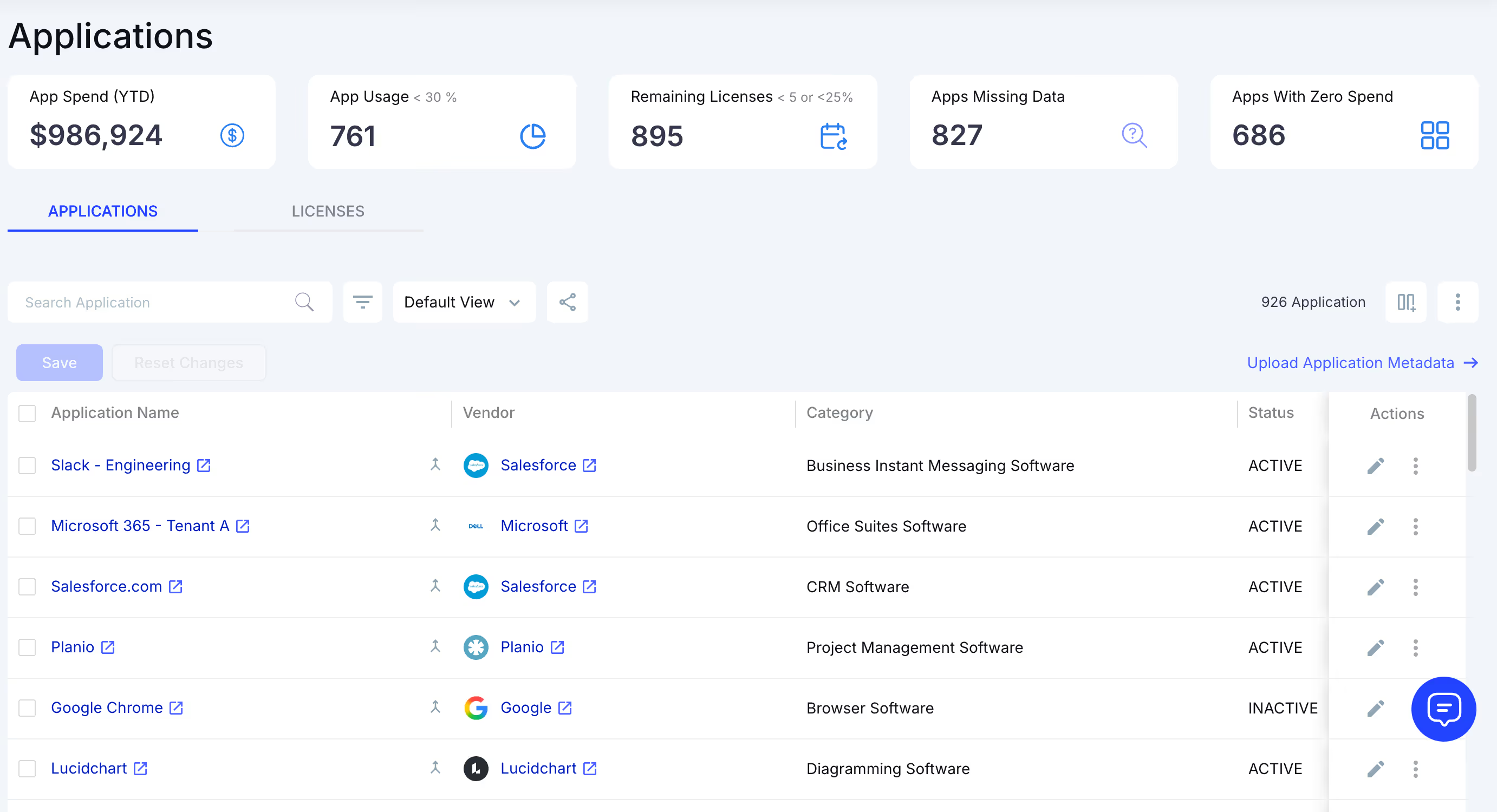
This ensures no apps, licenses, or users are missed, critical during offboarding, role changes, and M&A transitions.

2) Access Governance + Automated Deprovisioning

CloudEagle.ai integrates with identity systems to automate joiner–mover–leaver workflows.
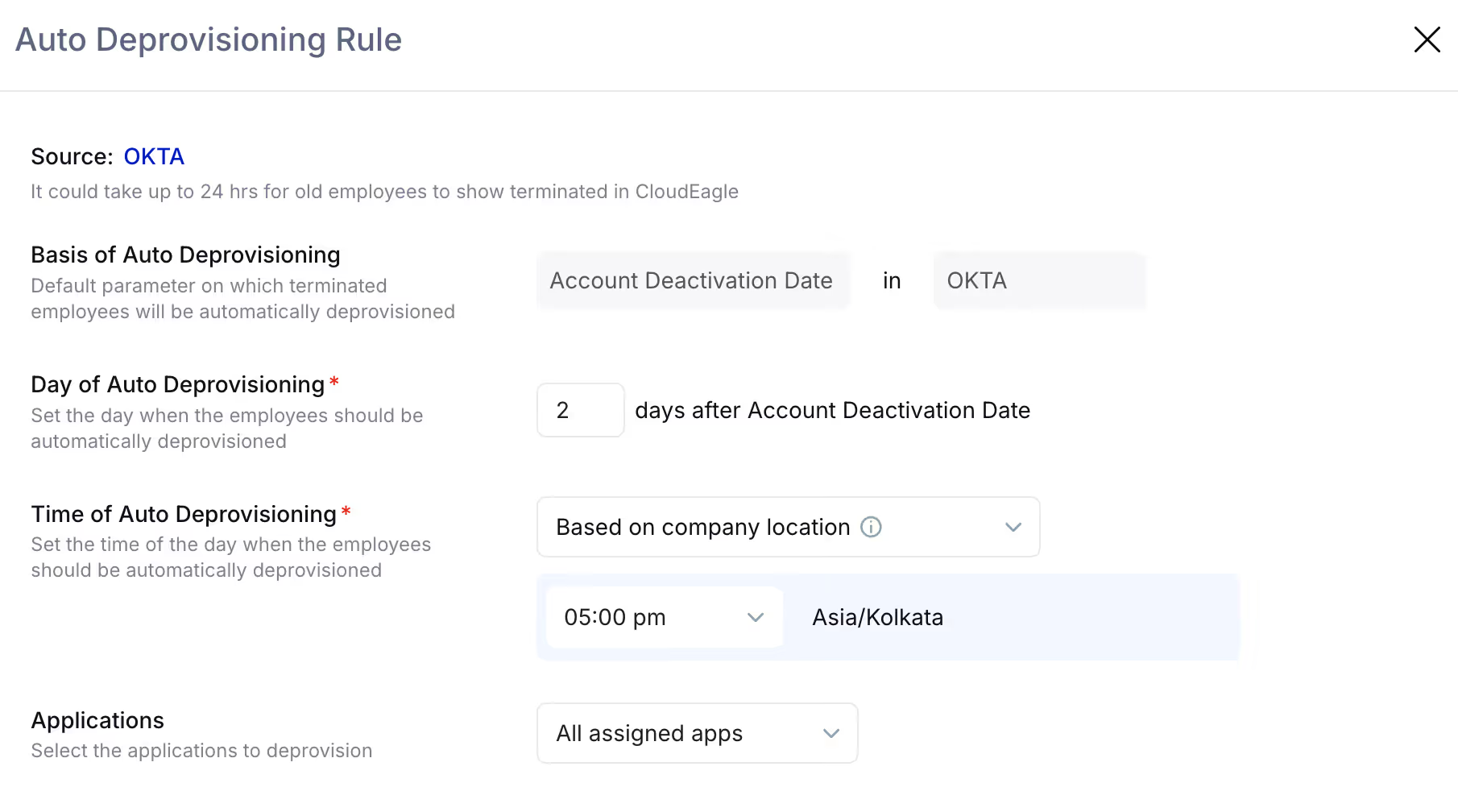
When employees leave, change roles, or complete contracts, access is removed on time, preventing license waste and security exposure.

3) Central Contract Repository with AI Intelligence

All contracts, order forms, and amendments live in one place, with AI extracting renewal dates, notice periods, and commitments.
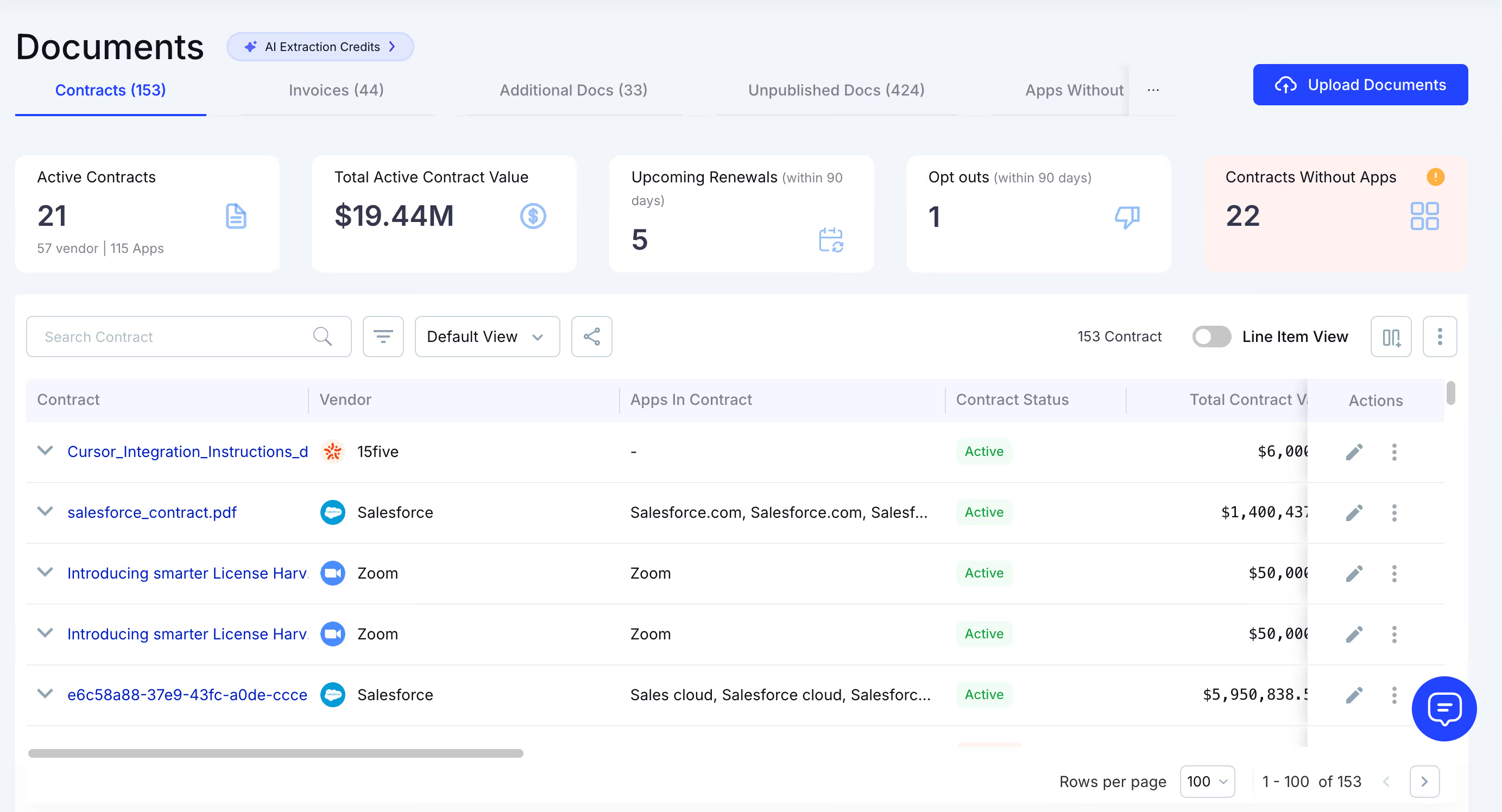
This keeps contract data current and auditable, even as org structures and ownership change.

4) Usage-Based Optimization (Right-Sizing Made Practical)

By linking contracts to real usage data, CloudEagle.ai identifies shelfware, permission creep, and over-licensed temporary users.
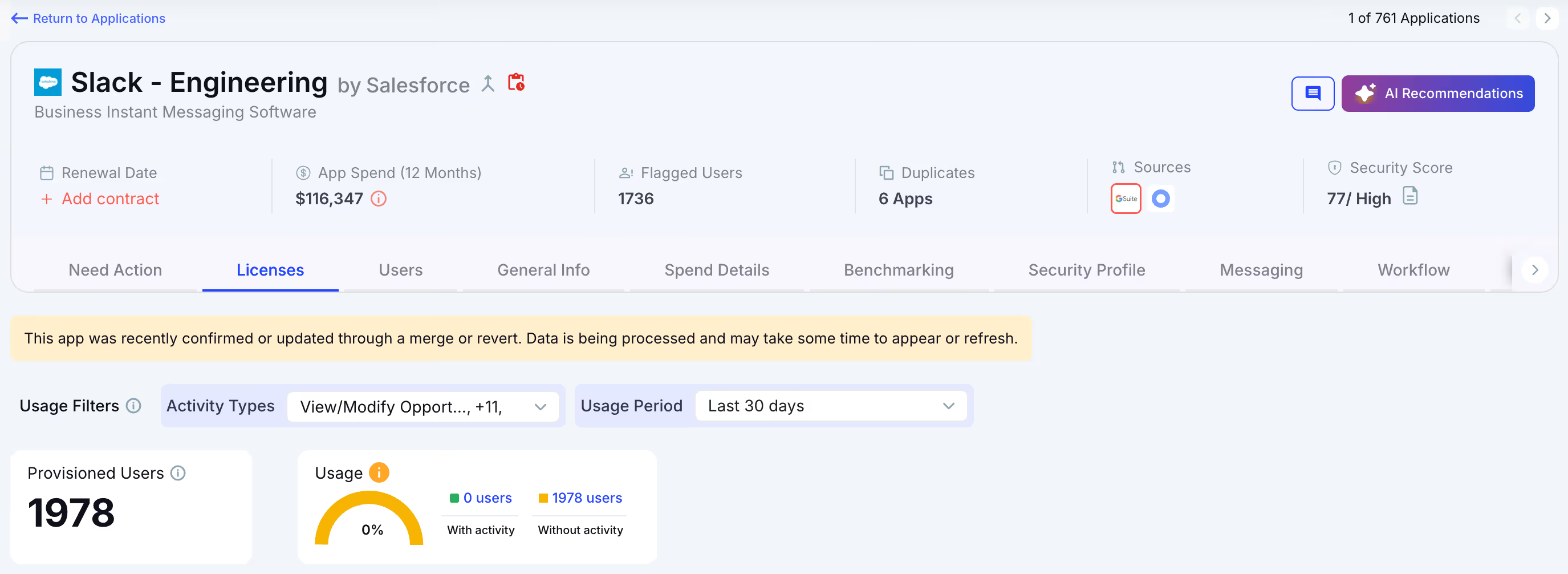
Teams can reclaim licenses, downgrade tiers, and right-size before renewals without manual audits.

5) Renewal Management with Ownership and Alerts
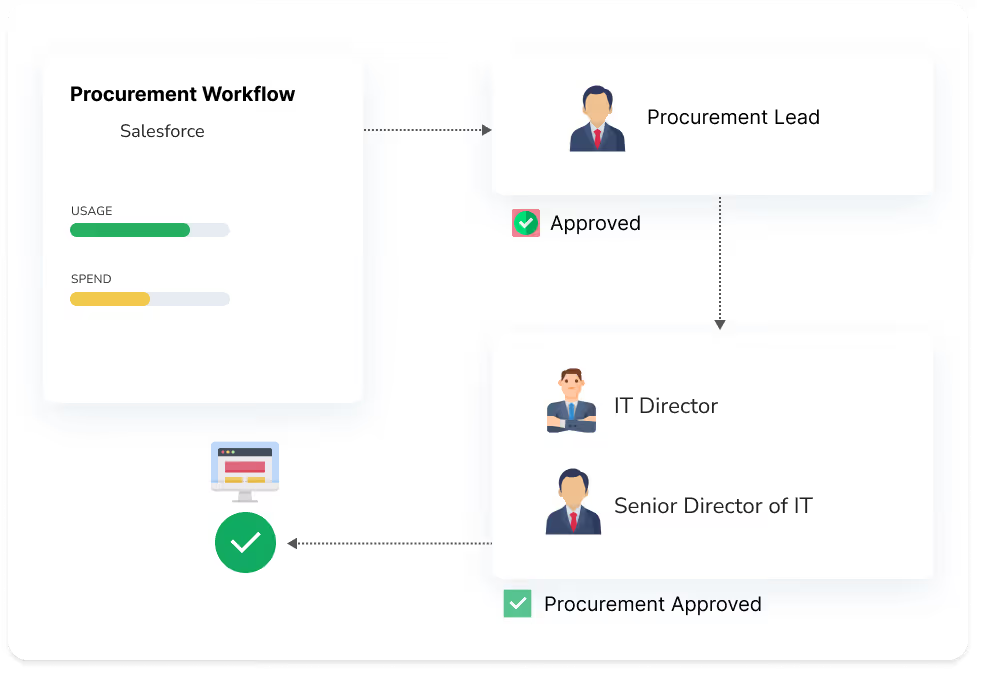
Renewals are tracked centrally with assigned owners and proactive alerts tied to notice periods.

This prevents missed cancellations and auto-renewals, especially common after restructures or acquisitions.

6) Standardized Procurement and Renewal Workflows
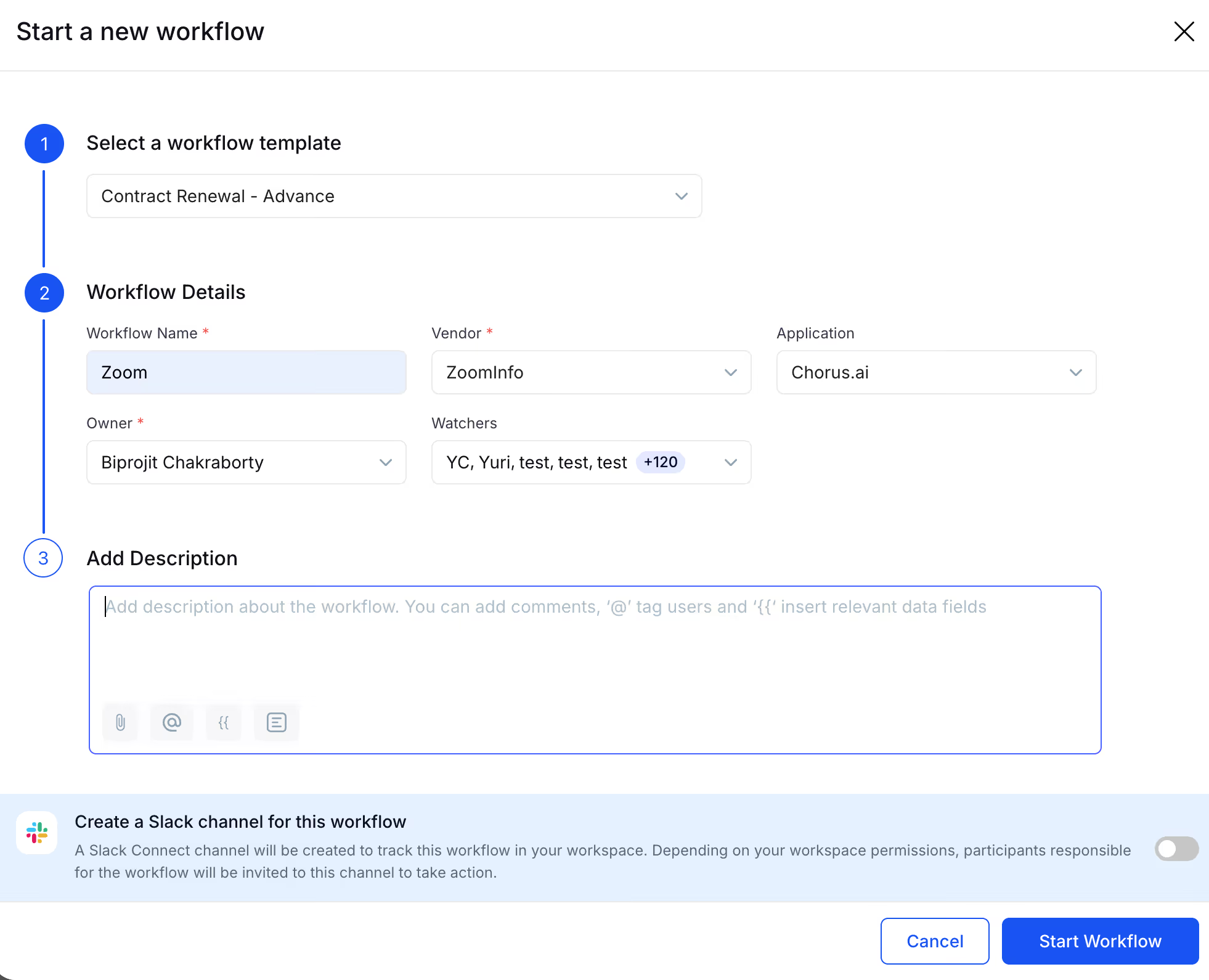
CloudEagle.ai brings structure to intake requests, approvals, and renewal playbooks. The result is stronger governance across distributed teams, without slowing down the business.

9. Final Thoughts: From Chaos to Control

Centralizing SaaS contracts and renewals is ultimately about moving from reactive fire-fighting to proactive control.

By building a single source of truth for contracts, standardizing key metadata, connecting contract terms to license usage, and automating renewal alerts and workflows, organizations can reduce risk, eliminate wasted spend, and make renewals a strategic lever instead of a recurring headache. 

With platforms like CloudEagle.ai, teams can go beyond storage and tracking by bringing discovery, contract intelligence, renewal management, and usage-based optimization into one system, so SaaS renewals become predictable, measurable, and easier to manage at scale.

Frequently Asked Questions

1) What is centralized SaaS contract management?

Centralized SaaS contract management means storing all SaaS contract documents and key metadata (renewal terms, notice periods, pricing, owners, commitments) in one system so teams can manage renewals and spend without relying on scattered files or spreadsheets.

2) Why are spreadsheets ineffective for SaaS contract and renewal tracking?

Spreadsheets are manual and disconnected. They don’t update automatically, don’t link contracts to usage, and often contain outdated or missing renewal terms — which increases the risk of surprise auto-renewals and overspending.

3) How do I centralize SaaS renewals across teams?

Centralize renewals by creating a single renewal calendar tied to contract terms, assigning owners for each renewal, setting alerts before notice periods, and prioritizing renewals by spend and risk.

4) What data should be tracked for SaaS renewals?

At minimum, you should track the renewal date, notice period, auto-renew clause, contract value, license count, contract owner, and payment method. 

5) How does CloudEagle.ai help replace spreadsheets for renewals?

CloudEagle.ai helps centralize SaaS contracts, automatically extract renewal terms, track renewal deadlines, assign ownership, send alerts, and connect contracts to usage data so teams can optimize licenses before renewing.

Advertisement for a SaaS Subscription Tracking Template with a call-to-action button to download and a partial graphic of a tablet showing charts.Banner promoting a SaaS Agreement Checklist to streamline SaaS management and avoid budget waste with a call-to-action button labeled Download checklist.Blue banner with text 'The Ultimate Employee Offboarding Checklist!' and a black button labeled 'Download checklist' alongside partial views of checklist documents from cloudeagle.ai.Digital ad for download checklist titled 'The Ultimate Checklist for IT Leaders to Optimize SaaS Operations' by cloudeagle.ai, showing checklist pages.Slack Buyer's Guide offer with text 'Unlock insider insights to get the best deal on Slack!' and a button labeled 'Get Your Copy', accompanied by a preview of the guide featuring Slack's logo.Monday Pricing Guide by cloudeagle.ai offering exclusive pricing secrets to maximize investment with a call-to-action button labeled Get Your Copy and an image of the guide's cover.Blue banner for Canva Pricing Guide by cloudeagle.ai offering a guide to Canva costs, features, and alternatives with a call-to-action button saying Get Your Copy.Blue banner with white text reading 'Little-Known Negotiation Hacks to Get the Best Deal on Slack' and a white button labeled 'Get Your Copy'.Blue banner with text 'Little-Known Negotiation Hacks to Get the Best Deal on Monday.com' and a white button labeled 'Get Your Copy'.Blue banner with text 'Little-Known Negotiation Hacks to Get the Best Deal on Canva' and a white button labeled 'Get Your Copy'.Banner with text 'Slack Buyer's Guide' and a 'Download Now' button next to images of a guide titled 'Slack Buyer’s Guide: Features, Pricing & Best Practices'.Digital cover of Monday Pricing Guide with a button labeled Get Your Copy on a blue background.Canva Pricing Guide cover with a button labeled Get Your Copy on a blue gradient background.

Enter your email to
unlock the report

Oops! Something went wrong while submitting the form.
License Count
Benchmark
Per User/Per Year

Enter your email to
unlock the report

Oops! Something went wrong while submitting the form.
License Count
Benchmark
Per User/Per Year

Enter your email to
unlock the report

Oops! Something went wrong while submitting the form.
Notion Plus
License Count
Benchmark
Per User/Per Year
100-500
$67.20 - $78.72
500-1000
$59.52 - $72.00
1000+
$51.84 - $57.60
Canva Pro
License Count
Benchmark
Per User/Per Year
100-500
$74.33-$88.71
500-1000
$64.74-$80.32
1000+
$55.14-$62.34

Enter your email to
unlock the report

Oops! Something went wrong while submitting the form.

Enter your email to
unlock the report

Oops! Something went wrong while submitting the form.
Zoom Business
License Count
Benchmark
Per User/Per Year
100-500
$216.00 - $264.00
500-1000
$180.00 - $216.00
1000+
$156.00 - $180.00

Enter your email to
unlock the report

Oops! Something went wrong while submitting the form.

Get the Right Security Platform To Secure Your Cloud Infrastructure

Please enter a business email
Thank you!
The 2023 SaaS report has been sent to your email. Check your promotional or spam folder.
Oops! Something went wrong while submitting the form.

Access full report

Please enter a business email
Thank you!
The 2023 SaaS report has been sent to your email. Check your promotional or spam folder.
Oops! Something went wrong while submitting the form.

Still Managing SaaS Renewals Without Procurement?

Follow these procurement best practices to centralize renewals and reduce risk.

Download The Checklist
CTA Thumbnail

Managing SaaS contracts sounds easy, until you’re tracking 50+ tools across teams, scattered payment methods, and renewal dates buried in email threads. That’s where spreadsheets stop being helpful and start becoming risky.

In fact, most mid-sized orgs run 100+ SaaS apps, and finance teams typically lose visibility across renewals because spreadsheets don’t update in real time, don’t connect to usage data, and can’t prevent silent auto-renewals.

If you’ve ever:

  • renewed an unused tool by mistake,
  • scrambled to find the contract during negotiation, or
  • discovered surprise subscriptions after month-end close,

you’re already paying the price of decentralized contract management.

This guide shows a practical step-by-step way to centralize SaaS contracts and renewals without spreadsheets, helping you reduce renewal risk, improve visibility, and turn renewals into a strategic process, not a last-minute fire drill.

TL;DR

  • Discover every SaaS contract by pulling data from AP/ERP invoices, corporate cards, and department purchases to eliminate blind spots. 
  • Build a centralized contract repository with standardized fields like renewal date, notice period, owner, ACV/TCV, and key clauses. 
  • Connect each contract to license entitlements and real usage to compare paid seats vs assigned seats vs active seats. 
  • Automate renewals with 120/90/60-day alerts and clear workflows across finance, procurement, and app owners. 
  • Optimize 60–90 days before renewal by right-sizing seats/tier, removing unused add-ons, negotiating better terms, and tracking metrics like renewal risk and savings.

Are Renewals Hurting Your SaaS Forecasting Accuracy?

Use FinOps practices to predict renewals, control spend, and optimize budgets.

Download The Checklist
CTA Thumbnail

1. The Problem with Managing SaaS Contracts in Spreadsheets

Spreadsheets are great for lists. SaaS contracts are not lists, they’re living systems with timelines, obligations, auto-renewals, license limits, legal terms, and business risk.

a. How SaaS Contracts End Up Scattered Across Teams

In most companies, SaaS contracts are scattered because buying is scattered.

Marketing buys campaign tools. Sales buys enablement platforms. HR buys onboarding software. Engineering buys DevOps tools. Each team stores contracts in their own way:

  • Email threads
  • Shared drives
  • Slack messages
  • Vendor portals
  • Individual laptops (yes, still)

So even if finance knows the vendor name, they often don’t have:

  • The signed contract
  • The renewal terms
  • The notice period
  • Who owns it
  • Whether it’s used

b. Limitations and Risks of Spreadsheet-Based Tracking

Spreadsheets fail because they’re manual and disconnected.

Common spreadsheet problems include:

  • contract details are outdated
  • renewal dates are wrong
  • owners leave the company and no one updates the sheet
  • notice periods are missed
  • usage data isn’t linked to contracts
  • no audit trail exists

Even worse: spreadsheets create false confidence — teams assume the data is accurate because it exists.

c. Impact of Poor Contract Visibility on Renewals and Costs

When contracts aren’t centralized, renewals become reactive. That leads to:

  • surprise auto-renewals
  • rushed negotiations
  • overbuying licenses “just in case”
  • missed consolidation opportunities
  • compliance exposure (unreviewed DPAs, SOC clauses, etc.)

2. Why Centralizing SaaS Contracts and Renewals Matters

Centralizing SaaS contracts and renewals is a critical business strategy because it converts a fragmented, reactive, and costly process into a controlled, strategic, and cost-optimized operation

a. Avoiding Surprise Auto-Renewals and Cost Overruns

Auto-renewals are one of the biggest silent SaaS cost drivers.

Without centralized tracking:

  • Renewals happen automatically
  • Invoices get paid as “business as usual”
  • Spend increases quietly year over year

Centralization ensures every renewal is:

  • visible early
  • assigned to an owner
  • evaluated based on usage and business need

b. Improving Negotiation Leverage and Cost Control

Vendors negotiate harder when you negotiate late.

Centralized contract management gives you:

c. Reducing Operational and Compliance Risk

Contracts contain obligations that impact security and compliance:

  • data retention clauses
  • subprocessor terms
  • access control requirements
  • breach notification timelines

Centralization makes it possible to audit these quickly.

d. Creating Accountability Across IT, Finance, and Procurement

SaaS contract management becomes easier when everyone knows:

  • who owns the tool
  • who approves renewals
  • who monitors usage
  • who manages vendor negotiations

3. What “Centralized SaaS Contract Management” Really Means

"Centralized SaaS Contract Management" means using a single, unified digital platform (a "system of record") to store, track, and manage all software-as-a-service (SaaS) agreements, rather than relying on disparate spreadsheets, email archives, and shared drives. 

a. Defining a Single Source of Truth for Contracts

A centralized SaaS contract system should act as a single source of truth for renewals, spend control, and compliance. It must store not only PDFs, but also the key commercial and operational details needed for decision-making.

It should store:

  • Contract docs: MSA, SOW, order forms, DPAs, amendments
  • Renewal terms + notice periods (including notice deadline dates)
  • Pricing + commitments (ACV/TCV, true-ups, add-ons, minimums)
  • Owners + stakeholders (business, finance, procurement, IT/security)
  • Risk/compliance details (security review status, SOC2/ISO, DPA clauses)

It must also be searchable, accessible, and auditable (permissions + audit trail).

b. What Data Should Be Centralized

To make contracts actionable, centralize structured fields like:

  • Vendor name + category
  • Contract start/end date
  • Renewal date + notice period + auto-renew (yes/no)
  • Spend (monthly/annual/committed)
  • License count + tier/add-ons
  • Department owner
  • Procurement + legal contacts
  • Payment method (invoice/card)
  • Links to invoices and connected systems (AP/ERP, SSO, expense tools)

c. Who Owns SaaS Contracts and Renewals

Ownership must be shared but clearly assigned so renewals don’t become last-minute fire drills:

  • IT: app inventory + access governance + security posture
  • Finance: spend validation + forecasting + budget alignment
  • Procurement: negotiation + renewal process execution
  • Business owner: confirms adoption + value + tool necessity

Why Are Licenses Not Matching Contracts?

Learn license management best practices to align usage, ownership, and renewals.

Download The Checklist
CTA Thumbnail

4. Common Challenges in Centralizing SaaS Contracts

Even teams with good intentions struggle here.

a. Decentralized Purchasing and Shadow IT

Shadow IT introduces tools that:

  • never get recorded
  • renew silently
  • create security gaps

Centralization starts with visibility.

b. Missing or Incomplete Contract Information

Many orgs only have invoices, not contracts Or they have contracts but not:

  • order forms
  • renewal clauses
  • amendments

c. Lack of Ownership and Cross-Team Alignment

If renewals are “everyone’s job,” they quickly become nobody’s job. When ownership isn’t clearly assigned, key steps like usage validation, budget approval, and negotiation prep get delayed, often until the last minute. 

This leads to rushed renewals, missed notice periods, and auto-renewals that lock the company into unnecessary spend. Clear cross-team alignment (Finance + Procurement + IT + Business owners) ensures renewals are treated as planned financial decisions, not emergency tasks.

d. Manual, Time-Consuming Processes

Without automation, contract centralization becomes a heavy maintenance burden. Teams waste hours chasing contract copies, updating renewal dates, and reconciling spend across invoices, cards, and departments. Over time, data becomes outdated, alerts are missed, and renewals happen reactively, forcing teams back into spreadsheets. 

5. Step-by-Step Process to Centralize SaaS Contracts and Renewals

Now that you know why centralization matters (visibility, renewal control, and risk reduction), the next step is execution. Below is a practical step-by-step framework that finance, procurement, and IT teams can follow to build a centralized contract system and manage renewals proactively.

Step 1 – Discover All SaaS Contracts and Renewals

You can’t centralize what you don’t know exists.

Identifying Contracts via Finance and AP Systems

Start with:

  • AP tools
  • ERP
  • invoice management systems

Pull vendor lists for the last 12 months and categorize:

Reviewing Expense, Invoice, and Card Data

Card spend is where the hidden SaaS lives.

Review:

  • corporate cards
  • reimbursement platforms
  • virtual card payments

Look for:

  • monthly charges
  • duplicate tools
  • “trial” tools that became paid

Capturing Contracts Owned by Departments

Run a quick internal intake:

  • ask department heads for tools they use
  • check shared drives and vendor portals
  • collect owner details

Uncovering Auto-Renewals and Hidden Commitments

Auto-renewals hide in:

  • MSAs
  • order forms
  • renewal addendums

You need a structured method to extract and track these.

Step 2 – Build a Central SaaS Contract Repository

Now centralize everything in one place.

Standardizing Contract Fields and Metadata

Create a standard template for every contract record:

  • vendor
  • contract value
  • renewal clause
  • notice period
  • owner
  • start/end dates

Standardization makes reporting and automation possible.

Storing Contracts, Amendments, and Order Forms

Contracts are rarely one document.

Store:

  • MSA
  • SOW
  • order forms
  • amendments
  • DPAs
  • security exhibits

Linking Contracts to Vendors and Applications

A contract is useful only when it’s connected to:

  • the actual app
  • users
  • spend
  • renewal timeline

Ensuring Secure Access and Version Control

Contracts include sensitive data.
Use:

Step 3 – Connect Contracts to Usage and Licenses

This is where spreadsheets completely break down — because they can’t connect to usage.

Mapping Contracted Licenses to Active Users

For each tool:

  • contracted licenses (from contract)
  • active users (from SSO / app data)

This reveals gaps immediately.

Identifying Overprovisioning and Shelfware

Common patterns:

  • 100 licenses paid, 62 used
  • premium tier purchased, basic features used
  • inactive users still assigned paid seats

Understanding Feature and Tier Utilization

Usage isn’t just “active vs inactive.”
It’s also:

  • which tier is actually needed
  • whether key features are being used

Aligning Contract Value with Actual Usage

This gives you negotiation power:

  • reduce licenses
  • downgrade tier
  • renegotiate commitments

Step 4 – Centralize and Automate Renewal Management

Centralization only works when renewals are automated.

Tracking Renewal Dates, Notice Periods, and Terms

Renewal visibility must include:

  • renewal date
  • notice period (30/60/90 days)
  • auto-renew clause
  • termination conditions

Setting Alerts and Renewal Timelines

A best-practice renewal timeline:

  • 120 days: usage review + stakeholder alignment
  • 90 days: negotiation prep
  • 60 days: vendor negotiation
  • 30 days: final approval / cancellation notice

Prioritizing Renewals Based on Spend and Risk

Not all renewals are equal.

Prioritize based on:

  • annual spend
  • security risk
  • business criticality
  • contract complexity

Preventing Unplanned Auto-Renewals

If your renewal system isn’t sending alerts before the notice period, it’s not a renewal system — it’s a calendar.

Step 5 – Standardize SaaS Renewal and Procurement Processes

Renewals need governance without bureaucracy.

Defining Renewal Ownership and Approval Workflows

Every renewal should have:

  • business owner
  • procurement owner
  • finance approver
  • IT/security reviewer (as needed)

Aligning IT, Finance, Procurement, and Legal

Centralization improves collaboration because everyone works from the same data:

  • contracts
  • usage
  • spend
  • timelines

Introducing SaaS Intake and Review Processes

New tools should follow intake:

  • business justification
  • security review
  • cost approval
  • integration plan

Enforcing Governance Without Slowing Teams Down

Governance should feel like enablement, not friction.
Automation makes this possible.

Step 6 – Optimize Contracts Before Renewals

The best time to save money is before renewal.

Right-Sizing Licenses Using Usage Data

Right-sizing actions:

Renegotiating Pricing, Terms, and Commitments

Use centralized history to negotiate:

  • price locks
  • reduced uplifts
  • flexible renewal terms
  • shorter commitments

Consolidating Vendors and Redundant Tools

Centralization reveals duplication:

  • multiple survey tools
  • multiple project management tools
  • overlapping security tools

Avoiding Long-Term Lock-Ins and Shelfware

Avoid:

  • multi-year contracts without adoption metrics
  • commitments without usage baselines

6. Metrics to Track for Centralized SaaS Contract Management

Centralization must be measurable.

a. Contract Coverage and Completeness

Track:

  • % of SaaS apps with contracts stored
  • % with renewal terms captured
  • % with owner assigned

b. Renewal Risk and Upcoming Commitments

Track:

  • renewals in next 90 days
  • renewals with missing notice period
  • auto-renewals without owner

c. Cost Savings from Optimization

Track:

  • savings from right-sizing
  • savings from tier downgrades
  • avoided renewals

d. Time Saved Managing Renewals

Track:

7. Best Practices for Centralizing SaaS Contracts at Scale

Centralizing SaaS contracts at scale requires moving from manual, fragmented tracking to a tech-enabled, and standardized system. As SaaS sprawl increases, a centralized approach reduces security risks, eliminates redundant spending, and ensures compliance. 

a. Moving Away from Spreadsheets Permanently

Spreadsheets will always fail at scale because they are:

  • manual
  • error-prone
  • not connected to real data

b. Making Contract Reviews a Continuous Process

Don’t wait for renewal panic.
Review quarterly:

  • usage trends
  • license allocations
  • new purchases

c. Driving Adoption Across Business Teams

Adoption improves when teams see value:

  • faster approvals
  • fewer surprises
  • better negotiation outcomes

d. Building a Sustainable Governance Model

Governance should include:

  • clear ownership
  • renewal playbooks
  • intake policies
  • automation

8. Where CloudEagle.ai Fits in Centralizing SaaS Contracts and Renewals

Centralizing SaaS contracts isn’t just about storing PDFs, it’s about connecting contracts + spend + usage + renewals in one operational workflow.

This is exactly where CloudEagle.ai helps teams move away from spreadsheets.

1) Automated SaaS Discovery (No More Blind Spots)

CloudEagle.ai continuously discovers SaaS apps using signals from finance systems, SSO, expense tools, and usage sources.

This ensures no apps, licenses, or users are missed, critical during offboarding, role changes, and M&A transitions.

2) Access Governance + Automated Deprovisioning

CloudEagle.ai integrates with identity systems to automate joiner–mover–leaver workflows.

When employees leave, change roles, or complete contracts, access is removed on time, preventing license waste and security exposure.

3) Central Contract Repository with AI Intelligence

All contracts, order forms, and amendments live in one place, with AI extracting renewal dates, notice periods, and commitments.

This keeps contract data current and auditable, even as org structures and ownership change.

4) Usage-Based Optimization (Right-Sizing Made Practical)

By linking contracts to real usage data, CloudEagle.ai identifies shelfware, permission creep, and over-licensed temporary users.

Teams can reclaim licenses, downgrade tiers, and right-size before renewals without manual audits.

5) Renewal Management with Ownership and Alerts

Renewals are tracked centrally with assigned owners and proactive alerts tied to notice periods.

This prevents missed cancellations and auto-renewals, especially common after restructures or acquisitions.

6) Standardized Procurement and Renewal Workflows

CloudEagle.ai brings structure to intake requests, approvals, and renewal playbooks. The result is stronger governance across distributed teams, without slowing down the business.

9. Final Thoughts: From Chaos to Control

Centralizing SaaS contracts and renewals is ultimately about moving from reactive fire-fighting to proactive control.

By building a single source of truth for contracts, standardizing key metadata, connecting contract terms to license usage, and automating renewal alerts and workflows, organizations can reduce risk, eliminate wasted spend, and make renewals a strategic lever instead of a recurring headache. 

With platforms like CloudEagle.ai, teams can go beyond storage and tracking by bringing discovery, contract intelligence, renewal management, and usage-based optimization into one system, so SaaS renewals become predictable, measurable, and easier to manage at scale.

Frequently Asked Questions

1) What is centralized SaaS contract management?

Centralized SaaS contract management means storing all SaaS contract documents and key metadata (renewal terms, notice periods, pricing, owners, commitments) in one system so teams can manage renewals and spend without relying on scattered files or spreadsheets.

2) Why are spreadsheets ineffective for SaaS contract and renewal tracking?

Spreadsheets are manual and disconnected. They don’t update automatically, don’t link contracts to usage, and often contain outdated or missing renewal terms — which increases the risk of surprise auto-renewals and overspending.

3) How do I centralize SaaS renewals across teams?

Centralize renewals by creating a single renewal calendar tied to contract terms, assigning owners for each renewal, setting alerts before notice periods, and prioritizing renewals by spend and risk.

4) What data should be tracked for SaaS renewals?

At minimum, you should track the renewal date, notice period, auto-renew clause, contract value, license count, contract owner, and payment method. 

5) How does CloudEagle.ai help replace spreadsheets for renewals?

CloudEagle.ai helps centralize SaaS contracts, automatically extract renewal terms, track renewal deadlines, assign ownership, send alerts, and connect contracts to usage data so teams can optimize licenses before renewing.

CloudEagle.ai recognized in the 2025 Gartner® Magic Quadrant™ for SaaS Management Platforms
Download now
gartner chart
5x
Faster employee
onboarding
80%
Reduction in time for
user access reviews
30k
Workflows
automated
$15Bn
Analyzed in
contract spend
$2Bn
Saved in
SaaS spend

Recognized as an Industry leader for our AI

CloudEagle.ai is Recognized in the 2024 Gartner® Magic Quadrant™ for SaaS Management Platforms

Recognition highlights CloudEagle’s innovation and leadership in the rapidly evolving SaaS management and procurement space.
Read More
Gartner Magic Quadrant for SaaS Management Platforms showing a chart divided into Challengers and Leaders quadrants with various companies plotted as dots.

CloudEagle.ai Recognized in the GigaOm Radar for SaaS Management Platforms

CloudEagle named a Leader and Outperformer in GigaOm Radar Report, validating its impact in the SaaS management platform landscape.
Read More
gigaom

Everest Group Positions CloudEagle.ai as a Trailblazer in SaaS Management Platforms

CloudEagle recognized as a Trailblazer by Everest Group, showcasing its rapid growth and innovation in SaaS spend and operations management.
Read More
qks

CloudEagle.ai is Recognized in the 2024 Gartner® Magic Quadrant™ for SaaS Management Platforms

Recognition highlights CloudEagle’s innovation and leadership in the rapidly evolving SaaS management and procurement space.
Read More
gartner

Streamline SaaS governance and save 10-30%

Book a Demo with Expert
CTA image
One platform to Manage
all SaaS Products
Learn More