
%201.svg)


HIPAA Compliance Checklist for 2025

SaaS spending is quietly becoming one of the largest line items in modern IT and finance budgets. With teams adding tools faster than they retire them, renewals often happen on autopilot, auto-renewal clauses kick in, licenses stay unused, and costs creep up year after year.
A strong SaaS renewal strategy changes that. Instead of treating renewals as a last-minute administrative task, organizations can use them as a strategic moment to optimize usage, renegotiate contracts, reduce waste, and avoid long-term vendor lock-in.
This SaaS renewal strategy checklist is designed as a practical, step-by-step guide for IT, procurement, and finance teams. It helps you move from reactive renewals to a proactive, data-driven SaaS renewal process that maximizes ROI and keeps your software stack aligned with business goals.
TL;DR
- Start renewal planning 90–120 days early to avoid auto-renewals and regain negotiation leverage.
- Audit SaaS usage and performance to eliminate unused licenses and redundant tools.
- Use data and market benchmarks to renegotiate pricing, terms, and flexibility.
- Evaluate all options - renew, downgrade, consolidate, or switch, based on ROI and business fit.
- Monitor usage continuously after renewal to reduce waste and prepare early for the next cycle.
1. Understanding SaaS Renewal Strategy: Importance, Benefits, and Impact
A SaaS renewal strategy is a structured approach to evaluating, negotiating, and deciding whether to renew, modify, or exit a SaaS contract before its renewal date.
It combines usage data, cost analysis, vendor performance, and business alignment to ensure you’re paying only for tools that deliver real value.
Using a SaaS renewal checklist ensures that nothing critical is missed, from identifying auto-renewal risks to benchmarking pricing and preparing negotiation leverage. For growing organizations, this checklist becomes essential to managing SaaS subscriptions at scale.
2. SaaS Renewal Preparation Checklist (Before the Renewal Date)
Effective SaaS renewals start long before the renewal date. Preparation is where most cost savings are won or lost.
Track Renewal Dates and Contracts
Many organizations lose leverage simply because they engage vendors too late. Centralizing contracts and tracking renewal dates gives you time to assess options and negotiate from a position of strength.

Assemble a Cross-Functional Team
SaaS renewals affect multiple teams. IT understands technical fit, finance focuses on cost control, legal reviews risk, and end users know whether the tool actually delivers value.
Gather Historical Data
Renewal decisions should be backed by evidence, not assumptions. Historical data reveals trends that vendors rarely surface themselves.
3. How Do You Analyze SaaS Usage and Performance Before Renewal?
Understanding how a tool is used in practice is central to any SaaS renewal strategy. This is often where the biggest savings opportunities appear.
Audit Subscription Utilization
Unused or underutilized licenses are common, especially in fast-growing teams. A usage audit highlights where you can right-size subscriptions.
Evaluate Vendor Performance
Renewal time is the right moment to assess whether the vendor is meeting expectations—not just on paper, but in real-world usage.
Assess Business Alignment
A tool that once made sense may no longer fit your current workflows or priorities. SaaS renewal decisions should reflect where the business is headed, not where it was.
Calculate Total Cost of Ownership
Sticker price rarely tells the full story. A proper SaaS renewal checklist includes TCO analysis.
4. What Are the Best Negotiation Strategies for SaaS Renewals?
Negotiation is a critical phase of the SaaS renewal process. Vendors expect it, but only when buyers come prepared.
Research Alternatives and Benchmarks
Even if you plan to renew, knowing your alternatives gives you leverage. Vendors are more flexible when they know you have options.
Checklist:
- Identify competing tools with similar functionality
- Gather pricing benchmarks from peers or market data
- Evaluate switching costs and effort
Define Negotiation Objectives
Going into renewal discussions without clear goals often results in minimal gains.
Checklist:
- Set target cost reductions or budget caps
- Identify licenses or features to remove
- Define acceptable contract length and flexibility
- Decide on must-have vs nice-to-have concessions
Engage the Vendor Early
Early engagement signals professionalism and avoids rushed decisions. It also gives you time to escalate if negotiations stall.
Checklist:
- Initiate renewal discussions well before notice deadlines
- Use usage and performance data to justify requests
- Push back on blanket price increases
- Explore incentives for longer commitments or faster closes
Secure Favorable Terms
Beyond price, contract terms shape long-term flexibility.
Checklist:
- Negotiate seat flexibility and true-down rights
- Include price caps on future renewals
- Add exit clauses or shorter renewal terms
- Secure performance guarantees where possible
- Document all negotiated changes clearly
5. How Do You Make the Right SaaS Renewal Decision?
With data and negotiations complete, it’s time to make a clear, well-documented decision.
Weigh All Options
Renewal doesn’t always mean staying exactly as-is. A strong SaaS renewal strategy considers multiple scenarios.
Obtain Approvals
Clear approvals reduce delays and last-minute surprises.
Finalize the Renewal
Execution is the final step, but accuracy matters.
6. What Should You Do After a SaaS Contract Is Renewed?
The SaaS renewal process doesn’t end once the contract is signed. Ongoing optimization ensures you don’t repeat the same mistakes next cycle.
Implement Continuous Monitoring
Visibility into SaaS usage and spend is essential for long-term control.
Schedule Regular Reviews
Quarterly reviews prevent renewal panic.
Foster Vendor Relationships
Strong relationships lead to better outcomes during renewals.
7. How Can CloudEagle.ai Help Simplify SaaS Renewals?
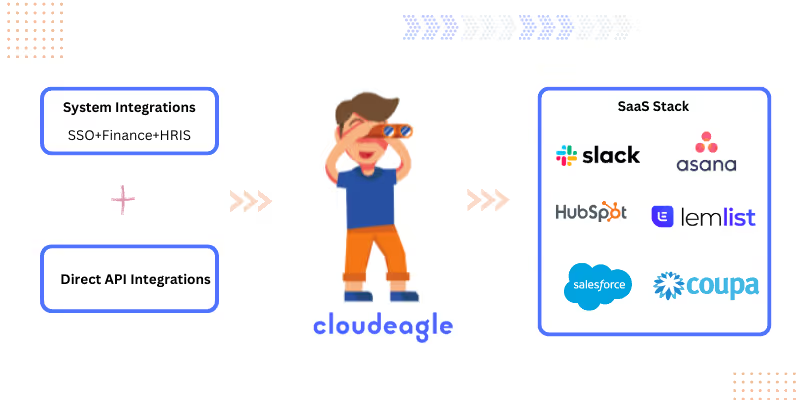
CloudEagle.ai helps transform the chaotic, reactive renewal process into a predictable, proactive, and revenue-driving cycle.
CloudEagle's renewal calendar fires 30/60/90-day alerts automatically so teams reach that window without relying on manual reminders.
It does this by centralizing data, automating insights, and enabling cross‑functional collaboration, so teams close renewals earlier, with less friction and more forecast accuracy.
Centralized Contract & Subscription Visibility
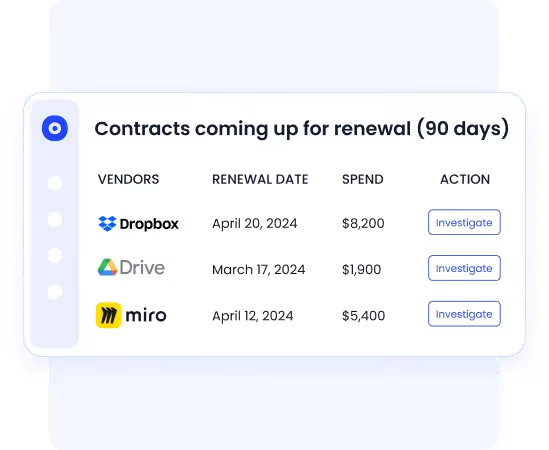
Challenge: Renewals often get missed because renewal dates, terms, and entitlements are scattered across spreadsheets, CRM notes, emails, and different tools.
CloudEagle.ai Advantage:
- Brings all subscriptions, renewal dates, pricing, and contract terms into one unified view.
- Highlights upcoming renewals early, so teams can engage customers proactively (not reactively).
- Removes manual tracking via spreadsheets, reducing errors and missed opportunities.
Training tip: Stress the business impact — missed renewals = revenue leakage.
b. Predictive Renewal Risk & Renewal Likelihood
Challenge: Sales teams often struggle to know which renewals are at risk and why.
CloudEagle.ai Advantage:
- Uses data signals (usage patterns, product adoption, support interactions) to score renewal risk.
- Helps reps focus on high‑impact accounts first.
- Provides actionable insights — not just dates — like “low usage trend” or “support ticket spikes” that correlate with churn risk.
Trainer note: This is where CloudEagle.ai moves from transactional tracking to intelligent revenue operations.
c. Cross‑Team Alignment & Workflow Automation
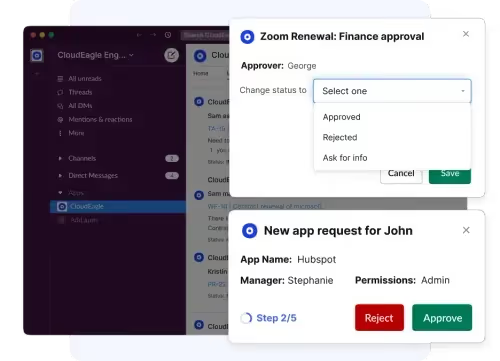
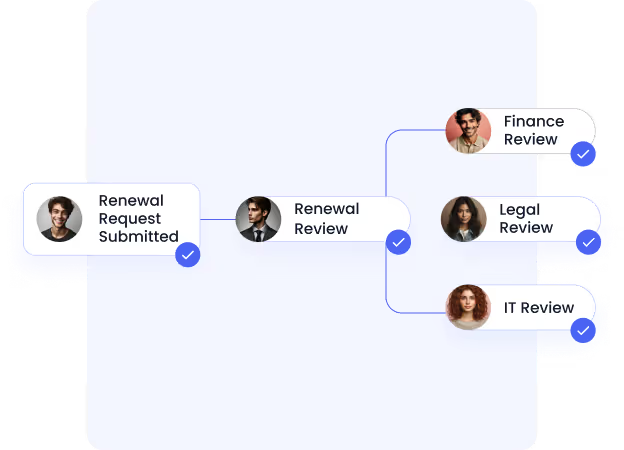
Challenge: Renewals involve Sales, Customer Success, Finance, Legal — and often communication breaks down.
CloudEagle.ai Advantage:
- Offers shared dashboards and workflows so everyone works from the same playbook.
- Automates renewal reminders, escalations, and task assignments.
- Reduces internal delays by routing approvals and information where it needs to go — automatically.
Benefit to users: Less email chasing, fewer manual handoffs, faster internal alignment.
d. Insights that Improve Renewal Conversions
Challenge: Renewal conversations often lack data-backed talking points that resonate with customers.
CloudEagle.ai Advantage:
- Surfaces usage metrics, feature adoption scores, ROI evidence, and customer engagement data — so reps can build stronger renewal narratives.
- Enables tailored, data‑informed renewal pitches rather than generic “contract due” messages.
Training focus: Turn insights into selling momentum.
e. Predictable Forecasting & Revenue Planning
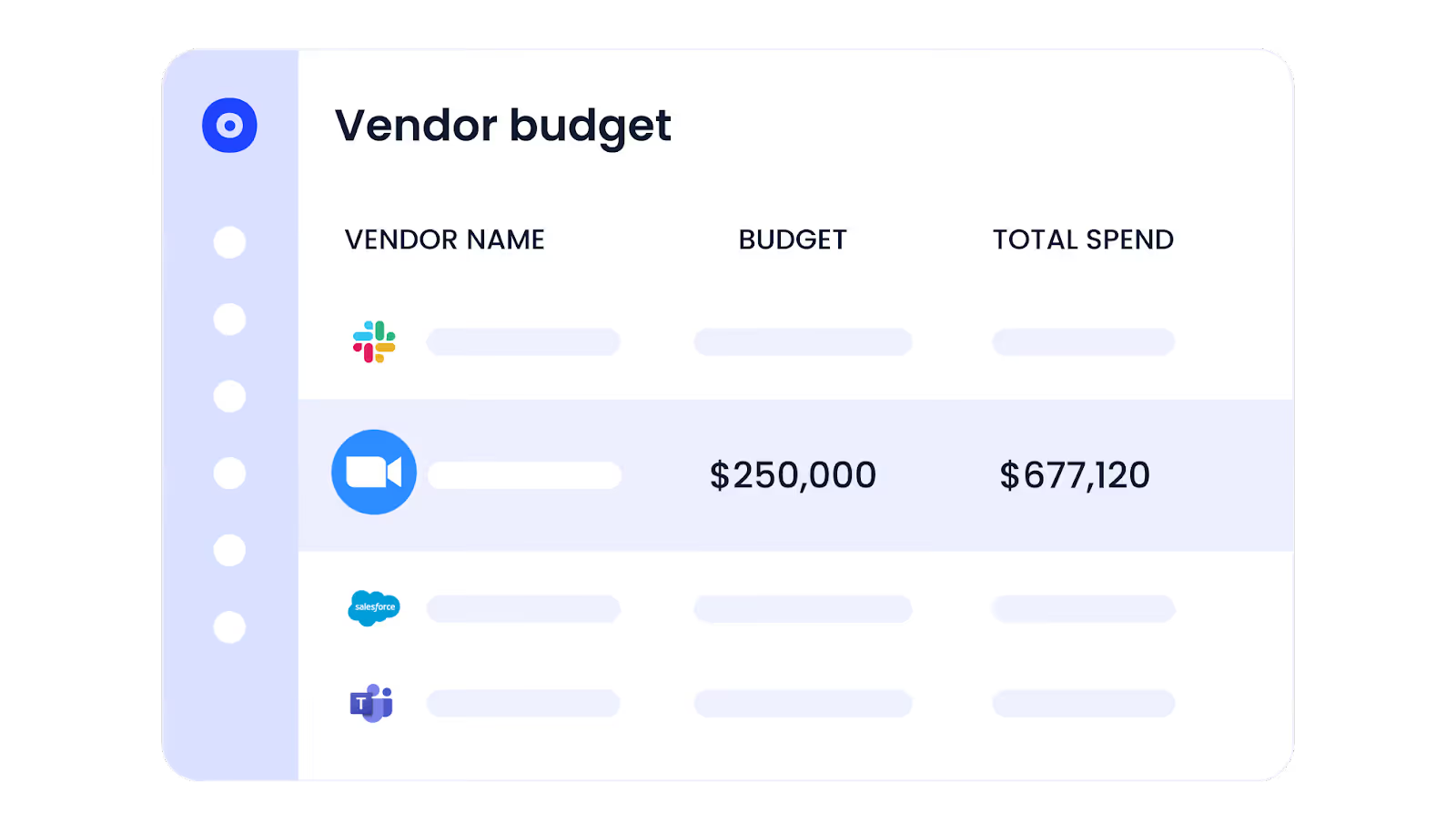
Challenge: CFOs and Revenue Operations teams need predictable renewal revenue forecasts, but manual systems aren’t reliable.
CloudEagle.ai Advantage:
- Provides renewal forecasting with confidence scoring based on real behaviors and risk factors.
- Helps revenue leaders plan pipeline, quota, and capacity with greater accuracy.
Educational note: This feeds directly into board reporting and executive planning processes.
f. Automated Renewal Playbooks
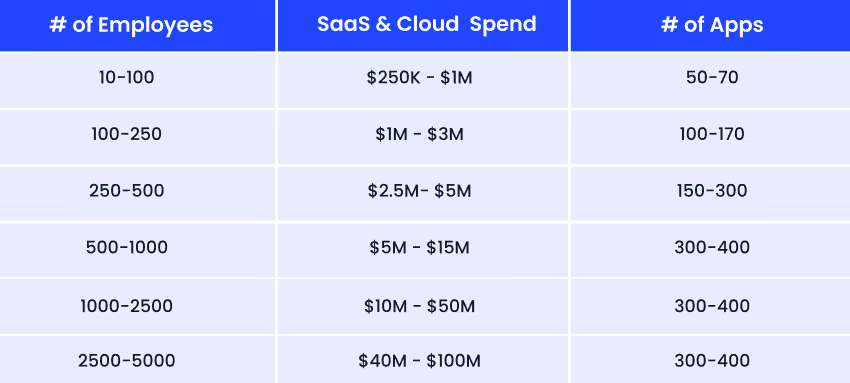
Challenge: Without consistent renewal playbooks, teams rely on memory, which leads to variability.
CloudEagle.ai Advantage:
- Teams can configure standardized playbooks for different renewal scenarios.
- Ensures consistency in process and messaging — no matter who owns the account.
Benefit: Best practices get operationalized across teams.
g. Audit‑Ready Compliance & Contract History
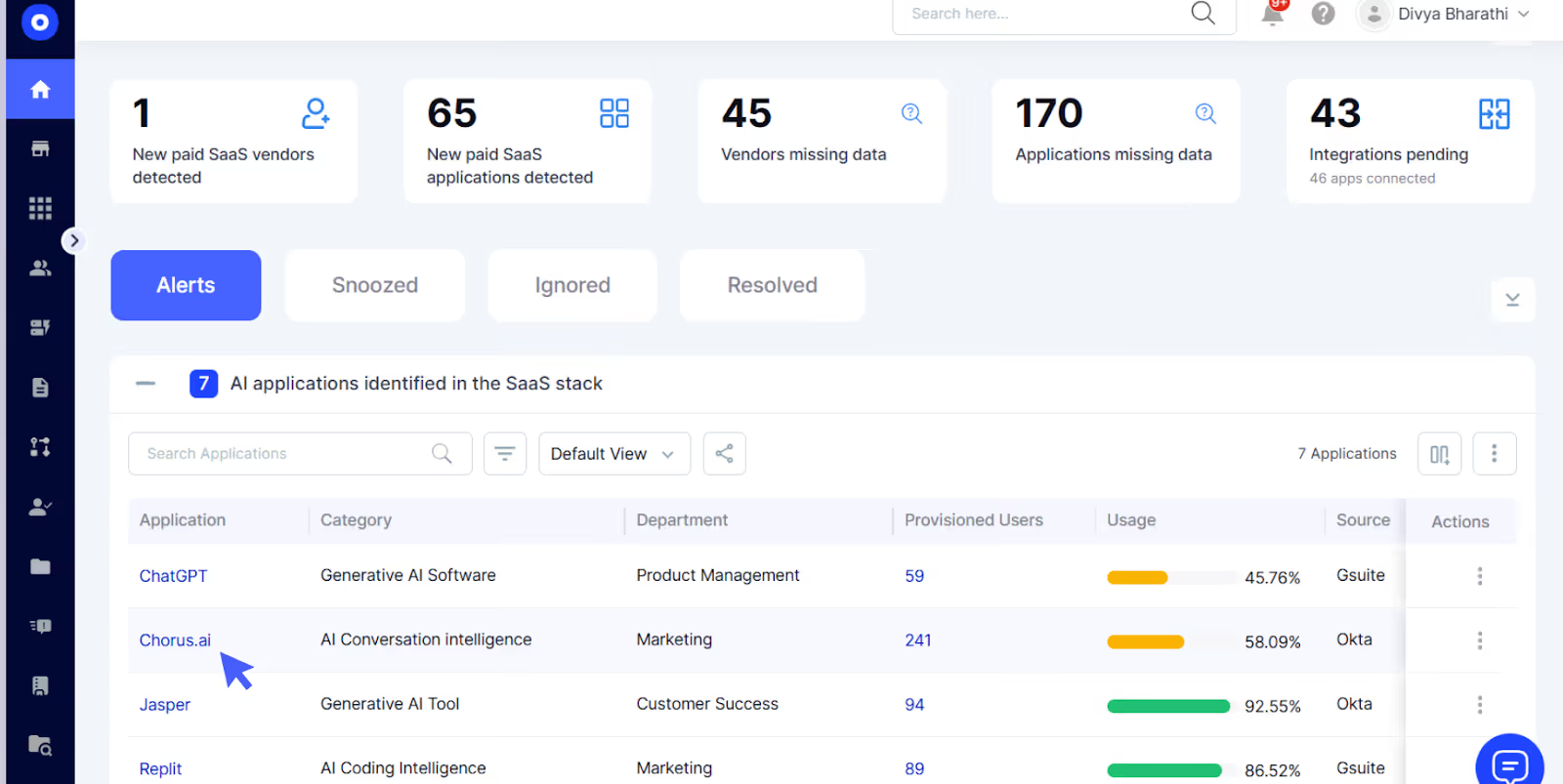
Challenge: Audits or disputes can stall renewals if documentation isn’t organized.
CloudEagle.ai Advantage:
- Maintains full audit trail of contract changes, conversations, pricing adjustments, and renewal actions.
- Reduces legal risk and speeds resolution of compliance questions.
📈 Key Business Outcomes
See Every Renewal Before It Costs You.


8. How Does a SaaS Renewal Strategy Checklist Drive Long-Term Value?
A well-defined SaaS renewal strategy checklist transforms renewals from a cost risk into a strategic advantage. By preparing early, analyzing usage, negotiating with confidence, and optimizing continuously, organizations can reduce SaaS waste, improve vendor accountability, and ensure every subscription delivers real value.
As SaaS ecosystems continue to expand, teams that adopt a structured SaaS renewal process will be better positioned to control costs, stay agile, and support long-term growth.
Start by using a centralized SaaS renewal checklist to track renewals, eliminate waste, and make every contract decision intentional.
Frequently Asked Questions
1. Why is a checklist important for SaaS renewals?
A checklist ensures that critical steps like usage analysis, contract review, and negotiation preparation aren’t overlooked. It helps teams stay proactive, avoid auto-renewal risks, and consistently identify savings opportunities.
2. What are the key steps in the SaaS renewal process?
The SaaS renewal process typically includes pre-renewal preparation, usage and performance analysis, negotiation, decision-making, execution, and post-renewal optimization.
3. How early should SaaS renewals be reviewed?
Best practice is to start reviewing SaaS renewals 90 to 120 days before the renewal date. This provides enough time to analyze data, explore alternatives, and negotiate favorable terms.
4. What role does SaaS subscription management play in renewals?
SaaS subscription management provides visibility into usage, costs, and renewal timelines. This data is essential for making informed renewal decisions and optimizing spend over time.
5. Who should be involved in the SaaS renewal process?
SaaS renewals should involve cross-functional stakeholders including IT, Finance, Procurement, Security, and business owners.
See Every Renewal Before It Costs You.


.avif)


.avif)
.avif)




.png)







.avif)
.avif)
.avif)


