You need to enable JavaScript in order to use the AI chatbot tool powered by ChatBot

How to Prepare for SaaS Renewals 90 Days in Advance

Share via:
blog-cms-banner-bg
Little-Known Negotiation Hacks to Get the Best Deal on Slack
cta-bg-blogDownload Your Copy

HIPAA Compliance Checklist for 2025

Download PDF

Every FinOps team has seen it happen.

A “routine” SaaS renewal lands unexpectedly, procurement scrambles, finance approves under pressure and suddenly, the quarterly forecast is off by six figures.

Industry estimates suggest that 25–30% of SaaS spend is wasted on unused or underused licenses, yet most of that waste only becomes visible after renewal. For FinOps teams trying to maintain forecast accuracy, last-minute SaaS renewals are one of the biggest budget shock generators.

The core problem? 

SaaS renewals rarely live inside FinOps forecasting workflows.They’re scattered across emails, vendor portals, spreadsheets, and procurement tools, far from the cloud dashboards FinOps teams rely on.

This blog introduces a 90-day SaaS renewal preparation framework that helps FinOps teams bring renewals into forecasting before they disrupt budgets. Because modern FinOps needs full SaaS spend visibility, not just cloud costs.

Where Is Your SaaS Spend Leaking?

Learn practical steps to uncover waste, control licenses, and optimize SaaS costs.

Download Resource
CTA Thumbnail

TL;DR

  • SaaS renewals are a major blind spot in FinOps forecasting
  • Starting renewal prep 90 days early prevents budget surprises
  • Usage data is critical for accurate SaaS cost forecasting
  • Renewal visibility improves negotiation leverage and cost control
  • Forecasting tools make SaaS spend predictable and manageable

1. Why Is SaaS Harder to Forecast Than Cloud Spend?

Cloud costs fluctuate, but they’re fundamentally elastic usage goes up, usage goes down, and FinOps tooling is built to track that in near real time.

SaaS, on the other hand, behaves very differently.

What makes SaaS forecasting harder?

  • Rigid contracts: Annual or multi-year renewals lock in spend regardless of actual usage
  • Auto-renewals: Miss a notice period and you’re stuck for another year
  • Seat creep: Licenses accumulate quietly as teams grow or shift
  • Tiered pricing: Premium plans renew even when features aren’t used
  • Limited visibility: Usage data often lives inside vendor admin panels

Without clear insight into contracts and usage, SaaS budget forecasting becomes guesswork, reducing the accuracy of FinOps forecasting models.

2. The Hidden Risks of Last-Minute SaaS Renewals

When SaaS renewals are handled reactively, FinOps teams inherit risks they can’t control.

Common SaaS renewal risks include:

  • Paying for shelfware that no one uses
  • Missing downsell or consolidation opportunities
  • Renewing overlapping or redundant tools
  • Accepting price increases without negotiation leverage

Each of these leads directly to FinOps SaaS spend overruns, not because costs increased unexpectedly, but because decisions were made too late.

Many SaaS management platforms focus on discovery or license cleanup. Far fewer go deep on forecasting accuracy, renewal timing, and financial impact, leaving a major FinOps gap.

3. The 90-Day SaaS Renewal Readiness Framework

The key to predictable SaaS spend isn’t better negotiation tactics, it’s earlier preparation.

a. Day 90–60: Build Renewal Visibility

This phase is about eliminating blind spots.

  • Centralize SaaS contract data
  • Identify upcoming renewals and notice periods
  • Flag high-cost and mission-critical apps
  • Capture license counts, contract values, and renewal dates

Without this foundation, SaaS renewal management is impossible, and SaaS spend visibility remains fragmented.

b. Day 60–45: Analyze Usage and Spend Trends

Now visibility turns into insight.

  • Compare real usage vs. paid licenses
  • Identify inactive users and unused premium features
  • Detect redundant tools across departments
  • Quantify right-sizing opportunities

These inputs feed directly into SaaS cost forecasting, giving FinOps teams data-backed renewal scenarios instead of assumptions.

c. Day 45–30: Align with Stakeholders and Finance

Numbers alone don’t forecast the future, context does.

  • Validate usage findings with app owners
  • Capture upcoming hiring, attrition, or project changes
  • Align renewals with business timelines
  • Feed updates into FinOps forecasting models

This step prevents renewal decisions that look efficient today but break budgets tomorrow.

d. Day 30–0: Finalize the Renewal Strategy

With data and alignment in place, teams can act decisively.

  • Decide whether to renew, downsize, renegotiate, or cancel
  • Use usage data as negotiation leverage
  • Lock in forecasted renewal costs
  • Update FinOps budgets and variance tracking

At this stage, SaaS renewals become a predictable FinOps workflow, not a financial fire drill.

Ready to Transform Your FinOps Strategy Today?

Explore six essential FinOps practices to improve cloud efficiency and financial accountability.

Download Resource
CTA Thumbnail

4. What Data Does FinOps Need to Forecast SaaS Spend Accurately?

Forecasting SaaS requires more than invoices.

Critical SaaS forecasting inputs:

  • Contracts: Renewal dates, notice periods, pricing tiers
  • Usage: Active users, license utilization, feature adoption
  • Spend: Historical trends, renewal uplifts, discounts
  • Org context: Headcount plans, department ownership

This is where spreadsheets collapse, manual updates, broken formulas, and stale data make SaaS forecasting unreliable at scale.

5. How SaaS Forecasting Tools Improve Renewal Outcomes

The best SaaS forecasting tools don’t just track spend, they connect data across teams.

What to look for in SaaS forecasting tools:

  • Contract intelligence and renewal visibility
  • Real-time or near-real-time usage tracking
  • Automated renewal alerts
  • Forecast modeling tied to renewals
  • Stakeholder workflows for validation and approvals

Many tools stop at discovery or license cleanup. CloudEagle.ai is positioned as an end-to-end SaaS spend and renewal intelligence layer, connecting usage, contracts, and forecasting to help FinOps teams make renewals predictable.

5. FinOps Budgeting Best Practices for SaaS Renewals

High-performing FinOps teams treat SaaS as a controllable, forecastable investment, not a last-minute approval exercise.
When done right, renewals become a predictable lever for cost optimization, not a fire drill.

1. Classify SaaS as a Forecastable Spend Category

Best practice: Move SaaS out of “misc. IT” and into a dedicated, forecasted budget line with owner attribution.

Why it matters:
SaaS spend is recurring, contractual, and renewal-driven—making it far more predictable than infra or usage-based cloud.

Metrics to track:

  • % of SaaS spend under active contract (target: >90%)
  • Forecast vs. actual SaaS variance (target: <5–8%)
  • % of spend with a named business owner (target: 100%)

Example: A mid-market enterprise categorized $8M in SaaS under a single forecasted budget and reduced year-end budget variance from 14% to 4% within two quarters.

2. Maintain a Centralized SaaS Renewal Calendar

Best practice: Track every renewal - date, contract value, vendor, owner, notice period—in one system, not spreadsheets.

Why it matters:
Missed notice periods eliminate negotiation leverage and lock in auto-renewals at list price.

Metrics to track:

  • % of renewals visible 90+ days in advance (target: 95%+)

  • Auto-renewals without review (target: 0)
  • Average days of lead time before renewal (target: 60–120 days)

Example: Companies that introduce a centralized renewal calendar typically uncover 10–20% of renewals that were previously invisible until the invoice arrived.

3. Standardize Renewal Review Checklists

Best practice: Use a consistent renewal checklist across all vendors—no exceptions for “small” tools.

Core checklist inputs:

  • License utilization (% active vs. purchased)
  • Cost per active user
  • Feature adoption vs. plan tier
  • Security & access review
  • Business criticality score

Metrics to track:

  • % of renewals reviewed using a standard checklist (target: 100%)
  • Avg. licenses removed per renewal
  • % of renewals downsized or retired

Example: FinOps teams that enforce standardized renewal reviews typically reclaim 15–30% of licenses before renewal, without impacting end users.

4. Tie Renewal Decisions to Usage and Business Value

Best practice: Renew based on outcomes, not sentiment or vendor relationships.

Key questions to answer:

  • Are at least 70–80% of licenses actively used?
  • Is the tool mapped to a current business initiative?
  • What happens if the tool is downgraded or replaced?

Metrics to track:

  • Cost per active user
  • % of spend tied to revenue-generating or compliance-critical use cases
  • Tools with <50% adoption (flag for action)

Example: One FinOps team flagged a collaboration tool with 42% usage and negotiated a 35% reduction by right-sizing licenses and dropping unused premium features.

5. Run Quarterly SaaS Forecast & Renewal Reviews

Best practice: Review upcoming renewals quarterly—not just monthly or at fiscal year-end.

What to review each quarter:

  • Next 2–3 quarters of renewals
  • Spend growth by department
  • Known expansion risks (headcount changes, M&A)
  • Planned consolidations or tool replacements

Metrics to track:

  • Renewal decisions finalized ≥60 days pre-renewal
  • QoQ SaaS spend change (planned vs. unplanned)
  • % of renewals renegotiated early

Example: Organizations running quarterly SaaS forecast reviews reduce “unplanned SaaS spend” by 20–25% year over year.

Are You Following Best SaaS Procurement Practices?

Discover seven procurement strategies that improve vendor selection, lower costs, and boost compliance.

Download Resource
CTA Thumbnail

6. Where CloudEagle.ai Fits in the SaaS Renewal Workflow

As SaaS portfolios grow, many FinOps teams struggle to connect contracts, usage data, and renewal timelines in one place. This fragmentation is often why renewals slip through the cracks, forecasts miss the mark, and teams get pulled into last-minute negotiations with little leverage.

CloudEagle.ai helps close this gap by centralizing SaaS contracts, spend, usage, and renewal intelligence into a single system of record. Instead of tracking renewals in spreadsheets or inboxes, FinOps teams get automated renewal alerts tied directly to real usage and contract terms.

With this approach, teams typically see:

  • 30–60 days earlier renewal visibility, giving Finance and Procurement enough lead time to forecast, negotiate, and right-size before deadlines.
  • 15–35% reduction in unused or underutilized licenses by aligning renewal decisions with real usage data.
  • 10–25% savings on renewal costs through data-backed negotiations and proactive plan downgrades.
  • Up to 90% fewer missed or auto-renewed contracts, thanks to automated alerts and centralized contract tracking.
  • 40–60% less manual effort spent on spreadsheets, renewal audits, and internal follow-ups.

AI-Powered Contract Metadata Extraction: The Backbone of Predictable SaaS Renewals

Manual contract tracking is the biggest reason SaaS renewals stay reactive. High-performing FinOps teams eliminate this risk by using AI to extract and operationalize contract metadata at scale.

Automatically Build a Live SaaS Renewal Calendar

CloudEagle.ai uses AI to ingest contracts and invoices and automatically extract:

  • Renewal and termination dates
  • Auto-renew clauses and notice periods
  • Contract value, billing cadence, and pricing uplifts
  • Vendor, product, and ownership details

This metadata continuously populates a centralized, always-updated SaaS renewal calendar, giving FinOps teams 90+ days of advance visibility into upcoming renewals, without spreadsheets or manual follow-ups.

Connect Contract Data with Real Usage and Business Value

By integrating usage data with contract metadata, CloudEagle.ai shows which applications are delivering measurable value and which are quietly draining budgets.

FinOps teams can instantly see:

  • Licenses purchased vs. licenses actively used
  • Cost per active user by contract tier
  • High-cost, low-adoption tools approaching renewal

This insight enables earlier renewal planning, more accurate SaaS spend forecasts, and data-backed downsizing or exit decisions.

Align IT, Finance, and Procurement on One Source of Truth

CloudEagle.ai brings IT, Finance, and Procurement onto the same page with:

  • Shared dashboards powered by contract + usage data
  • Standardized renewal workflows and approvals
  • Clear ownership for every application and renewal

Everyone operates from the same data, eliminating misalignment, reducing friction, and removing renewal surprises.

7. From Renewal Fire Drills to FinOps Control

For growing organizations, AI-driven contract metadata extraction transforms renewals from a reactive fire drill into a predictable, governed FinOps process, driving sustained SaaS cost optimization and stronger financial control.

The result is a renewal process that is predictable, auditable, and continuously optimized, not reactive and chaotic. For organizations managing hundreds of SaaS applications, this becomes a durable FinOps capability, not a one-time cost exercise.

Ready to turn SaaS renewals into a strategic advantage?

Book a demo to see how CloudEagle.ai automatically extracts contract data, builds a live renewal calendar, and helps your teams save 10–30% on SaaS spend, every year.

Frequently Asked Questions

  1. How do SaaS renewals affect FinOps forecasting accuracy?
    Unexpected renewals introduce unplanned fixed costs, reducing forecast reliability and increasing variance.
  2. Why is SaaS harder to forecast than cloud spend in FinOps?
    SaaS contracts are rigid, auto-renewed, and often lack real-time usage visibility compared to cloud resources.
  3. What causes budget overruns during SaaS renewals?
    Late renewals, unused licenses, missed notice periods, and unchallenged price increases.
  4. How can companies avoid surprise SaaS renewal costs?
    By starting renewal prep 90 days early with contract, usage, and stakeholder alignment.
  5. What data does FinOps need to forecast SaaS spend accurately?
    Contract terms, license usage, historical spend trends, and organizational growth plans.
Advertisement for a SaaS Subscription Tracking Template with a call-to-action button to download and a partial graphic of a tablet showing charts.Banner promoting a SaaS Agreement Checklist to streamline SaaS management and avoid budget waste with a call-to-action button labeled Download checklist.Blue banner with text 'The Ultimate Employee Offboarding Checklist!' and a black button labeled 'Download checklist' alongside partial views of checklist documents from cloudeagle.ai.Digital ad for download checklist titled 'The Ultimate Checklist for IT Leaders to Optimize SaaS Operations' by cloudeagle.ai, showing checklist pages.Slack Buyer's Guide offer with text 'Unlock insider insights to get the best deal on Slack!' and a button labeled 'Get Your Copy', accompanied by a preview of the guide featuring Slack's logo.Monday Pricing Guide by cloudeagle.ai offering exclusive pricing secrets to maximize investment with a call-to-action button labeled Get Your Copy and an image of the guide's cover.Blue banner for Canva Pricing Guide by cloudeagle.ai offering a guide to Canva costs, features, and alternatives with a call-to-action button saying Get Your Copy.Blue banner with white text reading 'Little-Known Negotiation Hacks to Get the Best Deal on Slack' and a white button labeled 'Get Your Copy'.Blue banner with text 'Little-Known Negotiation Hacks to Get the Best Deal on Monday.com' and a white button labeled 'Get Your Copy'.Blue banner with text 'Little-Known Negotiation Hacks to Get the Best Deal on Canva' and a white button labeled 'Get Your Copy'.Banner with text 'Slack Buyer's Guide' and a 'Download Now' button next to images of a guide titled 'Slack Buyer’s Guide: Features, Pricing & Best Practices'.Digital cover of Monday Pricing Guide with a button labeled Get Your Copy on a blue background.Canva Pricing Guide cover with a button labeled Get Your Copy on a blue gradient background.

Enter your email to
unlock the report

Oops! Something went wrong while submitting the form.
License Count
Benchmark
Per User/Per Year

Enter your email to
unlock the report

Oops! Something went wrong while submitting the form.
License Count
Benchmark
Per User/Per Year

Enter your email to
unlock the report

Oops! Something went wrong while submitting the form.
Notion Plus
License Count
Benchmark
Per User/Per Year
100-500
$67.20 - $78.72
500-1000
$59.52 - $72.00
1000+
$51.84 - $57.60
Canva Pro
License Count
Benchmark
Per User/Per Year
100-500
$74.33-$88.71
500-1000
$64.74-$80.32
1000+
$55.14-$62.34

Enter your email to
unlock the report

Oops! Something went wrong while submitting the form.

Enter your email to
unlock the report

Oops! Something went wrong while submitting the form.
Zoom Business
License Count
Benchmark
Per User/Per Year
100-500
$216.00 - $264.00
500-1000
$180.00 - $216.00
1000+
$156.00 - $180.00

Enter your email to
unlock the report

Oops! Something went wrong while submitting the form.

Get the Right Security Platform To Secure Your Cloud Infrastructure

Please enter a business email
Thank you!
The 2023 SaaS report has been sent to your email. Check your promotional or spam folder.
Oops! Something went wrong while submitting the form.

Access full report

Please enter a business email
Thank you!
The 2023 SaaS report has been sent to your email. Check your promotional or spam folder.
Oops! Something went wrong while submitting the form.

Every FinOps team has seen it happen.

A “routine” SaaS renewal lands unexpectedly, procurement scrambles, finance approves under pressure and suddenly, the quarterly forecast is off by six figures.

Industry estimates suggest that 25–30% of SaaS spend is wasted on unused or underused licenses, yet most of that waste only becomes visible after renewal. For FinOps teams trying to maintain forecast accuracy, last-minute SaaS renewals are one of the biggest budget shock generators.

The core problem? 

SaaS renewals rarely live inside FinOps forecasting workflows.They’re scattered across emails, vendor portals, spreadsheets, and procurement tools, far from the cloud dashboards FinOps teams rely on.

This blog introduces a 90-day SaaS renewal preparation framework that helps FinOps teams bring renewals into forecasting before they disrupt budgets. Because modern FinOps needs full SaaS spend visibility, not just cloud costs.

Where Is Your SaaS Spend Leaking?

Learn practical steps to uncover waste, control licenses, and optimize SaaS costs.

Download Resource
CTA Thumbnail

TL;DR

  • SaaS renewals are a major blind spot in FinOps forecasting
  • Starting renewal prep 90 days early prevents budget surprises
  • Usage data is critical for accurate SaaS cost forecasting
  • Renewal visibility improves negotiation leverage and cost control
  • Forecasting tools make SaaS spend predictable and manageable

1. Why Is SaaS Harder to Forecast Than Cloud Spend?

Cloud costs fluctuate, but they’re fundamentally elastic usage goes up, usage goes down, and FinOps tooling is built to track that in near real time.

SaaS, on the other hand, behaves very differently.

What makes SaaS forecasting harder?

  • Rigid contracts: Annual or multi-year renewals lock in spend regardless of actual usage
  • Auto-renewals: Miss a notice period and you’re stuck for another year
  • Seat creep: Licenses accumulate quietly as teams grow or shift
  • Tiered pricing: Premium plans renew even when features aren’t used
  • Limited visibility: Usage data often lives inside vendor admin panels

Without clear insight into contracts and usage, SaaS budget forecasting becomes guesswork, reducing the accuracy of FinOps forecasting models.

2. The Hidden Risks of Last-Minute SaaS Renewals

When SaaS renewals are handled reactively, FinOps teams inherit risks they can’t control.

Common SaaS renewal risks include:

  • Paying for shelfware that no one uses
  • Missing downsell or consolidation opportunities
  • Renewing overlapping or redundant tools
  • Accepting price increases without negotiation leverage

Each of these leads directly to FinOps SaaS spend overruns, not because costs increased unexpectedly, but because decisions were made too late.

Many SaaS management platforms focus on discovery or license cleanup. Far fewer go deep on forecasting accuracy, renewal timing, and financial impact, leaving a major FinOps gap.

3. The 90-Day SaaS Renewal Readiness Framework

The key to predictable SaaS spend isn’t better negotiation tactics, it’s earlier preparation.

a. Day 90–60: Build Renewal Visibility

This phase is about eliminating blind spots.

  • Centralize SaaS contract data
  • Identify upcoming renewals and notice periods
  • Flag high-cost and mission-critical apps
  • Capture license counts, contract values, and renewal dates

Without this foundation, SaaS renewal management is impossible, and SaaS spend visibility remains fragmented.

b. Day 60–45: Analyze Usage and Spend Trends

Now visibility turns into insight.

  • Compare real usage vs. paid licenses
  • Identify inactive users and unused premium features
  • Detect redundant tools across departments
  • Quantify right-sizing opportunities

These inputs feed directly into SaaS cost forecasting, giving FinOps teams data-backed renewal scenarios instead of assumptions.

c. Day 45–30: Align with Stakeholders and Finance

Numbers alone don’t forecast the future, context does.

  • Validate usage findings with app owners
  • Capture upcoming hiring, attrition, or project changes
  • Align renewals with business timelines
  • Feed updates into FinOps forecasting models

This step prevents renewal decisions that look efficient today but break budgets tomorrow.

d. Day 30–0: Finalize the Renewal Strategy

With data and alignment in place, teams can act decisively.

  • Decide whether to renew, downsize, renegotiate, or cancel
  • Use usage data as negotiation leverage
  • Lock in forecasted renewal costs
  • Update FinOps budgets and variance tracking

At this stage, SaaS renewals become a predictable FinOps workflow, not a financial fire drill.

Ready to Transform Your FinOps Strategy Today?

Explore six essential FinOps practices to improve cloud efficiency and financial accountability.

Download Resource
CTA Thumbnail

4. What Data Does FinOps Need to Forecast SaaS Spend Accurately?

Forecasting SaaS requires more than invoices.

Critical SaaS forecasting inputs:

  • Contracts: Renewal dates, notice periods, pricing tiers
  • Usage: Active users, license utilization, feature adoption
  • Spend: Historical trends, renewal uplifts, discounts
  • Org context: Headcount plans, department ownership

This is where spreadsheets collapse, manual updates, broken formulas, and stale data make SaaS forecasting unreliable at scale.

5. How SaaS Forecasting Tools Improve Renewal Outcomes

The best SaaS forecasting tools don’t just track spend, they connect data across teams.

What to look for in SaaS forecasting tools:

  • Contract intelligence and renewal visibility
  • Real-time or near-real-time usage tracking
  • Automated renewal alerts
  • Forecast modeling tied to renewals
  • Stakeholder workflows for validation and approvals

Many tools stop at discovery or license cleanup. CloudEagle.ai is positioned as an end-to-end SaaS spend and renewal intelligence layer, connecting usage, contracts, and forecasting to help FinOps teams make renewals predictable.

5. FinOps Budgeting Best Practices for SaaS Renewals

High-performing FinOps teams treat SaaS as a controllable, forecastable investment, not a last-minute approval exercise.
When done right, renewals become a predictable lever for cost optimization, not a fire drill.

1. Classify SaaS as a Forecastable Spend Category

Best practice: Move SaaS out of “misc. IT” and into a dedicated, forecasted budget line with owner attribution.

Why it matters:
SaaS spend is recurring, contractual, and renewal-driven—making it far more predictable than infra or usage-based cloud.

Metrics to track:

  • % of SaaS spend under active contract (target: >90%)
  • Forecast vs. actual SaaS variance (target: <5–8%)
  • % of spend with a named business owner (target: 100%)

Example: A mid-market enterprise categorized $8M in SaaS under a single forecasted budget and reduced year-end budget variance from 14% to 4% within two quarters.

2. Maintain a Centralized SaaS Renewal Calendar

Best practice: Track every renewal - date, contract value, vendor, owner, notice period—in one system, not spreadsheets.

Why it matters:
Missed notice periods eliminate negotiation leverage and lock in auto-renewals at list price.

Metrics to track:

  • % of renewals visible 90+ days in advance (target: 95%+)

  • Auto-renewals without review (target: 0)
  • Average days of lead time before renewal (target: 60–120 days)

Example: Companies that introduce a centralized renewal calendar typically uncover 10–20% of renewals that were previously invisible until the invoice arrived.

3. Standardize Renewal Review Checklists

Best practice: Use a consistent renewal checklist across all vendors—no exceptions for “small” tools.

Core checklist inputs:

  • License utilization (% active vs. purchased)
  • Cost per active user
  • Feature adoption vs. plan tier
  • Security & access review
  • Business criticality score

Metrics to track:

  • % of renewals reviewed using a standard checklist (target: 100%)
  • Avg. licenses removed per renewal
  • % of renewals downsized or retired

Example: FinOps teams that enforce standardized renewal reviews typically reclaim 15–30% of licenses before renewal, without impacting end users.

4. Tie Renewal Decisions to Usage and Business Value

Best practice: Renew based on outcomes, not sentiment or vendor relationships.

Key questions to answer:

  • Are at least 70–80% of licenses actively used?
  • Is the tool mapped to a current business initiative?
  • What happens if the tool is downgraded or replaced?

Metrics to track:

  • Cost per active user
  • % of spend tied to revenue-generating or compliance-critical use cases
  • Tools with <50% adoption (flag for action)

Example: One FinOps team flagged a collaboration tool with 42% usage and negotiated a 35% reduction by right-sizing licenses and dropping unused premium features.

5. Run Quarterly SaaS Forecast & Renewal Reviews

Best practice: Review upcoming renewals quarterly—not just monthly or at fiscal year-end.

What to review each quarter:

  • Next 2–3 quarters of renewals
  • Spend growth by department
  • Known expansion risks (headcount changes, M&A)
  • Planned consolidations or tool replacements

Metrics to track:

  • Renewal decisions finalized ≥60 days pre-renewal
  • QoQ SaaS spend change (planned vs. unplanned)
  • % of renewals renegotiated early

Example: Organizations running quarterly SaaS forecast reviews reduce “unplanned SaaS spend” by 20–25% year over year.

Are You Following Best SaaS Procurement Practices?

Discover seven procurement strategies that improve vendor selection, lower costs, and boost compliance.

Download Resource
CTA Thumbnail

6. Where CloudEagle.ai Fits in the SaaS Renewal Workflow

As SaaS portfolios grow, many FinOps teams struggle to connect contracts, usage data, and renewal timelines in one place. This fragmentation is often why renewals slip through the cracks, forecasts miss the mark, and teams get pulled into last-minute negotiations with little leverage.

CloudEagle.ai helps close this gap by centralizing SaaS contracts, spend, usage, and renewal intelligence into a single system of record. Instead of tracking renewals in spreadsheets or inboxes, FinOps teams get automated renewal alerts tied directly to real usage and contract terms.

With this approach, teams typically see:

  • 30–60 days earlier renewal visibility, giving Finance and Procurement enough lead time to forecast, negotiate, and right-size before deadlines.
  • 15–35% reduction in unused or underutilized licenses by aligning renewal decisions with real usage data.
  • 10–25% savings on renewal costs through data-backed negotiations and proactive plan downgrades.
  • Up to 90% fewer missed or auto-renewed contracts, thanks to automated alerts and centralized contract tracking.
  • 40–60% less manual effort spent on spreadsheets, renewal audits, and internal follow-ups.

AI-Powered Contract Metadata Extraction: The Backbone of Predictable SaaS Renewals

Manual contract tracking is the biggest reason SaaS renewals stay reactive. High-performing FinOps teams eliminate this risk by using AI to extract and operationalize contract metadata at scale.

Automatically Build a Live SaaS Renewal Calendar

CloudEagle.ai uses AI to ingest contracts and invoices and automatically extract:

  • Renewal and termination dates
  • Auto-renew clauses and notice periods
  • Contract value, billing cadence, and pricing uplifts
  • Vendor, product, and ownership details

This metadata continuously populates a centralized, always-updated SaaS renewal calendar, giving FinOps teams 90+ days of advance visibility into upcoming renewals, without spreadsheets or manual follow-ups.

Connect Contract Data with Real Usage and Business Value

By integrating usage data with contract metadata, CloudEagle.ai shows which applications are delivering measurable value and which are quietly draining budgets.

FinOps teams can instantly see:

  • Licenses purchased vs. licenses actively used
  • Cost per active user by contract tier
  • High-cost, low-adoption tools approaching renewal

This insight enables earlier renewal planning, more accurate SaaS spend forecasts, and data-backed downsizing or exit decisions.

Align IT, Finance, and Procurement on One Source of Truth

CloudEagle.ai brings IT, Finance, and Procurement onto the same page with:

  • Shared dashboards powered by contract + usage data
  • Standardized renewal workflows and approvals
  • Clear ownership for every application and renewal

Everyone operates from the same data, eliminating misalignment, reducing friction, and removing renewal surprises.

7. From Renewal Fire Drills to FinOps Control

For growing organizations, AI-driven contract metadata extraction transforms renewals from a reactive fire drill into a predictable, governed FinOps process, driving sustained SaaS cost optimization and stronger financial control.

The result is a renewal process that is predictable, auditable, and continuously optimized, not reactive and chaotic. For organizations managing hundreds of SaaS applications, this becomes a durable FinOps capability, not a one-time cost exercise.

Ready to turn SaaS renewals into a strategic advantage?

Book a demo to see how CloudEagle.ai automatically extracts contract data, builds a live renewal calendar, and helps your teams save 10–30% on SaaS spend, every year.

Frequently Asked Questions

  1. How do SaaS renewals affect FinOps forecasting accuracy?
    Unexpected renewals introduce unplanned fixed costs, reducing forecast reliability and increasing variance.
  2. Why is SaaS harder to forecast than cloud spend in FinOps?
    SaaS contracts are rigid, auto-renewed, and often lack real-time usage visibility compared to cloud resources.
  3. What causes budget overruns during SaaS renewals?
    Late renewals, unused licenses, missed notice periods, and unchallenged price increases.
  4. How can companies avoid surprise SaaS renewal costs?
    By starting renewal prep 90 days early with contract, usage, and stakeholder alignment.
  5. What data does FinOps need to forecast SaaS spend accurately?
    Contract terms, license usage, historical spend trends, and organizational growth plans.
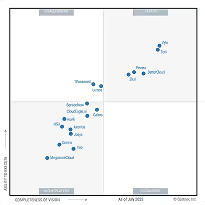
CloudEagle.ai recognized in the 2025 Gartner® Magic Quadrant™ for SaaS Management Platforms
Download now
gartner chart
5x
Faster employee
onboarding
80%
Reduction in time for
user access reviews
30k
Workflows
automated
$15Bn
Analyzed in
contract spend
$2Bn
Saved in
SaaS spend

Recognized as an Industry leader for our AI

CloudEagle.ai is Recognized in the 2024 Gartner® Magic Quadrant™ for SaaS Management Platforms

Recognition highlights CloudEagle’s innovation and leadership in the rapidly evolving SaaS management and procurement space.
Read More
Gartner Magic Quadrant for SaaS Management Platforms showing a chart divided into Challengers and Leaders quadrants with various companies plotted as dots.

CloudEagle.ai Recognized in the GigaOm Radar for SaaS Management Platforms

CloudEagle named a Leader and Outperformer in GigaOm Radar Report, validating its impact in the SaaS management platform landscape.
Read More
gigaom

Everest Group Positions CloudEagle.ai as a Trailblazer in SaaS Management Platforms

CloudEagle recognized as a Trailblazer by Everest Group, showcasing its rapid growth and innovation in SaaS spend and operations management.
Read More
qks

CloudEagle.ai is Recognized in the 2024 Gartner® Magic Quadrant™ for SaaS Management Platforms

Recognition highlights CloudEagle’s innovation and leadership in the rapidly evolving SaaS management and procurement space.
Read More
gartner

Streamline SaaS governance and save 10-30%

Book a Demo with Expert
CTA image
One platform to Manage
all SaaS Products
Learn More